
Joined April 2012
- Tweets 25,579
- Following 5,170
- Followers 13,032
- Likes 30,499
1,471 Photos and videos








Pinned Tweet

3 Oct 2025
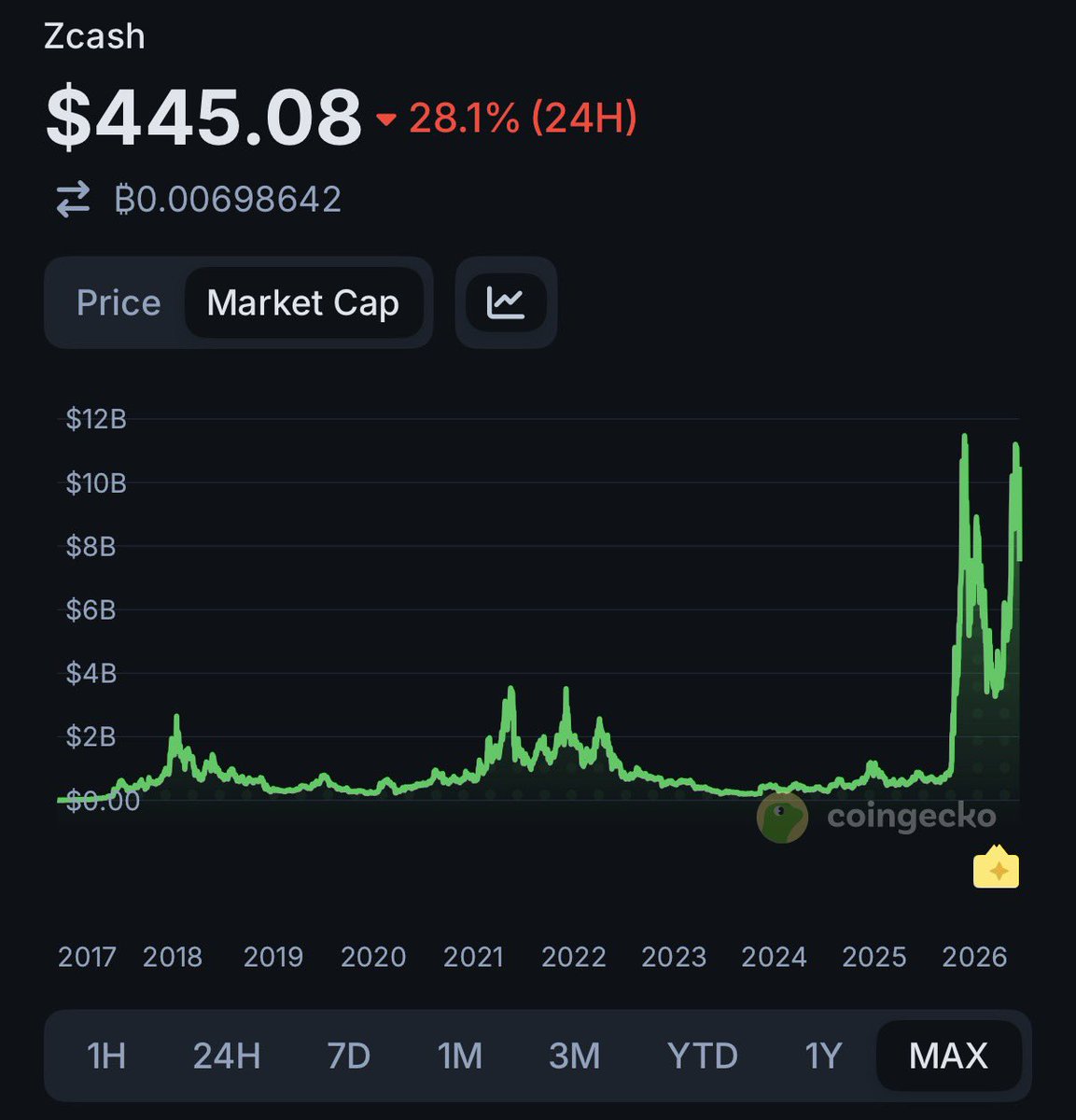
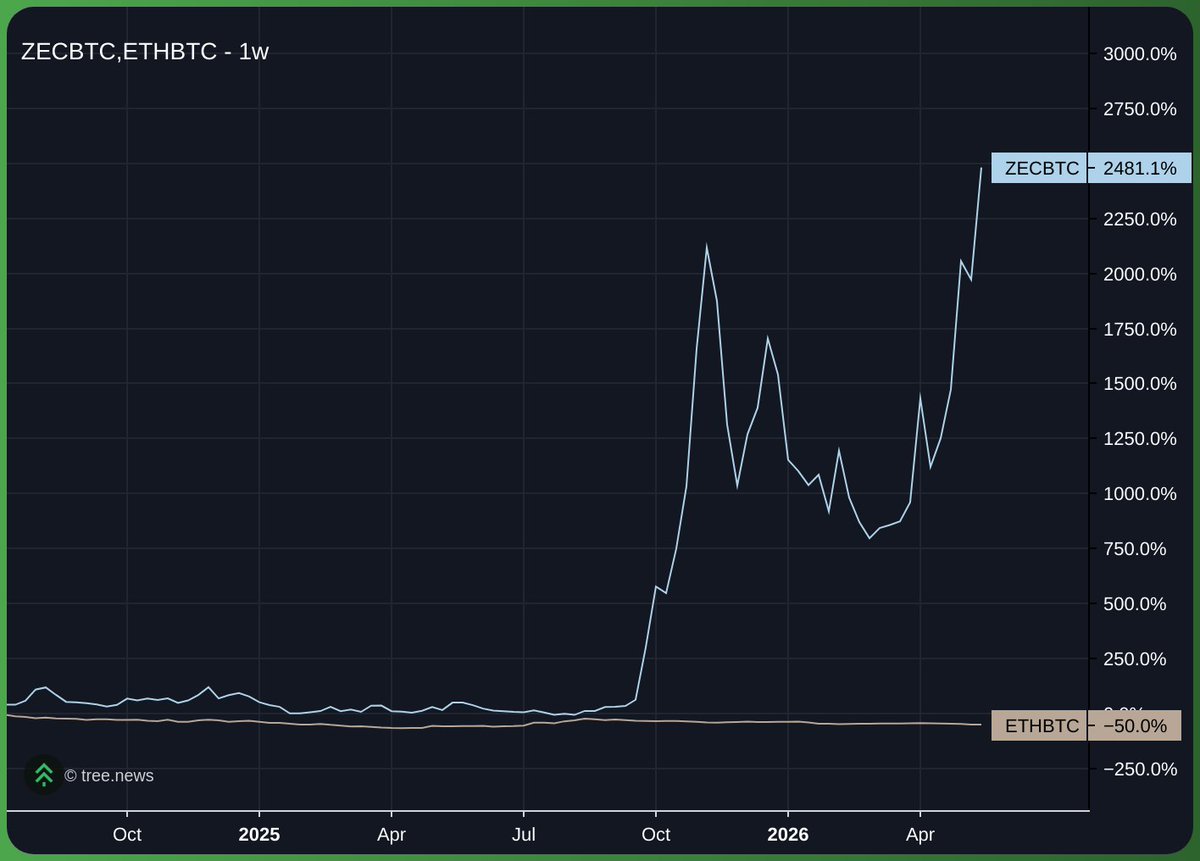
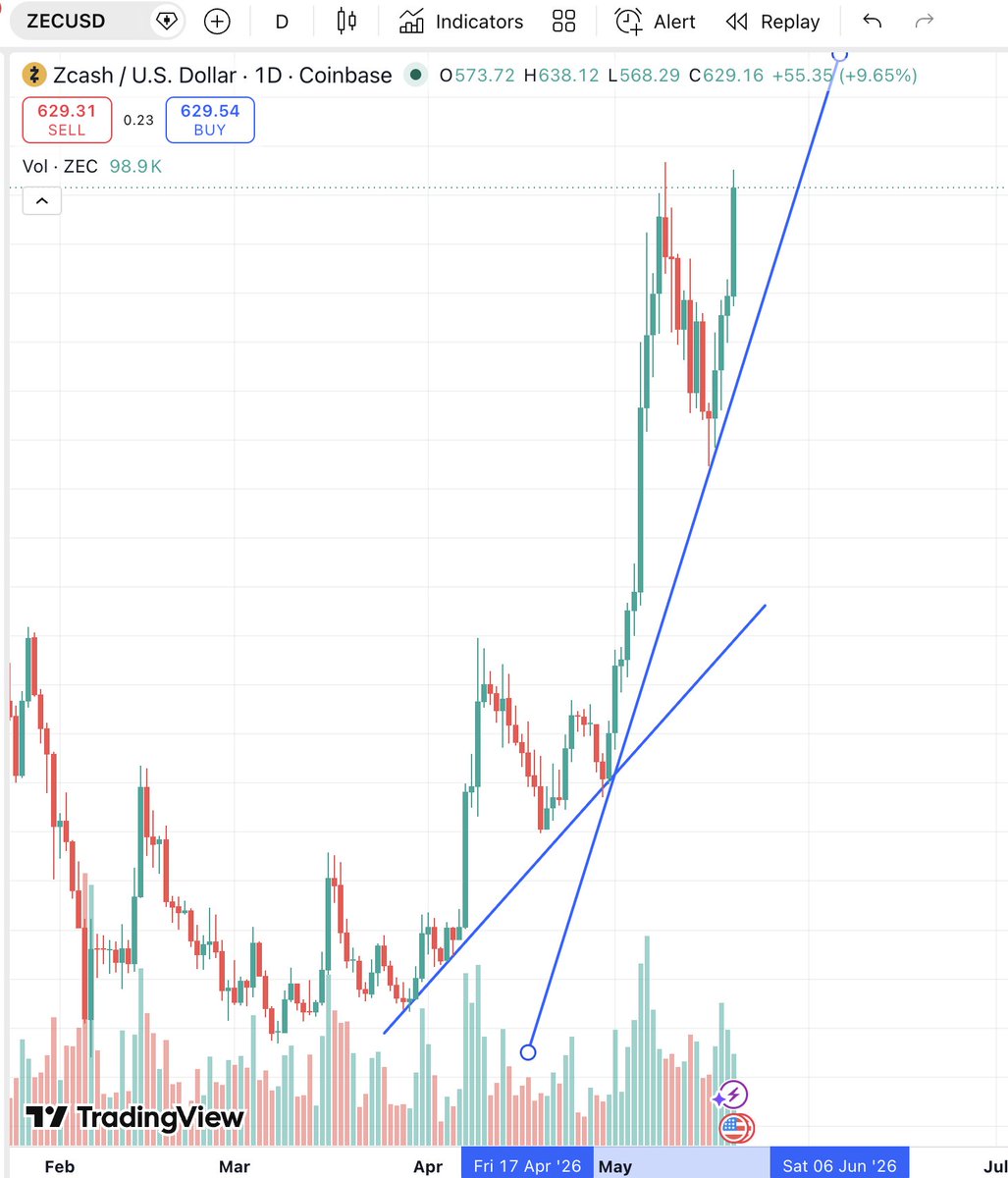
The Zcash resurrection has been underway for a few years. People are finally discovering it today.
Follow the early movers.
x.com/i/lists/19739362424053…
64
23
372
98,799
This post is glaring evidence that government and politics absolutely corrupts the most principled of men.
David Sacks of All In would not agree with any of this.
I would guess he is doing what he needs to do to stay in the position he is in, choosing his battles.
But the outward result is that his words are corrupted sometimes, he can no longer speak or do what he believes is right.
This is an inevitability of government. It infects all who venture within. Many surrender to Leviathan and let it fully consume them.
Some, compromise externally, but internally still battle onward.
I think David makes it through unconsumed, but not unscathed.
But this is exactly why we must not let the Leviathan grow until it consumes us all.
We must battle it back. A necessary evil we can not fully kill, but also one we can not let flourish.
It starts with taking back your own rights and powers you have given it to control.
Your mind, your body, your property, your speech, your math, your money.
Don’t let them control what is yours.
Choose to control yourself.

I’ve had a number of conversations with folks inside and outside government about the current situation with Anthropic, and here is what I believe to be true:
— As we know, Anthropic publicly released its Mythos class models earlier this week under the commercial name Fable.
— Fable is Mythos with guardrails. But if those guardrails fail, then you’ve exposed Mythos and its advanced cyber capabilities to people who shouldn’t have them. (Keep in mind that Anthropic itself widely promoted the idea that Mythos was a cyberweapon and needed to be regulated as such. They asked for government regulation of Mythos and championed the guardrails on Fable. If there is a vulnerability — big or small — it is Anthropic’s responsibility to patch.)
— A highly credible trusted partner of both Anthropic and the USG who was testing Fable came forward with a jailbreak of those guardrails. The Admin asked Dario to fix the jailbreak or de-deploy the model. Dario refused.
— In their blog post, Anthropic defended its decision by saying the jailbreak isn’t serious. That is not what the trusted partner and the USG believe; nor is that kind of minimizing language consistent with Anthropic’s brand as the AI safety company. It’s difficult to fathom how they could claim a jailbreak allowing operability of a cyber weapon could be defined as not “serious.”
— In the past, Anthropic has always said that safety must be top priority and taken super seriously. In this case, Anthropic prioritized the continued offering of the consumer model over safety.
— In reaction, the Admin issued the export control. The Admin did this reluctantly. It’s been very surprised that Anthropic hasn’t wanted to cooperate with a reasonable safety request (ie fixing the jailbreak issue). Anthropic’s reaction is very much at odds with their branding and ethos as a safe AI research community.
— The Admin’s hope now is that Anthropic remediates the safety issue, the export control is lifted, and Fable goes back into general release. The Admin wants all of this to happen as soon as possible. It is frankly bewildered that Anthropic hasn’t wanted to comply with safety requests that it previously said were its highest priority.
— Those trying to misdirect and tie this action to the prior DoW/Anthropic issues are wrong. The Admin values Anthropic’s technical capabilities and feels that this issue, while serious, should be easily resolved. The ball is in Anthropic’s court.
9
730
The cool thing about the open source harness tools like hermes, openclaw, gbrain, etc is that you totally avoid vendor lock in while still getting gains from advanced closed models.
Don’t be enslaved to any single provider, keep building up your personal AI stack.

The takeaway from Fable 5 being BANNED by the government: GET GOOD AT LOCAL MODELS SO YOU HAVE 100% CONTROL.
My entire weekend was going to be building my craziest ideas with Fable 5. That's now cancelled.
So instead of building with Fable this weekend, I've decided I'll go deep on local models:
1. Start with the runtime. Download Ollama or LM Studio first. This is the thing that actually runs models on your machine.
2. Match the model to your hardware. A model's size is measured in billions of parameters (7B, 32B, 70B). Bigger is smarter but needs more memory. Rule of thumb: a 7B model runs on almost any laptop, a 32B needs a good Mac with 32GB RAM, a 70B needs serious hardware like a DGX Spark or a maxed-out Mac Studio.
3. Know which model for which job. Qwen 3 is the best all-around choice for most tasks. DeepSeek for reasoning and coding. Gemma 4 when you need something tiny that runs on a phone. Llama when you want the biggest community and the most fine-tunes.
4. Quantization. You can shrink a model to run on weaker hardware with barely any quality loss. Look for versions labeled Q4 or Q5. This is how a model that "needs" a server runs on your laptop. Learning this one concept changes everything.
5. Connect it to your agent. Point Hermes or your agent stack at a local model.
6. Context window is your real constraint locally. Cloud models give you huge context for free. Local models make you pay for it in memory. A bigger context window eats RAM fast. Keep your sessions tight and your prompts lean or your machine chokes.
7. Learn to give local models tools. A smaller local model with web search, file access, and code execution beats a giant model with none. The capability gap closes fast when you wire up the right tools. The model is the engine but the tools are the wheels.
8. Fine-tuning is more accessible than you think. You don't need this on day one, but know it exists. You can take an open model and train it on your own data so it gets good at your specific domain.
I'll probably do a breakdown at some point on this @startupideaspod if people are into it.
The lesson from this ban is basically don't build your entire workflow on something that can disappear with a single letter. Own part of your stack. Local models are insurance.
It reminds me when people realized they don't own social media accounts. And then you saw people build email lists etc.
I remember running a startup and my biggest traffic source was organic FB. All of a sudden, algo changed, and I lost 99% of my traffic.
Same sorta moment (but bigger) for AI.
This is a wake up call.
3
4
74
17,492
Are you brain maxxing yet?


6
11
2,783
Tom Howard retweeted

Jun 13
the new banned claude version was run against $zec and found no serious issues. quite notable
10
9
176
8,311
Jun 13
If you want access to the most advanced technology on earth you must have this passport
2
8
307
Jun 13
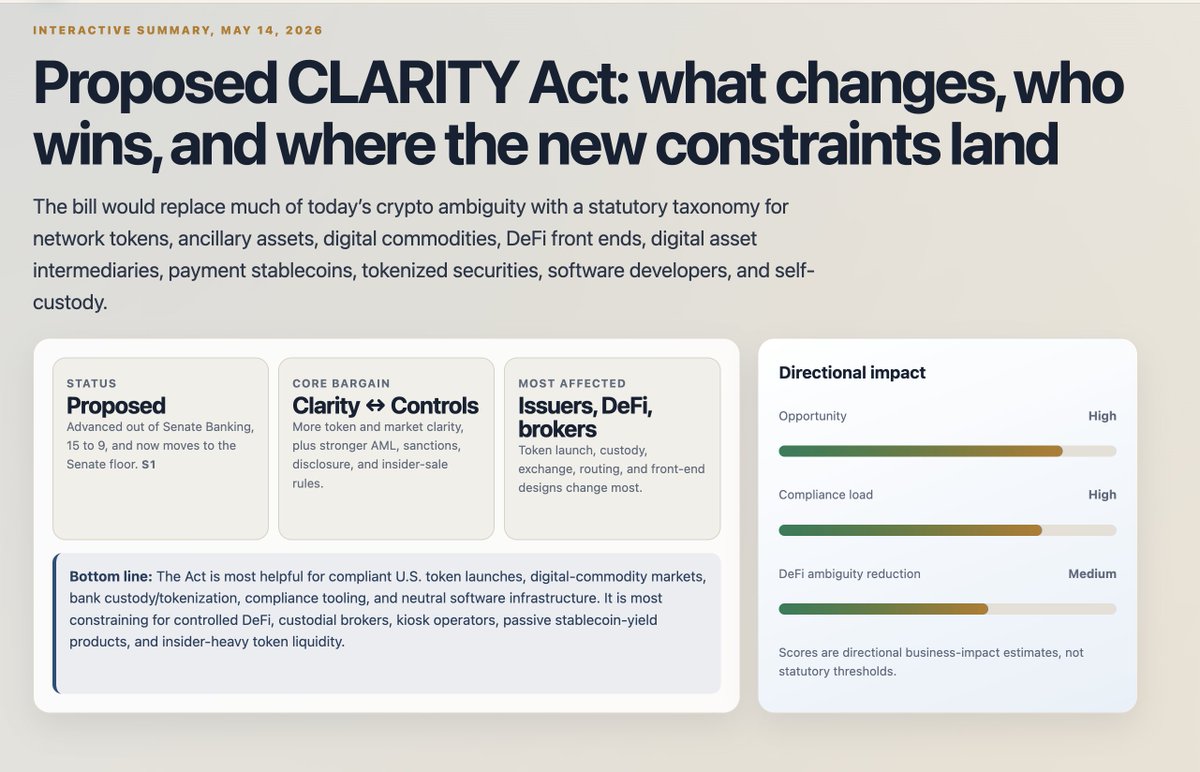
A general reminder that all of the decelerationists, safetyists and EAs are delusional and emotionally stunted.
These are not people anyone would want making decisions on behalf of humanity.



2
38
5,936
Jun 12
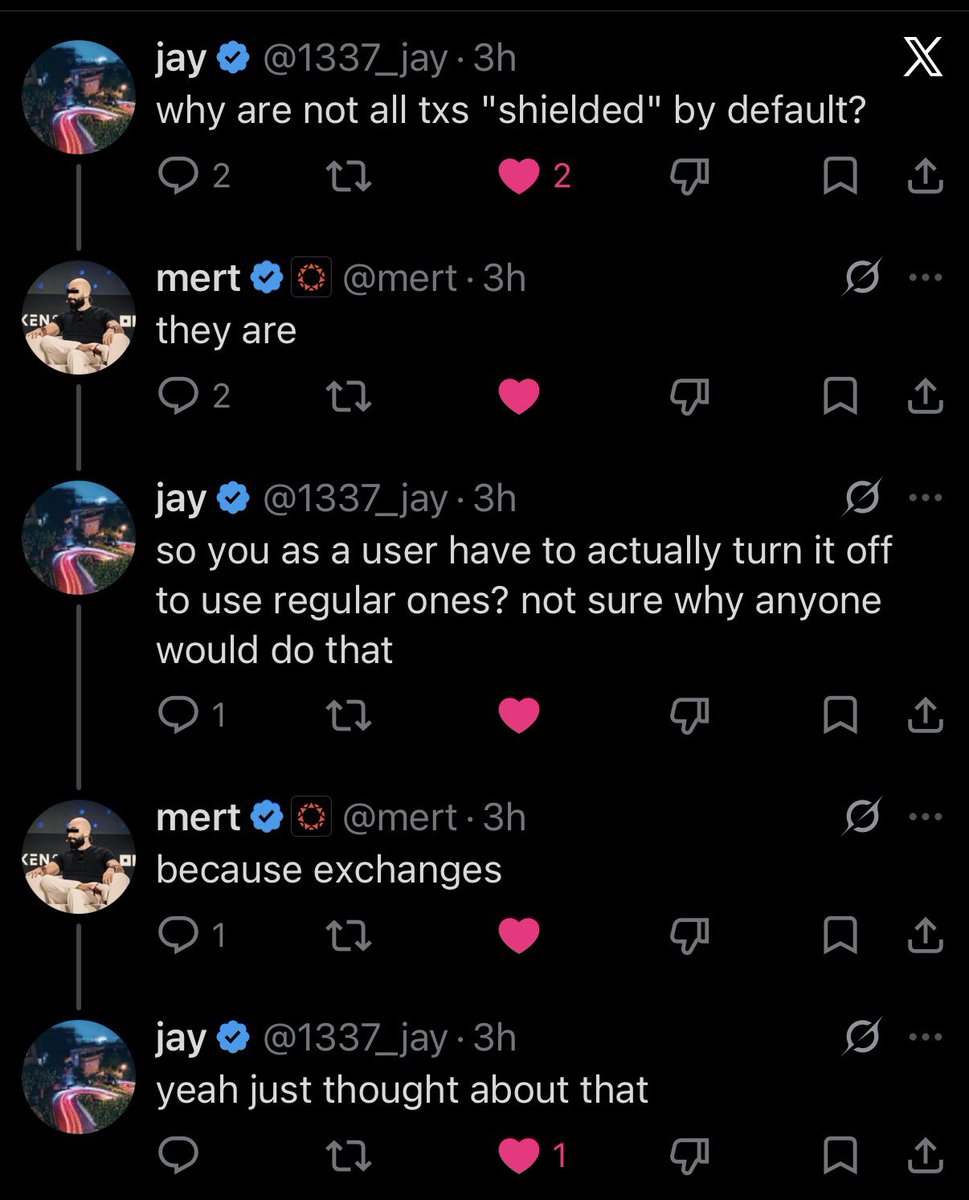
Public blockchains were a huge mistake


6
7
39
2,393
Jun 12
Doubters and doomers always think the future is fixed to the present.
But no, you can just do things that change the future.
Jun 11

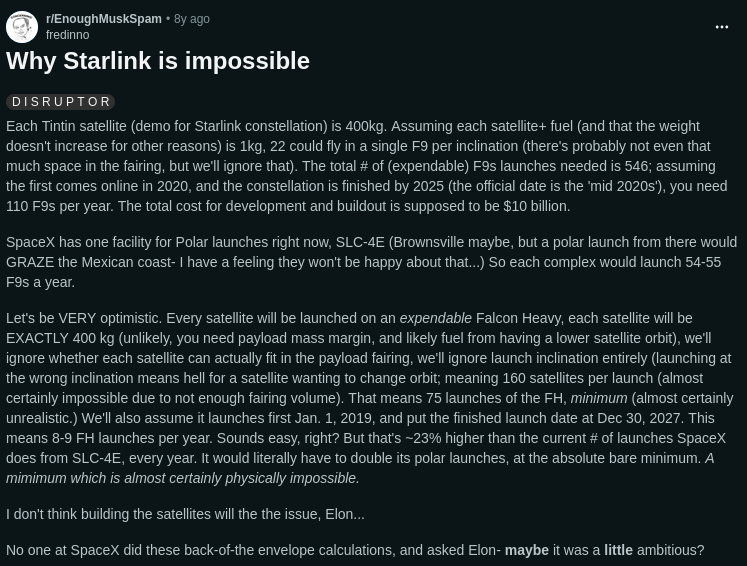
Daily reminder that Redditors "debunked" Starlink as "impossible" 8 years ago.
Just in case you start thinking a phone scratcher has a better mental model of thermodynamics than SpaceX engineers.
1
9
740
Jun 11
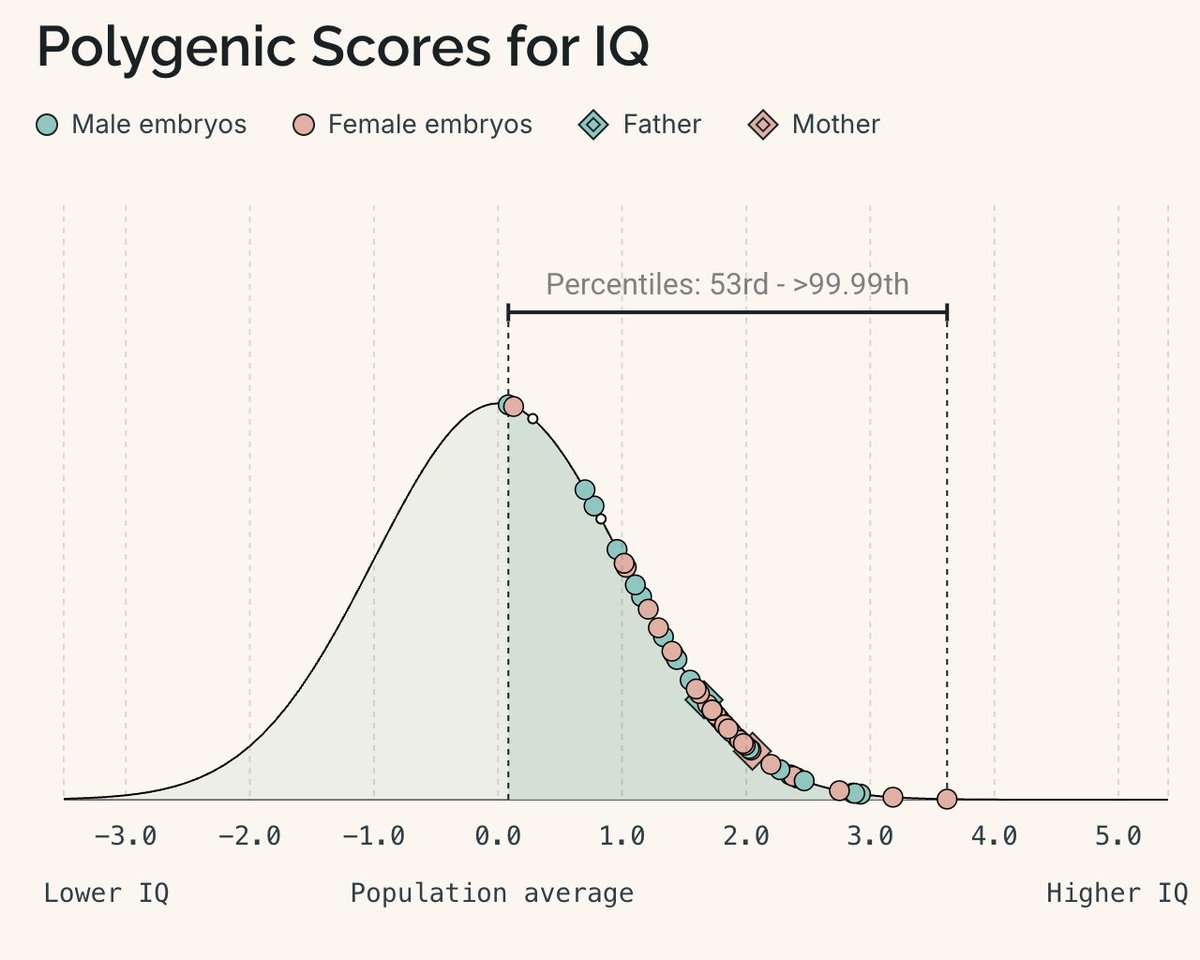
Whoa neat, they just made a 133 IQ super baby
May 22

A friend of mine had her embryos screened by Herasight and they found one with an IQ score in the 99.99th percentile
10
2,633
Jun 11
I feel like I’m in a loop
Jun 11

I feel like I’m in a loop
1
1
336
Jun 11
I feel like I’m in a loop
Jun 10
I feel like I’m in a loop
3
664
Jun 10
Programming human biology is about to go exponential

5
35
5,361
Jun 9
Using grip strength intraday volatility to measure 100 health prediction seems incredibly idiotic. That’s just noise.
If it’s a useful marker it’s far more likely that some mixture of personal bests and rolling averages is the most predictive.
Jun 3

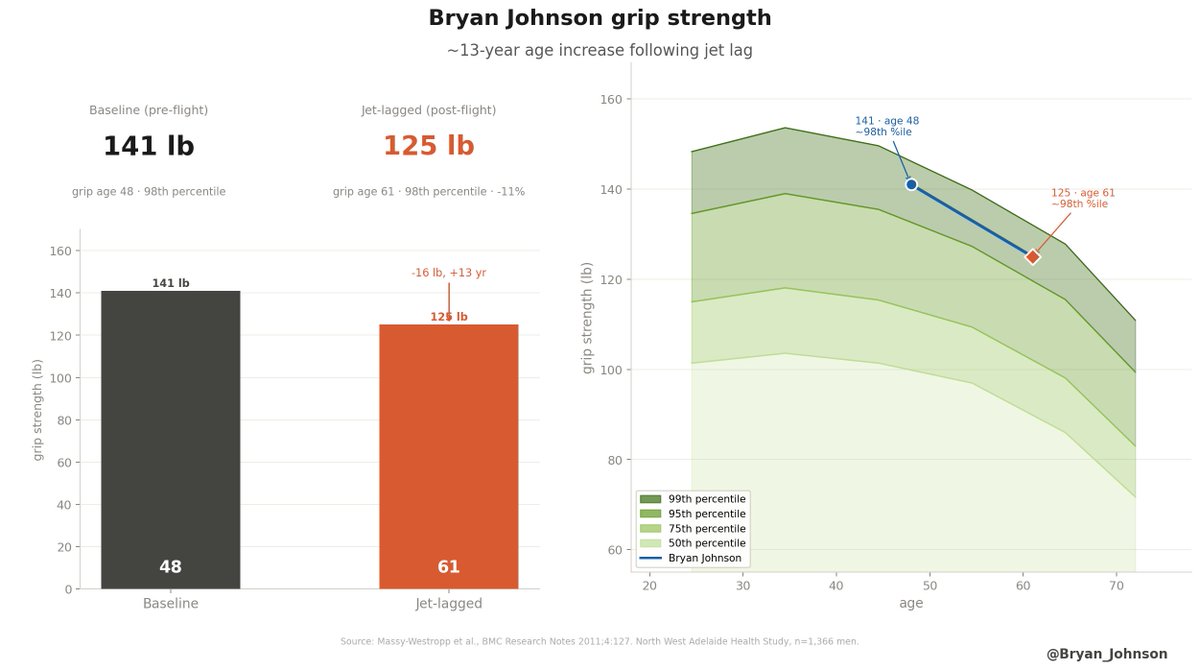
Jet lag increased my biological age by ~13 years.
> as measured by grip strength
> pre-travel: 141 lbs, grip age 48, ~98th percentile
> post-travel: 125 lbs, grip age 61, ~98th percentile
Traveled across 7 time zones, Los Angeles to Australia.
Grip strength predicts mortality better than almost anything you can measure at home.
A published study of a comparable eastbound flight found the same pattern, about a 7% morning drop.
1
3
649

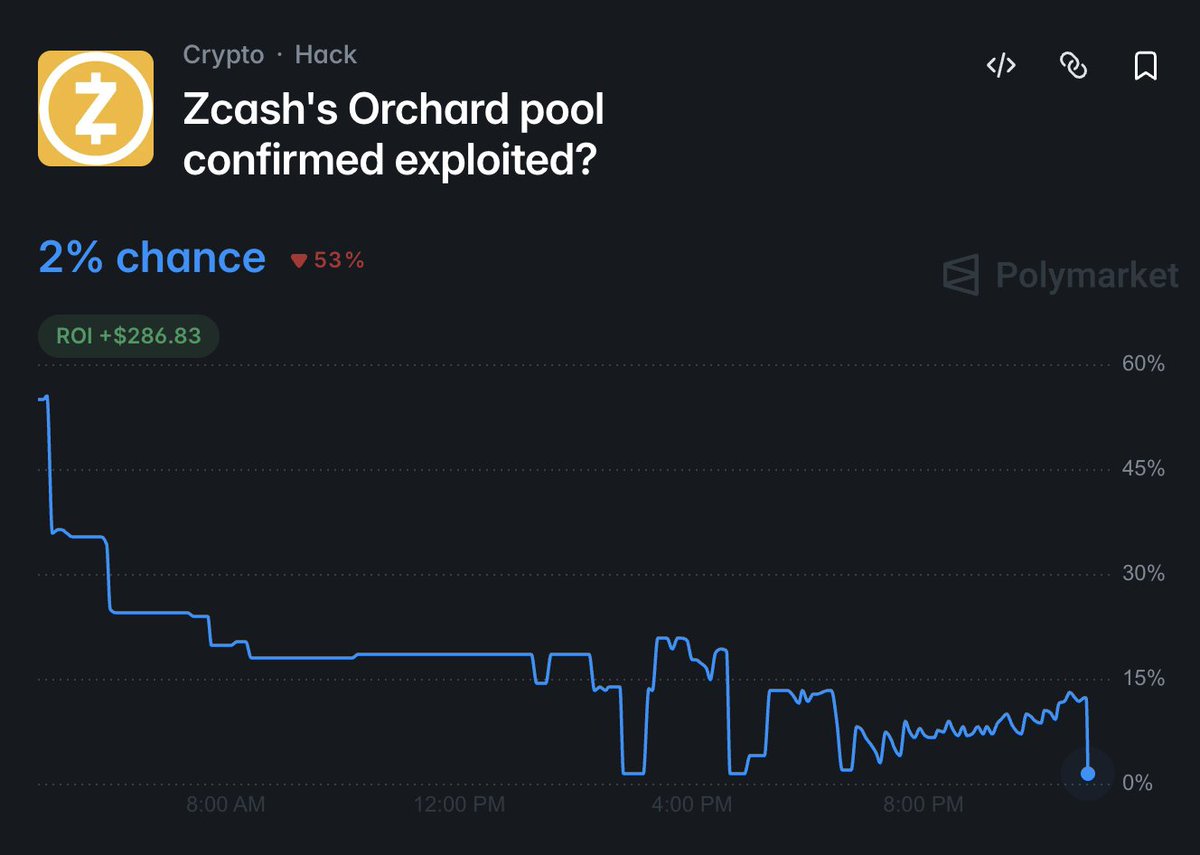
UPDATE: The various orgs and protocol developers mentioned have agreed on the specific consensus rule changes for Ironwood, after settling the finer details.
Here's a summary:
1. Ironwood introduces a new pool using the Orchard protocol, just like the existing pool.
2. The circuit for the Orchard protocol—which applies to both the existing Orchard pool and the new Ironwood pool—will have a flag that consensus rules can toggle. This flag disables payments to *other* users within that pool, while maintaining the ability to create change notes. (This enables a privacy safeguard.)
3. The old Orchard pool will have this flag enabled after the network upgrade, and payments to the old pool will also be disabled by constraining valueBalance.
4. Because payments are disabled on the old pool, wallets must send new payments to Orchard receivers (inside existing unified addresses) via the new pool, and they should also migrate funds away from the old pool.
This combination enforces a bound on the circulating supply of ZEC through the use of the existing turnstile mechanism; the amount of ZEC that anyone can transact with is no more than the amount that is supposed to exist. Meanwhile, users' wallets can migrate funds to protect them from risk, which also gradually provides evidence that counterfeiting never took place.
Now that we have this decided, we'll collectively move on to the implementations, specifications, and ecosystem support/outreach. (We also have many different auditing and formal verification efforts taking place behind the scenes to provide assurance about the circuit correctness. More on that soon!)
Jun 6

Together with @zodl_co, @ZcashFoundation, @ValarGroup and @ShieldedLabs, we're advocating for a network upgrade that would make ZEC's circulating supply auditable, providing additional reassurance that no counterfeiting occurred in the Orchard pool before this week's bugfix.
tachyon.z.cash/blog/auditing…
19
70
307
148,601
Jun 7
The future of the entire tech infrastructure hinges on understanding this

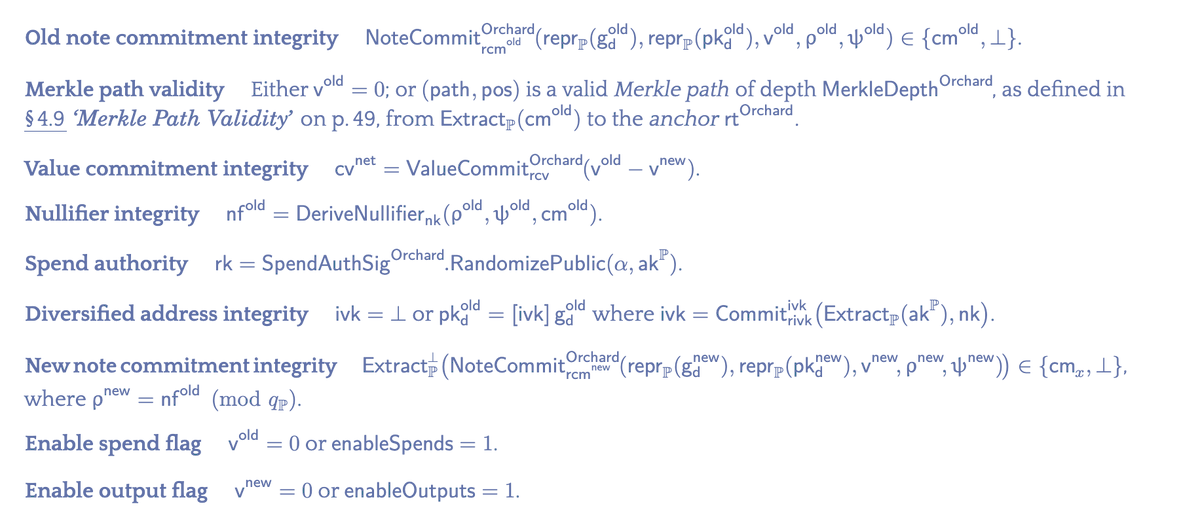
Where can a bug come from?
- Circuit spec: Never happened before
- Circuit impl error: Protected by FV.
- FV specs not being correct. I don't believe in risk for missing circuit spec <> FV spec guarantees.
- Fatal compilation error for FV. (I believe this is impossible for R1CS - Tachyon)
- FV language is wrong: Its pretty machine checkable. Have AI just also fact check the proof.
- ZKP Verifier has no bugs (We will just FV it too)
So the end state risk becomes just the circuit spec. But its honestly quite high-level simple? We then FV each relevant property of the high-level functions as well.
Then there is the cryptography itself. EC operations / Lattices / Hashes, what-not. There lindy-ness does a lot.
EC's aren't getting broken until quantum computers. Hashes have stood the ~entire history of cryptography, they will remain secure. Lattices, I have less certainty on.
2
1
22
1,791

Tom Howard retweeted

Fear of shielded ledgers due to complexity, despite breakthroughs in formal verification, is doomer / decel / techno-pessimist behavior.

lol im afraid youve become possessed by an ai datacenter doomer / bernie sanders hybrid
I told you three times now that tachyon pool will be *formally verified* and *mathematically sound*. Ai might help discover vulnerabilities in software but it turns out it ALSO helps you build more sound systems
that will reduce the risk in that class of bug by orders of magnitude. and it will be combined with fuzzing and reduction in circuit arithmetic and quantum proofing
cryptographic-currencies, it turns out, use cryptography. And it turns out you can improve that cryptography! There is no getting around this. The entire industry relies on this. By this logic you should never use software again (which includes your favorite coin, the risks simply change form, they dont eliminate)
You can get the risk to be extremely low but never zero. No amount of doomerism on the advancements here is going to get anyone to stop. I suggest you start helping so we can all be better off!
(If your general point is that users should be more informed on the tradeoffs, i agree. I will figure out a way to do that. But fear mongering is not productive)
7
8
84
16,863
Tom Howard retweeted
Jun 6
This sort of proof would have taken a large amount of time and effort (like ~1 year) before AI tooling.
Just like finding the bug was possible due to an AI update, permanently solving it is as well!
1
2
7
1,553