
14h
AI security is starting to look a lot like cloud security did years ago.
Everyone is moving fast.
Every team is experimenting.
New tools are showing up everywhere.
And the controls are trying to catch up.
But AI is not one thing anymore.
It is not just someone using ChatGPT in a browser.
It is employees using public AI tools.
Developers building GenAI apps.
Models touching sensitive data.
APIs connecting AI into business systems.
Agents using tools, reading files, making decisions, and starting to take action.
That is why securing AI with one point solution does not work.
A prompt filter helps, but it is not enough.
DLP helps, but it is not enough.
Model testing helps, but it is not enough.
A one-time red team helps, but it is not enough.
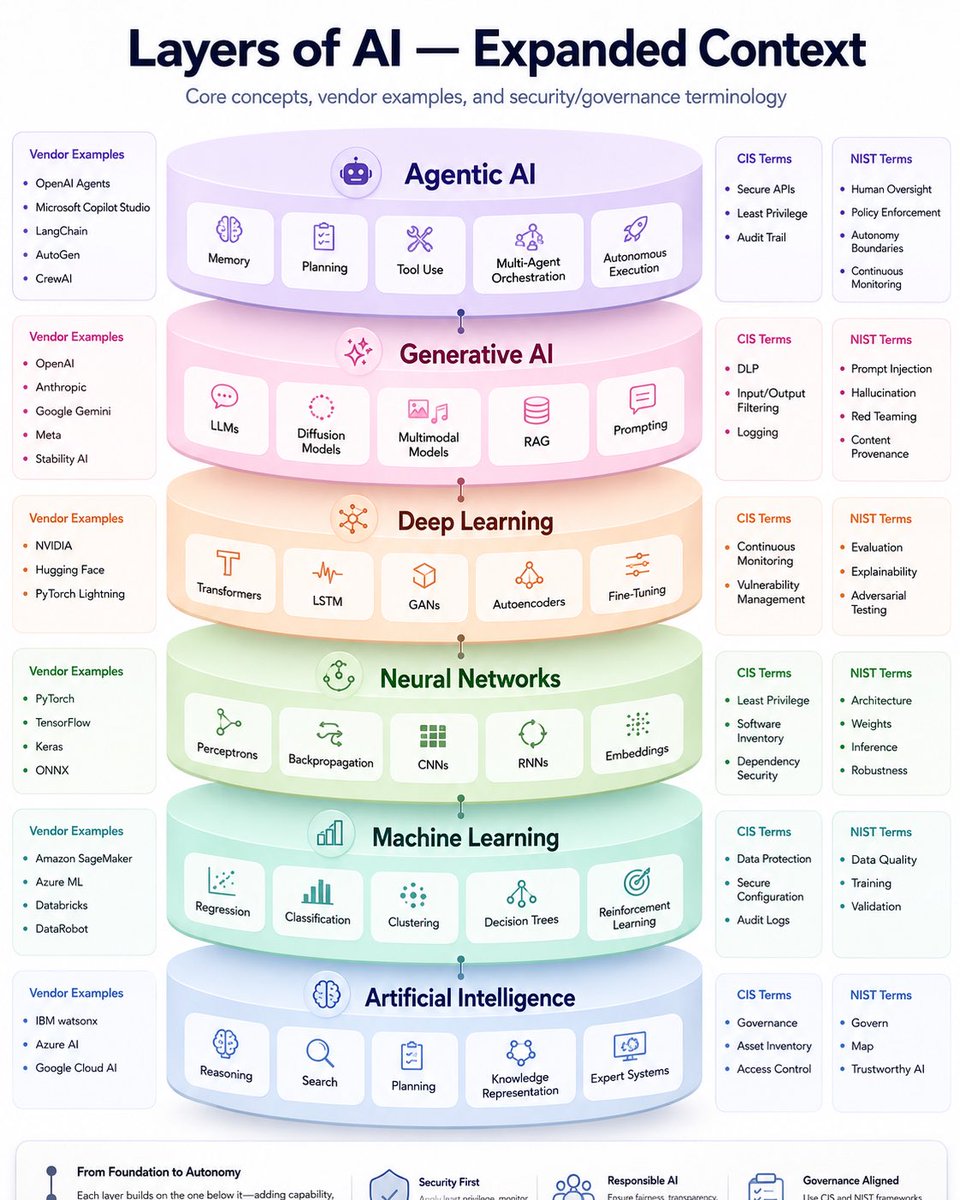
Enterprises need security across the full AI lifecycle:
Workforce security for how employees use AI.
Application security for GenAI apps and model inputs/outputs.
Agent security for tool use, file access, and autonomous behavior.
Guardrails where AI actually runs.
AI red teaming before these systems go live.
Runtime enforcement when models and agents are already in use.
Governance, monitoring, and audit trails CISOs can trust.
This is the direction @CheckPointSoftware is taking with its AI security approach, strengthened by Lakera: helping organizations secure AI usage, AI applications, and AI agents as one connected ecosystem.
Because the real question for enterprises is no longer:
“Are we adopting AI?”
It is:
“Do we actually know where AI is being used, what data it can touch, what actions it can take, and how we stop it when something goes wrong?”
AI is moving from assistance to autonomy.
Security has to move from point tools to full-stack protection.
#AISecurity #GenAI #AgenticAI #CyberSecurity #CISO #AIgovernance #CheckPoint #Lakera #SecureAI #AIredteam
30

📈Estafas, ransomware y aplicaciones falsas preocupan a los hinchas y a la organización del Mundial 2026
👉Nuestro trabajo para @CheckPointSW en @todonoticias
#checkpointsoftware #tecnología #brandpartners #prensa
tn.com.ar/tecno/novedades/20…
14

Check Point (CHKP) and OpenAI link up on trusted cyber access as enterprise security shifts toward AI defence business-news-today.com/chec… $CHKP #CheckPointSoftware #Cybersecurity #AISecurity #EnterpriseSecurity #NASDAQ #OpenAI #Daybreak #LargeCapStocks
51

May 16
#Seguridad #Tendencias #CheckPoint #CheckPointSoftware A tan solo unos días del pitazo inicial, los ciberdelincuentes se enfocan en el Mundial de Fútbol 2026 para hacer sus ataques: La Copa Mundial de Fútbol 2026, uno de los eventos deportivos más… dlvr.it/TSZX3s

1
2
49
The people have spoken! Congratulations Daniel Shultz on these new five star reviews and thank you for your support!
#studentreview #testimonial #checkpointsoftware
1
2
3
21

CheckPointSoftware finde ich sehr interessant. Netto cash. Stabile Margen. Wurde wohl abgestraft, weil es langsamer als die mitbewerber wächst. KGV von 15. Aktienrüxkkaufprogramm läuft. Ziemlich viel Value. Gut positioniert, Übernahmekandidat?! Aktie schön zurückgekommen.
2
2
19


Mar 4
Gil Messing, Check Point Software: As the war with Iran escalates, a parallel battle is unfolding online. Cyberattacks targeting Israel have surged dramatically in the past few days, with the average Israeli organization facing thousands of attempted attacks, far beyond normal levels. Security experts say the activity is no longer limited to Israel, with targets now including the United States and several Arab countries across the Gulf.
Much of the campaign combines direct cyber intrusions with psychological warfare, including fake apps, phishing messages, and attempts to infiltrate infrastructure, businesses, and personal devices. Experts warn that this is only the beginning, urging individuals and organizations alike to remain vigilant, avoiding suspicious links, downloading apps only from official stores, and ensuring systems and software are fully updated as the cyber front of the war continues to intensify.
#YnetGlobal #Israel #war #cyber #CheckPointSoftware #iran
1
3
2
980
This case study shows how Check Point CCSA Administrator training strengthened firewall administration skills and supported day-to-day security operations.
ap1.hubs.ly/y0D-cR0
#casestudy #CheckPoint #CCSA #aviationcybersecurity #checkpointsoftware
1
1
2
50
Great feedback from this recent Check Point CCSA delivery by Senior Instructor Nitin Kulkarni.
Find our next Check Point courses in your region at ap1.hubs.ly/y0yphg0
#CheckPointSoftware #CCSA #CheckPointTraining
1
2
12

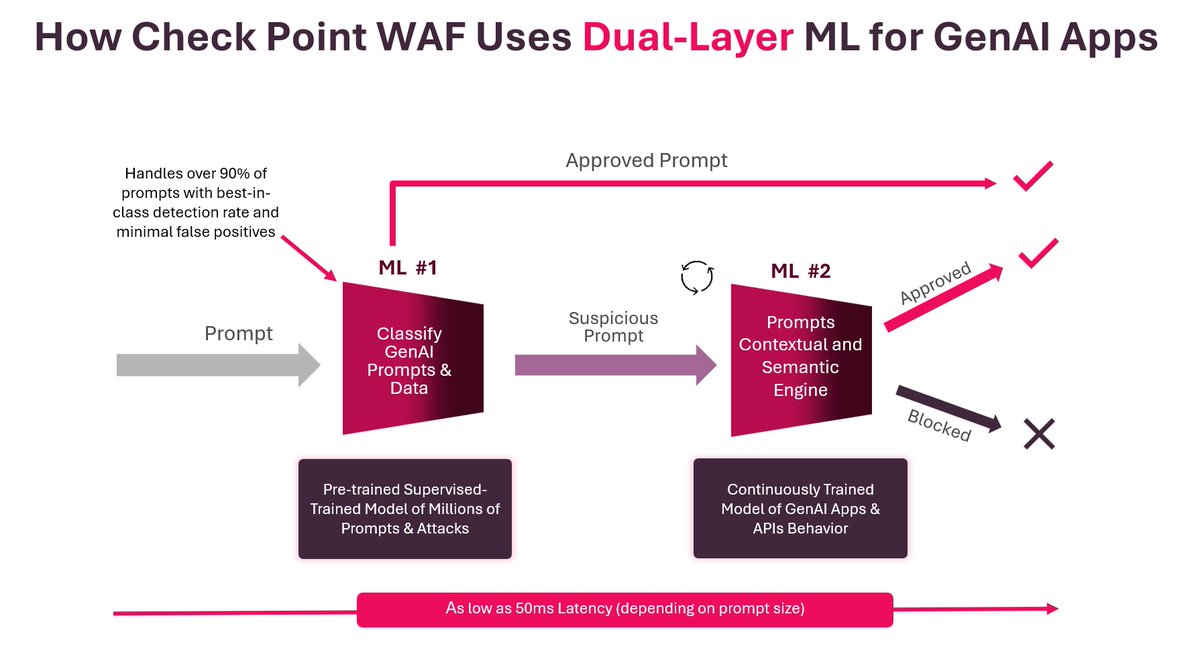
How confident are you in your new AI initiatives bringing in ROI and not ADDED RISK?
Check out this from Check Point on Securing GenAI applications and workloads. #AI #GenAI #LLMs #ChatGPT #Salesforce #Gemini #firewalls
@checkpointsoftware
lnkd.in/djE3_u2K
5
85

7 Dec 2025
Congratulations Arthur Emezieobi on this fantastic new five star review of your recent Check Point Deployment Administrator training, #CheckPointSoftware #studentreview #CPDA
1
2
22

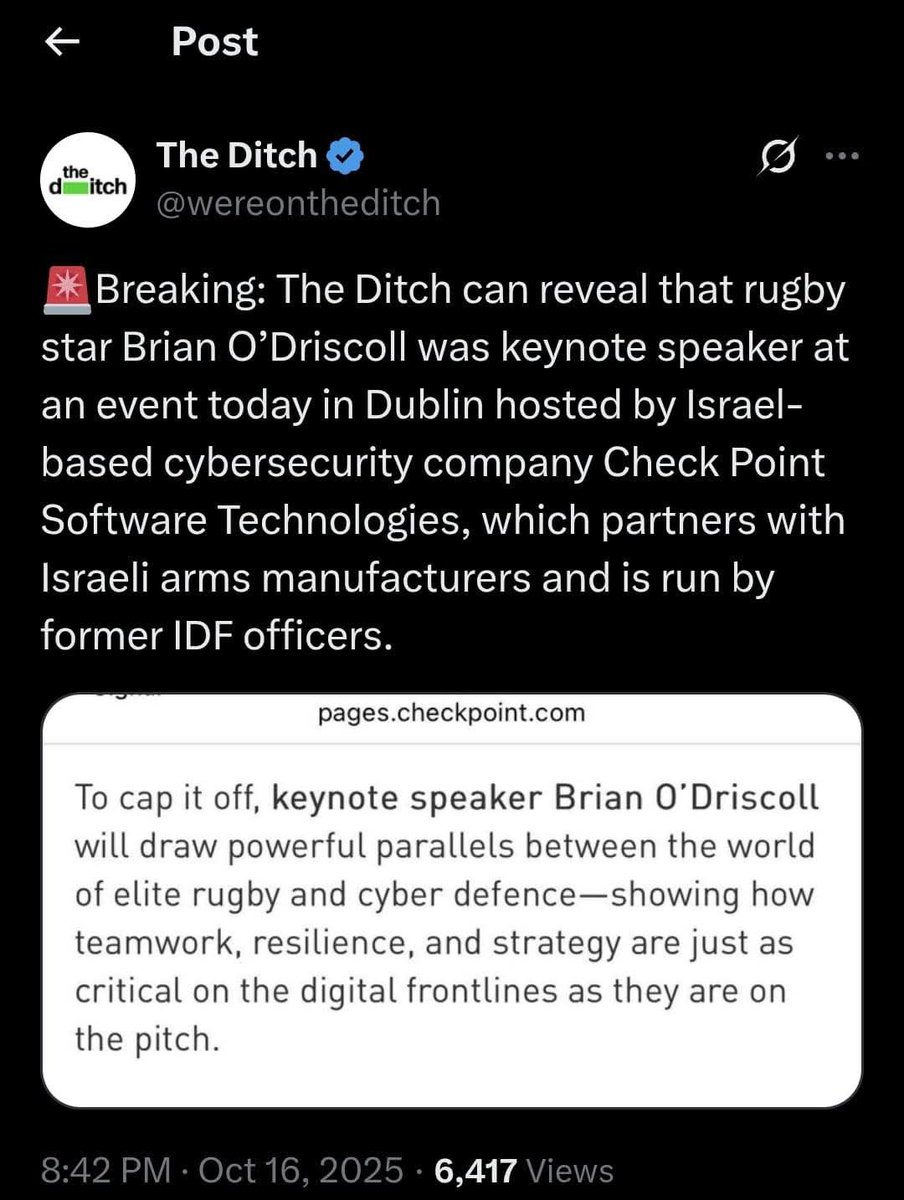
#brianodriscoll on the other hand embodies the worst, the keynote speaker for trade with the #CheckPointSoftware part of #HolocaustGaza creators #IsraelTerroristState Brian O'Driscoll & the baby cull, the team!
19
547
3 Sep 2025
Congratulations Dan Schultz! Another five-star review recognising your ability to combine deep experience and technical expertise with your talent for making complex concepts easy to understand. #checkpoint #cybersecurity #cybersecuritytraining #CheckPointSoftware
1
1
3
40
24 Aug 2025
Use your IGS credits and enhance your Check Point skills with with the Check Point Platinum ATC of the Year. ap1.hubs.ly/y0czhH0
#checkpoint #checkpointsoftware #checkpointtraining
1
1
3
48
23 May 2025
Does Red Education have a target on its back? Quite possibly, says CEO Mike Baird. Find out why bit.ly/TopPlatATP #CheckPointSoftware @CheckPointSW #bestATC #ATCoftheyear #cybersecurity #cybersecuritytraining
2
3
36

20 May 2025
We’re delighted to welcome Check Point Software as one of our key sponsors for the Connected Africa Summit 2025. As a global cybersecurity leader, Check Point is at the forefront of securing Africa’s digital frontier—empowering governments, enterprises, and service providers to stay ahead of ever-evolving threats.
Their involvement in this year’s summit underscores the growing importance of end-to-end cyber resilience in building a connected, secure, and innovative Africa.
📍 Join us at the Leisure Lodge Beach & Golf Resort, Diani
🗓️ 28th–30th May 2025
🎟️ Register now: lnkd.in/dEY4-6HH
#ConnectedAfricaSummit2025 #CAS2025 #CheckPointSoftware #CybersecurityAfrica #DigitalTrust #SmartAfrica #SecureDigitalFuture #ICTAuthority #CIOAfrica #dx5 ICT Authority

1
1
87
14 May 2025
Congratulations Jamal Sheik for supporting our students through their Check Point training and playing your part in our success as the Check Point Software Platinum Elite ATC of the Year #CheckPointSoftware #cybersecurity #cybersecuritytraining
1
1
4
44
20 Apr 2025
We couldn’t have put it better, Mike! bit.ly/TopPlatATP #CheckPointSoftware @CheckPointSW #bestATC #ATCoftheyear #cybersecurity #cybersecuritytraining #simplythebest
3
51
25 Feb 2025
The Red Education team has landed in Las Vegas for CPX 2025 Feb 25th - 26th at the Venetian Expo. Come and see us at the Red Education booth to find out about our multi-award winning @CheckPointSW training #checkpoint #checkpointsoftware #checkpointtraining #cpx2025
1
4
110