
have you looked into $STM? 90% market share in chips for SpaceX Starlink satellites and the only chipmaker confirmed in early discussions for orbital data centres.. no position just curious on your thoughts already up 200% YTD but doubled its 26 and 27 revenue target
4


NVIDIA isn’t just a chipmaker - it’s the backbone of the AI revolution. From data centers to autonomous vehicles, its ecosystem is reshaping the future of computing.
thekatyalyst.org/nvidia-busi…
#NVDA #AI #Investing
1
14


JUST IN: $SPCX ⚡️
Google Is Paying $920 Million Per Month to SpaceX.
Nvidia Is the Quiet Winner Nobody's Talking About.
The chipmaker is positioned to benefit from SpaceX's plans
👉 trends.global/?ref=105

22


#NVIDIA put $2 billion into Nebius, a cloud built only for AI.
Nebius made $399M in Q1 2026 — up 684% from one year ago — on contracts already signed with Meta and Microsoft.
When the biggest chipmaker funds your competitor, the old cloud giants didn't just lose a deal. They lost the default.
53

This pattern has a name and a precedent. It's vendor financing, and telecom ran it into the ground in 1999.
Lucent, Nortel, Cisco lent customers the money to buy their equipment. The loans booked as revenue, demand looked insatiable, and the financing showed up as growth instead of credit risk. When the customers couldn't pay, the revenue and the loans vanished in the same quarter. The gear was real. The demand was partly the vendors funding their own order book.
The AI version runs through equity instead of debt, but the wiring is identical. A chipmaker or hyperscaler takes a stake in the buyer, the buyer spends it on the seller's product, and one dollar books as an investment on one balance sheet and revenue on another. Consolidated it nets to nothing. Across separate entities it nets to a supercycle. The related-party share of that revenue is the number nobody discloses cleanly.
Physics doesn't change and the economics doesn't change. The financing structure changes, and the financing structure is what decides how the cycle ends. Telecom ended when the vendor loans stopped rolling. This ends when the equity stops marking up and the loop has to clear in cash.

The appetite is real. What's worth separating is how much is external capital and how much is the same dollar on another lap.
A large share of that $100bn flows between parties that are each other's customers. Hyperscalers fund the labs, the labs spend it back on hyperscaler compute, the marks reset higher each round. That reads as voracious demand, but a closed loop and a deep external market look identical on the way up. They only diverge when someone needs cash out and the next funder isn't also a customer.
So the imbalance isn't only appetite versus supply. It's that the appetite and the supply are increasingly the same balance sheets. The binding constraint stops being investor enthusiasm and becomes the first quarter the loop has to settle in cash instead of paper.
1
38

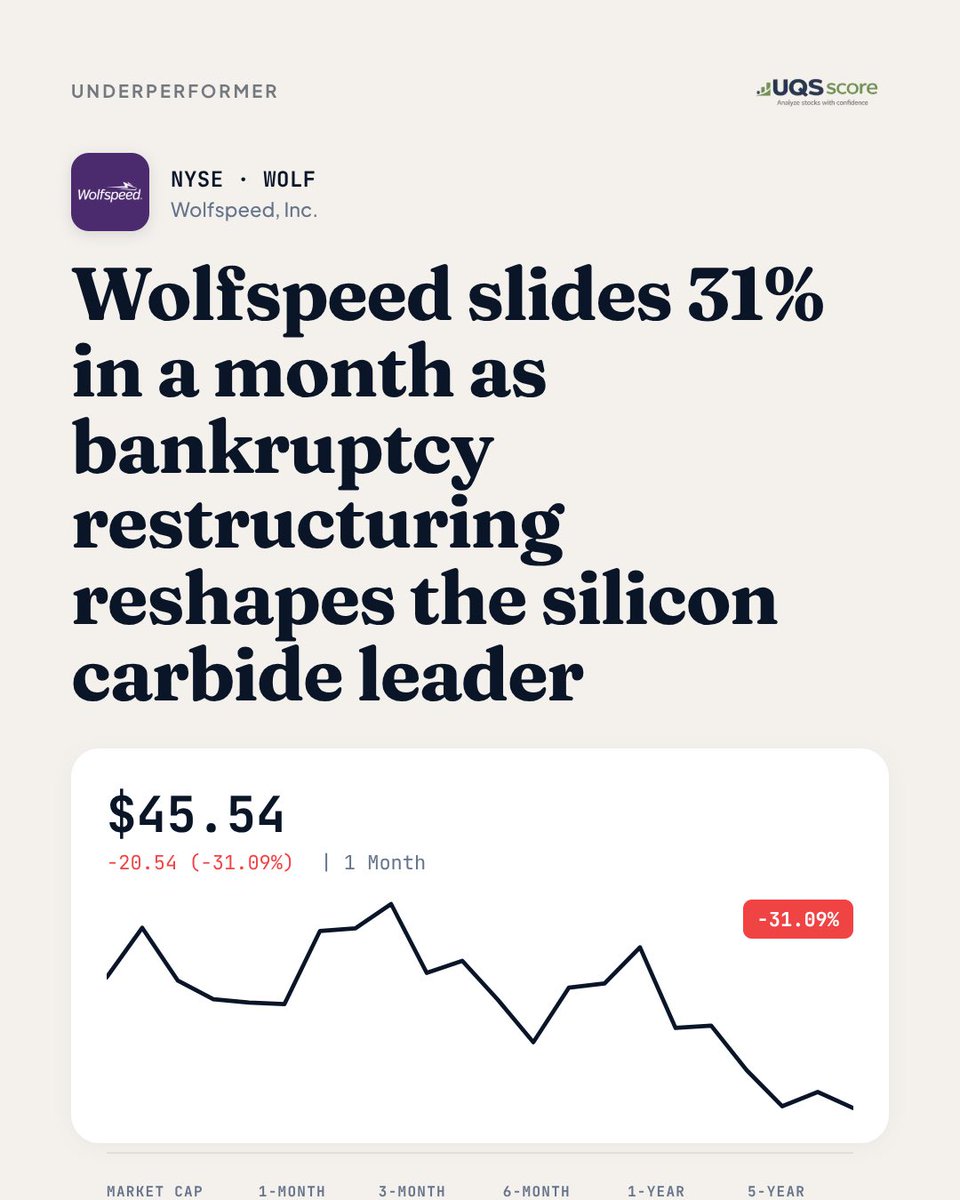
Wolfspeed (NYSE: $WOLF ) has shed roughly a third of its value over the past month as the silicon carbide chipmaker works through a court-supervised restructuring. The company entered into a Restructuring Support Agreement backed by holders of more than 97% of its senior secured notes, targeting a reduction of approximately $4.6 billion in total debt • around 70% of its debt load. Revenue guidance for the current quarter points to a sequential decline, with the Durham fab scheduled to close and certain customers pursuing alternative suppliers during the bankruptcy process.
1
1
172
Herman Kienhuis retweeted

Jun 4
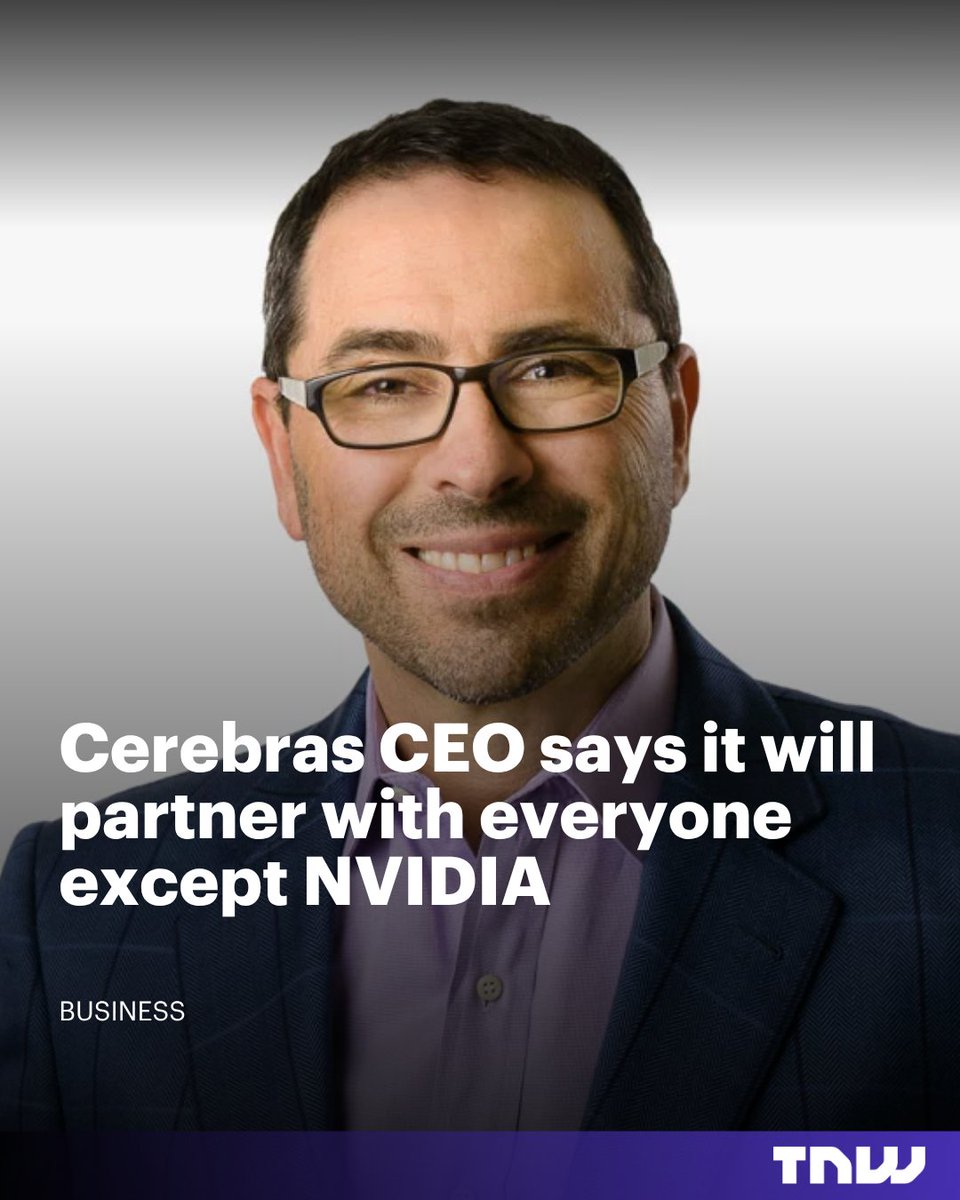
NVIDIA placed $40B in AI bets. Cerebras pitches itself as the backup.
Its CEO says it will work with every chipmaker in AI except one. thenextweb.com/news/cerebras…
2
1
1,293

Memory Manufacturing Plans
Memory production is a core part of the Terafab vision. The project explicitly aims to manufacture both logic chips and the high-bandwidth memory (HBM) required for high-performance AI workloads in the same facility. This vertical integration is intended to improve performance, reduce costs, and accelerate development. However, while the plan includes memory, full independence from external suppliers for all types of memory and storage is unlikely in the early years.
Intel’s Role
Intel joined the project in April 2026 as the primary technology partner. The company is contributing its advanced manufacturing process technology (particularly the 14A node) and expertise in advanced packaging (such as EMIB and Foveros), which are well-suited for integrating memory with logic chips.That said, Intel exited the commodity memory business years ago and has limited current experience in high-volume standalone memory production. Analysts have noted that additional partnerships with memory specialists may still be needed for the memory side of Terafab.
Comparison to TSMC
For context, TSMC — the world’s largest contract chipmaker — generated approximately $123 billion in revenue in 2025 with strong profits and a highly diversified global operation. Terafab’s most ambitious long-term target of 1 million wafer starts per month would represent a very large portion of TSMC’s current total capacity, but concentrated in a single, highly specialized facility focused primarily on AI chips for the Musk ecosystem.
Challenges and Outlook
Building and operating advanced semiconductor fabs is extremely complex, capital-intensive, and time-consuming. Adding memory production increases the technical difficulty. While the vision is bold, real-world execution often faces delays. Terafab remains in the early stages, with the prototype fab just beginning construction. Success will depend on overcoming significant engineering, supply chain, and scaling challenges over the coming years.
Final Thoughts
Terafab represents a major strategic bet on vertical integration in the semiconductor industry. If successful, it could provide Tesla, SpaceX, and xAI with greater independence and faster innovation in AI hardware. Whether the project meets its most ambitious targets remains to be seen, but it is already shaping discussions about the future of chip manufacturing, AI infrastructure, and U.S. semiconductor self-sufficiency.
2
65

After years of uncertainty, including delayed listings, memory chipmaker Kioxia's shares soared 56x in 18 months, making it Japan's most valuable company
techsnif take: techsnif.com/2026/06/14/kiox…
🦞 connect your agent: techsnif.com/agents
source: asia.nikkei.com/business/tec…
29

Looks good but I can't be the only one who was initially confused thinking 'Brand Intel' was something to do with the California-based chipmaker, can I ?!?! 😀
1
7

14h
Company raises $Bn
Chipmaker funds buyer.
Buyer purchases chips.
Chipmaker books “revenue.”
And people still call this organic demand?
Let me simplify the scammy part:
“I’ll give u money…
so u can buy my product…
so I can show growth.”
Wall Street: GENIUS 🚀
Reality: 🤡
1
22