

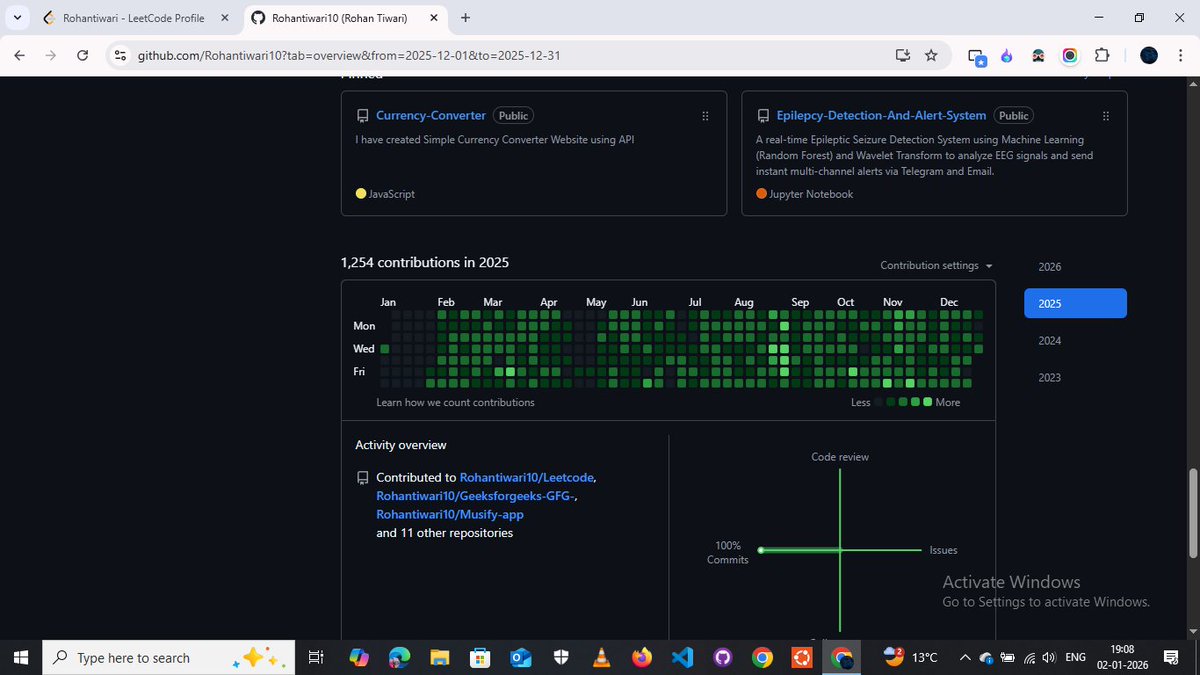
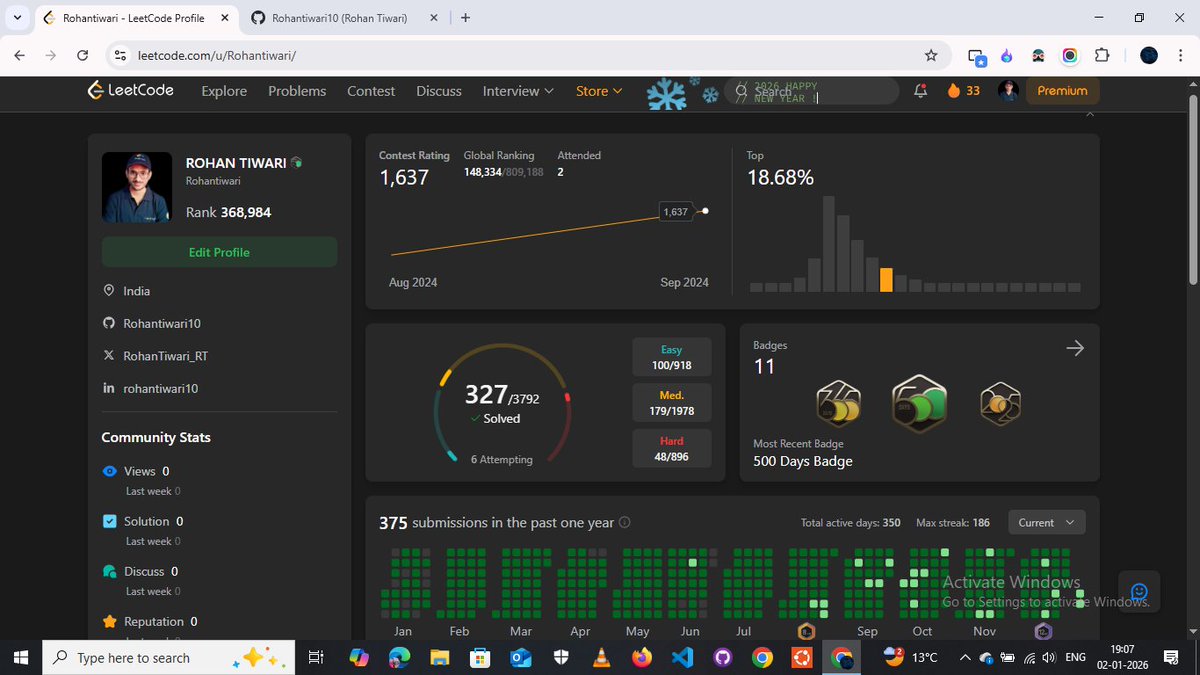
It wasn't easy. There were late nights and days I almost missed a commit. But focusing on small daily progress is what matters. Every small win compounds into mastery.
#GitHub #LeetCode #Coding2025 #ConsistencyWins #DevLife
2
34

18 Dec 2025
Hi! I'd like to tell you about the Codex project. I use it myself and would like to share my impressions.
**How It All Began**
Codex was launched in May 2025 as a research version, replacing the original Codex, which was then behind GitHubCopilot. The basic idea was simple: automate routine programmer tasks—writing new features, fixing bugs, drafting pull requests, and answering code questions—while still leaving a human reviewer to avoid errors.
**Technical Foundation**
At the heart of Codex is the GPT-5.2 model, specifically modified for working with code. It can plan several steps ahead, parse complex context, and make meaningful recommendations. Thanks to this, the model can handle tasks that would previously have required significant effort from the developer.
**What Codex Can Do**
- Generate and complement code in dozens of languages.
- Conduct automated code reviews, highlighting logical errors and potential vulnerabilities.
- Assist in preparing pull requests: write descriptions, generate tests, and even run them in isolated environments.
- Maintain the "skills" system—a set of user modules that can be connected to the CLI and ChatGPT to, for example, convert code from Rust to Python.
- Work in real time, allowing multiple tasks to simultaneously process the repository, which became especially fast after the September 2025 update.
**Latest News 2025**
In May 2025, Codex was released in the cloud and became available to ChatGPTPlus users. A major upgrade took place in September of that year: inference was accelerated, reliability was increased, and access to the API key was made available to developers. In October, the ability to enable custom skills was added via the `--enable-skills` parameter in the CLI. Interestingly, OpenAI already uses Codex for its own code – "most of the Codex is generated by Codex itself." According to the State of AI Coding2025 report, GPT-5-Codex outperformed previous versions in speed, throughput, and review accuracy. Users report a 10x increase in productivity during complex refactorings, although sometimes several hours of work are required for large codebases.
How to use and how much it costs**
- Via ChatGPTPlus: $20/month subscription, including web interface and CLI, unlimited local tasks.
- Via ChatGPTPro: $200/month, higher limits and priority access, convenient for teams.
- Per-token pricing: $1.75 per million input tokens and $14 per million output tokens, with cached input costing $0.175 per million tokens. This is convenient for flexible scalability.
- For larger companies, we offer enterprise-level pricing with customized pricing, audit logs, and administrative tools.
**Ecosystem and Integrations**
Codex easily integrates into popular IDEs like VSCode, Cursor, and others via SDK. There's a dedicated CLI tool that's convenient for CI pipelines and batch tasks. You can call Codex directly in chat via Slack and ChatGPT, and GitHub already has @codexfx , which can leave comments on pull requests.
**Pros and Cons**
Advantages include a significant productivity boost, deep model reasoning capabilities, and a flexible pricing model suitable for both individual developers and large organizations. The "skills" system allows you to customize the tool to your needs without rewriting the model.
Disadvantages include the cost, which can quickly increase with intensive use, the need for constant internet access (the offline version is currently limited to cached models), and the model sometimes still generates "hallucinations," requiring human supervision. Furthermore, setting up your own "skills" and working with API keys can require some learning.
**Where the Project is Heading**
Codex is gradually transitioning from a niche tool to a more mainstream product. Integration with ChatGPT is expanding, the library of ready-made "skills" is growing, and performance continues to improve thanks to GPT-5.2. If OpenAI continues to work on security and makes pricing more affordable, Codex could well become a standard part of any modern developer workflow.
If you'd like to give it a try, you can download a demo version of the CLI (an API key is required) and see how easy it is to use in your projects. I hope this information helps you understand what Codex is and how it can be useful in your work. and of course I can't help but mention my assistant @SentientAGI
17 Dec 2025

— Why are international transfers still so slow and expensive?
— Because they go through banks and a bunch of intermediaries. Each of them charges a commission and adds delays.
— Is there a way to send money abroad faster?
— Yes. For example, through @codexfx , transfers are almost instantaneous and without bank involvement.
— Are the fees really lower there?
— Significantly lower. There are no hidden charges, everything is transparent from the start.
— What about exchange rates?
— The rates are clear and fair, with no unpleasant surprises along the way.
— How safe is it?
— The network runs on stablecoins backed by real reserves, so the risks are minimal.
— Who needs this anyway?
— Businesses, freelancers, and anyone who regularly receives or sends money abroad.
— Is this just another crypto service?
— No. This is a full-fledged financial bridge between countries, only without bureaucracy and intermediaries. #CodexCartoon
11
1
62
465

30 Nov 2025
Coding faster in 2025 starts with the right AI assistant!
Check out the 7 Best AI Coding Assistant Tools in 2025 - speed, accuracy, and smarter dev workflows!
List: topdealsnet.com/blog/best-ai…
#AIDevTools #Coding2025 #SoftwareEngineering #AIRevolution #DevCommunity #TrendingTech
4
4
3,282

27 Nov 2025
🚀 Google Antigravity is changing everything we thought we knew about coding.
The new “agent-first” IDE from Google doesn’t just autocomplete your code — it plans, executes and tests full features unassisted. Imagine telling an AI: “Build an OAuth2 login system with unit tests and browser validation.” A few minutes later: done.
Want to see how deep the rabbit hole goes? Discover how Antigravity blends agents, browser automation, multi-model AI and mission-control dashboards to transform developer workflows.
👉 Read the full breakdown: ctrlaltnod.com/en/news/ai-in…
#GoogleAntigravity #AI #DevTools #SoftwareDevelopment #AIIDE #AgentFirst #Coding2025 #TechNews
1
4
165
27 Nov 2025
🚀 Google Antigravity is changing everything we thought we knew about coding.
The new “agent-first” IDE from Google doesn’t just autocomplete your code — it plans, executes and tests full features unassisted. Imagine telling an AI: “Build an OAuth2 login system with unit tests and browser validation.” A few minutes later: done.
Want to see how deep the rabbit hole goes? Discover how Antigravity blends agents, browser automation, multi-model AI and mission-control dashboards to transform developer workflows.
👉 Read the full breakdown: ctrlaltnod.com/en/news/ai-in…
#GoogleAntigravity #AI #DevTools #SoftwareDevelopment #AIIDE #AgentFirst #Coding2025 #TechNews
1
5
194
27 Nov 2025
🚀 Google Antigravity is changing everything we thought we knew about coding.
The new “agent-first” IDE from Google doesn’t just autocomplete your code — it plans, executes and tests full features unassisted. Imagine telling an AI: “Build an OAuth2 login system with unit tests and browser validation.” A few minutes later: done.
Want to see how deep the rabbit hole goes? Discover how Antigravity blends agents, browser automation, multi-model AI and mission-control dashboards to transform developer workflows.
👉 Read the full breakdown: ctrlaltnod.com/en/news/ai-in…
#GoogleAntigravity #AI #DevTools #SoftwareDevelopment #AIIDE #AgentFirst #Coding2025 #TechNews

6
219

13 Sep 2025
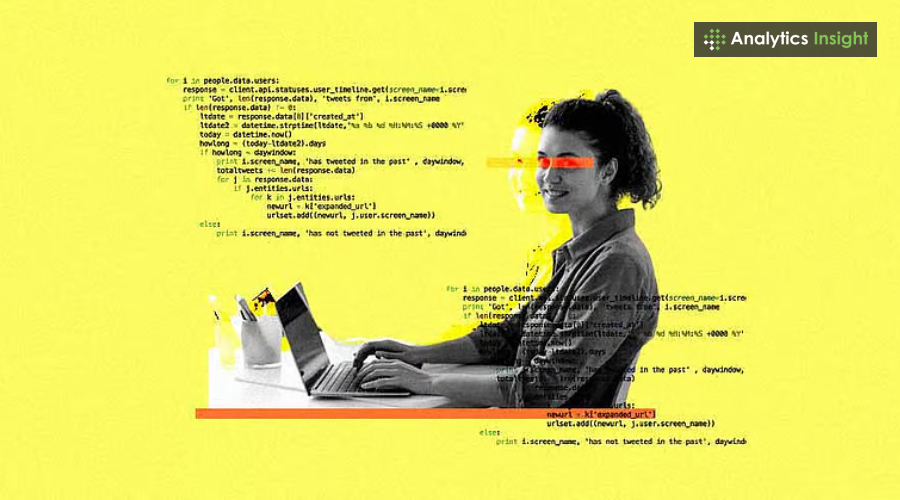
𝐓𝐨𝐩 𝐂𝐨𝐝𝐢𝐧𝐠 𝐂𝐡𝐚𝐥𝐥𝐞𝐧𝐠𝐞 𝐏𝐥𝐚𝐭𝐟𝐨𝐫𝐦𝐬 𝐭𝐨 𝐁𝐨𝐨𝐬𝐭 𝐘𝐨𝐮𝐫 𝐒𝐤𝐢𝐥𝐥𝐬 𝐢𝐧 𝟐𝟎𝟐𝟓
Unlock the future of coding in 2025! From LeetCode to CodinGame, discover platforms that train problem-solving, sharpen interview skills, and make coding fun. Whether preparing for jobs, building portfolios, or competing globally, these sites have something for every learner.
Sharpen skills, ace interviews, and enjoy coding like never before. The best coding platforms of 2025 are here - ready to take learning beyond textbooks.
#Coding2025 #LearnToCode #TechCareers #CodingPlatforms #DeveloperLife #FutureCoders #AI #AINews #AnalyticsInsight #AnalyticsInsightMagazine
Read More 👇
zurl.co/bRYIj
1
66

30 May 2025
🧠 Top 7 AI Tools for Developers in 2025 Want to write code faster, smarter, and with the help of AI?
Must-read this Insightful article👉c-sharpcorner.com/article/to…
#AITools #DeveloperLife #Coding2025 #TechInspo #GitHubCopilot #ChatGPT #ProgrammingTips

6
22
783
30 May 2025
🧠 Top 7 AI Tools for Developers in 2025
Want to write code faster, smarter, and with the help of AI?
Must-read this Insightful article by @mcbeniwal .
Read it now 👉c-sharpcorner.com/article/to…
#AITools #DeveloperLife #Coding2025 #TechInspo #GitHubCopilot #ChatGPT #ProgrammingTips

8
22
559

2 May 2025
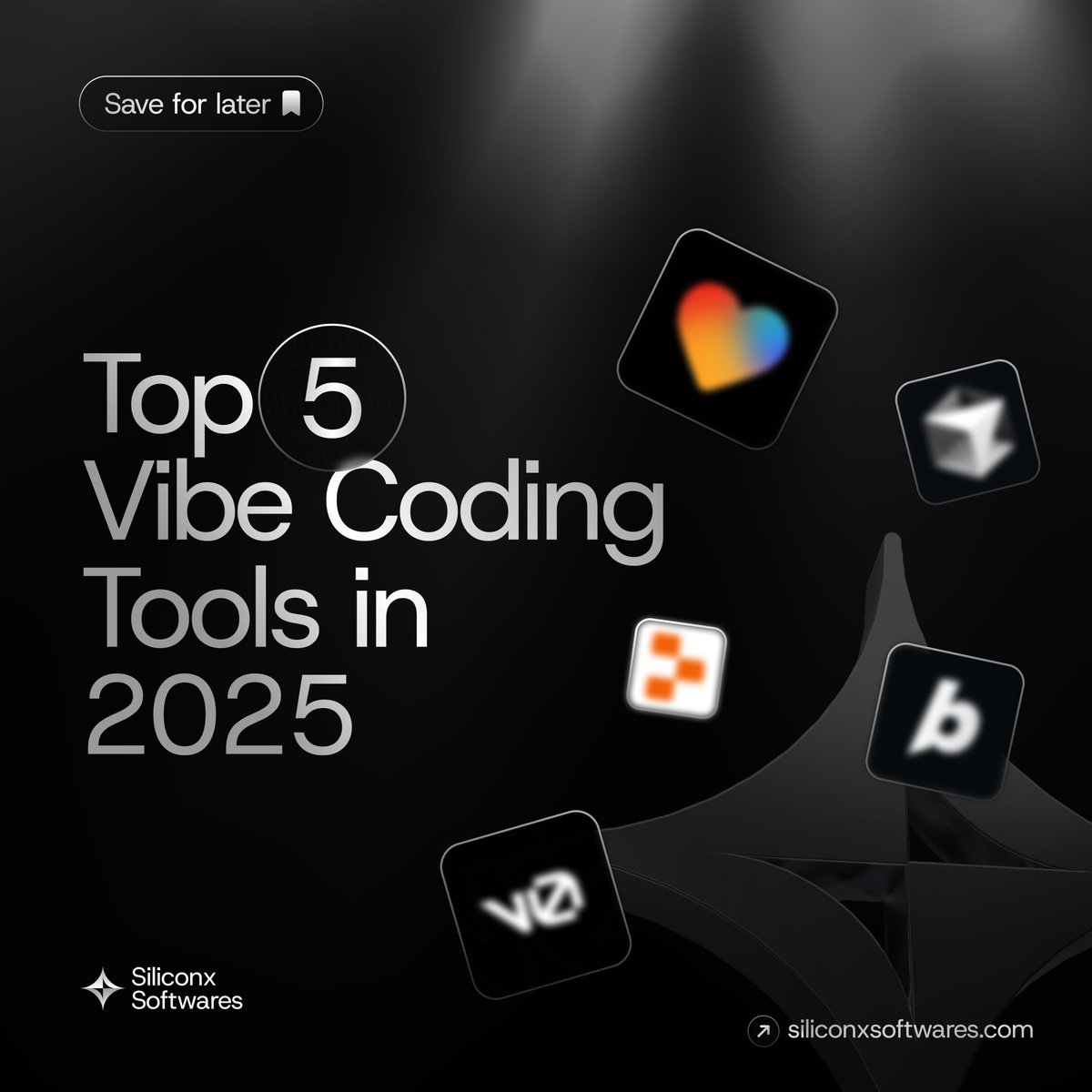
🚀 Top 5 VIBE Coding Tools in 2025- a thread
What is vibe coding?
It’s not just about writing lines of code anymore — it’s about the experience.
#siliconxsoftwares #vibecoding #coding2025 #top5devtools #CursorAI #loveableai #replitai #v0 #boltnew
5
3
60

7 Jan 2025
Back to the Code Cave in 2025 ;
Swapping PJs for Pixels,
Let's Get This Grind On! 🎉🖥️
#OfficeLife #Coding2025 #BackToTheGrind


5
193