
Many people have voiced their opinion on the $BE deal, including myself.
At $2.6B over 10 years, this contract will add roughly $1.04m per gross MW in OPEX, and at a PUE of 1.25, roughly $1.3m per MW IT load.
But since DataOne wasn't able to provide the Bergen solution, won't Nebius be able to get a much lower colocation rate at DataOne?
If colocation means renting a powered shell, but $NBIS brings their own power through the $BE deal, isn't DataOne just building a data center to rent at regular real estate rates to Nebius?
I understand that these partners won't disclose the details right now, and maybe they never will, but I believe this deserves scrutiny.
For Nebius investors, this could be a tailwind, if the company can tell the market that the additional $/MW from $BE, is effectively cut in half by a discount on the colo costs at DataOne.
I tried to make this research as obejctive as possible.
And besides a lack of transparancy, not much can be said about the profitability of this contract just yet.
If $NBIS pays for $BE and received no discount from DataOne, then the $/MW total lease expenses basically doubled.
If there was in fact a new colocation lease negotiated, it could look very different.
Being your own general contractor is ultimately the best way to limit third party risks.
That said, it looks like Nebius was still able to act as one, by bringing their own energy solution to the project.
The construction is not slowing down.
All eyes on 6/25
1
75

Autant l’annonce « pour jeune fille » paraît louche. Autant la « Colocation féminine » beaucoup moins

IP Security Forensics & Incident Management
🔹 Specialist – OSS Operations Support
🔹 Senior Manager – MTN Cloud & Colocation
🔹 Coordinator – Business Relationship Management
🔹 Manager – Agile Delivery
🔹 Manager – Cloud Support
🔹 Manager – Platform Management
📡 Netwo
1
26

Vertiv (VRT) ผู้ขาย “พลั่วและจอบ” ในยุค AI
หลายคนมอง AI ผ่านบริษัทอย่าง NVIDIA แต่ในความเป็นจริง ต่อให้มีชิปที่ทรงพลังที่สุด ก็ไม่สามารถทำงานได้หากไม่มีระบบไฟฟ้าและระบบระบายความร้อนรองรับ
นี่คือธุรกิจของ Vertiv บริษัทไม่ได้สร้าง AI แต่สร้าง “โครงสร้างพื้นฐาน” ที่ทำให้ AI ทำงานได้
โมเดลธุรกิจ
เมื่อบริษัทอย่าง Microsoft, Amazon, Meta, Google หรือ Oracle สร้าง Data Center ใหม่ พวกเขาต้องซื้อ
ระบบไฟฟ้าและ UPS
ระบบสำรองพลังงาน
Rack และตู้เซิร์ฟเวอร์
ระบบปรับอากาศและควบคุมอุณหภูมิ
Liquid Cooling สำหรับ AI Server
บริการติดตั้งและบำรุงรักษา
AI คือสมอง ส่วน Vertiv คือระบบหัวใจและปอดที่ทำให้สมองทำงานได้ ประมาณ 80% ของรายได้ Vertiv เชื่อมโยงกับตลาด Data Center โดยตรง และบริษัทกำลังขยายธุรกิจ Liquid Cooling ซึ่งเป็นตลาดที่เติบโตเร็วมากจากการมาของ AI Server รุ่นใหม่ๆ
⸻
ความได้เปรียบของ Vertiv
1. ได้ประโยชน์จาก AI โดยตรง
ยิ่ง AI โต ยิ่งต้องสร้าง Data Center มากขึ้น และ Data Center ที่ใช้ชิปประสิทธิภาพสูงอย่าง Blackwell หรือ Rubin ของ NVIDIA ต้องการระบบไฟและระบบระบายความร้อนที่ซับซ้อนกว่าเดิมมาก
2. เป็นผู้เล่นรายใหญ่ในตลาด Liquid Cooling
AI Server รุ่นใหม่มีความหนาแน่นของพลังงานสูงจนระบบลมแบบเดิมเริ่มไม่เพียงพอ Liquid Cooling จึงกลายเป็นเทคโนโลยีสำคัญของยุค AI และ Vertiv มีผลิตภัณฑ์ครบวงจรและเป็นหนึ่งในผู้นำของตลาดนี้
3. ลูกค้าเป็น Hyperscaler รายใหญ่ของโลก ลูกค้าของบริษัทอยู่ในกลุ่ม Microsoft, Amazon, Meta, Google, ผู้ให้บริการ Cloud และ Colocation รายใหญ่ การสร้าง Data Center ใช้เวลาหลายปี ทำให้รายได้มีความต่อเนื่องสูง
4. Ecosystem ครบวงจร
คู่แข่งหลายรายมีสินค้าเฉพาะทาง แต่ Vertiv มีทั้ง Power, Cooling, Rack, Modular Data Center, Service ทำให้ลูกค้าสามารถซื้อได้จากผู้ขายรายเดียว ลดความซับซ้อนในการออกแบบและติดตั้ง
5. ธุรกิจบริการสร้างรายได้ประจำ
หลังติดตั้งแล้ว ลูกค้าต้องมีการ ตรวจสอบระบบ ซ่อมบำรุง เปลี่ยนอุปกรณ์ Upgrade ระบบ ทำให้บริษัทมีรายได้ประจำ (Recurring Revenue)
⸻
จุดอ่อนและความเสี่ยง
1. พึ่งพาการลงทุน Data Center สูง หาก Microsoft, Amazon หรือ Meta ชะลอการลงทุน คำสั่งซื้อของ Vertiv อาจชะลอตัวทันที
2. คู่แข่งแข็งแกร่งมาก บริษัทต้องแข่งขันกับยักษ์ใหญ่อย่าง Schneider Electric, Eaton, ABB
ซึ่งต่างก็เร่งลงทุนในตลาด AI Infrastructure เช่นกัน
3. หุ้นมี Valuation สูง ตลาดให้ Premium สูงกับ Vertiv ดังนั้นแม้ธุรกิจยังดี แต่หากการเติบโตต่ำกว่าที่นักลงทุนคาด หุ้นสามารถปรับฐานแรงได้
4. ธุรกิจมีลักษณะเป็นวัฏจักร รายได้ขึ้นอยู่กับ Capex ของลูกค้า ถ้าเกิดภาวะเศรษฐกิจถดถอยหรือ AI Cycle ชะลอ การเติบโตอาจลดลงได้
⸻
โลกกำลังเข้าสู่ยุค AI Factory ทุกบริษัทมองเห็น NVIDIA เพราะเป็นผู้สร้าง “สมอง” แต่สิ่งที่ถูกมองข้ามคือ AI ต้องการไฟฟ้าและการระบายความร้อนมหาศาล และนั่นคือสิ่งที่ Vertiv ขาย
Vertiv ไม่ได้ขาย AI แต่ขายสิ่งที่ AI ขาดไม่ได้ และตราบใดที่โลกยังสร้าง Data Center เพิ่มขึ้น Vertiv ก็ยังมีโอกาสเติบโตไปพร้อมกับ AI Supercycle
ความเสี่ยงที่ใหญ่ที่สุดของบริษัทอาจไม่ใช่ธุรกิจ แต่เป็น “ความคาดหวังของตลาดที่สูงมาก” เพราะราคาหุ้นสะท้อนอนาคตที่สดใสไปแล้วส่วนหนึ่ง
4
7
398

As your network grows, your infrastructure should grow with it.
Data demands change fast. Fiber@Home Ltd. delivers the nationwide transmission, secure colocation, and scalable solutions your business needs to stay seamlessly connected.
#FiberAtHome #TechInfrastructure
2

La colocation on sent qu'ils vont nouer des liens forts
et surtout y a aussi du suspense avec des secrets sur chacun (Jeanne Iris et Théo) qui sont révélés au fur et à mesure
une écriture de fragments de vie qui me plaît
150

India's #DataCentre & #AI Infrastructure Boom 🚀
#ANANTRAJ CMP ₹535
✅ Direct Data Centre Play
✅ ₹20,000–25,000 Cr Expansion Plans ✅ Cloud & Colocation Business
✅ Biggest beneficiary of India's Data Centre growth..
Support & Resistance..
👎Down side expecting 450 and 420 level
👍Upside seeing 600 then 700 levels
If execution remains strong, this could become a multi-fold digital infrastructure company rather than a real-estate stock.

Tomorrow i will post some interesting stocks..
Its Related for #DataCenters...???
1
141

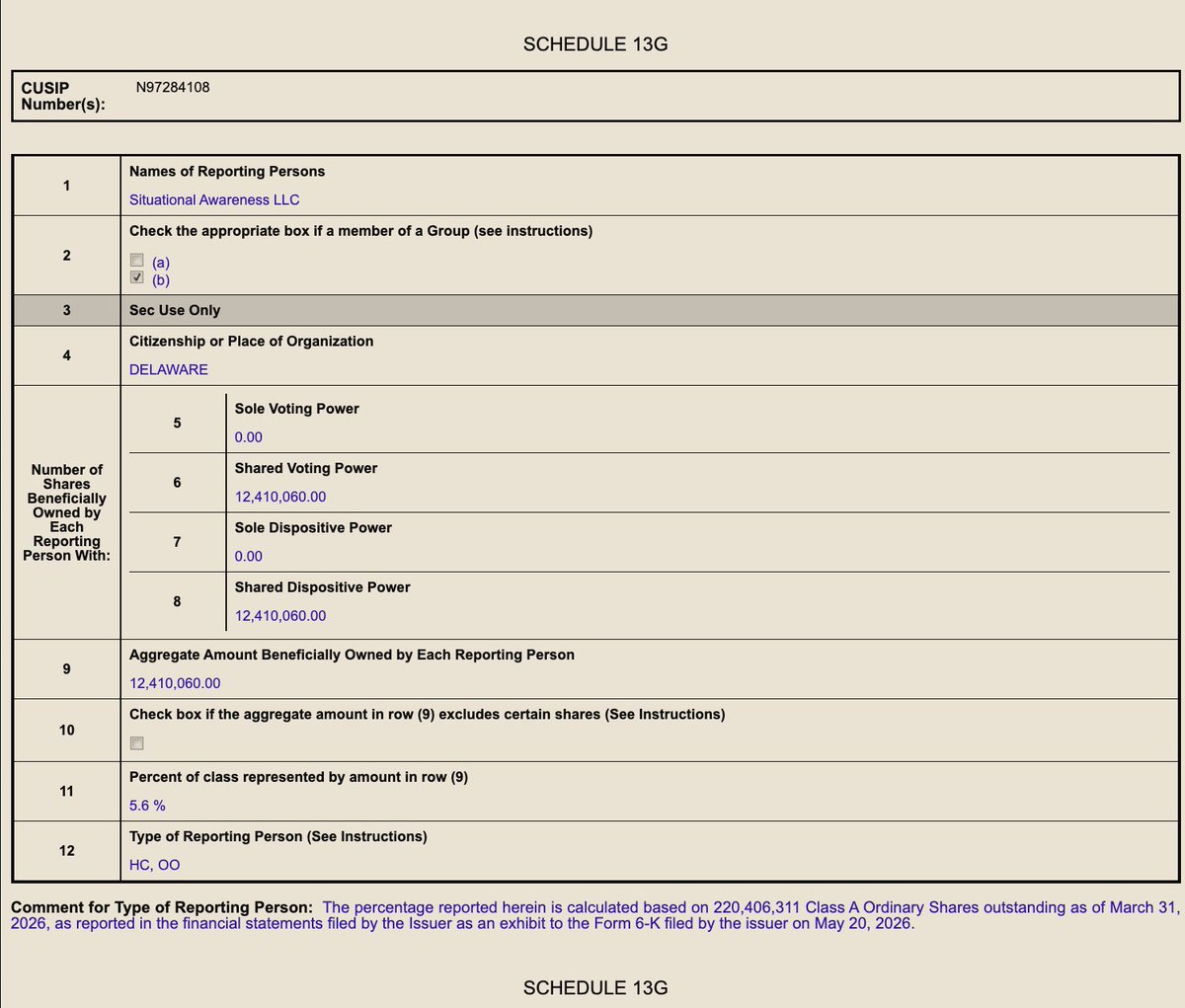
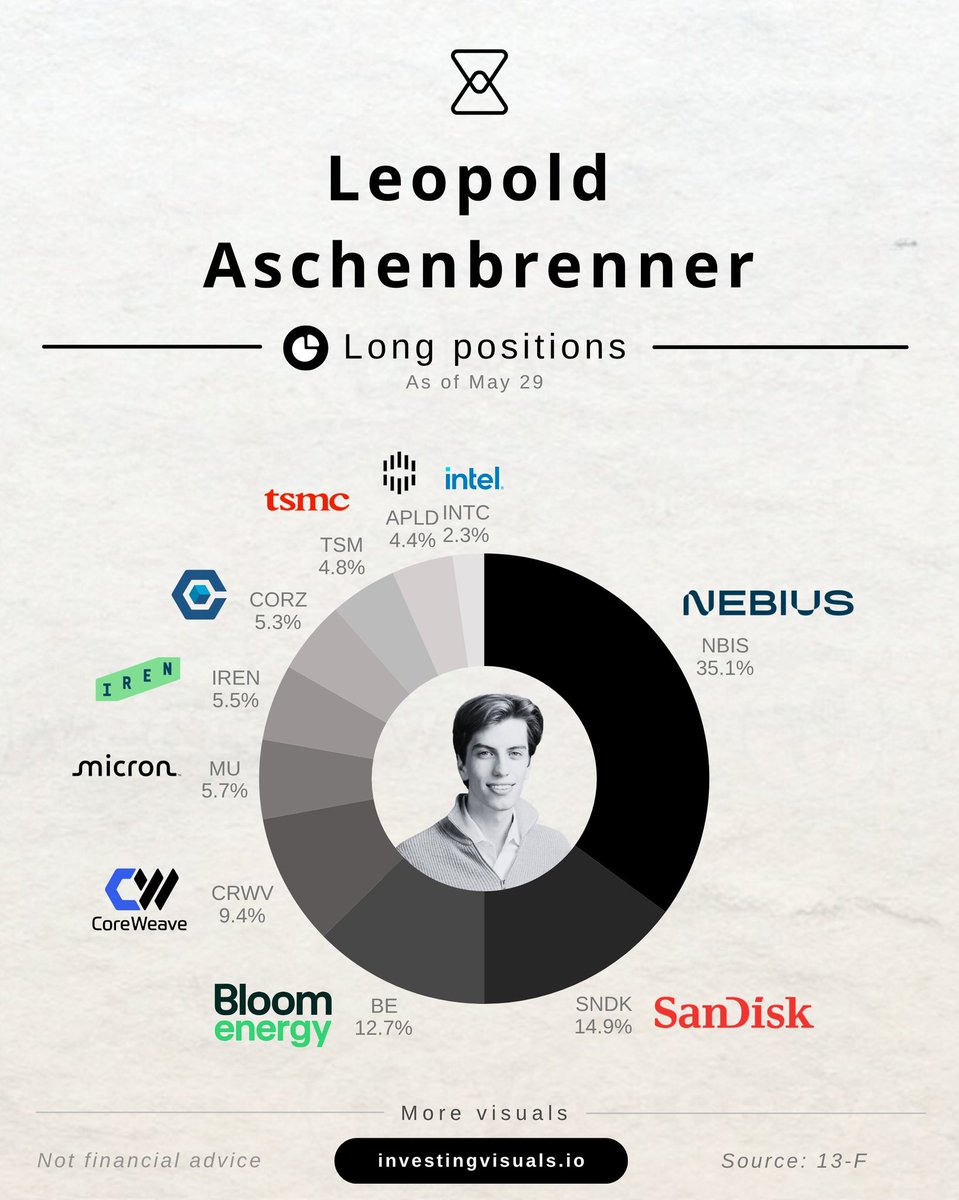
Leopold beli $NBIS di bulan Maret.
Nebius itu bukan chipmakers,dia masuk ke Data Center.
Masalahnya,data center itu spketrum-nya luas.
Ada colocation modela ala $DCII.
Ada Neo-Cloud atau gw lebih seneng nyebut GaaS model.
9 Sep 2025

Karena dia unik.
Unik secara perusahaan dan unik secara bussines model bahkan value capture.
Saya buka dikit.
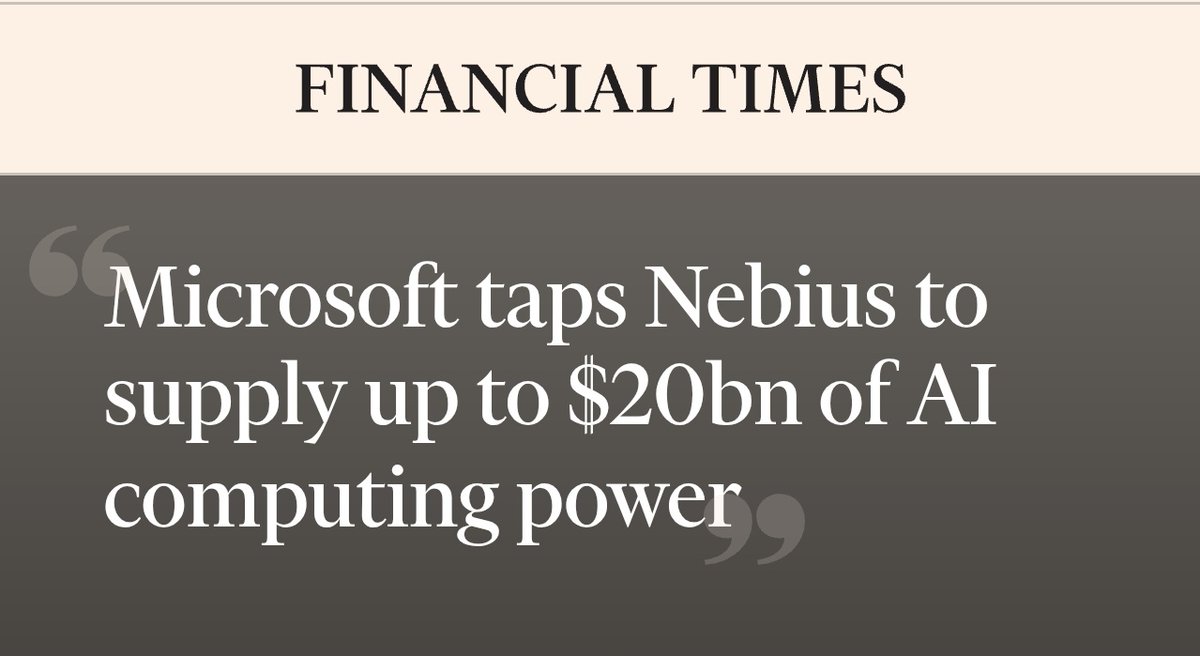
NBIS itu AI infrastructure as a service.
Bingung?
Wajar,karena di indonesia jarang yg model begini.
*saya bakal pake bahasa teknis banget*
Thread!
1
1
5
363

What I am validating:
Directional: Skip. Handled via passive SIPs.
Arbitrage: Out of scope. Requires HFT infra/colocation.
Non-Directional: The sweet spot. Specifically pure Volatility Trading—betting on market temperature and mean-reversion.
8

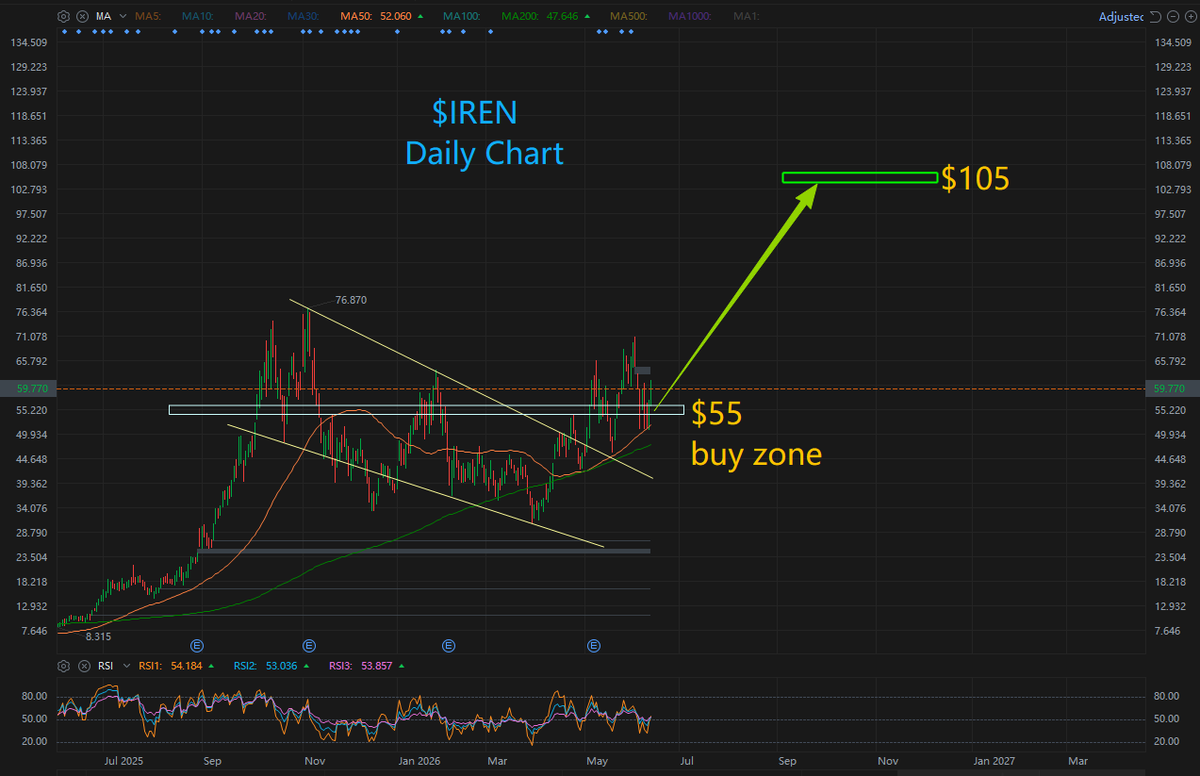
$IREN ---In early June, $IREN officially closed a $3.65 billion investment-grade GPU-specific financing facility. This funding will cover 96% of its $5.81 billion GPU capital expenditure plan, earmarked exclusively for purchasing NVIDIA's latest Blackwell Ultra GPUs. This means the hardware capital required to fulfill its massive AI cloud services contract with Microsoft is now fully secured, eliminating market concerns over a capital shortfall for capacity expansion.
Also in early June, $IREN announced a landmark transmission interconnection agreement, locking in a new 800 MW AI data center campus in Bundey, Australia. Combined with the 1.6 GW Oklahoma site acquired in February, its 490 MW European footprint and Texas native assets, IREN's global contracted power pipeline has doubled in just six months to a staggering 5.8 GW.
In May, $IREN completed full acquisitions of open source cloud infrastructure giant Mirantis (valued at ~$625 million) and AI software firm Awaken. This marks IREN's official transformation from a "power and colocation landlord" into a full-stack, hardware-software integrated AI cloud provider offering Kubernetes orchestration capabilities.
1. The Ultimate Hard Currency of the AI Era: Power Grid Contracts
IREN's core moat is the 5.8 GW of 100% renewable power interconnection rights it has aggressively accumulated over the past few years. In an era where data center build cycles take 3-5 years, whoever controls ready-to-use, large-scale grid capacity is the landlord tech giants have no choice but to partner with. Today's tech giants (Microsoft, Google, Meta) can afford all the GPUs they want — but power grids around the world simply do not have the spare capacity to power them.
2. Staggering Monetization Per Megawatt
Long-term upside: If its 5.8 GW (5,800 MW) power pipeline is gradually converted into operational data center capacity by 2028-2029, its theoretical annual recurring revenue (ARR) ceiling will reach the tens of billions of dollars range.Based on the May framework agreement IREN signed with NVIDIA, each megawatt of capacity will generate ~$11.33 million in annual revenue over five years under its AI cloud model.
3. Full Exit From Crypto Volatility, Complete Valuation Re-Rating
Previously, the market only valued IREN as a highly volatile crypto mining stock. But as management commits to reducing traditional Bitcoin mining revenue to near-zero by end of 2026 and pivoting fully to pure AI compute infrastructure, its valuation multiple has shifted directly from depressed mining sector P/E ratios to the 10x-15x P/S range typical of high-growth tech/compute software players.
1
7
751

SOMEONE HAS A FULL ENTERPRISE GRADE DATA CENTER HIDDEN BEHIND A BOOKSHELF IN THEIR LIVING ROOM AND IT'S THE MOST CYBERPUNK HOME SETUP I'VE EVER SEEN.
The first time you scroll through the photos you don't even register what you're looking at. Old leather hardcovers. A Snoopy plush. Programming textbooks from the 90s. The Complete Works of Shakespeare. Microsoft mugs from a previous decade. A cordless drill leaning against some battered paperbacks. Looks like every middle-aged tech guy's home library on Earth.
Then your eye drifts to the center of the wall and everything stops making sense.
Between the bookshelves, sliding open like a Bond villain's escape route, is a full-height server rack. Liebert UPS at the top with that iconic emergency display panel. Industrial PDUs distributing power. Cisco enterprise networking equipment with every port lit green. A pile of Dell PowerEdge servers stacked rack unit by rack unit. Lenovo storage arrays at the bottom. The kind of hardware you'd expect to find in a colocation facility in northern Virginia, sitting between Shadows of Belin and a Kama Sutra translation.
This is not a homelab. A homelab is a Synology NAS and a Raspberry Pi. This is a small business datacenter that has been deliberately camouflaged as a bookshelf.
The level of intentionality is what gets me. Whoever built this didn't just hide the rack behind some curtain. They built custom millwork around it. The bookshelves on either side were sized to match the rack's footprint. The shelf spacing was calibrated so the rack disappears into the bookcase line. From three feet back the only giveaway is a subtle vertical seam and the faint blue glow of the UPS display peeking out from between volumes.
Let's talk about what's actually in there.
Liebert UPS with battery backup means he can ride out a power outage cleanly. We're talking 20 to 30 minutes of full load runtime minimum, enough to keep services online or perform a graceful shutdown if the outage is going to be longer than that.
Enterprise switching at the top. Multiple uplinks. Fiber and copper. He's running serious internal networking, probably 10 gigabit at minimum, possibly 25 or 40 gig between core devices. This isn't a home router situation. This is the kind of switching that supports a real production environment.
The middle rack units look like Dell R-series servers. Probably R730s or R740s based on the chassis depth. Each one capable of running 24 to 48 cores, several hundred gigabytes of RAM, and a serious amount of internal storage. Stack of six or seven of them visible in the photos. That's somewhere between 200 and 400 cores of compute capacity, dual digit terabytes of RAM, sitting between Pearl programming books and a Snoopy plush.
The bottom of the rack is storage. Looks like Dell or HP storage shelves. Could be anywhere from 50TB to several hundred TB of usable capacity depending on the drive configuration.
A few realizations worth sitting with.
The electricity bill on this thing has to be brutal. A rack like this, fully loaded, pulls 4 to 8 kilowatts continuously. That's 100 to 200 dollars a month in power alone at US residential rates, possibly much more depending on the state. The cooling load is also enormous, which is why he probably has a dedicated AC unit running or vents the heat into an unused part of the house.
The noise control is the real engineering feat. Enterprise servers are loud. Like vacuum cleaner loud. Like cannot have a conversation in the room loud. Whoever built this either soundproofed the cavity behind the bookshelf, swapped the stock fans for quieter aftermarket ones, or has accepted a level of background hum that would make most people insane.
The use case is the most interesting unsolved question. Why does one person need this much compute at home?
Jun 10

SOMEONE JUST CHAINED FOUR MAC STUDIOS TOGETHER IN THEIR APARTMENT AND RAN A 670GB AI MODEL AT 29 TOKENS PER SECOND.
This is the kind of setup that should live in a data center. It's running next to a coffee mug.
Going to walk you through what just happened because this is genuinely unhinged.
The model is Kimi K2.5. 670 gigabytes. For scale, that's roughly the entire English Wikipedia plus every Marvel movie in 4K plus your last three years of iCloud, stuffed into a single file and loaded into RAM. Not streamed. Not paged from disk. Sitting in memory, ready to fire tokens at you on demand.
Three years ago this was science fiction unless you had an H100 cluster and Nvidia's personal phone number. The setup in this video pulled it off with four Mac Studios talking to each other over MLX.
The test was simple. Run the model on two nodes first. Then add two more. See if scaling actually works the way the theory says it should.
Two-node run came first. The cluster started swallowing the model into memory. 325GB on one machine. 330GB on the other. GPUs pinned at 100% within seconds. If you've ever pushed a Mac Studio to its limit, you know the fans go from "quiet office" to "small aircraft taking off" almost instantly. I'm picturing the room at this point sounding like a wind tunnel with a man inside it refusing to flinch.
Loading took forever. Long enough to make coffee, check Twitter, briefly reconsider your career.
Then the prompt fires. Output starts flowing. 23.4 tokens per second.
That's already faster than what most people get out of cloud APIs during peak hours. From two computers. In an apartment. With a power bill about to file for emancipation.
Then the cluster doubles. Four nodes. Same model. Memory load per machine drops to between 178 and 200GB each. Still cursed numbers, but no longer pushing every node to the brink. Time to first token improves immediately. The bottleneck was never compute. It was memory pressure.
Final result: almost 29 tokens per second.
That's a ~25% jump from just splitting the load across more machines. The math works. The hardware obeys. MLX does the job it was built for and barely breaks a sweat.
Now here's the part that hit me.
The gap between "frontier lab with a billion dollars in funding" and "guy with four computers and a YouTube channel" is collapsing faster than anyone planned for. Hardware caught up. Frameworks caught up. Quantization caught up. The only thing left is people figuring out what to actually do with this power once it lives on their desk instead of in someone else's cloud.
The benchmark is not the story.
The story is that a 670GB model the size of a small library is now something you can host between your monitor and your houseplant. The era of needing permission to run real intelligence locally is ending in real time, and most people on this app haven't clocked it yet.
106


11h
🚨 TradoxVPS is expanding.
We’re adding new VPS colocation options in Amsterdam and London for traders who need stable, low-latency infrastructure closer to their execution venues.
More regions. Better routing. Built for traders who can’t afford lag.
tradoxvps.com/amsterdam-vps
tradoxvps.com/london-vps
#TradingVPS #AlgoTrading #ForexTrading #FuturesTrading #PropTrading #LowLatency #VPS #TradoxVPS
14

0xZzz retweeted

Jun 12
Conseils pour lancer une colocation (en vrac comme d'hab') :
1. Une colocation rentable en 2026, c'est 3 chambres minimum (4 c'est l'idéal).
2. Privilégier un appartement ou une maison supérieur à 80m².
3. Si c'est un appartement, vérifiez que le règlement de copropriété n'interdit pas la colocation.
4. Deux salles de bains obligatoires à partir de 4 chambres.
5. Les chambres doivent faire au minimum 9m² avec une ouverture sur l'extérieur.
6. Faire un bail commun pour les colocataires - difficilement opposable juridiquement.
7. L'aménagement qualitatif et les services inclus justifient des loyers premium.
8. Prévoir un espace de rangement commun (cave, placard dédié). Source fréquente de conflits si absent.
9. Groupe WhatsApp obligatoire avec les locataires (réduit les tensions et accélère les interventions).
10. Trois types de cautions : Garant physique, Visale (gratuit), Garantme (payant).
11. Le 100% d'occupation est théorique, prévoir de la vacance locative même en zone tendue.
12. Ne jamais sacrifier le salon pour créer une chambre supplémentaire.
13. Tarification : Loyer de marché nu 8% si meublé 5% si charges incluses (wifi, énergie) puis répartition au prorata de la surface occupée.
14. Règlement interne obligatoire : Planning de ménage, règles d'invités, silences horaires...
15. Souscrire soi-même l'assurance habitation colocation et le refacturer, ça évite les trous de couverture lors du turn over.
16. On peut sous traiter la gestion d'une colocation à une agence - Elle prendra entre 5 et 10% TTC des loyers perçus.
Space immobilier prévu la semaine prochaine.
8
8
72
15,348

The AM Brief, Saturday June 13, 2026 Part 3
Hello,
It’s noon in Tampa and here is a recap of events that caught my eye. Part 3
Amazon disclosed that its data centers used 2.5 billion gallons of water globally in 2025, marking its first such public accounting. The company reports a water efficiency rate of 0.12 liters/kWh, claiming it is seven times more efficient than the industry average and a 2% year-over-year reduction in owned-site usage. While Amazon states it is 75% toward its 2030 "water positive" goal, the figures exclude colocation sites and electricity generation, complicating independent impact assessments. These figures omit water usage from colocation (partner) sites and water consumed during electricity generation, which limits the full picture of the company's total environmental footprint.
Amazon executives are exploring a potential revival of the reality competition series The Apprentice for Prime Video. Preliminary internal discussions have identified Donald Trump Jr. as a possible host for the reboot, which would leverage the franchise Amazon acquired via its MGM purchase. While the original series was instrumental in launching the President’s national profile and returned to streaming in 2025, Amazon clarifies the project is not yet in active development. The move aligns with Amazon’s recent efforts to court a broader demographic, following its 2025 re-release of the original seven seasons. This project represents a key attempt to monetize the $8.5 billion MGM library acquisition through legacy intellectual property. Although Donald Trump Jr. is the primary name linked to the role, sources indicate he has not been formally approached as of June 2026.
Amazon, Alphabet, Microsoft, Meta, and Tesla are set to spend up to $750 billion this year on AI infrastructure, including chips and data centers, more than doubling 2025 levels. While the scale reflects a massive bet on agentic systems and hardware, Wall Street remains divided on the timeline for ROI. The financial strain is already manifesting in corporate restructuring, notably with Meta’s planned 10% workforce reduction aimed at offsetting these heavy capital expenditures. The $750 billion figure represents one of the largest shifts in capital allocation in the history of the technology sector. The Meta reduction highlights a growing trend of "re skilling" or downsizing traditional roles to fund AI development. This spending level correlates with a massive spike in demand for nuclear and alternative energy to power new data center clusters.
Sources : CNBC, Bloomberg, Opening Bell, Epoch, Yardeni, Forbes, Rundown AI, Mario Nawfal, X
Thank you for reading
Live your best life,
AL Maulini
1
56
OMGdomains.com retweeted

Yeah, mostly future guidance.
2027 Management target: 90 MW colocation 10-12 MW GPU ~$300M revenue run rate.
2028 Management target: 140 MW colocation 30 MW GPU ~$450-500M revenue run rate.
It's coming because they just booked $35 million Vera Rubin platform for Jan.
1
68

Traduction :
Nous leur avons proposé une colocation, ils vivraient dans 97% du garage et utiliseraient les chiottes au fond du jardin.
C'était honnête et ils ont refusé.
2
147