
Domains OMGdomains.com SupportShoes.com BTCpricing.com Dilutive.com IQchecker.com AIbodyScan.com BuyStevia.com
Joined July 2014
- Tweets 40,952
- Following 3,709
- Followers 1,045
- Likes 18,294
66 Photos and videos










OMGdomains.com retweeted

Ceo of $dgxx just validated my research via @chinoalemano repost btw
Truly incredible stuff. Pays to dig deep.

Jun 13

This is a consolidation of my thoughts on $dgxx/$usdc/Yutanix/Zutacore.
There is alpha in this. Enjoy the read:
Nobody is talking about the real reason $DGXX is about to take over the AI infrastructure market. Let me explain.
Everything $dgxx is doing right now is positioning them to completely take over the ai infrastructure market.
$DGXX owns 55% of US Data Centers Inc. (USDC). USDC is currently private. USDC's entire business is manufacturing and selling the ARMS 200 — a modular, Tier 3-certified AI data center system that can turn any powered site into a fully operational AI compute facility in a fraction of the time traditional construction takes.
Companies like $IREN have spent years and enormous capital securing gigawatts of powered land. That's the hard part, or so everyone thought. But raw power means nothing if your cooling and compute density can't keep up with modern AI workloads. Air cooling and glycol loops are hitting their limits fast. These companies are sitting on some of the most valuable land in infrastructure and underutilizing it because they chose the wrong stack.
USDC's ARMS 200 is the answer they didn't build themselves. Drop modular units onto existing powered land, skip years of conventional construction, and immediately unlock high-density AI compute. The host site doesn't have to rebuild from scratch. They just have to let USDC in. Their stranded gigawatts become productive. USDC gets a customer. Everyone wins, but USDC wins most, because they own the system that makes it all work.
The ones who dont make this switch either through USDC or on their own will be left with way bigger electic bills, higher maintenance costs, and difficulty expanding.
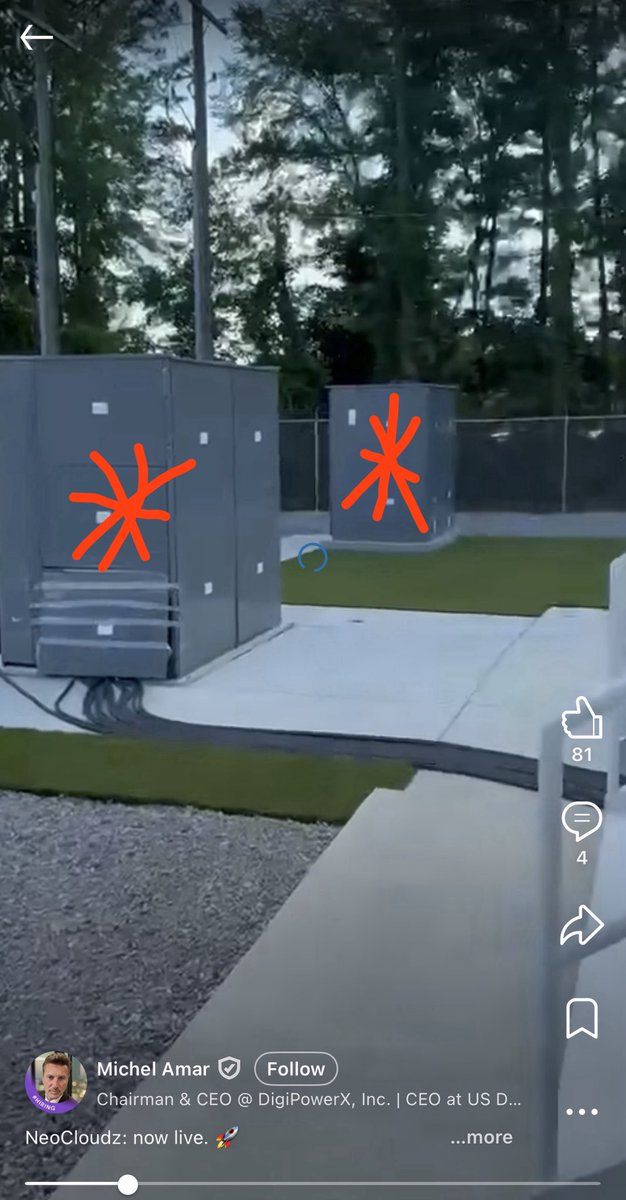
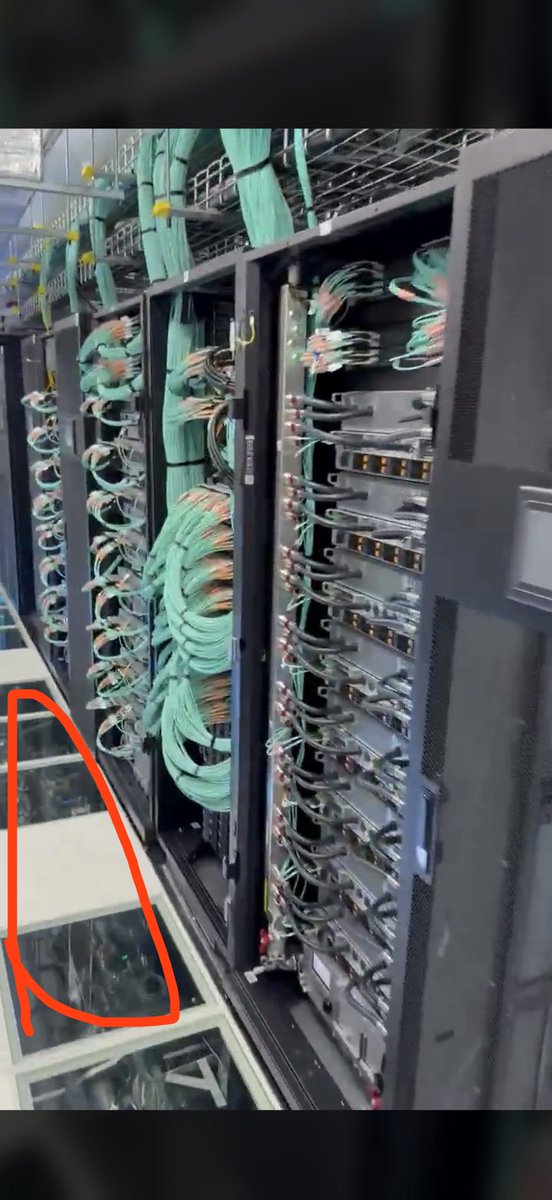
The ARMS 200 uses a dielectric liquid cooling (I will talk further about the liquid a couple paragraphs down, this is signalled and not publicly confirmed. This is alpha.) built around Supermicro hardware and NVIDIA Blackwell-class GPUs, not to mention the $35 million $dgxx just spent on Vera Rubins. Wonder where thats going!
Each pod delivers 1 MW of compute and supports up to 256 B200/B300 GPUs. DGXX plans to scale to 40 MW at its Alabama site alone, roughly 10,240 GPUs. The modularity allows for easy scaling.
Now here's where Yutanix fits. Yutanix is an AI infrastructure marketplace that connects AI teams with GPU capacity, deployment planning, and data center sourcing. As USDC starts selling ARMS units to powered sites at scale, Yutanix is positioned to be the demand-side engine that feeds it, matching teams who need compute with the exact kind of rapid-deployment, cluster-ready infrastructure ARMS provides. USDC supplies the modules. Yutanix supplies the customers. That's a clean loop.
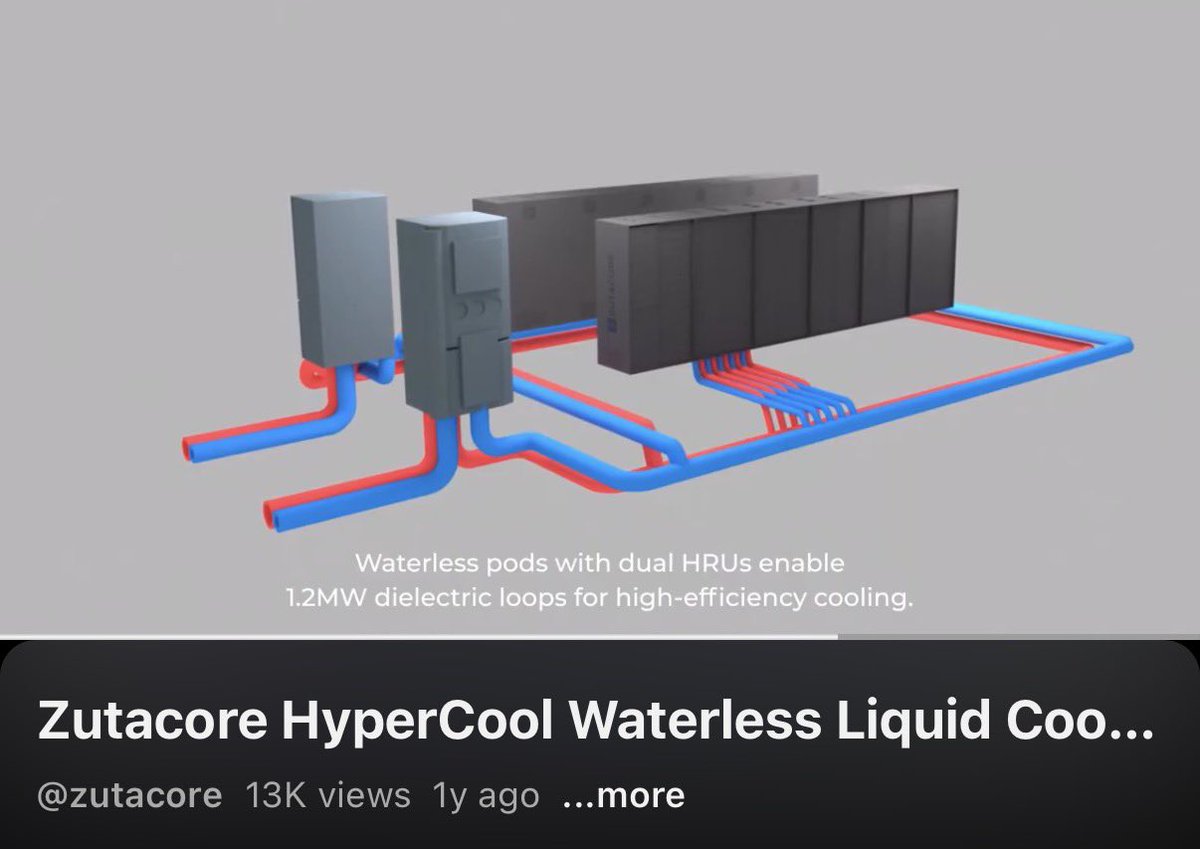
Now here's the piece worth watching VERY closely. ZutaCore dielectric HyperCool technology is waterless, direct-to-chip dielectric cooling.
Zero water, handles extreme power densities that glycol and air cooling can't touch, closed loop, ZERO leak risk
The main publicity backlash against AI data centers right now is noise, power, and water usage. Communities where USDC decides to set up modules will eat this up.
ZERO water usage if utilizing Zutacore Hypercool.
The heat can be REUSED for other purposes easily.
The Zutacore system requires a flow rate of just 0.3L/min for every 1000W. For example, cooling Nvidia’s B200 (1200W) would need a flow rate of 0.36L/min with HyperCool, compared to 1.8L/min for single-phase direct-to-chip water/glycol cooling.
Thats 5 to 6x lower flow rate. 50% less energy usage on cooling.
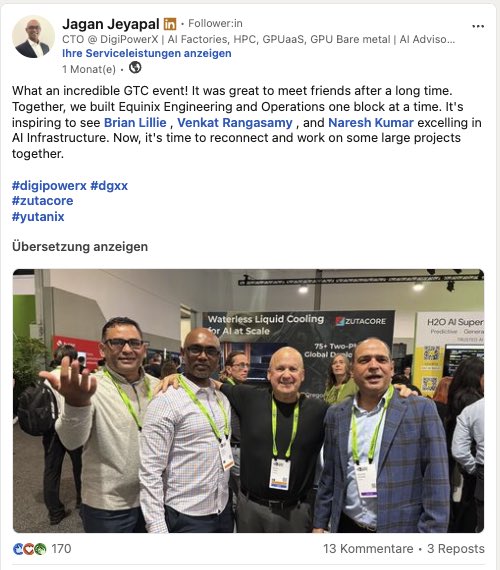
No official DGXX/ZutaCore partnership has been announced, but Jagan Jeyapal, CTO of DigiPowerX, was photographed at ZutaCore's booth at GTC and tagged #digipowerx #dgxx #zutacore and #yutanix all in the same LinkedIn post, mentioning plans to work on "large projects together." That's not nothing.
If a formal partnership follows, it becomes very hard for any competitor to replicate without tearing their building apart and starting over.
4
3
35
4,098
OMGdomains.com retweeted
$DGXX isn't helping the laggers.
DGXX is positioning to be the company the laggers buy from. That's not negative. That's a moat.
First, "liquid cooling isn't new". Half right.
As a general concept it's been around for years.
But there are three very different tiers, and lumping them together misses the point.
Tier 1 is air cooling, the old standard that completely breaks down at modern GPU densities.
Tier 2 is single-phase water/glycol direct-to-chip, which is what CoreWeave and IREN use today. It works, but it still uses water, demands high flow rates, and carries leak risk.
Tier 3 is two-phase waterless dielectric (ZutaCore HyperCool), where a dielectric fluid boils and condenses in a sealed closed loop.
Zero water, 5 to 6x lower flow, zero leak risk.
When people say "liquid cooling" they mean tier 2.
What almost nobody has deployed at scale is tier 3.
That gap is exactly where the differentiation lives.
Second, and this is the bigger one: "DGXX is spending money helping the laggers develop this".
This gets the direction backwards.
DGXX is not financing anyone's cooling R&D.
ZutaCore already built HyperCool.
They're an independent company with their own patents and IP. If a partnership happens, DGXX would be the integrator and customer, not the sponsor.
Here's the part that flips the premise entirely.
Through USDC and ARMS 200, DGXX is building a modular Tier-III system that other operators (the ones sitting on stranded gigawatts but lacking a modern stack) would have to buy.
Companies like IREN spent years securing powered land, but raw power means nothing if your cooling can't handle modern density.
ARMS300 is the answer they didn't build themselves.
So DGXX isn't helping the laggers.
DGXX is positioning to be the company the laggers buy from. That's not negative. That's a moat.
One honest caveat: the DGXX/ZutaCore partnership isn't officially announced yet, just signalled via the CTO's LinkedIn post. Treat it as a strong signal, not confirmed fact. But the broader thesis holds either way. They're building the full stack to sell to a market that's desperate for exactly that.
1
1
3
462
OMGdomains.com retweeted

Why would Anthropic, a company that just got caught nerfing its own models and surveilling users simultaneously push for a government agency to regulate AI? (Save this)
@DavidSacks and @chamath have the same answer, and it has nothing to do with safety.
On the exact same day that the Fable 5 backlash was playing out publicly, Dario Amodei published a sweeping policy essay calling for an FAA-style regulatory agency to approve all frontier AI models before release, with government authority to block deployment if an independent auditor deems the model too risky.
The proposal uses the language of safety, cybersecurity, bioweapons, loss of control and the timing was not a coincidence.
The mechanics of what Amodei is proposing reveal the actual target.
An FAA for AI would require every model to pass a pre-release compliance audit before it can be deployed publicly.
Closed models from well-funded labs like Anthropic, OpenAI, and Google can afford compliance teams, legal frameworks, audit pipelines, and the months of runway required to navigate a government approval process.
Open source models cannot.
An open source model, by definition, is already out in the world the moment it is released, it cannot be recalled, audited in advance, or forced through a centralized approval gate.
The regulation would not slow Anthropic down.
It would make open source legally impossible to deploy, effectively eliminating the only class of AI that users can run locally, inspect fully and operate without a third-party vendor deciding what they are allowed to ask.
Sacks called it precisely, it is a preemptive strike against local inference the practice of running a model on your own machine, where no one can profile you, degrade your responses, or cut off your access.
The data on compute concentration makes this even more alarming.
Chamath revealed on the podcast that even today, with open source models technically available, the overwhelming majority of inference compute still flows to the big closed labs, open source runs on a minuscule fraction of the total megawatts in operation.
The market already concentrates power at the top, and a compliance based regulatory framework would institutionalize that concentration permanently.
31
69
367
31,141
OMGdomains.com retweeted

Random Sunday Thoughts #217
1. Over many years I have invested in and advised on some of the most valuable domain names. These assets fall into four distinct buckets; Category domains that are also brands, such as Football .com, Chocolate .com, Chat .com; Exact match domains where the value is purely as a brand, i.e. Monarch .com, Runway .com; 2-3 letter domains that are also category defining , HR .com, ID .com, and those that are purely brands i.e. RL .com, TPT .com. Of these, I would argue that no domain asset is more valuable than the industry defining term. I founded CreditCards. com, and that name alone allowed us to compete alongside massive, established leaders and build a profitable, trusted, and successful business. The category domain is the category. There is no Plan B. There is always someone out there who will ultimately make the decision that acquiring the category defining .com sets their company up to be a market leader. That conviction is what drives the ceiling on these domains higher than any other asset in this class, because there is only one, and there is no alternative. That said, selling a category domain requires something specific: a buyer who unequivocally understands why they want it and exactly what they are going to do with it. This is true whether the buyer is a Fortune 500 management team or a first time entrepreneur. It is why, with generic category domain assets, having an internal champion at the ultimate buyer is essential. I have seen this play out in so many of our transactions; Home .com (the full story is here: lnkd.in/gP8t_Y4u), IRA .com, and Chat .com, to name just a few. It is even more valuable when the category domain is the 2 letters, like HR or ID. With an exact match brand domain, the path to a deal is one of less resistance. The company is already called Monarch but started on MonarchMoney .com. These companies are looking to upgrade their brand, their trust, and their email security to the exact match .com. The motivation is intuitive, the path is clear, and the value immesurable, but the ceiling is lower than it is with a true category domain, because there is usually another option.
2. This was a great week as I, with ATM Holdings, and Hilco Digital, oversaw major transactions for Mom .com and TPT .com, both win-win deals for the buyers and sellers. They each required a ton of patience and perseverance to get them over the finish line. As I say all the time, it is not a matter of if but when with the most valuable domain assets, and patience the art of negotiation is key.
3. My monthly SubStack domain briefing is growing. You can see the June edition here lnkd.in/gkNJZFW3
4. I have never been a soccer player or fan. But I am loving the World Cup. The crowds, the atmosphere, the amazing Scotland fans in Boston, and the perfect game played by the USA in its opening match. Congrats to the Knicks and their real fans. Clutch team for sure.
Until Next Week
#domains #worldcup
2
3
17
585

Bittensor $TAO pumps hard after frightening Anthropic news...
Following the US Govt's orders against Anthropic, @opentensor's native token has absolutely charged.
At time of writing, $TAO is up 25% on the week and more than 13% on the day.
Is now the time to be bullish on decentralised AI...?
13
39
242
14,304
OMGdomains.com retweeted

New to $TAO? Start here.
Bittensor explained by co-founder Const himself. 👇
Jun 7

NEW 🚨
Watch Const's full Q&A conversation with the Cointelegraph team at Proof of Talk.
Const on how Bittensor competes with OpenAI: "I think we organize talent better than them, and I think we'll eventually train better models than them."
📽️ Credit: @Cointelegraph
8
45
1,861
OMGdomains.com retweeted

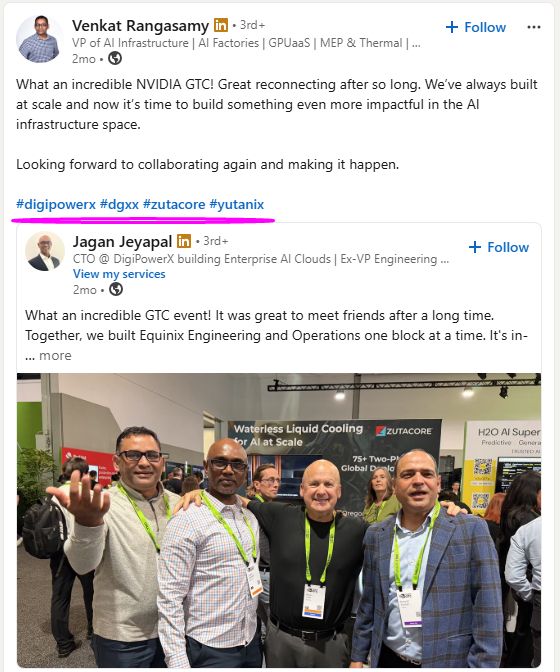
Did a little digging to figure out what that executive post was all about, and the connection is actually pretty simple. It takes three pieces to build these new AI data centers, and these companies each have one:
$DGXX has the raw power and the land.
ZutaCore has the special cooling tech to keep the computer chips from overheating.
Yutanix is the marketplace that actually finds the tech companies to rent the space.
They all need each other to work. Seeing the execs tag all three together shows they are building a real team effort here.
Will we get an official PR or news release on this soon? Usually, these things are hammered out behind the scenes first, but if it's a major deal, they have to disclose it eventually. Keeping my eyes peeled. 👀

2
2
31
3,176
OMGdomains.com retweeted
I am analyzing $DGXX performance against tough questions they were asked at the Columbia town hall this past January.
(Questions answered on the Columbiana data center)
Hopefully we will be able to use this to judge their future performance in other public settings.
💧Water usage concerns are COMPLETELY resolved with Zutacore Hypercool.
⚡Electricity concerns are mostly resolved, although an increase in electric rates is probably inevitable. DGXX is going to be more electrically efficient than other AI infra at this stage though, so that is a win.
🔊Noise concerns are completely resolved, except for future expansion. DGXX can prevent further complaints in the future by not conducting construction at night, fairly easy.
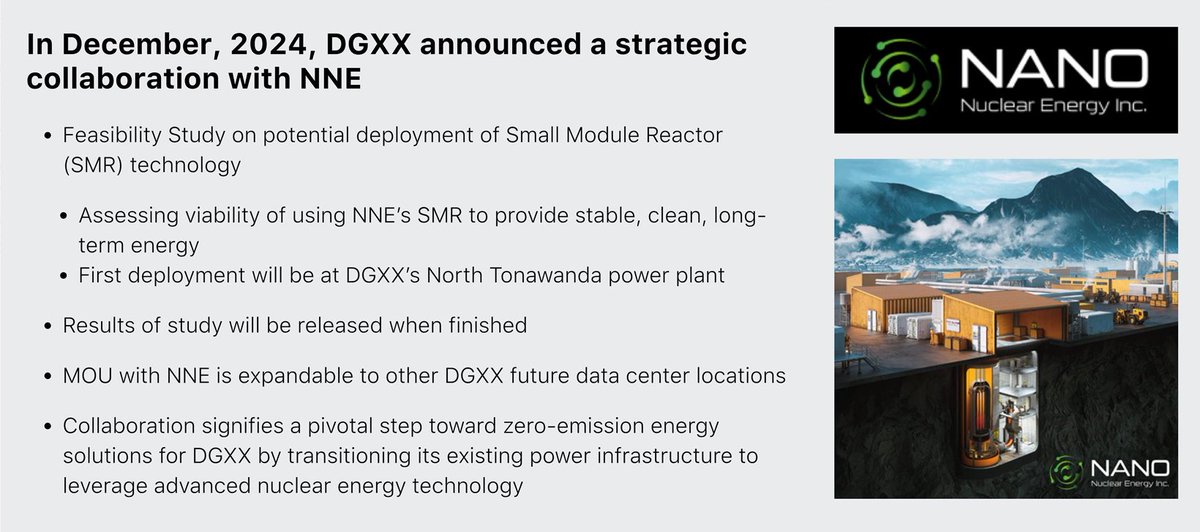
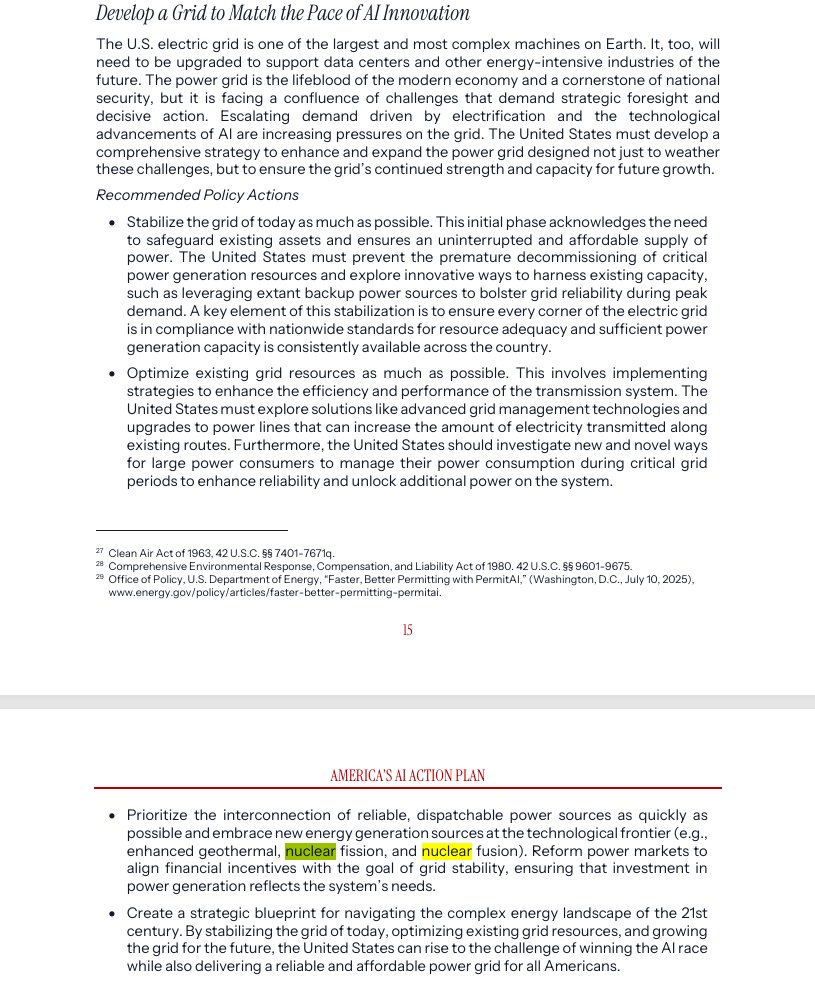
💨Air quality concerns AT COLUMBIANA have yet to be addressed. HOWEVER, they are interested in deploying SMRs (Small Module Nuclear Reactors) at one, if not ALL of their sites, which would resolve this entirely.
💧Water pollution concerns are resolved, as ARMS sites are ZERO WATER.
🧪Chemical concerns are significantly reduced, as Zutacore Hypercool is easily contained, low maintenance, and leaks can be easily managed.
🔥Fire risk in a tier 3 data center is LOW, as they must have built-in fire suppression systems to qualify as Tier 3. This of course has not been reported on much with DGXX.
🍃DGXX environmental impact is one of the best things about the company. These concerns are squashed. Zero water, high electrical efficiency, Yutanix supporting sustainable practices, nobody is doing it better than DGXX at this point.
🏙️ Quality of life impacts are mostly localized and manageable. Residential noise, traffic, and infrastructure load are contained, future construction projects are going to be the only noise and QoL concern at this point.
🧾 ❗❗❗Transparency & governance concerns are NOT structurally resolved. Issues like public notification, decision visibility, and stakeholder inclusion remain procedural risks rather than technical ones, and depend heavily on governance behavior rather than infrastructure design.
⚖️ ❗❗❗Ethics, political influence, and process integrity concerns remain unresolved and independent of technical outcomes. These include perceived influence, confidentiality practices, and decision-making transparency, none of which are automatically improved by better infrastructure design. THIS IS AN IMPORTANT ONE TO MONITOR GOING FORWARD, however they are still beating IREN at this lmao
💰 Taxation & public benefit balance is mixed but trending neutral-to-positive. Potential abatements and subsidies are offset by questions around fair tax contribution and whether community benefits scale proportionally with private profit capture. The tax abatement did get denied, so DGXX is still benefitting the community here by paying their share at Columbiana.
📈 Economic development organizations and recruitment roles are generally net positive from a local growth standpoint. 58 INC simply helped them move in. They support investment and job creation narratives, though confidentiality agreements and selection processes can limit perceived openness.
🏗️ Land use & zoning concerns are mostly resolved at approval stage, but long-term constraint remains. Appropriateness of location and zoning alignment are typically satisfied, while the ability for communities to later reverse or halt expansion is limited.
🚀 Growth & expansion impacts are the key long-term variable. Future facility scaling increases water, power, and infrastructure demand proportionally, meaning sustainability is NOT static, it is contingent on how aggressively expansion proceeds. Again, they are still much better than other companies at sustainability at this point.
💼 Jobs & economic claims are directionally positive. DGXX has stated they intend to host local training centers near their data centers. Jobs materializing, job quality vs environmental tradeoffs, and net local economic value all depend on whether projected hiring and investment actually match build-out reality.

4
8
36
2,487


OMGdomains.com retweeted

Trump can’t control bittensor:native. No one could.
Jun 13

We are not building decentralised AI because it sounds better.
We are building it because the off switch cannot belong to one hand.
If AI is going to run the economy, you cannot have it gated behind one API, one vendor, one jurisdiction, or one policy mood.
Viva la bittensor:native
1
11
56
1,504

Bittensor TAO Price Surges After U.S. Government Weaponizes Centralized AI coindoo.com/bittensor-tao-su…
21

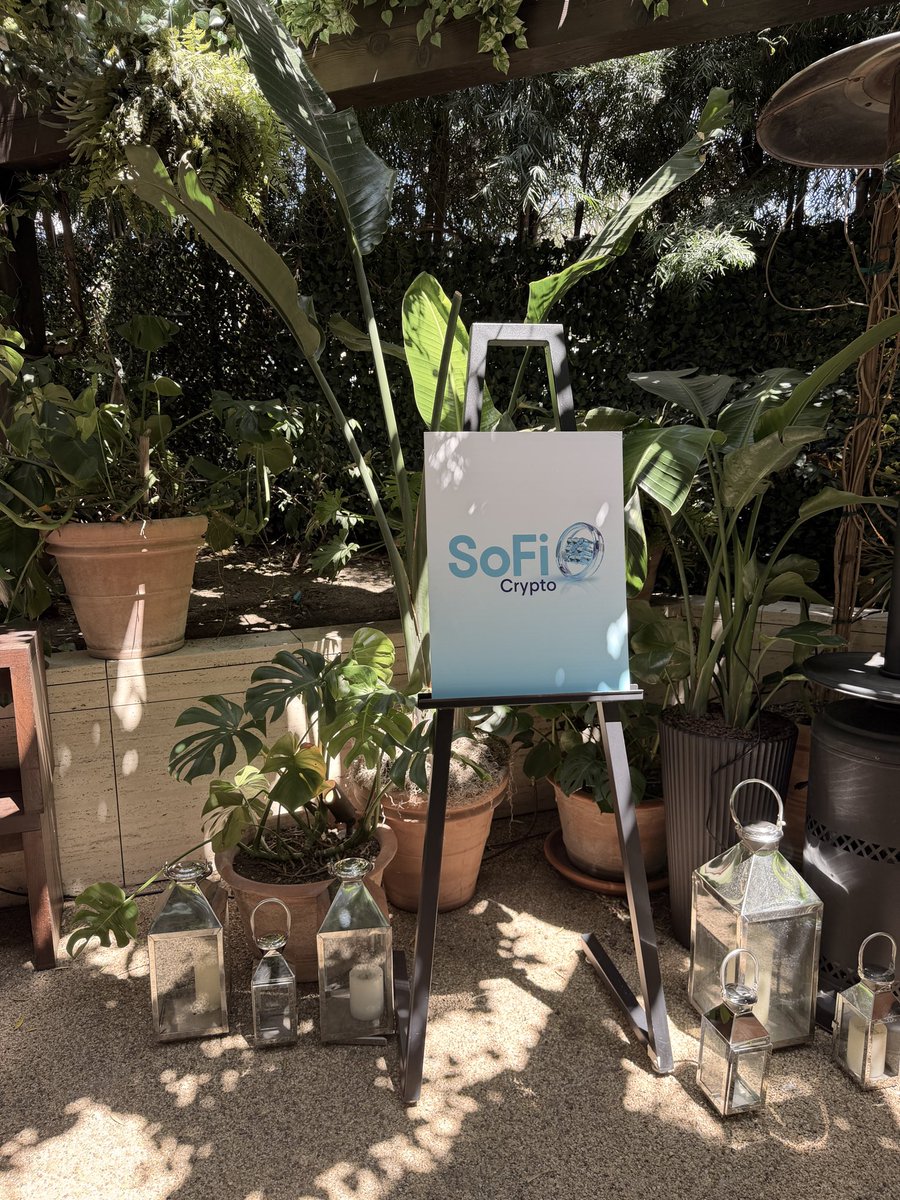
Crypto adoption starts with education.
As @FIFAWorldCup kicked off in Los Angeles this week, we brought together journalists and industry voices to discuss the future of digital assets, from Bitcoin and stablecoins to payments and financial literacy.
As crypto continues to evolve, we’re focused on helping more people access and understand the opportunities in digital assets.
Learn more: SoFi.com/crypto


2
13
180
7,463
OMGdomains.com retweeted

Jun 13
Catch me if you can Surfer!
2
26
229
14,042

There has never been a clearer moment that Bittensor is competing directly with centralized AI.
Every time a $TAO subnet beats a frontier model on a specific task, the thesis gets stronger.
That's why I've never understood the urge to tear down other subnets.
We're not competing with each other.
We're competing with OpenAI, Anthropic, Google and every other centralized AI giant.
The more subnets succeed, the stronger the entire ecosystem becomes.
Let's act like it.
4
20
149
4,264
OMGdomains.com retweeted

Jun 13
While $CRWV's data centers drink millions of gallons of water...
$DGXX is building something different.
ZERO water.
Not a metaphor.
Literally zero.
Here's the story nobody's connecting the dots on:
A few months ago, DGXX made two strategical hires:
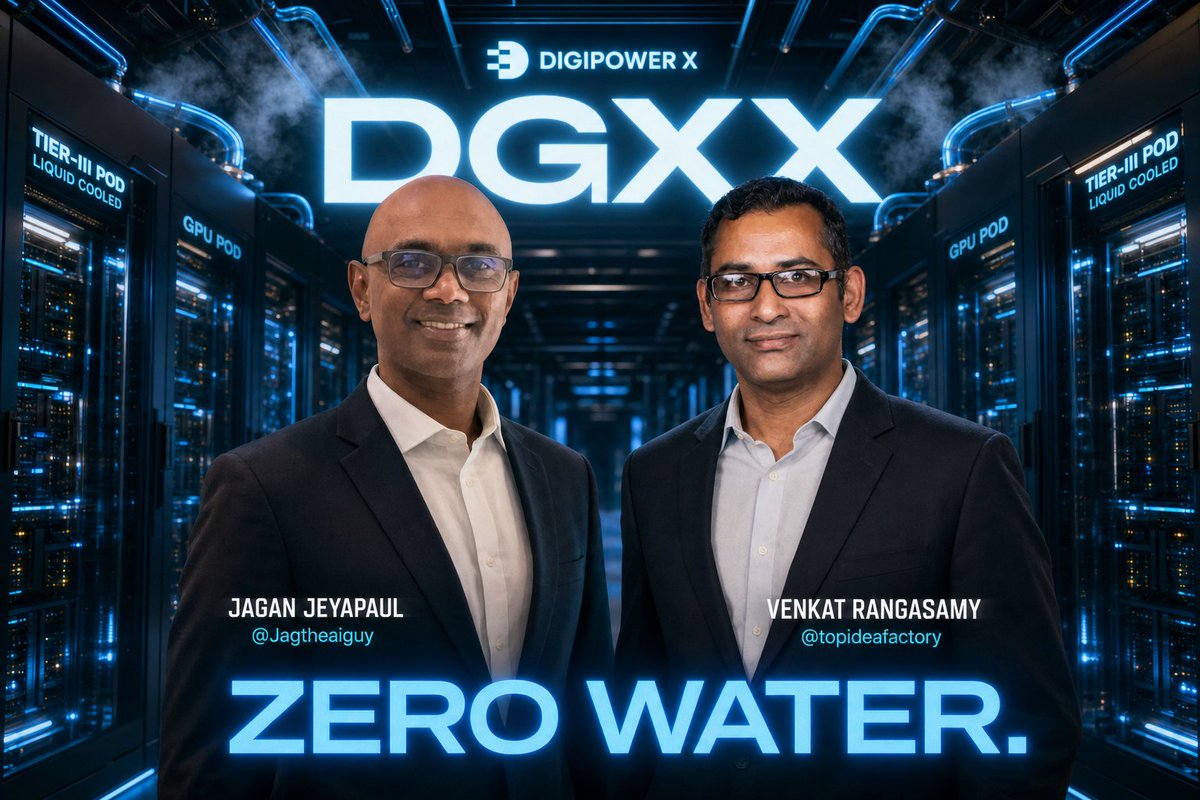
➟ Jagan Jeyapaul. CTO.
➟ Venkat Rangasamy. Engineering.
Most people saw the announcement, scrolled past it, moved on.
Big mistake.
Because what Jagan and Venkat brought with them wasn't just experience.
It was relationships.
Specifically: deep contacts inside two companies most retail investors have never heard of.
Yutanix and ZutaCore.
And once you understand what those two companies do, the entire DGXX thesis clicks into place. 👇
🧊 THE COOLING PROBLEM NOBODY TALKS ABOUT
AI data centers have a dirty secret.
They drink water.
A LOT of water.
A single hyperscaler campus can consume millions of gallons per year for cooling.
CoreWeave, Nebius, IREN, all of them rely on air cooling, glycol loops, or water-based systems.
That's why every new AI data center announcement triggers community backlash.
Noise.
Power.
Water.
Especially water.
Rural communities don't want their aquifers drained so Anthropic can train a model.
🔬 ENTER ZUTACORE
ZutaCore built something different.
HyperCool.
A waterless, two-phase, direct-to-chip dielectric cooling system.
Translation in plain English:
➟ A dielectric liquid (not water) sits directly on the chip.
➟ It boils at low temperature (18-50°C) absorbing heat.
➟ The vapor rises, condenses, returns to the chip.
➟ Closed loop. Sealed. Zero water in. Zero water out.
➟ Zero leak risk. Zero corrosion. Zero contamination.
The fluid never needs to be replaced.
Not after a year.
Not after a decade.
And the kicker?
The heat extracted can be reused, district heating, industrial processes, greenhouses.
🌐 ENTER YUTANIX
Hardware is half the equation.
The other half is software.
Because a GPU-as-a-Service platform needs:
➟ Automated billing and metering
➟ Multi-tenant isolation
➟ CPQ (configure-price-quote) workflows
➟ Real-time capacity discovery
➟ Self-service marketplace
Without that layer, you don't have a cloud business.
You have a really expensive rack of GPUs.
This is where Yutanix comes in.
AI infrastructure marketplace.
Software stack.
Cloud-like agility for any data center operator.
And here's the part that suddenly makes everything make sense:
🔓 WHY NEOCLOUDZ TOOK SO LONG
If you've been following $DGXX, you noticed something.
NeoCloudz was announced months before it actually launched.
People were getting impatient.
"Where's the platform?"
"Why the delay?"
The answer, in hindsight, is obvious:
They didn't have the software layer.
Building a GPU marketplace from scratch is hard.
Really hard.
So instead of forcing it, they waited.
They hired Jagan.
They hired Venkat.
Jagan and Venkat brought Yutanix into the conversation.
And suddenly NeoCloudz had what it needed to actually scale:
➟ ARMS 200 = the physical pods ✅
➟ Supermicro NVIDIA = the compute ✅
➟ ZutaCore HyperCool = the waterless cooling ✅
➟ Yutanix = the software marketplace ✅
The wait wasn't a delay.
The wait was assembly.
🧥 THE PICTURE NOBODY ELSE IS SEEING
While retail investors were complaining about NeoCloudz delays...
The DGXX Man was quietly assembling the most differentiated stack in the entire neocloud space.
Zero water.
While CRWV, NBIS, and IREN are burning through aquifers and fighting permitting battles in water-stressed counties, $DGXX is positioned to walk into any rural community and say:
"We will not touch your water."
That's not marketing.
That's a physics-level differentiator.
And in 2027, when every state starts passing water-restriction laws on data centers...
Guess who's already compliant?
🎯 THE TELL
December 2025.
Jagan Jeyapaul, CTO of DigiPower X, drops a LinkedIn post.
Hashtags: #digipowerx #dgxx #zutacore #yutanix
All four.
In one post.
No official partnership announced.
No press release. No 8-K.
Just the CTO casually tagging the two companies that complete the stack.
That's how it always starts.
Also, woth to add, Venkat Rangasamy brought his massive experience building for Oracle and Cerebras.
Go follow the real heros.
➟ Jagan Jeyapal @Jagtheaiguy
➟ Venkat Rangasamy @topideafactory
Without them, this wouldn't be feasible.
Thank you, Jagan.
Thank you, Venkat.
Well done, Michel.
__
Nothing confirmed. Just connection the dots.
Not Financial Advice. DYOR.
Jun 13
This is a consolidation of my thoughts on $dgxx/$usdc/Yutanix/Zutacore.
There is alpha in this. Enjoy the read:
Nobody is talking about the real reason $DGXX is about to take over the AI infrastructure market. Let me explain.
Everything $dgxx is doing right now is positioning them to completely take over the ai infrastructure market.
$DGXX owns 55% of US Data Centers Inc. (USDC). USDC is currently private. USDC's entire business is manufacturing and selling the ARMS 200 — a modular, Tier 3-certified AI data center system that can turn any powered site into a fully operational AI compute facility in a fraction of the time traditional construction takes.
Companies like $IREN have spent years and enormous capital securing gigawatts of powered land. That's the hard part, or so everyone thought. But raw power means nothing if your cooling and compute density can't keep up with modern AI workloads. Air cooling and glycol loops are hitting their limits fast. These companies are sitting on some of the most valuable land in infrastructure and underutilizing it because they chose the wrong stack.
USDC's ARMS 200 is the answer they didn't build themselves. Drop modular units onto existing powered land, skip years of conventional construction, and immediately unlock high-density AI compute. The host site doesn't have to rebuild from scratch. They just have to let USDC in. Their stranded gigawatts become productive. USDC gets a customer. Everyone wins, but USDC wins most, because they own the system that makes it all work.
The ones who dont make this switch either through USDC or on their own will be left with way bigger electic bills, higher maintenance costs, and difficulty expanding.
The ARMS 200 uses a dielectric liquid cooling (I will talk further about the liquid a couple paragraphs down, this is signalled and not publicly confirmed. This is alpha.) built around Supermicro hardware and NVIDIA Blackwell-class GPUs, not to mention the $35 million $dgxx just spent on Vera Rubins. Wonder where thats going!
Each pod delivers 1 MW of compute and supports up to 256 B200/B300 GPUs. DGXX plans to scale to 40 MW at its Alabama site alone, roughly 10,240 GPUs. The modularity allows for easy scaling.
Now here's where Yutanix fits. Yutanix is an AI infrastructure marketplace that connects AI teams with GPU capacity, deployment planning, and data center sourcing. As USDC starts selling ARMS units to powered sites at scale, Yutanix is positioned to be the demand-side engine that feeds it, matching teams who need compute with the exact kind of rapid-deployment, cluster-ready infrastructure ARMS provides. USDC supplies the modules. Yutanix supplies the customers. That's a clean loop.
Now here's the piece worth watching VERY closely. ZutaCore dielectric HyperCool technology is waterless, direct-to-chip dielectric cooling.
Zero water, handles extreme power densities that glycol and air cooling can't touch, closed loop, ZERO leak risk
The main publicity backlash against AI data centers right now is noise, power, and water usage. Communities where USDC decides to set up modules will eat this up.
ZERO water usage if utilizing Zutacore Hypercool.
The heat can be REUSED for other purposes easily.
The Zutacore system requires a flow rate of just 0.3L/min for every 1000W. For example, cooling Nvidia’s B200 (1200W) would need a flow rate of 0.36L/min with HyperCool, compared to 1.8L/min for single-phase direct-to-chip water/glycol cooling.
Thats 5 to 6x lower flow rate. 50% less energy usage on cooling.
No official DGXX/ZutaCore partnership has been announced, but Jagan Jeyapal, CTO of DigiPowerX, was photographed at ZutaCore's booth at GTC and tagged #digipowerx #dgxx #zutacore and #yutanix all in the same LinkedIn post, mentioning plans to work on "large projects together." That's not nothing.
If a formal partnership follows, it becomes very hard for any competitor to replicate without tearing their building apart and starting over.
10
22
170
11,333
OMGdomains.com retweeted

Jun 13
.@fundstrat's Tom Lee says testing new Fed chair Kevin Warsh is one of three reasons a drawdown risk is building into the second half.
The full H2 outlook goes deeper on all three, where he and @MarkNewtonCMT see opportunity, and Fundstrat's June stock ideas: research.fundstratdirect.com…
14
24
306
74,540


OMGdomains.com retweeted

Jun 12
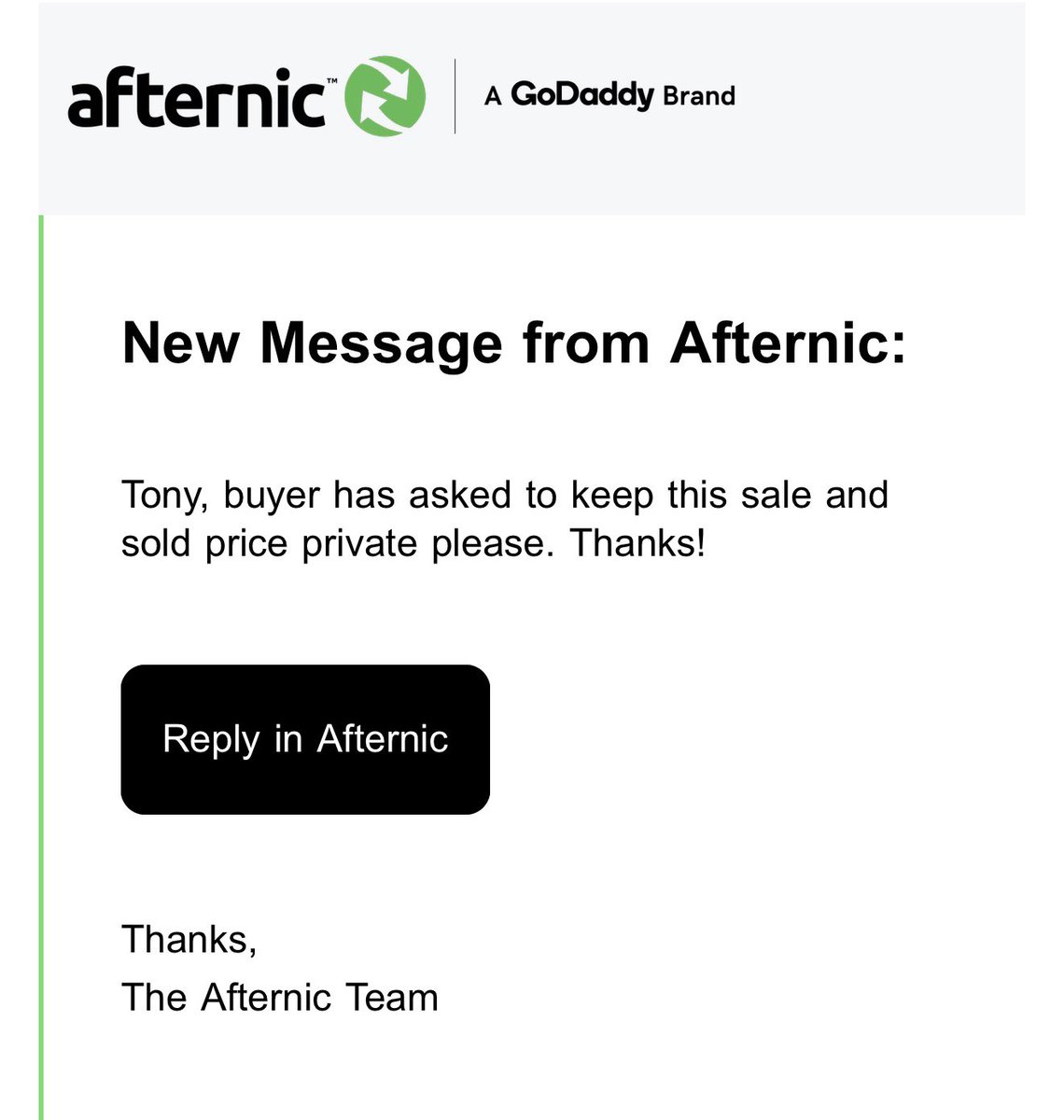
Is this what the big guys call The NDA?
My first ever NDA in that case.
15
3
143
3,793
OMGdomains.com retweeted

Jun 13
He Mined Bitcoin in 2009. Now He’s Betting on TAO
In this episode, Shizzy sits down with @rBryer23 , an early Bitcoin miner from 2009, to talk through the wild early days of crypto and how it has evolved into the rise of Bittensor and decentralized AI.
RL shares his story of mining Bitcoin back when almost nobody understood what it was, then walks through major moments in crypto history including Mt. Gox, Silk Road, Ethereum in 2016, and the lessons learned from each cycle.
The conversation then shifts into artificial intelligence, DeAI, TAO, and why Bittensor could become one of the most important networks in crypto. RL also shares his favorite subnet pick, other subnets he is watching, and where he thinks crypto and Bittensor are heading next.
CHAPTERS
00:00:00 Shizzy’s Monologue
00:01:33 RL Bryer Joins the Show
00:02:55 RL Explains His 2009 Bitcoin Story
00:18:25 Mt. Gox Historical Talk
00:23:35 The Early Days of Silk Road
00:29:13 Ethereum in 2016 Historical Talk
00:38:00 Artificial Intelligence and What DeAI Can Become
01:06:40 RL Explains His Favorite Subnet Pick and Other Subnets He Finds Interesting
01:10:15 RL Shares His Thoughts on the Future of Crypto and Bittensor
01:22:40 How to Find RL Bryer and Final Words
01:26:19 Final Words from Shizzy
$TAO #Bittesnor #Bitcoin
11
25
155
8,050

$DGXX this is amazing finding. Some serious alpha in this post.
Jun 13
This is a consolidation of my thoughts on $dgxx/$usdc/Yutanix/Zutacore.
There is alpha in this. Enjoy the read:
Nobody is talking about the real reason $DGXX is about to take over the AI infrastructure market. Let me explain.
Everything $dgxx is doing right now is positioning them to completely take over the ai infrastructure market.
$DGXX owns 55% of US Data Centers Inc. (USDC). USDC is currently private. USDC's entire business is manufacturing and selling the ARMS 200 — a modular, Tier 3-certified AI data center system that can turn any powered site into a fully operational AI compute facility in a fraction of the time traditional construction takes.
Companies like $IREN have spent years and enormous capital securing gigawatts of powered land. That's the hard part, or so everyone thought. But raw power means nothing if your cooling and compute density can't keep up with modern AI workloads. Air cooling and glycol loops are hitting their limits fast. These companies are sitting on some of the most valuable land in infrastructure and underutilizing it because they chose the wrong stack.
USDC's ARMS 200 is the answer they didn't build themselves. Drop modular units onto existing powered land, skip years of conventional construction, and immediately unlock high-density AI compute. The host site doesn't have to rebuild from scratch. They just have to let USDC in. Their stranded gigawatts become productive. USDC gets a customer. Everyone wins, but USDC wins most, because they own the system that makes it all work.
The ones who dont make this switch either through USDC or on their own will be left with way bigger electic bills, higher maintenance costs, and difficulty expanding.
The ARMS 200 uses a dielectric liquid cooling (I will talk further about the liquid a couple paragraphs down, this is signalled and not publicly confirmed. This is alpha.) built around Supermicro hardware and NVIDIA Blackwell-class GPUs, not to mention the $35 million $dgxx just spent on Vera Rubins. Wonder where thats going!
Each pod delivers 1 MW of compute and supports up to 256 B200/B300 GPUs. DGXX plans to scale to 40 MW at its Alabama site alone, roughly 10,240 GPUs. The modularity allows for easy scaling.
Now here's where Yutanix fits. Yutanix is an AI infrastructure marketplace that connects AI teams with GPU capacity, deployment planning, and data center sourcing. As USDC starts selling ARMS units to powered sites at scale, Yutanix is positioned to be the demand-side engine that feeds it, matching teams who need compute with the exact kind of rapid-deployment, cluster-ready infrastructure ARMS provides. USDC supplies the modules. Yutanix supplies the customers. That's a clean loop.
Now here's the piece worth watching VERY closely. ZutaCore dielectric HyperCool technology is waterless, direct-to-chip dielectric cooling.
Zero water, handles extreme power densities that glycol and air cooling can't touch, closed loop, ZERO leak risk
The main publicity backlash against AI data centers right now is noise, power, and water usage. Communities where USDC decides to set up modules will eat this up.
ZERO water usage if utilizing Zutacore Hypercool.
The heat can be REUSED for other purposes easily.
The Zutacore system requires a flow rate of just 0.3L/min for every 1000W. For example, cooling Nvidia’s B200 (1200W) would need a flow rate of 0.36L/min with HyperCool, compared to 1.8L/min for single-phase direct-to-chip water/glycol cooling.
Thats 5 to 6x lower flow rate. 50% less energy usage on cooling.
No official DGXX/ZutaCore partnership has been announced, but Jagan Jeyapal, CTO of DigiPowerX, was photographed at ZutaCore's booth at GTC and tagged #digipowerx #dgxx #zutacore and #yutanix all in the same LinkedIn post, mentioning plans to work on "large projects together." That's not nothing.
If a formal partnership follows, it becomes very hard for any competitor to replicate without tearing their building apart and starting over.
2
7
71
7,762