
There isn’t a mass migration of Catholic priests who cannot even speak the language let alone conform. That was an internal crisis among the priests and it’s evil. Both are wrong. But nothing about migration.
1

nigga it’s not the fucking 1200s anymore. the anglo saxons basically killed the celtic dreads when they took control of the isle in order to force the celtic people to conform to english society. it only made a resurgence in recent years as an anti black dog whistle
1
8


Considering they've got no CL footy or any European football. I know they earn a lot of money via other sources but they still have to conform to PSR.
1
1

"encouraging teams to celebrate diversity during Pride Month"
-The Hill
Uh...wouldn't the fact that the @MLB is threatening to punish players for refusing to conform be the exact opposite of celebrating diversity?

Vance fires back at MLB over San Francisco Giants Pride Bible verses
thehill.com/policy/sports-ga…
5
"encouraging teams to celebrate diversity during Pride Month"
-The Hill
Uh...wouldn't the fact that the @MLB is threatening to punish players for refusing to conform be the exact opposite of celebrating diversity?

Why don't you follow your own advice and accept the reality of Christians who don't conform to what you think?
Governments/politicians are a reflection of their people. A corrupt, godless population gets a corrupt, godless government, a.k.a. Fascism & Communism.
12

Exactly! Kids are used for hidden agendas designed to manipulate the parents to conform to the system.
4

we need the apolitical masses to regard communism as inevitable and to feel social and institutional pressure to conform to communist thought
4

Yes. Female voting clearly comes along with the issue of being captured by virtue signalling, suicidal empathy and generally an inability to not conform. It's very obvious. But removing the vote is insane talk. We ain't going back to strict enforced gender roles.
1
8
Shiny Jessy 💗 retweeted

glad lola stuck it on priya. she’s so weird and i’m not gonna conform to her tears x #loveisland #loveislanduk
1
5
700

Of course the Bible verses on the caps caused gay people pain ... the scriptures are not supposed to make us feel all warm and fuzzy!
In the scripture, Ephesians 6:17 (NIV) God's word says
"Take the helmet of salvation and the sword of the Spirit, which is the word of God."
"The sword of the spirit" think about that ... a sword is a weapon of war, it's designed to puncture, pierce, cut or sever the enemy to death.
Likewise in the spiritual realm, God's word is meant to cut, pierce, sever the evil and demonic forces that exists in humanity!
If you don't want a painful experience, stay away from Christian warriors!
We will use God's word! Christians are not called to conform themselves to the world! We are called to be transformed into the likeness of Jesus Christ. If being Christ like causes anyone pain ... so be it!
Every knee shall bow and every tongue shall confess that Jesus is Lord!

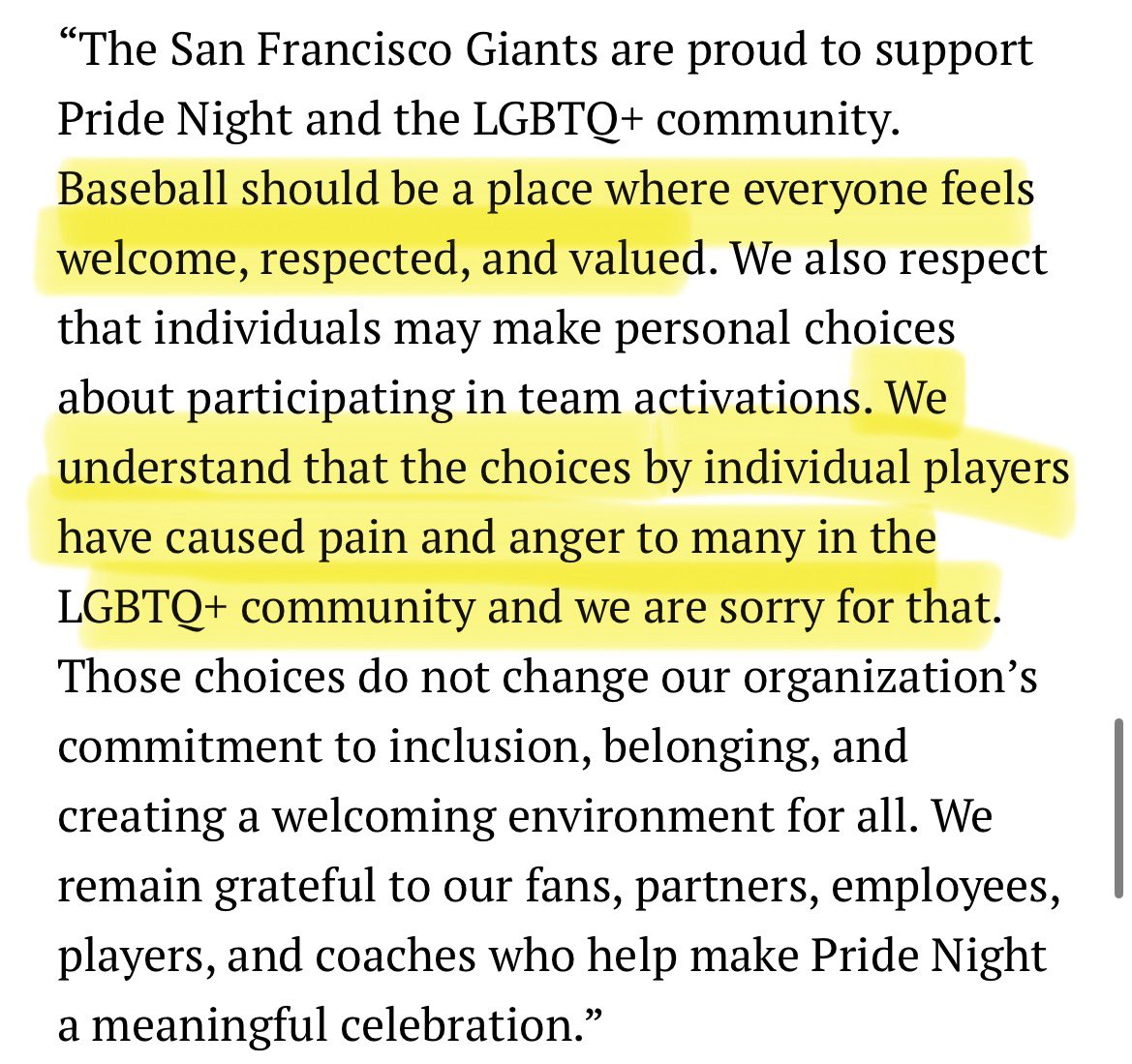
A Bible verse written on a baseball cap caused pain and anger to many in the LGBTQ community? What??
1

The problem is that the people who object to these narrations as nonsense because of what they say about Allah do not even try to interpret them in a way to conform their beliefs like they do the qur'an knowing full well it uses so called anthropomorphic descriptions.
1
18

This one I could see why it can feel combative. Idk the context of why she’s saying it but it’s a fair enough point. Beauty standards are rough on all ladies but when you have to really transform your natural look to conform, I could see why it can be frustrating. Ty for sharing
1
9

Is there pressure to conform from fans to wear the hat even if you don't agree with it? Of course.
But you can't save people from public opinion. MLB has shown they are not required to wear the caps, but if you do, don't deface them.
2

Look at the actions of CONform
Disgusting lies & smears. Then demand we vote for this



3

It would never even have made it to the 70s, never mind the 2000s. The entire first 6 years of the show don't conform to his "one young female contemporary companion" rule.
1
2
15

This is the problem with modern human beings, they demonize anyone and everything that does not bring them instant gratification or that does not conform and bend the knee to their beliefs.

A trillionaire with nothing to show for it. No museums. No libraries. No foundations. No scholarship programs. Just a greedy loser who will die alone.
At least the rich people of old contributed to society and the arts.
This new crop of rich people are leeches.

If you look at the verses you posted, you’re still relying on what an old translator wants you to believe. Let look at some of the terms:
Wrath: Gr. orgen.
1. (properly) desire (as a reaching forth or excitement of the mind)
2. (by analogy) violent passion (ire or (justifiable) abhorrence)
3. (by implication) punishment
The primary usage of orgen is desire or passion. When you replace God’s wrath with God’s desire or passion, the gospel is much clearer.
——-
Forever and ever; Gr. eis tous aion as ton aionon.
1. (properly) to the ages of the ages. Note the word aion (eon/age) used twice.
2. (by extension) perpetuity (also past)
3. (by implication) the world
4. (specially, Jewish) a Messianic period (present or future)
Nothing is this word represents ‘eternal’, as an unending period of time. It’s ages of ages. If ages were unending, there could not be multiples of them, but this is a a collection of ages.
———
Torment: Gr. basanisthesantai.
This verb is from the root noun basanos
1. a touchstone used to test the purity of gold
2. (generally) a test to prove the genuineness of a thing
3. (figuratively) an instrument used in questioning by which one is compelled to divulge the truth
4. (by analogy) torture
This word’s primary usage to activity to test purity or genuineness. While this may feel like torment while we are experiencing it, it actually refinement or purification.
It’s this refinement that fire always represents, and while the person is refined, the smoke (that which is burnt off) of that purification rises through the ages of ages, but is no longer effectual.
When you study the words of Scripture, you will note that there primary usage isn’t always found in Scripture, as the translators used the English to conform the Scriptures to their belief of a vengeful God of wrath, while I can legitimately do the same to reflect a loving Father.
All it takes is honest study.
2
6