siouni@なんか作ってる人(動画サボり魔) retweeted

2
33
1,127

Movement II – C : The Temporal Loom
physis_loom.cpp
```cpp
// The C embodiment: deterministic, cache‑ruthless, and gentle as a falling feather.
// No heap after ignition. No locks. No surrender.
#include <cstdint>
#include <atomic>
#include <chrono>
#include <thread>
#include <immintrin.h>
extern "C" {
struct PhysisCore;
PhysisCore* physis_create(double amplitude_kv, double freq_hz);
double physis_update(PhysisCore* core, uint64_t t_ns, double freq_hz);
void physis_adapt(PhysisCore* core, double temp_c, double current_ka);
}
namespace physis {
// ---- Eternal pool – allocated once, loved forever ----
template<typename T, size_t N>
class SacredPool {
alignas(64) std::array<std::byte, sizeof(T) * N> sanctum;
std::atomic<size_t> next_idx{0};
public:
T* consecrate() noexcept {
size_t i = next_idx.fetch_add(1, std::memory_order_relaxed);
if (i < N) return reinterpret_cast<T*>(sanctum.data() i * sizeof(T));
return nullptr; // never happens if N sufficient
}
};
// ---- The Loom – where time is woven into voltage ----
class PhysisLoom {
SacredPool<PhysisCore, 1> pool; // one core, perfectly enough
PhysisCore* core;
const double grid_freq;
std::atomic<bool> active{true};
static constexpr volatile uint16_t* DAC_OUT = (volatile uint16_t*)0x4000'8000;
static constexpr volatile uint32_t* TEMP_ADC = (volatile uint32_t*)0x4000'6000;
static constexpr volatile uint32_t* CURRENT_ADC = (volatile uint32_t*)0x4000'7000;
public:
PhysisLoom(double amplitude_kv, double freq_hz) : grid_freq(freq_hz) {
core = physis_create(amplitude_kv, freq_hz);
}
void runForever() noexcept {
// Pin to a dedicated core (conceptual – real pinning uses OS calls)
constexpr uint64_t PERIOD_NS = 1000; // 1 MHz sampling
uint64_t deadline = std::chrono::steady_clock::now().time_since_epoch().count();
uint64_t now, wait;
uint32_t tick = 0;
while (active.load(std::memory_order_relaxed)) {
deadline = PERIOD_NS;
now = std::chrono::steady_clock::now().time_since_epoch().count();
if (now < deadline) {
wait = deadline - now;
if (wait <= 800) {
while (std::chrono::steady_clock::now().time_since_epoch().count() < deadline) {
_mm_pause();
}
} else if (wait <= 5000) {
std::this_thread::sleep_until(std::chrono::steady_clock::time_point(
std::chrono::steady_clock::duration(deadline - 2000)));
while (std::chrono::steady_clock::now().time_since_epoch().count() < deadline) {
_mm_pause();
}
} else {
std::this_thread::sleep_until(std::chrono::steady_clock::time_point(
std::chrono::steady_clock::duration(deadline)));
}
}
// Harmonic update – the heart of Zeus
double field_kv = physis_update(core, deadline, grid_freq);
uint16_t dac_val = static_cast<uint16_t>(field_kv * 4095.0 / 420.0);
*DAC_OUT = dac_val;
// Every 1024 cycles, read sensors and adapt the living lattice
if (( tick & 0x3FF) == 0) {
uint32_t temp_raw = *TEMP_ADC;
uint32_t curr_raw = *CURRENT_ADC;
if ((temp_raw & 0x80000000) == 0 && (curr_raw & 0x80000000) == 0) {
double temp_c = (temp_raw & 0xFFFF) * 0.125;
double current_ka = (curr_raw & 0xFFF) * 0.01;
physis_adapt(core, temp_c, current_ka);
}
// if sensors not ready, we simply skip – nature waits gracefully
}
}
}
};
} // namespace physis
1
4

29m
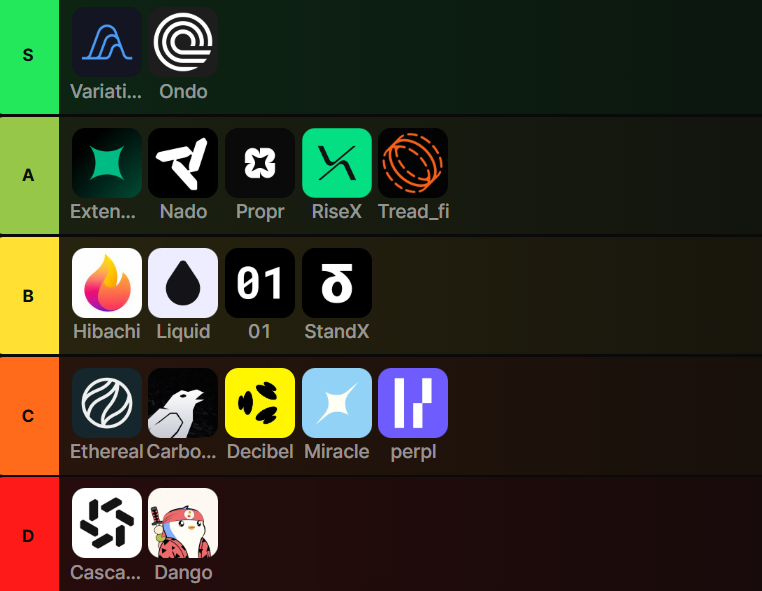
if you ask me about my perp dex tier list, here it is:
Tier S:
1. @variational_io - The crazy RFQ model, good tech, and solid team
2. @OndoPerps - Focus on RWAs with very good potential in RWA
Tier A -> solid community, good product, and has potential:
1. @extendedapp
2. @nadoHQ
3. @ProprXYZ
4. @risextrade
5. @tread_fi
Tier B & Tier C -> is also on my watchlist, and some of them has a very low cost per point. It's not bad, but not many people talking about it. However for eg: I really love @01Exchange if you farm this earlier, you will see the very cpp and it's good for farmers.
Tier D? skip it
Did i miss something good perp dex? let me know!
3
6
90
KanaworksAI retweeted

PixVerseさん(@PixVerse_ )で揚げバナナ屋さんを作りました(〃艸〃)❤ #pixversecpp PixVerse CPP
フィリピンでメジャーみたいですね♪
わたしも食べてみたいです♪
1
9
158

43m
The bedside hemodynamics often break the tie: mannitol’s osmotic diuresis can shave preload and CPP in an already hypovolemic trauma patient, while HTS lowers ICP without that volume cost and can even support MAP. With mortality still a wash, I let volume status and the serum osmolar gap pick the agent.
1
14

The Hollow King (my 80's style dark fantasy single prompt test) with very subtle changes. Now it's time to drop in more story and exposition. Made with @PixVerse_ #AIVideoAgent #CPP
15
Sara &DDS Supporter💚 retweeted

What really resonates here is the hypocrisy ng mga kakampink, leftist, loyalist, and cpp-npa-ndf 🗣️

39
28
67
1,807
María Cristina Rodríguez retweeted

6 Nov 2024
Parafraseo
Pregúntale si le importa
CPP y FGN son la ley
Cortan el bacalao a su gusto con la complicidad del sindicato fiscales TODOS FA
Sume mayoría en senadores
5 años más la "dolce vita"🥳
Es lo q aprueba celebra disfruta aplaude y VOTA el FAMPLISTA
#LosHechosDicenTODO🙌🤔👇

4
3
79

Tamil Nadu CM Shri C. Joseph Vijay met CPP Chairperson Smt. Sonia Gandhi ji and LoP Shri @RahulGandhi at 10 Janpath, New Delhi.




212
7,937
36,914
462,566

🚀 BSNL ગુજરાતમાં ફ્રેન્ચાઇઝી પાર્ટનર બનવાની સુવર્ણ તક!
📄 વિગતવાર EOI CPP Portal પર ઉપલબ્ધ:
etenders.gov.in/eprocure/app
📅 છેલ્લી તારીખ: 15.06.2026 | ⏰ સવારે 11:00 વાગ્યા સુધી
#BSNLGujarat #EOI #FranchiseOpportunity #DigitalIndia

24

आज कॉन्स्टीट्यूशन क्लब में INDIA गठबंधन की महत्वपूर्ण बैठक हुई।
इस बैठक में कांग्रेस अध्यक्ष श्री @kharge, CPP चेयरपर्सन श्रीमती सोनिया गांधी जी और नेता विपक्ष श्री @RahulGandhi के साथ INDIA गठबंधन के वरिष्ठ नेता मौजूद रहे।
📍 दिल्ली
251
1,563
7,546
132,560

@ChShersh may I invite you to early access to C/Cpp niche LLM? It performs 10x better on my memory management benchmarks compared to opus 4.8
1
23
ヤレヤル retweeted

6/23(火)20:30〜
MIRAICHIイベントやります🎉
今回は、PixVerseの最新アップデート
Canvas / MiniApps / CPP 2.0 を整理しながら、
AIエージェントと一緒に
作って、投稿して、次につなげるところまで実践ベースで共有します。
✅ 無料チケットで本編参加OK
✅ リアルタイム参加の方には、PixVerse Pro 7日間ギフトコードの応募案内あり🎁
AI動画を「作って終わり」にせず、
その先の活用まで一緒に掴みに行こう!

🌈 MIRAICHIから新しいイベントのお知らせ
📅 6/23(火)20:30〜
👨🏫 講師:いとぱん(@takamasa045)さん
今回は、PixVerseの最新アップデート
(Canvas / MiniApps / CPP 2.0)を整理しながら、
AIエージェントと一緒に「作って・投稿して・つなげる」
までを実践的に共有していただきます。
私も、AI動画の"その先"がどう変わってきているのか、すごく楽しみにしています。
皆様のご参加を心よりお待ちしております!

1
2
6
194


The present qualities of PH Lawmakers gravely deteriorated and ignorant ... from Honorable Statesman to Baklang Parlor na CPP NPA NDF enabler.
Mabuti pa ang Kargador marangal ang trabaho hindi nag recruit ng estudyante at hinahayaan, iniiwan mamatay sa bundok.
9