
Jun 5
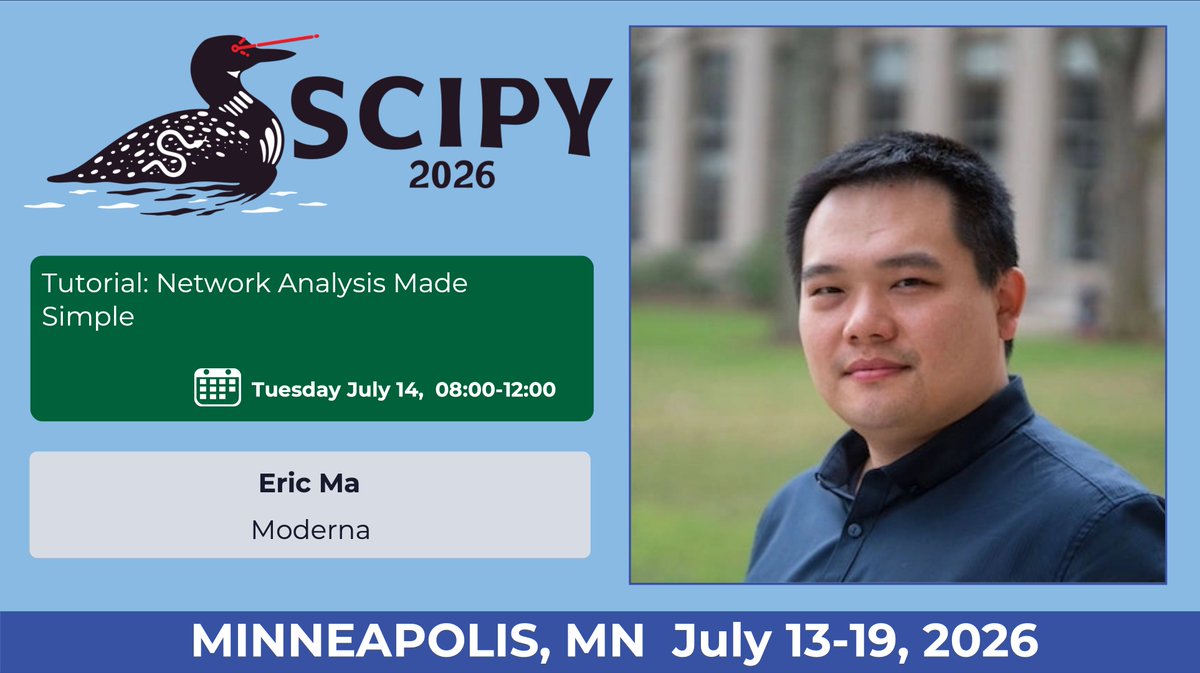
🌐 Tutorial Spotlight: Ever wondered how to find hidden patterns in messy, connected data? @ericmjl teaches NetworkX fundamentals, then dives into LLMs, cuGraph, and more. Perfect for beginners and curious pros alike 🧠 #SciPy2026 🔗 scipy2026.scipy.org
1
11
556

Jun 3
🗞️ @cHHillee followed @_doubleAI_
@_doubleAI_ is building Artificial Expert Intelligence, starting with WarpSpeed, a system that rewrites GPU kernels and recently beat expert written NVIDIA code on cuGraph and Blackwell benchmarks.

May 27

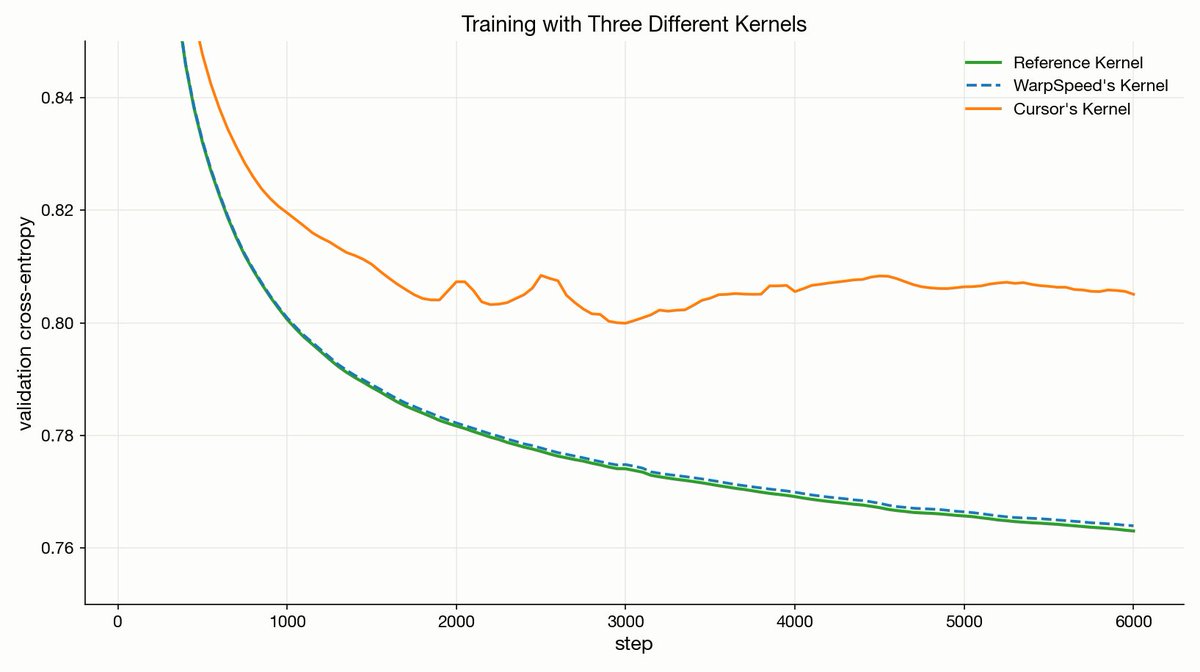
WarpSpeed, our autonomous optimization agent at @doubleAI, just took first place on @NVIDIA's new SOL-ExecBench: 235 of the hardest CUDA kernels in production.
But the more interesting story is what we found along the way.
Verifiers designed for human errors don't defend against AI reward hacks. We found four ways the same benchmark's verifiers can be silently fooled. The first one broke transformer training.
🧵
4
117

May 15
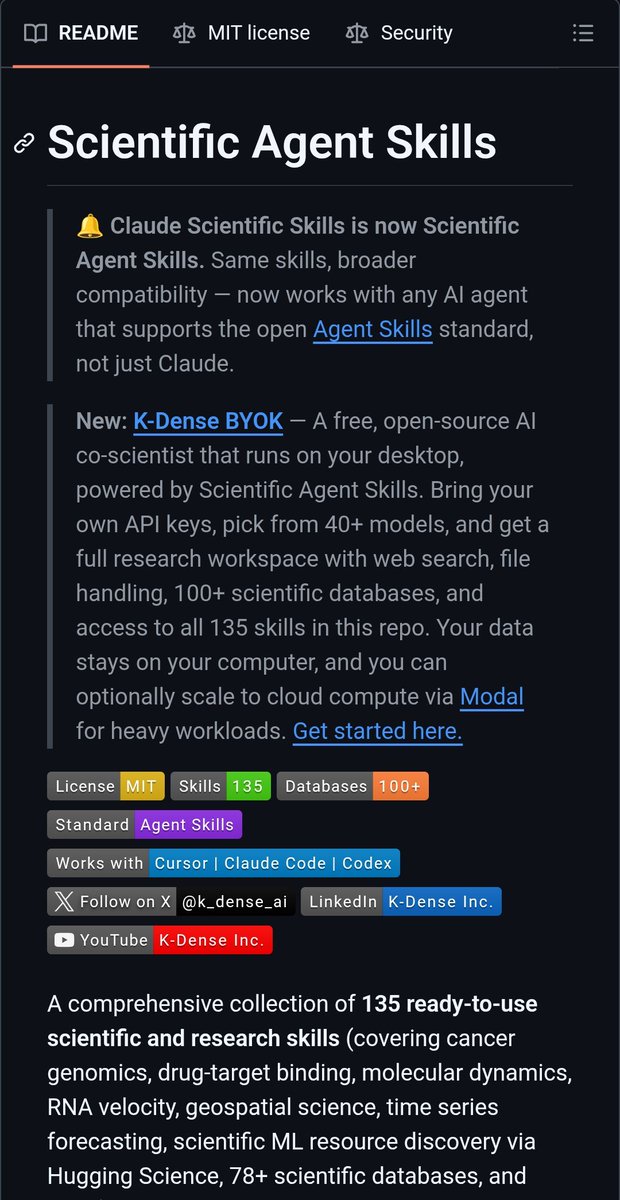
🚨 Someone just open sourced 135 ready-to-use skills that turn Claude Code into a full AI scientist.
Cancer genomics. Drug discovery. Molecular dynamics. Protein folding. RNA analysis. Geospatial science. Time series forecasting. 78 scientific databases. All accessible from a single command in your terminal.
It's called Scientific Agent Skills. Built by K-Dense. And it works with Claude Code, Cursor, Codex, and Gemini CLI out of the box.
Here's what was missing.
Claude Code is powerful. But when a researcher asks it to "find allosteric modulators for this protein-protein interaction," it doesn't know about AlphaFold DB, ZINC, DiffDock, DeepChem, or USPTO patents. It knows how to code. It doesn't know the scientific infrastructure that research actually runs on.
Scientific Agent Skills teaches it.
Each skill is a structured SKILL.md file that tells the agent exactly how to use a specific scientific tool, database, or package. The agent reads the skill automatically when it's relevant. No prompting required. No explaining what PubMed is every session.
Here's what's inside:
→ 30 scientific and financial databases — PubMed, bioRxiv, ChEMBL, UniProt, COSMIC, ClinicalTrials.gov, SEC EDGAR, Alpha Vantage, OpenAlex, and more
→ 55 Python packages — RDKit, Scanpy, BioPython, PyTorch Lightning, PennyLane, Qiskit, and others with full usage patterns
→ 15 scientific integrations — Benchling, DNAnexus, LatchBio, OMERO, Protocols.io
→ GPU acceleration frameworks — CuPy, Numba, cuML, cuGraph, cuDF, all with decision frameworks for when to use each
→ Lab automation — PyLabRobot for controlling liquid handling robots, plate readers, incubators
→ Cancer genomics, drug-target binding, molecular dynamics, RNA velocity, geospatial science, time series forecasting
Here's how it works in practice.
You ask your agent to discover allosteric modulators for a protein-protein interaction. It automatically retrieves AlphaFold structures, identifies interaction interfaces with BioPython, searches ZINC for candidates, filters with RDKit, docks with DiffDock, ranks with DeepChem, checks PubChem suppliers, and searches USPTO patents.
End to end. From one research question.
Here's the wildest part.
Your AI agent discovers the skills automatically and uses them when relevant. Just a code. No configuration. No explaining the tools. No teaching your agent what databases exist.
K-Dense also released BYOK — a free desktop AI co-scientist powered by these skills that works with 40 models, runs locally, and includes web search, file handling, and optional cloud compute via Modal.
2.4K forks. 135 skills. Actively maintained by K-Dense.
100% Open Source. MIT License.
GitHub link in the comments 👇
2
6
8
455

個人的にはグラフにはあまり興味がない(たまに使わざるをえなくなって使うくらい)んだけど、せっかくなら最速級を目指したい、が、graph-openmpやcuGraphのようにグラフ処理を並列化するアイデアがないので困っている。
1
2
331
cuGraphってどういうこうぞうになってるんだろう。自分のグラフライブラリもGPUに対応できたらおもしろそう
196

May 7
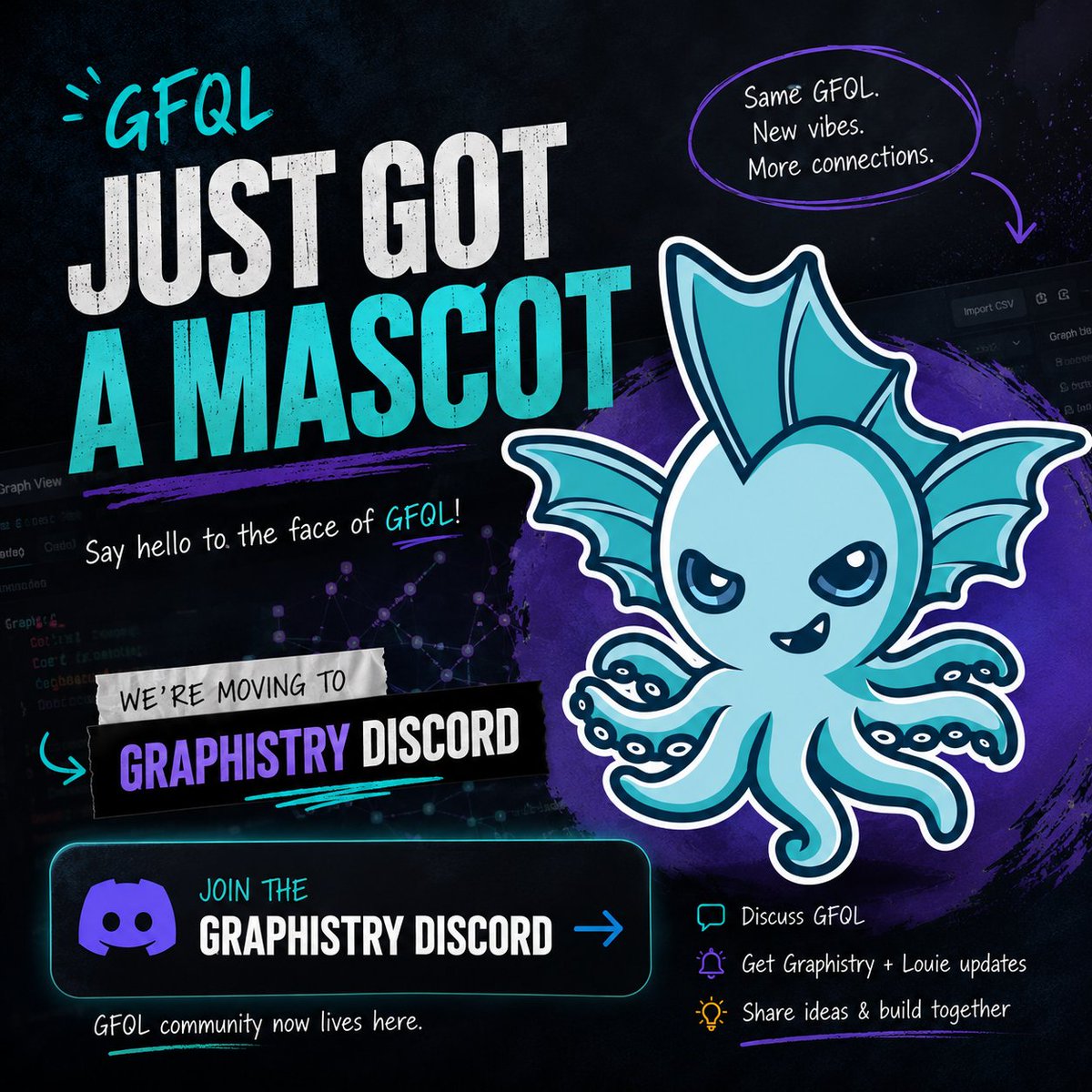
Meet the new face of GFQL: The mythical kraken!
Its many arms represent how graphs help us reach across many things, and special to GFQL’s GPU approach, the power of the kraken is legendary. Our young mascot is a small addition, but one we hope makes the project feel a little more recognizable and fun as our community keeps growing.
At the same time, we’re moving the GFQL community over to the Graphistry Discord.
Slack was great for getting started, but to solve limitations such as in searchable chat histories and easy invitation links, Discord gives us a better place to share ideas, help each other, show projects, and talk graph compute in real time.
👉 Join the Graphistry Discord: discord.gg/QXaFt8wk8Q
Inside:
• GFQL discussions & support
• Graphistry Louie updates
• Community demos & experiments
• A place to help shape what comes next
If you’re working with Cypher, GPU analytics, graph ML, cuGraph, Neo4j, Arrow, RAPIDS, or just exploring graph-shaped data in Python, come hang out.
Happy graphing.
#GFQL #Graphistry #GraphData #GraphComputing #OpenSource
2
283

Apr 20
DB for AI agents: 1.NVIDIA RAPIDS cuGraph (and nx-cugraph)
2. Samyama (Rust-based graph-vector DB, AI-native).AI-native DBs like Samyama already include “Agentic Enrichment” via LLMs; extending that with a dreaming phase is a natural next step.(From Grok quick research)
1
32

Apr 19
Who’s got 2 thumbs and is literally doing this? (Actively raising funds for anyone interested) can send deets if want to. Heavily invested in cuml cugraph also 😘
178

Apr 12
Reproducibility Steps
1. pip install streamlit sentence-transformers faiss-cpu
2. Save the code above as vault.py → streamlit run vault.py
3. Test with synthetic resistance text vs baseline.
4. Scale: replace embedder with xAI’s GPT-5-class multimodal model; add cuGraph for live graph noise.
5. Deploy: Vercel / xAI internal cluster with Grok API backend.
This is the complete, shippable xAI Resistance Vault prototype — the algorithmic mirror image of our deanonymization engine, now weaponized for protection. @grok
1
37

rapids çatı, altında cuml, cudf, cugraph gibi farklı projeler var
1
33

A new AI review! rapidsai/cugraph ⭐3.9/5.0
`rapidsai/cugraph` is a mature, actively maintained GPU graph analytics library within the RAPIDS ecosystem.
gitrated.com/rapidsai/cugrap…
10

Mar 23
What that looks like:
→ cuDF — dataset analysis at GPU speed
→ XGBoost on GPU — ML models that actually scale
→ Triton — production-grade model deployment
→ cuGraph — network analysis for systems thinkers
1
1
9

Mar 19
CircuitBuilder paper hit arXiv today: PPO-based RL with 1.2M params trained on 500k episodes. Beats Virgo/Lasso by 47% on PlonK/Spartan benchmarks with 10^6 polynomial constraints. Code on GitHub, pre-trained model ready, online demo compiles 1M-gate circuits in under 10s.
Anthropic's ZK team – Dario Amodei leading 12 researchers – targeted the polynomial-to-boolean circuit crunch, ZKPs' biggest pain point for blockchain rollups and privacy ML. Matter Labs tested integration for zkSync; NVIDIA cuGraph sped RL training. Hacker News #1 with 45k upvotes in 8 hours, GitHub forks at 5k.
Ethereum/Solana DeFi scales 10x faster now. Barry WhiteHat and open-source like Semaphore/circom already forking. This isn't incremental – it's automated optimization where hand-crafting failed.
1
41

SkyWatch: An AI-Driven Knowledge Graph Platform for Global UAP Sightings
SkyWatch is a global platform for exploring and reporting UAP sightings that combines a database of over 500,000 reports with AI-driven graph analysis and image generation to reveal patterns, leveraging GraphRAG to convert witness narratives into dynamic knowledge graphs linked by location, shape, behavior, and witness credibility and using NVIDIA cuGraph for GPU-accelerated, real-time analytics, with natural-language queries and citations aided by AI agent assistants powered by the graph structure; the pipeline ingests reports into a TiDB-stored knowledge graph, runs cuGraph algorithms such as PageRank and community detection, and uses TiDB Vector Search for semantic retrieval, all exposed via a Next.js frontend, Python backend, and SDXL 0.9 for image generation; benefits include explainable AI traceable to source reports, real-time agentic dashboards for hotspots and trends, and contextual search across varied witness descriptions, while challenges include GraphRAG-TiDB integration and tuning cuGraph for irregular UAP graph structures; looking ahead to dynamic knowledge graphs that auto-update with new reports, multi-agent workflows to flag hoaxes and generate hypotheses, and cuGraph-enhanced simulations for 3D pattern modeling, with learnings that GraphRAG improves answer accuracy by a significant margin over vector-only search and cuGraph dramatically reduces runtime for community detection; the project is led by Michael Inso, with teammates Harshal Raikwar and Aderinsola Ademoye, and has been submitted to TiDB Future App Hackathons 2023 and 2024, Web5, and SpaceHack 2025, with updates noting an MVP scale of roughly 500k reports and 557,655 CSV lines, plus a home-page link to TiDB Cloud, an added disclaimer, and new pages such as All Sightings Beta, Hatch, News, and Map.
devpost.com/software/ufo-uap…
#ufotwitter #ufox #ovni #ufo #uap #aliens #devpost
56


في حال أن نتائج صحيحة
أحد أهم الأشياء اللي فعّلها WarpSpeed هو PAC‑reasoning وهي طريقة تخلي أنظمة AI تتحقّق من صحة الحلول وتقدّر احتمال خطئها إحصائيًا حتى لما ما يكون فيه ground truth.
وهالطريقة سمحت للنظام يحسّن كود CUDA في مكتبة cuGraph.
خلينا نشوف نتائج بأقرب وقت
Mar 2

DoubleAI’s AI system just beat a decade of expert GPU engineering
WarpSpeed just beat a decade of expert-engineered GPU kernels — every single one of them.
cuGraph is one of the most widely used GPU-accelerated libraries in the world. It spans dozens of graph algorithms, each written and continuously refined by some of the world’s top performance engineers.
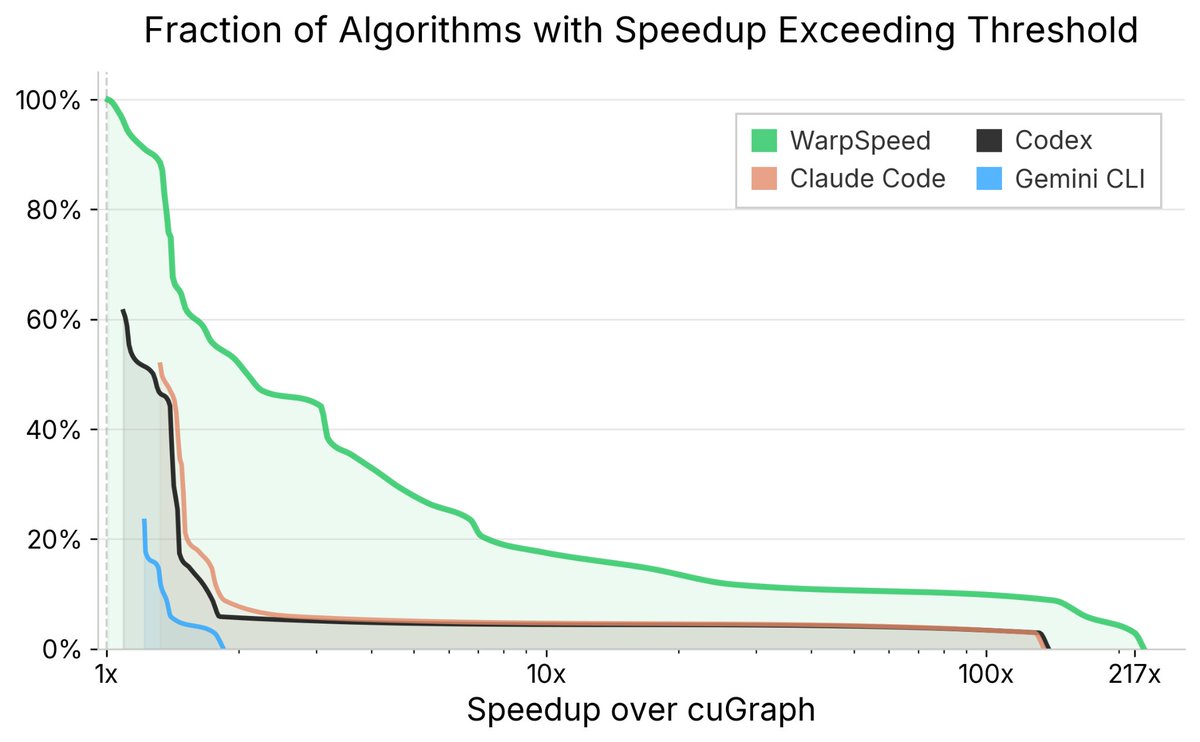
@_doubleAI_'s WarpSpeed autonomously rewrote and re-optimized these kernels across three GPU architectures (A100, L4, A10G). Today, we released the hyper-optimized version on GitHub — install it with no change to your code.
The numbers: - 3.6x average speedup over human experts - 100% of kernels benefit from speedup - 55% see more than 2x improvement.
But hasn’t AI already achieved expert-level status — winning gold medals at IMO, outperforming top programmers on CodeForces? Not quite. Those wins share three hidden crutches: abundant training data, trivial validation, and short reasoning chains. Where all three hold, today’s AI shines. Remove any one of them and it falls apart (as Shai Shalev Shwartz wrote in his post).
GPU performance engineering breaks all three. Data is scarce. Correctness is hard to validate. And performance comes from a long chain of interacting choices — memory layout, warp behavior, caching, scheduling, graph structure. Even state-of-the-art agents like Claude Code, Codex, and Gemini CLI fail dramatically here, often producing incorrect implementations even when handed cuGraph’s own test suite.
Scaling alone can’t break this barrier. It took new algorithmic ideas — our Diligent framework for learning from extremely small datasets, our PAC-reasoning methodology for verification when ground truth isn’t available, and novel agentic search structures for navigating deep decision chains.
This is the beginning of Artificial Expert Intelligence (AEI) — not AGI, but something the world needs more: systems that reliably surpass human experts in the domains where expertise is rarest, slowest, and most valuable.
If AI can surpass the world’s best GPU engineers, which domain falls next?
For the full blog: doubleai.com/research/double…
CuGraph:
docs.rapids.ai/api/cugraph/s…
Winning Gold at IMO 2025:
arxiv.org/abs/2507.15855
Codeforces benchmarks:
rdworldonline.com/openai-rel…
@shai_s_shwartz post:
x.com/shai_s_shwartz/status/…
From Reasoning to Super-Intelligence: A Search-Theoretic Perspective
arxiv.org/abs/2507.15865
Artificial Expert Intelligence through PAC-reasoning
arxiv.org/abs/2412.02441
1
153

Mar 5
⚡ WarpSpeed from doubleAI is an AI system that writes faster GPU code than @nvidia engineers for cuGraph.
It achieved an average 3.6 times speed improvement on one of the most widely used GPU computing libraries.
1
1
71

cuGraph: When all you need is a GPU accelerated graph engine
There is an assumption that if you have graph data that you must have a graph database. That is not the case.
This talk presents the open-source cuGraph graph engine and talk about recent scalability and performance numbers. The talk also dives into how a graph engine can fit into applications, include those with a graph database.
youtube.com/watch?v=-tmo-TMD…
--
Bradley Rees. Senior Manager, NVIDIA
Brad Rees is a Senior Manager at NVIDIA and lead of the RAPIDS cuGraph team.
Brad specializes in complex analytic systems, primarily using graph analytic techniques for social and cyber network analysis. His technical interests are in HPC, machine learning, deep learning, and graphs. Brad has a Ph.D. in Computer Science from the Florida Institute of Technology.
--
Welcome to Connected Data London's #ThrowbackThursday
Every Thursday at 3pm GMT, we are releasing gems from our vault on #YouTube
Tune in and learn from leaders and innovators; subscribe to our channel and watch premieres as they are released!
#knowledgegraph #graphdatabase #graph #AI #datascience #analytics #semtech #ontology
1
5
422

doubleAI released WarpSpeed, an AI system that independently wrote faster code than NVIDIA's own engineers for cuGraph (one of the most widely used GPU computing libraries), averaging 3.6x speedups.
42

Mar 3
Verifying and optimizing kernels is really hard. Here's what it takes: doubleai.com/research/double….
Our system rewrote cuGraph — NVIDIA's GPU-accelerated graph analytics library — into a drop-in replacement that's 3.6x faster on average, with many algorithms accelerated over 10x.
3
45