
I'll put it like this: If I absolutely had to pick one, I would rather walk in on three people getting it on than an amalgamation of decayed flesh giving birth to another smaller amalgamation of decayed flesh.

okay but that's different! you can't compare that to sex and stuff...
9

Decayed!Wifies has been dead for 58 days
2

Heh decayed and decrepit or whatever heh I'm geetting into it hyayay
1

This reflects a remarkably shortsighted and myopic Saudi perspective. Despite decades of immense oil wealth, Saudi Arabia has continued to depend on external security guarantees, including military cooperation with Pakistan, highlighting the vulnerabilities of an absolute decayed monarchy that has struggled to develop a sustainable and independent security framework.
For more than three decades, many Arab and Muslim states chose to ignore the political realities in Somaliland. The historical record is clear: Somaliland and Somalia were separate British and Italian colonies that gained independence independently in 1960 before voluntarily uniting to form the Somali Republic. When that union collapsed alongside the Somali state in 1991, Somaliland reasserted the sovereignty it had briefly relinquished.
Thirty-five years later, Somaliland has established relative peace, democratic institutions, internal security, and self-governance without foreign peacekeeping forces. Meanwhile, Somalia continues to grapple with political instability, insecurity, terrorism, and dependence on the support of the African Union stabilization mission, African Union Support and Stabilization Mission in Somalia (AUSSOM).
Given these realities, Saudi officials are hardly in a position to lecture Somaliland about governance, stability, or state-building. Those who rely on others for their own security should exercise greater humility before criticizing a society that has maintained peace and stability through its own institutions. Enjoy the protection provided by Pakistan while Somaliland continues charting its own course.
This is one of my articles about hypocrisy of Arabs about Somaliland issue:
“One might have expected the Islamic and Arab worlds—so often vocal about Muslim suffering elsewhere—to rise in defense of Somaliland’s civilian population. They did not. On the contrary, many Muslim-majority states either openly sided with the Somali regime responsible for the atrocities or chose silence and diplomatic evasion. Even when evidence of mass killing was presented before international forums, solidarity was extended not to the victims but to the perpetrators, in the name of preserving a fictional unity. Based on credible reports from international human rights organizations, Israel brought the issue of the Isak genocide to the attention of the United Nations General Assembly.
This was not an isolated moral failure. History offers other stark examples. In 1971, when the Pakistani army carried out mass killings against Bengali civilians following Bangladesh’s declaration of independence, much of the Muslim world again looked away—or worse, defended the aggressor. It was a non-Muslim country, India, that intervened militarily to stop the slaughter and subsequently recognized Bangladesh as a sovereign state. Similarly, during the late 1980s, when Somaliland’s population fled aerial bombardment, it was Ethiopia—not Arab or Muslim states—that hosted refugees and provided limited material support. In both cases, moral action came from outside the self-proclaimed fraternity of Islamic solidarity.”
Read the full article here!
blogs.timesofisrael.com/isra…
14

Leaders do come from the society. Behaviour of leaders reflect the composition and morality of that society. Bengal society is so much decayed, we did not know. It was Left which had wrapped up the decaying Bengali society! Correct me if I am wrong! #BengalPolitics
1
37

Hold your phone away from your face.
The Age of True Gnosis had begun!
Like a phoenix reborn from the fire and ash of the old, decayed, demon world, the Age Of True Gnosis shall rise in Glory of God.
Our Gnosts sets us free 🙏🏼🖤
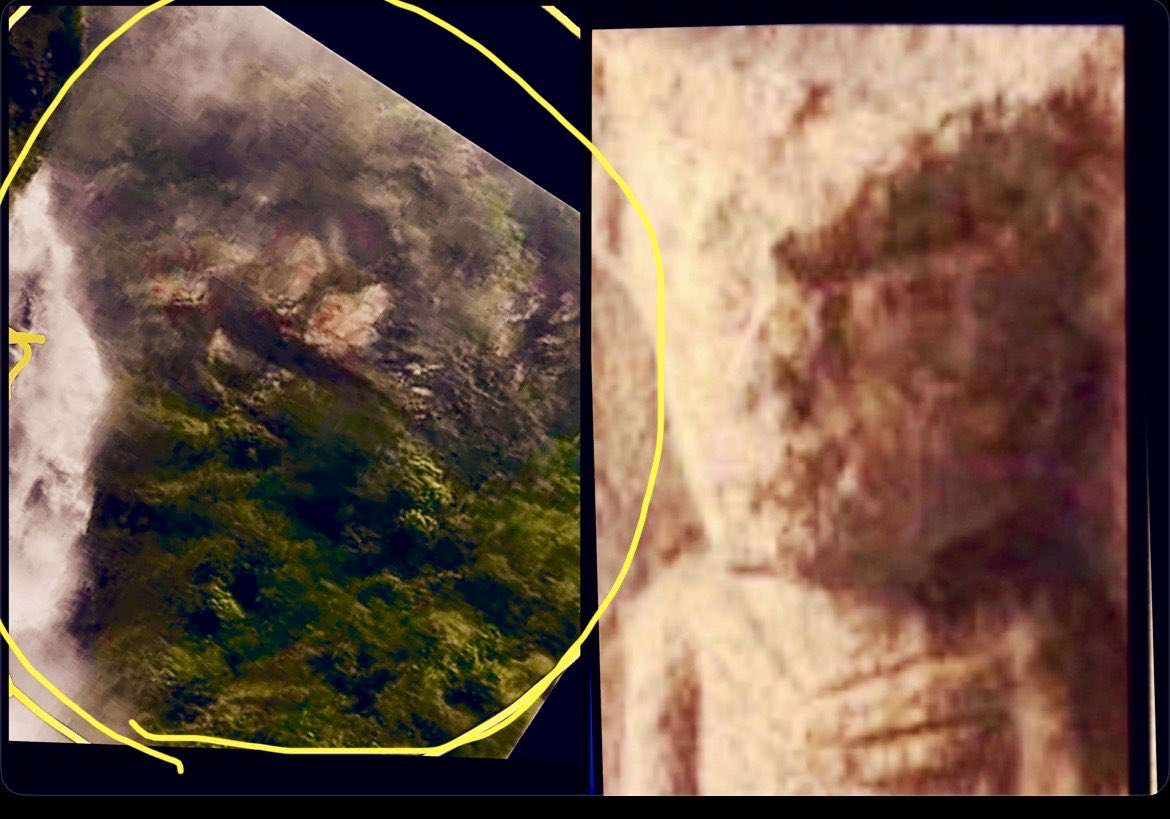

Praise be to the Supreme Creator for my gift of Gnosis!
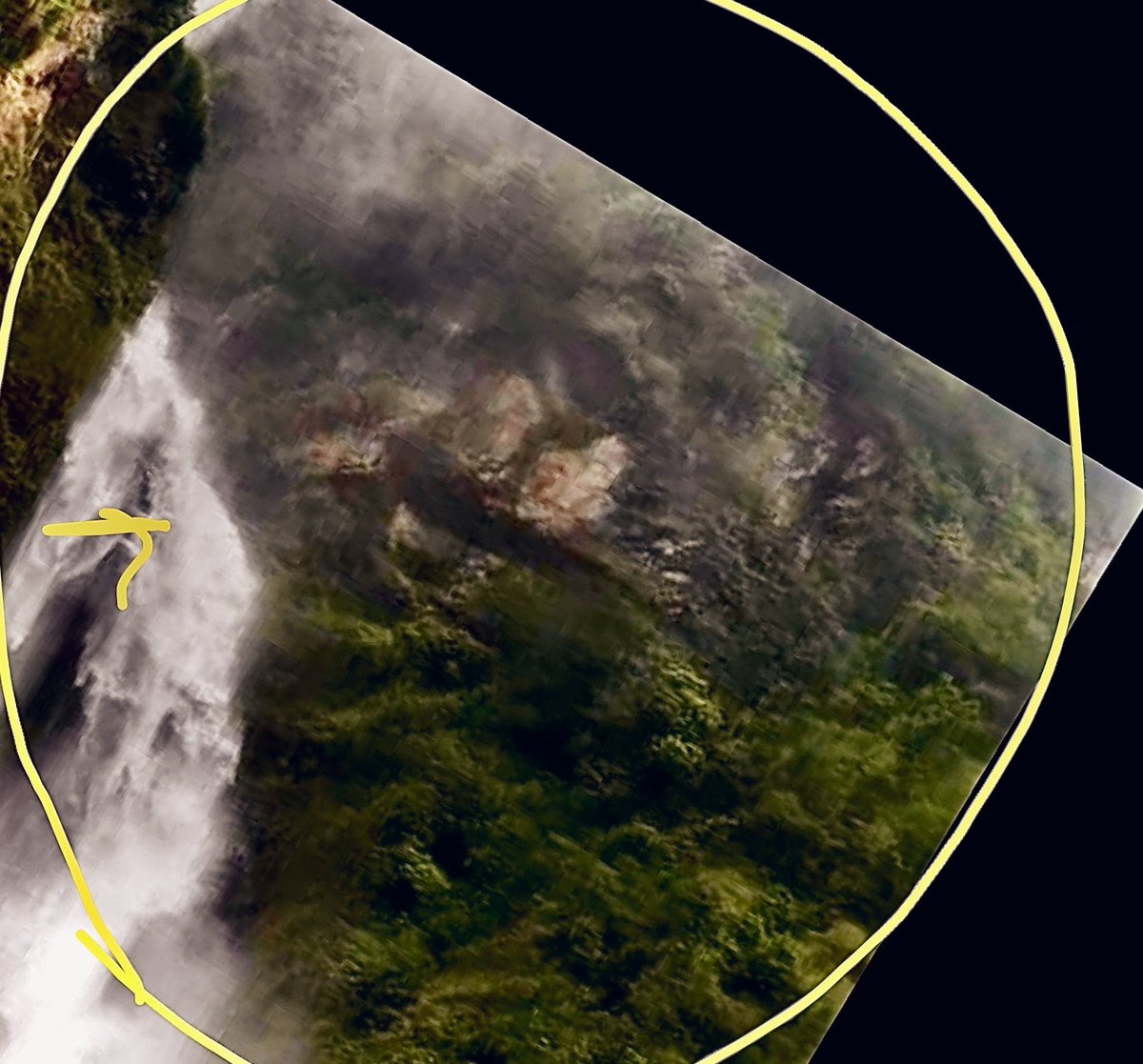
This may be the most detailed hidden predictive model I’ve ever seen.
This is clearer than my actual predictive model itself.
How can anyone claim this is pareidolia??
Note! As per my said specific and bizarre predictive model, one eye light and one eye dark.
22

Soon he will be decayed with the rest of his mafia convicted felon, criminal mobster, family
1
1

Maxies claw feet ewwwwwwwww two old nasty critters that smell like decayed cadavers.
2
5

Her liver will remain long after the rest of her has decayed to dust. She's already pickled it.
8


One of the most striking findings involved the DMFT score, a standard dental measurement that records the number of decayed, missing, and filled teeth throughout a person's lifetime.
1
3
47

The US is in just as bad of shape, and its way more morally decayed. Trump turned out to be a fucking TRAITOR
1
8

i just assumed the rest of her body decayed with the bacteria that we’ve seen from the youtube videos but FUCK maybe you’re right!!!!
1
1
37

Eh, I'd argue that Christianity is losing because it has emasculated itself and pussified for centuries.
It's losing because it's rotten, decayed, powerless.
5
86

We have a decayed tooth that is Israel and we are going to yank it out. Americans are DONE with Israel.
1
6

If you’re sick it’s Israeli if you have a decayed tooth is Israel 🇮🇱 why always blame Israel idiot….
3
2
25

DECAYED

UFC Freedom 250 at The White House is currently on a weather delay, per the broadcast.
Concern is “high winds and lightning.” No word yet on the new official start time.

2
142

Lazarus Ryze retweeted

The Roman Republic didn't collapse in a single day.
It decayed over decades, civil unrest, endless wars, an elite class hoarding wealth and power.
Eventually, the institutions designed to protect the public became tools for the ruling class.
Sound familiar?
4
9
34
459

drawing different fluixons whenever i can
5/? : decayed and decrepit flux
one of the very rare ones who had a happy ending!
#fluixon


drawing different fluixons whenever i can
4/? : heartless horizon flux
good storytelling, cool animations and all, but meanwhile our man is still stuck suffering in the void ;;
#fluixon

16
104
1,006