
Jun 12
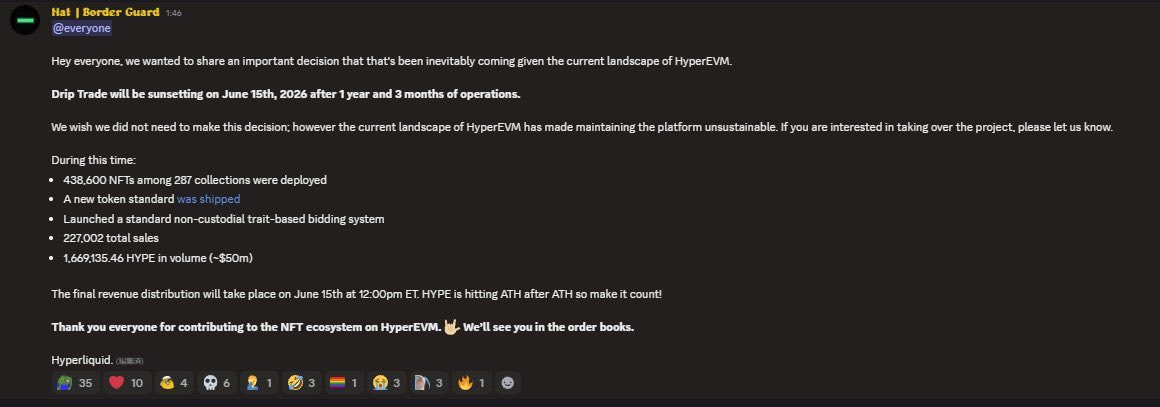
El principal marketplace de Hyperliquid, cierra sus puertas ❌
DripTrade anuncia oficialmente que cerrarán el protocolo el próximo 15 de Junio
Drip Trade fue durante mucho tiempo el principal marketplace de NFTs dentro del ecosistema de Hyperliquid
Tuvo bastante tracción durante el bull run de NFTs en la red en 2025, pero con el paso del tiempo perdió volumen y actividad
Después de varios meses de baja actividad, el equipo ha decidido cerrar la plataforma de forma definitiva
Si tienes fondos dentro, retíralos antes del deadline y cancela cualquier listado/posición que tengas
25 Oct 2025

Pues minteo en Hybra cerrado ❌
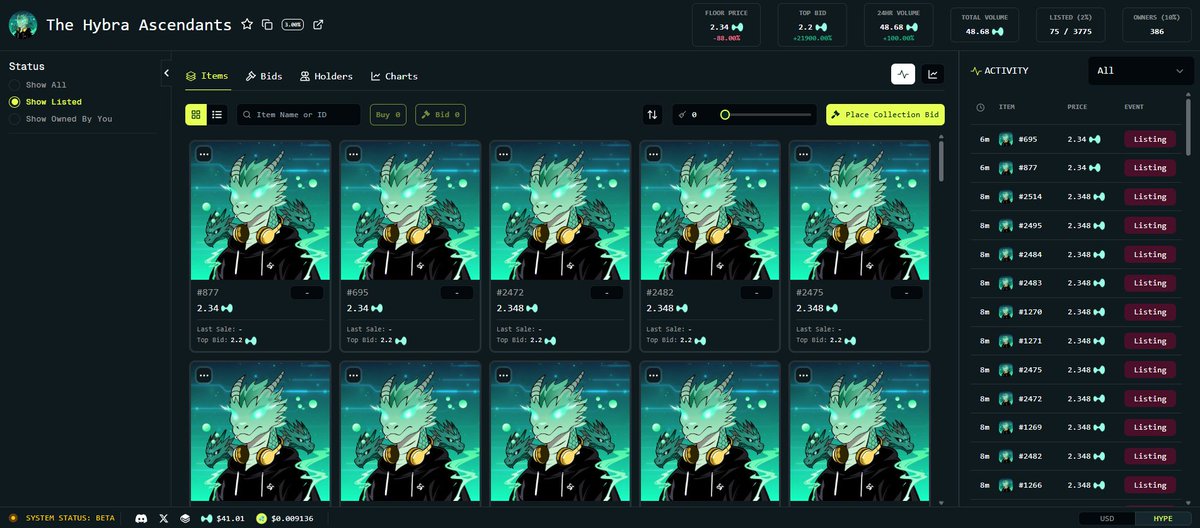
En total se han minteado 3775 Hybra Ascendants del total de 5000 que habían
Lo primero que tenéis que hacer es reclamar manualmente los NFTs que habéis reclamado para tenerlos en la wallet
Y si queréis, podéis comprar o vender en el Marketplace de Drip Trade, actualmente el Floor Price está en 2.34 $HYPE y la venta más grande se ha hecho en 3 HYPE
Por lo menos se mantiene por encima del precio de minteo y al final, tendremos mejor Airdrop (9270 $HYBR por NFT vs los 7000 iniciales)
¿Que vas a hacer con tu NFT? 🤔
2
36
3,343

Jun 11
Drip.trade will be sunsetting in 4 days, friendly reminder to move your listings over to @opensea and to revoke access from driptrade

.@drip__trade is shutting down their marketplace
Make sure to delist your Whal3s and Atlanteans from this marketplace, revoke permissions and relist them on @opensea if you want
Whal3s: opensea.io/collection/whal3s
Atlanteans: opensea.io/collection/atlant…
7
802

Por ahora están en driptrade. También los encuentras en opensea me parece. drip.trade/collections/tiny-…
1
1
20

😈sasami weekly✨5/31-6/7
私のポスト1週間のまとめ
👾xStocks ディスコロールを取得しておこう
x.com/neko_smg/status/206158…
📊Percolator Waitlist登録開始
x.com/neko_smg/status/206185…
💰Bulk プレデポジット開始
x.com/neko_smg/status/206146…
🌊OpenSeaモバイル アーリーアクセス対象の方はチェック
x.com/neko_smg/status/206262…
📱Seekerエアドロ活動してますか?
x.com/neko_smg/status/206286…
📢MegaETH ウォレット登録開始 6月10日まで
x.com/neko_smg/status/206091…
🪂Plume シーズン2エアドロClaim可能
x.com/neko_smg/status/206223…
⚠️HyperEVM のマケプレ DripTradeがサービス終了
x.com/neko_smg/status/206215…
🔐Phoenix モバイル対応 QRログインは慎重に
x.com/neko_smg/status/206171…
🟣HelloTradeがMegaETHからMonadへ移行
x.com/neko_smg/status/206181…
🧟♂️かそつー界隈 入口に有害人物が多すぎる
x.com/neko_smg/status/206094…

😈sasami weekly✨5/24-5/31
私のポスト1週間のまとめ
👛Base Guild 1000ドル分保有しておこう
x.com/neko_smg/status/205856…
🤖NousResearchのHermesエージェントでX通知BOT作った話
x.com/neko_smg/status/206051…
⚠️ZERO Network サービス終了 資産の引き出し対応要
x.com/neko_smg/status/206073…
🗳️Tea$TEA AEROステーカーは報酬付きVOTE参加可能
x.com/neko_smg/status/206055…
🔧Base MCPリリース ビルダー向け
x.com/neko_smg/status/205930…
🎁Fluent NFTホルダーに$BLEND配布
x.com/neko_smg/status/205933…
🕯️ONDOの創業者が32歳で亡くなって闇を感じる
x.com/neko_smg/status/205910…
2
22
4,567

Jun 5
Our good old days 💙
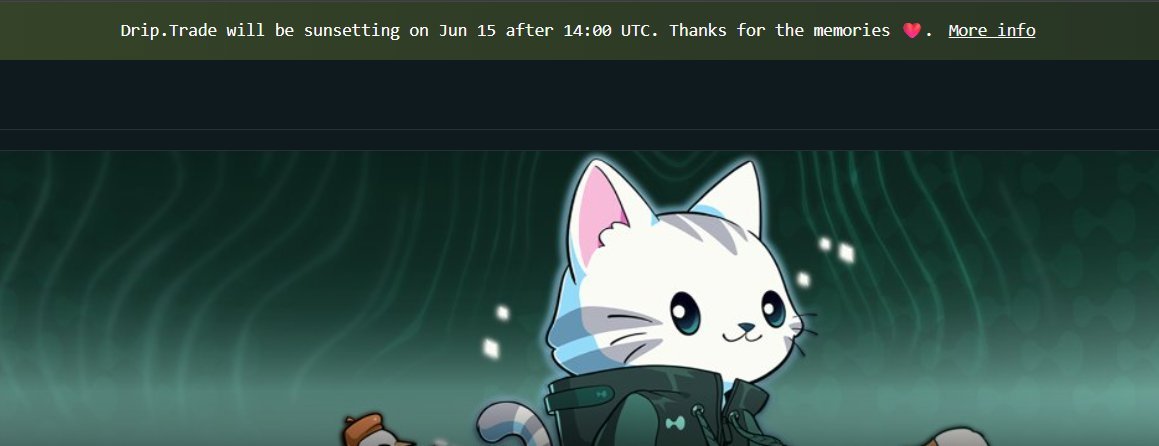
@drip__trade is shutting down June 15 at 14:00 UTC
The Hyperliquid-native NFT marketplace is sunsetting after serving the ecosystem for a solid run
This comes after Pallet Exchange on Sei did the same earlier this year (Jan 2025 shutdown). Two major chain-native NFT platforms closing within 18 months ....
I remember these good old days in SEI and now driptrade memories are also loading
all I can say is Thank you for everything and so many memories on pallet and on driptrade too
2
7
147

HyperEVMのNFTマケプレDripTrade @drip__trade サ終
少し触ってた人も多いと思う。
収益をトップウォレットに還元しすぎてしまったのが原因なのかな?そこを優遇しすぎるとポイント取れない人は去ってしまうよね💧
これからは、くそだけどOpenSea使う感じかな。
資金入れてる人は引き出し対応要とのことです‼️
Jun 2

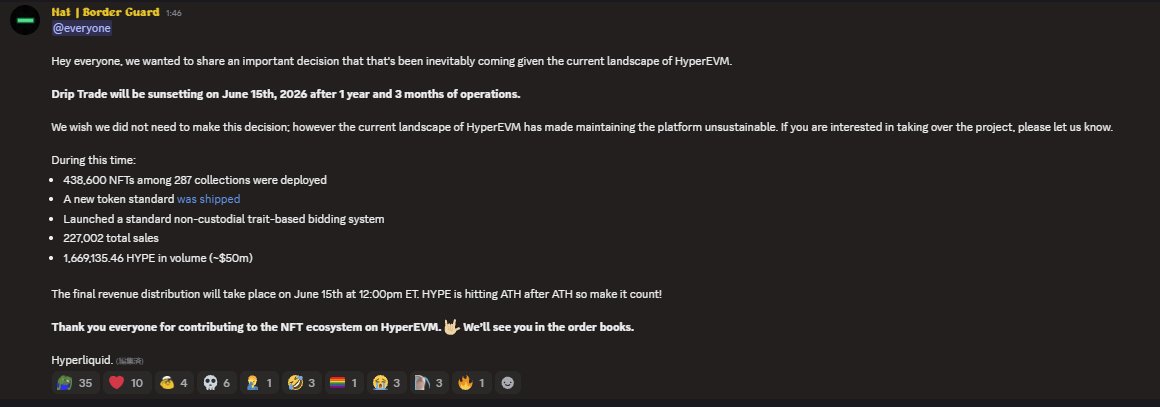
HyperEVMのNFT マーケットプレイスとして長らく稼働してしていた DripTrade @drip__trade が6/15にサービス終了とのこと 💦
JPEGのステーキングとかDripTradeプラットフォーム上に預けてる資産は引き出せなくなりそうなのでもし忘れている人がいれば要チェック⚠
私もしばらく携わっていましたが、結局人々は流動性を求めて大きな海に集まってしまうので、NFT市場はレッドオーシャンだなと思います。
Dripの運営は手数料収益をほぼすべてTop Walletに還元するというHyperliquid精神を正に体現したスタイルを最後まで貫いていましたが、一部のWalletが大量にポイントを保有しているせいで還元が独占されている状況になっていたし。(詳しくは調べていないですが...)
そのため、大盤振る舞いをしている割に人が集まらず、人が集まらないと手数料が落ちてこないのでどんどん苦しくなってきたんだと思います。
改めてHyperliquidのやってきたことは異常だなと思い知らされます。
DripTradeお疲れ様でした。
(ちなみに、PJを引き継ぎたい人がいれば募集しているらしい。)
1
1
17
2,704


Jun 2
毎日めくってたあのカードはいったい何の意味があったんだろう…www
DripTrade使ってた人は要チェック✅
Jun 2
HyperEVMのNFT マーケットプレイスとして長らく稼働してしていた DripTrade @drip__trade が6/15にサービス終了とのこと 💦
JPEGのステーキングとかDripTradeプラットフォーム上に預けてる資産は引き出せなくなりそうなのでもし忘れている人がいれば要チェック⚠
私もしばらく携わっていましたが、結局人々は流動性を求めて大きな海に集まってしまうので、NFT市場はレッドオーシャンだなと思います。
Dripの運営は手数料収益をほぼすべてTop Walletに還元するというHyperliquid精神を正に体現したスタイルを最後まで貫いていましたが、一部のWalletが大量にポイントを保有しているせいで還元が独占されている状況になっていたし。(詳しくは調べていないですが...)
そのため、大盤振る舞いをしている割に人が集まらず、人が集まらないと手数料が落ちてこないのでどんどん苦しくなってきたんだと思います。
改めてHyperliquidのやってきたことは異常だなと思い知らされます。
DripTradeお疲れ様でした。
(ちなみに、PJを引き継ぎたい人がいれば募集しているらしい。)
4
2
22
4,124

Jun 2
HyperEVMのNFT マーケットプレイスとして長らく稼働してしていた DripTrade @drip__trade が6/15にサービス終了とのこと 💦
JPEGのステーキングとかDripTradeプラットフォーム上に預けてる資産は引き出せなくなりそうなのでもし忘れている人がいれば要チェック⚠
私もしばらく携わっていましたが、結局人々は流動性を求めて大きな海に集まってしまうので、NFT市場はレッドオーシャンだなと思います。
Dripの運営は手数料収益をほぼすべてTop Walletに還元するというHyperliquid精神を正に体現したスタイルを最後まで貫いていましたが、一部のWalletが大量にポイントを保有しているせいで還元が独占されている状況になっていたし。(詳しくは調べていないですが...)
そのため、大盤振る舞いをしている割に人が集まらず、人が集まらないと手数料が落ちてこないのでどんどん苦しくなってきたんだと思います。
改めてHyperliquidのやってきたことは異常だなと思い知らされます。
DripTradeお疲れ様でした。
(ちなみに、PJを引き継ぎたい人がいれば募集しているらしい。)
2
17
8,407

May 29
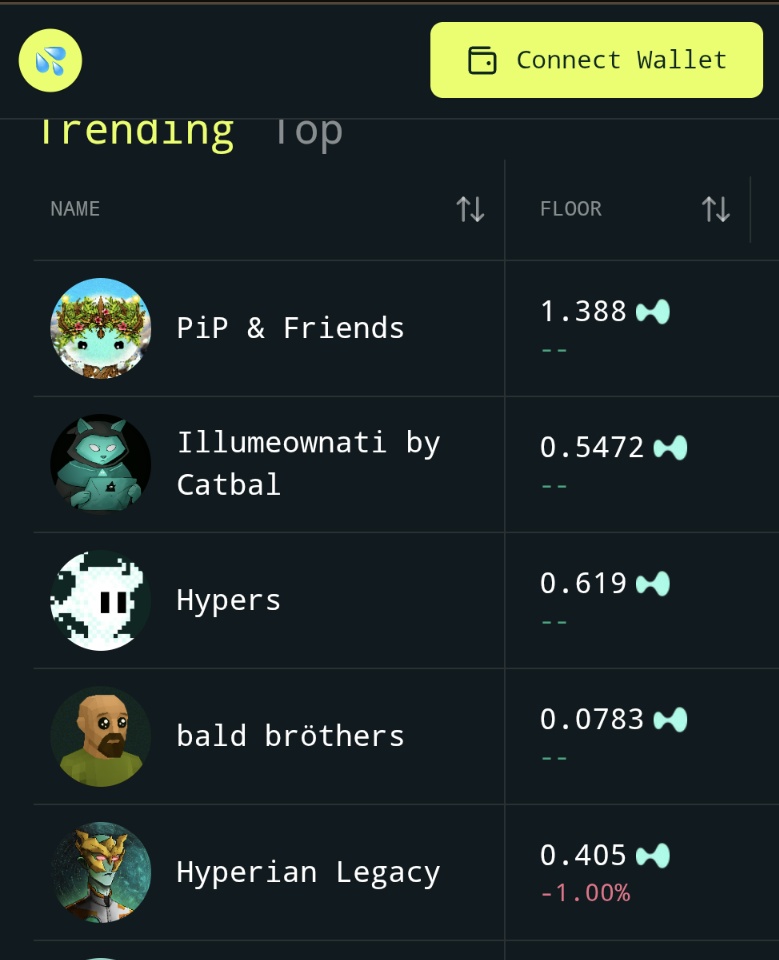
Our Hyperian Legacy collection is top 5 trending on @drip__trade 👀
1000 piece deflationary collection using the ERC-H20 standard built by Driptrade!
Currently 871 pieces with each NFT vault holding .1 $Hype value right now
Only on #Hyperliquid
2
8
336

May 9
ACTUALIZACIÓN MAYO 2026: El meta de los badges en @drip__trade
Los blinds siguen comprando JPEGs. Los smart money stackean multiplicadores silenciosos.
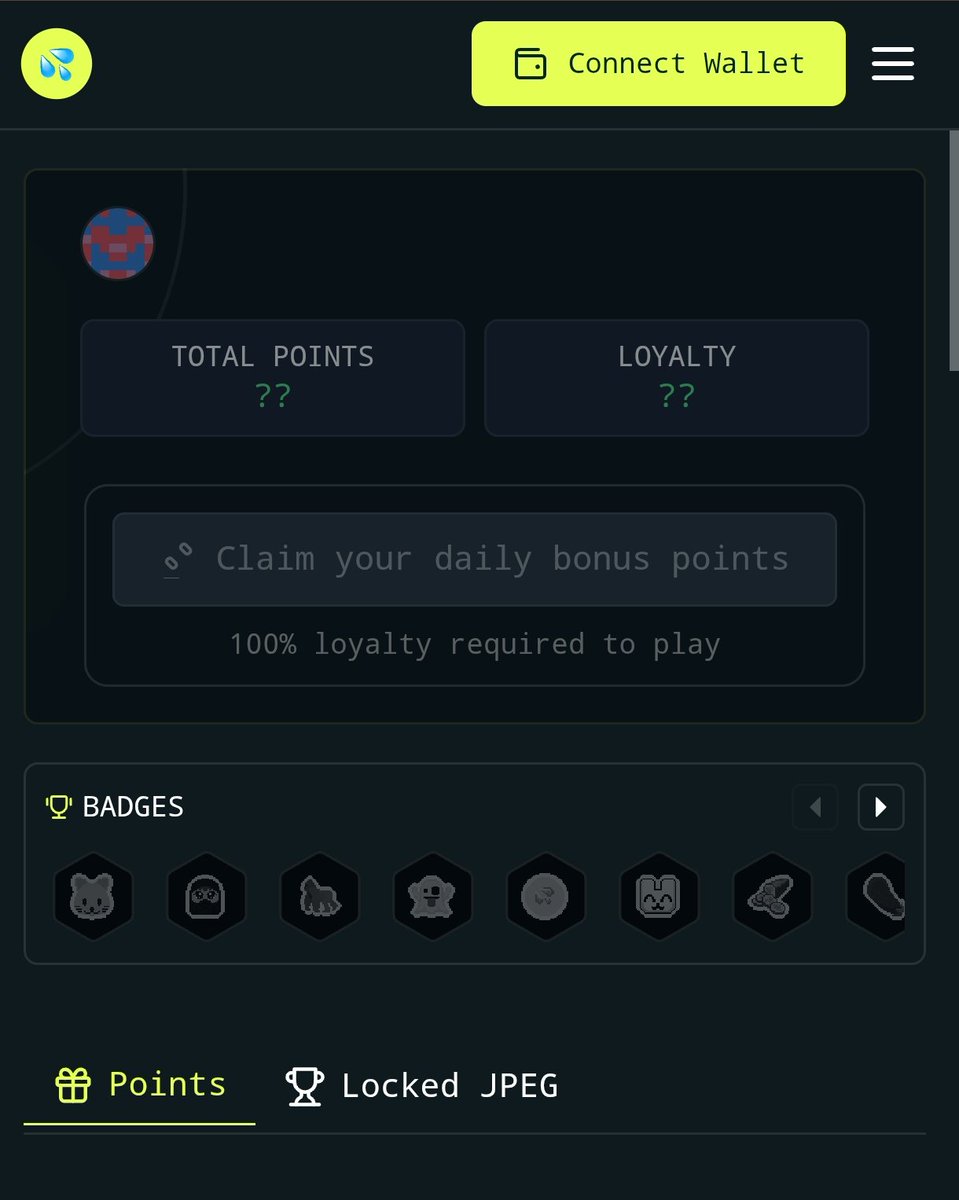
En Drip.Trade los badges NO son cosméticos.
Son leverage real en el leaderboard:
más badges → más tier → más puntos por cada compra.
5 tiers oficiales. Cuántos tienes tú.
Así funciona el engine (oficial, GitBook):
• Buy Volume = puntos base
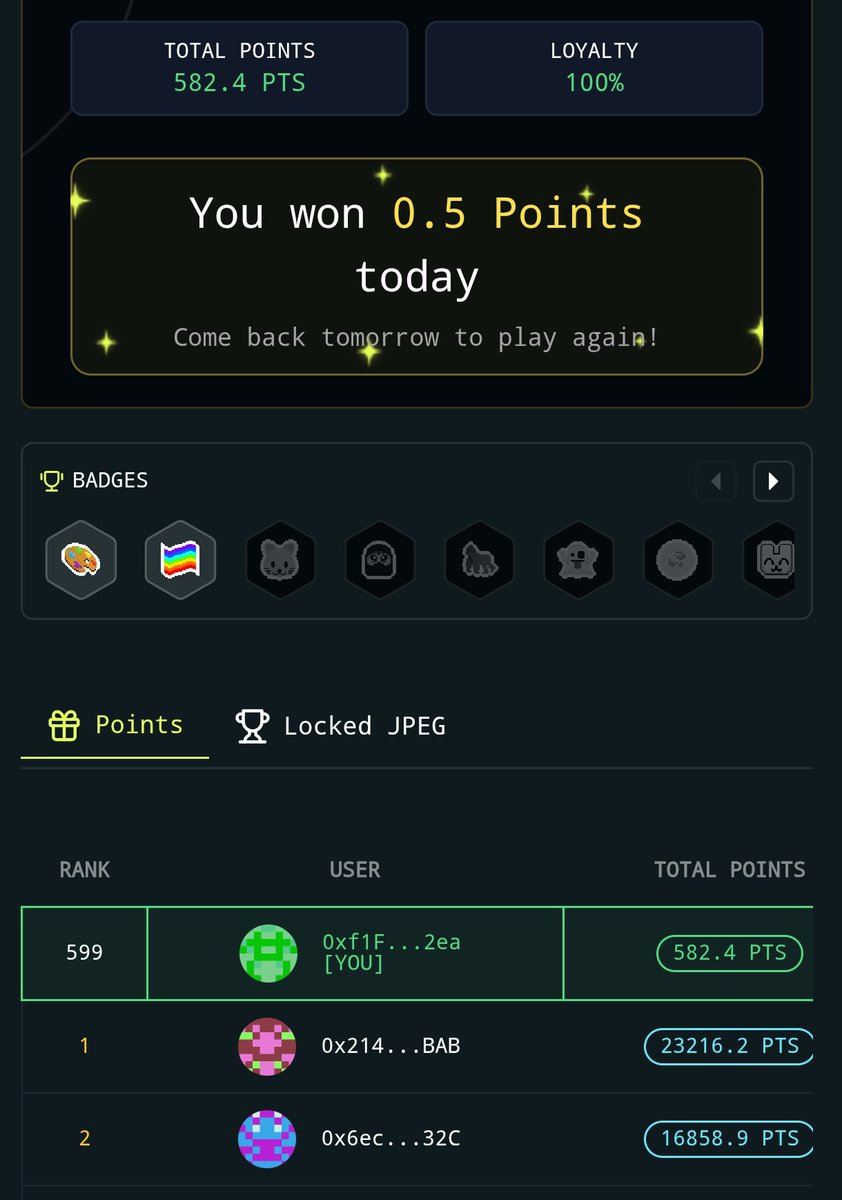
• Loyalty % = amplificador (100% = Daily Check-in Game gratis hasta 50pts/día)
• Hypers Hypio holdings = multiplicadores que stackean entre sí
• Badges = otro multiplicador encima de todo lo anterior
El compounding es brutal si tienes todo activo al mismo tiempo.
OJO: cada $HYPE que reclamas en Revenue Distribution te descuenta 10pts. Reclamar tiene un costo en puntos. Eso cambia el cálculo de cuándo conviene canjear.
━━━━━━━━━━━━━━━━━━━━━━━━━━
EASY MODE (bajo capital, máximo overlap)
🎴 DripTrader → 1 NFT "Drip" Race de HypersOnHL
🐰 Bad Bunny → 1 "Bunny" Outfit de HypersOnHL
🐒 Mono → 1 "Mono" Race de HypersOnHL
🏛️ Collectooor → 10 NFTs de 10 colecciones distintas
🌈 There is No Second Gayest → 1 NFT de @HypericardoHL
💜 It Belongs in a Museum! → 1 rarity Purple (Top 10%) de Hypio, Hypers, Tiny Hyper Cats o Gems
━━━━━━━━━━━━━━━━━━━━━━━━━━
MEDIUM MODE (overlap multi-colección)
🤝 Cabal → 1 Hypio 1 Tiny Hyper Cats 1 Hypericardo 1 Gems
🫠 Naked and Famous → trait "Naked" de Hypio
👽 E.T. Phone Home / Arkantos → trait "Alien" o "Atlantean" de Hypio
🧕 Niqabio, KittenMode, Catbalio → traits específicos de Hypio
━━━━━━━━━━━━━━━━━━━━━━━━━━
HARD MODE (para ballenas de verdad)
🐳 I Own 6 Hyios → 6 NFTs de Hypio
💧 Big Drip Traders → 5 "Drip" Race (Hypers) 5 "DripTrade" Hat (Hypio)
🍆 Large Penis / Tremendous Cock / Harem → combos ultra raros (todos los colores de Niqab — el verde es legendario)
━━━━━━━━━━━━━━━━━━━━━━━━━━
ESTRATEGIA ÓPTIMA (surfear el tsunami sin ahogarse):
① Mantén Loyalty al 100% — no compres NI listes en otra plataforma
② Prioriza overlaps Hypio ↔ Hypers — varios badges con menos capital
③ Acumula puntos ANTES de reclamar — reclamar consume 10pts por $HYPE
④ Activa el Daily Check-in — con 100% Loyalty tienes hasta 50pts gratis por día
⑤ Apunta a rarity Purple y traits clave para badges que la mayoría ignora
Badges Loyalty Volume Holdings = compounding asimétrico.
La Casa de Todas las Finanzas te da el manual.
¿Lo estás leyendo?
🧵 Hilo original (Feb 2026): x.com/tonix_C/status/2022758…
Estudia Hyperliquid.
@Hyperliquid_ES
Feb 14

1/18
Most of you are farming points blindly.
You’re buying JPEGs.
Whales are stacking multipliers.
On @drip__trade badges aren’t cosmetic.
They’re silent leverage. 🧠🔥
1
1
4
147

Apr 26
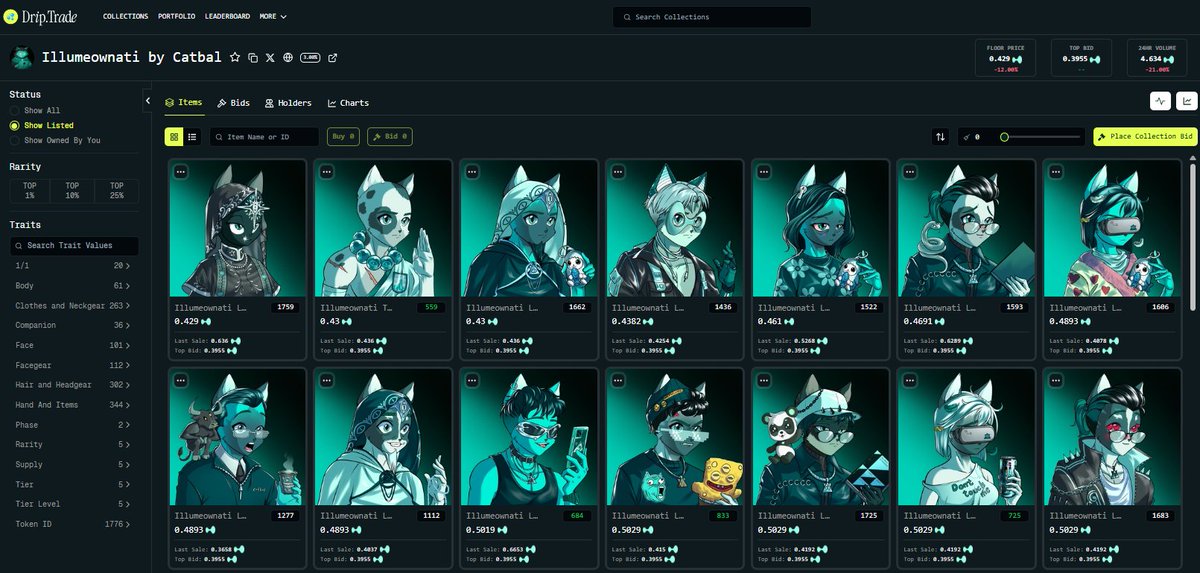
Illumeownati by Catbal 👀
Clean art, consistent style
Strong identity across the collection
• Solid floor holding around ~0.4
• Active listings steady bids
• Traits feel well distributed
Quietly building in the background.
Not overhyped — just consistent.
Worth watching.
#NFT #DripTrade #Hyperliquid #OnChain @MBxxvv
1
2
84
Apr 23
If your on #Hyperliquid EVM, you probably don't own enough Hyperian Legacy NFTs 👀
Don't sleep, just sweep.
On driptrade 🔥
drip.trade/collections/hyper…
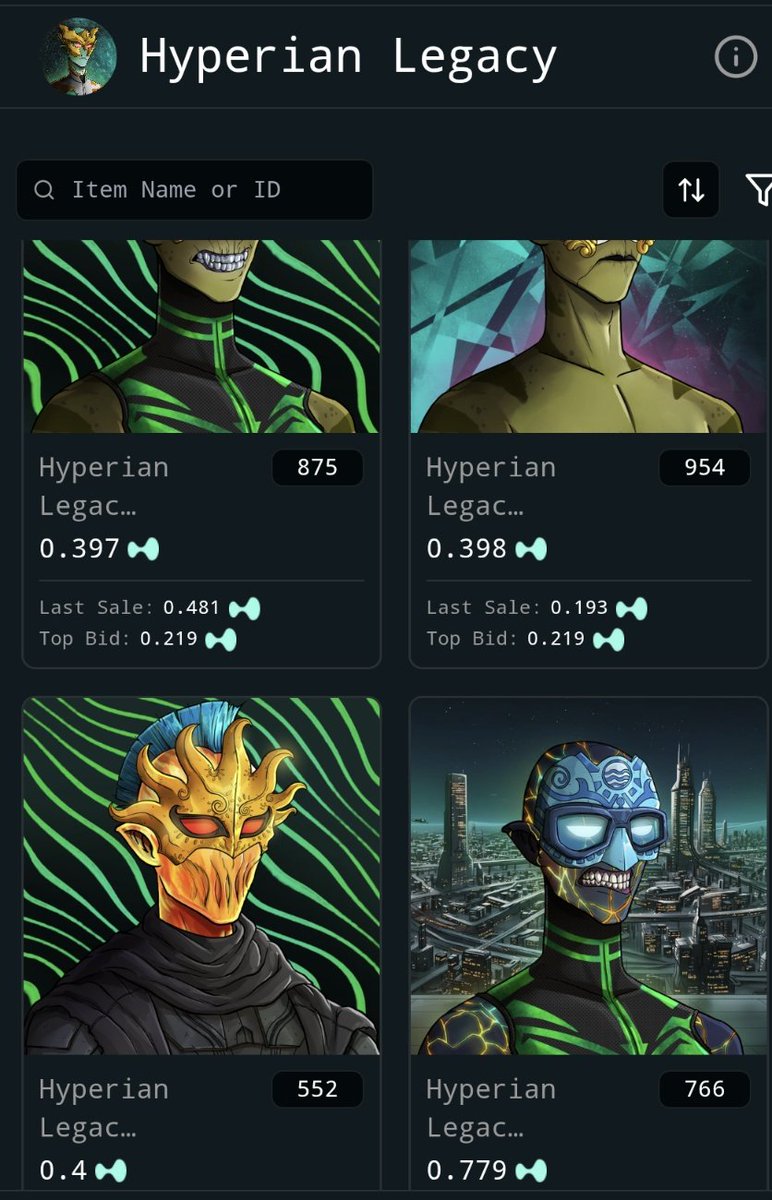
1
4
4
205
Apr 16
Using Opensea this is the real one.
opensea.io/collection/hyperi…
On driptrade there is only 1
drip.trade/collections/hyper…
1
2
31

Apr 11
RWA is regulated or working hard to be. The bridge between real world and blockchain requires trust in real institutions, legal frameworks, and compliance structures underneath.
NFTs are largely permissionless. Anyone can mint one tonight. No compliance. No custodian. No institution required. That freedom is their power and their biggest vulnerability.
One is built on what the world already recognizes as valuable.
The other is building a new definition of value from scratch.
𝗥𝗲𝗮𝗹 𝗪𝗼𝗿𝗹𝗱 𝗨𝘀𝗲 𝗖𝗮𝘀𝗲𝘀
This is where theory stops and reality begins.
RWA in the real world right now:
Most projects that tokenize gold stop at the surface. They take gold sitting in a vault, wrap it in a token, and call it innovation. The reserve sits still. The token moves. And somewhere in between, you're supposed to trust that the value holds.
@emas_fi goes deeper than that.
It connects actual gold mining operations directly to the blockchain meaning the value flowing into its ecosystem doesn't come from a reserve collecting dust somewhere. It comes from ongoing physical production. Gold being pulled from the ground, converted into real revenue, and distributed monthly to token holders through a structured revenue-sharing model.
No price pumps. No hype cycles. No hoping the market moves in your favor while you wait.
Just a system designed to produce value continuously the way real assets have always worked, now running on-chain. Every transaction visible. Every token accounted for in a multi-signature safe wallet where no single person controls the funds alone. Zero central control. Full transparency.
And for early participants the structure rewards positioning over chasing. A 12 month auto-stake filters out the people looking for a quick flip and keeps the ones who actually understand what they're holding. Gold production generates value. That value gets distributed. You earn not because the price pumped but because the ground produced.
That's not a token.
That's infrastructure built quietly while everyone else was chasing noise.
NFTs in the real world right now:
The marketplaces tell their own story. @opensea and @MagicEden handle the broadest range of collections across multiple chains. @tensor_hq is where Solana NFT trading happens. @DripTrade serves the Hyperliquid ecosystem. @getgemsdotio is where TON NFTs live and move.
But the real story isn't where they trade.
It's what traded.
@cryptopunks 10,000 pixelated characters minted in 2017 when nobody was paying attention became the cultural foundation of everything NFTs would become. At their peak they crossed $300,000 per punk. Today they sit around $63,000. Not because they failed. Because the market contracted, the noise cleared, and what remained was a collection with cultural weight too deep to disappear.
@pudgypenguins told a different story entirely. A collection that nearly collapsed, found new leadership, rebuilt its community from scratch, expanded into physical toys sold in Walmart stores, and rode that real-world presence all the way to an all time high above $200,000 per penguin. Today they sit around $9,468 still standing, still recognized, still held by people who understand that what they own survived a bear market and came out breathing.
Both collections prove the same thing.
NFT value isn't random. It follows community, culture, and the kind of conviction that outlasts the hype and stands on the other side of the crash still holding.
1
18
84

Apr 10
Extremely bullish on Hyperliquid.
Performance ⚡
Liquidity 💧
Execution 🎯
Everything is already there.
But… where are the NFTs? 🤔
Is DripTrade RIP? 🪦
Which NFT communities do you think will bounce back ?

3
3
48
249
Mar 13
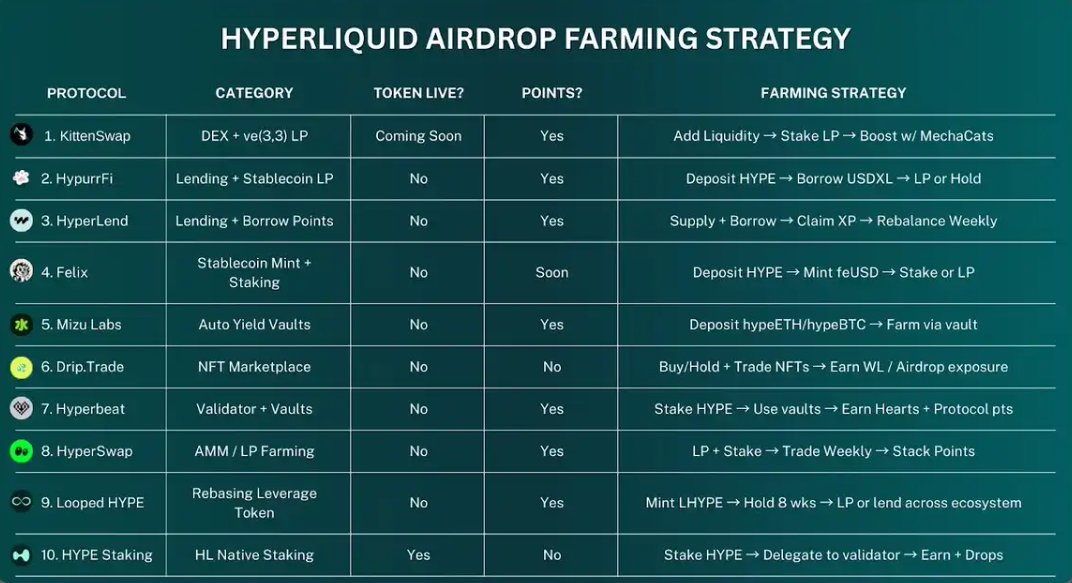
The picture is not the latest...but it's worth looking at.
Hyperliquid ecosystem is quietly becoming one of the most powerful airdrop farms in crypto. 🚀
If you're not active yet, you might be missing multiple future token distributions across the ecosystem.
Here’s a simple farming route many users are following right now 👇
🔹 KittenSwap 🐱
Add liquidity → Stake LP → Use MechaCats boost
🔹 HypurrFi 💱
Deposit HYPE → Borrow USDXL → LP or hold
🔹 HyperLend 🏦
Supply assets → Borrow → Claim XP → Rebalance weekly
🔹 Felix Protocol 🪙
Deposit HYPE → Mint feUSD → Stake or LP
🔹 Mizu Labs 🌊
Deposit hypeETH / hypeBTC → Farm vault yield
🔹 Drip.Trade 🎨
Buy / Hold / Trade NFTs → WL & ecosystem exposure
🔹 Hyperbeat ⚡
Stake HYPE → Use vaults → Earn Hearts protocol points
🔹 HyperSwap 🔄
Provide LP → Stake → Trade weekly → Stack points
🔹 Looped HYPE 🔁
Mint LHYPE → Hold 8 weeks → LP or lend
🔹 HYPE Staking 🔐
Delegate to validator → Earn rewards potential drops
The Hyperliquid ecosystem is expanding fast.
Points, vaults, LP positions, NFTs and staking may all play a role in future rewards.
Stay active. Stay early. 🧠
🔥 Which protocol are you farming the most?
#Hyperliquid #HyperEVM #HYPE #Airdrop #Crypto #DeFi #NFT #DripTrade #KittenSwap #HyperLend #HypurrFi #Felix #MizuLabs #HyperSwap #Web3 #CryptoFarming
1
3
95
Mar 1
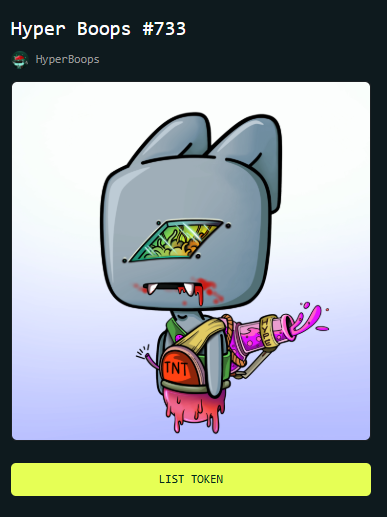
⚡🎁 ROUND 4 & 5 COMBINED – 12H MEGA DROP 🎁⚡
2 NFTs - 2 Winners - 12 Hours.
🥷 Hypurr Ninja #185
💣 Hyper Boops #733
✅ Follow me
✅ Like
🔁 Retweet
💬 Comment “Hypurr Ninja & Hyper Boops” tag 1 real Hyper builder
⏳ 12 HOURS
Winners picked publicly.
Builders only.
Let’s push HyperEVM together ⚡
#Hyperliquid #HyperEVM #HYPE #DripTrade #NFTGiveaway #HyperBuilders

5
2
2
91

Feb 23
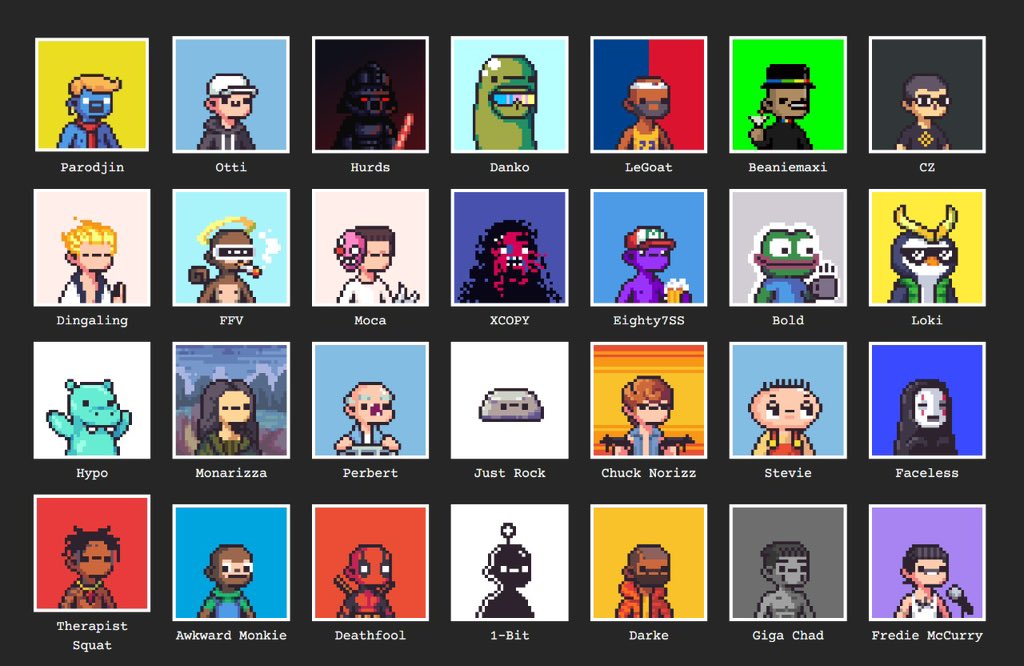
Would love for you to take a serious look at Parodee @parodeenft
What it is:
Parodee is a focused pixel art-driven collection blending satire and culture. Every piece is blended with lots of no traits.
Why support it:
• True 1/1 scarcity, every piece stands alone
• Strong collector base that values art
• Built for cultural relevance, not short-term speculation
Where to find it:
OpenSea and Driptrade
opensea.io/collection/parode…
drip.trade/collections/parod…
The Grail to go after:
If you’re hunting a statement 1/1, we’d suggest going for one of our culturally sharp pieces something bold, instantly eye catching, and conversation-starting.
Massive respect to you. Not everyone is supporting NFTs like you do. That’s exactly what our ecosystem needs to grow.
Appreciate you opening this up to the community. Whether you choose us or not, this is the kind of energy the space needs 🫡
8
6
18
585