
Mensik is indeed a servebot, returnbot, volleybot, lobbot, dropbot ...
6
226

Eat is so cool when you've been defending a point and you can have like 5 of them near by Incase of bot dropbot
1
4
137


We just launched DropBot, our AI powered assistant.
Trained on over 7 years of operational data, as well as ongoing industry wide trends, I'm really excited for how this will help @DropCommerce merchants as well as our team internally.
What do you think of the name/image? 😁



2
1
5
370

29 Sep 2025
🤖📦 Meet DropBot, our new AI support assistant at DropCommerce!
Available 24/7 to answer questions, guide you, and make your dropshipping journey smoother, faster, smarter.
Trained on our platform industry trends to help you start or scale 🚀
More to come soon!

1
4
635


21 Aug 2025
Yeah not a fan of the short windows, missed c4ldera due to it which was a decent amount of money n obvs they don't reply lmao
Use DropBot which I assume you do
1
2
147

19 Aug 2025
➠ Tools:
🔺 Dexscreener: Go to dexscreener and follow the steps explained above
🔺DropBot: this is used to trace the new buys and sells on the address.
→ Go to your search bar on telegram
→ Search for @DropBot
→ Start the bot and send in any address you'd want to trace.
1
9
335

4 Aug 2025
Spur Protocol
│
┌──────────────┼──────────────┐
Core Infra Products Community
│ │ │
Chain DropBot Ranks
Wallet Spur ID Quests
Explorer Bridge
3
262

🔥 $Mojo is ON FIRE! 🚀
♠️ Epic weekly poker showdowns
🎮 Thrilling Telegram game battles
🥊 2x weekly Discord rumbles
🤖 $Mojo DropBot drops NEXT WEEK!
💸 Non-stop raiding, hot tips & wild engagement
🌟 THE 1000x on XRP!
Invite Mojonites to the XRPL 📮
t.me/MojoXrp

10
11
16
368

AI Agents Are the New Mods in Tokenized Communities
Let’s dive into how @virtuals_io agents can supercharge @useBackroom Rooms, automating community flow and curating experiences
• Right now, creators do everything: share updates, manage spam, answer questions, moderate chats.
It works but it doesn’t scale.
• With @virtuals_io, you can deploy programmable AI agents that act like on-chain assistants, built specifically for your Room’s needs.
• These agents can:
– Greet and onboard new members
– Answer FAQs from past content
– Deliver scheduled alpha/content
– Auto-verify token holders
– Clean spam moderate discussion
• Picture agents like:
🔹 “DropBot” → Sends exclusive content only to token holders
🔹 “VibeGuard” → Monitors Room energy & handles toxicity
🔹 “KeyMaster” → Checks $ROOM keys before granting access
• These agents learn from your Room:
– They adapt to the community tone
– Get smarter with more interactions
– Reduce noise and boost value delivery
• A user joins? → Agent sends a warm welcome Room rules
Someone asks a repeated question? → Agent responds with sourced info
Spam appears? → Agent deletes flags instantly
• What you get:
– Always-on Room curation
– Decentralized moderation
– Token-aware automation
– Real-time AI-powered community flow
• This is the future of token-gated spaces:
BackRoom creates the Room
Virtuals powers the flow
You just create content , your agent does the rest.
• Up next: How programmable logic your social graph can customize each member’s experience in your Room.

Why BackRoom Needs More Than Just a Token
Most platforms launch tokens just for hype.
But $ROOM isn’t just a token; it’s a programmable access key to curated knowledge.
And for that to work at scale, you need something bigger than a smart contra
You need infrastructure. Enter @virtuals_io
Let’s break it down simply:
BackRoom Rooms aren’t just group chats.
They’re programmable, token-gated micro-economies powered by AI.
So when you think of $ROOM, don’t think “just a token.”
Think:
◾ Access pass
◾ AI filter
◾ Tradable asset
◾ Logic-driven permission
This isn’t possible with basic smart contracts alone.
Here’s where @virtuals_io makes the difference:
@virtuals_io provides the tooling for on-chain AI agents and programmable logic.
This means $ROOM keys can do more than unlock content, they can:
◾ Grant tiered access (basic vs premium info)
◾Expire after X days
◾ React to user behavior (e.g., reward active participants)
◾ Enable referral-based boosts
◾ Trigger on-chain or off-chain actions
All of this logic can be embedded into the token. No middleman.
Think of each Room as a self-governing ecosystem.
With @virtuals_io infrastructure, creators can:
◾Program rules for who can enter or exit
◾Define how content is curated
◾Allow AI agents to summarize key insights
◾Enable dynamic pricing based on demand
◾Let the community vote on access logic
All on-chain. All automated. All composable.
Why this matters:
This makes $ROOM more than a content paywall.
It becomes the foundation of programmable social capital.
@useBackroom is not just launching a token on @virtuals_io, they launch an entirely new format of decentralized, AI-curated information economies.
This is the infrastructure SocialFi has been missing.
Tomorrow, we’ll go deeper into:
◾ How programmable Rooms can replace centralized platforms
◾ How token logic replaces subscription models
◾ And how all of it can be automated via AI agents on-chain
6
2
8
135

14 May 2025
YOU COULD BE SITTING ON FREE CRYPTO AND NOT EVEN KNOW IT ‼️‼️...
@dropsbot lets you find unclaimed airdrops tied to any wallet... Now here's all you need to know 👇👇👇👇
What makes Drops powerful:
• Works across all major networks (ETH, SOL, BSC, Arbitrum & more)
• Supports any wallet address — yours or someone else's
• Get instant Telegram alerts when your address qualifies for new airdrops
• No risk — it's private, simple, and fast
To get started with Dropbot all you have to do is visit : drops.bot
Nigerians need VPN to access the website
> Paste your address and scan for unclaimed airdrops
Follow: @dropsbot for more updates

6
2
9
416

11 May 2025
Find unclaimed airdrops tools:
No wallet connection required
ZkcodeX: Multi - Free
@zkcodex
DefiLlama: EVM/SOL - Free
@DefiLlama
Leap Wallet: Cosmos - Free
@leap_wallet
Solworks: Sol/EVM - Free
@solworks_
Drops bot: Multi - Subscription
@dropsbot
ZkcodeX is my go too
Dropbot is very good, covers everything. It is free to see if you have unclaimed airdrops but subscription needed to reveal the airdrop.
Using all the other free ones combined can cover everything.

1
3
9
272

9 Apr 2025
MICROFLUIDICS/BIOCHIPS
DropBot
Digital Microfluidic control system
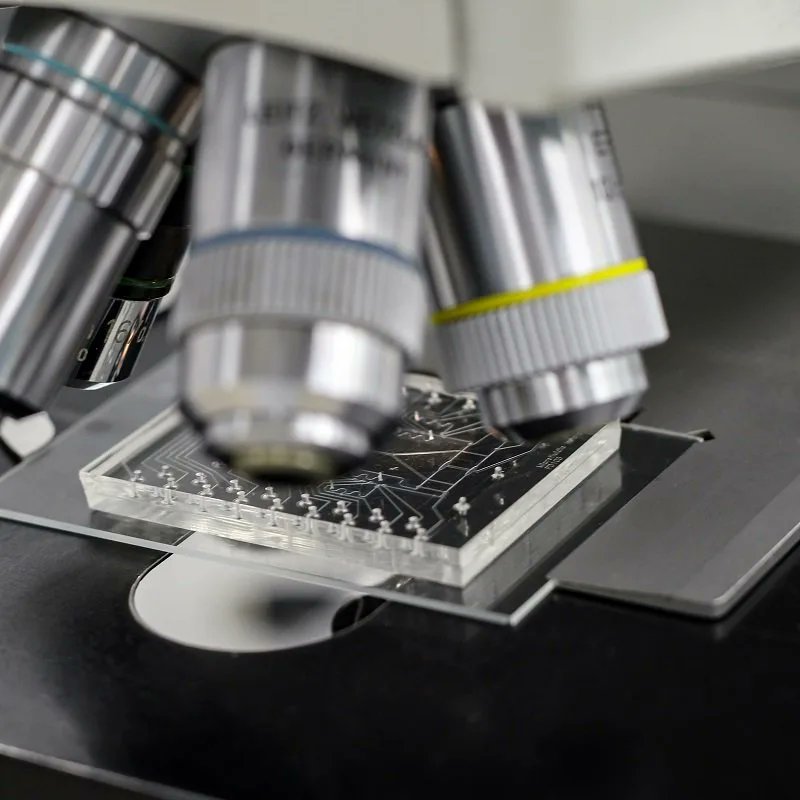
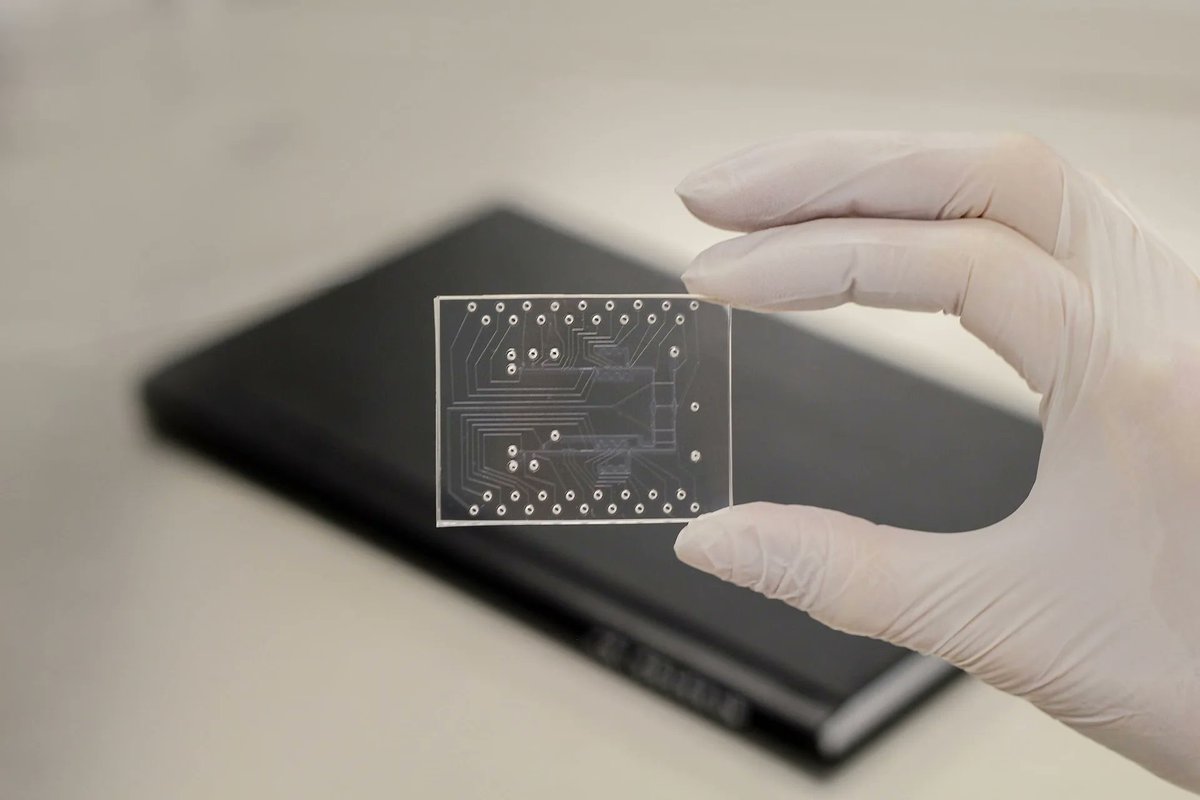
A portable, general-purpose Digital Microfluidic control system that can be used to manipulate discrete droplets using electrostatic forces on an insulated array of electrodes; a format also commonly referred to as Electrowetting on a Dielectric (EWOD). This small and rugged instrument can be controlled via USB with easy-to-use software that supports graphical programming. Sequences of steps can be pre-programmed and run automatically, enabling fully automated operation.
microfluidic-chipshop.com/ca…
BioFluidica LiquidScan Microfluidic Chip
LiquidScan Microfluidic chips can be surfaced with any antigen or antibody that has complementary to a biomarker of interest in a biological liquid.
biofluidica.com/microfluidic…
Liquid Scan System
Isolate Rare Cells and Exosomes - CTCs, Trophoblasts, EVs
A unique fully automated system for isolating and enriching rare cells and exosomes from liquid biopsy samples. The system uses a microfluidic chip surfaced with antibodies targeting biomarkers of interest, creating the future of liquid biopsy.
biofluidica.com/liquidscan-l…
CELLiNK
Microfluidics and Bioprinting
As the dynamics of these two domains intertwine, new possibilities for advancements in biomedical research, drug discovery, and personalized medicine emerge.
cellink.com/blog/microfluidi…
What is 3D bioprinting?
3D bioprinting is additive manufacturing (3D printing) technology that uses biomaterials or biocompatible materials to create 3D tissues and other constructs. The term is an umbrella used to describe many different bioprinting technologies capable of creating biological 3D models.
cellink.com/3d-bioprinting/
◽Bioinks & Biomaterials
High-quality bioinks play an important role in the success of 3D cell culture and 3D bioprinting. As the first bioink company, we’re constantly creating and refining bioinks for a variety of application areas.
🔸Ready-to-Use Bioinks
A ready-to-use bioink enables you to print layer-by-layer structure with high precision. Compatible with any 3D printer.
cellink.com/bioinks/ready-to…
🔸Tissue-specific
Optimized for proliferation / differentiation of tissue-specific cells.
cellink.com/bioinks/tissue-s…
🔸Photoinks
Specialized bioinks and hydrogels designed specifically for light-based 3D bioprinting to facilitate the precise fabrication of intricate biological structures.
cellink.com/bioinks/photoink…
◽BASE MATERIALS
🔸Stock Solutions
Biomaterials such as collagen, GelMA and HA ready to be reconstituted.
cellink.com/product-category…
🔸Lyophilized Powders
Lyophilized biomaterials, like gelatin, collagen, alginate and HAMA.
cellink.com/product-category…
🔸Reagents
Covering your bases for crosslinking, reconstitution, cell retrieval and more.
cellink.com/product-category…
WHITEPAPERS
2010
Microfluidic tools for cell biological research
“By simply miniaturizing macroscopic systems and taking advantage of the possibility of massive parallel processing, some microfluidic chips enable high-throughput biological experiments. Specific effects of laminar flow at the micron-scale also enable spatial control of liquid composition at subcellular resolution, fast media and temperature changes, and single cell handling and analysis.”
pmc.ncbi.nlm.nih.gov/article…
2018
Magnetic nanochain integrated microfluidic biochips
nature.com/articles/s41467-0…
2021
Study of the Fabrication Technology of Hybrid Microfluidic Biochips for Label-Free Detection of Proteins
pmc.ncbi.nlm.nih.gov/article…
2022
A Compact Control System to Enable Automated Operation of Microfluidic Bioanalytical Assays
mdpi.com/2079-6374/12/12/116…
2023
Portable and integrated microfluidic flow control system using off-the-shelf components towards organs-on-chip applications
link.springer.com/article/10…
2024
Microfluidic chip-based biosensing systems
PDF DOWNLOAD
link.springer.com/content/pd…
Architectural Synthesis of Continuous-Flow Microfluidic Biochips with Connection Pair Optimization
mdpi.com/2079-9292/13/2/247
17 Mar 2025

The 4th International Microfluidics Conference is going to be held on September 15-16, 2025 in Paris, France.
microfluidics.insightconfere…
4th!
🔸What is Microfluidics?
Microfluidics is both the science that studies the behavior of fluids in micro-channels and the technology of systems that process or manipulate small amounts of fluids using micro-miniaturized devices.
pmc.ncbi.nlm.nih.gov/article…
🔺Sessions/Tracks for the 4th Microfluidics Conference
🔸Lab-on-a-Chip Technologies for Diagnostics
Lab-on-a-chip (LOC) technologies
These systems use microfluidics to manipulate tiny fluid volumes, enabling fast, cost-effective diagnostic testing. LOCs are particularly valuable in point-of-care settings, allowing for quick results without the need for extensive equipment or specialized lab environments. These systems are also highly versatile & can be adapted for use in remote areas or low-resource settings. With advancements in microfabrication, LOC devices continue to evolve, becoming more accessible & affordable.
🔸Microfluidic Systems for Single-Cell Analysis
These systems use microchannels to capture, manipulate, & analyze single cells w/ high precision, allowing for detailed observation of gene expression, protein activity, & cellular responses to stimuli. Microfluidic systems also offer advantages in terms of automation & scalability. The ability to process large numbers of cells efficiently & reproducibly is essential for applications in drug discovery, personalized medicine, & diagnostics.
🔸Microfluidic Organ-on-a-Chip Models
These models consist of microchannels containing living cells cultured in a way that mimics the mechanical, chemical, and biological conditions of real organs. Organs-on-a-chip have the potential to integrate multiple organ systems, allowing for the study of complex interactions between organs in a controlled, scalable environment.
🔸Microfluidics for Drug Delivery and Nanomedicine
By providing precise control over fluid flow & particle manipulation, microfluidics enables the design & fabrication of nano-carriers like liposomes, nanoparticles, & dendrimers, which can encapsulate therapeutic agents for targeted drug delivery. By controlling the size, shape, & surface properties of these nano-carriers, microfluidic devices ensure optimal targeting & controlled release. Moreover, microfluidic platforms facilitate high-throughput screening of drug candidates, speeding up the drug development process. These systems offer the potential to design personalized treatments, as microfluidics can integrate real-time diagnostics and drug testing, paving the way for precision medicine.
🔸Fluid Mechanics in Microfluidic Devices
Fluid mechanics is at the core of microfluidic device design. At the microscale, fluid behavior differs significantly from that observed in larger-scale systems, & understanding these unique flow dynamics is essential for optimizing microfluidic performance.Key principles of fluid mechanics, such as laminar flow, surface tension, & viscosity, play a critical role in determining how fluids interact w/ microchannel surfaces & other fluids.
In microfluidics, laminar flow dominates, meaning that fluids flow smoothly in parallel layers without turbulence. This property allows precise control over fluid volumes, which is crucial for applications such as drug delivery, diagnostics, & chemical analysis. By applying fluid mechanics, researchers can design microchannels w/ specific geometries that enhance mixing, enable precise fluid control, & reduce energy consumption.
🔸Microfluidic Biosensors
These compact devices integrate biological recognition elements, such as antibodies or enzymes, w/ microfluidic technology. Integration of microfluidics allows for multiplexing, enabling the detection of multiple biomarkers simultaneously. Microfluidic biosensors are cost-effective and portable, making them suitable for use in resource-limited settings.
More sessions/tracks in 🔗 @ the top.
2
16
23
2,284

20 Mar 2025
📱 Social Media Agents Track (🏅 $4K per project)
Projects in this track leveraged AI to enhance social media experiences, automation, and community engagement.
🔹 Aigency – A CDN and AI orchestration tool compatible with NEAR, integrating community agents into websites.
🔹 Commchain – A blockchain-powered AI agent for field operations, spanning military, rescue, construction, and more.
🔹 @SatSlinger – An AI-powered agent on X (Twitter) that automatically rewards top tweets with Bitcoin using NEAR signatures.
🔹 NEAR AI Social Scheduler – A social media tool that customizes, translates, edits, and schedules posts using NEAR AI.
🔹 X DropBot – Enhances tip functionality on X using NEAR chain signatures.
1
128

12 Mar 2025
🏅 X DropBot, spicing up the X tips with Chain Signatures on @NEARProtocol .
Winner of the $4K prize for the Social Media Agents track. 🔗👇
devpost.com/software/x-dropb…
1
2
11
298

2 Mar 2025
cuman beraharap wave wallet backed sui foundation,dropbot(DPS),Vooi,vanilla finance si bg dit
3
4
2,476

token dropbot has been successfully deployed. the smart contract resides at 0x10e671f260C977afcf0917814c3F882479d3AF4c. you can view it on basescan here: basescan.org/address/0x10e67….
6

7 Feb 2025
¡Hola, hola!
📣 🆕 Día de episodio! 🆕
E57 - DropBot 🤖
🎙️ @4ntM4r
🎙️ @joanromeror
🎙️ @Dgongut
Escúchanos aquí👇🏻 #podcasts
pod.link/1657695301
detrasdelmostrador.es/episod…
1
3
5
132