
Also a topic on #EchoDerZeit on Swiss radio on Monday. Remember: companies get private credit when they can't get a loan from the bank. Extractive finance capitalism is destructive and needs to be stopped.

Wall Street just got exposed for FAKING the ratings on a $3 TRILLION market.
Columbia Business School researchers found that the ratings underpinning the private credit market are systematically understating how risky the investments actually are.
The ratings say these loans are safe. But the researchers say they're lying. And US life insurance companies have $807 BILLION of their money parked in this exact market.
Private credit is a $3 trillion shadow lending market where investment funds lend money directly to companies instead of banks. It exploded after 2008 because new regulations stopped banks from making risky loans, so Wall Street just moved the same risky loans to a different address where regulators couldn't see them.
The market grew from $10 billion twenty years ago to over $3 trillion today, and the people rating these loans have been telling everyone they're safe the entire time.
But they're NOT safe.
Fitch Ratings reported in May that the US private credit default rate hit a RECORD 6.0% in April 2026. Companies with less than $25 million in earnings are defaulting at 15.8%.
More than one in ten loans in private credit funds have been marked down by at least 50%, meaning they've already lost HALF their value on paper.
And Moody's found that 65% of defaults in 2025 weren't even counted as real defaults because lenders restructured them through extensions and payment-in-kind deals where borrowers pay interest by taking on MORE debt instead of cash.
The defaults are being hidden and the ratings are being inflated, and the people most exposed are the insurance companies managing the policies.
But here's where it gets genuinely scary:
The top 10 US life insurers now hold $352 billion in private illiquid bonds. Apollo runs an insurance company called Athene and KKR runs one called Global Atlantic.
These private equity firms are taking insurance premiums, lending that money to risky companies through their own private credit funds, rating those loans as safe through friendly rating agencies, and collecting fees at every step of the chain. The money goes in a circle and gets counted as safe at every stop.
Blue Owl, one of the biggest private credit managers, literally froze withdrawals from one of its retail funds in February 2026. An Apollo-managed fund cut its dividend and wrote down the value of its loans around the same time. Blackstone had to raise its repurchase limit to handle nearly $2 billion in withdrawal requests in a single day.
And a London-based lender called Market Financial Solutions collapsed entirely with a collateral shortfall exceeding $1 billion after a company called First Brands was caught pledging the same assets as collateral to multiple lenders simultaneously.
Jamie Dimon even saw it coming. On JPMorgan's earnings call he said "when you see one cockroach, there are probably more."
And remember, there's a $162 billion wall of debt that has to be refinanced THIS YEAR at significantly higher interest rates. The companies that borrowed this money can't afford to pay it back, and the lenders are running out of ways to pretend they can.
This is 2008 all over again. Bad loans, fake ratings, insurance companies loaded with toxic assets, and everyone looking the other way because the fees are too good to stop.
The only difference is last time it was mortgages. This time it's corporate loans. And instead of your house being at risk, it's the life insurance and pension.
6

May 7
Aber hallo, @srfnews und #EchoderZeit - ein bisschen kritischer hätte das Portrait schon sein müssen, um als Journalismus durchzugehen. Israel-Hass, Erdogan-nahes Umfeld: alles kein Thema?
srf.ch/audio/echo-der-zeit/p…
20
21
156
3,244
Mar 20
Ich war selbstverständlich gegen die #HalbierungsInitiative. Aber dieser #EchoderZeit-Beitrag ist nun wirklich überflüssig. Ein grüner Sesselkleber und Berufspolitiker mehr im Zürcher Stadtrat - das hätte es wirklichlich nicht gebraucht.

Der ehemalige Grünen-Präsident Balthasar Glättli wechselt vom Nationalrat in die Zürcher Stadtregierung. srf.ch/news/schweiz/wechsel-…
1
4
394

Feb 18
Und der Hammer: @srfnews duckt sich weg! Ich hätte heute im #echoderzeit eine journalistische Einordnung erwartet, wenn man schon damit wirbt, Vielsprachigkeit zu verkörpern! Lieber macht man ein anderes Thema auf: Der Sudan! Ich kann diesen Sender nicht mehr ernst nehmen!
2
41

Jan 27
Der ist gut:
Vor dem Waadtländer-Kantonsparlament hat es einen Weinberg, der dem Parlament gehört und der Versorgung der Parlamentarier mit Wein dient.
Wäre ich dort Kantonsrat, würde ich zwecks Gleichberechtigung das anfügen einer Cannabis-Plantage vorschlagen. :-) #EchoDerZeit
7
175
29 Dec 2025
Gazasender. Tagtäglich unbedeutende Storys über Gaza im #echoderzeit es langweilt! @srfnews
1
1
57

17 Sep 2025
📢 80 Jahre #EchoDerZeit – das Flaggschiff von @SRF feiert Geburtstag. Seit 1945 liefert die Radiosendung Informationen und Analysen. #Bundesrat #AlbertRösti nahm an der Geburtstagssendung teil und betonte die Wichtigkeit eines starken #Servicepublic.
➡️srf.ch/audio/echo-der-zeit/8…
1
2
360

20 Jun 2025
#Neutralitätsinitiative #Neutralitaet #Proschweiz #SVP #echoderzeit
Wir freuen uns über positive und negative Kommentare! #Demokratie
srf.ch/audio/echo-der-zeit/v…
4
1
5
136

8 Jun 2025
Und all die Katzenvideos im #echoderzeit erst!
7 Jun 2025

Wir wollen Kernauftrag statt Katzenvideos von der SRG. 200 Franken sind genug. Ja zur Halbierungsinitiative!
12
28
1,542

1 Dec 2024
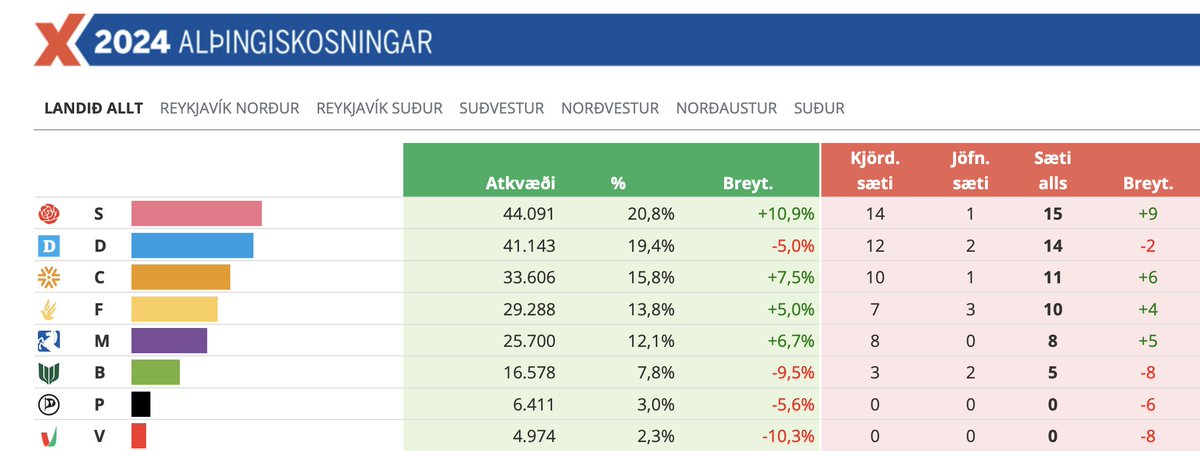
Regierungswechsel in Island 🇮🇸🗳️ - und was für einer! Nach zehn Jahren in der Opposition werden Sozialdemokraten grösste Partei und streben Koalition mit liberaler Pro-Europapartei und Volkspartei des Komikers Jon Gnarr an. Mehr dazu im #EchoderZeit heute um 18 Uhr auf @srfnews
2
392

21 Nov 2024
In seiner "Analsyse" zur Rettung der #Stahlindustrie macht Wirtschaftsredaktor @_mheim im heutigen #Echoderzeit zwei Sachen klar: 1. Er hat es nicht verstanden, 2. Die Politik muss noch stärker über die Sinnhaftigkeit aufklären. Zu den Behauptungen heute auf @srfnews:
2
2
4
913
2 Nov 2024
Die "Artenschutz-Konferenz" in Kolumbien sei abgebrochen worden, höre ich im #EchoderZeit von @srfnews. Weil die Delegierten ihre Flüge rechtzeitig erreichen wollten.
1
640

21 Oct 2024
Jahrbuch Qualität der Medien 2024 @foegUZH: "In punkto Qualität bleiben die Radiosendungen SRF #EchoderZeit (8,1) und SRF Rendez-vous (7,9) das Mass der Dinge." foeg.uzh.ch/de/jahrbuch-qdm/…

3
17
527

13 Oct 2024
Süsswasserreserven drohen knapp zu werden
Interview in @SRF #EchoderZeit
➡️Bericht der Weltorganisation für Meteorologie @WMO:
wmo.int/publication-series/s…
➡️ Kapitel des letzten Weltklimaratsberichts zu Klimaextremereignissen:
ipcc.ch/report/ar6/wg1/downl…
@ETH
srf.ch/audio/echo-der-zeit/s…
6
11
888
5 Oct 2024
"Während der Dachverband Palästina-Schweiz von 8000 Teilenehmenden sprach, schätzte die Polizei die Zahl auf ungefähr 2000 Personen."
Laut #EchoderZeit von @srfnews
waren es "einige hundert". Was stimmt denn jetzt?
tagesanzeiger.ch/nationale-p…
4
4
266

5 Oct 2024
Bundesbern bremst die progressive Westschweiz immer häufiger aus, oder versucht es zumindest. Mein Beitrag im #EchoderZeit @SRF srf.ch/play/radio/redirect/d…
4
4
8
1,423

3 Oct 2024
#Rohingya in #Bangladesch Helvetas Mitarbeiter Arishku Raham spricht im #EchoderZeit @SRF über die tragische Realität im grössten Flüchtlingslager der Welt. 👇
srf.ch/audio/echo-der-zeit/b…
2
4
206
27 Sep 2024
Sooo grossartig waren die Leistungen von Bastien Girod in Bern nun auch wieder nicht, @srfnews, dass ihm das #EchoderZeit gleich einen länglichen Beitrag zu seinem Abgang widmen muss.
@M_Strasser
srf.ch/audio/echo-der-zeit/b…
2
110
26 Sep 2024
Die Gesundheitskosten steigen in der Schweiz und damit wohl auch die Krankenkassenprämien. Gross ist das Wachstum im Kanton Jura. Warum? Eine klare Antwort gibt es nicht. Mein Beitrag @SRF #echoderzeit srf.ch/news/schweiz/krankenk…
1
2
189

22 Sep 2024
#EchoDerZeit #Radio @srf – an Wahlsonntagen üblicherweise DER Ankerpunkt hochstehender journalistischer Aufarbeitung. Nicht so heute: Fragenkatalog-"Interviews" schulmässig-dilettantischen Zuschnitts und Horrorvorstellung,dass das "Echo" bald in der Bedeutungslosigkeit versinkt.
2
146