
Jun 12
Array(n) の n が負数の場合は RangeError になるということも ECMAScript に明記されている。SameValueZero(ToUint32(n), n) が false だと RangeError になる。
tc39.es/ecma262/#sec-array
16
Jun 12
Array.from({length: n}, ...) の n が負数の場合は 0 として扱うと ECMAScript で定義されているのか。LengthOfArrayLike(arrayLike) から ToLength (arg) が呼ばれて、マイナスなら 0 にすると明記されている。
tc39.es/ecma262/#sec-array.f…
tc39.es/ecma262/#sec-tolengt…
17

Jun 12
Do you mean .... like the frontend of ecmascript? aka javascript? I'm not following the intended meaning
1
1
9

ECMAScriptのメモリモデルで説明できない世界に突入してそうだ…
Jun 10

オイオイオイオイオイオイ
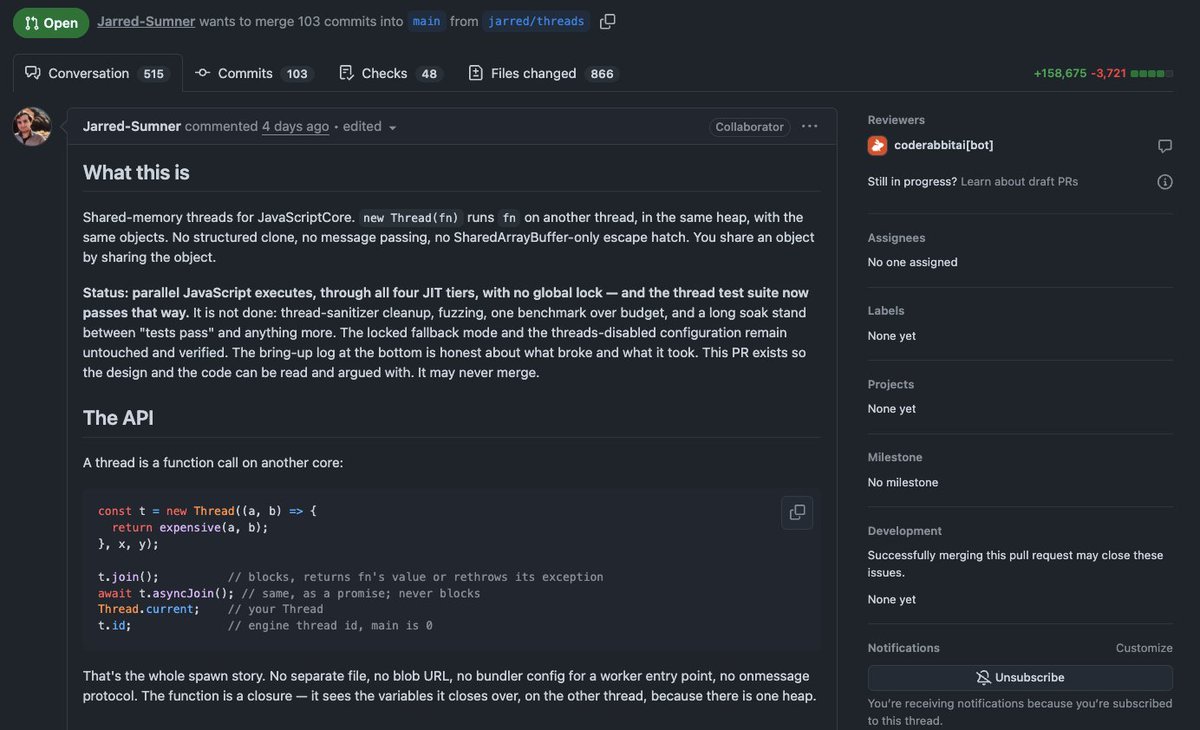
Shared-memory threads for JavaScriptCore (experimental, not working yet)
github.com/oven-sh/WebKit/pu…
1
2
36
12,613

Jun 11
An official rebrand from ECMAScript to something ready for the new era is long overdue. Flow sounds nice.
20


次回、String.prototypeのメソッドの続きを読み進めます!
ECMAScript 仕様輪読会 第104回 #esspec esspec.connpass.com/event/39…
2
8
1,116

Jun 9
Ever wonder what HTTP stands for? Or can you list all the network protocol layers? How about naming some big ECMAScript updates?
These are just a few interview questions folks shared with me after my last post about LLMs in code reviews.
But one story really stuck with me.
"I had a take-home task from a company. I am more comfortable with TypeScript, but went with Python because they seemed to use it a lot. They penalized my application for not using TypeScript."
This guy's been in IT for 20 years. If he's facing this at Senior Lead level, it must be way tougher for Juniors.
He got the vibe right. He showed he could adapt. Still lost out.
Here's what's messed up with hiring right now:
1. Interview tasks that set you up for failure based on the very answers they guide you to.
2. Processes meant for new grads but used on folks who've launched real systems across three tech eras.
3. Trivia that checks your memory, not your skills. Just knowing what HTTP stands for doesn't mean you can design a solid API.
4. Feedback that totally contradicts the requirements they gave you at the start.
Plus, the whole setup is flawed. Candidates are stressed out. Interviewers have all the control. Even a senior engineer who confidently ships stuff daily can choke on a question they know the answer to. The format tests how you handle stress, not your actual skills.
Here's what those companies just don't get:
Interview benchmarks often reflect the interviewer's own learning curve from way back, not what the job actually needs now. What they struggled with a decade ago ends up being the gate every candidate must pass through. It's not about testing skills. It's a mirror.
Developers who can adapt to whatever tools the team uses are showing exactly why senior engineers get hired. Seeing the situation and making the right call? That's not a flaw. That's the job.
The right company will:
1/ Look at what you've built, not just whether you picked the right answer under stress.
2/ See adaptability as a strength, not a sign you're lacking skills.
3/ Know the difference between "this isn't how I'd do it" and "this is wrong."
If a company's process punishes adaptability, imagine the chaos in their codebase when requirements change.
The interview is broken. Not the developer.
What's your story? Still collecting them.
1
1
52


Jun 8
"seppuku" って海外でも使われるワードなのか……?(ぐるぐるおめめ #ecmascript
QT: JSONRegistry - Allows branded instances in regular JSON - 💡 Ideas - TC39
es.discourse.group/t/jsonreg…
1
1
142


Jun 6
the ts implementation of decorators isnt the same as the tc39 ecmascript proposal they are 2 separate things - which is also something that will probably result in some headaches later down the line
1
1
14