
hm, what are the thermodynamic levels and what is your esterification levels? you're not super saturating buttercups are you? the light show and the audience observance and feelings are important for your style in this setting.
7

Jun 14
At least for sodas, I think it's because the esterification of isoamyl acetate was a fairly simple production process, so they've been common soda flavours for a decent while. No clue for actual bananas though. Maybe something to do with the 90s banana boom in Fujian?
5
103

Jun 13
I thought you'd never ask.
Cannabis hemp. Restitutions from the British, stripping patents and strains the Americans hold on our native (arguably ) plant material somehow surprisingly . They want to share stuff like anthropic claude models with us. There'd be an argument for that: India was kept out of the breeding projects and cultivation was prohibited, processing, harvesting, etc., all of that as well. Scientific research and study were also crippled. You know it's like playing a World Cup match against the other team while having their legs lashed to each other. I don't know. Again analogies fail me but the general idea is that it'd be a nuisance in the World Courts, that kind of grab at attention. I think that covered that already. That's what we're doing here.
UCO doesn't use cooking oil. We have no good collection. We'll have hemp seed oil once we decriminalise. Hemp seed oil can then be diverted and directed to eliminate the problem of malnourishment. If you can believe it, in 2026 there are children that are malnourished, AI or no AI, and then we direct less nutritious oils like palm and soya for the production of biodiesel, simple esterification reaction.
1
30

Energy metabolism is probably not impaired given main source is likely NEFA in lean keto adapted.
NEFA = ~355 µmol/min vs
VLDL-TG = ~13 µmol/min
I don’t think the issue is impaired clearance (otherwise cholesterol drop protocol wouldn’t work among other lines of evidence); i suspect it’s the input rate perhaps overwhelming a normally functional system when continuously ran in a context evolution may have anticipated for a shorter, cyclical time frame?
Higher LDLc may have served adaptive purpose (immune, anti-lipolytic, tissue repair substrate, ?steroidogenesis) and then perhaps “normalized” when spring came and CHO reintroduced - bumping up insulin.
Evolution may have had no selection pressure to upregulate clearance bc the phenotype self-resolved and the additional immune properties may be beneficial for respiratory infxns in close quarters, winter. 🤷♂️ just speculating.
Ezetimibe is prob not a problem IMO bc any free cholesterol deficit in the hepatocyte is immediately corrected by srebp2 upregulating both synthesis and LDLr while excess fatty acyl-CoA that can no longer find cholesterol for esterification (via ACAT2) is rerouted into beta-oxidation/ ketogenesis, already running at high capacity in the keto-adapted - I suspect we would have seen an hepatotoxicity signal by now but maybe there will be (doubt it tho)
2
32


Jun 11
Arabian Petroleum Ltd. (APL) showcased a robust financial performance in FY26, with a substantial 44.88% Year-on-Year (YoY) increase in Revenue from Operations, reaching ₹41,327.37 Lakhs. 📈 The company's Earnings Before Interest, Taxes, Depreciation, and Amortization (EBITDA) saw a 15.64% YoY growth, amounting to ₹2,010.68 Lakhs. Profit After Tax (PAT) also demonstrated strong growth, rising by 23.47% YoY to ₹1,121.66 Lakhs. 💰
𝗞𝗲𝘆 𝗕𝘂𝘀𝗶𝗻𝗲𝘀𝘀 𝗠𝗶𝗹𝗲𝘀𝘁𝗼𝗻𝗲𝘀 & 𝗔𝗰𝗵𝗶𝗲𝘃𝗲𝗺𝗲𝗻𝘁𝘀:
- 𝗦𝘂𝗯𝘀𝗶𝗱𝗶𝗮𝗿𝘆 𝗚𝗿𝗼𝘄𝘁𝗵: FY26 marked the consolidation of two new subsidiaries: Arzol Petroleum Trading FZE (Dubai, UAE) and Lavisa Technologies Pvt. Ltd. (India). Both entities commenced revenue generation in H2 FY26, contributing to the group's overall performance and global presence. 🌍
- 𝗣𝗿𝗼𝗱𝘂𝗰𝘁 & 𝗠𝗮𝗿𝗸𝗲𝘁 𝗘𝘅𝗽𝗮𝗻𝘀𝗶𝗼𝗻:
▸ APL secured NSF/US FDA certification for its food-grade lubricant range, opening doors to the high-margin pharmaceutical sector. 💊
▸ The company entered the transformer oil market with a significant order from a PSU steel manufacturer. 🏭
▸ Received Volvo OEM approval & API certification, alongside Daimler approval.
▸ Expanded ARZOL's reach to Sri Lanka. 🇱🇰
- 𝗜𝗻𝘀𝘁𝗶𝘁𝘂𝘁𝗶𝗼𝗻𝗮𝗹 𝗪𝗶𝗻𝘀 & 𝗖𝗼𝗻𝘁𝗿𝗮𝗰𝘁𝘀:
▸ Secured a 2-year BHEL contract, with new rate contracts awarded by MOIL & BEML in H2 FY26.
▸ Received repeat orders for BRO Bhutan's Project Dantak.
▸ Completed development orders for water-soluble forming fluid with ISRO. 🚀
▸ Part of the active institutional order book for ONGC.
- 𝗗𝗲𝗳𝗲𝗻𝘀𝗲 𝗦𝗲𝗰𝘁𝗼𝗿 𝗦𝘁𝗿𝗲𝗻𝗴𝘁𝗵:
▸ Received an order worth ~₹90 Lakhs for defense-grade lubricants from the Indian Army. 🛡️
▸ Absorbed Technology Transfer (TOT) for Universal Recoil Fluids (URF) & Low Temperature Coolants, positioning APL in a near-monopoly defense segment nationally.
- 𝗢𝗽𝗲𝗿𝗮𝘁𝗶𝗼𝗻𝗮𝗹 𝗘𝘅𝗰𝗲𝗹𝗹𝗲𝗻𝗰𝗲:
▸ Commenced Fatty Acid Amides production for in-house use & open market sales, reducing import dependency.
▸ Laid the foundation for esterification capability, producing esters for lubricant formulations & external sales.
▸ NABL-accredited, ISO 17025 certified laboratory with advanced testing instruments like FTIR & ICP-OES.
- 𝗡𝗮𝗻𝗼𝘁𝗲𝗰𝗵𝗻𝗼𝗹𝗼𝗴𝘆 𝗔𝗱𝘃𝗮𝗻𝗰𝗲𝗺𝗲𝗻𝘁: Strengthened its technological edge through an exclusive licensed tie-up with Xado (Ukraine) for proprietary nanotechnology additives, enhancing product performance, fuel efficiency, and engine life. 💡
𝗙𝗶𝗻𝗮𝗻𝗰𝗶𝗮𝗹 𝗛𝗶𝗴𝗵𝗹𝗶𝗴𝗵𝘁𝘀 (𝗖𝗼𝗻𝘀𝗼𝗹𝗶𝗱𝗮𝘁𝗲𝗱 𝗙𝗬26):
- Revenue from Operations: ₹41,327.37 Lakhs ( 44.88% YoY)
- EBITDA: ₹2,010.68 Lakhs ( 15.64% YoY)
- Profit After Tax (PAT): ₹1,121.67 Lakhs ( 23.47% YoY)
- Earnings Per Share (EPS): ₹10.30 ( 14.19% YoY)
The company's strategic focus on product innovation, market expansion, and operational efficiency is driving its growth trajectory. 🚀
📊 ARABIAN PETROLEUM LTD | 🏷️ Investor Presentation
🌐 Details: wegro.app/ACgIon
⚡️Instant stock alerts on WhatsApp - Try FREE 👉 wegro.app/go
173

Jun 11
I synthesized tBu iodobenzoate in university frequently. I checked the progress of esterification by taking a small sample of reaction, reacted with methanol and take TLC. tBu ester and Me ester separates in moderate resolution so it might be applicable for just checking inpurity
1
1
104

Jun 11
MCT oil is a synthetic triglyceride manufactured of re-esterification of fatty acids. Fatty acids with unnatural TAG positional arrangements.
Note: these MCT fatty acids are a waste product output of lauric acid production from palm & coconut fats.
9

if everyone hate ur fav maybe he is problamatic..like what he did to yall.... he is just existing and everyone is hating..ppl need to be have job or else they will be like this and that @.esterification (whatever) need to be chill bcs bbg we are not obsessed with yall and ur ass
2
6
327

Jun 9
Sulphuric acid daddy: I'm gonna perform the esterification reaction on you
2
20

844 ilifanya I have the most random facts living rent free in my mind. nilikua napika nikakumbuka the most basic way of making cooking oil is through esterification of glycerol molecules.
1
2
6
182

Jun 3
1. Growth hormone and retatrutide (for fat loss)
- GH liberates free fatty acids from body fat
- Retatrutide upregulates fatty acid oxidation
Fat is mobilized and burned.
Mobilization w/out oxidation = re-esterification (fat gets stored again).
Together = actual fat loss.
3
18
3,328

Jun 3
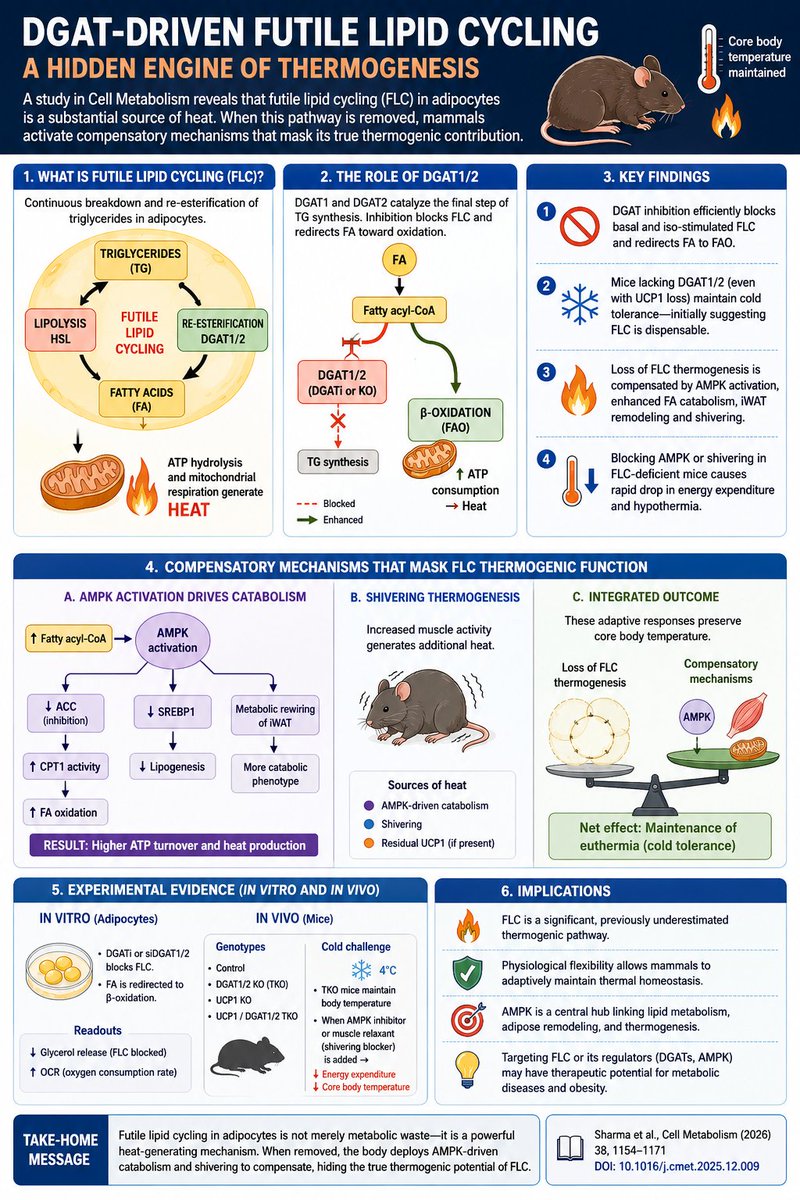
DGAT-Driven Futile Lipid Cycling: The Hidden Engine of Thermogenesis
🔥 What if a major source of heat production has been hiding in plain sight?
A new study in Cell Metabolism reveals that futile lipid cycling (FLC)—the continuous breakdown and re-esterification of triglycerides—is not merely a metabolic inefficiency. Instead, it functions as a powerful thermogenic pathway whose contribution has been masked by remarkable physiological compensation mechanisms.
Key Findings
✅ DGAT1/2 drive adipocyte futile lipid cycling
Using pharmacologic inhibition and adipose-specific genetic deletion of DGAT1 and DGAT2, the authors demonstrate that adipocytes continuously cycle fatty acids between lipolysis and triglyceride synthesis. Blocking DGAT activity markedly suppresses this cycle and redirects fatty acids toward β-oxidation.
✅ FLC contributes substantially to non-shivering thermogenesis
Despite eliminating terminal lipid re-esterification, mice maintained cold tolerance surprisingly well. This initially suggested FLC might be dispensable—but the story was far more interesting.
✅ Compensation masks the true thermogenic role
Triple-knockout mice lacking DGAT1, DGAT2, and UCP1 remained largely cold tolerant because multiple backup systems were activated:
AMPK-driven fatty acid catabolism
Enhanced lipid oxidation
White adipose tissue remodeling
Increased shivering thermogenesis
When AMPK or shivering pathways were pharmacologically blocked, body temperature rapidly collapsed, revealing the true thermogenic contribution of FLC.
Mechanistic Insight
Loss of DGAT activity causes accumulation of fatty acyl-CoAs, activating:
AMPK → ACC inhibition → increased CPT1 activity → enhanced FA oxidation
Simultaneously:
AMPK → ↓SREBP1 → ↓lipogenesis
This metabolic rewiring transforms iWAT into a highly catabolic tissue capable of compensating for lost lipid-cycle thermogenesis.
Why This Matters
For decades, thermogenesis research has centered on UCP1, SERCA-mediated calcium cycling, and creatine futile cycling.
This work introduces DGAT-dependent futile lipid cycling as another major thermogenic node and suggests that adipose tissue possesses far greater metabolic flexibility than previously appreciated.
The findings also highlight AMPK as a critical adaptive regulator linking lipid metabolism, adipose remodeling, and energy expenditure.
Takeaway
Rather than being metabolically wasteful, futile lipid cycling appears to be a biologically valuable heat-generating mechanism. Its thermogenic impact has remained hidden because mammals rapidly recruit alternative pathways—particularly AMPK-mediated fatty acid catabolism and shivering—to preserve body temperature.
A compelling reminder that in metabolism, what appears "futile" may actually be essential.
📄 Reference
Sharma AK, Khandelwal R, Zurkovic J, et al.
DGAT-driven futile lipid cycling has a pronounced, yet concealed, thermogenic function.
Cell Metabolism. 2026;38:1154–1171.
DOI: 10.1016/j.cmet.2025.12.009
#Metabolism #Thermogenesis #AdiposeTissue #DGAT #AMPK #BrownFat #Obesity #EnergyExpenditure #CellMetabolism #AgingResearch #Mitochondria #LipidMetabolism
5
14
735

Ethanol to acetic acid, esterification to "ketone"
wont hurt
Had a 50L batch for distilling go like that.. Fractionating still fixed it
1
2
19

2nd alternative route of fatty acid oxidation due to carnitine deficiency induced by meldonium is AMPK activation
Reduced mitochondrial FAO flux causes an energy deficit signal within cells, the AMP:ATP ratio rises, which activates AMPK . This is often overlooked. AMPK activation:
- Promotes GLUT4 translocation, increasing glucose uptake and oxidation in muscle, the well-documented glycolytic shift caused by meldonium
- Activates PGC-1α, driving mitochondrial biogenesis and upregulating oxidative capacity over time
- Inhibits lipogenic pathways in adipose tissue: AMPK activation in WAT suppresses de novo lipogenesis and, in some contexts, inhibits insulin-stimulated glucose re-esterification into fat (DNL becomes even more difficult)
- Activates HSL (hormone-sensitive lipase) in adipocytes, promoting lipolysis and mobilization of stored triglycerides
So, UNDER ENERGY DEFICIT, meldonium-driven AMPK activation simultaneously reduces fat synthesis and promotes fat mobilization from adipose stores, even while blunting the mitochondrial route of fat combustion in muscle. So fat becomes harder to be made from sugar, and stored fat is released 'better'
Fat mass loss under energy deficit requires:
- Lipolysis in adipocytes (HSL, ATGL activity): areleasing FFAs into circulation ✅ AMPK-activated by meldonium
- Net energy deficit: caloric expenditure > intake ✅ Unaffected; possibly enhanced via peroxisomal thermogenesis
- Suppression of lipogenesis and re-esterification ✅ AMPK suppresses ACC and lipogenic gene expression
None of these steps require mitochondrial carnitine-dependent FAO in skeletal muscle . The mobilized FFAs can be oxidized through peroxisomal pathways, channeled to other tissues (liver, heart), or used for thermogenesis
Use carnitine or use meldonium, many pharmacometabolic routes to the same goal
11
5,742


organic-chemistry.org/abstra…
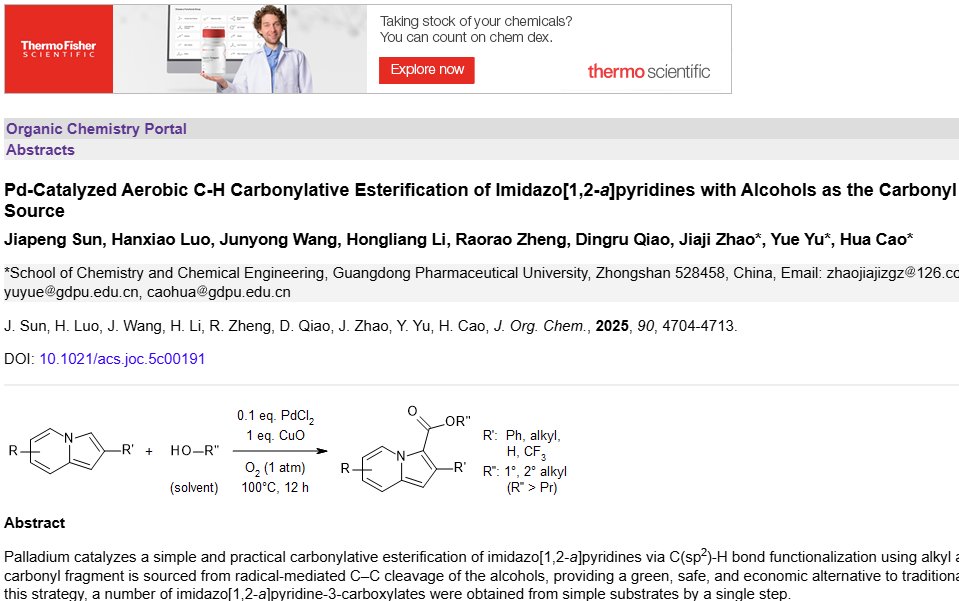
Palladium catalyzes a simple and practical carbonylative esterification of imidazo[1,2-a]pyridines
1
5
448
