
Joined August 2023
- Tweets 853
- Following 540
- Followers 108
- Likes 2,630
75 Photos and videos



Pinned Tweet

Apr 18
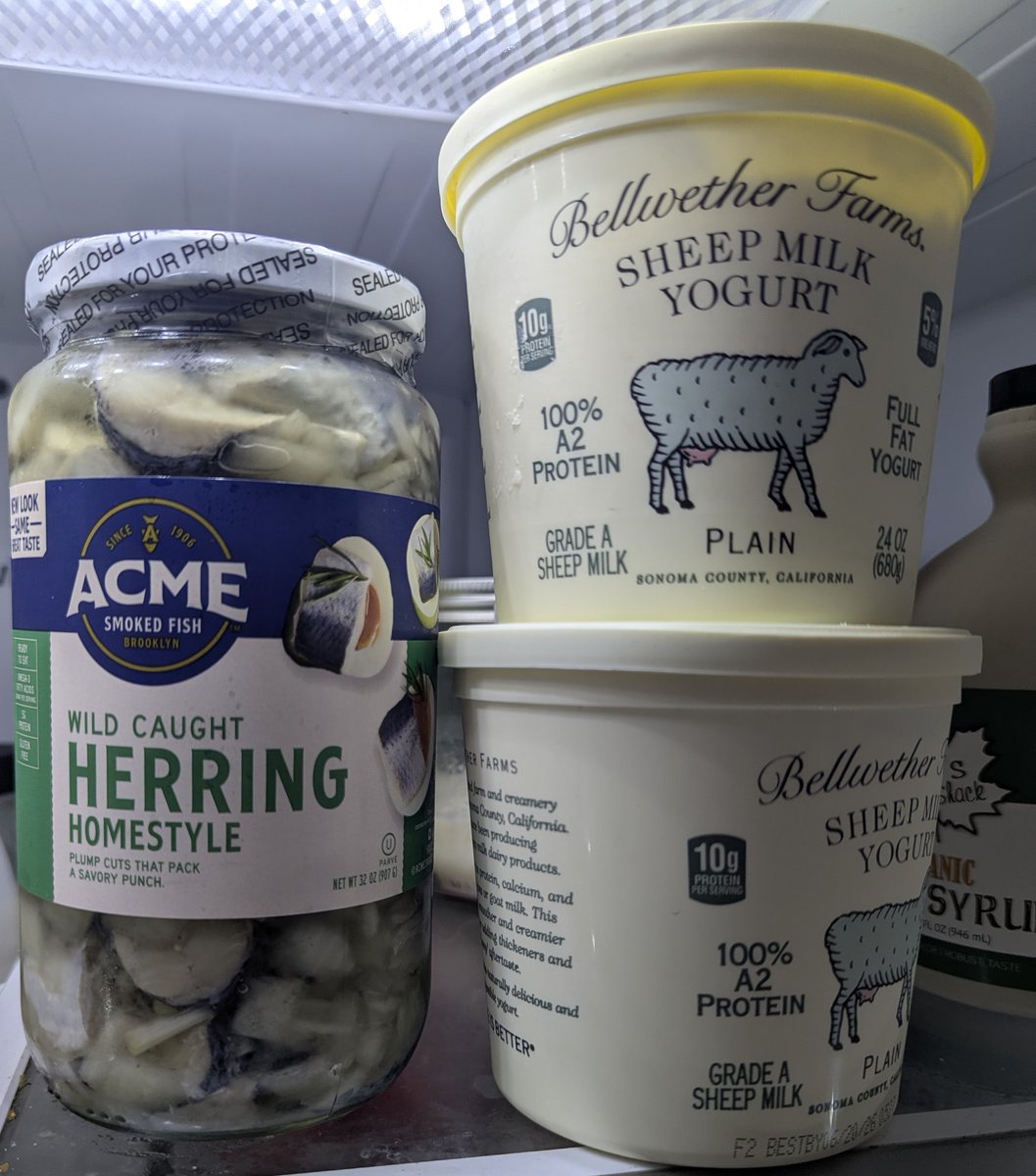
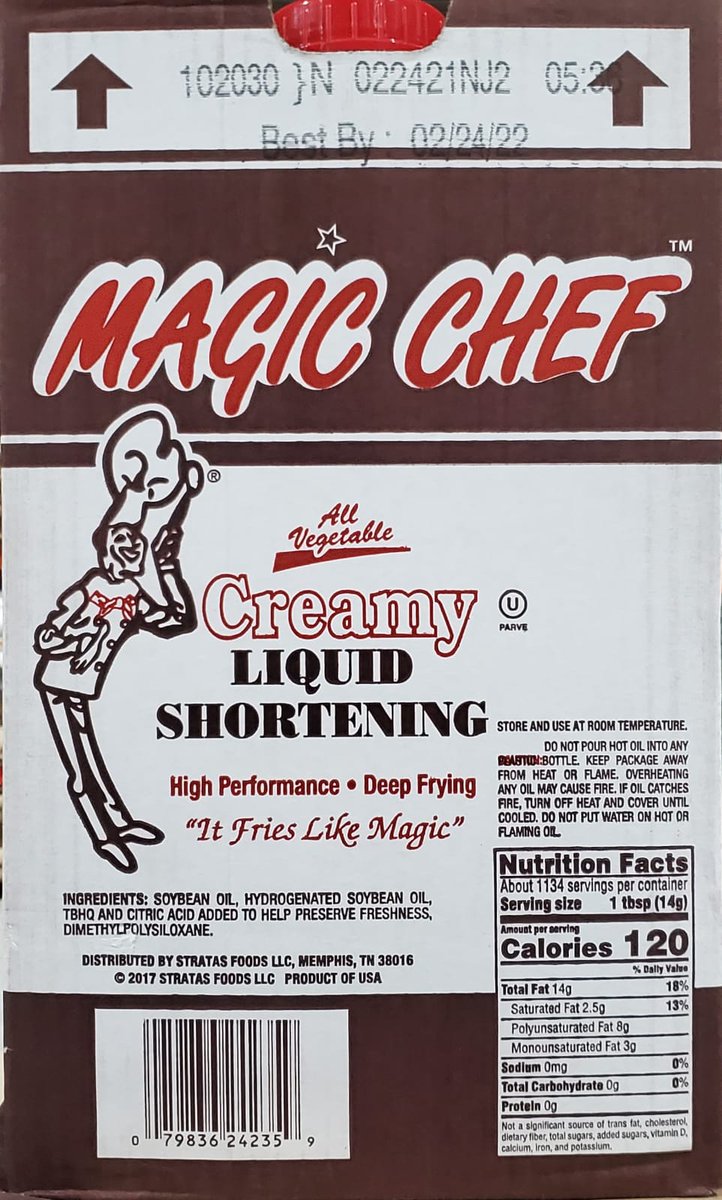
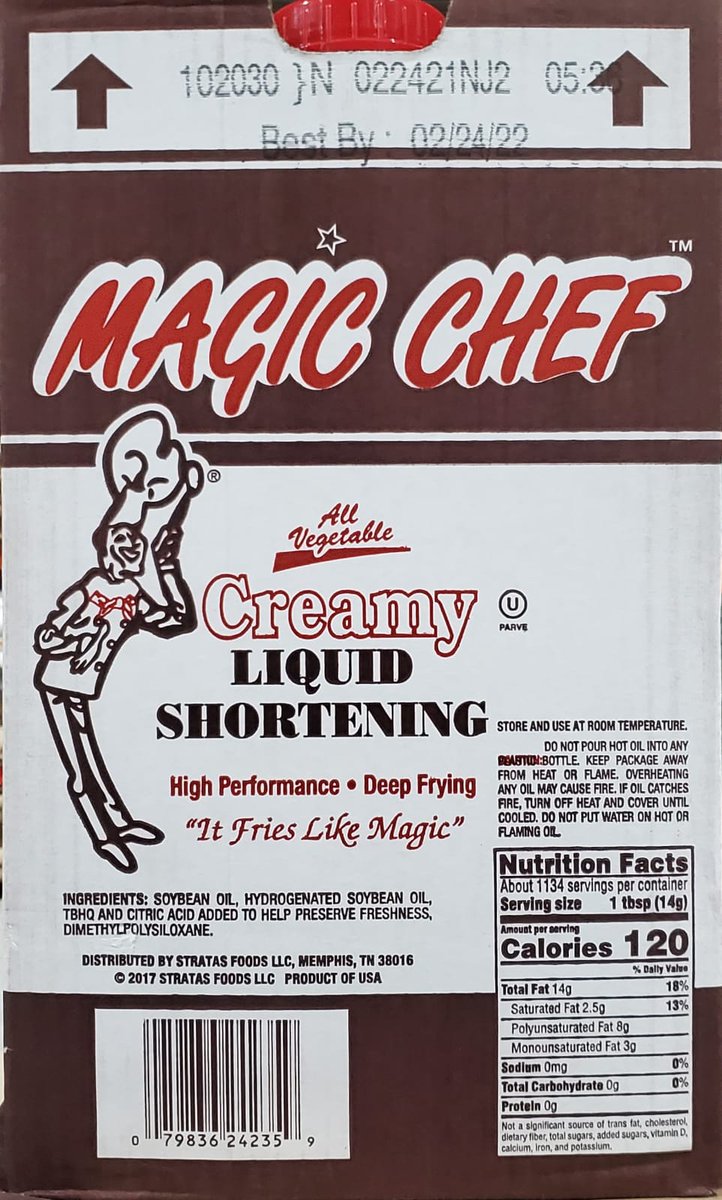
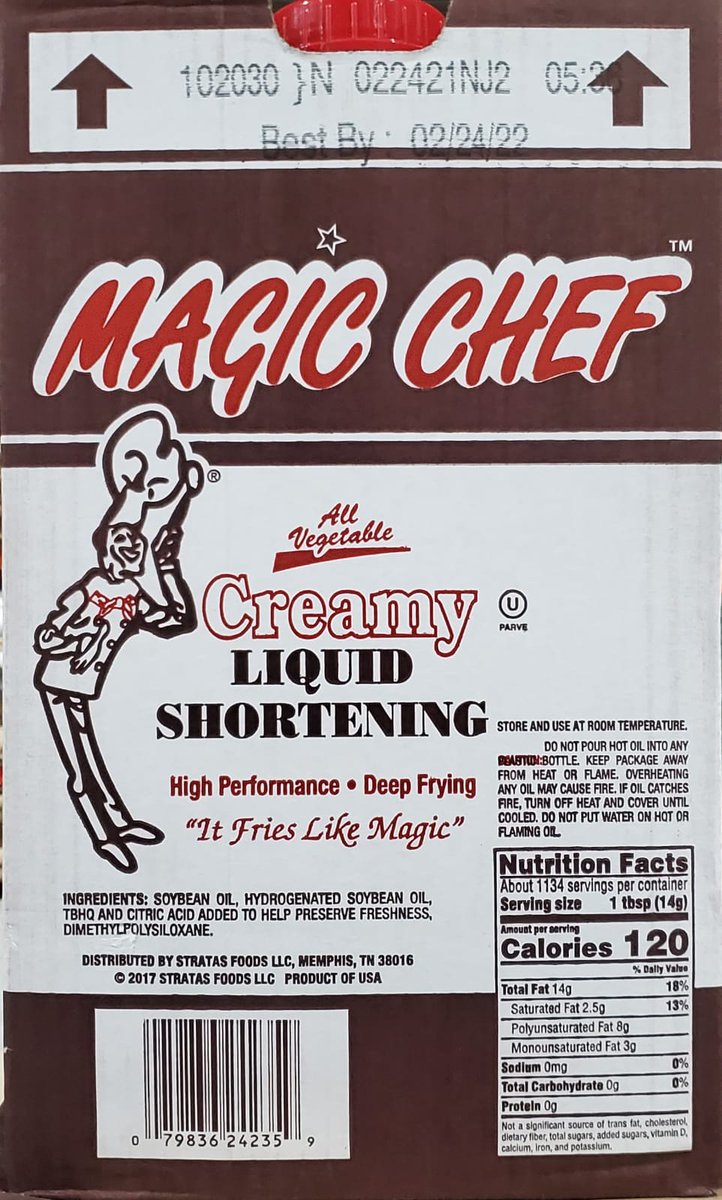
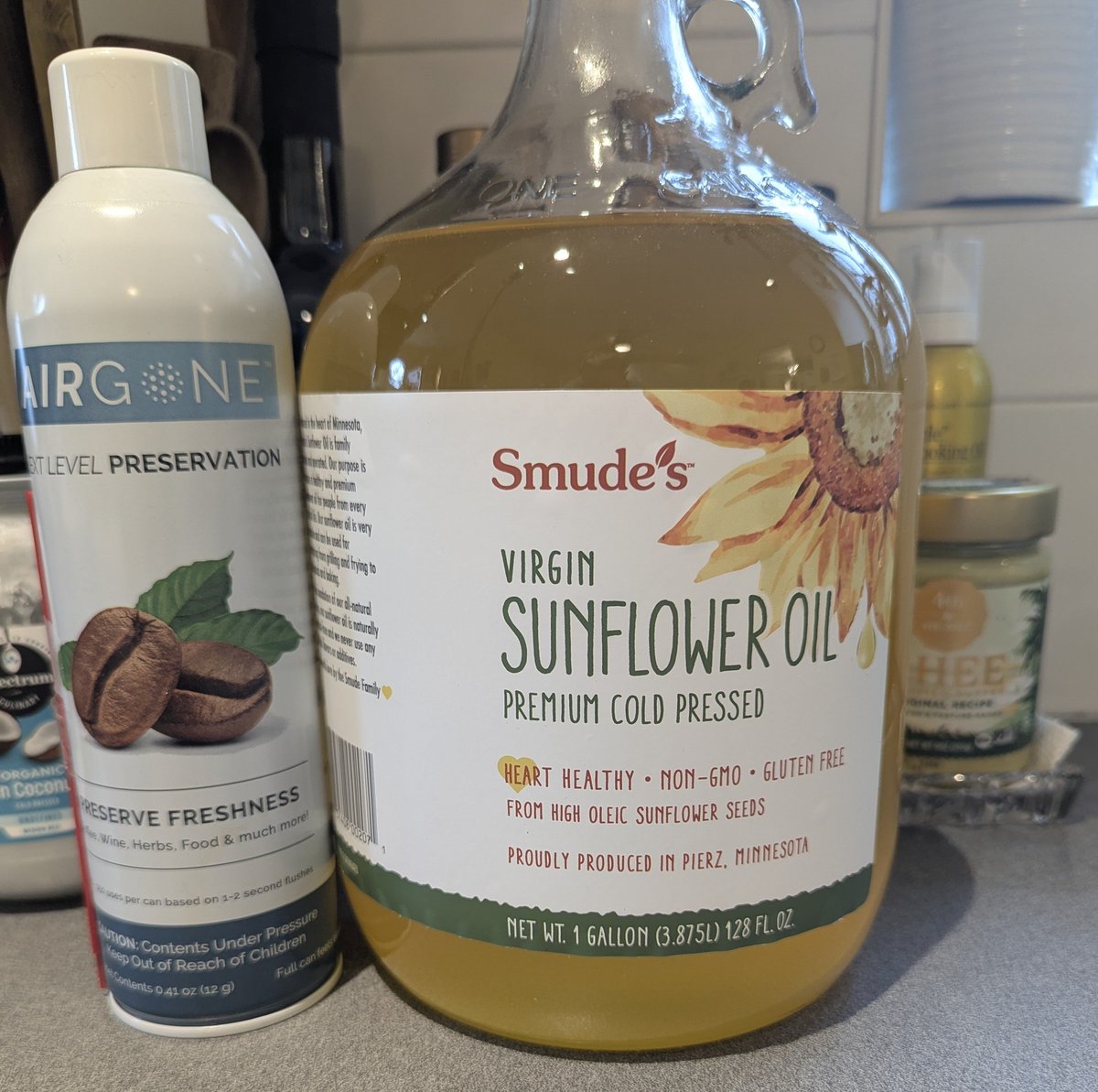
Seed oils and the so-called "whole grains" full of rancid grain oils. But don't just go by what I say, here you go! Oil Crop Science journal "Lipid oxidation in food science and nutritional health: A comprehensive review". sciencedirect.com/science/ar…
1
153
Neil Johnson retweeted

17h
🤔Eating less frequently RAISES LDL
☠️Snacking more DECREASES LDL
🤔Lowering carbs RAISES LDL
☠️Processed carbs DECREASES LDL
🤔Low BMI RAISES LDL
☠️High BMI DECREASES LDL
Focusing on LDL while disregarding obesity & metabolic syndrome is MALPRACTICE
7
14
119
4,919
Neil Johnson retweeted

Jun 14
One gram of fat for every gram of protein. On carnivore, treat that as the floor, not the goal.
Fat is your fuel here. No carbs are coming to help. Skimp on it and you will feel flat, starving, and wretched, then blame the diet.
Most people do better higher still, nearer two grams of fat to one of protein. Aim past the minimum, never below it.
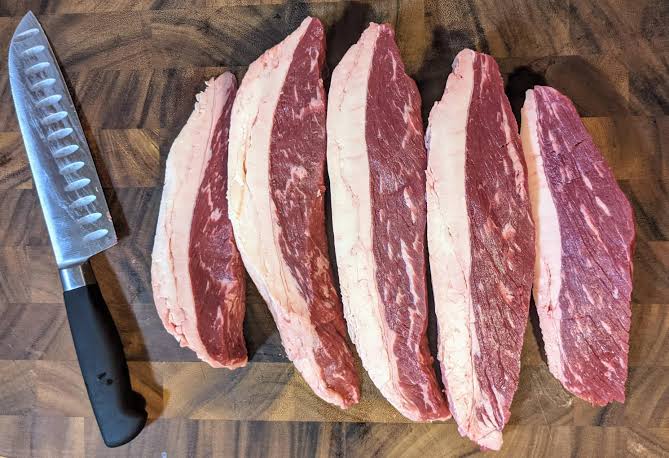
Start with the cut. You want it well marbled, fine white threads of fat running all through the red.
The lean, ruby, trimmed steak is the wrong one. Reach for ribeye over fillet. Chuck, brisket, short rib, belly. Fatty mince, twenty percent fat or more, never the lean.
Then add more on top. A knob of butter melting over the hot steak. Eggs cooked slowly in butter until they drink it in.
Cook in tallow or butter, never a dry pan. The fat that renders out is the prize, not the mess to tip away.
Brown your mince and leave the fat where it is. Stir that golden pool back through it. That is the meal, not the waste.
Spoon the drippings back over the plate. Leave the yolks soft. Choose the fatty fish over the lean.
Get the fat right and the rest follows. The energy, the fullness, the steady calm. On carnivore, the fat was never the side. It is the whole point.
35
225
1,408
25,605
Neil Johnson retweeted

Jun 14
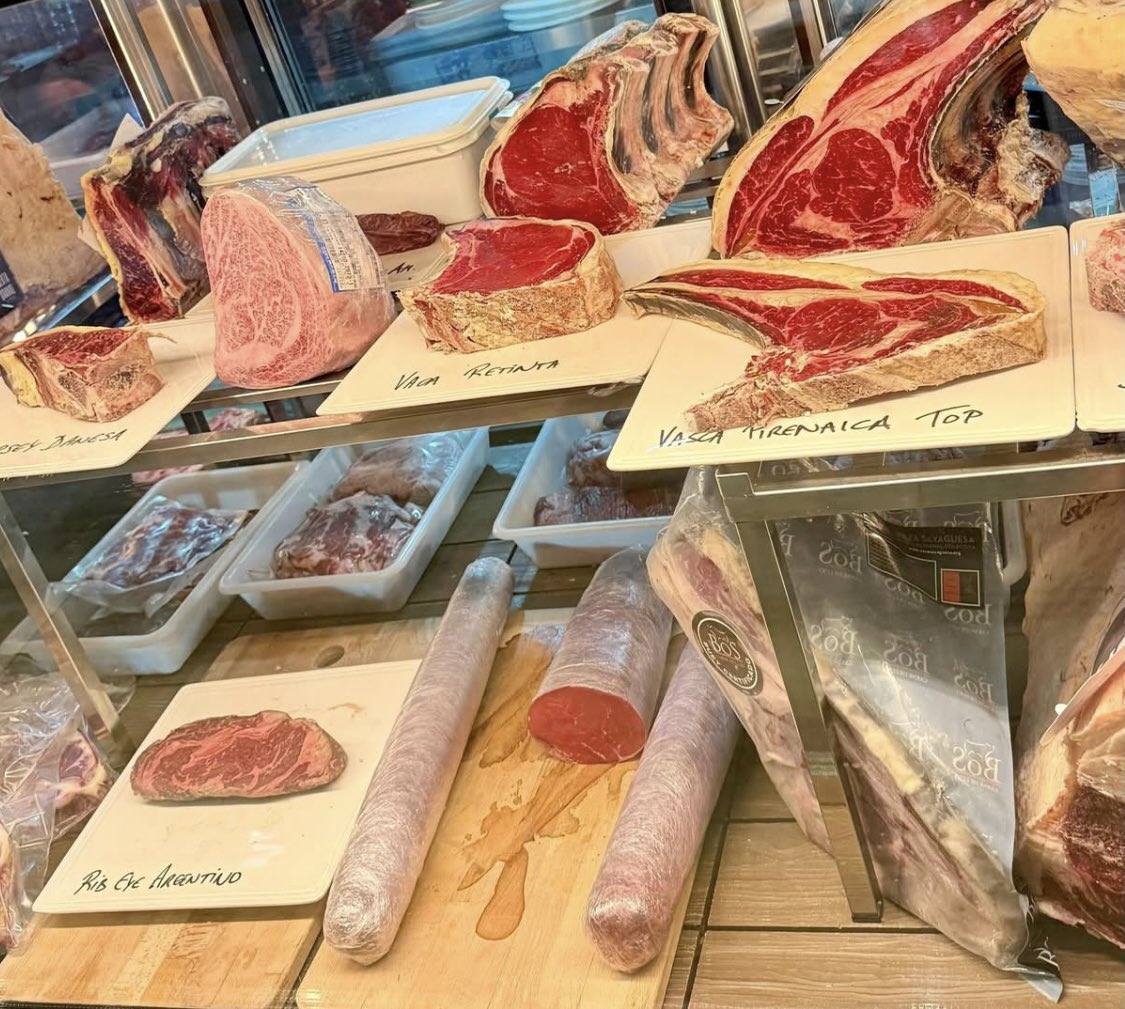
Scientists say we need to cut meat consumption by 75%.
Think about that for a second.
The food humans have eaten for millennia.
The food that provides complete protein, B12, iron, zinc, choline, and highly bioavailable nutrients.
That’s the thing they want less of.
Not sugary drinks.
Not candy.
Not breakfast cereals.
Not the endless aisles of packaged food.
Meat.
I find it fascinating that every solution seems to involve ordinary people giving up traditional foods while becoming more dependent on products made in factories.
Maybe I’m old fashioned.
But when someone tells me steak is the problem and ultra processed food isn’t, I’m going to ask a few questions.
Would you cut your meat intake by 75%?
211
400
1,187
17,762
Neil Johnson retweeted

Jun 13
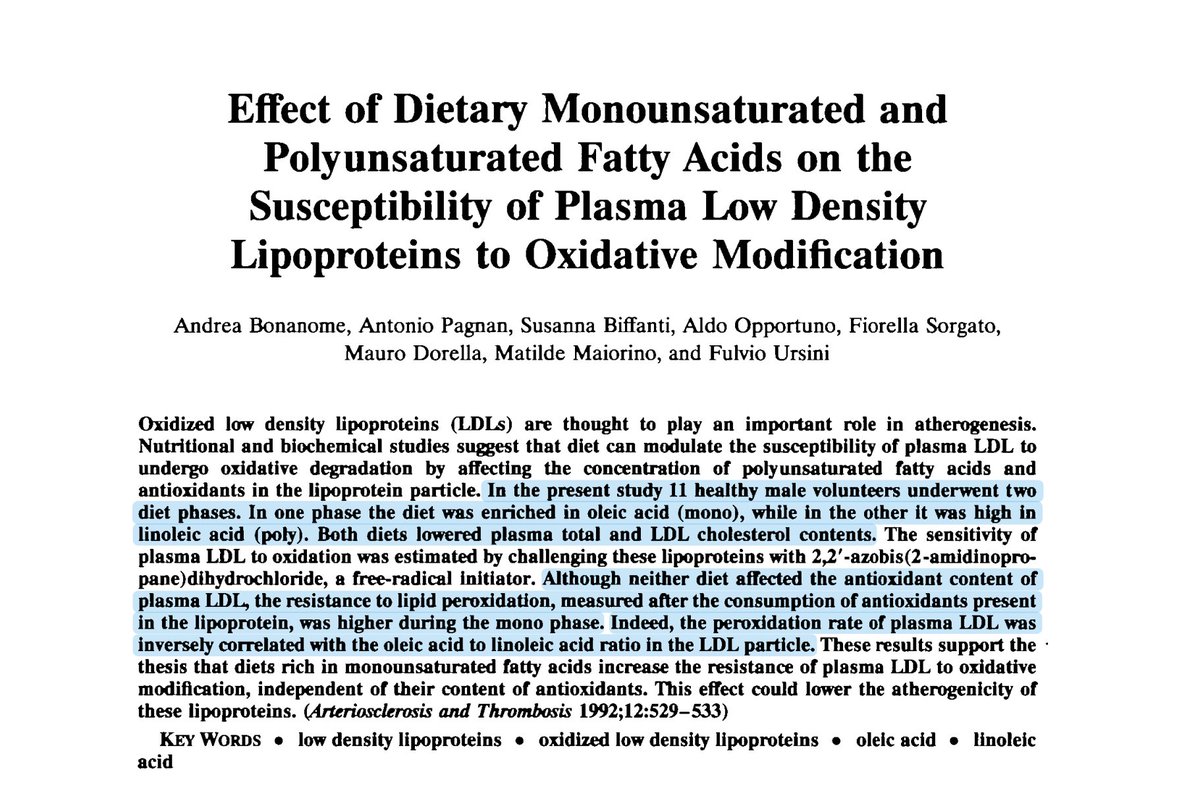
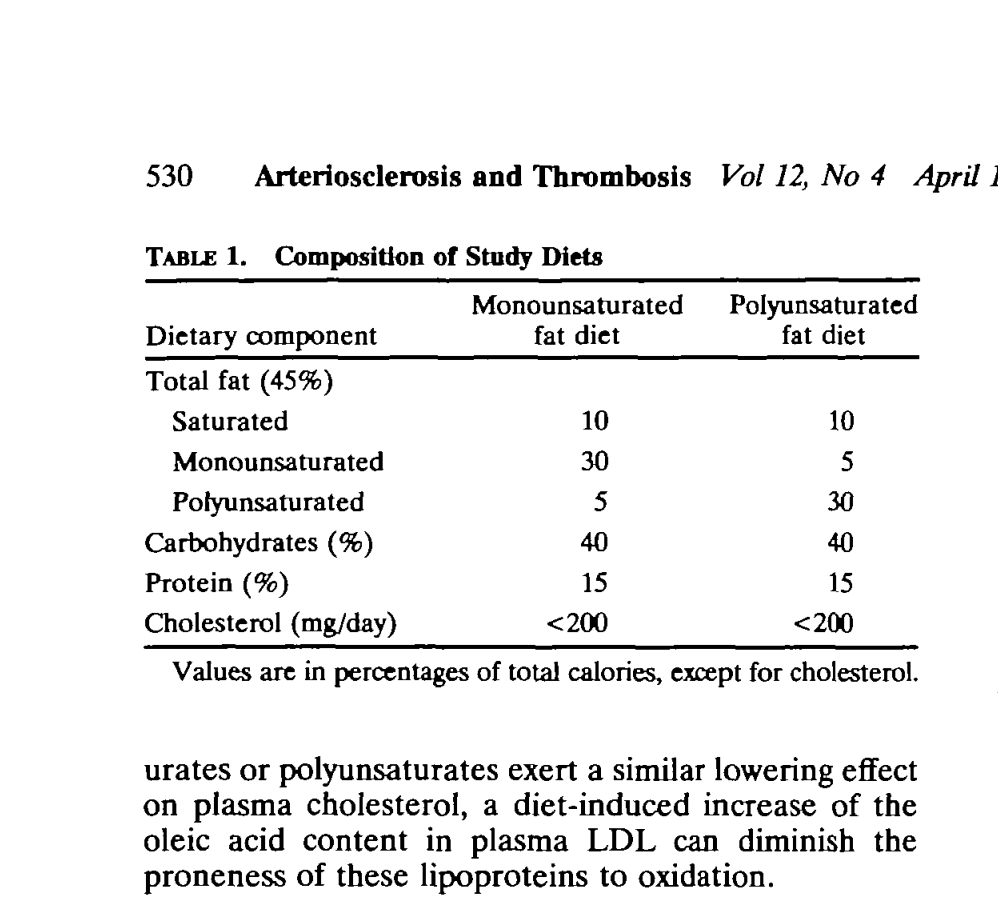
Small study from the 1990s. Effects of two diets were compared:
- Diet 1: relatively high monounsaturated fatty acid content (MUFA; oleic acid)
- Diet 2: high polyunsaturated fatty acid content (Ω-6 PUFA; linoleic acid).
Linoleic acid is the dominant fatty acid in MOST seed oils, like soybean oil; oleic acid tends to predominant in fruit oils, like olive oil.
A notable exception to this rule is canola oil, a seed-derived oil that has a more olive oil-like profile, with more MUFA and less Ω-6 PUFA (linoleic acid) than most other seed oils.
In the study below, MUFA:PUFA varied, while total calories, total fat, saturated fat, carbs, protein, and cholesterol were held constant (Image 2).
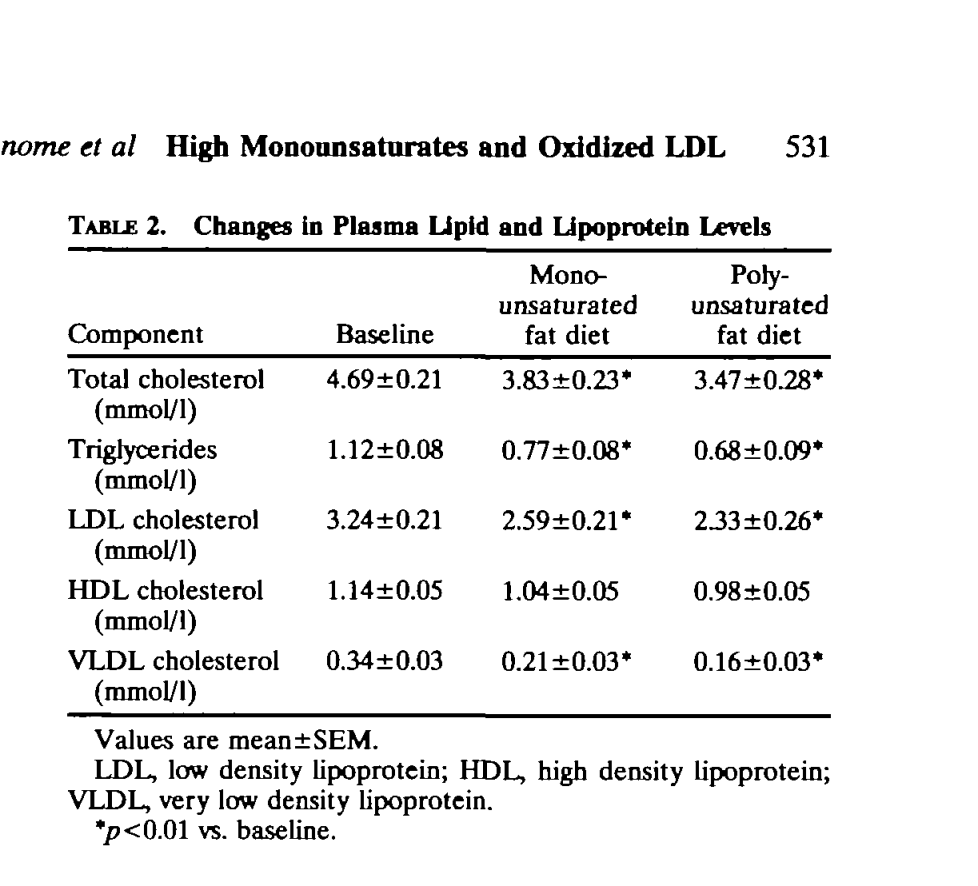
What did they see?
BOTH diets lowered the following (Image 3):
- Total cholesterol
- Triglycerides
- LDL
- vLDL
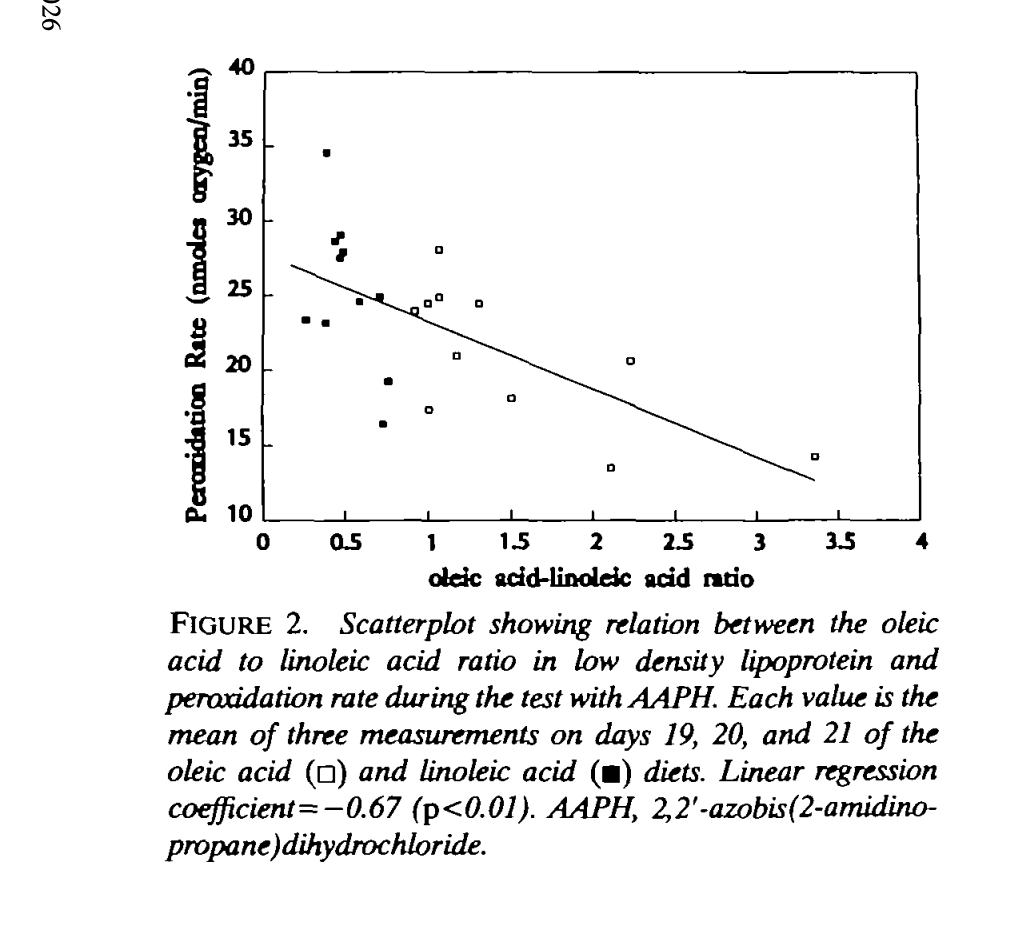
What differed between high MUFA:PUFA and low MUFA:PUFA diets?
Peroxidation rate of LDL. There was a strong, significant association between MUFA:PUFA ratio and peroxidation rate (Image 4).
Higher linoleic acid (Ω-6 PUFA) lower oleic acid (MUFA) --> more LDL peroxidation.
This result makes perfect sense if you already understand the basic underlying biology: PUFAs like linoleic acid are very susceptible to oxidation, whereas MUFAs like oleic acid are resistant.
This is far from the only study to show such an effect.
Oxidized LDL (oxLDL) is bad news.
OxLDL particles are filled with rancid fats from oxidized PUFAs, which immune cells (macrophages) want to gobble up for disposal, because they're toxic.
In fact, it's possible to increase the PUFA content of diets, seeing an overall decrease in LDL but an increase in oxLDL rate.
4
6
28
1,832
Neil Johnson retweeted

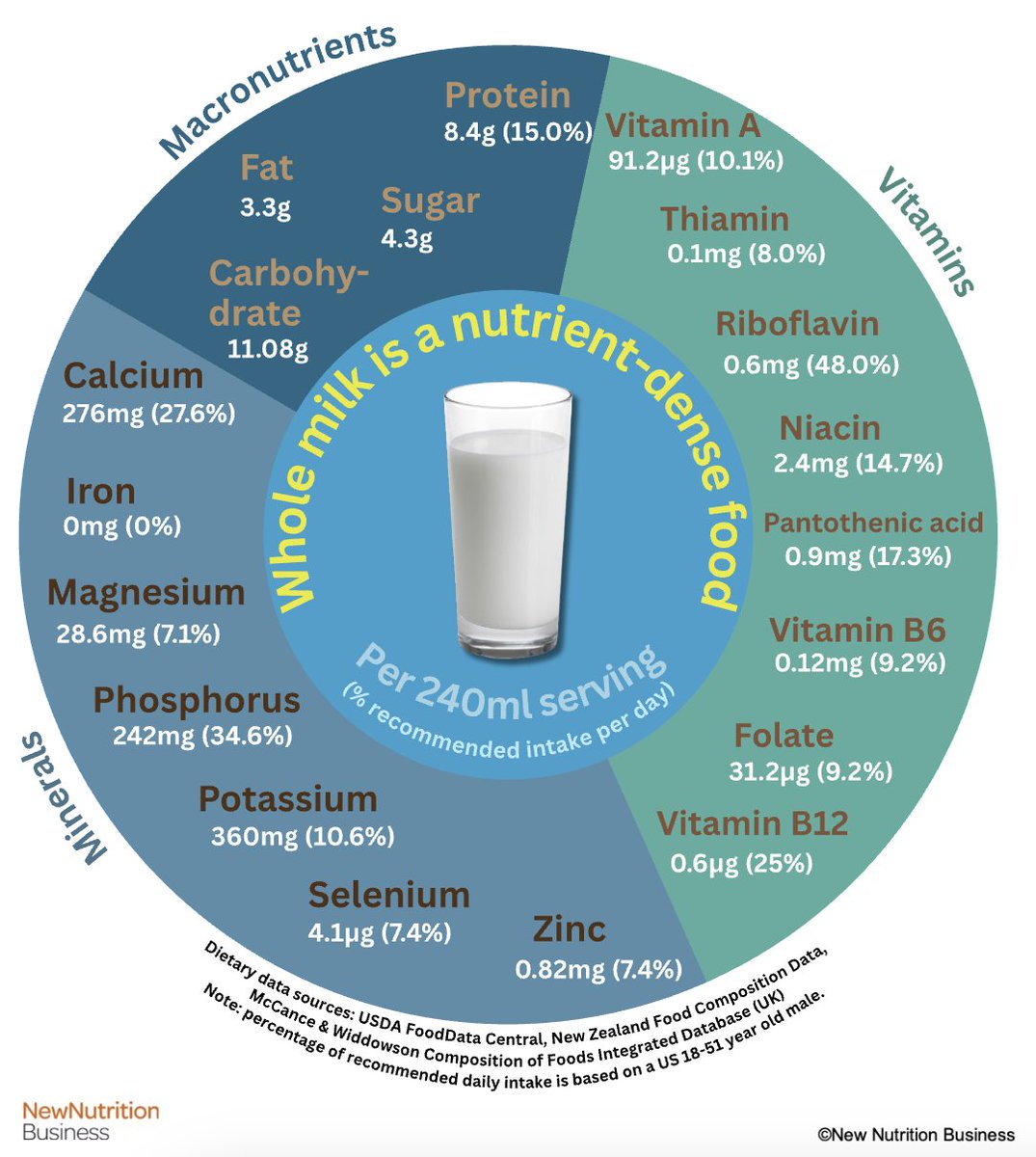
Milk is a naturally nutrient dense superfood.
Milk is a whole food.
Humans have thrived on this one for 6,000 years.
1
8
21
1,189
Neil Johnson retweeted
Jun 13
Vitamin K2 decreases aortic, vascular and coronary calcifications
This is huge news. Next step is an outcomes study
jamanetwork.com/journals/jam…
37
119
781
36,921
Neil Johnson retweeted

Jun 12
Hospitals should be helping people heal,
NOT slowly poisoning them...

A colleague sent this to me
Cardiac floor patient in a hospital
Food is medicine OR poison
This is….POISON

89
172
1,118
91,630
Neil Johnson retweeted
Jun 12
The year is 1949.
The Nobel Prize in Medicine has just gone to the man who invented the lobotomy. Your doctor suggests one for your sister, who has not been herself since the baby came. It is the most celebrated advance in psychiatry of the age, and he is simply current. By the time the prize curdles into an embarrassment, close to twenty thousand Americans have had the operation, and proportionally more here in Britain.
The year is 1956.
Lay the baby down on his front, the doctor says. So does the most trusted childcare book ever written, the one on every new mother's shelf. On his back he might choke, the reasoning goes. Millions obey. The advice holds for nearly thirty years, long after the evidence has quietly turned, and a generation of cot deaths is counted before anyone thinks to roll the babies over.
The year is 1966.
A bestselling book informs your wife that menopause is a disease, that she is, in the author's word, a castrate, and that a small daily pill will keep her youthful and tolerable to live with. Her doctor agrees. The drug becomes one of the most prescribed in the country. Nobody mentions that the author sat on the payroll of the company that made it. That detail surfaces decades later, in the same year the landmark trial is halted early for raising rates of breast cancer, stroke and clots.
The year is 1979.
Your ulcer is caused by stress and sharp food, the doctor explains. Calm down, drink milk, take the antacid that happens to be the best-selling medicine on earth. Two Australians are about to prove that most ulcers are caused by a bacterium and cured by a fortnight of antibiotics. The profession laughs. One of them eventually drinks a beaker of the stuff to settle the matter. The establishment takes the better part of twenty years to stop laughing. The Nobel lands in 2005.
The year is 1985.
Butter is dangerous, the doctor says. Switch to margarine, it is modern, it is heart-healthy, the experts are united. The spread he nudges you toward is loaded with trans fats, which the next decade will identify as the genuinely dangerous one, and which will eventually be banned outright. The butter goes quietly back in the fridge. No correction is ever printed at the volume of the original warning.
The year is 1992.
There is a pyramid on the surgery wall, and the very same one in your grandchild's classroom. Bread, cereal, rice and pasta form the broad virtuous base, up to eleven servings a day. Fat is exiled to the tiny tip. The chart was reportedly held back a year while the relevant industries had their say. It is wrong at the bottom and wrong at the top.
Now it is today.
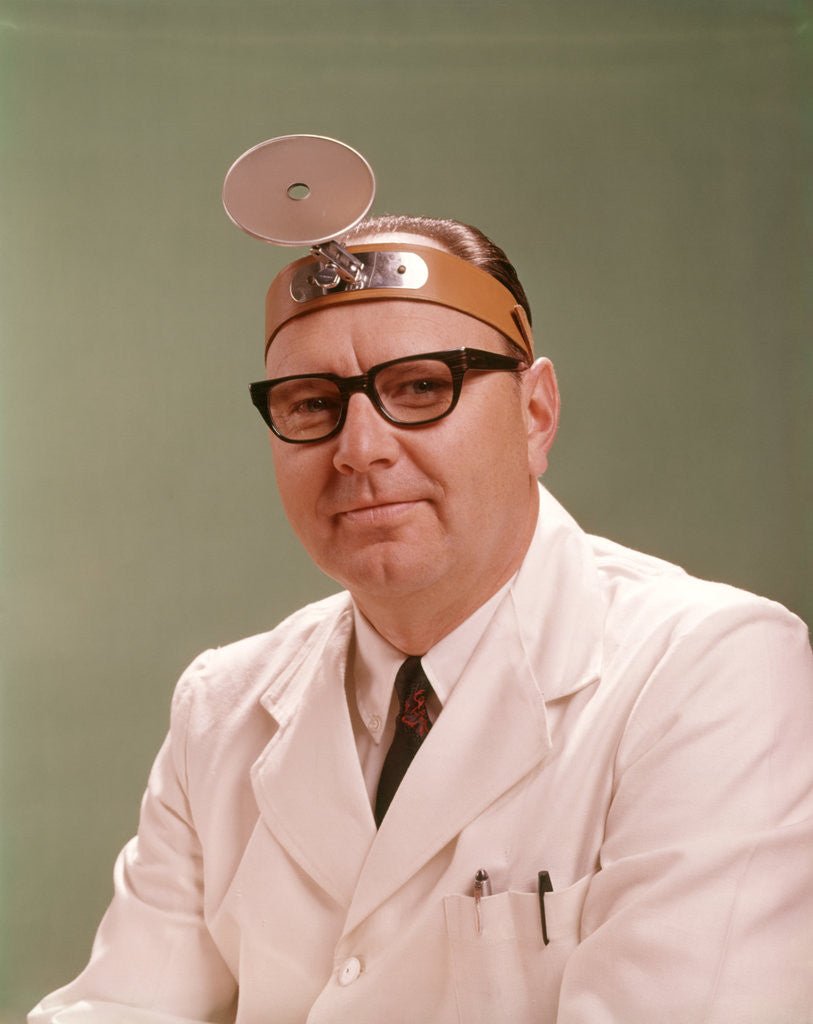
Your doctor has new guidelines, new studies, a fresh consensus, delivered with precisely the steady confidence of every guideline above. He believes it, and he has good reason to. So did every doctor in this thread. None of them were villains. Each was sincere, most were kind, and all were certain, reading from a map that somebody else had drawn and handed them. That is the part worth sitting with.
So when the man in the white coat tells you what to eat, what to fear, and what to swallow every morning for the rest of your life, you are allowed to ask. Who paid for the study. What the evidence says beneath the headline. What he was just as certain about thirty years ago, and where that advice sits now.
Then make up your own mind. Call it scepticism, or call it whatever your grandmother called it when she ignored the advert, kept the butter where it was, and lived to ninety-one.
It has outlasted every consensus on this list. It will outlast this one too.
483
5,121
14,899
312,989
Neil Johnson retweeted
Jun 12
Statins. A lifetime of daily pills, for a benefit so staggering they had to measure it in days.
In the actual trials, taking one every morning for years postponed death by a median of three to four days. Days, not years. Try not to spend it all at once.
Three or four days, collected right at the very end, probably in a bed. Worth it, surely. Now the small print.
Muscle pain and weakness, the most common complaint, waved away for years as simply getting old.
In the worst cases, muscle that breaks down and floods the kidneys, which can finish you off entirely.
A raised risk of type 2 diabetes, real enough that regulators marched a warning onto the box.
Memory loss and confusion, with a warning of its own. They are draining cholesterol out of a brain that is a quarter cholesterol. Bold.
A flat, grinding fatigue, as the very same drug throttles the fuel your cells run on.
Strained liver enzymes, watched for years precisely because the drug leans so hard on the organ.
Sunken hormones, since you have cut off the raw material your body builds testosterone and oestrogen from.
And for the well person swallowing it just in case, a benefit so tiny it politely rounds down to nothing.
So there is the bargain of the century. A lifetime of pain, fog, fatigue, and fresh risk, for three or four extra days you will spend swallowing the pill that caused them.
41
188
626
17,436
Jun 12
This post below is true. My story is the same. Maybe even a bit darker. Now. 100% recovered 66yo off all meds per PCP doctor's advice.
Jun 11

A cardiologist who has spent his career inside the system just told my story better than I ever have.
Seven blood panels. Seven statin recommendations. Not one insulin test. Then a heart attack at 52.
If my story helps one person ask their doctor one better question, every bit of it was worth living through.
3
Neil Johnson retweeted

Jun 11
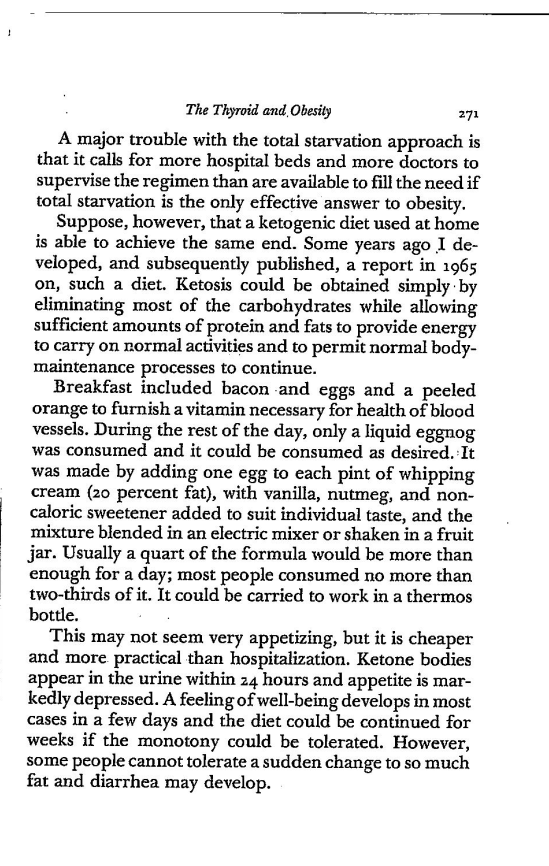
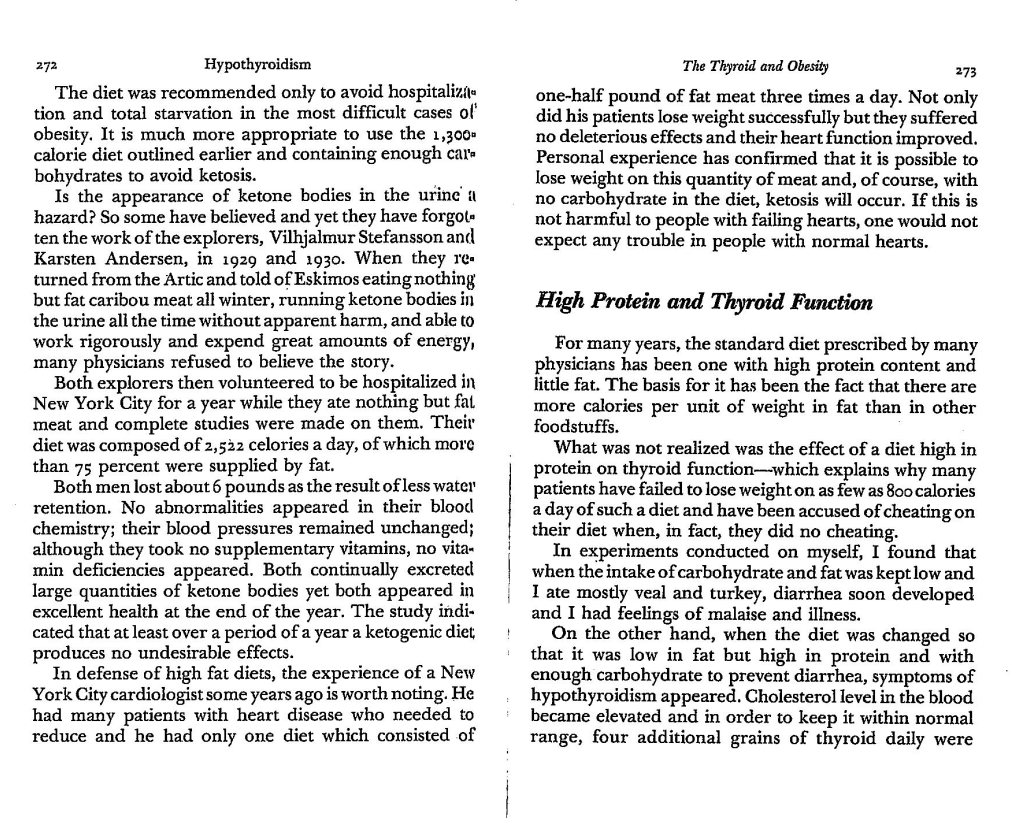
Broda Barnes literally developed a heavy whipping cream diet in 1965 as a more convenient alternative to fasting🤣
His book Hypothyroidism also includes a vigorous defense of ketosis and low-carb/high-fat diets.
The only macro he discourages for its thyroid impact is protein.
9
7
143
7,591
Neil Johnson retweeted
Jun 11
The fattest newborn of any mammal on record is the human baby. Almost nothing else comes close.
We arrive at roughly fifteen per cent body fat. A chimpanzee manages about three. Most mammals are born at two or three. We turn up padded like nothing else alive, then peak near twenty-five per cent in the first year.
That padding is the most expensive thing evolution ever built into us, laid down in the womb before the baby takes a breath.
The reason sits just above it. A newborn's brain burns fifty to sixty per cent of the baby's energy, and it builds itself out of fat. The baby fat is both the fuel tank that keeps that brain running between feeds and the raw material it is physically made from.
So a species that supposedly evolved on leaves produces the fattest infants in the animal kingdom, to power the largest brain in it, out of fat.
Then the infant grows up and is handed a leaflet explaining that fat is the thing to fear. The exact substance that built its brain, recast as the enemy.
We are born declaring what we run on. Then we spend a lifetime being taught to flinch at it.
The baby was never confused. Only the adult had to be taught.

44
421
2,172
33,325
Neil Johnson retweeted

Jun 11
Another fine example of why you should ignore dieticians.
The correct answer is both/either, but only if they're 100% beef.
“Hot Dogs vs. Hamburgers: Which Is the Heart-Healthier Option for Your Summer Cookout?”
health.yahoo.com/conditions/…
2
3
14
869
Neil Johnson retweeted
Jun 11
The label reading evolution:
Week 1: "I'll cut sunflower oil from the cupboard. Done."
Week 2: "Why is rapeseed oil in the bread."
Week 3: "Why is sunflower oil in the hummus."
Week 4: "Why is canola oil in the pesto."
Week 6: "The shop is now taking ninety minutes."
Week 8: "There's seed oil in the tinned tomatoes."
Week 10: "The 'olive oil mayonnaise' is 96% rapeseed."
Week 14: "Asking waiters what they fry the chips in. Nobody knows."
Week 18: "Bringing a small bottle of tallow to dinner parties."
Week 22: "Rendering my own dripping on a Sunday."
Week 26: "Pricing up half a cow and a chest freezer."
Week 30: "Considering whether the garden could support a heifer."
Week 36: "Naming the heifer."
The descent into paranoia is just pattern recognition arriving in real time.

170
768
4,240
69,438
Neil Johnson retweeted
Jun 11
@JeremyClarkson has seed oil poisoning.
Atherosclerosis and liver disease.
And no he's following his doctor's advice on diet and not eating the beef and lamb he grows.
He's screwed. 😢
9
8
84
3,413
Neil Johnson retweeted

Jun 10
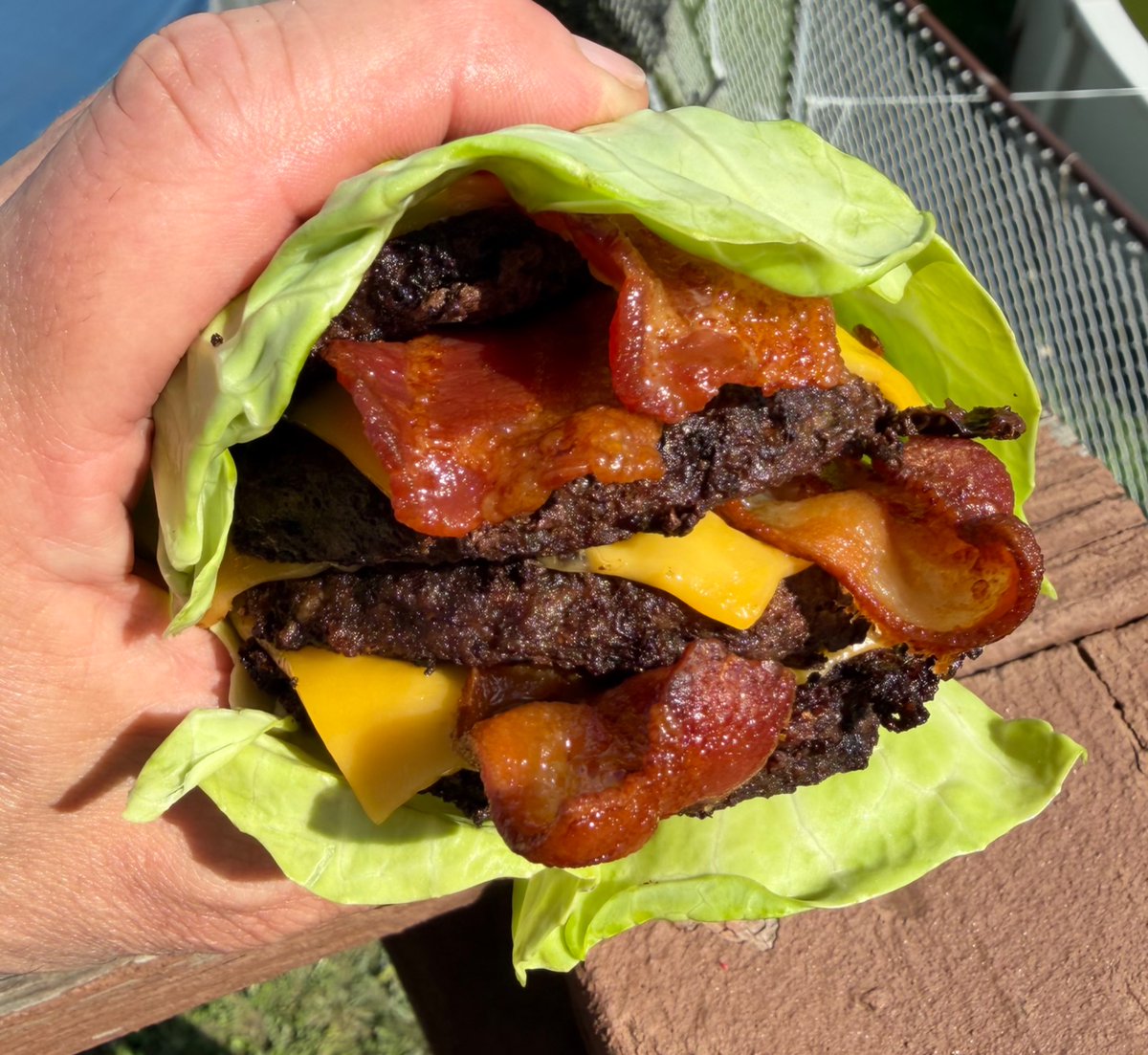
They told us. We obeyed. We suffered.
Cut red meat.
We did and heart disease didn't vanish.
Swap butter for margarine.
We did but we "still need" to take statins.
Eat oatmeal instead of eggs.
We did and type 2 diabetes is everywhere.
Cut down on salt.
We did and high blood pressure is rampant.
Eat lots of whole grains.
We did and allergies boomed.
We're fat. We're sick. We're tired.
Maybe it's time to get back to basics and eat like our ancestors did?
The ‘eat healthy’ experiment has been a catastrophic failure.
74
226
1,364
25,352
Neil Johnson retweeted

“The mediation proportions of...
👉🏻LDL-C ( -9.75 % [95 % CI -20.24, 0.74 ] ),
👉🏻SBP ( 9.85 % [ -0.77, 20.47 ] ), and
👉🏻DBP ( 0.72 % [ -1.79, 3.22 ] )
...were not statistically significant.
After adjusting for metabolic traits, the direct effect of GLP- 1R expression on MI VANISHED 👻( B = -0.003, P = 0.12 ), indicating...
‼️NO DIRECT EFFECT‼️
...of GLP-1R expression on MI independent of METABOLIC IMPROVEMENTS.”
“Notably, LDL-C did not mediate the causal association of GLP-1RAS on MI, consistent with MVMR results, confirming reliability.
These results suggested that...
👉🏻HDL-C and TG👈🏻
...rather than LDL-C, played a major role in reducing the risk of MI in GLP-1RAS.”
1
2
6
300
Neil Johnson retweeted
15 May 2025
1
12
39
12,717
Neil Johnson retweeted

Jun 9
Here's the study frontiersin.org/journals/nut…
And here is the meta analysis I mentioned sciencedirect.com/science/ar… and the retrospective study study frontiersin.org/journals/nut…
4
1
10
1,018
Neil Johnson retweeted
Jun 9
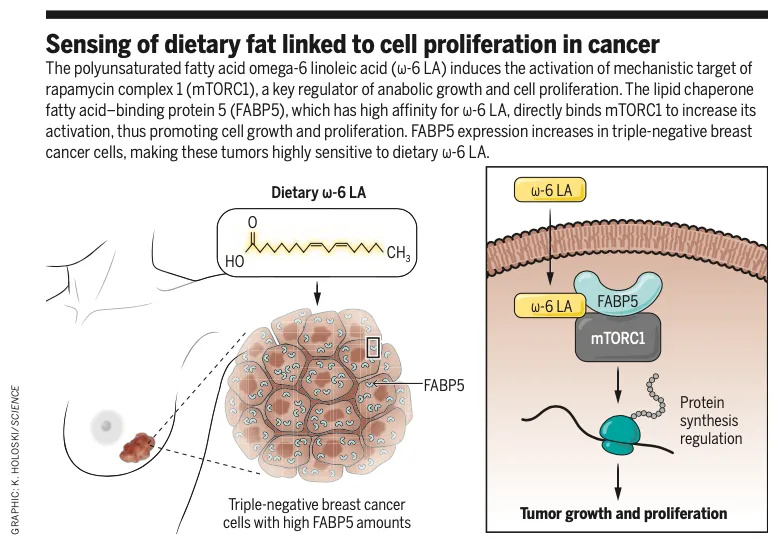
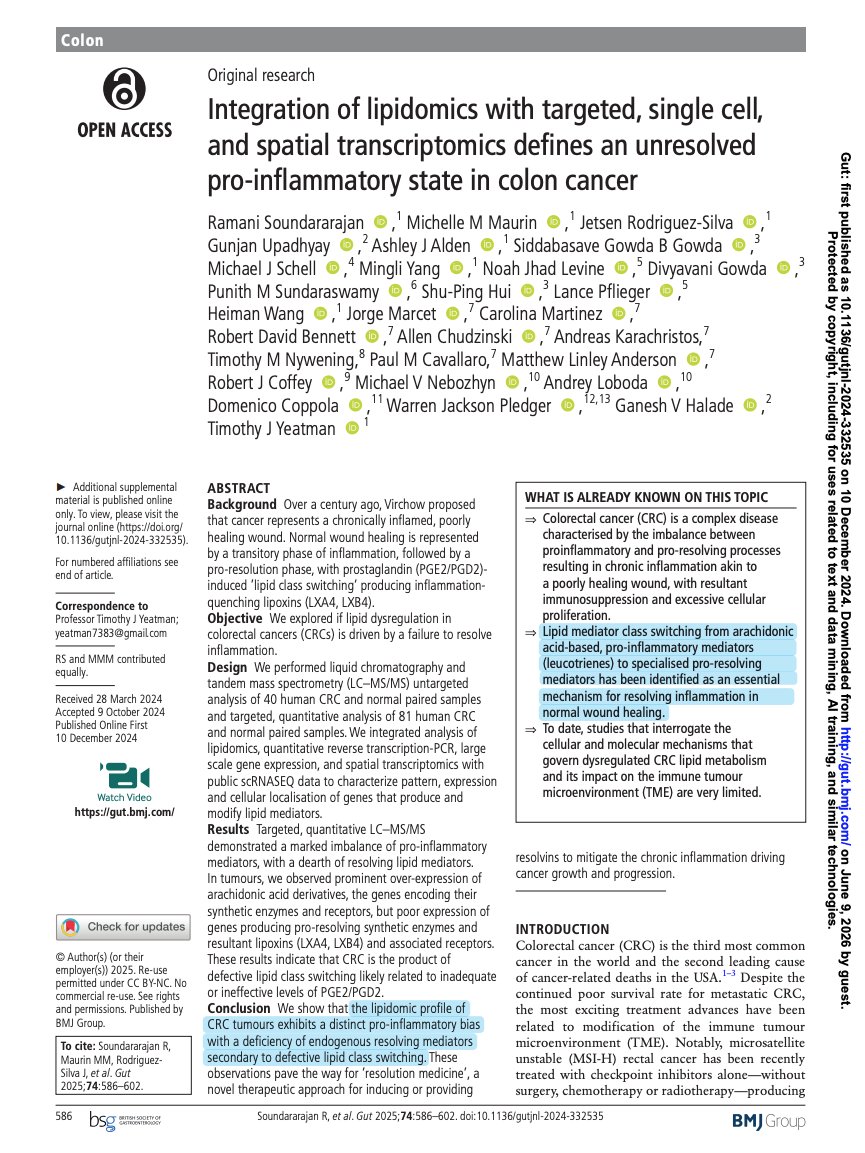
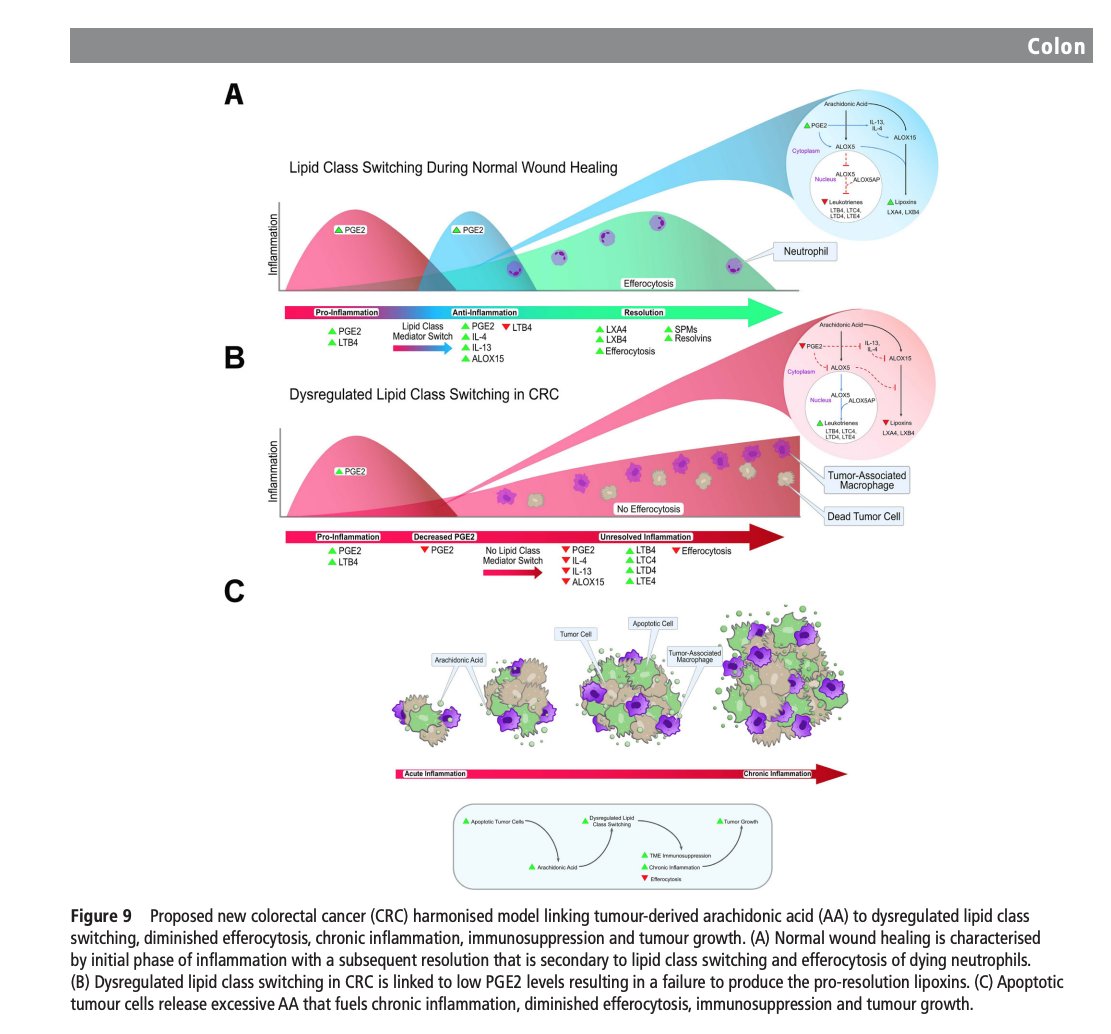
In the past two years, animal research as shown a direct, causal relationship between linoleic acid (the main Ω-6 fat in seed oils) and cancer.
In human colon cancer specifically, the latest and most detailed lipidomics analysis has shown that colon cancer tissue is characterized by an over-abundance of Ω-6 PUFA-derived inflammatory lipids.
Learn more here: x.com/trikomes/status/192309…
Jun 9

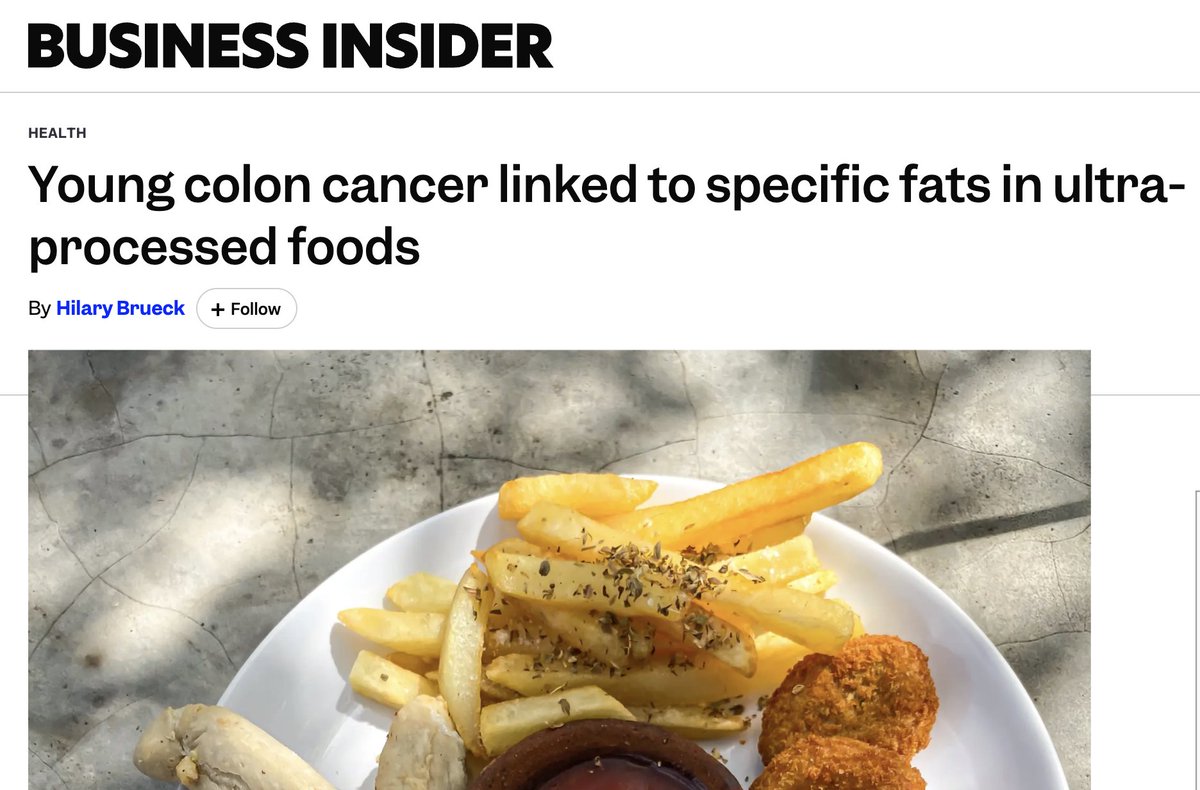
New Seed Oil term just dropped
We're calling them "Specific Fats" now
"Specific Fats" is also what I call my in-laws
1
14
55
5,900