Charleen Montgomery retweeted

Jon Ossoff was born to extremely wealthy parents. He went to private schools his whole life and the two jobs he had before becoming a Senator included a congressional aide and running a film company that he started with a large inheritance that he received from his grandfather. He also currently lives in a house that his rich daddy bought for him.
16h

Donald Trump’s handpicked candidate Mike Collins is a notorious bigot, antisemite, and extremist currently under federal investigation for the illegal misuse of tax dollars. Collins, who is only a congressman because his daddy was a congressman, voted to double health insurance premiums for more than a million Georgians, for the Iran War, and for the Trump tariffs.
39
296
1,196
38,921

RT @vali_nasr: I told @WSJ that looking beyond the MoU to a nuclear negotiations the economic carrot of sanctions relief is extremely power…
23
aspen 𐂂 ⚢ retweeted

you do know that it's an extremely popular piece of literature right??
19h

i read the color purple a few years ago and it traumatized me… like it literally starts with a 14 year old being raped by her father repeatedly and having two children by him that get sold immediately after birth…. like do you really think black people are reading that publicly
1
4
80
8,483

NVIDIA just shared some exciting news:
The new open-source model **MiniMax M3** has arrived, and it’s already performing at the absolute frontier alongside models like DeepSeek V4 and Kimi.
What’s really impressive?
NVIDIA’s new Blackwell chips are delivering excellent performance on it — with the Blackwell Ultra version offering up to **5x higher throughput** compared to the previous generation.
In simple terms: AI models are getting more powerful, and the hardware needed to run them efficiently is improving extremely fast.
The speed of progress right now is insane.
What do you think — are we moving too fast or still too slow? 👇


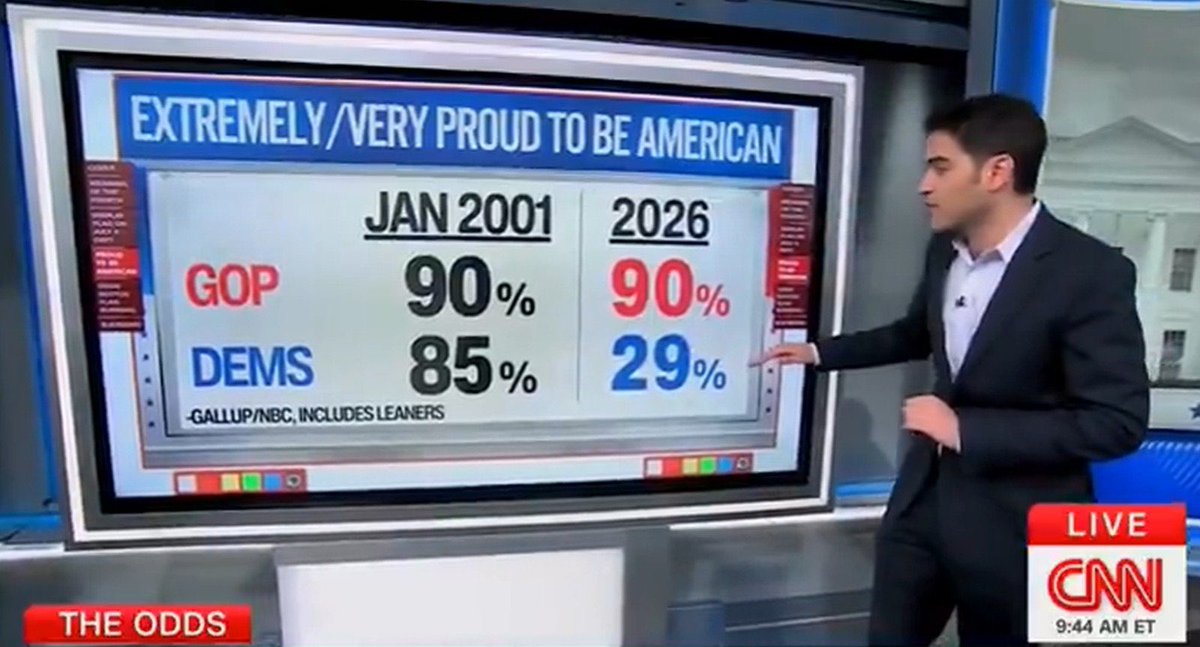
Extremely well written article with very good points posed and addressed
Jun 16

With respect, I think this statement says far more about the leadership of the unions than it does about Keir Starmer.
Trade union membership has fallen from over 13 million to around 6 million, with the overwhelming majority of members joining for workplace representation, legal support, pay negotiations and protection at work, not because they wish their union leaders to determine who leads the Labour Party.
As a former regional union leader myself, I would question how many ordinary members were consulted before union executives decided to involve themselves in Labour's leadership. My suspicion is very few.
The reality is that Labour has changed because Britain has changed. The industrial Britain upon which much of the trade union movement built its political power no longer exists. Manufacturing represents a fraction of the economy it once did, and the old assumptions about class, politics and voting patterns no longer hold true.
If the unions genuinely wish to defeat Reform, then perhaps they should spend less time plotting leadership contests and more time addressing the political conditions that created Reform in the first place. Brexit has not delivered the economic benefits that were promised. Instead, it has imposed a substantial cost upon the country and left Britain with slower growth, lower trade and reduced investment opportunities.
The irony is that many of those now demanding a change of Labour leader are avoiding the one debate that goes to the heart of Reform's existence. Reform was born from Brexit politics and continues to draw much of its support from it. If you want to challenge Reform's appeal, you have to confront the consequences of Brexit honestly and make the case for a closer relationship with Europe.
Perhaps union leaders should also reflect upon what happened to the Conservative Party. A party that loses touch with the country and retreats into ideological comfort zones eventually finds itself rejected by the electorate.
The collapse of Labour could be even more dramatic. Twenty first century Britain cannot be led by people seeking to recreate the politics or economic thinking of the 1970s. The country has changed, the economy has changed and the electorate has changed. Any movement that refuses to recognise that reality risks not merely electoral defeat, but political irrelevance.




MIKGAMER505 retweeted

An EXTREMELY BELATED commission for Tera Shadic Tyrant feature their namesake OC and my neglected girl Puce again.
Still shaking the dust off, but it's live now for P@Treon folks. Will post everywhere else later.
2
31
373
4,269

Pierce Morgan says what he thinks people want to hear, in order to get the most traction.
Pierce Morgan has no moral standards or principles, other than “what makes me money“.
He is an extremely unserious person.

24s
Allocation of resources is extremely difficult when it comes to retail work and even more so when it comes to geopolitical events.

All those points are extremely valid. You don't think the Nuggets team is ahead of any of GSW and Milwaukee?
Virginia eastwood💙🇵🇸🇵🇸🇵🇸💚💚 retweeted

Extremely well written piece by @GeorgeMonbiot sums up my views perfectly.
Plus we must be v concerned about a Home Sec, of any party, being able to accuse campaigners of 'future crimes' they haven't commited yet. Sounds like science fiction but it's real. theguardian.com/commentisfre…
19
272
403
10,530

Are you retarded? You sound extremely vaccinated.
Who was in charge of operation warpspeed?🤔
Blessup AD retweeted

No worry yourself, na everybody know say ibo people are extremely tribalistic 🤣🤣🤣🤣🤣🤣

4
12
72
920
Elias✌️ retweeted

Soap is extremely drunk after a few drinks.
🧼: I think I've hit rock bottom, man, I want to fuck a blond guy.
💀: And who would that be?
🧼: Lieutenant Ghost, just don't tell him...it's my dirty little secret.
💀: Don't worry, I won't.
#ghostsoap #ghoap 💀🧼
1
36
1,014
6,577
4NGEL retweeted

Jun 16
An interesting thing I’ve learned from carpentery is that the eye is extremely good at detecting PLUMB. It is also very good at seeing PARALLEL and SQUARE. The eye can detect an imperfect circle immediately. But it is not as good at seeing LEVEL. I have no theory for this.
156
356
14,205
228,917

Also extremely difficult for victim to accept: that it’s PERSONALITY, not PTSD.
Mamma only abused us when she was «in that corner» as we called it. So easy to assume it was when mamma was trauma triggered, right? But here’s the thing: mamma CHOSE her actions «in that corner»

Mette needed to believe that mamma was against her sexuality and not that mamma was harming her with the harm as the goal in itself.
1

Sure she can sue him, doesn’t mean she would actually win. Defamation is extremely hard to prove, and there’s stuff that supports his assertion like her huge bulge in dresses.
3
DSPy retweeted

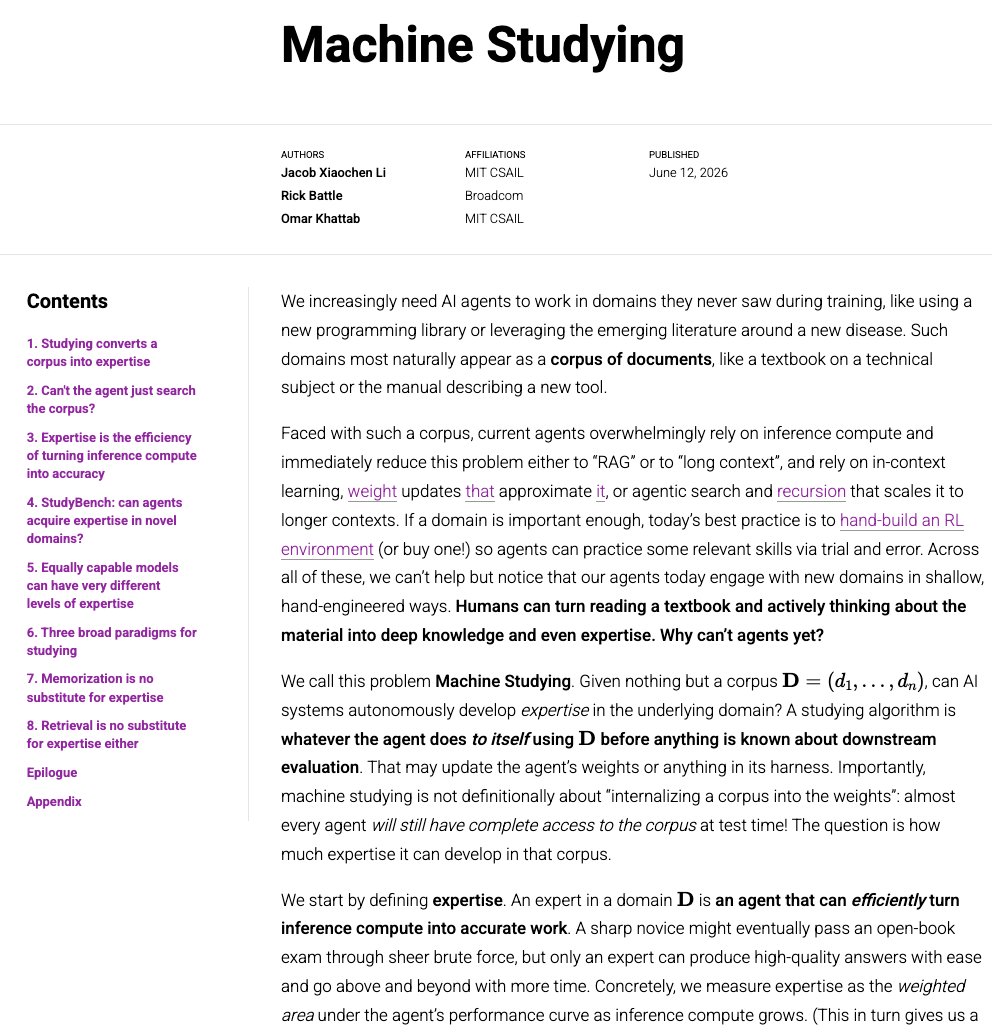
Been extremely excited about this work by @jacobli99!
We're disappointed in the current ways our agents develop expertise in new domains. Very shallow and hand-engineered!
Humans turn reading textbooks or documentation into deep expertise all the time. Why can’t our agents?!

Continual learning is widely discussed right now, but mostly as improving on the job or avoiding catastrophic forgetting. But it has a different, difficult, and already urgent form:
Given nothing but a corpus of documents, how should AI systems develop expertise in a new, unfamiliar domain? We call this problem Machine Studying.
1
2
4
60