
Amazon supplement failures often start in manufacturing—not marketing.
Proper granulation improves blend consistency, flowability, potency accuracy, and production efficiency. Quality manufacturing helps brands protect their reputation and meet label claims.
#purensm #supplementmanufacturing #amazonseller #privatelabelsupplements

1
3

Jun 11
Paste backfill must flow, stand, and support without failing.
The backfill engineering of open stopes with CPB revolves around the stability, pressure, drainage, and curing processes that allow for the development of CPB that can sustain itself and neighbouring mining operations.
Studies performed in the field and in models have revealed that CPB behavior is greatly influenced by many factors, including the geometry of the stope, the composition of the binder, the filling rate, barricades, and the subsequent stope wall closure process. Therefore, a universal solution to backfilling cannot be applied here.
Does paste strength or pipeline flowability pose greater engineering difficulty? Share your thoughts in comments!
Read the full article to learn more: miningdoc.tech/question/what…
Subscribe to Mining Doc to know more about Mining: miningdoc.tech/signup/
Video rights: @coryrockwell (TikTok)
Contact us: info@miningdoc.ca
22
Geoengineering Info retweeted

Jun 11
The CarbonBuilder™ seed flowability agent employs beneficial fungi to store more carbon to improve any soil’s health - particularly marginal fields. Find out how: bit.ly/WhenSoilWins

1
30

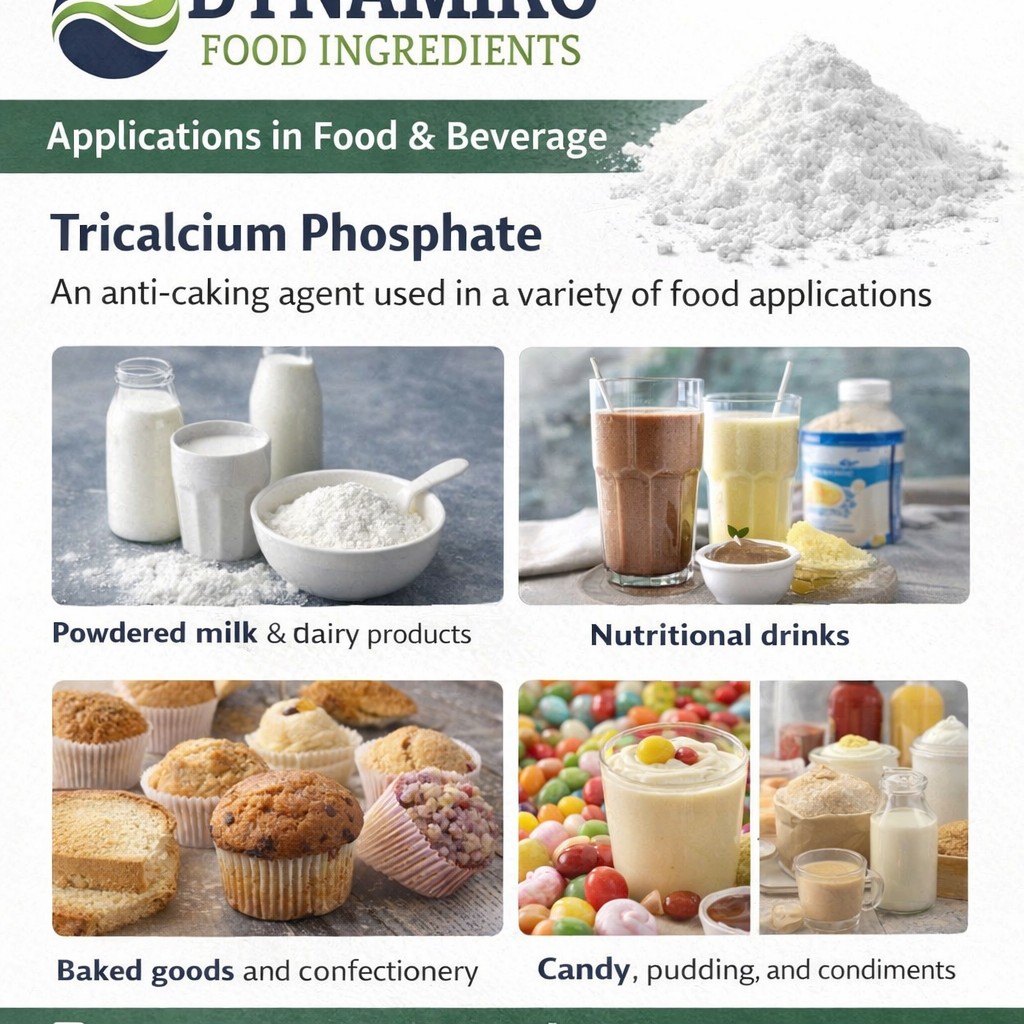
TRICALCIUM PHOSPHATE - A high-performance anti-caking agent used to improve flowability and prevent clumping in powdered food products.
Clean, consistent, reliable performance.
zurl.co/r0vHw
#TricalciumPhosphate #FoodIngredients #AntiCakingAgent #CleanLabel

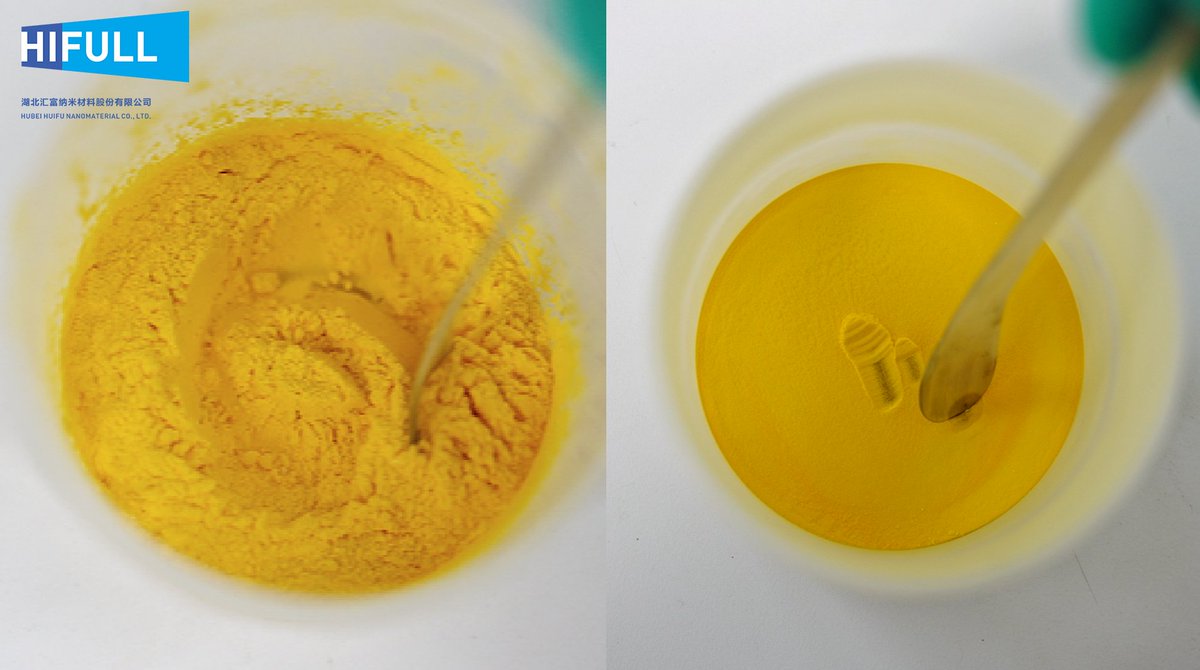
🧪 HIFULL® Fumed Silica helps powders stay free-flowing by reducing caking and improving handling efficiency.
📧 zhyy@hifull.com
🌐 hifull.com
#hifull #fumedsilica #anticaking #powderflow #flowability #powdercoating #chemicalindustry #nanomaterials
5
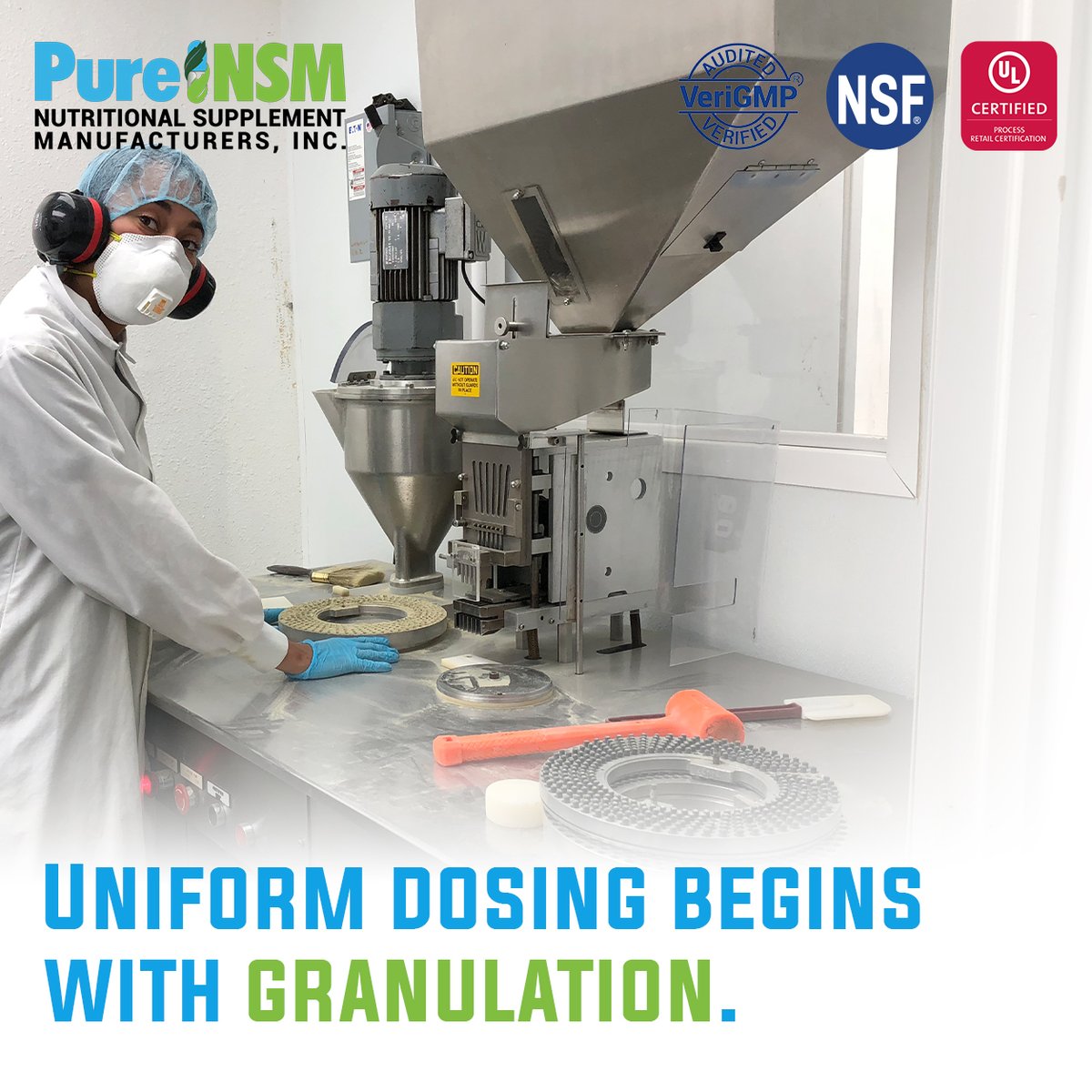
Uniform dosing starts long before a supplement reaches the bottle.
Granulation helps improve ingredient distribution, flowability, and dosage consistency—key factors in producing high-quality supplements at scale.
Quality manufacturing builds stronger brands.
#supplementmanufacturing #granulation #privatelabelsupplements #gmpmanufacturing
10

The flowability is depending on alkali content of the lava. Rich alkali gives flowable lava, but poor alkali pyroclastic lava flow. The latter one is more dangerous, because high temperature lava cluster diffuses to air.
1
60

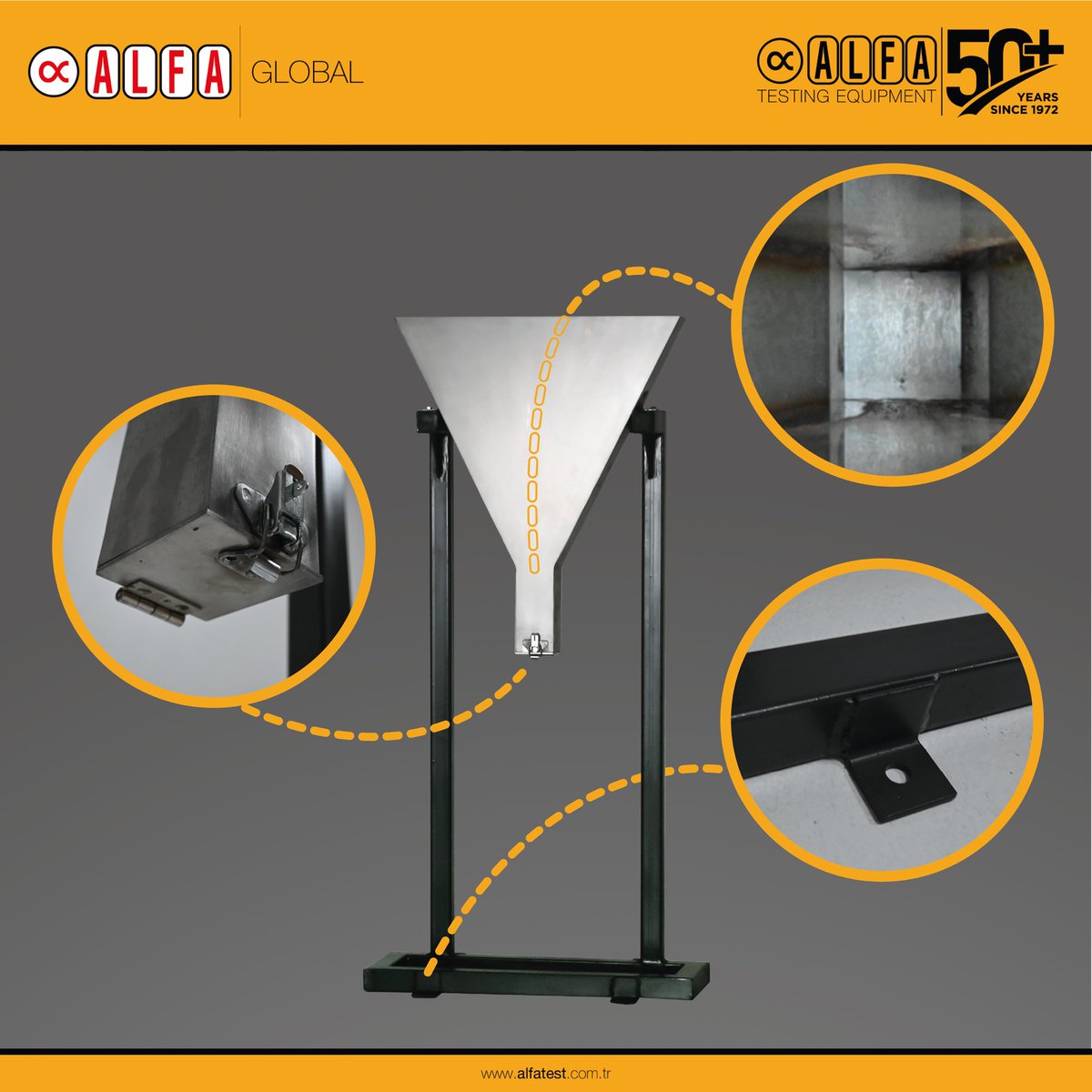
Built for Better SCC Flow Control
When working with self-consolidating concrete, flowability matters, but so does stability.
ALFA V-Funnel Apparatus • Simple test. Clear results. Better SCC control.
alfatest.com.tr
#ALFATestingEquipment #ConcreteTesting #SCC #VFunel
4

#LU7
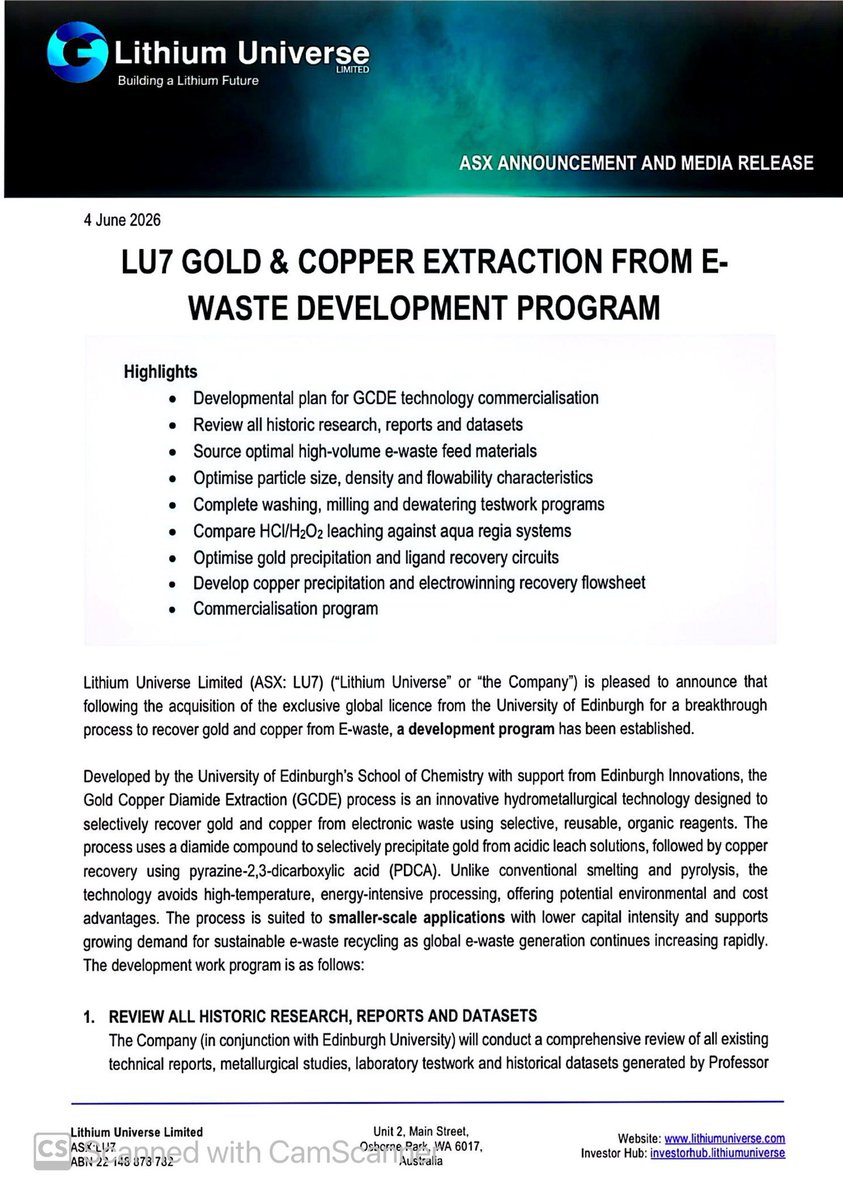
#LU7 #GOLD & #COPPER EXTRACTION FROM E.WASTE DEVELOPMENT PROGRAM
Developmental plan for GCDE technology commercialisation
Review all historic research, reports and datasets
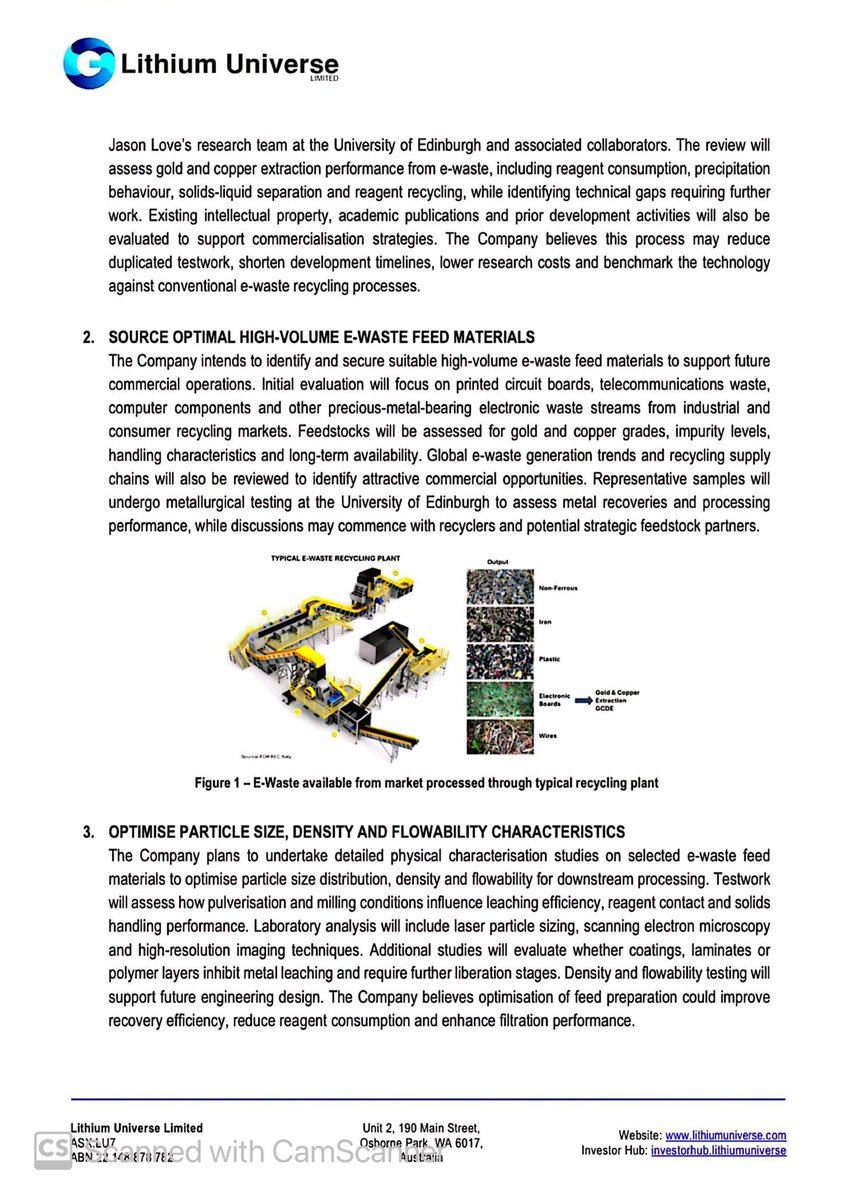
Source optimal high-volume e-waste feed materials
Optimise particle size, density and flowability characteristics
Complete washing, milling and dewatering testwork programs
Compare HCI/H202 leaching against aqua regia systems
Optimise gold precipitation and ligand recovery circuits
Develop copper precipitation and electrowinning recovery flowsheet
Commercialisation program
3
102

California high paraffin (often heavy) crude oil is thick, viscous, and requires intensive refining, making it ideal for asphalt and heavy fuel products. Conversely, sweet light crude is thin, low-sulfur oil that flows easily, yielding higher percentages of gasoline and diesel with simpler, cheaper processing, making it more valuable.
Understand Energy Learning Hub 4
CaCalifornia high paraffin (often heavy) crude oil is thick, viscous, and requires intensive refining, making it ideal for asphalt and heavy fuel products. Conversely, sweet light crude is thin, low-sulfur oil that flows easily, yielding higher percentages of gasoline and diesel with simpler, cheaper processing, making it more valuable.
Understand Energy Learning Hub 4
California High Paraffin/Heavy Crude Oil
Characteristics: High density (low API gravity), high viscosity (thick, flows like molasses), high paraffin/wax content, and often high sulfur (sour).
Refining: Requires complex, expensive, and energy-intensive refining, often needing specialized "coking" units.
Products: Excellent for producing lubricants, paraffin waxes, and asphalt.
Context: California has massive reserves of this type, which is necessary for the regional petrochemical industry.
American Fuel & Petrochemical Manufacturers 4
Sweet Light Crude Oil
Characteristics: Low density (high API gravity), low viscosity (flows easily), and low sulfur (< 0.5%).
Refining: Easier and cheaper to refine using simple distillation.
Products: Produces high yields of valuable light products like gasoline, kerosene, and high-quality diesel.
Context: It is the preferred, higher-priced standard for global benchmarks like WTI or Brent.
American Fuel & Petrochemical Manufacturers 5
Key Differences
Flowability: Light crude flows freely; high paraffin/heavy crude is thicker, especially in cold temperatures.
Refining Difficulty: Light sweet crude is easy to process; heavy paraffinic crude requires significant processing.
Value: Sweet light crude usually fetches a higher market price due to its high yield of gasoline and diesel.
Understand Energy Learning Hub 4
To provide a more detailed comparison, are you interested in this from a refining/production perspective or from a market/investment standpoint?
California High Paraffin/Heavy Crude Oil
Characteristics: High density (low API gravity), high viscosity (thick, flows like molasses), high paraffin/wax content, and often high sulfur (sour).
Refining: Requires complex, expensive, and energy-intensive refining, often needing specialized "coking" units.
Products: Excellent for producing lubricants, paraffin waxes, and asphalt.
Context: California has massive reserves of this type, which is necessary for the regional petrochemical industry.
American Fuel & Petrochemical Manufacturers 4
Sweet Light Crude Oil
Characteristics: Low density (high API gravity), low viscosity (flows easily), and low sulfur (< 0.5%).
Refining: Easier and cheaper to refine using simple distillation.
Products: Produces high yields of valuable light products like gasoline, kerosene, and high-quality diesel.
Context: It is the preferred, higher-priced standard for global benchmarks like WTI or Brent.
American Fuel & Petrochemical Manufacturers 5
Key Differences
Flowability: Light crude flows freely; high paraffin/heavy crude is thicker, especially in cold temperatures.
Refining Difficulty: Light sweet crude is easy to process; heavy paraffinic crude requires significant processing.
Value: Sweet light crude usually fetches a higher market price due to its high yield of gasoline and diesel.
Understand Energy Learning Hub 4
To provide a more detailed comparison, are you interested in this from a refining/production perspective or from a market/investment standpoint? @Google
3
92

Apr 21
Raise3D PA NEXT Black Powder is a next-generation SLS 3D printing material, boasting 4-5x higher elongation at break compared to standard PA12, higher powder flowability, and near-perfect isotropic mechanical properties (XYZ deviation within 1 MPa).
Shop: bit.ly/4ttw6FY
1
2
14
683

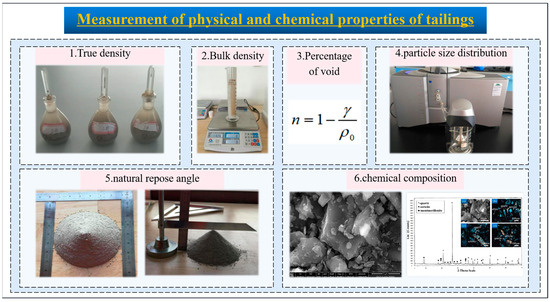
This study investigated the effects of cement-to-tailings ratio and mass concentration on the flowability and mechanical properties of cemented paste backfill
👉Read the full findings: brnw.ch/21x1AOt
#MaterialsScience #MDPIMaterials #Construction #Cement
2
3
94

Apr 1
#1759. Seed film coating
It is a precise, thin-layer application of polymers, binders, active ingredients onto seeds. It enhances seed performance by improving flowability for planting, r protecting against pathogens without significantly altering seed size.
#afactaday #SciComm
1
4
39
Mar 19
Carbon helps build deeper root channels for increased nutrient and water for this year’s crops… and then settles in to build soil carbon for future crops, too. It’s as easy as replacing current flowability agents with CarbonBuilder from Loam.
1
3
54


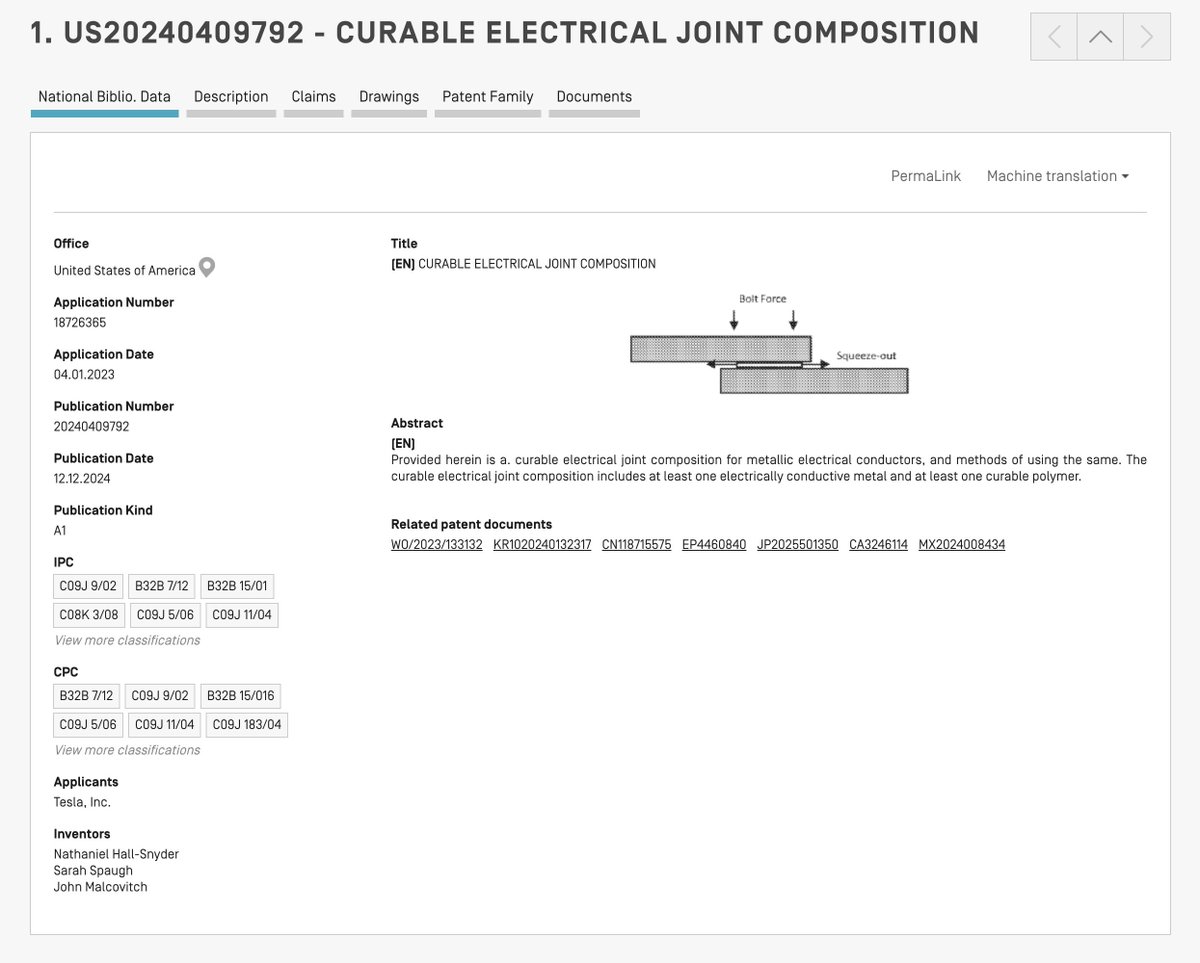
BREAKING 🚨 TESLA JUST DELETED THE PLATING LINE AT GIGAFATORIES WITH A "MAGIC" LIQUID SHIM 🥤
The days of expensive silver plating and messy factory grease are numbered.
Tesla has found a way to make raw aluminum conduct like precious metal. In a move to slash costs and simplify the production lines, a new patent unveils a viscous, curable "liquid shim".
This technology is not just theoretical—it is being actively secured for mass production right now. A fresh European patent publication from February 2026 (EP4693342) confirms that Tesla is doubling down on this intellectual property just months before the scheduled start of Cybercab production at Giga Texas.
This material flows like peanut butter to fill gaps, scrubs off oxidation like sandpaper during tightening, and then cures into a permanent rubber gasket. It’s a triple-threat invention that deletes an entire step from the supply chain while making the factory floor cleaner and safer.
This deep-dive breaks down the chemistry, the application, and the strategy behind the conductive 'liquid shim' that allows Tesla to join raw aluminum conductors without expensive plating. But to appreciate the elegance of this solution, we first need to understand the expensive headache it solves.
⚖️ The problem: High costs and messy manufacturing
In the production of electric vehicles and energy storage products, reducing electrical resistance is critical. Resistance is essentially the friction that electricity encounters as it moves, which causes energy to be lost as waste heat.
This is especially important for connections between large metal conductors like busbars—the heavy, flat strips of metal that act as the main highways for moving massive amounts of power through a battery pack.
While aluminum is the preferred metal for these busbars due to its low cost and light weight, it suffers from a natural oxide layer. This is a microscopic, hard skin of corrosion that forms instantly when raw aluminum touches air, blocking the flow of electricity much like a piece of clear tape would.
To fix this, manufacturers typically plate the aluminum, chemically coating the raw metal with a thin layer of expensive, non-corrosive metals like silver, nickel, or tin. However, this plating process is costly, wasteful, and environmentally difficult to manage.
The alternative to plating is using conductive petroleum greases—sticky, oil-based pastes filled with metal particles designed to bridge the gap between two conductors. But these introduce their own set of headaches.
Grease is messy, poses a safety hazard, and acts like a magnet for dust and debris. Perhaps most frustratingly for engineers, it cannot be reliably applied to the underside of a busbar or vertical surfaces because it drips and runs like warm honey.
Clearly, the industry needed a solution that offered the conductivity of plating without the cost, and the ease of grease without the mess. That is exactly what Tesla engineered.
💡 Tesla's solution: A curable polymer matrix
Tesla has developed a proprietary "curable electrical joint composition". Instead of a simple grease or a solid plate, this is a sophisticated mixture consisting of a curable polymer (a liquid plastic that hardens over time, such as silicone) filled with conductive metal powders.
This material starts as a viscous paste that is thick and sticky like peanut butter so it can be applied with precision, but it cures into a durable, rubbery seal after the joint is assembled.
The genius of this solution lies in its dual nature. It acts as a liquid interface during application, allowing it to spread and fill gaps like mortar between bricks, but transforms into a solid state that locks out oxygen and contaminants.
By using specific metal powders within a flexible web of rubber, Tesla creates a connection that is electrically superior to grease but mechanically superior to bare metal.
However, simply mixing metal into rubber isn't enough to guarantee a good connection. The real magic happens at the microscopic level, where the material actively fights the aluminum's natural defenses.
🛡️ The science: Puncturing the oxide layer
The core chemical mechanism relies on the specific interaction between the metal powder and the busbar surface. The patent details the use of zinc powder with a particle size distribution between 1 and 20 microns.
When the joint is bolted down, these microscopic zinc particles act as abrasives. They work like jagged grit to physically puncture the tough aluminum oxide layer that naturally forms on the busbar.
This puncturing action creates direct metal-to-metal contact points that bridge the gap between the two conductors. The surrounding polymer matrix then seals around these microscopic contact points, acting like a liquid gasket that hardens to keep the connection airtight.
This prevents the oxide layer from reforming and stops galvanic corrosion—a destructive reaction similar to what happens inside a leaking battery where one metal eats away at another.
Establishing this microscopic connection is vital, but it’s useless if the material drips off the part before it can be assembled. To solve this, Tesla turned to the physics of fluids.
🧪 The "Goldilocks" formulation
Tesla's engineers have dialed in a specific formulation to make this work at scale. The patent highlights a metal loading of 40-60% by weight—the precise ratio of metal powder mixed into the liquid base which strikes a balance between conductivity and flowability.
Conductivity ensures the joint carries electricity without resistance while flowability ensures the paste can be pumped through factory robots.
The viscosity is tuned to 100,000–200,000 centipoise, giving the paste a texture roughly the consistency of peanut butter. This specific thickness is crucial. If it were thinner, it would drip off inverted surfaces; thicker, and it wouldn't spread evenly.
This relies on a thixotropic nature—a physical property similar to toothpaste where the material flows easily when squeezed but instantly firms up when it stops moving.
This unique physical behavior solved the handling challenge, but Tesla went a step further, optimizing exactly how the material is delivered to the part.
🎯 The application: From dots to "Peel-and-Stick"
To solve the messiness of grease, Tesla formulated this material to be applied in a specific "dot array" pattern—a grid of tiny distinct droplets rather than a solid smear. The patent specifies a feature size of roughly 10 to 12 microns for these dots.
When the busbars are compressed, these high-aspect-ratio dots do not just squash flat; they act like tall, narrow pillars that collapse under pressure. This "squeeze-out" action effectively purges air, dust, and foreign debris from the joint, working like a squeegee to leave a clean, pure electrical connection in the center.
But the patent reveals an even more streamlined future: Conductive Tape.
Beyond robotic dispensing, the patent explicitly notes that this composition can be pre-manufactured as a bi-facial adhesive film. This implies a future where busbars arrive at Giga Texas with the conductive material already applied, protected by a peel-off backing.
This "peel-and-stick" high-voltage architecture would delete the dispensing robot entirely from the main line, reducing CapEx and cycle time even further.
This precise application strategy solves the physical assembly, but it also unlocked an unexpected digital benefit that transforms how the cars are inspected.
📉 The safety feature: Detecting loose bolts
One of the most fascinating aspects of this invention is how it acts as a quality control sensor. With traditional plated joints, a loose bolt might still make enough electrical contact to pass a factory test, only to fail later on the road due to vibration. This creates a "false pass" scenario—a nightmare for safety engineers.
Tesla's new composition behaves differently. At low clamp loads (1-4 kN), the material exhibits high electrical resistance (150–1,500 µΩ). The resistance only drops to an efficient operating level (under 10 µΩ) when the bolt is tightened to the correct force of 7–10 kN.
This stark difference allows the factory's automated testing equipment to instantly identify a loose bolt simply by measuring resistance, ensuring no car leaves the line with a loose high-voltage connection.
This electrical feedback loop ensures the car leaves the factory perfect, but the final challenge is ensuring it stays perfect for a million miles.
🔒 The seal: Snap-curing and thermal breathing
Unlike grease which stays wet forever, this composition includes curing agents that effectively turn the connection material into a solid gasket with a tensile adhesion strength of over 0.5 N/mm².
Crucially, the patent specifies this rubber creates a "low durometer" seal. This means the cured material remains soft and flexible rather than becoming a hard, brittle plastic.
This flexibility allows the joint to mechanically "breathe"—stretching and squishing as the busbars expand and contract with the intense heat of high-voltage operation—preventing the cracking that plagues rigid epoxies.
Speed is also a factor. While the material can cure at room temperature, the patent highlights the use of UV-sensitive photochemical catalysts. This suggests Tesla plans to use "snap curing"—blasting the joint with UV light to set it instantly.
This ensures zero bottlenecks on the assembly line, fitting perfectly with the "speed of the line" ethos of the Alien Dreadnought.
These microscopic victories over corrosion and vibration add up to a massive macroscopic advantage. Here is how this chemical innovation powers Tesla's broader strategic goals.
🚀 How this patent contributes to Tesla's future
As we move deeper into 2026, the strategic value of this patent becomes clear. It is a fundamental enabler of the "Unboxed" manufacturing process for the Cybercab, which is set to begin mass production at Giga Texas in April 2026.
The thixotropic nature of this paste allows robots to apply electrical connections to battery packs and drive units in any orientation—even upside down—without the material dripping.
Furthermore, this invention is a direct attack on Cost of Goods Sold (COGS). By eliminating the need for plating, Tesla unlocks massive savings as it targets production of millions of Cybercabs annually. By using raw aluminum busbars, Tesla insulates itself from volatile commodity prices of precious metals.
Finally, the environmental sealing properties extend to Tesla's expanding ecosystem beyond cars. For the massive Megapack deployments, the cured seal protects against decades of outdoor weather.
For Optimus, the vibration-resistant bond ensures that the hundreds of electrical joints inside the bot do not loosen as it walks and works, providing the mechanical reliability needed for a robot that must operate autonomously.
21
91
548
33,288

Feb 10
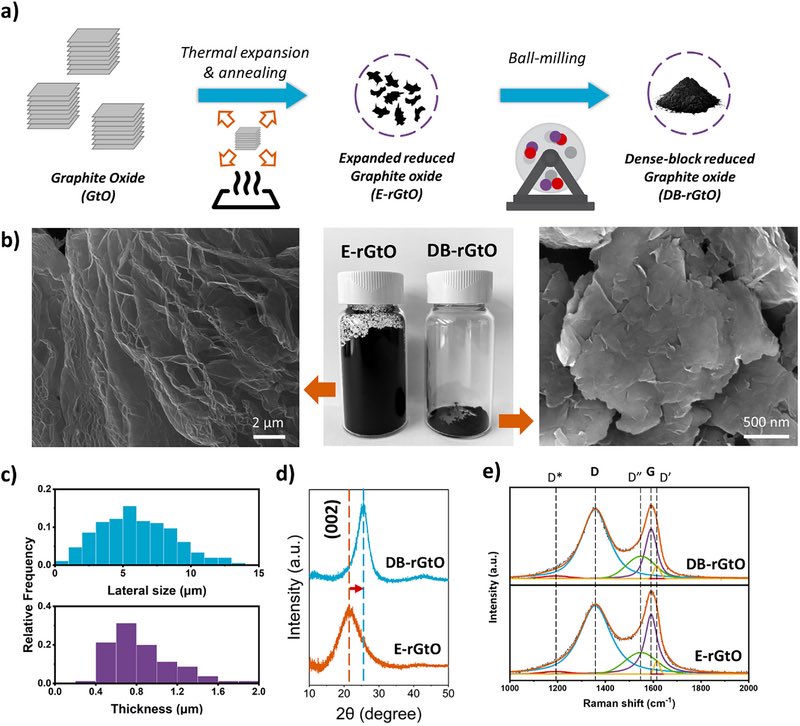
Effective technique to reduce #graphene into a conductive printed film with optimal tensile strength.
By using a mix of nitrogen-doped graphite oxide as starting synthesis, termed Dense-Block reduced Graphite Oxide (DB-rGtO), it’s here described a process to aggregate the wonder carbon mesh in form of ink with desired degree of viscosity, flowability and resistance to deformation for a suitable applications across various printed flexible electronics and devices. With a system of quantified polarized light microscopy the material is deposited uniformly without the use of other chemical additives.
🔗 researchgate.net/publication…
1
5
23
841

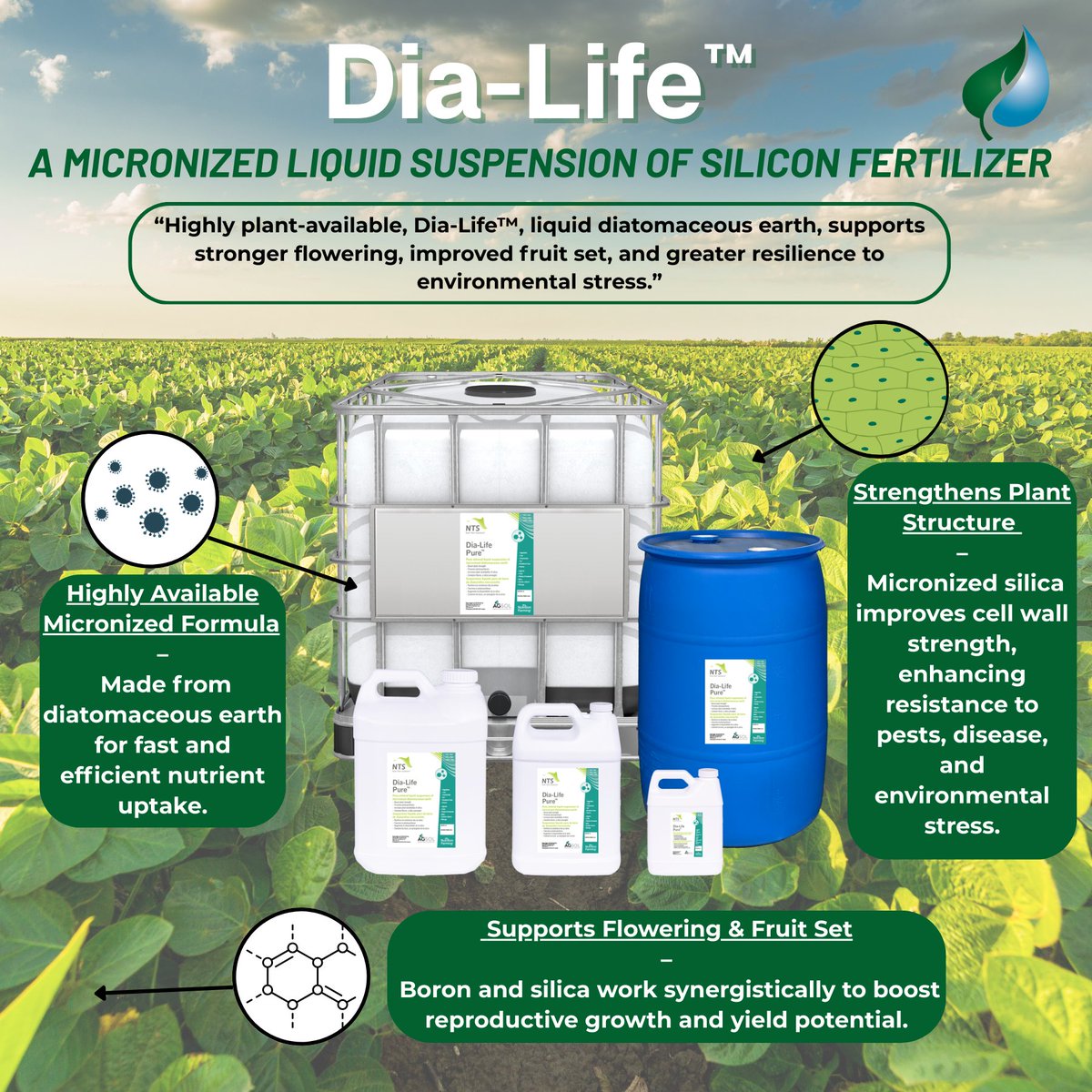
Support stronger flowering, improved fruit set, and greater resilience to environmental stress with Dia-Life™!
Dia-Life™ is a micronized liquid suspension made from diatomaceous earth, a natural source of amorphous silica derived from fossilized diatoms. The formulation also includes 0.70% boron, a key synergist that enhances silica uptake and performance, along with a spectrum of micronutrients.
🌱 Strengthen Plants' Structure - Micronized silica improves cell wall strength, enhancing resistance to pests, disease, and environmental stress.
🌱 Supports Flowering and Fruit Set - Boron and silica work synergistically to boost reproductive growth and yield potential.
🌱 Flexible Application Options – Apply via foliar spray, fertigation, or liquid injection for seamless integration into any fertility program.
Dia-Life’s highly available micronized formula is designed for fast and efficient nutrient uptake, as well as easy flowability.
To learn more about how Dia-Life™ can fit into your programs or to place an order:
Call 855-247-6548 or email info@agriculturesolutions.ca
Try Dia-Life™ Today and strengthen your crops from the inside out!
1
73