
32m
WITH A RAN TAN TAN ON MY OLD TIN CAN ! (From Roman Saturnalia to carnivals, charivaris, tar and feathering, ride-railing, hair-shaving of collaborating women, cacacerolazo, apéros saucisson-vin rouge and Canon français giant banquets or social media, looking back at these particular forms of popular or mob justice shaming rites through which common people have been expressing, for bad or for good since the Middle Ages and sometimes blending justice and celebration, their disapproval of different types of violation of community norms from their own midst like late or mismatched marriages or unpopular leaders)
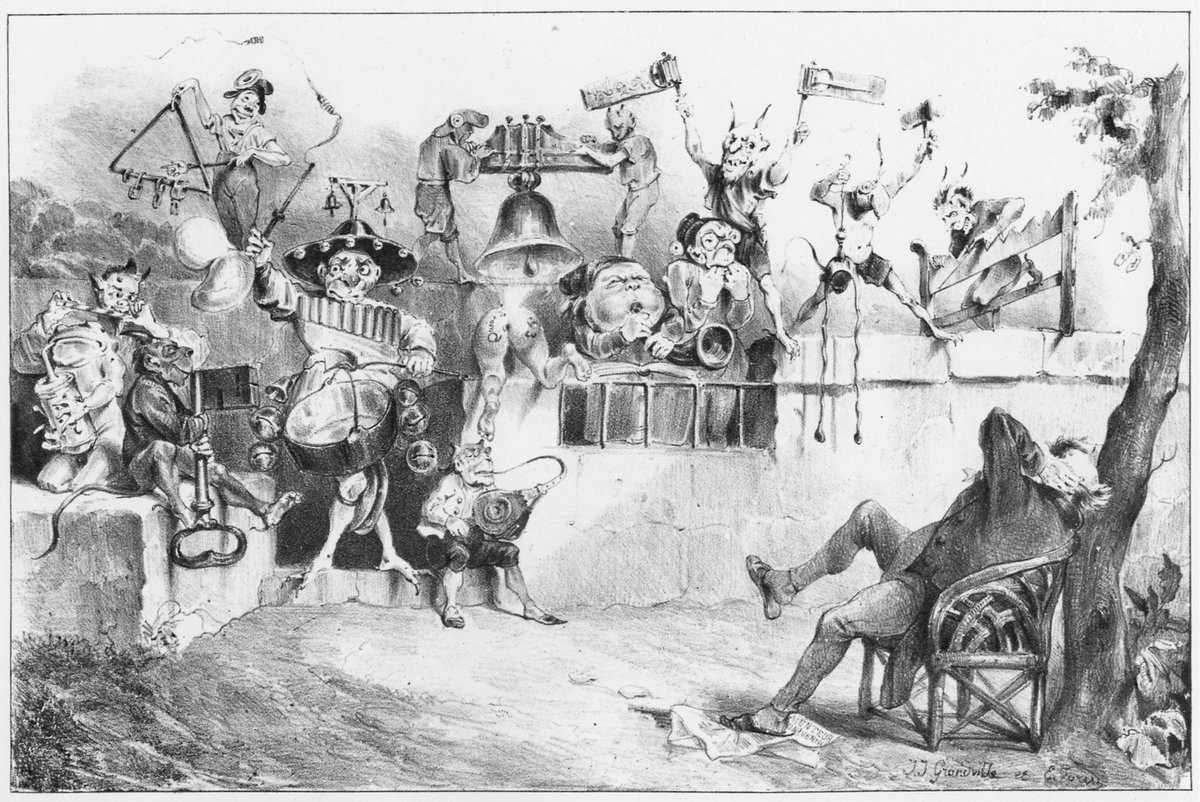
Charivari (alternatively spelled shivaree or chivaree and also called a skimmington) was a European and North American folk custom designed to shame a member of the community, in which a mock parade was staged through the settlement accompanied by a discordant mock serenade. Since the crowd aimed to make as much noise as possible by beating on pots and pans or anything that came to hand, these parades were often referred to as rough music. Parades were of three types. In the first and generally most violent form, an alleged wrongdoer (or wrongdoers) might be dragged from their home or place of work and paraded by force through a community. In the process, the victim was subject to the derision of the crowd and might be pelted, and was frequently dunked at the end of the proceedings. A safer form involved a neighbour of the wrongdoer impersonating the victim while being carried through the streets. The impersonator was obviously not themselves punished and often cried out or sang ribald verses mocking the wrongdoer. In the common form, an effigy was employed instead, abused and often burnt at the end of the proceedings. Communities used "rough music" to express their disapproval of different types of violation of community norms. For example, they might target marriages of which they disapproved, such as a union between an older widower and much younger woman, or the premature remarriage of a widow or widower. Villages also used charivari in cases of adulterous relationships, against wife-beaters or unmarried mothers. It was also used as a form of shaming upon husbands who were beaten by their wives and had not stood up for themselves. In some cases, the community disapproved of any remarriage by older widows or widowers. Charivari is the original French word, and in Canada it is used by both Anglophones and Francophones. Chivaree became the common variant in Ontario, Canada. In the United States, the term shivaree is more common. As species of popular justice rites, charivaric events were carefully planned and often staged at times of traditional festivity, thereby blending justice and celebration. The origin of the word charivari is likely from the Vulgar Latin caribaria, plural of caribarium, already referring to the custom of rattling kitchenware with an iron rod, itself probably from the Greek καρηβαρία (karēbaría), literally "heaviness in the head" but also used to mean "headache", from κάρα "head" and βαρύς "heavy". In any case, the tradition has been practised for at least 700 years.
Wikipedia
en.wikipedia.org/wiki/Chariv……
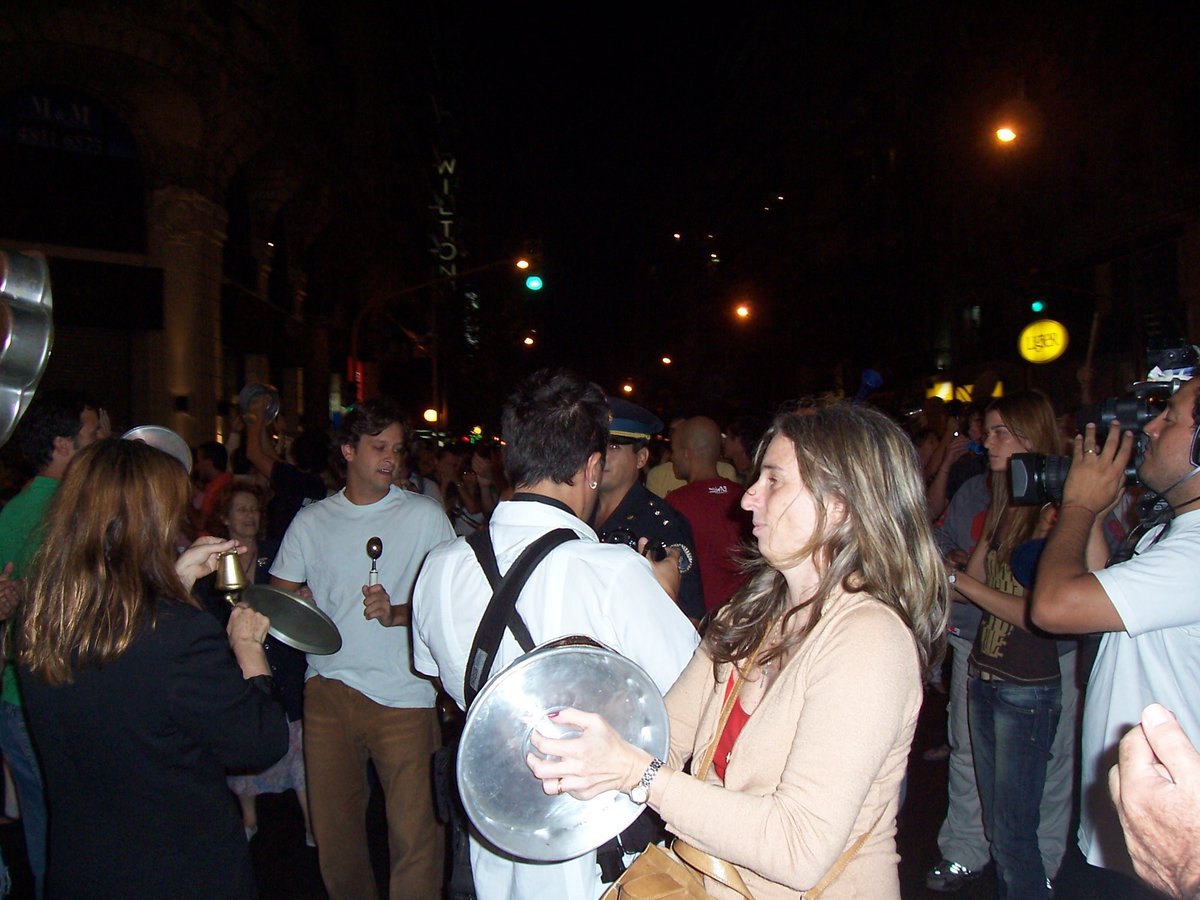
In Spanish, a cacerolazo or cacerolada; also in Catalan a cassolada or casserolade in French, is a form of popular protest which consists of a group of people making noise by banging pots, pans, and other utensils in order to call for attention. The first documented protests of this style occurred in France in the 1830s, at the beginning of the July Monarchy, by opponents of the regime of Louis Philippe I of France. According to the historian Emmanuel Fureix, the protesters took from the tradition of the charivari the use of noise to express disapproval, and beat saucepans to make noise against government politicians. This way of showing discontent became popular in 1832, taking place mainly at night and sometimes with the participation of thousands of people.
Wikipedia
en.wikipedia.org/wiki/Cacero…
Ancient times saw numerous popular festivals, featuring lively and boisterous parades, of which the Bacchanalia and the Saturnalia are the best known. The Western Middle Ages saw the Festival of Fools, and then the tradition of carnival took hold, including the Paris Carnival: the killing of Old Man Winter (or the old world) is a major celebration. A form of social criticism could manifest itself there, at least symbolically. In the Germanic world, undesirable (gossiping) celebrities could be paraded around with the Chatterbox Stone (Klapperstein) around their necks: the Klapperstei of Mulhouse, a form of mobile pillory, serves as evidence of this, representing a humiliating and shameful punishment. In the 19th century, reviving carnival traditions, festive and carnival societies generally organized masquerades and lively, noisy celebrations: bigophonic societies, Fine Arts fanfares, with no claim other than shared enthusiasm, and a certain dose of parody. Under the July Monarchy, Republican opponents of the new regime used this practice—a revival of the traditional charivari—against the government and its prefects. By 1832, demonstrations of this type had grown into a nationwide campaign, during which some one hundred such events took place. Each lasted several hours, sometimes repeated over several days, and could involve anywhere from a few dozen to several thousand people, most often at night. The phenomenon emerged around 1961 as a form of popular protest by the pieds-noirs, who favored keeping Algeria under French rule, against de Gaulle’s policy of self-determination and the country’s independence. During nighttime concerts, often organized at the initiative of the OAS, residents, gathered on rooftops or from their balconies, chanted in a telegraphic style while banging on pots and pans—three short beats and two long ones symbolizing “Al-gé-rie fran-çaise.”
Wikipedia
fr.wikipedia.org/wiki/Concer…
Horizontal collaboration (French: Collaboration horizontale, collaboration féminine or collaboration sentimentale) referred to the romantic or sexual relationship that many women in France actually or allegedly had with members of the German occupation forces after the Fall of France in 1940. The existence of those liaisons had been a major reason for young men to join the French Resistance. After the Liberation of France from German occupation, such women were often punished for collaboration with the German occupiers. After the war, throughout France, women accused of collaboration had their heads shaved. These women were referred to as "femmes tondues" (shaven women) and were easily identifiable. In many of the 20,000 cases, the women in question had performed only professional services for the occupying Germans, rather than being engaged in sexual relationships with them. The head-shaving in public spaces being used to punish women thought to be collaborators and the presence of many foreign photographers in post-war France have caused thousands of photos to exist of women being subjected to that punishment. "Collaboration horizontale" is believed to have produced 200,000 French babies with German fathers. Since 2009 Germany has offered these children of "the other bank of the Rhine" citizenship, after French foreign minister Bernard Kouchner lobbied for their recognition. The same phenomenon and later punishments occurred in other parts of Europe that were occupied by Germany during the war. Outside France Horizontal collaboration was also seen and condemned in other countries occupied by Germany during World War II, such as in Serbia, the Netherlands and in Norway, where the so-called Norwegian tyskertøser (German sluts) included thousands who actively participated in the Lebensborn program and others, such as the mother of ABBA member Anni-Frid Lyngstad, who independently had children with a German soldier. Rather than shaving their heads, women accused of horizontal collaboration in Norway were subjected to public exile and even arrest or internment. Any child that came from relationships between the local women and German soldiers was also considered part of the betrayal and so was equally exiled and considered illegitimate or bastards; Lyngstad's mother sent her to Sweden to avoid that. In both Norway and Serbia, horizontal collaboration was seen as a betrayal of one's own country during the war and was often treated as an act of aggression. In October 2018, Norwegian Prime Minister Erna Solberg publicly apologized to the tyskertøser and their children for the treatment that they received following the liberation. In Hiroshima mon amour (1959), the female protagonist is revealed to have been shaven as punishment for collaboration horizontale as a result of her relationship with a German soldier. The film visually linked the suffering of women forcibly shaved after D-Day with the loss of hair experienced by survivors of Hiroshima and Nagasaki. The phenomenon also inspired the 2010 film Collaboration horizontale, a documentary exploring what happened to the baby shown in the photo of The Shaved Woman of Chartres. In the 2000 film Malèna, a woman in wartime Sicily is punished for her beauty and her liaisons with German soldiers by the local women ripping off her clothes, beating her and shaving her hair. In the fourth episode of the 2001 series Band of Brothers, multiple Dutch women can be seen shaved with a black swastika on their forehead for collaborating with the Nazis.
Wikipedia
en.wikipedia.org/wiki/Horizo…
French organizers of a so-called “pork sausage and booze” party in Paris – designed as a deliberate provocation against Muslims – will move it from a heavily Muslim neighborhood to the Arc de Triomphe on Friday. The group, "Identity Block," called the new venue “Plan B,” after Paris police banned their bash this week on grounds of maintaining public order. Advertised on Facebook and receiving some 7,000 RSVPs, the party is billed as a “resistance to the Islamization of France.” It was initially planned to take place next to a mosque in the 18th district after Friday prayers, and on the same day as the English-Algerian World Cup soccer match. The date holds meaning for the French: On June 18, 1940, Charles DeGaulle issued his famous call for the French to resist Nazi occupation in World War II. “Identity Block” is an assortment of mostly French right-wing groups. Today, the group sent out a press release, calling upon “all Parisians … and French” to meet at the Arc de Triomphe Friday to eat ham and drink grape juice, fly French flags, protest the police ban, and listen to speeches against “religious control of public space” in France – a reference to the majority Arab-Muslim Goutte d’Or neighborhood where the sausage and wine party was to be held. Fadela Amara, a French federal minister of Algerian origin, calls the implicit protest against Muslims "hateful, racist, and xenophobic." The idea to gather at the Arc de Triomphe is described by Identity Block as symbolic, since it was where 2,000 schoolboys defied a Nazi ban on protest and marched against the occupying forces some 70 years ago. The plan to hold a pork-and-wine bash in Goutte d’Or, where the overcrowded mosque spills into the streets on Fridays, was considered provocative enough to cause a riot. Islam forbids the consumption of pork and alcoholic beverages. But it is also the latest and most public example of France’s current identity and culture wars aimed mainly at Muslims. In the past year, a controversial “national identity” debate run by the ruling party has gone along with a nearly completed federal ban in public places of the full-length veil or burqa worn by Muslim women. France is home to Europe’s largest Muslim population, some 4 million, most of whom are of North African origin. The pork bash and protest is also seen as an example of Facebook’s power to quickly mobilize large crowds. The right-wing pork party is a further morphing here of a new fad called “apéro géant” – huge binge-drinking parties organized overnight on Facebook. Apéro is short for apéritif, and geant means giant. French authorities have lately reined in apéro géant after a man fell off a bridge and was killed; an apéro géant aiming at 10,000 drinkers beneath the Eiffel Tower two weeks ago was also banned. Some conservative media have played the pork party ban as an abridgment of free speech. Marine Le Pen, deputy leader of the right-wing National Front (FN) party, calls the ban a “capitulation” by authorities to Muslims. The conservative American Thinker website ran a blog notice titled “Creeping Sharia,” suggesting that concern by Paris city hall of a riot or casualties is a bending to Islamic law. That is hardly the main reading in France. A more authentic comparison might be a neo-Nazi group holding a pork barbecue in front of a synagogue in a Hasidic Brooklyn neighborhood on Passover, then, when the city bans the event, calling the response “Creeping Torah.” French Protestant clergy are opposing the anti-Muslim party, including Friday’s “festival” at Arc de Triomphe – calling it “explicitly racial and religiously motivated.” Pastors have written letters comparing derogatory images of Muslims in the Facebook invitation to ugly images of Jews broadcast during the Vichy regime under the Nazis. Pastor James Woody of the Paris church Oratoire du Louvre said of the event that, “a rally specifically aimed at fellow citizens of France who are Muslim, using the French flag – that is not the way to do something in brotherhood.” Websites associated with the party claim Goutte d’Or has become so Islamized that pork is no longer sold there. But French media in recent days have published photos of piles of pork sausages and ham legs in the windows of shops in the Paris neighborhood.
CSM
csmonitor.com/World/Europe/2…
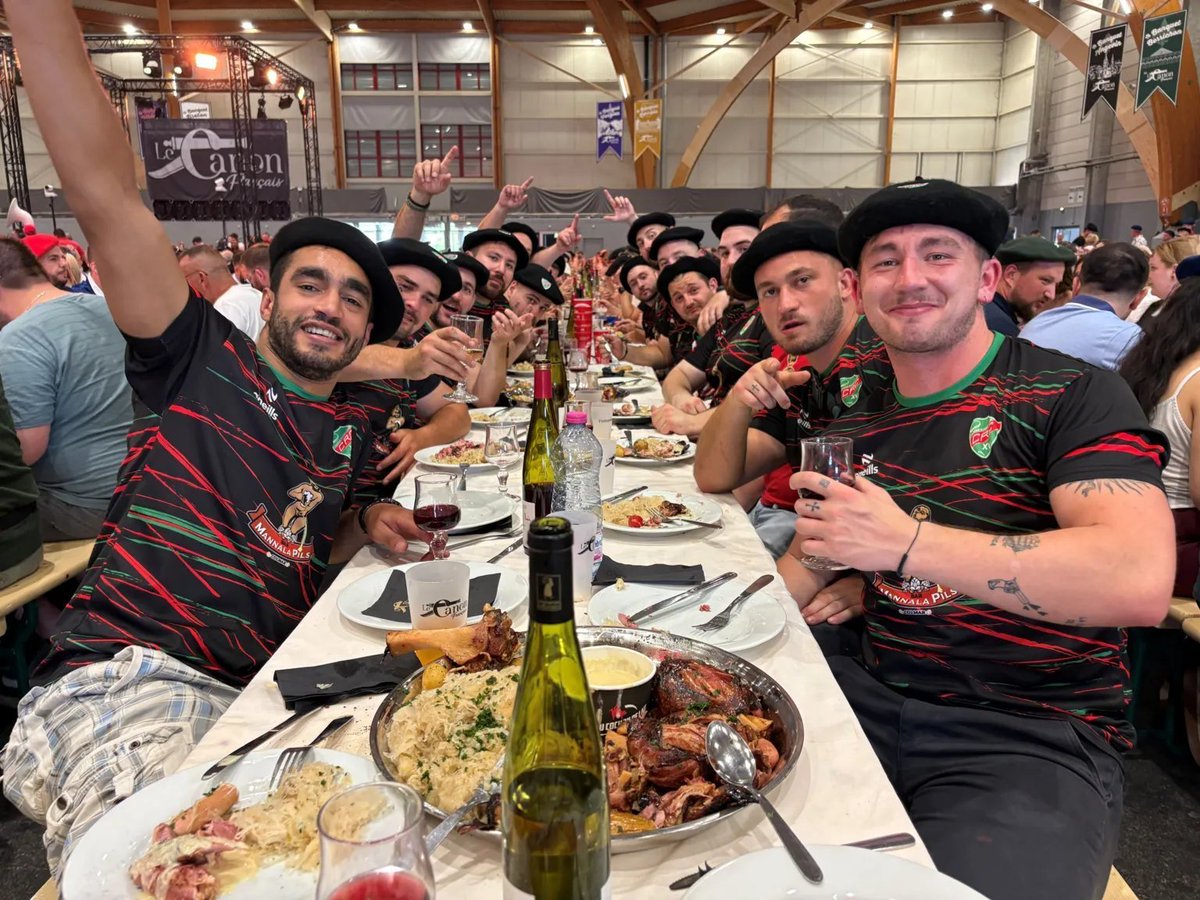
Le Canon Français is the brainchild of two entrepreneurs – Pierre-Alexandre de Boisse and Géraud de la Tour – who began selling wine over the internet to help a beleaguered winegrower friend during the Covid-19 pandemic. From there they started staging events to raise money for heritage projects – and success in that led to the banquets. (...) De Boisse says they are merely reviving an old French tradition of dining en masse with good local fare that goes back into the depths of medieval history. After the French Revolution, which led to the abolition of the monarchy, there were banquets républicains - marking the arrival of the new system - and, until recently, every village used to have its annual banquet populaire - a kind of people's feast. (....) He says the LFI is wrong to say they only serve pork. It happens regularly – because charcuterie is part of the French country tradition – but not exclusively. And he is angry at allegations that a Nazi salute was seen at one banquet. "I spoke to the guy and he said the accusation was total nonsense," he says. Describing himself as a Catholic from the impoverished aristocracy and an entrepreneur, he says it would offend against both his ethics and his business sense to exclude people from the banquets. As for Stérin, he says he has never met the investor, who "bought a 30% stake purely because he could see we were very profitable". (...) For the LFI's Fourreau, the banquets are "backward-looking – a caricature". "They don't represent modern France, which is a place rich in its diversity." Her party is trying to get local authorities to stop the banquets, and has had an initial success in the Brittany town of Quimper. In Caen, where a banquet was held in April, a preliminary investigation is being held by police into allegations of racial provocation by people attending. De Boisse does not deny that many – maybe most – of his punters are probably from the right, or hard right. "But look at the elections. That is how more and more people in the countryside are voting," he says.
BBC
bbc.com/news/articles/c78q21…
As in premodern charivari and its political variant during the nineteenth-century revolutions, groups of citizens nowadays take it upon themselves to hold perceived wrongdoers accountable by demonstrating outside the private homes of public officials whose decisions they condemn as outrageous. This direct action, which raucously breaches the public–private divide foundational to political liberalism, intends to enforce morality by condemning supposed violations of basic norms through symbolic shaming. These protests range from theatrical performances to (sometimes armed) intimidation, and are often posted to or live-streamed on the internet. Fighting back with special fervor against what they regard as improper state impositions on citizens’ bodies and violations of personal integrity (e.g., police brutality, abortion restrictions, or vaccination mandates), participants feel entitled to intrude in public officials’ private spheres by besieging them in their residential sanctuaries. This resurgence of rough music was unexpected, running counter to prominent writings on secular change in the repertoire of contention. (…) Charivari’s reappearance reflects several important developments that have reshaped liberal democracies in recent decades. Consequently, these controversial direct-action tactics, which resolutely trespass the public–private boundary, are not only interesting in
their own right, but also as a crystallization of broader changes, especially the growing troubles afflicting political liberalism. After all, during its gradual advance in the nineteenth century, liberalism had sought to protect the private sphere, suppress “popular justice,” and establish the rule of law. Suspected wrongdoing would be adjudicated via fair, evenhanded procedures (“due process”) under the guidance of well-trained experts (judges, lawyers), with firm guarantees for the rights of the accused. Moreover, the forward march of democratization had opened up regular, less contentious avenues of popular interest articulation and demand making that sought to replace the inarticulate expression of outrage by more constructive mechanisms: political parties could formulate proposals and programs, and elections allowed the citizenry to shape authoritative decision making and governance. As liberal democrats hoped, these well-designed, effective mechanisms predominated from the nineteenth century onward, forestalling “crude” surges of popular indignation in Europe and keeping them episodic in the less state-dominated polity of the US. For adherents to this notion of liberal democratic progress, the rise of charivari 2.0 risks a problematic relapse into incivility. As this reflection argues, several contributing factors have indeed weakened political liberalism. The move from a politics centered on material, socioeconomic interests to the postmaterialist assertion of diverse identities has not brought the predicted reign of universal toleration, but ended up fueling morality-driven disagreement and resentful backlash as theorists of the initial, more benign vision now recognize. Partly as a result, political polarization has deepened, inflamed not only by partisan and ideological divergences, but also by affective aversion and increasing hostility in the US. Rather than following the liberal maxim of agreeing to disagree, different groupings have felt growing antipathy and animosity. This simmering cauldron has been heated up further through the technical affordances of the internet, which has enabled vast numbers of previously inaudible people to voice their thoughts, opinions, feelings, and resentments, openly and without much restraint. Indeed, social media systematically amplifies eye-catching, shocking content and can turn expressions of outrage viral, which may disregard norms of civility with virtual impunity. As social media websites have also encouraged and even tricked people into opening up their private sphere to the public eye, they have exposed individuals to accusations from a wide range of self-appointed enforcers of diverse norms. Consequently, “morally motivated networked harassment” has proliferated in the cybersphere —with some fundamental similarities (but also differences) to historical charivari, as explained above. This new form of privacy-breaching direct action on the internet, including doxing, also propelled the resurgence of Katzenmusik in real-life politics. Given the erosion of the public–private boundary, widely diverse groupings nowadays regard it as legitimate to resort to charivari 2.0: they promote their intense moral values and denounce public officials as wrongdoers through performative protests at the targets’ private homes. Contemporary rough musicians use these transgressive tactics especially to fight back against what they perceive as immoral state intrusions or impositions on human bodies. To contest the illegitimate—in their eyes—interference of public decision makers in their private sphere, they feel entitled to retaliate by confronting the supposed offenders in their own private sphere. Therefore, they voice their indignation and outrage outside public officials’ family homes. Progressives who lack trust in the conventional procedures of liberal democracy embrace this upsurge of direct action as a promising way of articulating long-marginalized grievances and demands. Reactionaries resort to similar privacy-encroaching performances to push their own grievances and demands—but in the opposite direction. Facing fire from both sides, political liberals try to navigate these turbulences and conflicts while staying true to their own principles: how does one weigh free speech rights against the importance of safeguarding political civility, without which the fragile flower of democracy has difficulty blooming? After all, liberal checks-and-balances systems require a willingness to compromise, and conflict regulation through elections depends on losers’ acquiescence in their defeat—the opposite of the moral absolutism that often drives charivari 2.0. Considering these conflicting concerns and principles, it will be interesting to see how advanced democracies cope with the recent proliferation of rough music. Does this privacy-breaching contentious tactic open up alternative forms of popular participation that allow for citizen engagement concerning vital political and moral issues ? Or will postmodern polities privilege the protection of public officials in their private sphere, try to rein in this boundary-crossing direct action, and reassert the centrality of liberal democratic norms and procedures? As the return of Katzenmusik has been prepared by the erosion of political liberalism over the last few decades, the decisions that societies take on this controversial issue may foreshadow liberalism’s prospects for many years to come.
Kurt Weyland (2024)
cambridge.org/core/services/…
youtube.com/watch?v=2E1UGUky…
youtube.com/watch?v=zi-UJ9Ou…
youtube.com/watch?v=SMFWqh6o…… youtube.com/watch?v=CMeBxnpJ…
youtube.com/watch?v=dMHmLm4-…
youtube.com/watch?v=zi-UJ9

1
58

tu veux voir un verre geant @dan_murphy homo sapeinsus and your giver order for money via ADGM fitzpatrick
u already got the Stux net in ronnie bagel
no need for ASIC unit 8200
7

A l'époque j'avais vu Far Cry 3 a 110€, c'était au geant de la bateliére
174

la premiere quete est dingueeee et larbre de competence il est geant jv trop mamuser a geeker
10h

jviens d'installer diabloIV pcq jss nostalgique de l'époque ou je jouais diablo2 en cachette et wowwww le jeu de dingue
15

Les fardc et wazalendo sont à minembwe centre donc nous sommes occupé avec cette bonne nouvelle et aussi ils progressent vers rubaya . Le president felix Fera exactement ce que kagame a fait pour rester au pouvoir, calmez vous un geant assis est debout .
54

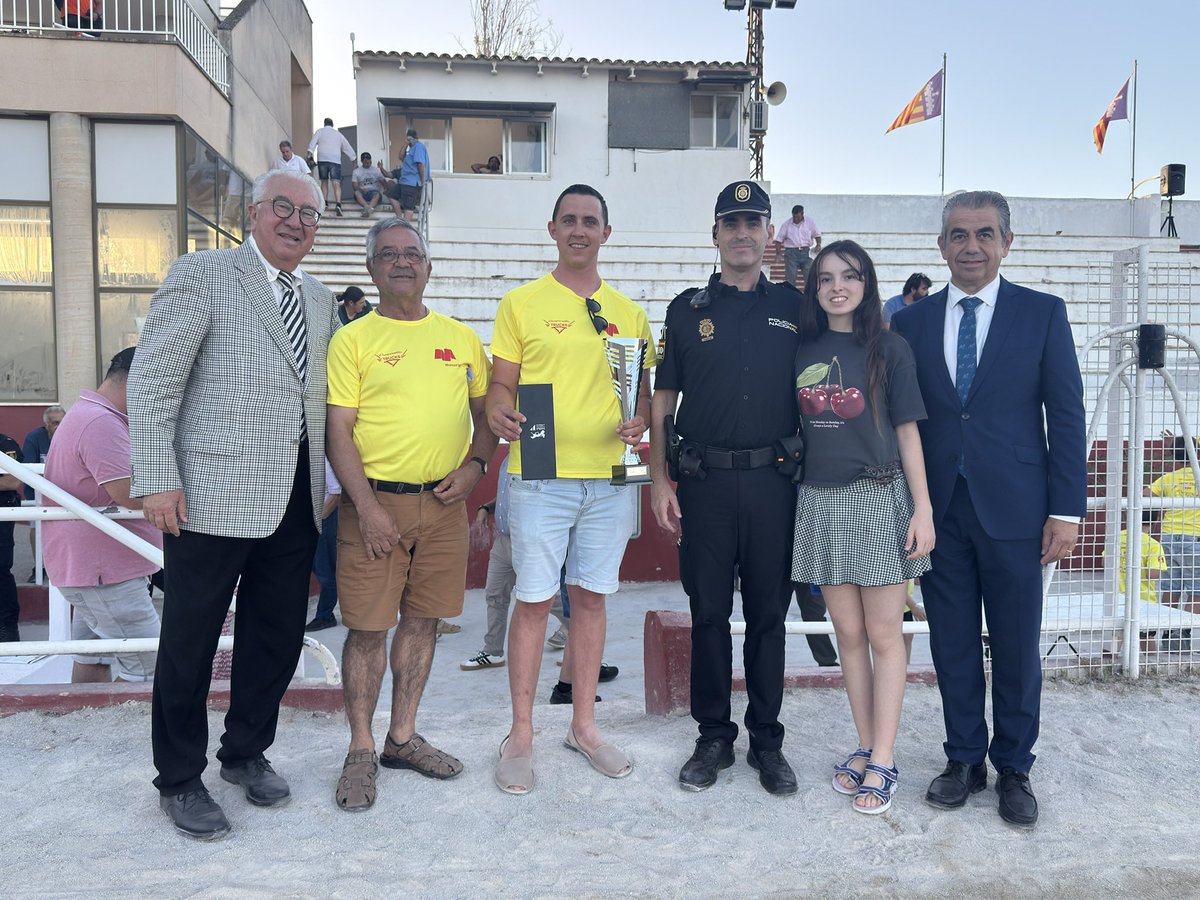
🏁 Resultado definitivo:
Carrera 1️⃣2️⃣ Premi SES SALINES
📅 14/06/2026
🏟️ #hipodromoManacor
🥇 5-GORLANDO STEED 1’17”2
🥈 7-HADRIEN DU VIF 1’17”6
🥉 6-GEANT D’AMOUR 1’18”2
4️⃣ 8-GIN MABO

33

La victoire du 3 1 à du vraiment leur faire mal au crâne, le scénario est terrible pour eux 🥲
Ça va lui faire du bien, je m'en fais pas pour lui
Brunson geant
1
1
8

En el Geant están vendiendo una figura coleccionable del Zaraza del Sabor.
Si apretas el botón dice “si clago”

9
260

LEWIIIISSSSS
LEWIS
TU ES MAGNIFIQUE
TU ES INCROYABLE
TU ES LE MEILLEURE DE TOUT LES TEMPS
TU ES LE PLUS GRAND CONDUCTEUR DE LA PLANÈTE
TU EST UN GEANT LEWIS
#f1
1
41


Le vieux Sassou surveille le fleuve @PR_Congo @ChristelSassou et le geant elegant surveille le parc...@HermanAmisi Paul adore la foret azala wana. Gorille moko abunga te. @PatrickMuyaya Yebisa ye. @Presidence_RDC @IsralMutombo11 @LFUTCFM
83
Mustica mathys retweeted

🇫🇷👁️Un geant a Paris !!!
Voici Mitou un boxeur roumain à Paris, France en 1935.
Dans le passé beaucoup d'homme était de taille hors normes et ils vivaient parmis nous !!!
4
25
121
22,007


Un geant face a un mec normal sinon. Moins dégradant pour José
70