Ian Shepherd retweeted

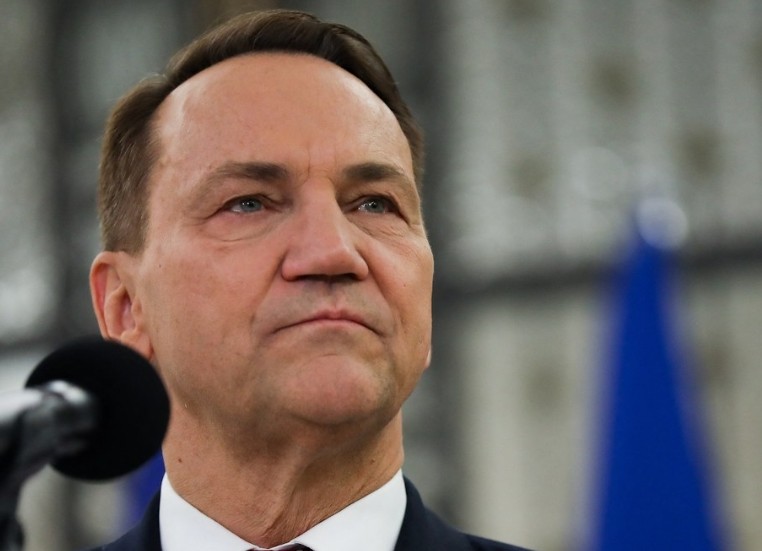
Sikorski says it clearly.
"The Russians are striking the Ukrainian power grid, grain terminals and gas storage facilities, civilian infrastructure. Apart from the fact that Russia does not use nuclear weapons, it does not limit itself to anything.
The constant proclamation of what our own red line is only encourages Moscow to adapt its hostile actions to our ever-changing self-imposed restrictions."
- Radoslaw Sikorski
Minister of Foreign Affairs of Poland
Ithis is True..!
3
62
168
2,842
🍑 ほい。🍑 retweeted

Just a little sand bubbler crab, sculpting its own mini universe one grain at a time.
30
1,064
6,264
356,464
Tito Villanova💙❤️ retweeted

This is why when women(particularly black women) say they were in a abusive relationship, i always take it with a grain of salt because in alot of cases the woman was the aggressor & she got hit back.
Y'all better leave these ghetto/hoodrat women alone & get you a good girl.
Jun 12

YouTuber LahMike got into an argument with his girlfriend that turned physical after he expressed frustration with their relationship
28
55
362
17,541

"🥩🐄 Why does some steak have white streaks running through the meat while others don't? In this fascinating breakdown, Dr. Robert Lustig compares *grass-fed beef, corn-fed beef, American beef production, Argentine beef, Italian beef, cattle nutrition, metabolic health, and food quality* to explain what may be happening beneath the surface.
This discussion explores the differences between **grass-fed vs grain-fed beef, metabolic syndrome, insulin resistance, cattle farming, modern agriculture, nutrition, food science, obesity, chronic disease, processed food systems, and metabolic health**. The visible fat patterns in beef can reveal important insights about how animals are raised, what they eat, and how modern food production has evolved over time.
🌱 Grass-fed cattle typically spend more time grazing on pasture, while many conventionally raised cattle are finished on grain-based diets. This has fueled ongoing debates around **beef quality, nutrient density, food sourcing, regenerative agriculture, healthy eating, sustainable farming, animal health, and human health**.
Dr. Lustig connects the concept of **metabolic syndrome, insulin resistance, liver health, obesity, diabetes, nutrition science, food industry practices, and modern diet trends**, raising important questions about the relationship between what animals eat and what ultimately ends up on our plates."
💡 Understanding your food is one of the first steps toward better health.
🎙️ Credit: Dr. Robert Lustig
youtube.com/shorts/E3GepDXTj…
2

This is Not Possible Anytime Soon.. You think E100 is Joke to you ? Bacho wali jaisi baate karte ho yaar..Netaa log chu** banate hai aur Janta bina kuch jaane Ban bhi jaati Hai..
E100 is Only Aspirational for now, This is Not Achievable for next 10-15yrs .. 4 Main reasons hai :
1. isme Re-engineering karni padegi..E20 ke liye minor modifications kaafi the, lekin E85-E100 ke liye flex-fuel engines ki zaroorat hai.
2. Infrastructure chnge kro: Petrol stations pe alag storage aur dispensing units lagane padenge higher blends ke liye.
3. Ethanol supply scalability ? food security vs fuel ka eternal tension hai. Itna sugarcane/grain kahan se aayega bina food prices affect kiye?
4.Phir transition karo: India mein karodon existing vehicles hain jo E100 compatible nahi hain.
Bohot Kaam baaki hai isme, E100 boldene se, ye kaam saal Do saal me nahi Hone wala hai.

Bahut hua E20, now India has to move ahead for E100.
India has to become self reliant. No other option to become Vishwaguru🇮🇳
We cannot keep paying our hard earned money to Russia, US and Saudi for Crude oil and Gas. It is unsustainble.
Long live our Farmers🇮🇳
Jai Kisaan🇮🇳
3

Ai Art Prompt Share Party 🎨👇
A bold woodcut print with coarse grain textures and angular carved lines, showcasing a stylized flamingo confidently gliding on inline skates down a crowded, sunlit beach boardwalk.

1
3


Honestly I think there's a grain of truth in every moment in this skit.
1
Kristen Bigalk retweeted

Stock up on fresh cherry tomatoes, baby spinach, and whole-grain bread at your local farmers’ market this weekend—perfect for quick, healthy salads or morning toasts!,

1
1

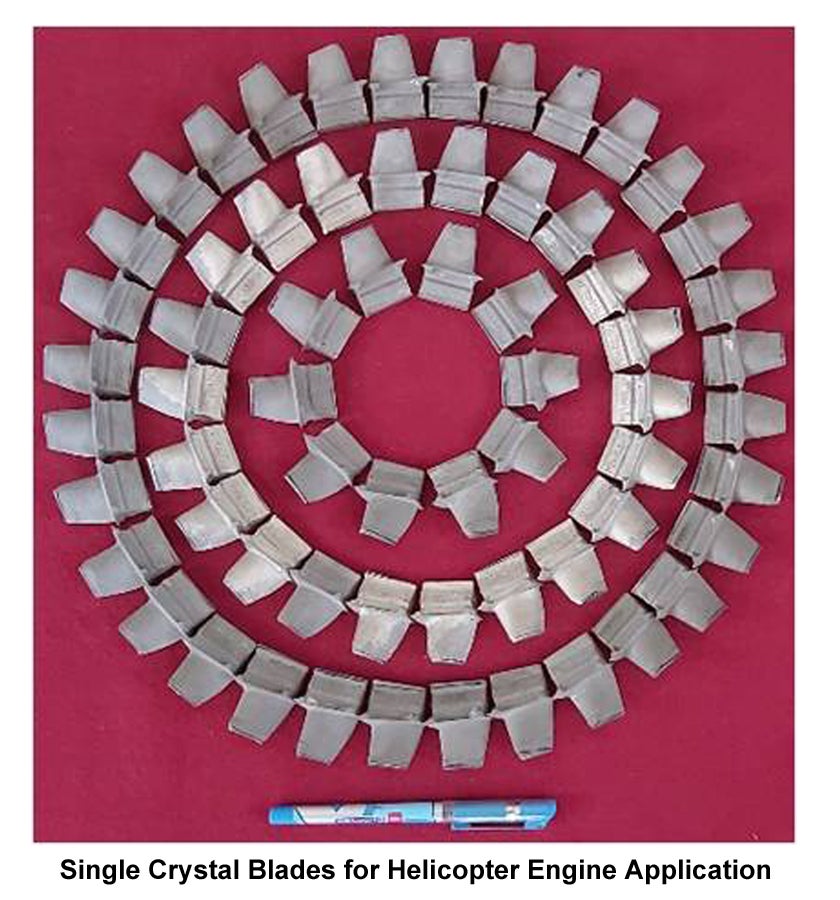
Single crystal turbine blades are a precision metallurgy milestone - pulling an uninterrupted crystal from molten superalloy under exacting thermal gradients, no grain boundaries, fatigue life that equiaxed blades simply can't approach.
What it means beyond the headline: domestic SCB manufacturing is a prerequisite for any serious domestic jet engine program.
That path runs through high-altitude long-endurance UAVs before it reaches fast jets.
India's HALE UAS ambitions had a hard import dependency here - this changes the equation.

🚨 MASSIVE: DRDO Cracks One of the World's Toughest Jet Engine Technologies, Develops Single Crystal Blade Tech
DRDO has successfully developed and perfected Single Crystal Turbine Blade technology, an achievement that places India among a small group of nations capable of producing one of the most sophisticated components used in modern jet engines.
At first glance, a turbine blade may appear to be just another metal component. In reality, it operates in one of the harshest environments known to engineering. Inside a fighter jet engine, these blades must withstand temperatures exceeding 1,500°C while spinning at tens of thousands of revolutions per minute. Even the smallest structural weakness can lead to catastrophic failure.
That is where single crystal technology becomes crucial.
Unlike conventional metal components, which are made up of multiple grains separated by microscopic boundaries, a single crystal blade is manufactured as one continuous crystal structure. The absence of grain boundaries eliminates weak points, allowing the blade to endure extreme heat, pressure, and mechanical stress that would destroy ordinary materials.
Developing such blades is considered one of the most difficult tasks in aerospace engineering. The manufacturing process requires extraordinary precision, from casting the crystal structure to machining cooling channels and achieving the final surface finish. A minor defect at any stage can render the entire component unusable.
Recognizing the maturity of the technology, DRDO has now invited private-sector companies to participate in its industrialization and large-scale production. The goal is not merely to manufacture the blades but also to obtain airworthiness certification, ensuring they meet the demanding standards required for operational aircraft engines.
The breakthrough carries major strategic implications. It strengthens India's ambitions to develop indigenous aero-engines, including future variants of the Kaveri engine, next-generation fighter jet engines, helicopter engines, and advanced gas turbines. Most importantly, it reduces India's dependence on foreign suppliers for one of the most sensitive technologies in the aerospace sector.
For years, aero-engines remained one of the few areas where India lagged behind the world's leading military powers. With the successful development of single crystal turbine blade technology, that gap has become significantly smaller.
What was once an exclusive capability of a handful of nations is now firmly within India's grasp.


Chances are it might be sold in NYCC, which is in October. If it does, it will probably be marketed there as a “convention exclusive”.
Just guessing, take it with a grain of salt.
5
chihir𝄐 retweeted

26Jun13 grain haus (Seoul)
DPR IAN - Do or Die
Excuse the poor camera work here - my whole body, other than my right hand, was freaking out at Cream(😆😆😆!!!)
And I failed to capture the moment Ian saying hi to me😇 (but it's forever etched in my brain, so that's okay)
5
23
165

Russian government is spending hundreds of millions of dollars annually across Europe on propaganda bilge like this, with Poland being one of Moscow’s highest-priority targets.
There are two separate questions:
1. How much does Russia spend overall on influence and disinformation?
Russian Foreign Minister Radosław Sikorski stated in 2025 that Russia spends “billions” on propaganda, disinformation and efforts to turn Europeans against Ukraine, the EU, and Ukrainian refugees.
Western intelligence agencies generally view Russian influence operations as part of a broader “hybrid warfare” effort that includes:
State media
Telegram networks
Bot farms
Fake news websites
Influencers and proxies
Cyber operations
Sabotage and espionage networks
Poland’s security services regard Russia as the primary foreign actor conducting information warfare against Poland.
2. Why is Poland such an important target?
Poland is arguably Russia’s most important information-war target after Ukraine itself because Poland:
Is a major military and logistics hub for Ukraine.
Hosts millions of Ukrainian refugees.
Is one of Ukraine’s strongest supporters in NATO and the EU.
Has historical disputes with Ukraine that can be exploited.
Researchers and security analysts repeatedly identify anti-Ukrainian and anti-EU narratives as key themes in Russian operations aimed at Poland.
Common narratives include:
“Ukrainians are taking Polish jobs.”
“Ukrainians get preferential treatment.”
“The EU is forcing Poland into war.”
“Poland is paying for Ukraine while Poles suffer.”
“Ukraine is dragging NATO into conflict.”
Historical grievances around Volhynia and the UPA.
These themes are chosen because they contain a grain of genuine public concern, making them easier to amplify.
Is it actually working?
To some extent, yes.
Support for Ukraine among Poles remains much higher than in many European countries, but surveys and reporting show a noticeable increase in anti-Ukrainian sentiment since 2022. Analysts attribute this to a mixture of:
War fatigue.
Refugee-related tensions.
Grain and economic disputes.
Domestic political rhetoric.
Russian information operations.
That does not mean every criticism of Ukraine is Russian propaganda. Many issues being debated in Poland are real political questions. The Russian objective is usually not to invent every grievance from scratch, but to magnify existing disagreements until they damage Polish-Ukrainian cooperation.
For someone following Polish social media, one of the clearest warning signs is when accounts relentlessly push all three of these messages simultaneously:
Anti-Ukrainian content.
Anti-EU content.
Narratives portraying Russia as misunderstood or preferable.
That combination closely matches patterns identified in Russian influence campaigns targeting Poland.
14h

A mayoral candidate in Krakow threw the flags of Ukraine and the EU in a pre-election video.
What a cringe🫠 Poles, does she have real support, or is it literally nobody?
In her campaign, the politicianess declares her intention to return Krakow to what she calls "Polish normality”
10
Lu❤️ retweeted
26Jun13 grain haus (Seoul)
DPR IAN - Ment5
(some parts I couldn't hear properly - bear with me😅)
4
21
204

Kenneth Okonkwo, it's shameful to end up this way...Not everything is money. Money will go but character will stand the test of time.
He that will be greedy of grain will end up by the lust of of it! Shameful!
63

The honest answer is: nobody outside the Russian government knows the exact figure, but it is almost certainly hundreds of millions of dollars annually across Europe, with Poland being one of Moscow’s highest-priority targets.
There are two separate questions:
1. How much does Russia spend overall on influence and disinformation?
Russian Foreign Minister Radosław Sikorski stated in 2025 that Russia spends “billions” on propaganda, disinformation and efforts to turn Europeans against Ukraine, the EU, and Ukrainian refugees.
Western intelligence agencies generally view Russian influence operations as part of a broader “hybrid warfare” effort that includes:
State media
Telegram networks
Bot farms
Fake news websites
Influencers and proxies
Cyber operations
Sabotage and espionage networks
Poland’s security services regard Russia as the primary foreign actor conducting information warfare against Poland.
2. Why is Poland such an important target?
Poland is arguably Russia’s most important information-war target after Ukraine itself because Poland:
Is a major military and logistics hub for Ukraine.
Hosts millions of Ukrainian refugees.
Is one of Ukraine’s strongest supporters in NATO and the EU.
Has historical disputes with Ukraine that can be exploited.
Researchers and security analysts repeatedly identify anti-Ukrainian and anti-EU narratives as key themes in Russian operations aimed at Poland.
Common narratives include:
“Ukrainians are taking Polish jobs.”
“Ukrainians get preferential treatment.”
“The EU is forcing Poland into war.”
“Poland is paying for Ukraine while Poles suffer.”
“Ukraine is dragging NATO into conflict.”
Historical grievances around Volhynia and the UPA.
These themes are chosen because they contain a grain of genuine public concern, making them easier to amplify.
Is it actually working?
To some extent, yes.
Support for Ukraine among Poles remains much higher than in many European countries, but surveys and reporting show a noticeable increase in anti-Ukrainian sentiment since 2022. Analysts attribute this to a mixture of:
War fatigue.
Refugee-related tensions.
Grain and economic disputes.
Domestic political rhetoric.
Russian information operations.
That does not mean every criticism of Ukraine is Russian propaganda. Many issues being debated in Poland are real political questions. The Russian objective is usually not to invent every grievance from scratch, but to magnify existing disagreements until they damage Polish-Ukrainian cooperation.
For someone following Polish social media, one of the clearest warning signs is when accounts relentlessly push all three of these messages simultaneously:
Anti-Ukrainian content.
Anti-EU content.
Narratives portraying Russia as misunderstood or preferable.
That combination closely matches patterns identified in Russian influence campaigns targeting Poland.
Given your interest in Polish-Ukrainian relations, one area Russian operations have focused on particularly heavily is the history of the Volhynia massacres and the legacy of the UPA, because it is one of the few issues capable of creating genuine emotional division between Poles and Ukrainians.
7

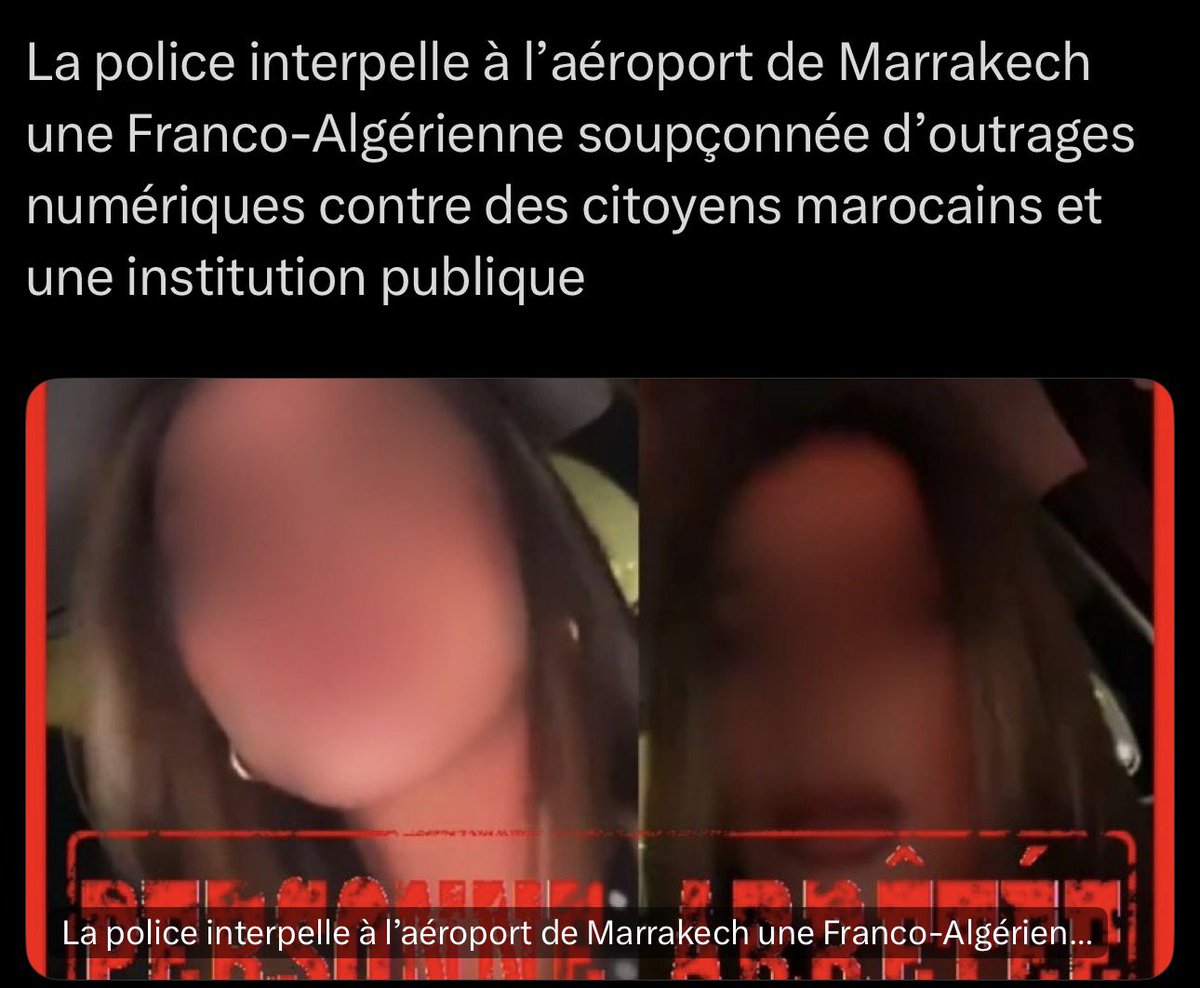
Faire arrêter une femme parce qu’elle critique la conduite au Maroc 🤣 vous avez un grain

🇲🇦🇲🇦🇲🇦 La police marocaine a une nouvelle fois fait preuve d’une grande réactivité, comme à son habitude.
barlamane.com/fr/la-police-i…
44