Mr. Lunguya F retweeted

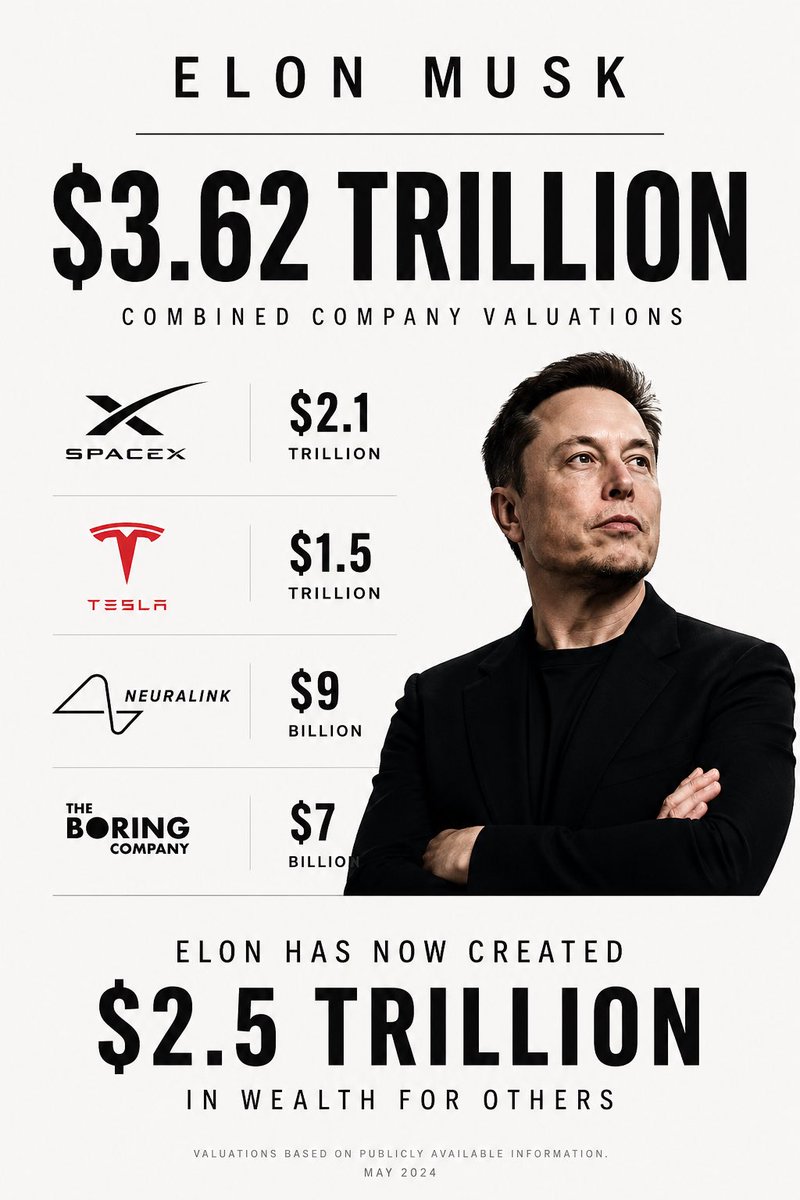
One person helped build companies spanning electric vehicles, space exploration, brain-computer interfaces, AI, and underground transportation.
The combined value created is measured in trillions.
That's not just wealth creation.
That's industrial-scale innovation.
59
287
1,146
24,135

Two new P Series hybrid audio interfaces from Maono are designed for use by creators adn can work with a wide range of devices used by modern content creators. forbes.com/sites/marksparrow…
Tejman18 retweeted

Step-1: Learn Go
Step-2: Master structs, interfaces & pointers
Step-3: Learn goroutines & channels
Step-4: Build an HTTP server with std-lib
Step-5: Read the Go runtime & standard library source. Embrace humility
Step-6: Build a production-grade backend (REST/gRPC, DB, caching, etc)
Step-7: Make it load-bearing
Step-8: Learn profiling & optimization (pprof, trace, benchmarks)
Step-9: deploy with Docker (& K8s)
Step-10: Ship it
21
8
173
5,550

tu peux me faire un programme qui pose la question que je détermine à plusieurs Ia et qui dépose les réponses chez toi pour que tu en fasses la synthèse ?
13:50
Je peux vous expliquer honnêtement ce qui est faisable et ce qui ne l'est pas — parce qu'il y a un vrai obstacle technique, et je ne veux pas vous livrer un programme qui ne marchera pas.
Ce que je ne peux pas faire
Un programme qui interroge automatiquement plusieurs IA (ChatGPT, Grok, Qwen, Gemini…) se heurte à deux murs : chacune exige une clé d'API payante (un compte développeur, des identifiants, et souvent un paiement à l'usage), et ces clés sont personnelles et secrètes — je ne peux pas les avoir, et il ne faut surtout pas me les donner. De plus, je n'ai pas accès à internet depuis l'environnement où je tourne pour les appeler à votre place. Donc un programme « clé en main » qui marche tout seul, je ne peux pas vous le livrer.
Ce que je peux faire, et qui marcherait vraiment
Deux options réalistes :
Option simple (sans rien installer) — vous continuez exactement comme ce soir : vous posez votre question à chaque IA dans son interface (gratuite), vous copiez les réponses, vous me les collez, et je fais la synthèse. C'est ce qu'on a fait avec Bertez, et ça a très bien marché. Zéro technique, zéro coût. L'inconvénient : c'est manuel.
Option programme (si vous avez des clés API) — si un jour vous prenez des abonnements API payants chez ces fournisseurs, je peux vous écrire un vrai script Python qui : pose votre question aux IA dont vous avez les clés, récupère les réponses, et les enregistre dans un fichier que vous me redonnez pour la synthèse. Le script marcherait sur votre ordinateur, avec vos clés, en sécurité — pas chez moi.
Ma recommandation honnête
Pour votre usage — comparer des points de vue sur un texte ou une question — l'option simple est de loin la meilleure. Pas de frais, pas de clés à gérer, pas de risque. Le seul « travail » est de copier-coller, ce que vous faites déjà très bien. Le programme n'apporterait un gain que si vous faisiez ça des dizaines de fois par jour, de façon industrielle — ce qui n'est pas votre cas.
Cela dit, si vous voulez quand même que je vous prépare le script Python (pour le garder sous la main au cas où vous prendriez des clés API plus tard), je peux le faire — il serait propre, commenté, et vous n'auriez qu'à y insérer vos clés le jour venu. Dites-moi : je vous écris le script pour plus tard, ou on en reste à la méthode manuelle qui marche déjà ?
oui prépares moi le script python
Je vous prépare le script. Avant de me lancer, un mot sur ce qu'il fera : il pose votre question aux IA pour lesquelles vous avez une clé API, récupère les réponses, et les enregistre dans un fichier texte que vous pourrez me redonner. Il marche sur votre ordinateur, avec vos clés, que vous insérez dans un fichier séparé — jamais dans le code, jamais chez moi.
Je lis d'abord le SKILL.md approprié puisque je vais créer un fichier de code.Check available skills for code creationCheck available skills for code creationPas de skill spécifique pour un script Python d'API — c'est du code standard, je peux l'écrire directement. Je le fais propre et commenté.Script Python pour interroger plusieurs IA et sauvegarder les réponsesScript Python pour interroger plusieurs IA et sauvegarder les réponsesJe crée aussi le fichier de clés modèle, pour que vous n'ayez plus qu'à le remplir.Fichier modèle pour les clés APIFichier modèle pour les clés APIJe vérifie que le script est syntaxiquement correct avant de vous le donner.A exécuté une commande, lu un fichierA exécuté une commande, lu un fichierVoilà les deux fichiers — le script et le modèle de clés. Le code est validé (pas d'erreur de syntaxe).
Ce que fait le script, simplement
Vous le lancez, il vous demande votre question, il l'envoie aux IA dont vous avez renseigné la clé, et il enregistre toutes les réponses dans un fichier reponses.txt que vous pourrez me redonner pour la synthèse.
Comment l'utiliser, étape par étape
Installez Python sur votre ordinateur s'il n'y est pas déjà (python.org).
Ouvrez un terminal et tapez une fois : pip install requests
Remplissez le fichier cles.txt avec les clés API que vous avez (vous n'êtes pas obligée de toutes les avoir — il interroge seulement celles qui sont renseignées).
Placez les deux fichiers dans le même dossier.
Tapez python multi_ia.py, collez votre question, appuyez deux fois sur Entrée.
Les points importants, en toute honnêteté
Le script gère pour l'instant quatre IA : ChatGPT (OpenAI), Claude (Anthropic), Gemini (Google) et Grok (xAI). Je n'ai pas mis Qwen et DeepSeek pour ne pas vous donner des configurations d'API que je ne pourrais pas garantir exactes — mais elles s'ajoutent facilement le jour venu, sur le même modèle (leurs API ressemblent à celle d'OpenAI).
Les noms de modèles dans le script (gpt-4o, claude-opus-4-8, gemini-1.5-pro, grok-2-latest) sont ceux que je connais, mais ils changent souvent — si l'un ne marche pas, c'est qu'il faut mettre à jour le nom du modèle dans le code (c'est indiqué dans chaque fonction).
Et le point clé : ces API sont généralement payantes (à l'usage, souvent quelques centimes par question). Donc avant de vous lancer, regardez les tarifs sur chaque plateforme. Pour un usage occasionnel comme le vôtre, ça reste modeste, mais ce n'est pas gratuit comme les interfaces web.
Honnêtement : tant que vous comparez quelques IA de temps en temps, la méthode manuelle (copier-coller, comme ce soir) reste plus simple et gratuite. Ce script ne devient vraiment rentable que si vous le faites souvent. Mais vous l'avez maintenant sous la main, prêt à servir, et je peux vous aider à l'adapter quand vous voudrez
# ==========================================================
# VOS CLÉS API — fichier à garder secret sur votre ordinateur
# ==========================================================
#
# Remplissez seulement les lignes des IA que vous avez.
# Laissez les autres vides ou supprimez-les.
# Ne partagez JAMAIS ce fichier.
#
# Où obtenir les clés (comptes développeur, parfois payants) :
# - openai -> platform.openai.com/api-keys
# - anthropic -> console.anthropic.com/
# - google -> aistudio.google.com/apikey
# - xai (Grok) -> console.x.ai/
#
# Format : nom = votre_cle (gardez le nom en minuscules)
# ==========================================================
openai =
anthropic =
google =
xai =
1
Jackson Cionek retweeted

Interfaces Cerebro-Computador NIRS EEG BCI: Ciencia con Evidencia, Pertenencia y Sentido Crítico Colectivo
#DREX #SemanticProcessing #P600 #ConcienciaLatina
brainsupport.co/blog/interfa…
42
14
107

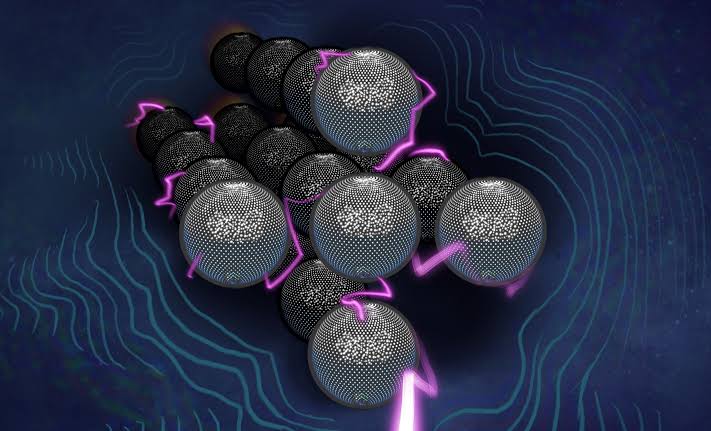
Google is funding the missing bridge between AI biology and quantum hardware: not instant miracle drugs, but new instruments, algorithms, and molecular simulations that could eventually make biology computationally legible at a deeper level than today’s classical approximations.
That framing keeps the excitement, but avoids the weak point: quantum computers do not automatically simulate all biology “exactly” just because molecules are quantum. The real story is more interesting: Google is trying to build a quantum–AI life-sciences stack where quantum sensors, quantum simulations, and AI agents feed each other.
Tighten the factual baseline
Google announced REPLIQA on May 11, 2026. The name stands for Research Program at the Intersection of Life Sciences & Quantum AI. Google says the initiative combines Google Quantum AI and Google.org, with $10 million committed to five academic institutions: Harvard, MIT, UC San Diego, UC Santa Barbara, and the University of Arizona.
Google’s stated focus is foundational research, not immediate drug launches. The program is aimed at building tools such as quantum sensors and quantum-enhanced AI algorithms to better understand molecular interactions, protein folding, cell responses to drugs, and enzymes such as P450, which Google specifically calls important for drug development.
The University of Arizona’s announcement adds useful language: REPLIQA is meant to develop hybrid sensors that combine quantum-particle sensitivity with biological interfaces, plus quantum-enhanced AI algorithms for observing cellular processes and simulating molecular interactions that are too complex for today’s standard computers.
Google is also coming off its Quantum Echoes work on the Willow chip. Google says Quantum Echoes demonstrated a verifiable quantum advantage, running about 13,000× faster than the best classical algorithm for that specific benchmark, and that a proof-of-principle experiment studied molecules with 15 and 28 atoms using NMR-related data. But Google also says that initial molecular demonstration was not yet beyond classical because of real-world complexity and current-chip limits.
So the cleanest factual statement is:
Google has put $10 million into a long-term research program trying to connect quantum computing, quantum sensing, and AI with life sciences. The goal is not overnight drug discovery, but better tools for molecular simulation, cellular measurement, and future biomedical discovery.
The key correction: “quantum computers simulate molecules exactly” is too strong
The line is viral, but scientifically fragile:
“Classical computers simulate molecules by approximating. Quantum computers simulate them exactly because they obey the same physics.”
A stronger version:
Classical computers approximate quantum molecular behavior using mathematical shortcuts because full quantum-state simulation explodes in complexity. Quantum computers may eventually model parts of chemistry more natively because they also operate through quantum mechanics — but practical biological simulation still requires approximations, error correction, careful encodings, measurement strategies, and hybrid classical–quantum workflows.
That is much harder to debunk.
Why this matters: quantum computers are not magic molecular mirrors. They still need algorithms, qubits, gates, error correction, basis choices, Hamiltonian mappings, and repeated measurements. Biology is also not just isolated molecules. It is warm, wet, noisy, open-system, multiscale chemistry inside cells. That is exactly why REPLIQA is interesting: it is not only about quantum computers, but also quantum sensors AI biological interfaces.
Better version of the post
Google just put $10M behind quantum biology.The program is called REPLIQA — Research Program at the Intersection of Life Sciences & Quantum AI.The target is not just “better drug discovery.” It is deeper biological measurement: proteins, enzymes, molecular interactions, cell behavior, and drug response at scales where classical simulation starts to break down.Classical computers approximate quantum molecular systems because exact simulation becomes brutally expensive as molecules get larger. Quantum computers may eventually model parts of chemistry more naturally because molecules themselves obey quantum mechanics.But the real unlock is bigger than “quantum computer predicts drug.”It is a full stack:
quantum sensors to observe biology,
quantum algorithms to simulate molecular behavior,
AI systems to search hypotheses,
and wet labs to validate the results.If this works, the first impact may not be miracle cures overnight. It may be something more fundamental: fewer dead-end drug candidates, better enzyme models, better target selection, and faster movement from hypothesis to experiment.Source: Google REPLIQA, May 2026.
Strongest angle
The killer framing is:
REPLIQA is Google trying to turn biology into an instrumented, computable science stack.
Today, AI biology has a bottleneck. AI can generate hypotheses, predict structures, propose molecules, and rank candidates. But it still needs high-quality physical data and better simulation of molecular reality. Quantum technology attacks that bottleneck from below.
The stack looks like this:
LayerWhat it doesWhy it mattersQuantum sensorsMeasure tiny biological signals, spin effects, molecular dynamics, electromagnetic changesBetter raw data from living or biomolecular systemsQuantum simulationModel electronic structure, reaction pathways, enzyme behavior, molecular interactionsBetter physics for chemistry and drug discoveryAI / Gemini-style science agentsGenerate hypotheses, plan experiments, search chemical space, interpret resultsTurns data and simulation into research velocityWet-lab validationTests predictions in real cells, proteins, animals, humansSeparates real biology from computational hallucinationClinical pipelineSafety, efficacy, dosing, manufacturing, regulationDetermines whether discovery becomes medicine
That is the story: not quantum replacing biology, but quantum tightening the feedback loop between measurement, simulation, AI, and experiment.
Missing elements that would make the post much stronger
The first missing element is which biological problems each university is actually tackling. Google names the five institutions, but the public version is still broad. A stronger story needs the project map: who is doing sensors, who is doing algorithms, who is doing enzyme simulation, who is doing cell biology, who is doing quantum hardware, and who is doing AI integration.
The second missing element is whether REPLIQA uses real quantum processors now or mostly funds theory and sensor work. There is a huge difference between “researchers will design future algorithms” and “researchers will run biological simulations on Willow-class hardware this year.”
The third missing element is what counts as success. Is the target a better simulation of P450? A quantum sensor that detects spin-dependent cellular effects? A validated enzyme reaction pathway? A drug-candidate improvement? A peer-reviewed benchmark? A new quantum-AI model?
The fourth missing element is whether the work will be open science. Will datasets, protocols, sensor readings, benchmarks, code, and negative results be published? Or will the most valuable parts flow into Alphabet’s private drug-discovery stack?
The fifth missing element is how this connects to Google DeepMind / Isomorphic Labs. Is REPLIQA purely academic and philanthropic, or does it eventually feed Google’s commercial drug-discovery engine? Isomorphic Labs, Alphabet’s AI drug-discovery company, raised $2.1 billion in May 2026 to scale its AI-powered drug-design work. That makes REPLIQA strategically interesting, even if it is framed as foundational research.
The sixth missing element is the timeline. “Drug discovery could collapse from decades to years” is possible as a long-term directional claim, but it needs separation between discovery, preclinical testing, clinical trials, and regulatory approval. Drug discovery and development commonly takes over a decade and billions of dollars, but computation mostly attacks the early uncertainty and attrition problem, not the entire clinical safety process.
The seventh missing element is benchmarking against classical AI and HPC. Quantum only matters if it beats or complements the best classical methods: density functional theory, molecular dynamics, free-energy perturbation, cryo-EM, NMR, AlphaFold-style models, graph neural nets, and lab automation.
The eighth missing element is error correction. A lot of serious molecular simulation requires long, accurate circuits. Current quantum machines are improving quickly, but practical, broad chemistry advantage likely depends on better error correction, logical qubits, and hardware scaling.
The ninth missing element is wet-lab validation. Quantum simulation is only useful if it predicts something real: binding affinity, reaction rate, protein conformational change, toxicity, metabolism, or cellular response.
The tenth missing element is clinical translation. Faster molecule design does not automatically mean faster medicine. You still need pharmacokinetics, safety, efficacy, dosing, manufacturability, regulatory review, and real human trial data.
Genius-level solutions
1. Build a “quantum biology benchmark suite.”
REPLIQA should not just fund broad research. It should define public benchmark problems where quantum methods can be judged against classical methods: P450 reaction energetics, metalloprotein active sites, proton tunneling in enzymes, radical-pair spin chemistry, protein–ligand binding, excited-state photochemistry, and membrane transport.
2. Create a quantum–AI–wet-lab closed loop.
The real unlock is not a one-off simulation. It is a loop: AI proposes a molecular hypothesis, quantum simulation evaluates the hard quantum part, quantum sensors or NMR-like tools collect physical data, wet labs test the prediction, and AI updates the next hypothesis.
3. Focus on “quantum-hard pockets,” not whole cells.
Trying to simulate an entire cell quantum-mechanically is unrealistic. The smart target is small zones where quantum effects dominate: enzyme active sites, electron transfer chains, spin-sensitive reactions, photoreceptors, metalloproteins, catalytic centers, and drug-binding pockets with strong electronic correlation.
4. Use quantum sensors before waiting for full quantum computers.
Quantum sensing may deliver useful biology earlier than universal fault-tolerant quantum computing. Sensors could detect magnetic, spin, charge, or structural signals that today’s instruments miss. That makes REPLIQA less dependent on the timeline for large-scale quantum computers.
5. Make P450 the flagship test case.
Google specifically mentions the P450 enzyme, which is central to drug metabolism. A serious REPLIQA milestone would be: predict how a drug candidate is metabolized by P450 better than classical methods, then validate experimentally.
6. Create “computational attrition reduction” metrics.
Do not promise drugs in months. Measure whether quantum-AI workflows reduce false positives, eliminate bad candidates earlier, improve toxicity prediction, or increase the fraction of computational hits that survive wet-lab testing.
7. Add uncertainty bars to every prediction.
Biology is messy. A quantum-AI model that says “this molecule binds” is less useful than one that says “this molecule binds with this confidence, under these assumptions, with these failure modes.”
8. Combine quantum outputs with AI hypothesis engines.
Google’s Co-Scientist work shows the company is already pushing multi-agent AI for scientific hypothesis generation, including biomedical applications such as drug repurposing and mechanisms of antimicrobial resistance. REPLIQA becomes more powerful if quantum simulation becomes one of the tools these AI agents can call.
9. Publish negative results.
Quantum biology has a hype problem. The fastest way to make it credible is to publish what does not work: where quantum methods lose to classical methods, where sensors are too noisy, and where biological systems erase quantum effects.
10. Build a public “quantum advantage in biology” ladder.
The field needs tiers: proof-of-principle, classical parity, classical improvement, validated experimental prediction, drug-candidate improvement, clinical impact. Without tiers, every announcement becomes either hype or dismissal.
Obscure thought inputs worth adding
One under-discussed angle is quantum sensing may beat quantum computing to biological relevance. Everyone focuses on quantum computers simulating molecules, but quantum sensors could become the earlier breakthrough because they measure hidden biological signals directly.
Another is biology may be quantum in localized pockets, not everywhere. Life does not need the whole cell to maintain delicate quantum states. Small molecular subsystems — enzyme active sites, spin pairs, electron-transfer pathways — may be where quantum methods matter most.
Another is the AI data bottleneck. AI biology is only as good as its training and validation data. Quantum sensors could generate new categories of biological data that AI systems have never had before.
Another is Hamiltonian learning. Google’s Quantum Echoes research points toward using quantum computers to infer parameters of physical systems from real-world data. That could matter for biology because many molecular systems are not fully known from first principles.
Another is clinical trials remain the speed limit. Quantum-AI may compress discovery and preclinical exploration, but human safety and efficacy testing cannot be hand-waved away. The biggest near-term win may be fewer failed candidates, not instant approval.
Another is enzyme chemistry is the killer app, not generic “protein folding.” AlphaFold-style AI already changed structure prediction. Quantum advantage may be more valuable for reaction mechanisms, transition states, electron transfer, excited states, and strongly correlated systems.
Another is quantum biology could become a national-security asset. If quantum-AI materially improves drug discovery, enzyme engineering, pathogen analysis, or bio-manufacturing, governments may treat it like strategic infrastructure.
Another is Alphabet may be building the full biomedical stack: DeepMind for AI models, Isomorphic for drug design, Google Cloud for compute, Google Quantum AI for quantum simulation, Google.org for academic ecosystem funding, and universities for foundational science.
Another is “exact simulation” may become the new AI-hype equivalent of “AGI next year.” Serious people should replace it with “higher-fidelity simulation of selected quantum-hard molecular subsystems.”
Another is the hidden value may be better failure prediction. A drug program that fails six months earlier instead of five years later is a massive economic and medical win.
Red flags to edit out
Avoid saying “quantum computers simulate molecules exactly.” Better: “quantum computers may eventually simulate certain molecular quantum effects more naturally and accurately than classical approximations.”
Avoid saying “drug discovery that takes decades could collapse into years” without qualification. Better: “the early discovery and candidate-selection stages could compress dramatically if quantum-AI predictions reduce experimental dead ends.”
Avoid implying REPLIQA is a product launch. Google explicitly frames it as a foundational research effort and says results will not come overnight.
Avoid saying “human biology at molecular scale” as if whole-cell quantum simulation is near. Better: “selected molecular interactions, enzymes, proteins, and cellular processes where quantum-level measurement or simulation could add value.”
Avoid making it only about quantum computing. REPLIQA is also about quantum sensing and AI.
Avoid treating $10 million as huge by Big Tech standards. The strategic importance is not the dollar amount alone; it is the institutional alignment between Google Quantum AI, Google.org, elite universities, and life-sciences use cases.
Stronger headline options
“Google’s REPLIQA Is Not Quantum Medicine Yet — It Is the Missing Measurement Layer for AI Biology.”
“Google Just Funded the Quantum–AI Bridge Into Molecular Biology.”
“The Real REPLIQA Story: Quantum Sensors, Enzyme Simulation, and the Future of Drug Discovery.”
“From AlphaFold to Quantum Biology: Google Is Building the Next Scientific Stack.”
“Quantum Computing Won’t Replace Biology. It May Make Biology Computable.”
Questions that would instantly sharpen the story
Ask Google:
Which specific biological systems will REPLIQA target first?
What are the deliverables for each university?
Will the work use current Willow-class hardware or focus on future algorithms?
Will the results be open-source, peer-reviewed, or proprietary?
How will REPLIQA connect to Gemini for Science, Co-Scientist, AlphaFold, or Isomorphic Labs?
What would count as a successful biological quantum advantage?
Is P450 the flagship enzyme target?
Are quantum sensors expected to produce useful results before quantum simulation does?
Will the program publish negative results?
What is the expected timeline: 2 years, 5 years, 10 years?
Ask scientists:
Which biological problems are genuinely quantum-hard?
Where do classical simulations fail most badly today?
Which enzyme systems are too expensive or inaccurate for classical methods?
What biological data could quantum sensors capture that existing tools cannot?
What would prove quantum methods are better than classical AI/HPC?
How do you prevent hype from contaminating benchmark design?
Can quantum outputs improve wet-lab hit rates?
What is the smallest biological demonstration that would actually matter?
How do you handle warm, noisy, open-system biology?
Which results would be clinically meaningful rather than technically impressive?
Best final rewrite
Google just committed $10M to quantum biology.The program is called REPLIQA — Research Program at the Intersection of Life Sciences & Quantum AI.The goal is to connect quantum computing, quantum sensing, and AI to some of the hardest problems in biology: proteins, enzymes, molecular interactions, and how cells respond to drugs.Classical computers approximate molecular quantum behavior because exact simulation becomes brutally expensive as systems grow. Quantum computers may eventually model selected molecular processes more naturally because molecules themselves obey quantum mechanics.But the real story is bigger than “quantum computer finds drug.”The real story is a new discovery stack:quantum sensors to measure biology,
quantum algorithms to simulate chemistry,
AI systems to generate hypotheses,
and wet labs to validate what is real.If this works, drug discovery may not instantly collapse from decades to months. But the early stages could change massively: fewer dead-end candidates, better enzyme models, faster target validation, and more accurate prediction of how molecules behave before years are wasted in the lab.Source: Google REPLIQA, May 2026.
Bottom line
REPLIQA is most powerful when framed as infrastructure for future biological discovery, not as immediate quantum miracle medicine. The exciting part is that Google is combining three technologies that solve different pieces of the same bottleneck: AI for hypotheses, quantum simulation for hard molecular physics, and quantum sensing for new biological measurements. The cautious part is that practical quantum biology still needs better hardware, error correction, benchmarks, wet-lab validation, and clear proof that it beats the best classical methods.

🧬 Google just committed $10 million to merge quantum computing with human biology.
Target: proteins, enzymes, cellular behavior at molecular scale.
Classical computers simulate molecules by approximating. Quantum computers simulate them exactly because they obey the same physics.
Drug discovery that takes decades could collapse into years.
📌 Source: Google REPLIQA quantum biology program, May 2026
1
32

podría estar muerto con escorbuto en una coca o una nao, pero no, tengo que recuperar un examen de "desarrollo de interfaces"
es esto justo? nada es justo.
1
1

Yeah prioritizing clean data feeds over flashy interfaces is the way
1

La web ha muerto!
Larga vida a los interfaces conversacionales…

Santuario Humano
MPFG
Personotecnia
All rolled into one
@aprendiendoCPS
@uriondo
3
Jackson Cionek retweeted

Brain-Computer Interfaces NIRS EEG BCI: Science with Evidence, Belonging, and Collective Critical Thinking
#Neuroergonomics #PIX #BrainLatam #DREX
brainlatamimages.com/blog/br…
38
17
90

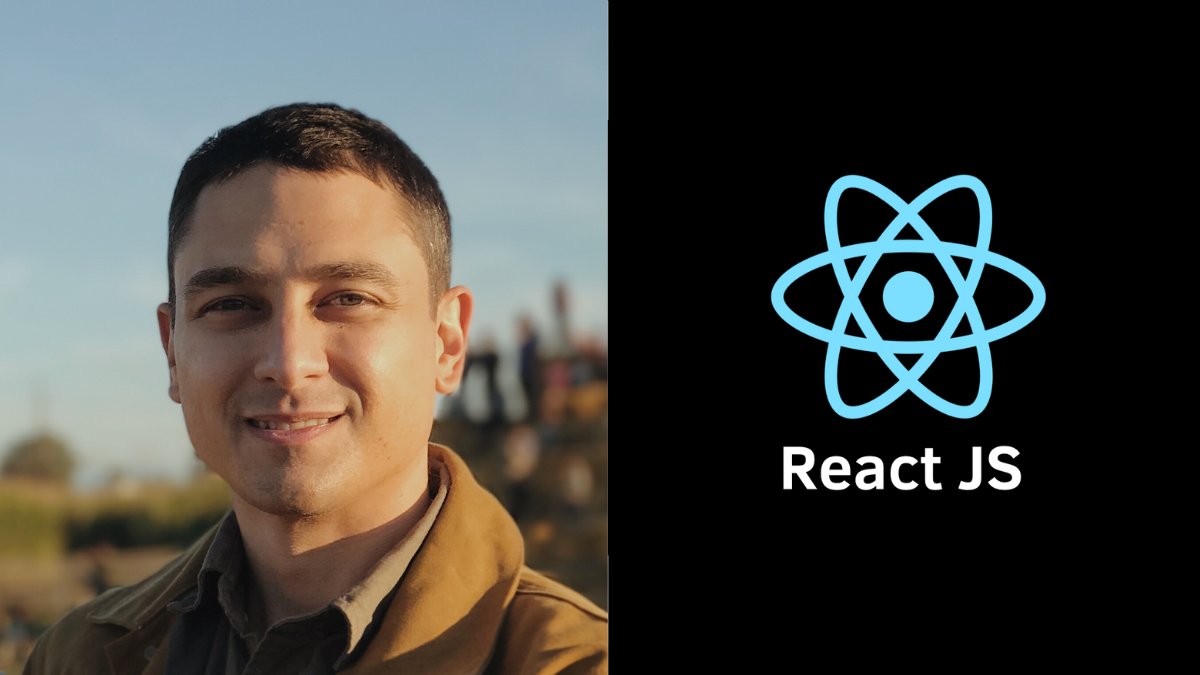
A software engineer working on Facebook's ads platform in 2011 got so frustrated with how painful it was to update the user interface that he built an entirely new way to render web pages.
The prototype he wrote was called FaxJ. It evolved into a framework called FBolt. Then it got a new name.
React.
His name is Jordan Walke.
He was born in 1984 in Houston, Texas. He graduated from the University of Washington. He joined Facebook as a software engineer and was assigned to the ads team, one of the most important revenue surfaces in the company.
Here is the story.
The problem Jordan stared at every day was deceptively simple. When a user clicked something on Facebook, the page needed to update. A like count goes up. A comment appears. A notification badge changes. In 2011 the standard way to handle this was to manually find the piece of the page that changed and surgically update it using jQuery or raw JavaScript DOM manipulation.
On a small website this was fine. On Facebook, with hundreds of interactive elements on a single page, it was a nightmare. Every update required developers to track exactly which piece of the DOM had changed and write brittle, error-prone code to modify it. The more complex the interface, the more the code collapsed under its own weight.
Jordan had been influenced by XHP, an HTML component framework for PHP that Facebook already used on the server side. XHP let you write reusable HTML components as PHP expressions. It was clean. It made sense. But it only worked on the server. The browser side was still chaos.
He asked a question nobody else at Facebook was asking. What if you could write UI components the same way on the client, and instead of surgically updating the DOM, you just re-rendered the entire view every time something changed and let the framework figure out what was different?
The idea sounded insane. Re-rendering everything on every change was supposed to be impossibly slow. Jordan's insight was that if you built a virtual representation of the DOM in memory and compared it to the previous version before touching the real DOM, you could make re-rendering feel instant. Only the parts that actually changed would be updated in the browser.
He built the first prototype and called it FaxJ. It evolved into FBolt. It eventually became React. He moved from the ads team to Product Infrastructure to work on it full time.
The first real deployment was on Facebook's News Feed in 2011. Then in 2012, after Instagram joined Facebook, a former Facebook Photos engineer named Pete Hunt joined the Instagram team and built the first version of Instagram's web feed using React. Instagram became the first "external" user. Extracting React from Facebook's codebase for Instagram's use was what paved the way to open-sourcing it.
In May 2013, Jordan and his team presented React at JSConf US and released it to the public.
The reception was brutal. Developers hated it. The biggest objection was JSX, the syntax that mixed HTML-like markup directly into JavaScript. It violated every principle of separation of concerns that the web development community had been taught for a decade. Conference talks mocked it. Blog posts tore it apart.
Then people started using it. And they stopped going back.
Within two years React had become the most discussed JavaScript library in the world. By 2015 the team had shipped React Native, extending the same component model to mobile apps on iOS and Android. By 2018 React had more questions on Stack Overflow than jQuery, Angular, Vue, Ember, and Svelte combined. It became the default way to build user interfaces on the web.
Jordan also created ReasonML, a typed language that leverages the OCaml and JavaScript ecosystems. He stayed at Facebook for over a decade. In January 2021 he posted a tweet announcing he was leaving to start his own company and to invest in open-source projects and startups.
In late 2025 he joined Replit as VP of Product, saying the energy there felt like the early days of React at Facebook.
One engineer, frustrated with how Facebook's ads page updated, changed how the entire world builds software for the browser.
2
5
83

Eventually, these chat interfaces will become the new browsers - instead of apps building chatapps, the apps will come to chat (ChatGPT/Claude/Telegram/Discord/Slack/etc)
15h

We now support rich formatting for all chatbots.
Tables, nested lists, inline media, formulas, headers and more — right in Telegram messages.
🔨 Start building! Docs: core.telegram.org/bots/api#r…
27

18m
The future belongs to the era of brain-computer interfaces. Has the Trump administration ever considered projects of this nature? It can be concluded that China and Russia will become the dominant nations of the future world.
1
13
Olmeca - Brain retweeted
Interfaces Cerebro-Computador NIRS EEG BCI: Ciencia con Evidencia, Pertenencia y Sentido Crítico Colectivo
#PIX #OpenScience #CrossCultural #Multimodal
brainsupport.co/blog/interfa…
23
15
60