
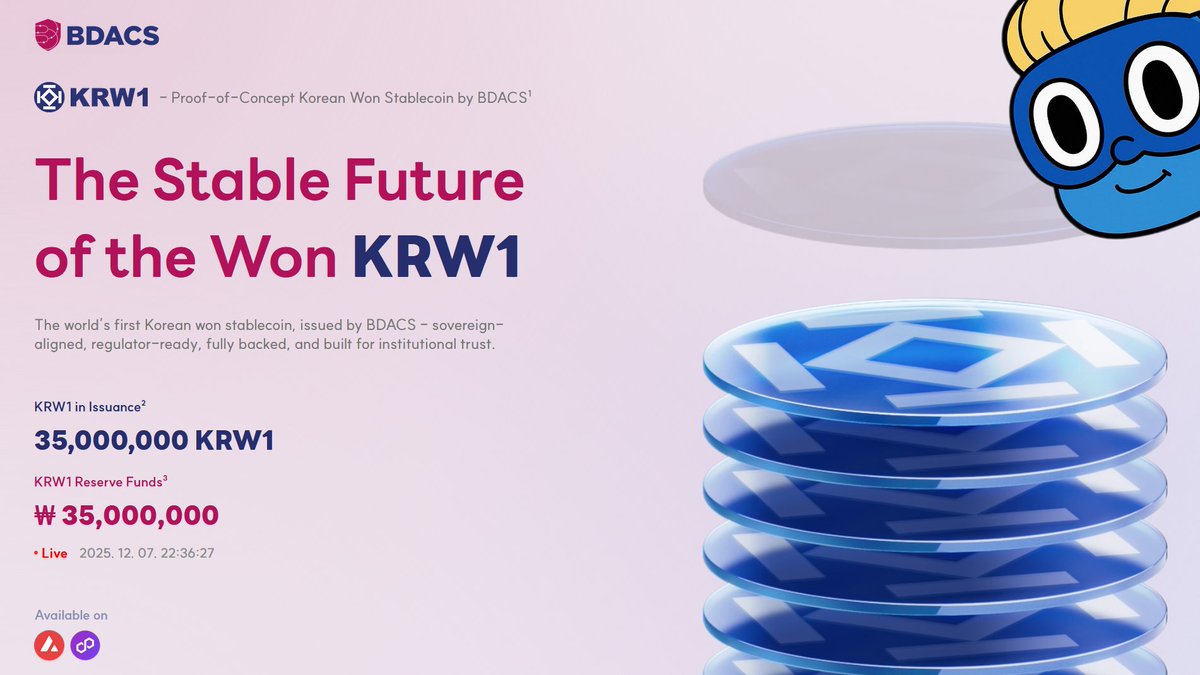
With ₩ 35,000,000 issued, the world’s 1st 🇰🇷 won stablecoin, issued by @BDACSKorea has expanded to the preferred superhighway for stablecoins, @0xPolygon 💜
KRW1 has all the key features of a stablecoin:
✅ sovereign-aligned
✅ regulator-ready
✅ 1:1 fully backed by won
✅ built for institutional trust
Polygon gives Koreans:
🚀 faster txns
🪙 lower fees
🌏 easier money movement for payments & remittances
🏦 more interoperablility in defi & enterprise workflows
Korea joins the biggest network for alt-USD stablecoins & is set to benefit for the network effects & tech ingenuity of the purple chain 🔥
4 Dec 2025

Payments just got easier across Korea.
@BDACSKorea has launched the KRW1 stablecoin on Polygon, backed by the Korean won.
• faster txns
• lower fees
• easier money movement
33
2
60
1,573

If you are yet to know about Irys.
that's not the rocket science, in one line - Irys is building a programmable data chain.
🔹Irys is a modular DA layer designed for blockchains, rollups, and dApps that need scalable and verifiable on-chain data storage.
🔹Irys provides a cheaper, faster DA layer with cryptographic proofs that the data is available and retrievable.
🦑what are benefits of choosing Irys?
🔹 All rollups and chains can prove their data is published and retrievable.
🔹Much cheaper than Ethereum calldata or storing on L1.
🔹Works as a DA backend for multiple rollups
🔹Provides cryptographic proofs to guarantee that data has been stored.
🔹Interoperablility
Its time to say Hirys
4
1
9
78

17 Aug 2025
What does interoperablility mean on @union_build
Imagine blockchains passing informations to one another seamlessly, that’s exactly what it means, before now it has been complicated But Union is build for complex issues
Here are some of union USE CASES👇
16 Aug 2025

Imagine making chains encrypted, verified and smarter using ZK proofs.
That’s what @union_build is about, no bridges.
Just a trustless coordination, no hype and that is what interoperability is all about.
Union isn’t replacing chains, it’s synchronizing and uniting them.

68
3
56
589


25 Jun 2025
Intent Centric OS이자
Cosmos SDK 기반 최고의 IBC.
@anoma 를 여러 번 칼협당하고 있는데요.
같은 클러스터를 공유하고 있는 프로젝트들도 몇 개가 되네요.
아이스크림 골라담기 하듯 가벼운 마음으로 골라서 해보면 좋을 것 같습니다.
키워드 한 번 외치고 소등하겠습니다.
1. Intent Centric
2. Asset Agnostic
3. DOS(Decentralized Operating System)
4. ZK MASP(Multichain Asset Security Protocol)
5. Digital Bartering
6. Namada
7. Interoperablility
@bongbongcrypto @co_cobling
25 Jun 2025

칼협시리즈6) Anoma, 이거 안하면 큰 일 납니다.
제목은 어그로구요, 상당히 오랫동안 기대주로 평가받았고 저 역시도 오랫동안 지켜봐온 @anoma가 방금 전 Kaito에 리스팅되었습니다.
개인적으로 상당히 불리쉬하게 보고 있기 때문에 이건 무조건 칼협하는 바입니다.
규모만으로 보면 Magic Newton보다 살짝 아랫급은 될 것 같아요!
✅ ANOMA? 그게 뭔데?
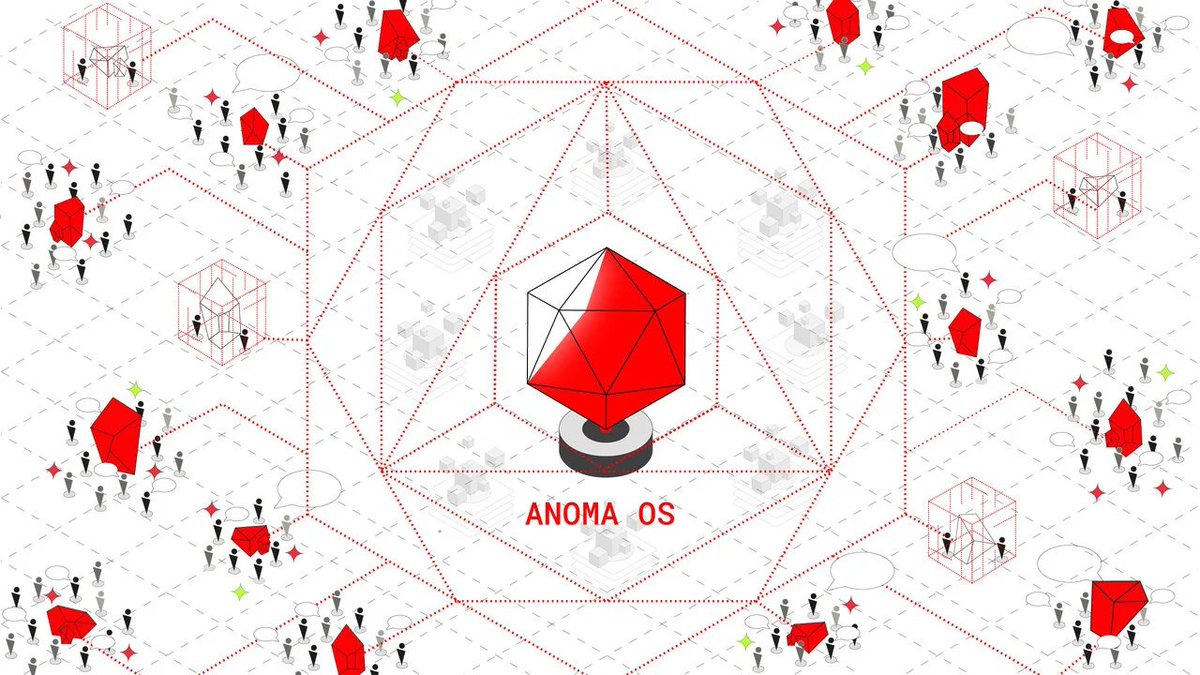
ANOMA는 의도중심적, 그리고 프라이버시 보호를 중심으로 하는 IBC 기반의 프로토콜입니다.
✅ 펀드라이징 (60.25m)
- Private Round: Polychain*, Coinbase Ventures, Electric Capital (6.75m)등
- Polychain*, Electric Capital 등 (26m)
- CMCC Global*, Electric Capital 등 (25m)
- Community Round (2.5)
✅ 주요 키워드 4종
1️⃣ Intent Centric Architecture (의도 중심 아키텍처)
2️⃣ Universal Solver Network (범용 솔버 네트워크)
3️⃣ Composable Privacy (조립 가능한 프라이버시)
4️⃣ Heterogeneous Security Model (이질적 보안 모델)
✅ 핵심키워드, "의도중심적" Intent Centric
위 4개 키워드 중 단연 Anoma의 핵심 키워드는 'Intent Centric' 입니다.
이게 뭐냐하면 '의도중심적' 이라는 건데요.
Intent는 블록체인 쪽에서 몇 년전부터 꽤나 중요한 내러티브로 꼽혀왔는데 쉽게 생각하면 사용자가 "무엇을 원하는지"만 말하면 블록체인이 알아서 이를 수행하는 것을 의미합니다.
예를 들어 우리가 0.1 ETH를 USDC로 스왑하기 위한 과정을 떠올려볼까요?
Uniswap에 접속해서 지갑을 연결하고, ETH-USDC 페어를 선택하고 0.1ETH를 입력하고, 슬리피지를 정하고, 거래를 승인하고, 트랜잭션을 쏘는 복잡한 절차를 거치게 되는데요.
이는 Web2 사용자들이 Web3 생태계에 적응하는데 큰 어려움이고 진입장벽인데요.
단순 스왑에서도 이 정도의 차이라면 디파이 예치 등으로 간다면 더욱 복잡해지겠죠?
반면 의도중심 방식은 이를 단순화해서 "0.1ETH를 USDC로 바꿔줘" 라고 말한다면 시스템이 알아서 최적의 경로로 스왑할 DEX를 찾고, 거래를 실행하는 방식입니다.
디파이에서도 마찬가지로 "1ETH를 가장 좋은 조건의 디파이에 예치하고 싶어" 한 마디면 최적의 경로를 탐색하고 예치를 진행할 수 있는 것입니다.
✅ 그래서 왜 해야함?
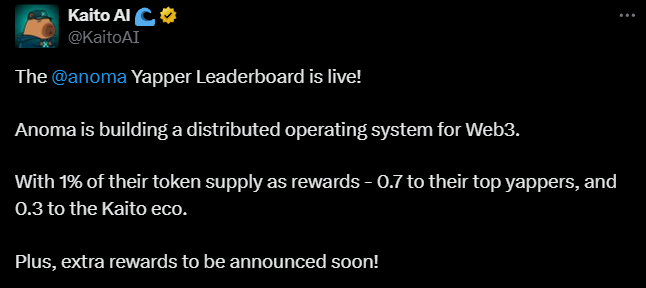
- 토크노믹스의 1%가 할당되었음
- 이 중 0.7%가 Yapper, 0.3%가 Staker에게 할당
- 참고로 마지막으로 알려진 펀드라이징 밸류에이션은 약 260M 수준 (다음껀 최대 500M 정도로 추정 됨)
- 260m 기준: 1,000명 균등 할당시 최소 $1,820
- 500m 기준: 1,000명 균등 할당시 최소 $3,500
- 추가 보상이 예정되어 있다고함.
결론: Magic Newton 급 (0.9%)은 아니지만 한국인 할당 유도해낸다면? 준 Magic Newton 급은 된다.
바로 시작해!
지금이 적기야!

3
7
132

23 Jun 2025
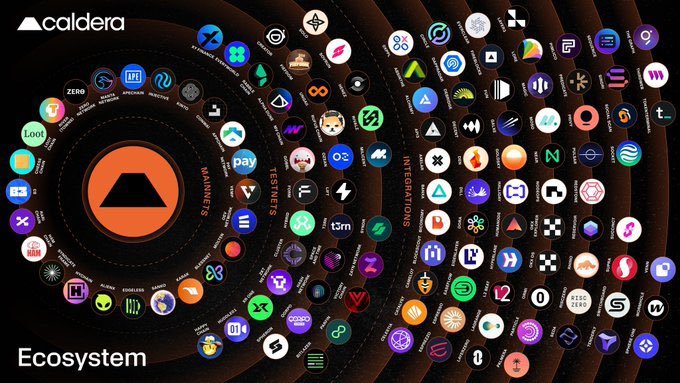
Metalayer making interoperablility a reality for ETH rollups
Powered by @Calderaxyz
2
4
391


18 May 2025
1/ Tired of costly #blockchain bugs?
Meet Move: A tool that is boosting interoperablility & security in the @arbitrum Devs ecosystem.
@rather_labs is hyping Move as the future of secure coding, it has a resource-oriented design meaning assets can’t be cloned or double-spent.
🧵

1
5
7
296

some news: @CatalystSystem has been acquired by @lifiprotocol
i’ll be joining to lead their new intents team with the goal of connecting all chains (EVM and altVMs) truly permissionlessly — with my cofounder @stabiliseret and the Catalyst team coming along for the ride
i couldn’t find the words to fully articulate all the emotions i’ve felt during this process — so I figured i'd make a video instead lol
TLDR; i’m damn proud of what we’ve built and the team that we’ve assembled. thank you to my amazing team to getting us this far.
thank you to all of our customers who relied on Catalyst and CrossCats to fulfil their cross-chain needs these past 2 years. thank you to all who believed in me — who trusted in my vision for rollups back in 2022 and who continued to trust me about altVMs.
~~~
“if you want to go fast go alone, if you want to go far go together”
the stakes have never been higher. it’s become obvious that interoperablility is the single most important problem we face in crypto — a massive roadblock to breaking into the mainstream. the problem space is so large, and I knew we couldn’t do it alone.
so we made the hard decision to team up with @lifiprotocol to solve this issue — and I believe that we’re on the cusp of fixing the whole damn thing.
we’re building LI.FI 2.0 — the most ambitious project I have ever been and will ever be a part of.
more details on it below. onwards 🫡
13 Feb 2025

Building the marketplace that solves crypto’s deepest liquidity problems requires expansion.
That is why we have acquired @CatalystSystem — to accelerate the future of intents and scale aggregation exponentially.
274
31
589
83,708

$KNDX's a pioneer encapsulated in ingenuity and a 1000% creative.
It once made its mark and will for ever be living!
It's a GREAT time to FULL your BAGS 'cause what a RARE GEM THIS IS!!!
#KNFT #ScalableInfrastructure #AI #Marketplace #VFX #SaaS #USD #Interoperablility🤝@nvidia
1
1
2
36

15 Nov 2024
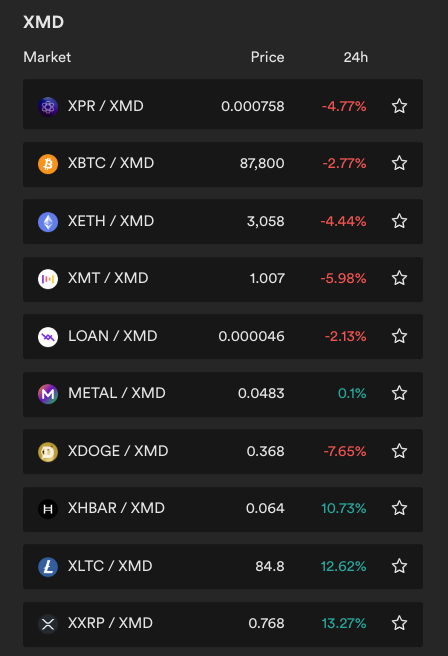
already fixed by @XPRNetwork. interoperablility with zero gas fees. all on chain with @webauthwallet
2
30

1 Oct 2024
👏Great to see DMC’s transition to the X-layer, aligning with Vitalik’s vision for Ethereum.
👍By meeting metrics and principles, DMC builds cohesive, interoperable decentralized storage services: ERC20 & ERC7585 interoperability, open-source, decentralization, security, public goods support, and a unified ecosystem.
#ERC20 , #ERC7585, #Ethereum #Interoperablility, #ethstandards @XLayerOfficial @VitalikButerin
1 Oct 2024

Shout out to the DMC community!
🎉 Thank you for your patience and support as we transition into DMC on X-layer. This marks our first step in embracing the EVM chain, and we’re excited to move toward integrating with all chains. 🚀
#DMCX @XLayerOfficial #EVM
3
278

28 Sep 2024
Thanks for the review! Think Teamfight Tactics (TFT) with Clash Royal art style, and yes, there's going to be interoperablility along with IPs play here.
1
3
76

27 Aug 2024
Check out the latest episode of the #TellMeWhereItHurts Podcast as host @medicompdoc interviews @katmcdavitt, @InnsenaG2M & @hellozorya & host of the Health Tech Talk Show.
🎧bit.ly/3AnBrYx #TEFCA #HealthcareRegs #HTI12 #Interoperablility #DataExchange #AIinHealthcare
1
2
2
68
13 Aug 2024
Check out the latest episode of the #TellMeWhereItHurts Podcast as host @medicompdoc interviews @katmcdavitt, @InnsenaG2M & @hellozorya & host of the Health Tech Talk Show.
🎧bit.ly/3AnBrYx #TEFCA #HealthcareRegs #HTI12 #Interoperablility #DataExchange #AIinHealthcare
1
2
3
191

22 Jul 2024
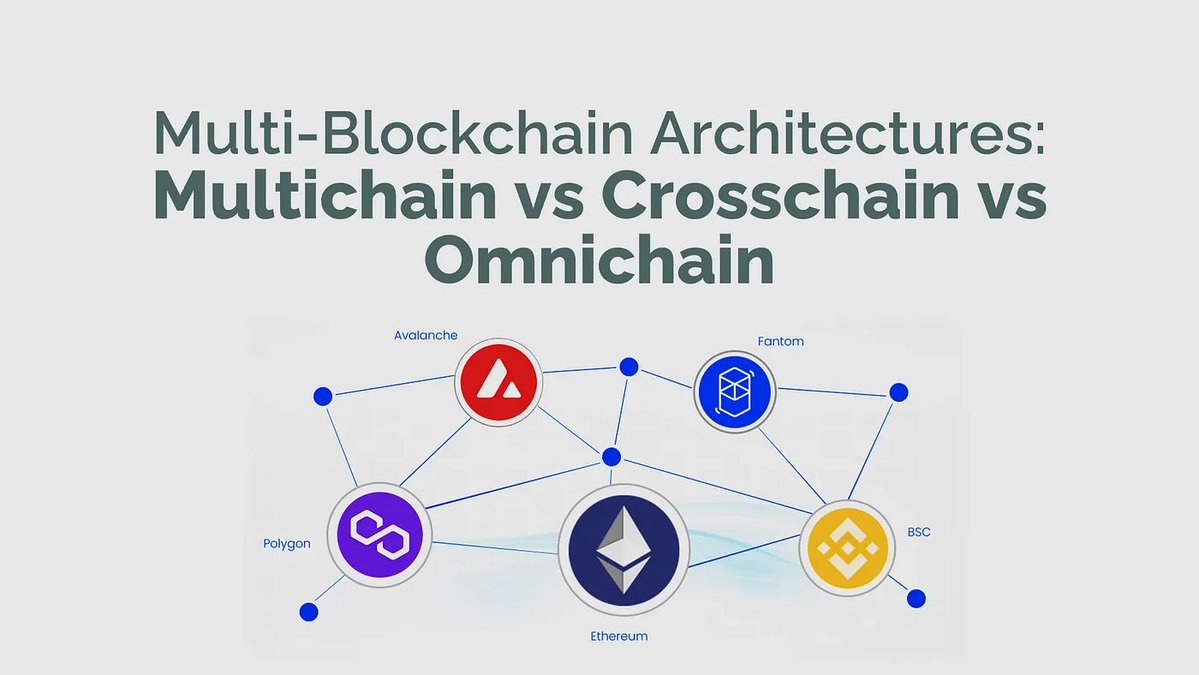
Omnichain vs Multichain vs CrossChain: What Are They?
Times have changed, and now we are spoiled for choice, as there are a plethora of different ecosystems we may choose to call home, all with their draws and benefits. The initial lack of interoperability between ecosystems led to many questions being asked; do we need all these chains? how do we transfer between them? How can we increase interoperability? What's the point? what does the future of the blockchain world look like?
Every answer leads us to encounter the same 3 buzzwords, and it’s time to give the people what they want and clear it all up.
The definitive differences between #Omnichain, #Multichain and Cross-Chain. Let's nail down one key detail that brings all of this together:
What is Interoperability
When we talk about interoperability, we generally refer to the way networks communicate data to each other. This is a pivotal factor in a decentralised ecosystem, as without interoperablility, there is no way for users to send data to and from different networks.
Previously, Ethereum network held upwards of 95% of all the TVL, and to get across to other networks was quite arduous, as well as time and resource-consuming — generally just a pain. The lack of interoperability was a serious issue and is something that needed to be solved.
Before delving deeper, we need to understand why there are so many different networks, and it all stems from the Blockchain Trilemma.
What is the Blockchain Trilemma?
As is in the real world, we can’t have it all. For Blockchains, the sacrificial scale is called the Blockchain Trilemma.
There are 3 main points to this Trilemma (naturally) and they are:
Scalability — The ability of a blockchain network to manage high transaction volumes efficiently.
Decentralisation — Decentralization is essentially the dispersion of decision-making power away from a central authority, to many individuals, in this case, it would be to nodes.
Security — This refers to the integration of a complete risk management system, where trust in transactions is ensured through the foundations of a blockchain security framework (consensus, cryptography, and decentralization).
Layer 1 Blockchains suffer from this curse, as to achieve efficiency in 2 points, one must be sacrificed. This is where we saw the developments in Layer 2 networks (#Optimism, #Arbitrum, #Polygon etc) begin, as they solved the issues that #Ethereum (A Layer 1) had with scalability.
Layer 2 Networks sit atop of Layer 1 Networks (the main blockchain). By being built on top of a Layer 1 network, the Layer 2 networks benefit from the decentralisation and security the Layer 1 has and then use their technology to fix the issues with scalability, thus solving the Trilemma (albeit at the cost of a slightly more complicated user experience).
The way they do this can vary depending on the Layer 2 — whether they be Optimistic Rollups Optimism(@Optimism), Arbitrum(@arbitrum), zkRollups - zkSync(@zksync), Starknet (@Starknet) or sidechains Polygon(@0xPolygon). At the end of the day, they all reduce transaction costs significantly and have much higher Transactions per Second than their parent chain.
This can be a lot to take in, and it may seem that this is a slight deviation but it’s important, as many new chains are being created in an attempt to solve this Trilemma, but ultimately, they were all inherently different and previously unconnected.
This brings us to DeFi Summer (AKA Summer of 2020), and the rise of CrossChain Bridges.
What is a Cross-Chain Bridge?
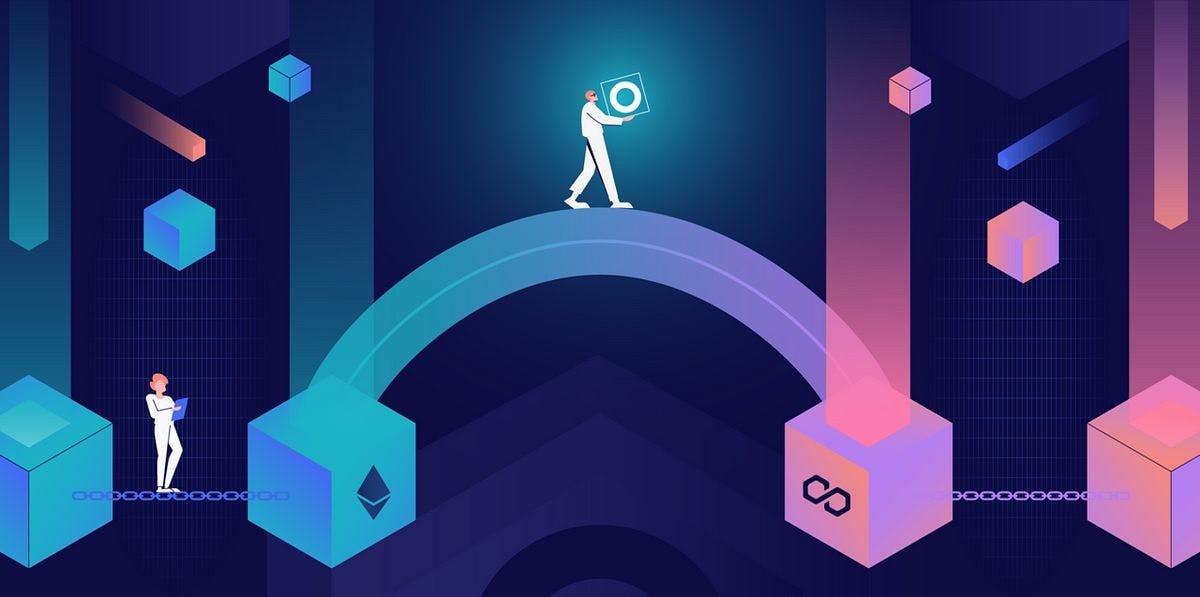
Thankfully, the definition of a cross-chain bridge is quite intuitive — it bridges data between unrelated networks. The beauty of bridges is that they take manual labour out of the equation, and save a lot of time.
Let’s say we have 1ETH — an ERC20 token, and we want to transfer it to the Solana network.
Previously, you would have had to go through a centralised exchange (CEX), sell your ETH for Solana, withdraw it to the Solana network, and then you would be left with 1ETH~ worth of Solana, which you can do what you want with. This process can be time-consuming (authenticate this and that), resource intensive, and if you are trading, can cost you an opportunity. Cross Chain Bridges fix this.
How does a Cross-Chain Bridge work?
Cross-Chain Bridges, like the Multichain Bridge, have changed the game, and are part of the reason why DeFi Summer, was DeFi Summer.
They work as follows, users typically lock or burn digital assets on the original chain and unlocks or mints the digital assets on the new chain. The whole process is governed by smart contracts, and hence why bridged assets are referred to as “wrapped assets” — cosily bundled up in smart contracts.
For example, lets say there’s a liquidity pool on a Solana-based Decentralised Exchange (DEX), that requires Wrapped Ethereum and some stablecoin as the LP. What would happen is I would take my ERC20 Ethereum to a bridge, lock it to receive some wETH — Wrapped Ethereum — as sort of IOU which I can then move freely around the Solana network and deposit into the liquidity pool with an equal amount of stables.
Cross-Chain Bridge Mechanisms
There are 3 Cross-Chain bridge mechanisms that are used:
1. Burn and mint — Users burn assets on the original chain, and the equivalent assets are minted on the new chain.
2. Lock and mint — Users lock assets in a smart contract on one chain, and simultaneously, wrapped tokens will be minted on the target chain, with a 1:1 conversion. When reverting back, wrapped tokens on the destination chain are burned to unlock the original assets on the original chain.
3. Lock and unlock — Users lock assets on the first chain to unlock the same assets in a liquidity pool on the target chain
Issues with Cross-Chain Bridges
No one is perfect, and bridges are not a person nor an exception. Bridges have been prime targets for hackers, for a few reasons. I will try to keep it simple here but it can get a bit technical so bear with me!
As we have discussed, when bridging assets you lock/burn/deposit them on one end, to have them unlocked/minted/credited on the other. The notion that the asset conversion is guaranteed is actually incorrect, as the bridges don’t exist on a single blockchain — they in themselves are an external entity. As a result, no blockchain can verify the bridge! Verification is done by 3rd parties, the dynamic duo of Oracles and validators & custodians (usually in the form of a DAO or Smart Contracts).
This added layer of reliance on 3rd parties destabilizes the trustless system and creates weak points which hackers can, and have, exploit.
Is it Worth it to Use Cross-Chain Bridges?
Cross Chain bridges give us a solution to the lack of interoperability, in a pretty seamless manner and save a lot of time when transferring assets between chains, and make it a lot easier to diversify your portfolio. Just make sure you are using a trusted bridge, have enough money for Gas and that the asset you are bridging is liquid enough on the target chain!
Cross-chain bridges are good for linking 1 chain to another and facilitating that one-to-one network relationship but ultimately don’t scale. This is where Multichain comes into play.
What is Multichain?
When we speak about Multichain, we are referring to either:
•Multichain dApps
•Multichain Networks (or Modular Blockchains)
What are Multichain Decentralised Applications (dApps)
A Multichain Decentralised Application (dApp), is a project that has been deployed across multiple blockchains, specifically ones that share the same smart contract technology. For example, Ethereum, Polygon and Arbitrum all use the Ethereum Virtual Machine (EVM) — we call these EVM Compatible chains, and so multichain dApps can be built across those.
Whilst Multichain applications are more widely accessible, allowing projects to scale with greater ease, there is still a widespread User Experience issue, for the most part, users are expected to switch networks on wallets when depending on where they are using the app, and for newcomers, it can pose as a severe roadblock. Moreover, having an dApp spread over multiple networks can lead to fragmented liquidity — which can severely harm the user experience further. The ideal state would be that you can connect wallets to multiple networks simultaneously, and access liquidity across all networks the dApp is built on. Seamless access.
What are Multichain and Modular blockchains
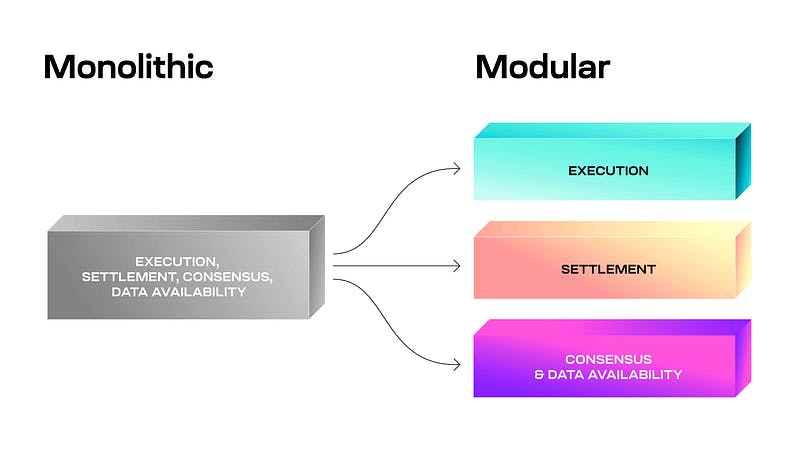
Often referred to as Modular Blockchains, Multichain networks are blockchains that have multiple, separate chains broken down into “layers” to perform different asks. This differs vastly from the general Layer 1 Blockchain — which for the most part uses a Monolithic structure.
Think about it a bit like outsourcing. If the Blockchain was a company, a “monolithic” company would do everything in-house, but a “modular” company would outsource tasks to specialists
Understanding Blockchain architecture can be tricky, but ZebPay have done a good job of explaining it.
Benefits of Multichain and Modular Networks
The benefits of Modular blockchain/Multichain networks are similar to those of Layer 2's
Scalability — allowing specific chains to carry out specialised tasks brings greater efficiency and scalability to the overall network
Security — Modular blockchains have shared security, which makes deploying new blockchains like rollups don’t require bootstrapping a new validator set, and means that new chains added to the network can benefit from the existing security.
Lower Costs — Rollup SDKs, will not only help facilitate the low-cost creation of new blockchains, by providing a way to bootstrap without needing a consensus mechanism, large validator set, or token distribution. Super neat.
What exactly is Omnichain and Layer 0?
There is a lot of confusion as to what Omnichain/Layer 0 actually is. Most pieces I read threw around abstract thoughts and ideas of seamless interoperability and generic definitions for the implication of the prefix omni, without really hitting what we really mean.
Looking back at what Multichain is, we mentioned that the dApps and networks had to be compatible, ie use the same smart contract technology — such as the Ethereum Virtual Machine.
Omnichain is connecting all chains — regardless of their smart contract technology — by building a base layer (Layer 0) where all other networks and dApps can be situated on top of. A mega-multichain ecosystem that does not discriminate.
With all these different layers and chains it can get tricky to visualise, so here's a simple way to think about it — The City analogy:
•Layer 0 — The main infrastructure (sewers, electricity grid, highways)
•Layer 1 — The Counties/States
•Layer 2 —Cities/Towns
•dApps — Stores and attractions
Although this is quite simplified, it should give a slightly better idea as to how the system comes together.
dApps can be built on Layer 1’s and not on Layer 2’s, and vice versa. For example, a dApp can be built and accessed on Polygon, but not accessible via Ethereum, and same goes the otherway round.
The rise of Layer 0 and Omnichain brings us ever closer to a seamless web3 experience, with complete interoperability, minimal fragmentation and a much easier user experience. Projects like LayerZero, Polkadot and Cosmos all fall into this Layer 0/ Omnichain infrastructure category and are pioneering the future and mass adoption of blockchain infrastructure.
Crosschain, Multichain and Omnichain all play their parts in the wider web3 world, and as we discussed, are all very different. I hope this piece cleared up the confusion!
Resources:
Understanding Blockchain architecture by Zebpay
zebpay.com/blog/what-is-bloc….
Explaining cross-bridge hacks and security by Ronal Tapal
boxmining.com/cross-chain-br…
#Multichain #Crosschain #Omnichain #Dapps #Ethereum
Credit: HackerNoon
30
18
23
247

7 Jul 2024
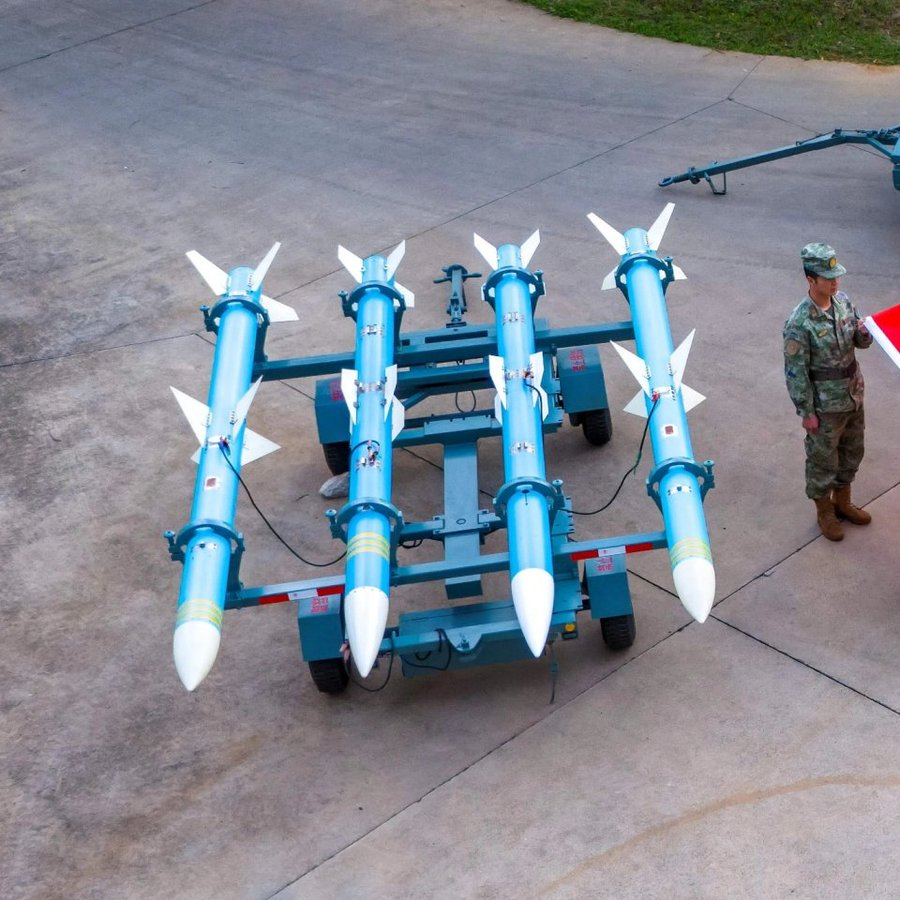
Primary BVRs common with both PLAAF & PAF.
Interoperablility
1
1
9
1,169

28 Jun 2024
crypto narratives:
Gaming: @avax, IMX, ronin
Interoperablility: avax (teleporter), cosmos, polkadot
RWAs: avax, algorand, link
AI: avax (decent), RNDR, IO, OPSEC
memecoins: avax, SOL, ETH
do you see it or do you want it spoonfed?
3
6
52
5,486

8 Feb 2024
We’ve heard so much about it but seeing in action the amazing interoperablility that the $qnt Overledger allows is something else.
1
13
1,690

29 Jan 2024
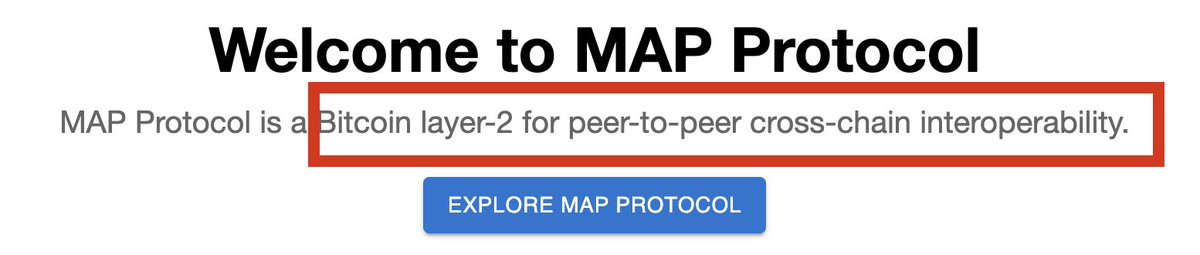
MAP Protocol is a bitcoinL2
for peer-to-peer crosschain interoperablility. #bitcoinL2 @MapProtocol
29 Jan 2024

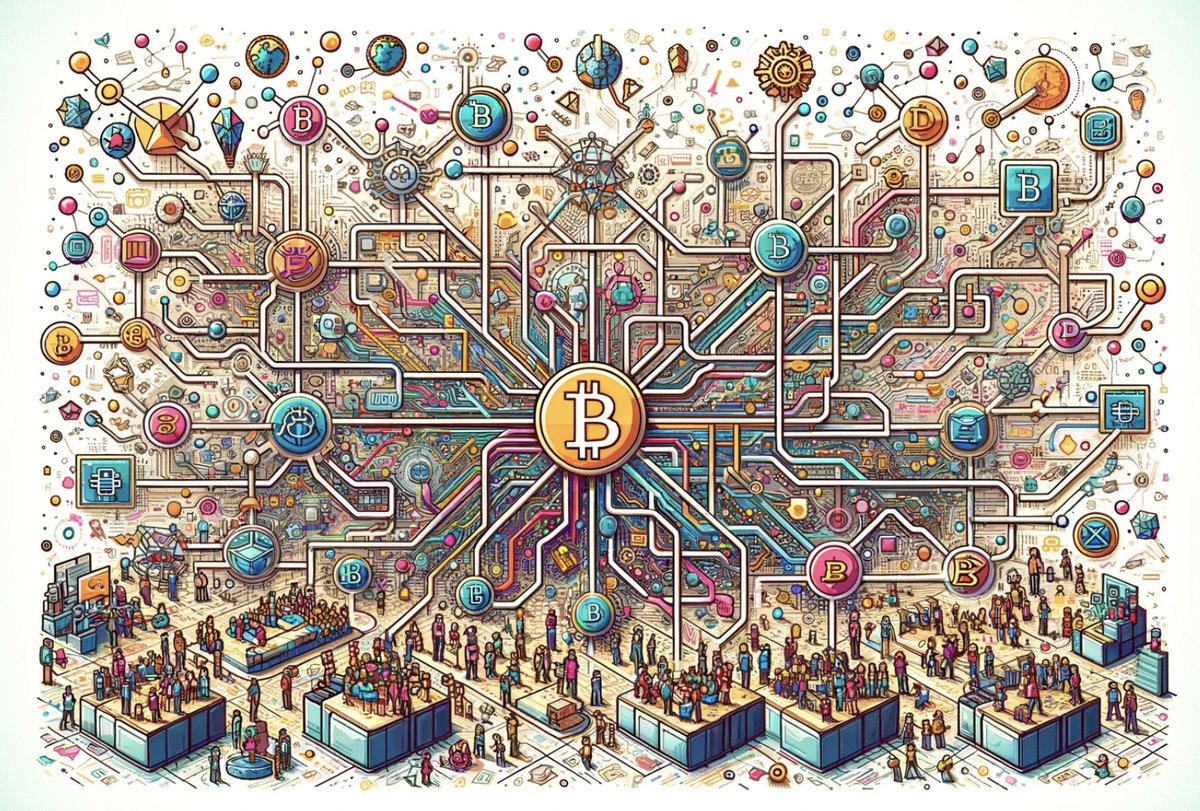
最近,BTC layer2正雨后春笋般涌现,不完全统计已有上百条项目箭在弦上,整个扩展生态呈现一片繁荣且混乱的景象。
正因为此,新链切入BTC layer2赛道,必须找到契合的卡位。接下来,要谈的 @MapProtocol All in比特币生态之心已路人皆知,但其终局可能并非layer2,而是BTC的interoperability层。Why?
因为在我看来,BTC layer2生态当前并无一个清晰的“标准”和“规范”:可以成熟的EVM Compatible链当成BTC layer2;可以把能够安全跨链BTC资产的独立侧链当成BTC layer2;可以把一些类UTXO账户模型的性能新链也视为BTC layer2等等,当然也包括状态通道闪电网络、客户端验证RGB等更Native的BTC layer2。
理论上,只要这条链能够接入BTC生态有关资产,且能够促进BTC资产二次繁荣的扩容链都可以归类到BTC layer2的范畴。听上去似乎对“layer2”的定义和边界大不敬,但前阵子Vitalik面对以太坊的layer2 内卷大战不也跳出来提议放弃layer2概念么?
某种程度上,BTC layer2现在呈现的混沌无秩序(熵 Entropy)态是一个不受任何个体主观意志所控制的形态,需要经历长时间的共识摩擦、技术掐架、市场内卷、优胜劣汰才能逐渐趋于清晰。
之前我撰文分析了 @BSquaredNetwork 在bitVM挑战机制上的特殊性,也提及了 @ParticleNtwrk 联合 @BitmapTech 在BTC Connect上的抽象设计,MAP Protocol很长时间内,在推特上的呼声都比较大,不少朋友让我分析。
说实在的,一开始我并没有看明白。因为,一个原本对标layerZERO做全链可交互操作性的链,突然宣传All in比特币layer2生态了,总让人感觉有点为了“叙事”委身的感觉。毕竟,明明可以做全链通的叙事,如果定位于BTC layer2 不相当于自我受限么?
带着这个疑问,我们先来简单分析下 MAP Protocol的技术逻辑框架:
MAP定位是基于轻客户端于ZK的点对点全链基础设施,专注于去第三方中心的点对点互操作性。如何做呢?MAP的方案其实是构建MAP中继链,相当于BOB 链中链,该中继链会在合约中预编译同构不同链的签名算法,基于此可以获得跨链通信和零摩擦资产转移能力。
以BTC为例,MAP先在BTC链上部署ZK轻客户端,轻客户端不需要下载全节点历史数据,就可以执行在BTC主网上执行一些操作:比如,验证区块头和交易相关的Merkle证明,可以实现在二层链进行提币请求时,主网轻客户端只需要验证特定交易相关的部分数据就可以安全完成操作。
这其实最早源自比特币白皮书中被定义的简单支付验证标准SPV(Simplified Payment Verification)技术。
若把BTC主网视为资产结算层,采用轻节点客户端的方式可以显著提升资产跨链转移的安全性,同时也避免了全节点验证的资源损耗和成本。而之所以采用ZK技术加持,则是为了保证layer2侧链的操作和主网验证共识保持一致性。
(需要厘清楚,轻客户端只能验证支付类型,并无法对layer2链上的状态有效性做验证,即主网可以根据layer2提交上来的部分数据验证是否解锁UTXO解锁条件进行资产转移,并无法对layer2链上的更复杂状态做验证)
应该说ZK轻客户端 中继链的方式,确实可以实现资产的安全跨链和同链无磨损转化。中继链会部署适配全链环境的智能合约(BTC这类无智能合约则用轻客户端做资产安全迁移)并遵循一套标准来进行跨链通信,再配合一套基于POS的交互有效性验证机制。做到这些,就构成了一条全链可交互操作性解决方案。
正因为MAP Protocol有做全链可交互操作性的基因,定位成BTC layer2其发展路径也会不同:
1)MAP 会重点针对BTC的主网特性,去丰富自己的layer2功能,让BTC的资产,除BTC主资产外,像诸多铭文资产也能安全跨链到layer2上。
因为单BTC这种强共识的资产流通,任何layer2扩展方案都很难撬动BTC holder们的共识,若是铭文资产就不一样了。BTC layer2 可以更低成本、低损耗的管理并流通这些BTC衍生资产,达成layer2扩展BTC主网价值的目标;
要实现这一目标,就并非简单地把BTC资产Wrap到layer2链那么简单了,涉及到indexer索引器的账本一致性管理,不同BTC衍生铭文资产的流通性兼容和管理等等。显然,要围绕BTC衍生资产的特性,开发出更多符合BTC原生特性的扩展性能才是关键。
2)MAP 会成为其他BTC layer2的可交互操作层(第0层),试想当BTC layer2接入的是一批成熟的EVM链,以及一批Non-EVM性能链,这些链都可以和BTC主链以某种方式进行连接,但核心问题不正是interoperability可交互操作么?显然一个充分异构BTC主网特性且能兼容其他全链环境的链中链会成为关键。
MAP大可选择不去争抢layer2链的C位,静观其他layer2链互相竞争,然后在他们把市场撕裂到七分八裂的时候,再基于自己全链可交互操作性的特性来整合和管理流动性。
在我看来,这或许才是一招绝佳妙棋。
当然,在BTC layer2角逐的蛮荒时期,大家都在挤破脑袋抢C位,其中不乏有一些不顾BTC主链客观缺陷事实,也理不清二层链价值核心的方案活跃在市场上,这种背景下,一个BTC layer2若能安定下来,找准自己的生态卡位,才是最终的制胜关键。
Note:最近私我看BTC layer2有关项目的比较多,很难都腾出时间去看并给回复,大家看好的相关项目可以评论区贴出来,呼声大的我会跟进去研究下。感谢支持。
1
7
26
5,994