
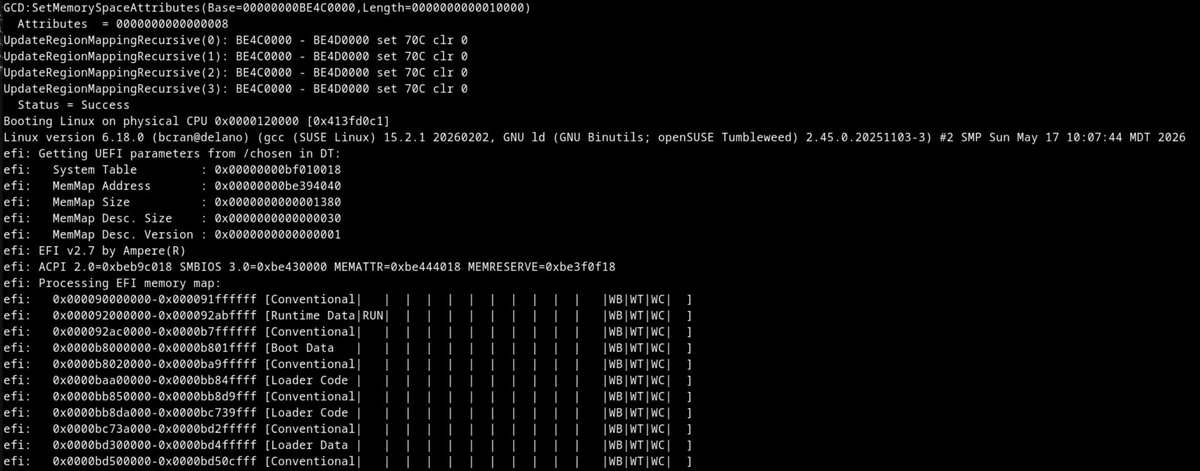

28 Dec 2025
Sind sie immer noch so verrückt und vertrauen ihrem Computer? (Vortrag von 2017)
Trigger-Warnung: Linux ist keine absolute Lösung! @tomregenauer @WitzlebenFlavio
Auf den meisten Endkundengeräten (Laptops/Desktops) ist LinuxBoot weiterhin nicht Standard, oft nicht einmal verfügbar.
Die tiefste Schicht (Intel ME, AMD PSP, frühe UEFI‑Phasen) bleibt proprietär; damit existiert ein „Vertrauensanker“, den man als Nutzer nicht vollständig kontrollieren kann
Ein extrem wichtiges Thema, welches uns alle betrifft.
Nach der Veröffentlichung von Vault 7 erwog die CIA, Julian Assange zu entführen und zu töten
Das Problem ist, dass die wenigsten Leute etwas davon verstehen (mich eingeschlossen).
waltersiegrist.ch/vault7_fra…
x.com/realwsiegrist/status/1…
Ersetzen Sie Ihre mit Exploits verseuchte Firmware durch Linux – Ronald Minnich, Google (Vortrag 2017)
Mit der Veröffentlichung des Vault7-Materials durch WikiLeaks ist die Sicherheit der UEFI-Firmware (Unified Extensible Firmware Interface), die in den meisten PCs und Laptops verwendet wird, erneut ein Thema. UEFI ist ein proprietäres und Closed-Source-Betriebssystem mit einer Codebasis, die fast so groß ist wie der Linux-Kernel. Es wird beim Einschalten des Systems ausgeführt und läuft auch nach dem Booten des Betriebssystems weiter (daher die Bezeichnung „Ring-2-Hypervisor“). Da es nie aufhört zu laufen, eignet es sich hervorragend zum Verstecken von Exploits, die von Kernels und Programmen nicht erkannt werden können.
Unsere Antwort darauf ist NERF (Non-Extensible Reduced Firmware), ein bei Google entwickeltes Open-Source-Softwaresystem, das fast die gesamte UEFI-Firmware durch einen winzigen Linux-Kernel und initramfs ersetzt. Das initramfs-Dateisystem enthält ein init und Befehlszeilen-Dienstprogramme aus dem u-root-Projekt (u-root.tk/), die in der Sprache Go geschrieben sind.
Über Ronald G. Minnich
Ron Minnich ist Softwareentwickler bei Google. In den letzten Jahrzehnten hat er zu vielen Open-Source-Projekten beigetragen, darunter zum Linux-Kernel (9p-Dateisystem), zum FreeBSD-Kernel (rfork) und zu Plan 9 (viele verschiedene Bereiche). Er leitete das Team, das Plan 9 auf die Blue Gene-Supercomputer portierte. 1999 erfand er LinuxBIOS (jetzt coreboot genannt). Er ist einer der Hauptmitwirkenden am Harvey-Betriebssystem. Sein jüngster Vortrag bei der Linux Foundation befasste sich 2016 damit, wie man eine eigene signierte Version von ChromeOS erstellen und sein Chromebook mit persönlichen Schlüsseln neu signieren kann.
27 Dec 2025

In gewisser Weise ist dieses Buch das Ergebnis zweier historischer Zufälle. Der erste „Zufall“
betrifft die Tausenden von Seiten mit Forschungsergebnissen, die im Rahmen des jahrzehntelangen MKULTRA-Programms der CIA
gesammelt wurden. Nach unserem Kenntnisstand haben nur zwei wichtige Forschungsstudien – Mulhollands
Handbücher – die Anordnung von CIA-Direktor Richard Helm aus dem Jahr 1973 überstanden, alle MKULTRA-Dokumente zu vernichten
.
Mulhollands Handbücher sind ein seltenes historisches Zeugnis dafür, dass die CIA in den 1950er Jahren durch MKULTRA versuchte, unorthodoxe Fähigkeiten zu verstehen und zu erwerben, um sie möglicherweise gegen den sowjetischen Gegner und die weltweite kommunistische Bedrohung einzusetzen.
Die
Handbücher und andere freigegebene MKULTRA-Verwaltungsunterlagen zeigen außerdem, dass
viele führende Wissenschaftler und private Einrichtungen der USA bereitwillig an
geheimen Programmen teilnahmen, die sie als entscheidend für die Sicherheit der Nation erachteten.
Der zweite „Zufall“ war die Entdeckung der lange verschollenen CIA-Handbücher durch die Autoren, während
sie 2007 eine andere Untersuchung durchführten. Obwohl Teile der Handbücher
zuvor beschrieben, referenziert oder teilweise gedruckt worden waren, war uns die Existenz einer
Kopie des vollständig freigegebenen Werks zusammen mit den Originalzeichnungen und -illustrationen nicht bekannt.
Bemerkenswerte öffentliche Verweise auf die Mulholland-Handbücher wurden vom Magier und
Historiker Michael Edwards in einem Artikel aus dem Jahr 2001 mit dem Titel „The Sphinx & the Spy: The Clandestine
World of John Mulholland” in Genii: The Conjurors’ Magazine, April 2001, eine teilweise
Reproduktion von Mulhollands erstem Handbuch in Genii, Band 66, Nr. 8, August 2003, und Ben
Robinsons MagiCIAn: John Mulholland’s Secret Life, Lybrary.com, 2008. Weder die
Bibliothek der CIA noch ihre Historical Intelligence Collection enthielten ein Exemplar von Mulhollands
Handbüchern.
Als die Autoren die Handbücher ausfindig machten, war der Text lesbar, aber die schlechte Qualität der
fotokopierten Seiten mit Mulhollands begleitenden Illustrationen, Zeichnungen und
Fotografien erforderte eine sorgfältige Untersuchung, um seine ursprüngliche Absicht zu verstehen. Um die
Lesbarkeit der Handbücher zu verbessern, wurden Korrekturen an Grammatik, Zeichensetzung und ähnlichen Fehlern vorgenommen, die
den Inhalt des Originalmaterials nicht verändern. Wir sind unserer
HarperCollins-Lektorin Stephanie Meyers zu Dank verpflichtet, dass sie Phil Franke als Illustrator empfohlen hat,
der den Stil und die Präzision der Originalbilder wiederhergestellt hat. Der Leser wird
Phils meisterhafte Darstellung der Bewegungen der menschlichen Hand und des Arms, die für
Mulhollands Erklärung seiner Tricks von zentraler Bedeutung sind, als hervorragende Kunst empfinden.
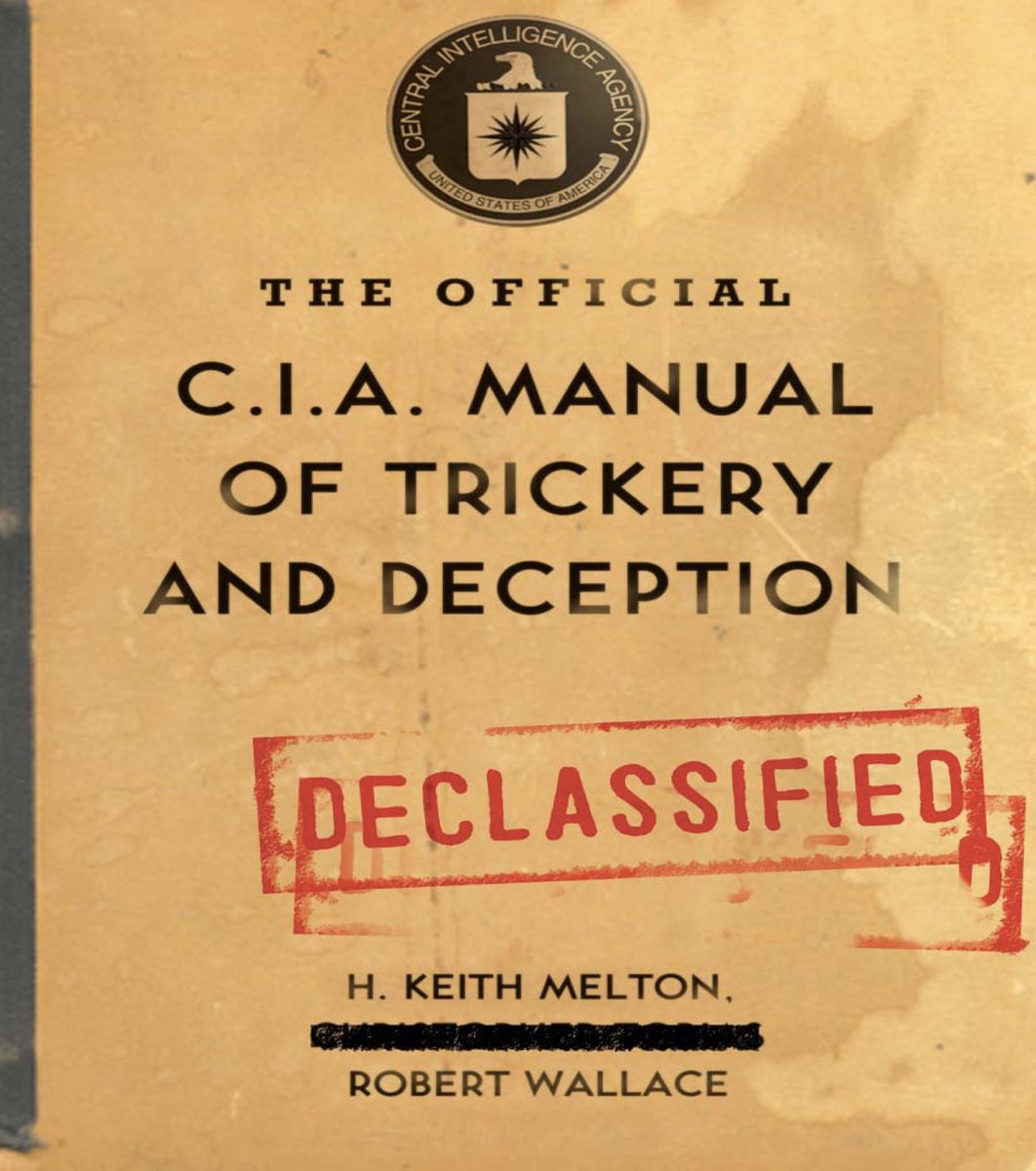
THE OFFICIAL CIA MANUAL OF TRICKERY AND DECEPTION
x.com/RedpillDrifter/status/…
wissenschaftstehtauf.ch/cia-…
2
9
12
1,804


14 Nov 2025
دایرهالمعارف تودرتو (En→En) از مفاهیم Linux BIOS/coreboot — کوتاه و سلسلهمراتبی:
Firmware (system firmware)
BIOS (Legacy BIOS)
POST (Power-On Self-Test)
INT 13h/INT 10h services (disk/video interrupts)
Option ROMs (expansion ROM)
MBR boot (Master Boot Record)
UEFI (Unified Extensible Firmware Interface)
EFI System Partition (ESP)
Boot Manager (NVRAM boot entries)
Secure Boot (signature verification)
GOP (Graphics Output Protocol)
coreboot (formerly LinuxBIOS)
Stages
bootblock (CPU bring-up, microcode)
romstage (cache-as-RAM, early chipset init, memory init)
ramstage (full device init, chipset/peripherals)
payload (hands off to next-stage program)
CBFS (coreboot filesystem in flash)
FSP/AGESA (vendor init blobs, platform init)
Verified Boot (RO/Recovery vs RW slots)
Payloads (run after coreboot init)
SeaBIOS (legacy PC BIOS services)
edk2/TianoCore (UEFI services as payload)
GRUB2 (bootloader as payload)
LinuxBoot/Heads (Linux kernel as payload; kexec handoff)
depthcharge (Chromebook bootloader)
Linux boot flow (with coreboot)
Power on → coreboot stages → payload
Bootloader (e.g., GRUB/systemd-boot) → kernel initramfs
Kernel mounts root filesystem → init/systemd
Storage/partition schemes
MBR (legacy, 2 TB limit, partition table in sector 0)
GPT (modern, protective MBR, large disks, required by UEFI best practice)
Security concepts
Measured boot (TPM measurements)
Secure Boot (UEFI signature chain)
Write protection/BIOS lock (protect flash regions)
Key components/terms
NVRAM (firmware settings)
ACPI tables (power/device enumeration to OS)
SMBIOS/DMI (system info to OS)
SMM (System Management Mode)
Option ROM execution (device init pre-OS)
Typical toolchain/ecosystem
Coreboot toolchain (build, board ports)
Flashing tools (flashrom)
Firmware images (vendor vs open firmware)
Troubleshooting signals
Beep codes/POST codes
Serial console (early boot logs)
Boot order/boot entries (UEFI Boot Manager)
اگر خواستی، میتونم همین ساختار رو برای یک بُرد/سیستم مشخص با جزئیات مرحلهبهمرحله (stages، payload انتخابی، و مسیر بوت لینوکس) شخصیسازی کنم.
1
1
55

13 Oct 2025
#OpenSource 🌱 L’#Europe construit son avenir #Numérique
🔹 Archis ouvertes #RISCV
🔹 Firmwares audités (Coreboot, LinuxBoot)
🔹 Outils #EDA et #PDK accessibles
🔹 Standards ouverts (O-RAN, SBOM, HBOM)
Pour une tech souveraine et interopérable 💡
incyber.org/article/open-sou…
1
2
107

12 Aug 2025
Become a Firmware Developer for Coreboot and Help Shape the Future of Open Hardware
Do you have experience with Coreboot, U-Boot, or LinuxBoot and a passion for low-level software development? Then become part of our team.
🐇tuxedocomputers.com/en/Infos…
#linux #jobs #coreboot
5
33
1,680
2 Aug 2025
Become a Firmware Developer for Coreboot and Help Shape the Future of Open Hardware
Do you have experience with Coreboot, U-Boot, or LinuxBoot and a passion for low-level software development? Then become part of our team.
🐇tuxedocomputers.com/en/Infos…
#linux #jobs #coreboot
22
71
2,669

17 Jun 2025
PSA: Linux kernel 6.15 drops a CRC-32 value which simply breaks bootloaders that uses it (e.g. linuxboot, u-root).
github.com/u-root/u-root/pul…
phoronix.com/news/Linux-6.15…
1
4
452

3 Feb 2025
Would be interesting to see how/whether a Tamago bootloader would complement work on LinuxBoot and u-root:
linuxboot.org/
github.com/u-root/u-root
Overall, I think focus on functionality running w/i confidential VMs (AWS Nitro Enclave, AMD SEV-SNP, Intel TDX) is great.
2
2
213



20 Jan 2024
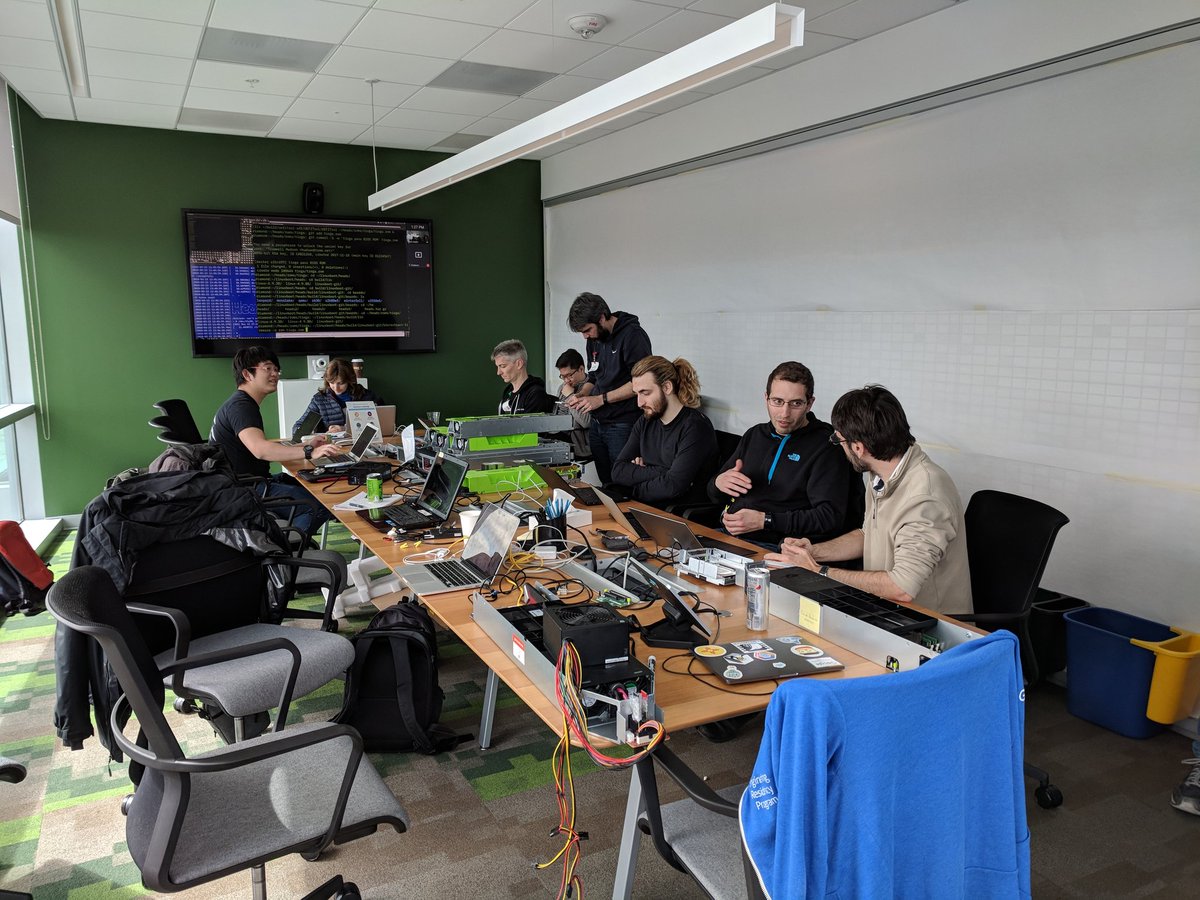
Finally it boots. Only a specific rank config is working (Samsung 1Rx8 in my case). Nothing else generates any output. If they’re running from cache in an OCM config it’s not rocket science to output a banner on the UART. Of course they shipped it with LinuxBoot not UEFI
17 Jan 2024

So last night I tried yet another DDR4 ECC RDIMM, but this time using a part that’s on the AVL for this RV chip. Once again failed to boot. Meanwhile more folks on the Milk-V forum posting about failures to boot or after a few days. Totally ready for prime time 👍
3
19
2,887

19 Jan 2024
Hey @t3dotgg, someone in my chat (LinuxBoot) asked an interesting question.
Specifically: What should be considered when developing a new framework?
After clarification, they meant UI framework.
My response:
- Documentation is the MOST important thing.
- I suggested they benchmark their framework against github.com/krausest/js-frame…. Not necessarily needing to be the fastest, but mainly to understand the tradeoffs and bottlenecks.
- I also mentioned that they should consider the SSR/SSG story. I firmly believe that most apps (especially dashboards) don't need to think about SSR/SSG, but plenty of devs will not even consider a framework without a valid approach to SSR/SSG.
Anything else you would mention?
Feel free to make a video about this. If you don't, I will.
4
1
16
2,537

2 Dec 2023
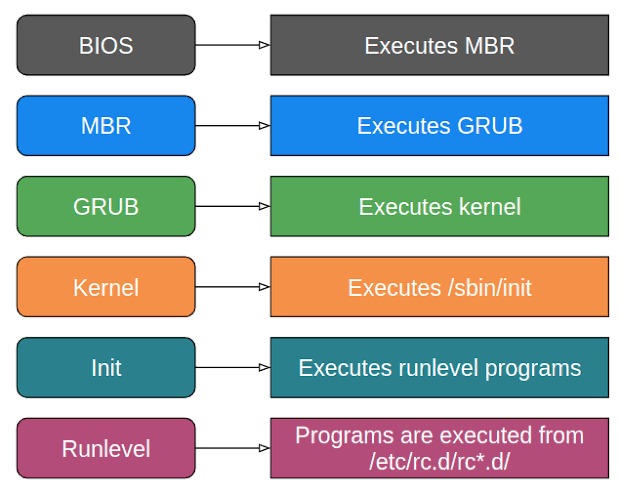
🐧 Unveiling the Linux Boot Process! 🚀
1️⃣ BIOS/UEFI Initialization: Power-on triggers a hardware check, and BIOS/UEFI loads the bootloader.
2️⃣ Bootloader Execution: GRUB, the star bootloader, loads the Linux kernel and offers a kernel selection menu.
3️⃣ Kernel Initialization: Linux kernel takes the stage, initializes hardware, and mounts the root file system.
4️⃣ Init Process: Init or systemd kicks in, launching the first user-space process and setting the stage for more.
5️⃣ User Space Initialization: Libraries, daemons, and processes join the party, configuring the system for action.
6️⃣ Login or GUI: The system prompts for login or sparks a graphical interface, welcoming users into the Linux realm.
7️⃣ User Session: Successful login unleashes the user's shell or desktop environment, offering a gateway to interaction.
Understanding this boot ballet is key for Linux enthusiasts and troubleshooters! 🚦👨💻 #LinuxBoot #SysAdmin #OpenSource 🐧✨
4
6
341

27 Jul 2023
La news qui me fais baver sur le futur de FreeBSD avec du Firecracker ou FreeBSD se lance en 20secondes
Découvert à l'occasion de l'existence de LinuxBoot qui remplace les Driver Execution Environment de l'UEFI par du Linux.
phoronix.com/news/FreeBSD-Q2…
3
6
18
5,022

FreeBSD Working On Support For LinuxBoot, Going From 256 To 1024 CPU Core Limit
phoronix.com/news/FreeBSD-Q2…
13
51
4,426

7 Jun 2023
I has my talk on LinuxBoot for FreeBSD mentioned in a talk about boot loaders by one of the core LinuxBoot developers a couple of weeks later. Nice surprise when college shared it with me...
1
3
215

6 Jun 2023
Though, to the best of my knowledge, (c)oreboot needs a payload: TianoCore, SeaBIOS, u-boot, linuxboot. Everything goes but you still need the pesky second stage thingy :).
2
3
39
22 May 2023
I have the VisionFive v1 board that I'd hoped to use for LinuxBoot work, but I've not had the time to devote to it that I'd like, so the project has languished.... I've not even powered this on, much to my shame....
1
1
70
20 May 2023
20 May 2023

Come see my talk today at #BSDcan on Booting FreeBSD with LinuxBoot. bsdcan.org/2022/stream1.php#… at 2:30pm EDT (18:30 UTC)

2
13
2,400
20 May 2023
Come see my talk today at #BSDcan on Booting FreeBSD with LinuxBoot. bsdcan.org/2022/stream1.php#… at 2:30pm EDT (18:30 UTC)
2
7
28
4,163