Filter
Exclude
Time range
-
Near
AB COST Programı’na Kabul Edildi Akademisyenimiz “CA22137 – Randomised Optimisation Algorithms Research Network (ROAR-NET)” (CA24164- Rastsal Optimizasyon Algoritmaları Araştırma Ağı) başlıklı COST Aksiyonuna kabul edildi. Bu doğrultuda single- and multiobjective optimisation (tek ve çok amaçlı) çalışma grubu kapsamında, Karmaşık mühendislik tasarım problemleri için tek amaçlı ve çok amaçlı optimizasyon metodolojileri geliştirerek ve analiz ederek katkıda bulunmayı amaçlıyor. Doç. Dr. Ali Mortazavi, çalışmaları kapsamında özellikle karmaşık ve kısıtlamalı mühendislik problemlerini çözmek için yeni hesaplamalı yöntemler geliştirerek literatüre katkıda bulunmaktadır. #izmirdemokrasiüniversitesi
1
5
244
Replying to @jparkjmc
yeah this is a multiobjective optimization problem with a pareto front
87
Replying to @MJnanostretch
Where is the proof that evolution performs multiobjective optimization across the entire viral genome to ensure that a 12-nucleotide insert is optimized for protein expression, has low MFE, & is PCR manufacturable?
10
¿Coste, eficiencia o sostenibilidad? ¿Por qué elegir si puedes tenerlo todo? ⚖️✨ Presentamos el Special Issue: “Multi-Objective Optimization: Theory, Methods, and Applications”. 📊✍️ victoryepes.blogs.upv.es/202… #Optimización #Investigación #Ingeniería #MultiObjective #Matemáticas
2
2
276
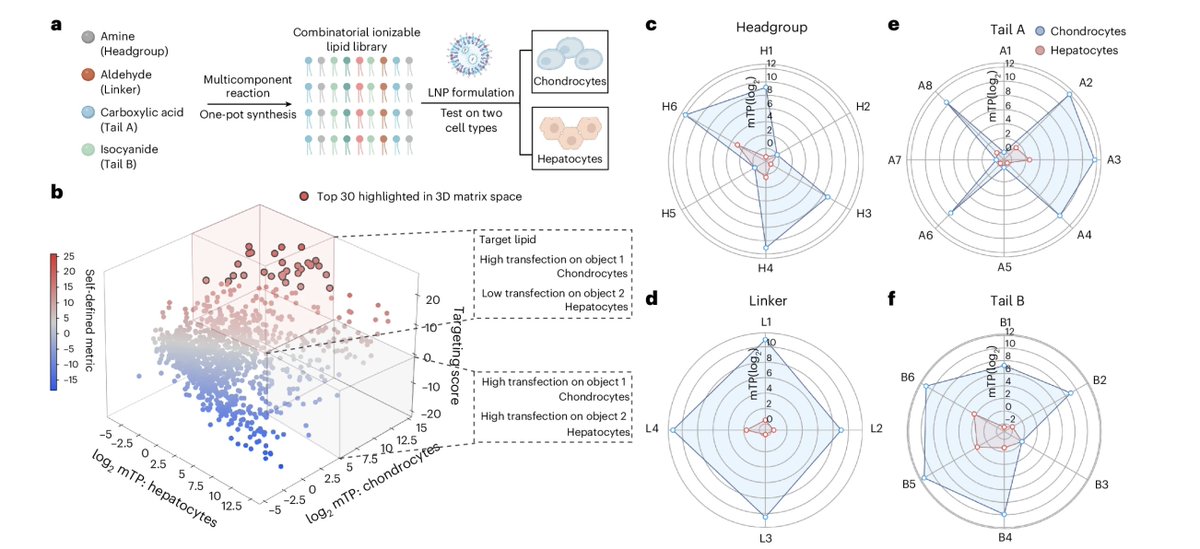
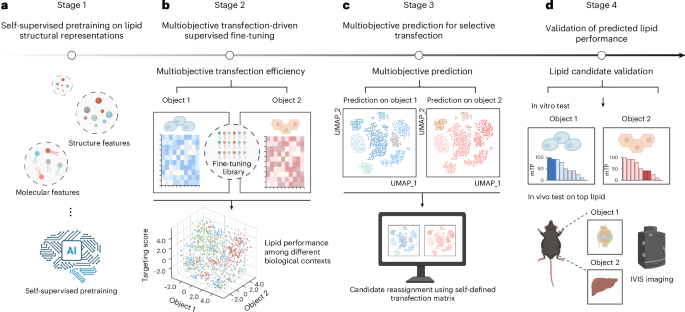
Been spending a lot of time trying to reason about LNP composition for cell type targeting based on prior lit & our own limited experimental capacity. ...excited to see models like this: A multiobjective AI model for LNP engineering enhances tissue-selective mRNA delivery
2
5
56
4,467
This talk breaks down the motivation for using LLMs combined with Iterative Search -- primarily evolutionary methods --for automated algorithm design. Algorithm design naturally models as an optimization problem in a language space, making landscape analysis crucial for the development of LLM4AD. Recent work highlighted includes: (1) Multiobjective EoH for discovering sets of algorithms with varying preferences; (2) EoH-S for finding a set of complementary algorithms, built on the idea that algorithm design and problem analysis should be approached collaboratively; and (3) Multi-modal EoH for leveraging multi-modal information in algorithm development.
4
155
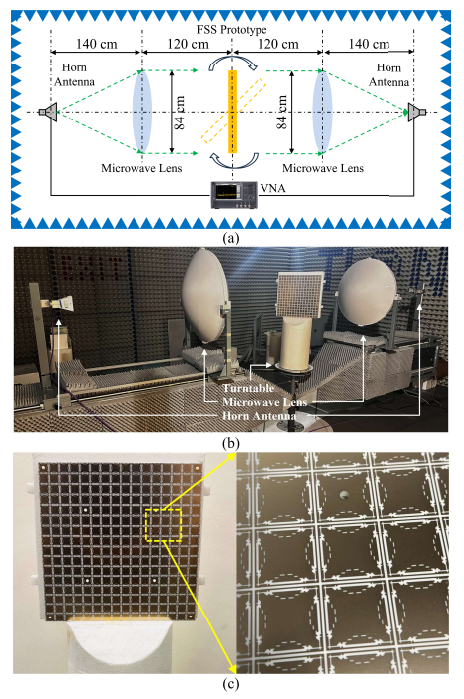
In this new #WHAP, the authors Y. Lyu, Y. Hong, and Z. N. Chen develop a generative deep learning (GDL)-enabled approach for the multiobjective synthesis of dual-polarized wide-angle loop-family frequency-selective surfaces (FSSs). 📃 Read it at: ieeexplore.ieee.org/document…
3
5
501
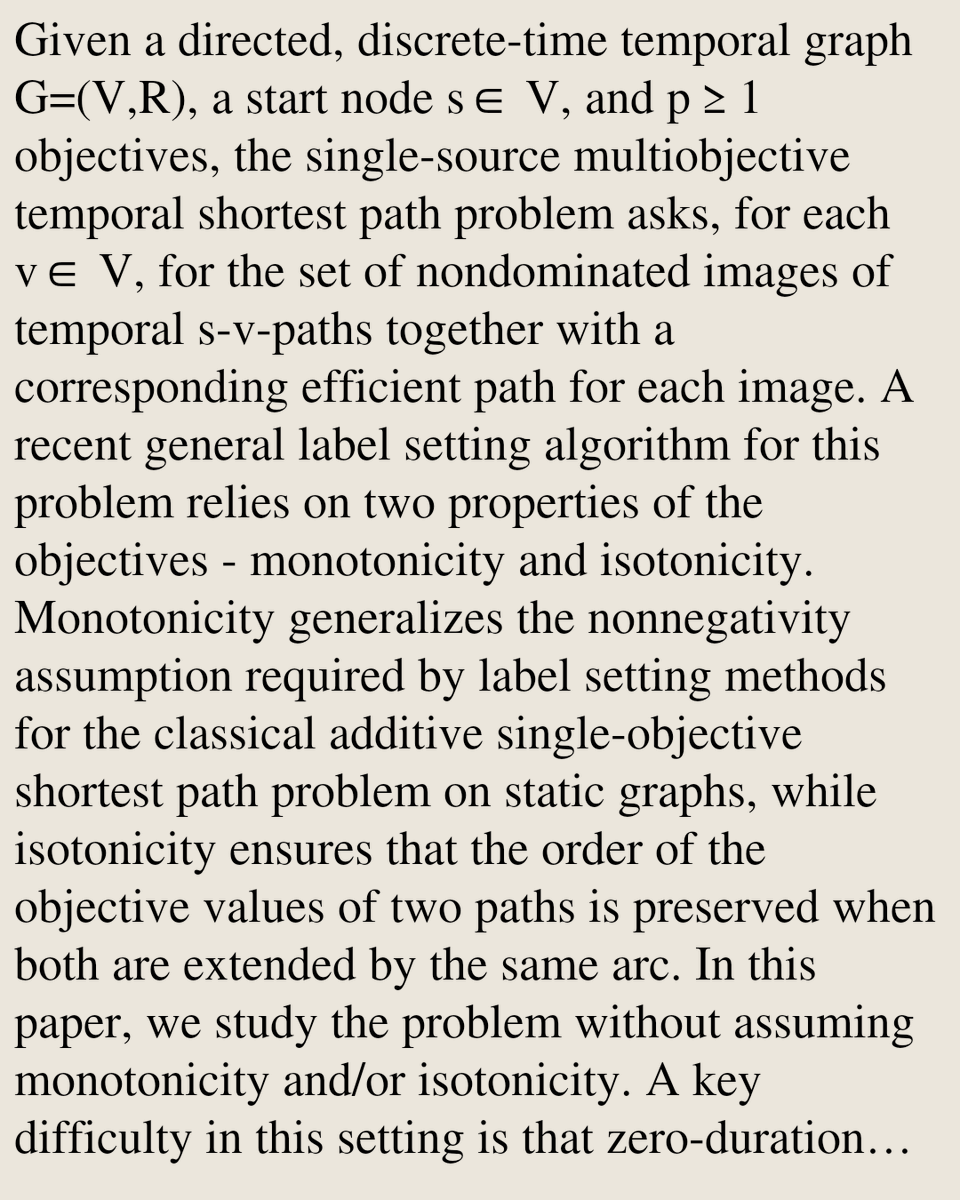
Label Correcting Algorithms for the Multiobjective Temporal Shortest Path Problem Edina Marica, Clemens Thielen, Alina Wittmann arxiv.org/abs/2605.05954 [𝚌𝚜.𝙳𝚂 𝚖𝚊𝚝𝚑.𝙾𝙲]
2
71
A multiobjective AI model for LNP engineering enhances tissue-selective mRNA delivery go.nature.com/4ugPm9D
22
110
27,835
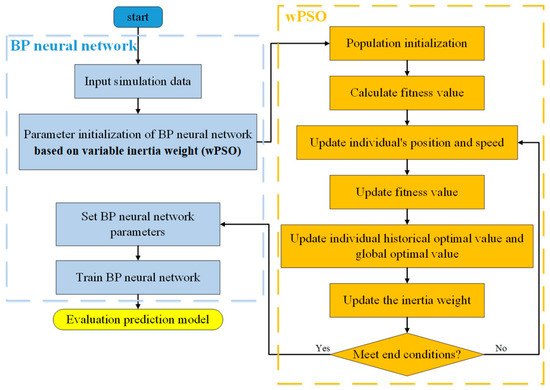
📢 #highlycited paper 📚 #OptimizationDesign of #MultiBladeCentrifugalFan Based on #VariableWeight #PSO_BP #PredictionModel and #MultiObjective Beluga #OptimizationAlgorithm 🔗 mdpi.com/2076-3417/15/11/595… 👨‍🔬 by Wenyang Jin et al. 🏫 Huazhong University of Science and Technology/Wuhan Second Ship Design and Research Institute/Valeo Automotive Air Conditioning Hubei Co., Ltd.
1
3
78
Y. Lyu, Y. Hong, and Z. N. Chen develop a generative deep learning (GDL)-enabled approach for the multiobjective synthesis of dual-polarized wide-angle loop-family frequency-selective surfaces (FSSs). Read it at: ieeexplore.ieee.org/document…
1
17
83
4,244
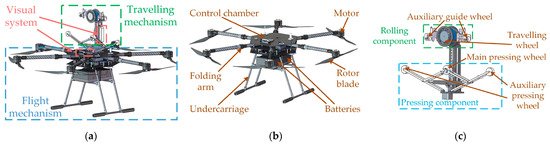
📢 #highlycited paper 📚 Multiobjective #EnergyConsumption Optimization of a #FlyingWalking #PowerTransmission Line Inspection Robot during Flight Missions Using #ImprovedNSGA_II 🔗 mdpi.com/2076-3417/14/4/1637 👨‍🔬 by Yanqi Wang et al. 🏫 Shihezi University #multiobjectiveoptimization
1
3
38
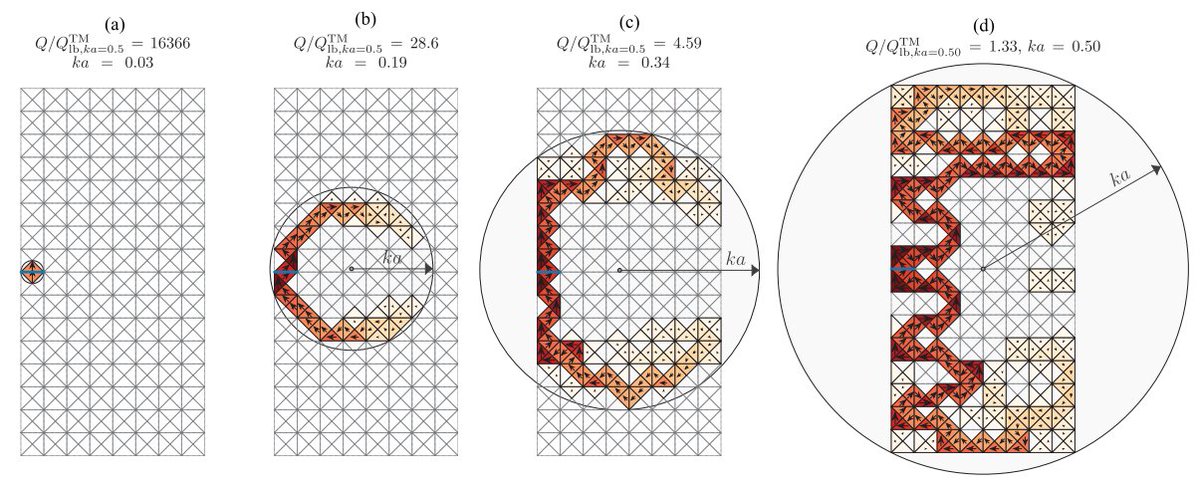
P. Kadlec and M. Capek deal with discrete topology optimization and describes the modification of a single-objective (SO) algorithm into its multiobjective (MO) counterpart. Read it at: ieeexplore.ieee.org/document…
4
13
1,105
Happy to announce the next iteration of the Multi-Objective Decision Making workshop (MODeM 2026), at IJCAI-ECAI 2026 (Bremen, Germany, 15-17 August) Deadline: 5 May 2026 (23:59 AoE). More info at modem2026.vub.ac.be #modem2024 #MultiObjective #DecisionMaking

1
8
399
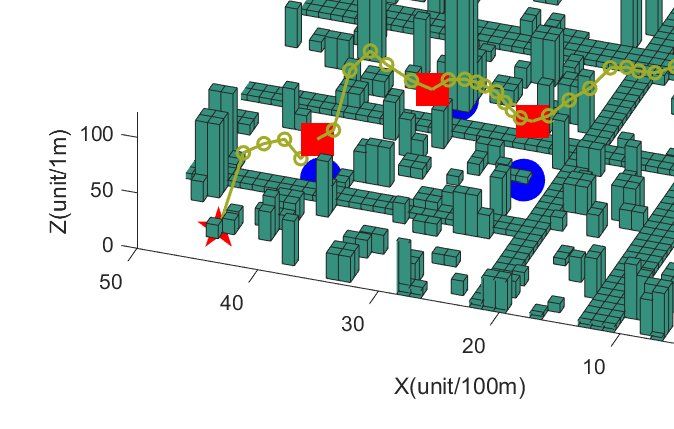
🚨 Paper of the day: arxiv.org/abs/2603.21544v1 Biparty multiobjective UAV path planning addresses efficiency and safety for two decision-makers, outperforming traditional algorithms in experiments. Read more: cognoska.com/dashboard
2
134
so i guess the right mindset for these llms is joint vs conditional. the model has all the distirbutions inside of it. its your job to elicit the right conditional distribution. thats why prompting is so critical. the proof i did in my ICML paper is now fully lean verified and most of it, the LLM did. i guided it and told it not to include PSD assumptions, etc, but it eventually got there. as for complex coding challenges, since all the conditionals are inside the theta, it also knows how to improve its answers if you let it. i prefer to use different thetas for critic vs actor but the point is the same. if you want it to work on complex things you have to do MOA (mixture of agents) loops as i described above. it will work or get 99% of the way there. i also really like adding manual tests and letting it do Grad Student Descent against some multiobjective func. e.g. "your final kernel must match my numpy implementation over 100 random input values and run at least 100x faster w no added memory footprint." then you can so a ralph loop on it and let it go for 3 days. and the results you get are insane. but like every major technology, w great power == great responsibility. tldr the conditional is there. you just have to find it.
1
2
72
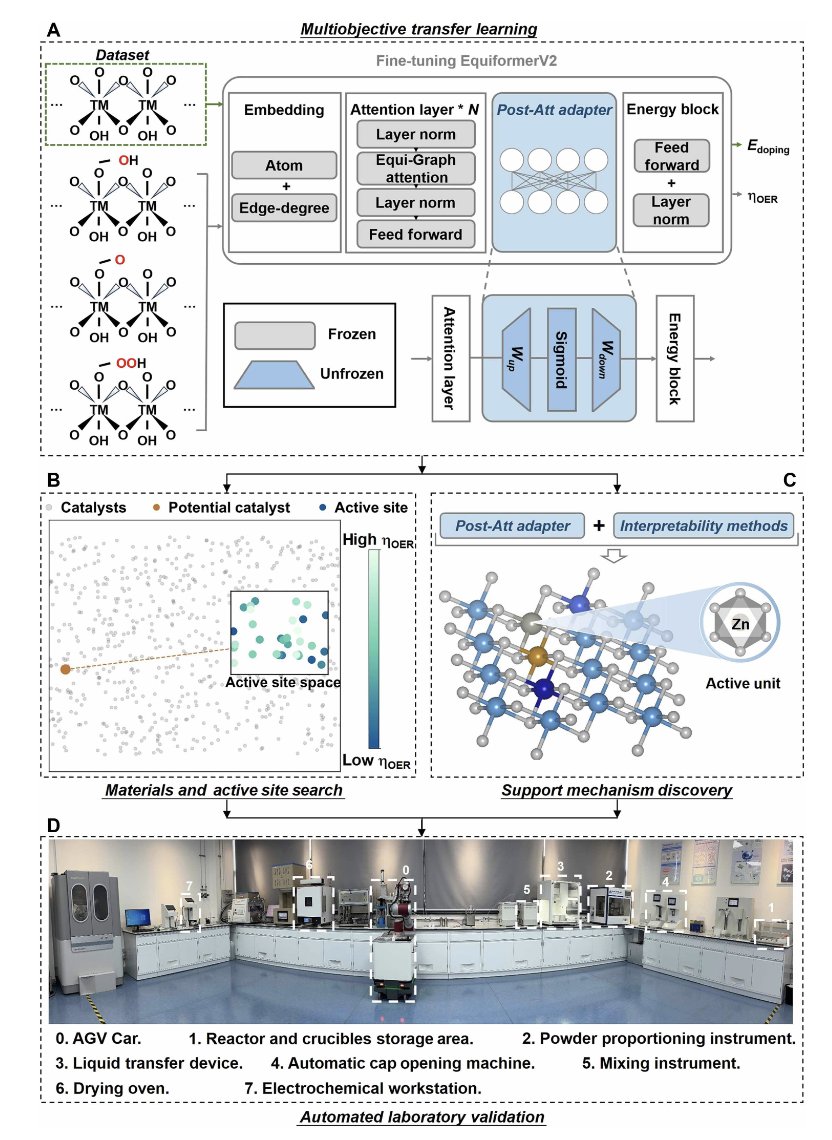
Decoding active sites in high-entropy catalysts with attention-enhanced models High-entropy catalysts—materials where four or more transition metals share the same lattice—offer a vast compositional space for exceptional catalytic performance. But that richness is also their curse: with multiple elements randomly occupying sites, pinpointing which local atomic arrangement actually drives the reaction becomes extraordinarily difficult. Liang Yin and coauthors tackle this for the oxygen evolution reaction (OER) in high-entropy CoOOH catalysts, relevant to water electrolysis and clean hydrogen production. They build a multiobjective transfer learning framework on EquiformerV2, an equivariant transformer pretrained on broad materials data. Instead of full fine-tuning, they introduce a lightweight Post-Att Adapter inserted after the attention layers, trained on 4,822 high-entropy CoOOH structures while keeping pretrained weights frozen. This adapter simultaneously predicts OER overpotential and doping formation energy, achieving mean absolute errors of just 4.5 mV/atom and 3.6 meV/atom, respectively. What makes this work distinctive is how the authors leverage attention scores for interpretability—extracting which transition-metal-centered octahedra the model considers most important, transforming it from a black-box predictor into an active-site discovery tool. They screen 17,500 catalysts from a space of over 3 million compositions, applying dual criteria for activity and stability to identify eight top candidates. These were synthesized and tested in a fully automated laboratory with robotic preparation and electrochemical characterization. The best performer, TiFeNiZn-CoOOH, achieved 263 mV overpotential at 100 mA/cm², a Tafel slope of 39.2 mV/dec, and 97.5% retention after 120 hours. The deeper insight comes from scaling the analysis across more than 5 million structures. Two generalizable design principles emerge: Zn dominates active site occupation (72–93% probability across systems), and the [CoNiZn] coordination environment consistently yields the lowest overpotential—even though it is not the most frequent configuration. Electronic structure calculations confirm that Zn shifts O(2p) orbitals toward the Fermi level, creating gap states that lower the OER energy barrier. This work illustrates a maturing paradigm: parameter-efficient fine-tuning of pretrained models, mechanistic interpretability from attention weights, and closed-loop automated validation—turning the combinatorial challenge of high-entropy materials into an opportunity. Paper: science.org/doi/10.1126/scia…
2
7
28
1,835