
Apr 29
#Cephalopods are related to #snails and #mussels. Yet they are more similar to #vertebrates than one would expect.
The interesting and insightful #sciencewriting article by Liam Drew (2026), which does justice to the #complexity of #cephalopod morphology, focuses on the #brain #anatomy and #neuronfunction of representatives such as the octopus and the cuttlefish.
The unique feature of the cephalopod brain lies in its #size relative to body proportions and its complexity. But the brain of an octopus is impressive not only morphologically, but also functionally. These animals—I emphasize again, relatives of our garden snails—are highly #intelligent, capable of solving complex problems, and are both capable of #learning and generally curious. They can even use simple tools. What seems somehow familiar to us is, in reality, the result of #independent (#convergent) #evolution. Therefore, cephalopods like the octopus are very suitable and interesting subjects of #research. Different research disciplines with varying focuses are approaching the #neuralcapabilities of these animals, a topic the aforementioned author discusses in detail and with much clarity. Key questions arise concerning the selective evolutionary pressures that enabled the emergence of such powerful brains during evolution. However the function and communication of the neurons themselves are also subjects of other research projects.
Since this is an independent evolutionary process in relation to vertebrates, the question naturally arises whether an intelligent animal group with large brains functions according to the same neural, #physiological, and morphological principles. Or, put another way: how profound are the seemingly striking similarities really, again considering that we deal with convergent evolution?
This text: Stefan F Wirth, Berlin, April 2026
Reference:
Liam Drew (2026):
doi.org/10.1038/d41586-026-0…
#Illustrations:
© Stefan F. Wirth, Berlin, 2025 - April 2026,
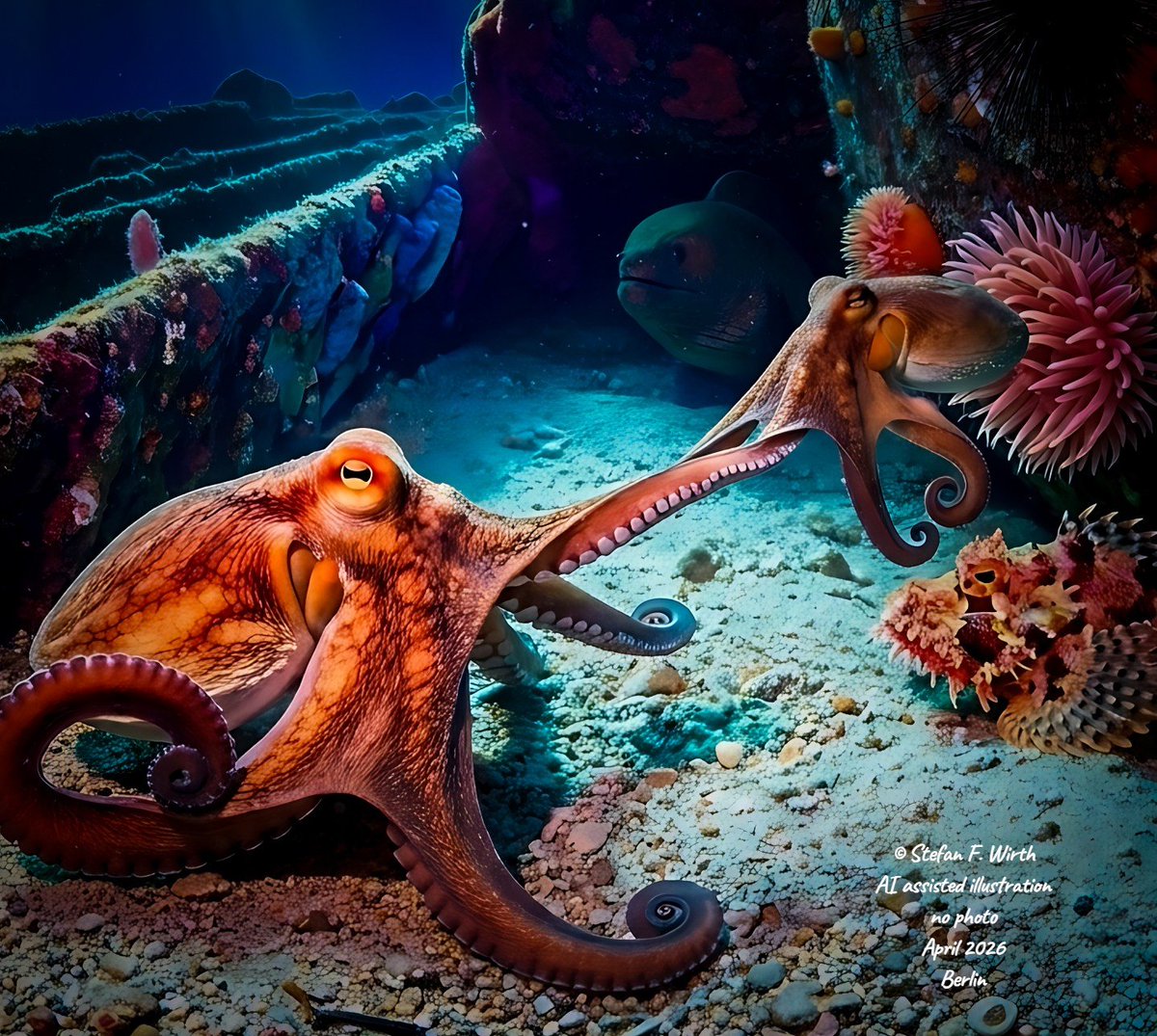
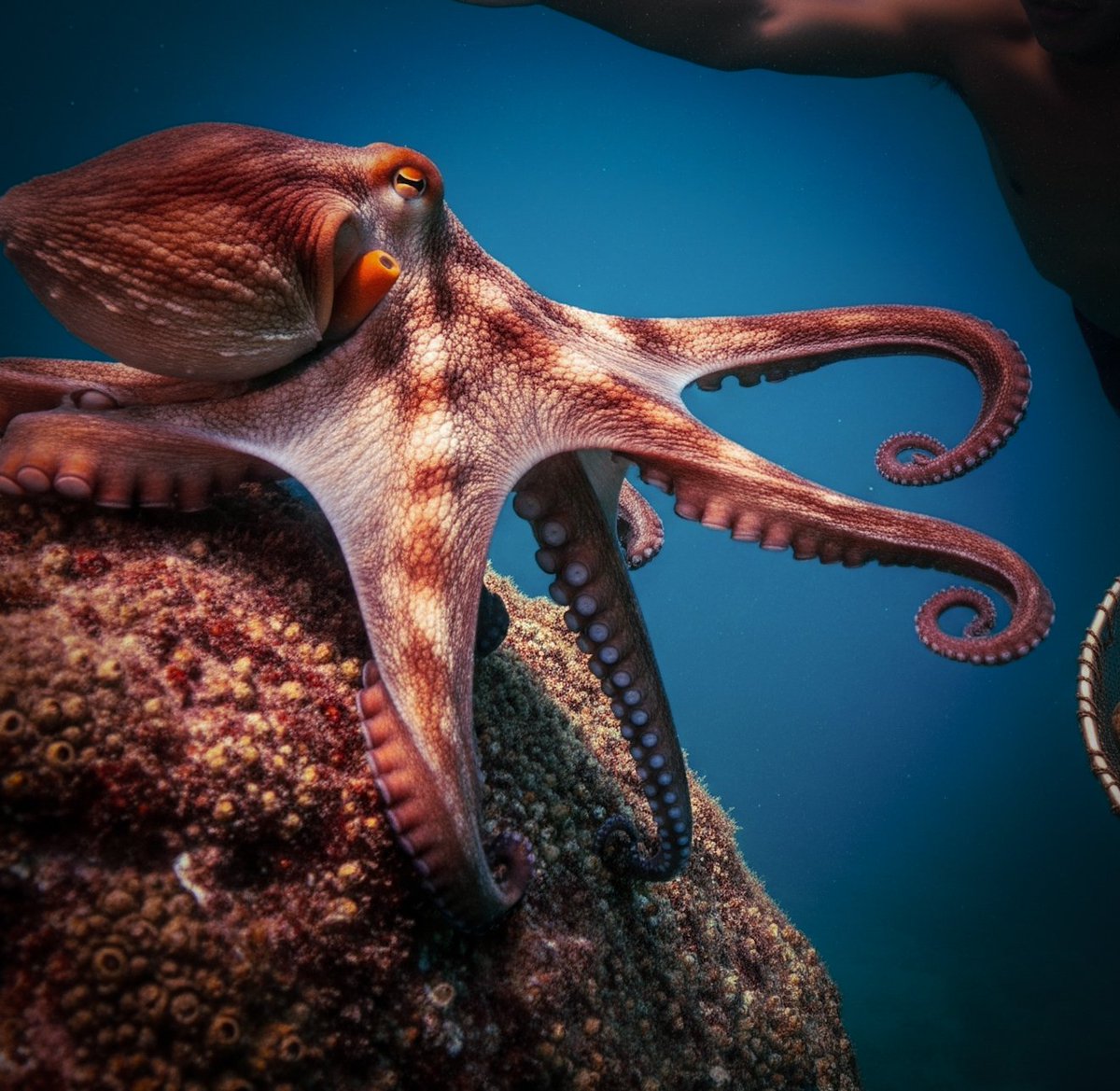
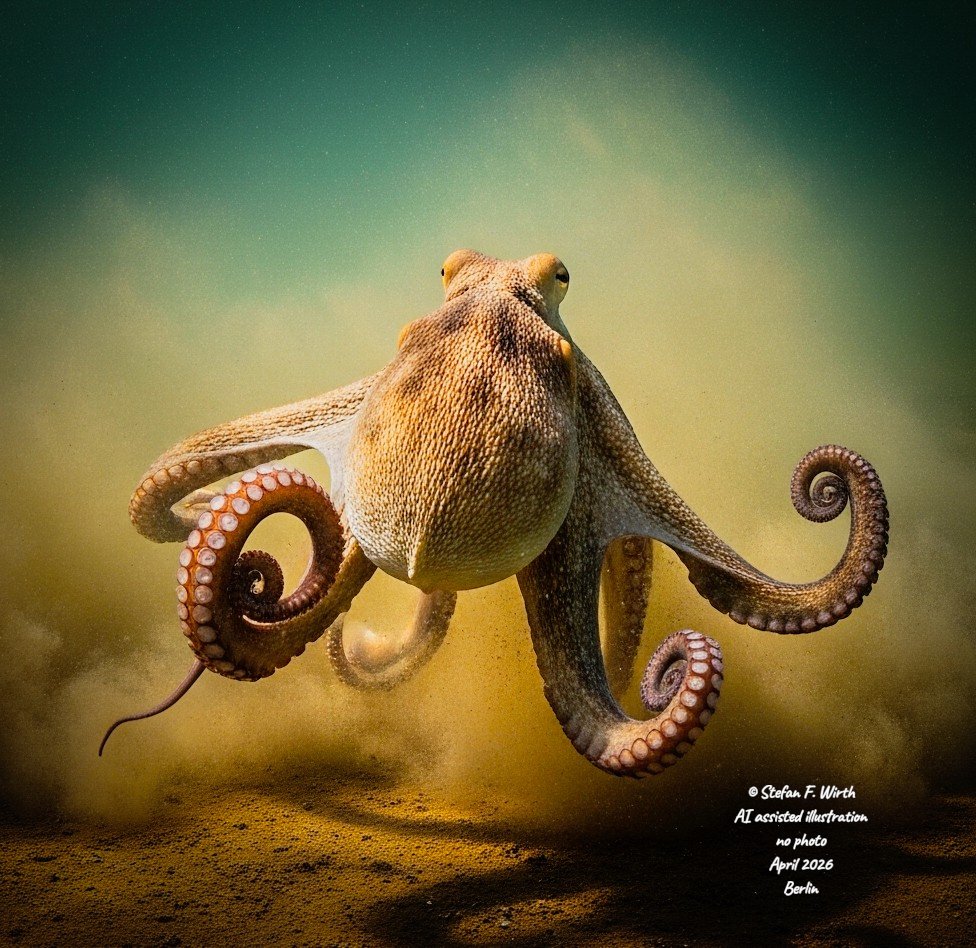
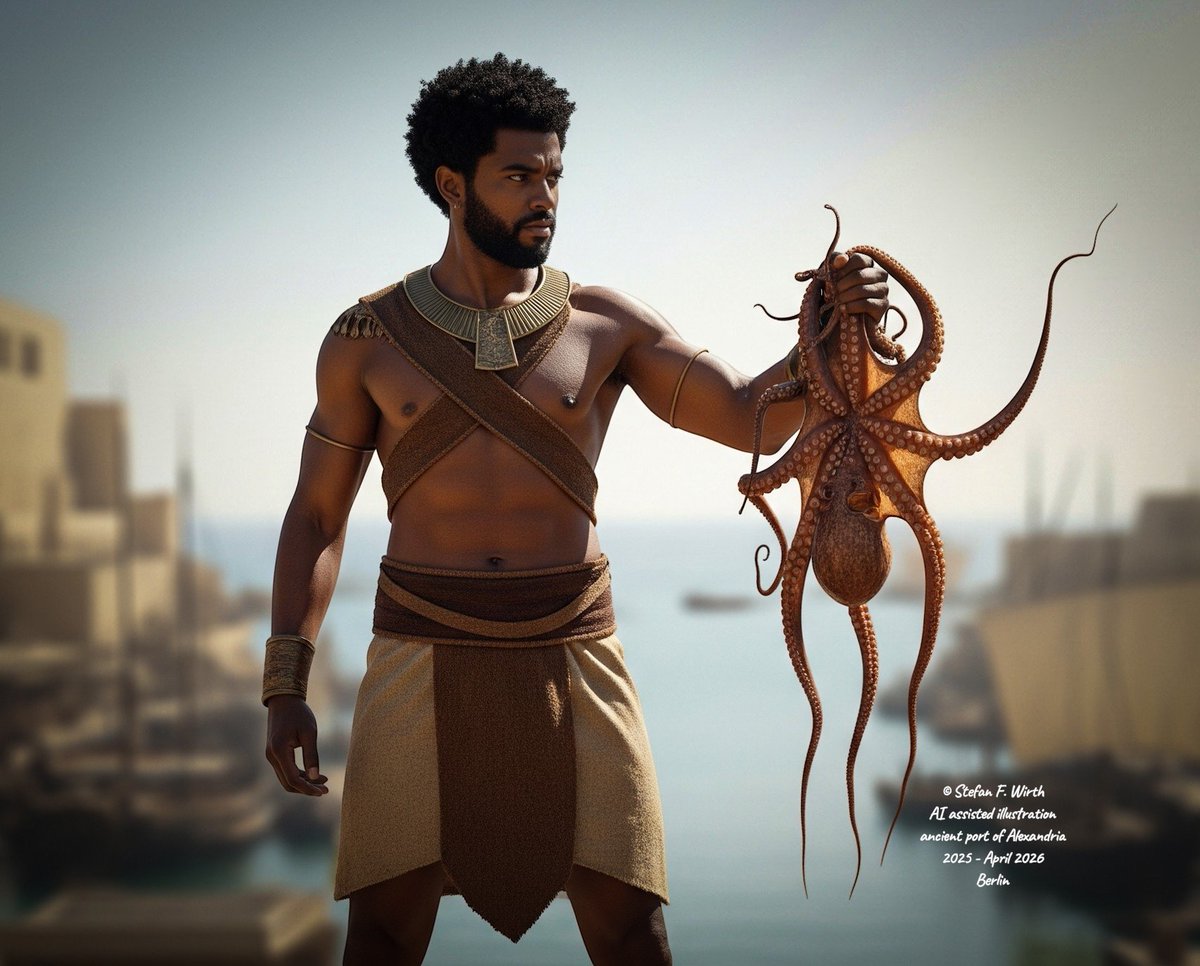
#AI assisted illustrations, no photos, of the common octopus (O. vulgaris), based on my hand sketched storyboards, created via Adobe Firefly and later manually edited via Adobe Lightroom and Photoshop.
1) Common Octopus during #mating
2) Common Octopus interacting with a human diver
3) Common Octopus during swimming from behind
4) Common Octopus, a human #foodsource since #ancienttimes, but biologically not fully understood until today. The illustration shows a scenery in the ancient harbor of Alexandria (#ancient #Egypt)
1
5
140
542

23 May 2019
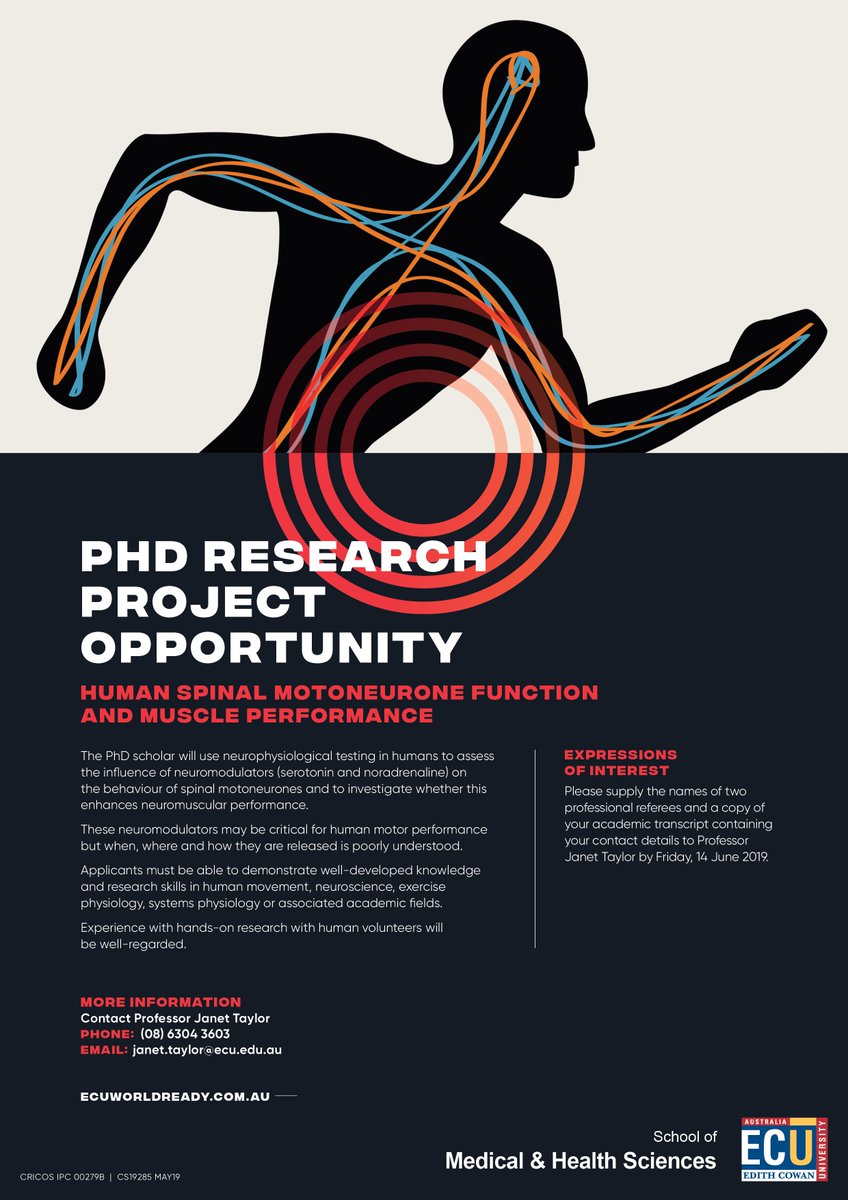
PhD RESEARCH PROJECT OPPORTUNITY
Human Spinal Motor Neuronfunction
If you’re interested, please
contact Prof Janet Taylor at janet.taylor@ecu.edu.au @ECUresearch @TonyBlazevich @clatella1
8
12

5 Oct 2017
"Never did I think I would have to write an essay about a toilet...thank you AP psych" #studenttweet #neuronfunction #youarewelcome #psychat
1
6