
fuck off jew
Having an article written on JewPost changes nothing
The whole world still hates you and forever will

Raghu Parmi retweeted

4h
Hrithik roshan is nothing zoo is everything oh my chowtie😭😭😭
 RATrovert 🇦🇷
27
205
821
17,043

That’s the basic thing bro, it’s nothing new, it’s nothing special.
Bare minimum as women would say.

[English Translation: The True Meaning of Nurturing]
“Wow! You raised your children so well, didn’t you?”
Nurturing (養育): The act of feeding, protecting, and raising offspring.
養 (To Nourish): 羊 (Sheep) 八 (Eight) 食 (Food/To Eat)
育 (To Rear): ㅗ (Head/Roof) 䏍 (Small Insect/Larva)
The character 養 (To Nourish) signifies the act of feeding and caring for a young lamb with the Noble Eightfold Path (or the Four Immeasurable Minds). The character 育 (To Rear) is a pictograph depicting a small insect sitting inside a cocoon, where the upper component (亠) represents a roof or a protective shield.
If we further deconstruct the character 育, which means a small insect inside a protective shield, it consists of the character 厶 (primitive triangle/garlic shape) and 肉 (or 月, representing the physical body). The shape 厶 is a triangle that designates “this side, that side, and the middle.” Dharma Master Cheon-Myeong-Il describes this character as a representation of Pi ($\pi$). Pi signifies the principle of ‘Three Dots in One Circle’ (원이삼점) or the Holy Trinity. In other words, it means that our biological cells are structurally composed of this ‘Three Dots in One Circle’ principle. To care for, protect, and raise these cells configured by this sacred triadic principle is what we call Nurturing.
However, when we return to our harsh reality, human parents merely indulge in the pleasures of each other’s bodies; they possess absolutely no inherent knowledge of how to truly create or grow a life. Growth occurs entirely through the mysterious, innate power of Great Nature. It is absolutely not something humans can achieve by merely pouring water and applying fertilizer. If you devotedly pour water onto a wooden chair, that chair will never grow. If you apply fertilizer to a bicycle, it will never transform into an automobile. Yet, a living organism continuously undergoes transformations and grows on its own. What governs this process is not any artificial human intention, but the supreme cyclical system of Nature.
Therefore, parents can care for their children, but they cannot grow them. To boast that one has “raised their child well” is nothing less than hijacking the absolute authority, power, and merit of Great Nature and Divine Intelligence. To make something grow is a sacrosanct, inviolable domain of the Divine.
The character 養 beautifully explains exactly how we must protect and rear our children: through the component 八 (Eight), which speaks of the Four Immeasurable Minds embedded within our very DNA. True nurturing demands absolute devotion. Specifically, the maternal love of a mother—the core of parental care—is what we call the Four Immeasurable Minds. These four minds—Loving-kindness (慈), Compassion (悲), Sympathetic Joy (喜), and Equanimity (捨)—are also referred to as the Bodhicitta (보리심). This reflects the supreme manner in which the Creator looks down upon and meticulously cares for the world.
The Four Immeasurable Minds practice Unconditional Giving without Attachment (무주상보시), asking for absolutely nothing in return. Great Nature unconditionally sacrifices itself for us without demanding any compensation or stipulating any conditions. If we possess even an ounce of conscience, we must ask ourselves: What kind of repayment are we offering in return for this grand, nurturing care?
Just as filial piety toward one’s parents is natural, returning our deep gratitude to Great Nature is equally natural. The festival of gratitude for the abundance of harvest obtained through farming is called Thanksgiving. If you have never questioned the very principle by which Nature rears all creation, it is solely because you lack a conscience.
Even as we sustain our lives by enjoying the boundless benefits provided by Nature every single day and every single fraction of a second, we remain entirely ignorant of how the food in our mouths creates taste. We do not fully know how that food is pulverized into microscopic particles to become the very flesh and blood of our bodies. We do not even know where we came from, nor do we know where we go after death. We remain oblivious to what supreme Will is actually driving us to live through the 24 hours of each day. In other words, although we utilize and spend our minds for 24 hours a day without a single moment of rest, we still do not know what the ‘Mind’ actually is. This is the natural consequence of a world where no one bothers to ask.
The universe is constructed strictly upon mathematics. From the material world of $1$ to the vibrational wave world of $0$, everything is pure mathematics. Therefore, if one excels at analysis through differentiation (분해), one can approach the profound mysteries of the universe. Conversely, if one reverses that process through integration (적분), one can mimic the very creation of the universe.
However, even if you possess the supreme technology to fabricate everything else in existence, you can never create or replicate Yourself—the Aware One, the Witness (알아차리는 자, 주시자). Because every single existence and every individual possesses a completely unique history of experiential life journeys, no two identical beings can ever exist. Therefore, you are a completely singular, matchless, and incomparably precious existence in this vast universe.
True study and spiritual cultivation begin with imitation. Yet, no matter how masterful one is at imitating, one can never truly become the object itself. Thus, the greatest defining characteristic of existence is one’s uniquely distinct individuality. Since everyone already possesses this entirely unique individuality, there is no such thing as being “better” or “worse.”
Competition born from comparison is utterly useless. If one simply studies and cultivates the core virtues of Benevolence, Righteousness, Propriety, and Wisdom (인의예지) to establish a rightful, upright character within their inner nature, they naturally draw closer to the primordial, authentic state of a human being—which is inherently pure Spirit and Divinity.


I don't even follow the guy LOL
And I bet you're proud that $14 Million of Taxpayer money went straight to Trump's cronies for a failed renovation that accomplished Literally Nothing
Do you MAGAs ever get tired of being such mindless retarded Sheep?
Raja Draksham retweeted

#Peddi acquired by Prathiyangara for full overseas with $6.5M required for breakeven. Nothing specific to US. As of now oversees collections is $6 million but this handle Venky_BO is spreading canards that it's a huge loss in US isnt trying insinuate that is a disaster seem to be motivated.
Did Peddi underperform in US, most certainly because it should have grossed above $4M more closer $5M to match it's humongous collections in AP/TG.
Also this guy went offline after posting similar post last week and did some drama to further negative sentiment towards Peddi. Something weird with this fellow.

#Peddi North America/Overseas is heading for a huge loss. The likely closing number is what was expected from the opening day alone. Shocker for the trade given the initial expectations and a clear signal that a market correction is needed, especially in terms of buying prices!
4
87
241
12,809
Hippychoc 💜 retweeted

Imagine being nagged by a Karen policewoman and her gnome accomplice when you're just standing around doing nothing for a couple of minutes.
How could anyone take these cops seriously? Do you think this pair could wrangle down an unruly, violent migrant?
 Royce Lopez
25
45
289
7,435

so im putting the new cards i got in sleeves admireing the artwork on them
watching a new anime
and i feel so good
happy
like a genuine moment of nothing else matters in my litle bubble that i can just be and enjoy the moment as it is
ive not felt this in a long time
1

WildPrimrose retweeted

She couldn't have known. There were no signs. Nothing out of the ordinary happened right in front of her. What husband wouldn't shell out £4k for a pair of his wife's old shoes? Happens every day.
dailymail.com/news/article-1…
220
931
8,076
483,159

There is nothing normalfag about Zenless, unless you're a dumb tourist.
The full designs proves this, AND my original point of the similarities. Sorry that seeing someone with joy makes you uncontrollably mad but that's not my mental illness to deal with.

Hola Mishamigos 💐 Teresa Battaglia retweeted

nothing is scarier than kryptonian who knows you can take a hit 😭
9
93
1,258
12,593

I mean, yeah, there's nothing wrong with liking a male character as, you know, A CHARACTER. His story, personality and relationships with others. But if you're romantically/sexually attracted to him, that's incredibly weird. I don't care if he's fictional, he's still a man. Wtf?


1
ren. retweeted

Jun 13
Nothing personal with your favorite influencers and politicians, guys. Gue cuma mau abolish penokohan aja. Tolong lah setop bawa argumen personal. Ga baik kalo pergerakan terus bergantung sm satu tokoh dan ga ngembaliin kekuatan pada rakyat.
1
18
34
707
Champagne_jay🐐 retweeted

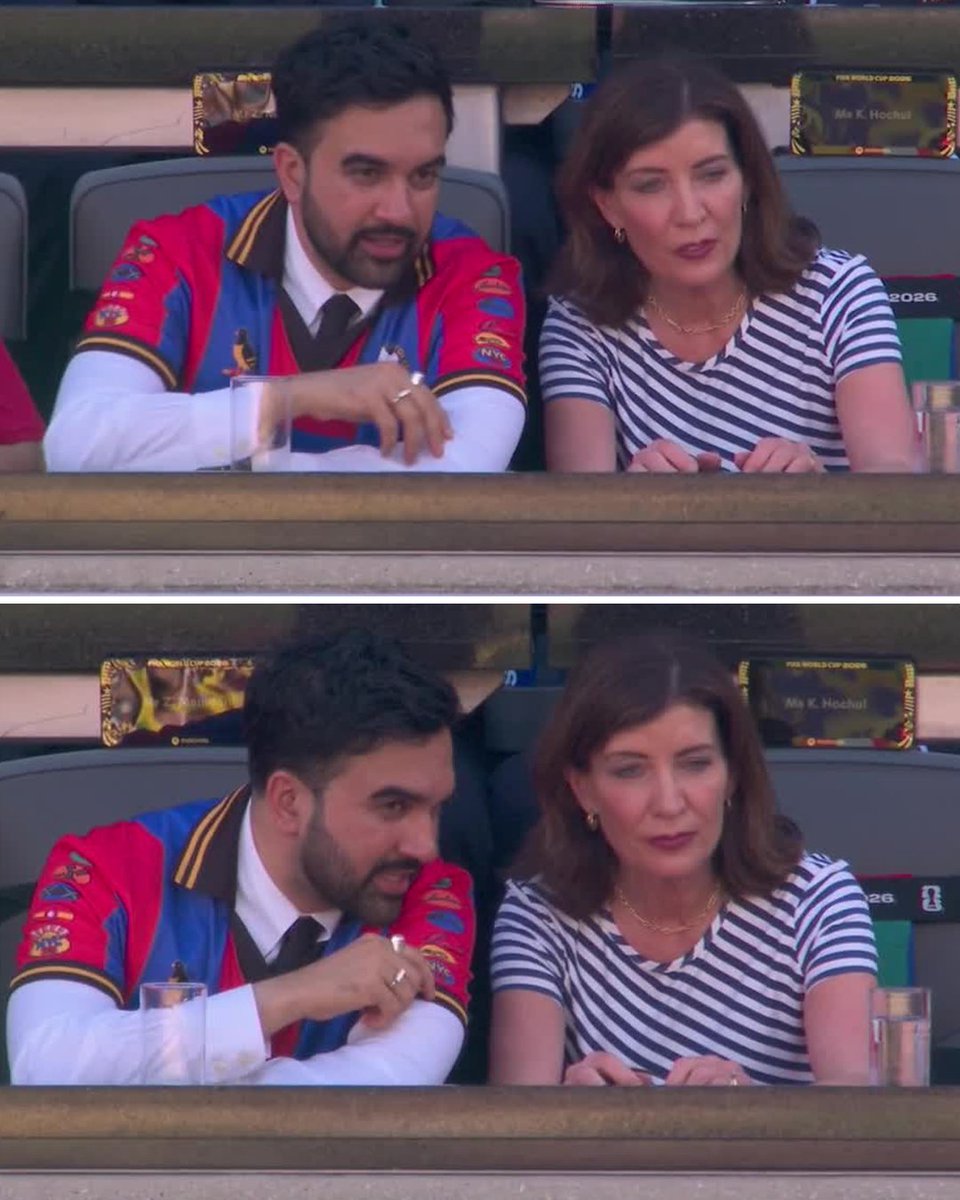
Nothing says socialism quite like watching the World Cup from a luxury suite.

NYC Mayor Zohran Mamdani and New York Governor Kathy Hochul in attendance for Brazil vs. Morocco.
405
1,263
17,005
482,690

#musiclesson #beAHitRadio
Every now and then someone discovers someone who’s voice turned into a complete hit station radio. Sometimes people write about it. Others just look and wait.. what happened?
It just might happen accidentally. Or you look up how to do it. Money for nothing and the chicks for free.
#mmmtv


• He can open the batting.. 🏏
• He can play at No. 3 or 4.. 💎
• He can bat lower down the order.. 🧠
• He can play as a finisher.. 💥
• He will keep wickets as well.. 🧤
There is absolutely nothing KL Rahul cannot do for Team India.
"Rahul, naam toh suna hi hoga!" 🧰🇮🇳💯
