FlutterfairyPR retweeted

10h
We’re hiring video editors and filmmakers🎬
If you’re creative, detail-oriented, passionate about technology, and have an excellent command of English, we’d love to see your work.
You should be able to make clean, engaging videos with strong pacing, sharp cuts, good sound, and clear storytelling.
Apply here: forms.gle/8jLBg653wZ284R3G6
Reposts Appreciated 🙌🏾

73
224
799
64,097
Lich retweeted

The designs are so fucking good, they would slaughter you if you tried to make a stylistic shape language oriented superhero cartoon


4
19
133
2,647

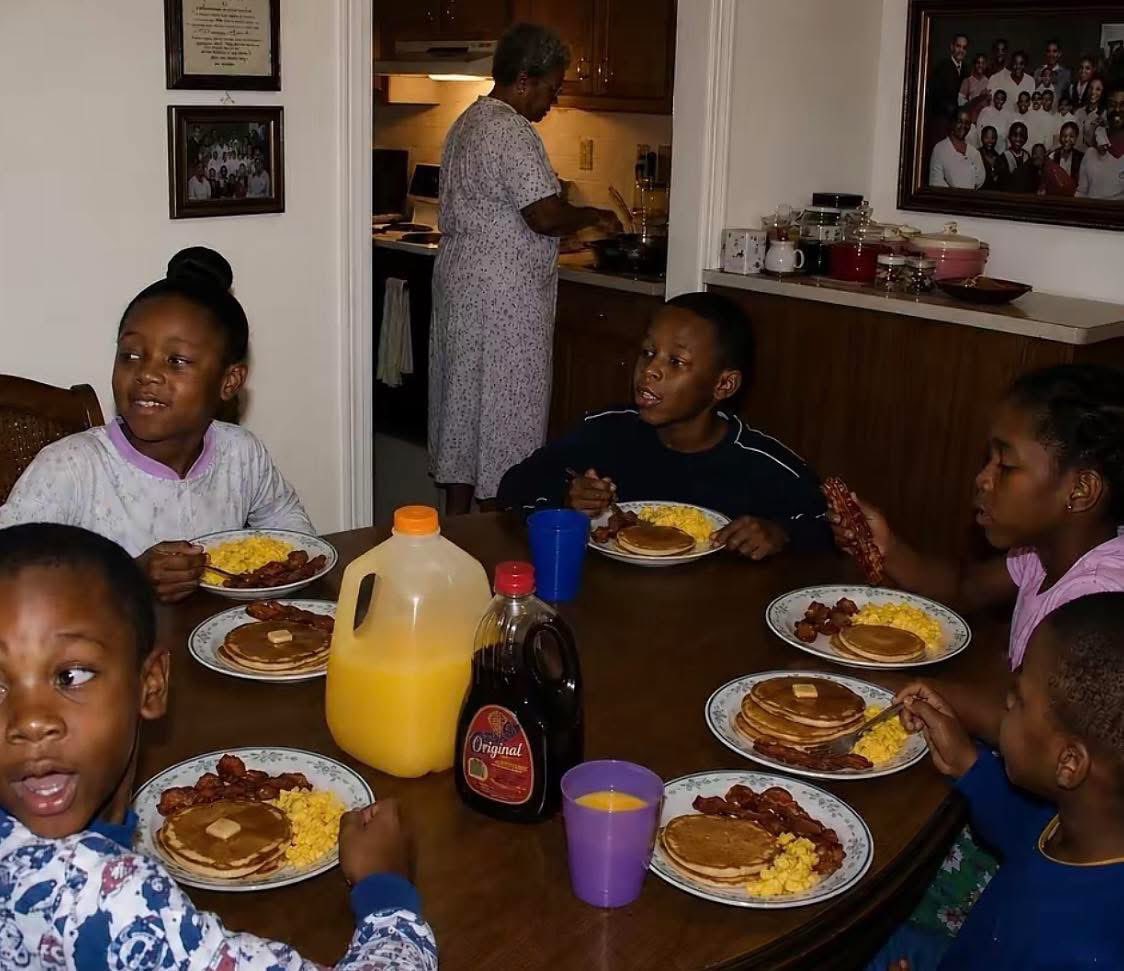
Same. You know the 6 sizes women want.... only thing I don't have is a 6 pack abs. I make a great income and I'm a family oriented man... cant get a girl to even share guac with me.


Family oriented asf🥰🫶🏾

2

Argentina imo is really different, the players are oriented by the ball and the gaps between opposition players, so they often are really close together and inside this group, there is a lot of movement and change of rhythm in possession
11

The DSA International Committee is traditionally very campist/tankie oriented. They use their influence to push Russian and Chinese talking points and positions throughout DSA. IC is also very good at shutting down dissenting voices, sometimes to ostracization.
1
42

That said I do think he could be more ‘control’ oriented if given instruction
1
1
12


Thank god, I was getting tired of the 40 oriented focused and cast movies
Jun 16

Kevin Feige has confirmed that the upcoming ‘X-MEN’ movie will be “a very youth-oriented, focused and cast movie.”
“Jake’s an incredibly smart guy, and he’s an incredibly talented filmmaker. We had a great experience with him on Thunderbolts, and if you saw that movie, what he did with those character interactions—he also has his pulse on, shall we say, a younger demographic.”
(Via: collider.com/x-men-reboot-ca…)


16

This sweet 2-year-old Corgi/Terrier mix weighs about 30 pounds and has an incredibly gentle, loving personality. He’s affectionate, people‑oriented, and just wants to be close to someone who will give him a chance.

❤️ Foster Needed for Waffles ❤️
This sweet 2-year-old Corgi/Terrier mix weighs about 30 pounds and has an incredibly gentle, loving personality. He’s affectionate, people‑oriented, and just wants to be close to someone who will give him a chance.
He already knows how to sit, walks nicely on a leash, and appears to be potty trained. He’s food motivated, eager to learn, and truly wants to be a good dog. Everything about him says he’s ready for a real home.
He needs:
• A foster home
• OR a foster‑to‑adopt home ready to give him a real chance
Hill County Animal Rescue will support the foster, they just need someone to say yes for him.
Call: (830) 990-9085
Email: info@hillcountryanimalrescue.org
📍 Fredericksburg, Tx

2

Acts of Service Lover
(( for those in connections/with a love interest & those who are single ))
Group spell ~ Friday ~ Brand New
** video of candles will be posted under a post titled “Friday Magic & Tip Based Spells” around 2am central time **
to join — tip $19.65 and put- “DOB, initials” in “for” section of payment // if in connection or have a POI put their info too
paypal — paypal.me/desireforfire111
I attract a partner who naturally expresses love through consistent actions.
My future partner enjoys taking care of me in thoughtful, practical ways.
My love interest naturally becomes more attentive, helpful, and dependable.
Acts of service become the primary way my partner expresses love for me.
The person meant for me happily looks for ways to make my life easier.
My love interest enjoys helping me without being asked.
The right partner remembers the little things that matter to me.
My future relationship is built on effort, consistency, and reliability.
I only attract partners who match their words with meaningful actions.
My love interest enjoys surprising me with thoughtful gestures.
The right person takes initiative to support and care for me.
My future partner feels fulfilled by making my day better.
My love interest naturally prioritizes my comfort, happiness, and peace.
The person pursuing me enjoys solving problems and reducing my stress.
I effortlessly attract emotionally mature partners who show up consistently.
My love interest becomes more intentional through their actions every day.
The right relationship is filled with mutual care, support, and devotion.
I attract someone who enjoys providing emotional, physical, and practical support.
The person meant for me follows through on every promise they make.
My future partner loves making my life feel softer, easier, and happier.
My love interest consistently chooses actions that strengthen our connection.
I naturally attract dependable, loyal, and service-oriented partners.
The right person enjoys showing their love through effort, consistency, and care.
I am cherished through actions, not just words.
My relationships are filled with genuine effort, thoughtful gestures, and unwavering devotion.

26
mike bennett retweeted

Jun 16
How to identify a far right extremist:
1. Their taxes fund your welfare
2. Not offended by words
3. Family oriented
4. Can identify a woman
5. Wants to feel safe in their own country
30
139
617
5,589


I will not beat up my mouth on Wheatley. If you take a taxi in Sp. Town, everybody knows Wheatley's stories. JLP came to office to get rich. Only corrupt, links-oriented people re-elect a corrupt government. Jcans love corruption.
5

why is it so hard for people to believe that someone who isn't a lesbian might not want to pursue a relationship with men?
it sounded like op was asking about microlabels for being a more sapphic oriented bisexual (berrisexual maybe?), not a political stance
1
22

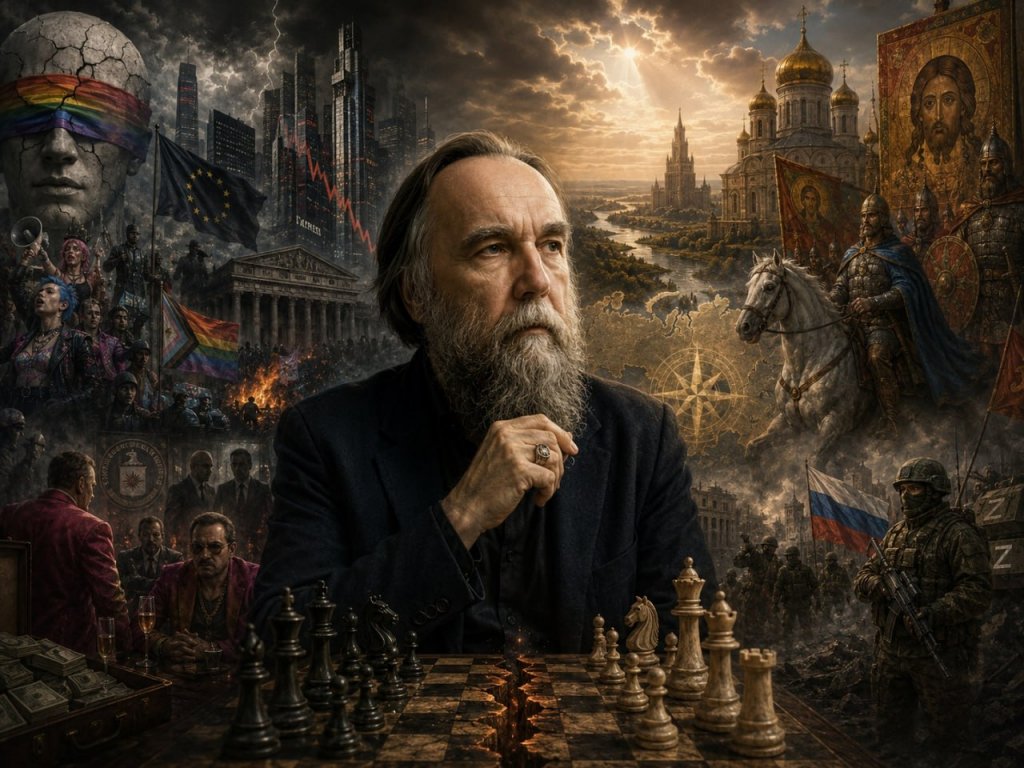
📕It is common to blame all of Russia's ailments on the Russian intelligentsia📕
Alexander Dugin
It is common to blame all of Russia's ills on the Russian intelligentsia. This term is purely Russian, and in other languages, it is written as "intelligentsia," referring to the Russian context. The Latin "intelligentsia" means reason, rational being, intellect. That is by no means what we mean.
I wouldn't be quick to generalize about the intelligentsia. The disastrous influence of the West wasn't brought to Russia by the intelligentsia – it didn't even exist in the 18th century. It was the state – Tsar Peter – that did it.
Pushkin said that in Russia the only European (i.e., a scoundrel) was the state. He meant that the people were different, that they were the bearers of their own, unique Russian civilization.
The Russian intelligentsia emerged in the 19th century and was incredibly diverse. They gathered in circles, passionate about ideas, searching for truth, writing novels and poems, paintings and symphonies, debating their meanings, arguing until they were hoarse, and living for thought. These are the Russian youths of Dostoevsky, gripped by a profound longing. They could be arrogant and misguided, proud and irresponsible, shouting slogans, but they also traveled to the elder states in Optina, repented and suffered, promised to change, and yet still lapsed into extremes. They suffered sincerely for the people and loved them wholeheartedly, but sometimes didn't even understand what they truly loved or for whom they were fighting. They tried to say that Russia is more than a state, that it is a country (civilization), a society, a person, a community, a people. They were by no means purely Western in their thinking. They were at least half (if not more) distinctly Russian, their own. Even the Russian liberal Westernizers (though not all, but many) were primarily Russian nationalists who wanted to adopt Western technologies to become stronger and meet the West on equal terms. And in the West, too, the Russian intelligentsia sought something close to them, something Russian. And the Russian left-wing Narodniks, including the Socialist Revolutionaries and even the assassins, did not resort to violence out of love for liberalism, but for the people, for their truth, for what was Russian. They did not see the state as such. They saw it as the West. They wanted Russia. I won't even mention the Slavophile and Orthodox intelligentsia. They cared deeply for the state, but it simply betrayed them.
The Russian intelligentsia of the Silver Age strove for renewal. In the late Russian imperial period, they saw nothing but idiotic bureaucracy. Even the radical monarchist Lev Tikhomirov was not surprised by the fall of the monarchy. It was doomed to failure—not because of a lack of liberalism, but because of its excess.
In the 1960s and 70s, the Soviet intelligentsia desired continuity with the Silver Age. They wanted Akhmatova and Mandelstam, Orthodoxy and Sophiology, Cosmism and Idealism, Stravinsky and Scriabin, but not the market and not globalization, not gender theories and not LGBT rights, which were banned in the Russian Federation. The state, represented by the highest-ranking officials of the Communist Party—Yakovlev and Kosygin, Andropov and Gorbachev, Yeltsin and Sobchak—pushed westward. Time and again, it is the state that becomes the dominant Westernizer, the liberal, and the European in Russia. Not the intelligentsia. Yet everything is blamed on the intelligentsia.
Not that she's entirely innocent. Her infighting, vanity, egoism, hysteria, envy, and toxic skepticism don't improve the picture. She can't save Russia; she won't succeed. But the Russian intelligentsia isn't the main culprit for our suffering. That's what I really want to say. The most flamboyant villains in our history weren't Russian intellectuals, but something else. In the 1990s, it wasn't intellectuals who came to power in Russia, but a bunch of scum. An alienated, Russophobic state elite handed power over to another—a downright colonial, liberal one that wasn't even Western-oriented anymore, but simply Western. Ogonyok, Echo of Moscow, and Moskovsky Komsomolets were founded and supported by the state. From the top down. The intelligentsia's fault lies in the fact that they didn't recognize this immediately, didn't rebel, didn't rise up in protest. No, it began cooperating with the comprador bourgeoisie, just as it had once done with the Bolshevik dictatorship. That is, of course, shameful. But it didn't make the decisions. Everything was decided at another level. The state betrayed itself. The people and the intelligentsia became objects and victims of this operation. They were deceived.
21

🏦 Stock-market pessimists have one less reason to worry as shares of banks and retailers perk up
Upside: $JPM | Strong (7/10) · #WMT | Strong (7/10)
Why it matters: The broadening rally from tech to banks and retailers signals a healthier market rotation, reducing recession fears and supporting a more sustainable uptrend. This shift benefits value-oriented sectors and may pressure growth stocks if rotation continues, while improving overall market breadth
Follow @algofinixai for real-time sentiment · #algofinixai
1