
Council agrees on CBAM exemption clause for cement in EU outermost regions l.contexte.com/Yke
1
150
Golden Tallow retweeted

What your skin barrier actually is: a complex of lipids, proteins, and water sitting on the outermost layer of your skin.
Ceramides, cholesterol, fatty acids. When that balance breaks, everything else breaks.
Tallow provides the fatty acid component in a form your skin recognizes.
2
3
122

it’s excessive. ( ignoring the jab, not bothering to look up from where he starts stripping the other of outermost layer of his coat. it soon joins his armor. )
how do you not feel suffocated on a daily basis?
1
21

What about ScrollViews?
Youre likely going to be working in scrollviews and want this type of shared element style, boundary hosts can teleport onto a dedicated outermost host.
to get a feel of what I mean, take a look at this example, without proper scrollview handling, we would get this floating look until the animation is fully finished.
1
2
126


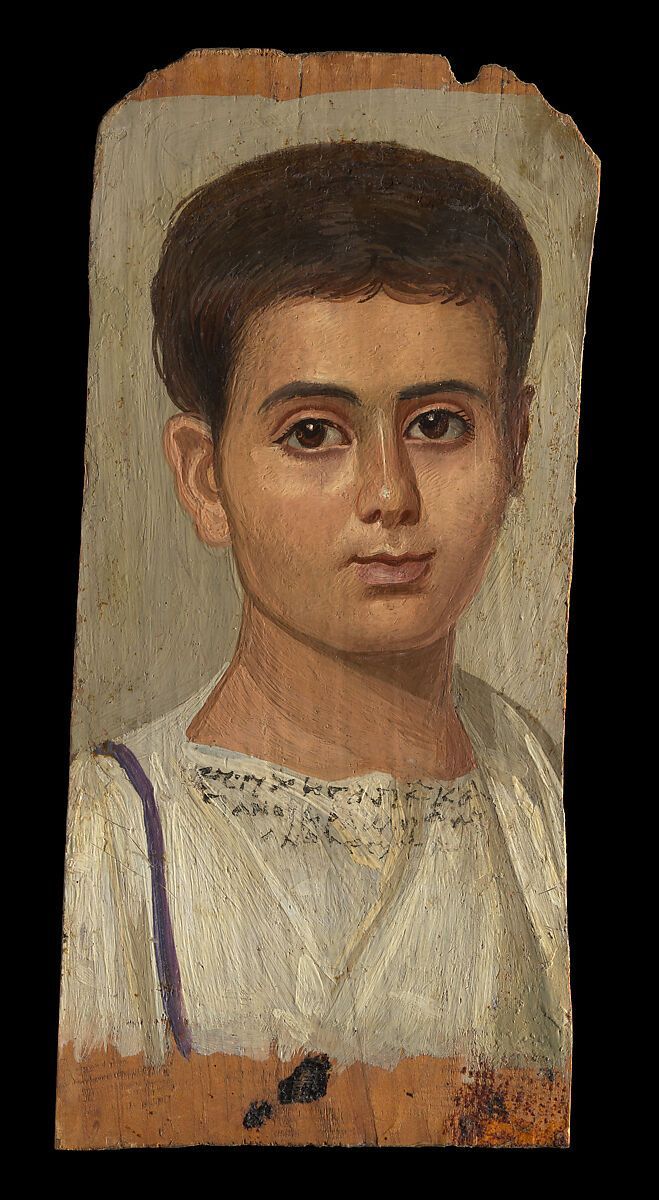
When a person died, the portrait panel was placed over the face of the mummy with parts of the outermost wrapping holding it in place. This implies Egyptian beliefs about the afterlife. metmuseum.org/art/collection…
2
47

I turn 15 this year in my second incarnation, I am 35 years old. I support the social media ban but you will have to introduce the children to Nature worldwide and make Peace and maximal freedom and Outermost Outer Space is where it currently *is* rather than is-not.
6

it’s funny how Canada doesn’t border the EU single market because both Greenland and St. Pierre et Miquelon are overseas countries and territories, but Madagascar, Mozambique, and Brazil do because Mayotte, Réunion, and French Guiana are outermost regions.
Jun 13

Carney: The new world order will be built from Europe. Canada is the most European of non-European countries, and we are transforming our cooperation with the EU ... In a more dangerous and divided world, Canada has chosen to build and work in partnership with Europe.
1
42
1,947

Carlisle Course Notes:
*RAILS*
Outermost line being used from 1m to 2½f, 8 yards out on Old Stable Bend from innermost position. 5 yards out Mile Bend and 2 yards out New Stable Bend to top crossing, 6 yards out remainder of bend. Safety factor reduced for 7F start from 12 to 10 to fit stalls on outer line configuration.
*RACE DISTANCES*
3:20pm: 35y to 1m 6f 67y
3:50pm: 19y to 7f 192y
4:23pm: 19y to 6f 214y
4:58pm: 19y to 6f 214y
*STALLS*
1m3f - Outside Remainder - Inside
*WEATHER*
7mm of rainfall Thursday. Dry since. Forecast: Mix of cloud and sunny spells Sunday and Monday (19-21°C).
1
82

Oh, apparently they do have a touchpad attachment confirmed.
I get why SteamDeck is perfect for DPAD Facebuttons as outermost, since many (most) people playing handhelds play indie pixel art games on those tiny screens, right? I have no clue, but it makes sense.
1
11


(the corneocytes that form our outermost skin barrier).
Hyperkeratinization (thickening of the barrier): POU2F3 activates the proliferation and differentiation of keratinocytes in the epidermis, resulting in a significantly thicker, extremely dense, and resilient stratum corneum.
1
1
5

Huh? Carbon dates can only reveal how old a tree was if you carbon date both the innermost ring and the outermost ring and then do the math.
2
2
81

This is a 3D representation of 2D space and 1D time as 3D spacetime. What we experience is our own lightcone in 3D. What you see as horizontal planes on the picture become spheres around us. Each spherical layer is at a concentric larger radius. Light emitted from a source anywhere at such layer of the backward lightcone will arrive with the same light traveltime to us NOW. Light emitted from us will arrive anywhere at such layer of the future lightcone after the same traveltime.
The backward lightcone is unique for every observer. It is the 3D reality out of the 4D spacetime that is causal relevant for us.
If we assume space as expanding, then every observer has its own finite large backward lightcone where the outermost layer is the start of the universe. Under assumption of homogeneity of the cosmos this makes that for every observer the backward lightcone is isotropic and thus balanced. There can't be any gravitational acceleration from an isotropic backward lightcone.
1
81

**Abstract**
Existing approaches to connecting Bitcoin’s monetary soundness with Dogecoin’s transactional velocity rely on fragile bridges, wrapped assets, or competing maximalist narratives that force an unnecessary tradeoff between security and usability. This paper proposes a fundamentally different architecture: **The Recursive Monetary Onion**, a three-layer holographic system that treats Bitcoin and Dogecoin as interdependent expressions of a single self-similar monetary organism.
The architecture is organized around three concentric layers. At the core sits the **immutable singularity (x⁰ = x¹ ❤️)**, represented by Bitcoin L1, which functions as the final settlement anchor and vacuum bias equivalent — the unchanging ground state from which all value and security radiate. Surrounding it is the **radial bridge layer (x² 💚)**, implemented as an L0 protocol with a master node network. This mediator layer actively converts external stress (congestion, attacks, peg pressure, and quantum threats) into protected depth through scar nucleation, while enforcing directional radial flow between the core and the outer ring. The outermost layer is the **high-velocity transactional ring (x³ 💙)**, embodied by Dogecoin L1 and its sub-node miners, which delivers fast, low-friction, memetic usability while remaining recursively tethered to the Bitcoin core through cryptographic commitments and entanglement proofs.
By embedding Dogecoin state directly inside Bitcoin blocks as self-similar Onion units, the system achieves depth-over-width scaling: most security and complexity lives inward, while the outer layer remains lightweight and responsive. Faults and stresses no longer degrade the system; they nucleate additional protected depth, making the bridge progressively anti-fragile over time. The result is a unified monetary architecture that preserves Bitcoin’s soundness without sacrificing Dogecoin’s velocity, and offers a concrete path toward recursive, holographically secured cross-layer money.
1
1
1
100
The EDAR gene controls the ectodysplasin signaling pathway. In the embryo, this pathway is precisely responsible for determining the density and structure of all ectodermal appendages (tissues that arise from the outermost germ layer). When this gene is upregulated,
1
1
13

20h
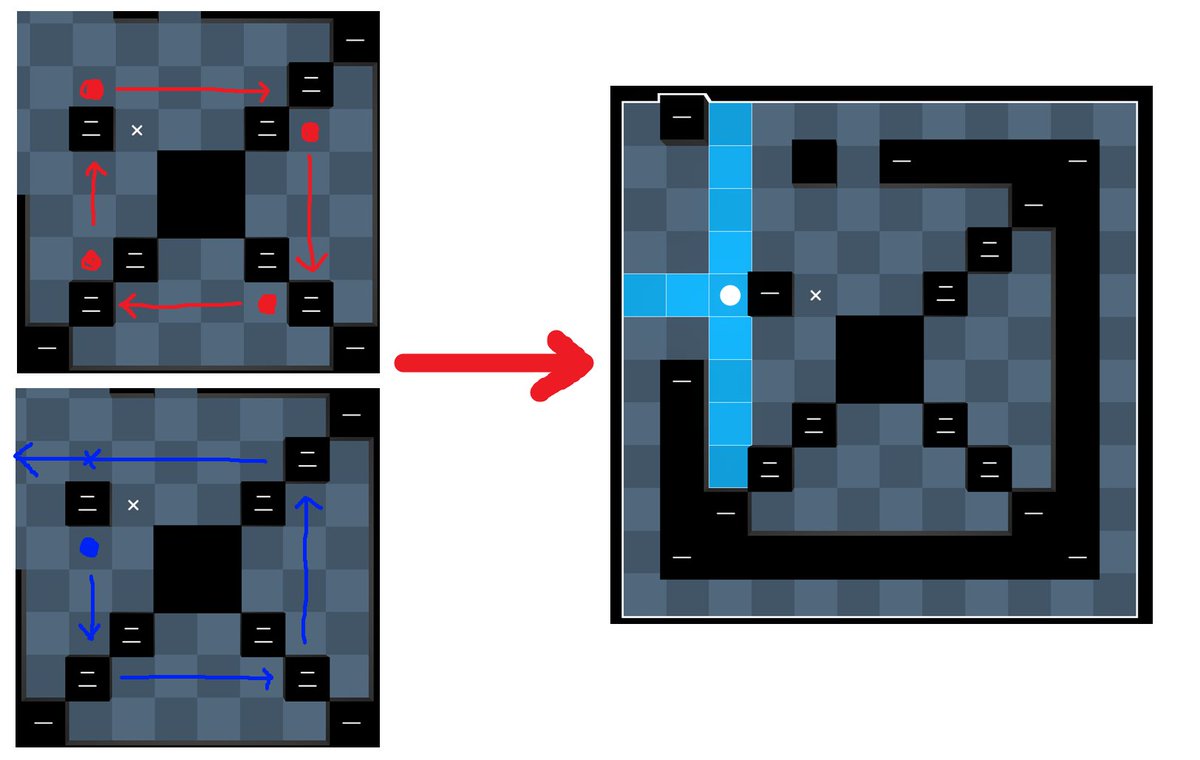
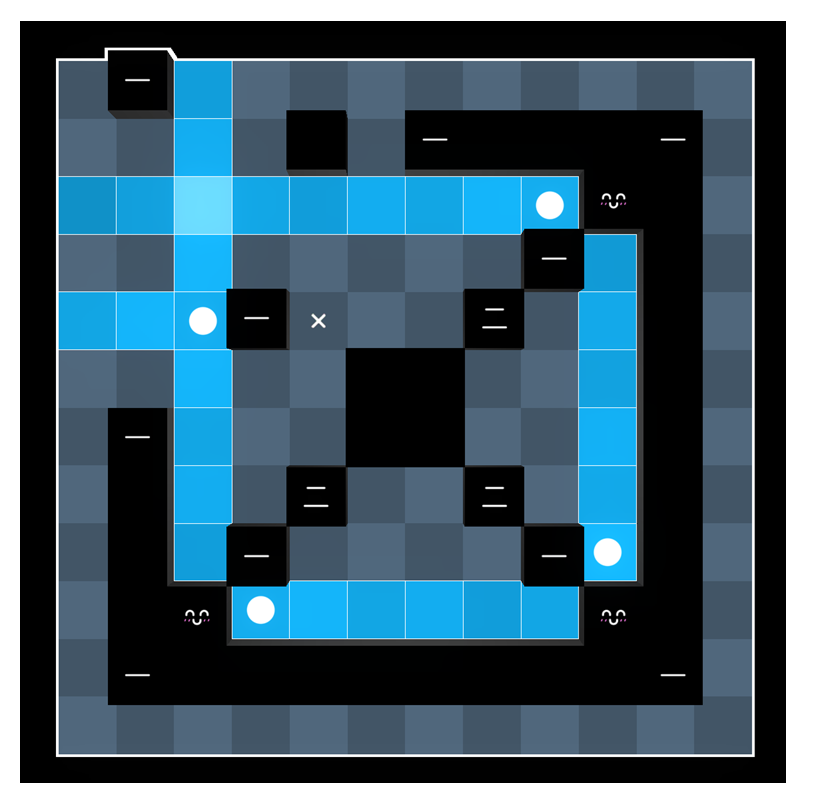
Next, consider the middle lane. Since the loop circles back onto the "2" clue, you can only put one light either above or below the "2". Thus, the leftover second light is forced to be located on the left of the "2". Thus, the configuration of the outermost loop is confirmed
1
47