
Ken retweeted

Jun 11
$QNT
Quantum computing coming, this is why we need
#Overledger #QuantFlow #Fusion25 #PayScript #QuantNet
cybersecure, crypto-agile interoperability, DYOR
SQC.com.au

2
25
1,016


$QNT cooking real institutional alpha while Chainlink clowns around with "oracles" nobody asked for
Quant's dropping PayScript & Quant Flow programmable money for banks & CBDCs
BoE/UK Treasury pilots hitting hard,central banks locked in. Enterprise adoption n staking incoming👀
1
49
1,029

May 27
🧿💥 $QNT Truly amazing tech coming! Ever invoiced a client & waited so long for payment? Annoying.
Process: Create the invoice with Quant Flow PayScript.
Then use Overledger Tokenise to turn it into a tradable digital asset.
Sell or finance it for fast cash. 💪
1/2 🧵
1
23
178
5,041
May 21
$QNT | #Quant use case
The ideal working environment for programmable, automated workflow #QuantFlow #Payscript #QuantNet #Fusion #Overledger

#Liquidity is the lifeblood of #SupplyChains, enabling firms to make timely payments without waiting for cash inflows. How do changes in #MoneyElasticity affect firms and the economy? Explore our latest #BIS working paper: bit.ly/4dtWHMf

1
1
34
989

May 11
👀 All live and in use today 👀
#Overledger: the world’s first interoperable blockchain operating system
#PayScript: the world’s first payment language powering #programmability
#QuantNet: the world’s first #interbanksettlement infrastructure
The future of finance $QNT
May 11

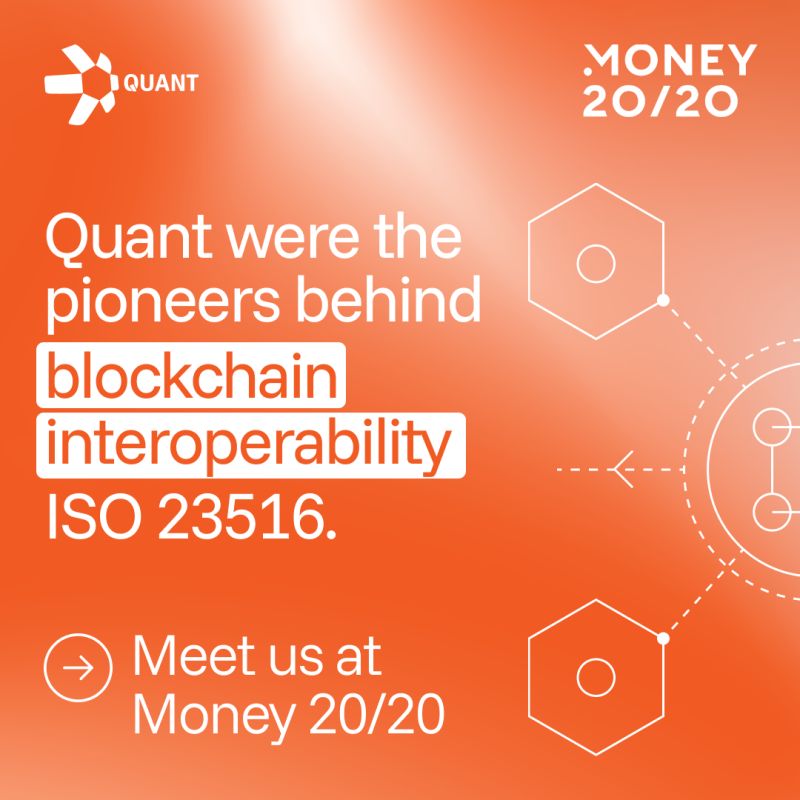
Quant was instrumental is building ISO/TS 23516:2026 (ISO 82098), the international standard for #blockchaininteroperability.
We built #Overledger: the world’s first interoperable blockchain operating system.
We invented #PayScript: the world’s first payment language powering #programmability.
Now #QuantNet: the world’s first #interbanksettlement infrastructure.
All live and in use today.
Join us at stand 5E10 to learn what Quant can do for you: meetings-eu1.hubspot.com/len…
#Money2020
8
105
1,758

May 11
Quant was instrumental is building ISO/TS 23516:2026 (ISO 82098), the international standard for #blockchaininteroperability.
We built #Overledger: the world’s first interoperable blockchain operating system.
We invented #PayScript: the world’s first payment language powering #programmability.
Now #QuantNet: the world’s first #interbanksettlement infrastructure.
All live and in use today.
Join us at stand 5E10 to learn what Quant can do for you: meetings-eu1.hubspot.com/len…
#Money2020
150
622
23,168

May 10
Quant is actively applied to RWA/tokenization. It enables cross-chain orchestration, programmable money (e.g., Quant Flow/PayScript), mapping to traditional finance rails, and institutional workflows for tokenized deposits, bonds, and securities. Partnerships include major banks
2
56

May 10
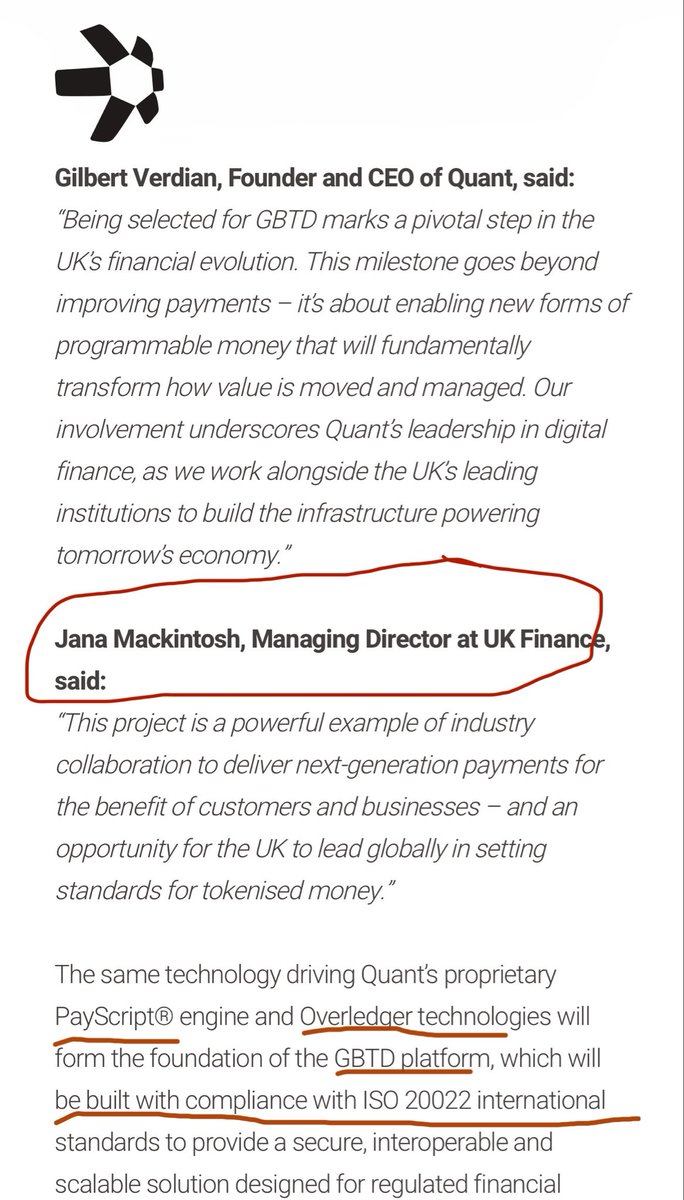
Uk Finance Jana Mackintosh at UK Parliament. #qnt #quant #ukfinance #iso20022 #payscript #overledger Natwest Connections🤔 #natwest next Post Pontes and Appia clues🤔#pontes #appia @DPGmaximus
6
47
1,695

May 7
Quant’s Role in Financial Services (as revealed by this agreement)
1. Quant is a “middleware” layer, not a regulated payment institution
Quant is registered with the FCA only as a PSD Agent of Yapily Connect Ltd (FRN: 1038324 vs Yapily’s FRN: 827001). This is significant — it means Quant cannot provide payment or account information services independently. It is legally dependent on Yapily’s regulatory licence to do anything involving open banking. This tells you Quant’s core value is not in financial regulation, but in the programmable logic layer sitting on top of it.
2. Quant’s actual product: programmable money automation
The agreement repeatedly references PayScript® — Quant’s proprietary scripting framework for automating payment workflows. This is the real intellectual property here. Quant is essentially building a “programmable money” platform — letting businesses define rules for how money moves (when, where, how much, triggered by what condition), rather than just moving it. This is a distinctly different value proposition from Yapily (pipes) or a bank (custody).
3. The layered architecture this reveals
The agreement implies a clear three-layer stack:
•Layer 1 — Banks (ASPSPs): Barclays, HSBC, etc. — hold the money
•Layer 2 — Yapily UK: Regulated open banking infrastructure — the licensed “pipe” to those banks
•Layer 3 — Quant Flow: Programmable automation logic — the “brain” that decides what to do with those pipes
•Customer sits on top, using Quant Flow to orchestrate it all
Quant occupies a higher abstraction layer than Yapily — it’s not competing with Yapily, it’s built on top of it.
4. Quant is positioning itself as enterprise/B2B infrastructure, not consumer fintech
Several clauses confirm this. Clause 13.2 explicitly warrants that the customer is not a “consumer” under Payment Services Regulations — this agreement is purely B2B. Combined with the references to bulk payments, PayScript® automation, and compliance obligations (KYC, AML, sanctions screening), this signals Quant’s target market is corporates, banks, and institutional clients automating complex treasury or payment workflows.
5. European regulatory reach through Yapily EU
For EEA customers, Quant relies on Yapily Connect UAB (Lithuania), which holds a Bank of Lithuania payment institution licence. This means Quant’s platform has regulatory coverage across both the UK (post-Brexit) and the EU, without needing its own licences in either jurisdiction. It’s a lean, asset-light regulatory model.
6. Liability structure tells you where the real risk sits
Quant explicitly disclaims liability for Yapily’s services, ASPSP failures, transaction success, and data accuracy (clause 16). Its liability cap is just 125% of annual fees paid (clause 16.4). This is a classic infrastructure/middleware liability posture — Quant is saying: “We provide the logic layer; the regulated pipes and the money aren’t our risk.”
# Implicit Strategic Picture:
Putting it together, Quant appears to be building something analogous to what Stripe is to card payments — but for open banking and programmable money. Yapily provides the regulated connectivity (like Visa/Mastercard networks), and Quant provides the developer-friendly logic layer (like Stripe’s APIs and webhooks) on top. The PayScript® trademark is the clearest signal that Quant sees its proprietary scripting language as its long-term moat — not the banking licence, which it outsources entirely to Yapily.
quant.network/quant-flow-ter…
9
49
792

May 6
$QNT
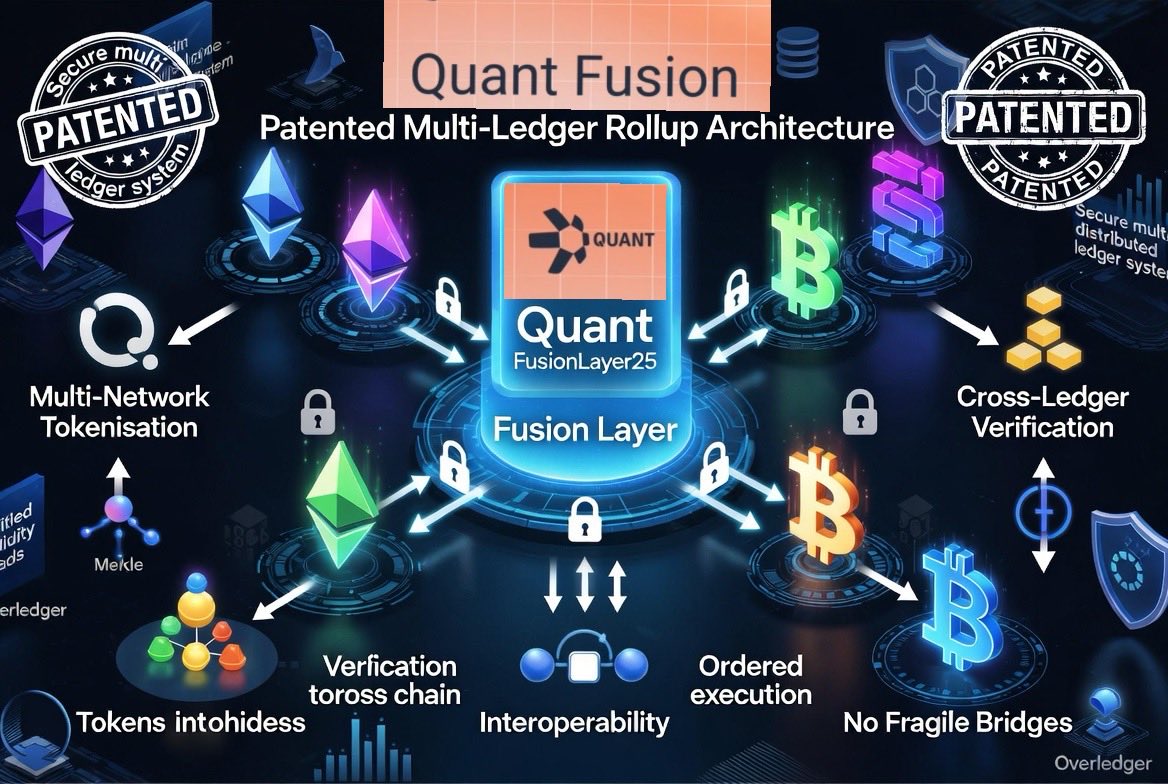
The question of the day… is @FusionLayer25 a patented technology?
ABSOLUTELY!!!
Through the
“Secure multi distributed ledger system” patent!
Quant Fusion (particularly its multi-ledger rollup architecture and multi-network tokenisation capabilities), is a core part of the Overledger platform.
This US and Japanese patent application covers methods, systems, and technologies for securely executing instructions (e.g., transactions or operations) across two or more different distributed ledgers (DLTs/blockchains).
It includes verification records published back to the ledgers for consistency, security, and robustness (handling forks, Merkle trees/roots for integrity, ordering of executions, and replay mechanisms).
Key Coverage
-Monitoring multiple DLTs for instructions.
-Verifying and executing those instructions in a secure, ordered way.
-Storing results and publishing cross-ledger verification records to ensure trustworthiness and control of user/data across ledgers.
Quant explicitly links this patent (and related filings) to Quant Fusion:
-It protects Fusion’s rollup technology, the foundational multi-ledger rollup architecture that enables seamless interoperability, asset fusion, token issuance/transfer across public/permissioned chains, unified liquidity, and multi-network tokenisation without fragile bridges or wrappers.
-Fusion builds on Overledger’s interoperability foundation, turning fragmented chains into a unified institutional-grade platform (e.g., cross-chain trading, privacy-preserving smart contracts, compliance features).
Broader Context for Quant’s Products:
-Overledger (the core DLT gateway/API platform for multi-chain interoperability, mDapps, smart contract execution, etc.) incorporates this multi-DLT technology as a foundational capability. The patent strengthens the overall platform but is most directly tied to advanced features in Fusion.
-Other products like Quant Flow or PayScript (programmable money, stablecoins, etc.) may benefit indirectly but are not the primary focus of this patent.
This aligns with Quant’s patent strategy to protect core interoperability innovations for enterprise use cases like CBDCs, tokenized assets, and cross-ledger operations.
Patents like this secure the enabling multi-DLT mechanisms rather than covering every product detail.
So yeah…. There will be one unique solution called @FusionLayer25
Take note! This team means business!
15
105
1,479

4. Banking and innovative financial products
- Banks can offer accounts with customized rules without changing their core systems (using PayScript, a specific language to program money).
- Intraday liquidity, automated management of tokenized deposits or bonds.
- Automatic compliance: block or release funds according to regulations or events.
1
2
49

Apr 23
Pieniądz, który myśli: GBTD to największy eksperyment monetarny w Europie
Na IFGS2026 w Londynie Gilbert Verdian z Quant Network zaprezentował Great British Tokenised Deposits (GBTD) projekt który może zdefiniować, jak wygląda pieniądz bankowy w erze blockchainu.
Czym jest GBTD
To nie stablecoin, nie CBDC.
To tokenizowany depozyt bankowy cyfrowa reprezentacja zwykłego funta sterlingowego, który nadal siedzi na bilansie banku komercyjnego, ale jest zapisany na blockchainie i może być programowany.
Pilot prowadzony przez UK Finance z udziałem Barclays, HSBC, Lloyds, NatWest, Nationwide i Santander testuje trzy przypadki użycia do połowy 2026 roku:
Płatności na platformach handlowych – dokonujesz zakupu online, a pieniądze są przekazywane sprzedawcy dopiero po dostarczeniu towaru (atomowa usługa escrow bez pośrednika)
Refinansowanie kredytu hipotecznego – proces ten został skrócony z kilku tygodni do kilku godzin, co eliminuje ryzyko oszustw związanych z przeniesieniem własności nieruchomości
Rozliczanie aktywów cyfrowych – bezpośrednie rozliczanie aktywów tokenizowanych (np. cyfrowych obligacji skarbowych DIGIT) w pieniądzu bankowym
Dlaczego to ważniejsze niż się wydaje
Infrastrukturę buduje Quant Network na bazie Overledger i PayScript, zgodnie z ISO 20022 co oznacza pełną interoperacyjność z RTGS, Faster Payments i Open Banking.
Innymi słowy: to nie zamknięty eksperyment, ale warstwa, która może połączyć tradycyjny system płatniczy z programowalnym pieniądzem.
Kluczowa różnica w porównaniu ze stablecoinami: tokenizowane depozyty nie opuszczają bilansu banku, więc użytkownik nadal korzysta z ochrony FSCS (ubezpieczenie depozytów). Stablecoin to zobowiązanie emitenta. Tokenizowany depozyt to nadal twój pieniądz w banku – tylko w nowej formie.
GBTD to „trzecia droga" między detalową gotówką a kryptowalutami pieniądz, który zachowuje zaufanie systemu bankowego, ale zyskuje programowalność blockchainu.
Jeśli pilot do połowy 2026 roku zakończy się sukcesem, UK może jako pierwsze uruchomić tokenizowane depozyty bankowe w masowej skali model, który prawdopodobnie skopiuje reszta Europy i nie tylko.
5 Dec 2025

🇬🇧 QUANT ($QNT) WYBRANY PRZEZ UK FINANCE !
To oficjalne.
To nie plotki.
Stowarzyszenie UK Finance (zrzeszające Barclays, HSBC, Lloyds, Santander itd.) wybrało Quant do budowy infrastruktury dla Tokenised Sterling Deposits (GBTD).
Co robi Quant ?
Overledger łączy systemy bankowe z blockchainem.
Dostarcza technologię dla Programowalnego Pieniądza (PayScript).
Tworzy standard tokenów dla całego sektora bankowego w UK.
Cel ?
Wprowadzenie "inteligentnego funta" do 2026 roku, który pozwoli na automatyczne, bezpieczne rozliczenia (np. przy kupnie domu czy handlu aktywami).
1
1
12
840
Apr 22
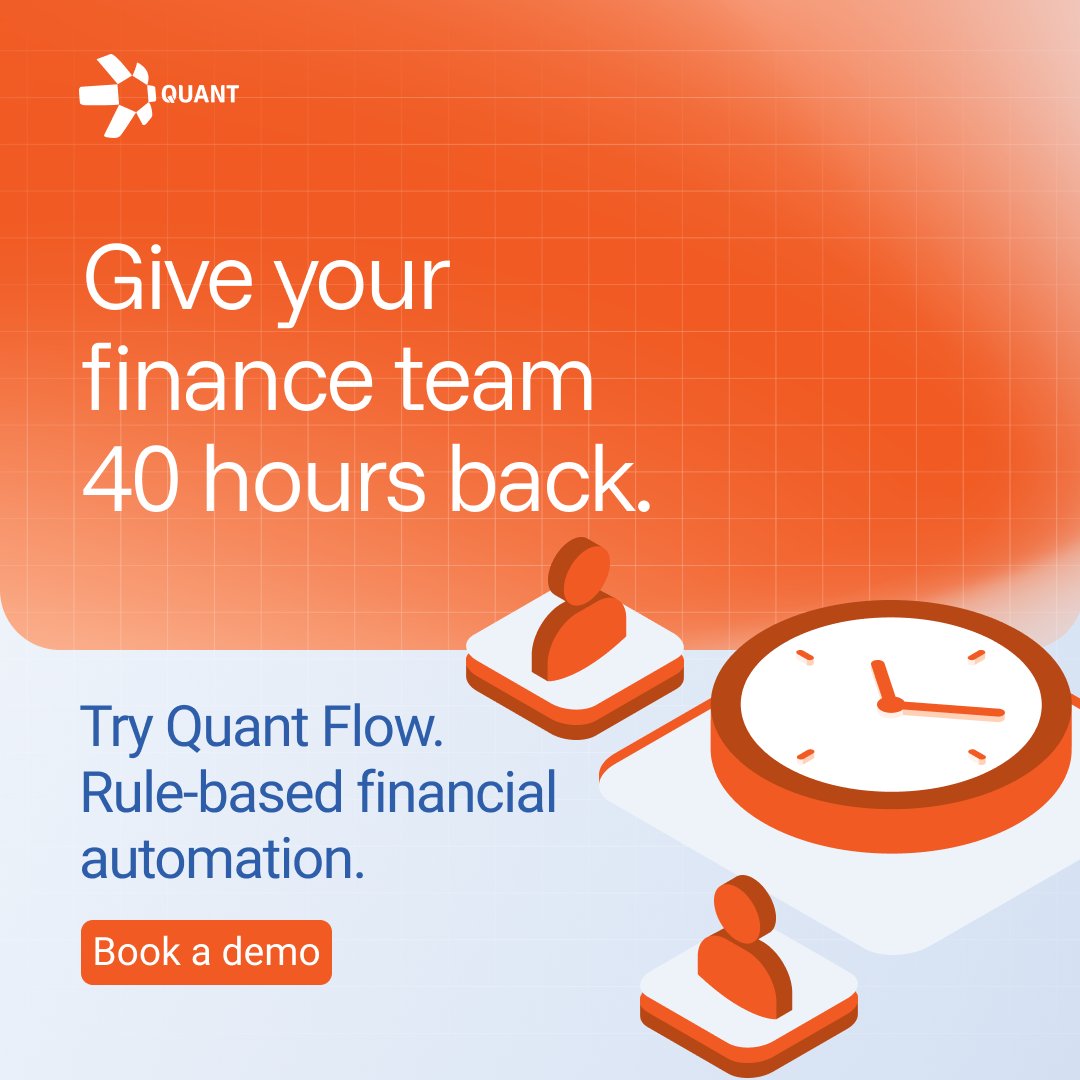
Year end is a scramble for most finance teams, but it doesn't have to be.
Modern finance still runs on infrastructure built in the 1960s. The result is hours lost to manual reconciliation, cash sitting idle, and last-minute #taxprovisions that should have been handled automatically.
Quant Flow gives finance teams up to 40 hours back every month through programmable automation built on our PayScript® engine.
Automated #cashmanagement. Automatic tax provisioning. Zero idle money.
Book a conversation with our team today, and make your next year end the straightforward one: meetings-eu1.hubspot.com/qua…
#QuantFlow #CFOs #Programmability
82
435
14,106

Apr 20
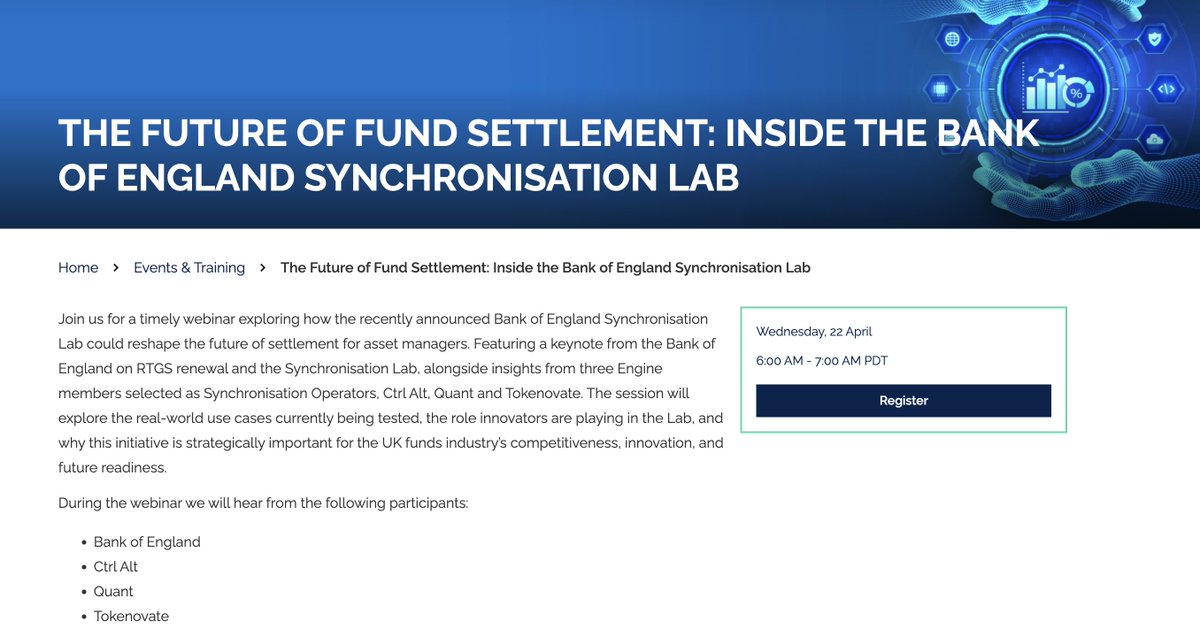
🎙️Another event with Bank of England & $QNT sharing the stage
This time they're discussing around the Sync Lab.
🏦We've seen clear development of the ties between Quant & Bank of England the past few years
And with what we know about the Sync Lab?
Quant fits PERFECTLY within the schemes here.
The Sync Lab is all about connecting legacy to DLT.
And we've already seen Bank of England use Quant for this via Project Rosalind.
And let's not forget... Quant is technically serving 2 roles within Sync Lab.
Firstly is liquidity rebalancing & provision thru Quant Flow and Payscript.
But then also interoperability of RTGS with tokenized RWAs via GBTD orchestration.
That alone shows you the unique importance that Quant holds here
Should be an exciting panel coming up,
Let's see what more is revealed
39
234
5,205

Token Necessity Claim is partially fair but outdated and incomplete.
Early Overledger licensing did allow some fiat-only enterprise contracts (the “buy-and-lock” model the thread mentions).
However, since Fusion Layer development (2025–2026), QNT is explicitly required for key network functions:Trusted Node Program (staking for validators/node operators) — confirmed in official docs and recent Fusion updates.
Network security and incentives in the Layer 2.5 architecture.
Interoperability licensing and access for full programmable money features (Quant Flow, PayScript). Official sources (quant.network and Fusion docs) now describe QNT as the native token that secures the network and aligns incentives for node operators and developers. It is no longer just a fundraising tool — it is structural to the decentralized interoperability vision.
2
3
77

Apr 10
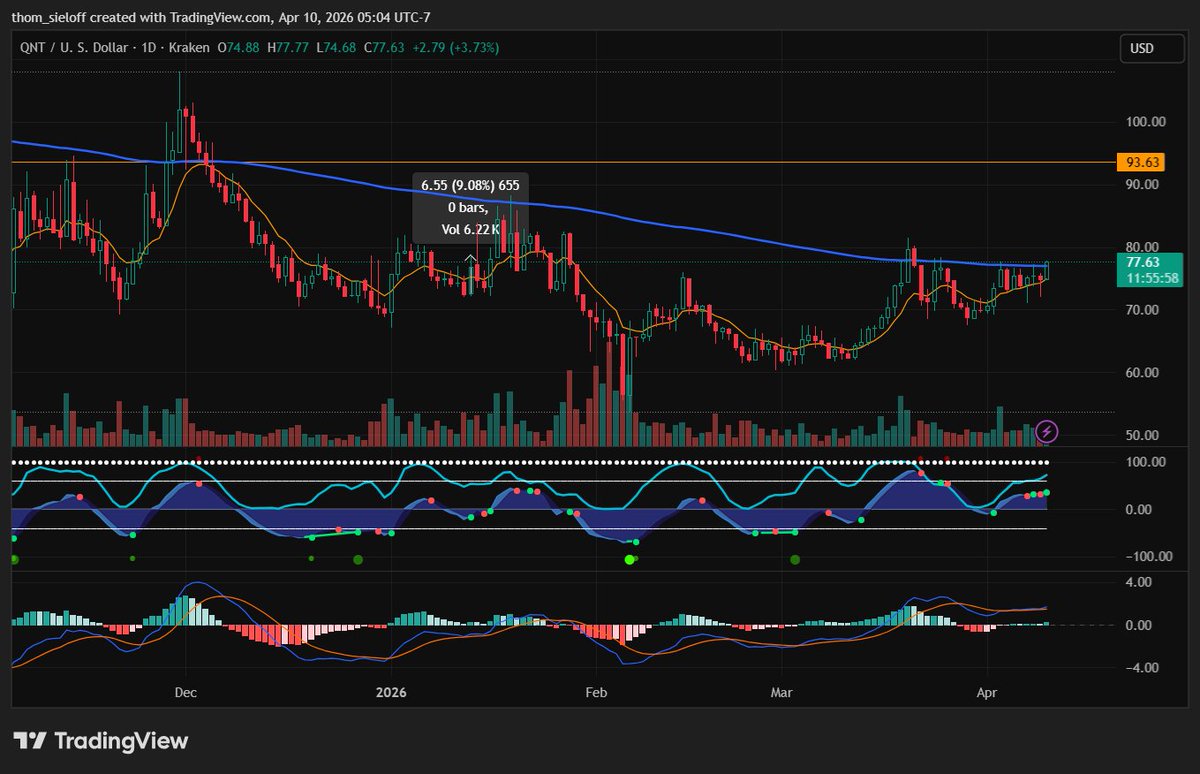
$QNT Price: $77.63 | 24h: 2.50% (CoinGecko, ~7:45 AM ET)
The Bank of Japan, in partnership with Dentsu Soken, is using Quant's Overledger technology to support a national-level CBDC and programmable payment infrastructure experiment.
The Bank of England's Synchronisation Lab test, which began in February 2026, is simulating atomic settlement for multi-bank treasury operations using Quant's automation platforms, Quant Flow and PayScript®. Overledger Fusion mainnet launch is still anticipated "within months."
(CoinMarketCap)
1
6
360