


Pdpp, se achar manda tb… Eu lembro que era Brasil 2 x 1 Marrocos e Alemanha 5 x 0 Curacao
1
118


Jun 10
Search this and read it and stop your nonsense further.
Section 3 of the Prevention of Damage to Public Property Act, 1984 (PDPP Act)
1
14
Jun 10
Section 3 of the Prevention of Damage to Public Property Act, 1984 (PDPP Act)
6

Jun 9
Baramulla Police cracks down on illegal mining; 5 vehicles seized in Kunzer. FIR No. 75/2026 registered at PS Kunzer under relevant provisions of BNS and PDPP Act. Sustained action against illegal mining continues. #BaramullaPolice #IllegalMining

146

Baramulla Police cracks down on illegal mining; 5 vehicles seized in Kunzer. FIR No. 75/2026 registered at PS Kunzer under relevant provisions of BNS and PDPP Act. Sustained action against illegal mining continues. #BaramullaPolice
#IllegalMining

3
13
395

🔴Haseena Begum Detained Under Public Safety Act, Shifted to District Jail Bhaderwah
Police in Baramulla district have detained 𝗛𝗮𝘀𝗲𝗲𝗻𝗮 𝗕𝗲𝗴𝘂𝗺 a resident of Sheeri in Narvaw tehsil, under the Public Safety Act (PSA).
According to officials, the detention order was issued by the District Magistrate, Baramulla, following an assessment of her alleged involvement in activities considered prejudicial to security and public order.
Police said she was named in multiple cases registered under various provisions of the UAPA, IPC, PDPP Act, and Sabotage Act.
After the PSA warrant was executed, she was taken into preventive custody and shifted to District Jail Bhaderwah under security arrangements.
Authorities stated that investigations had indicated alleged links with anti-national elements and activities aimed at disturbing public order.

2
195

Jun 3
#SurendranathCollegeControversy|
Muchipara Police Station has registered a case against TMC leader and former governing body member Debasish Banerjee and Paritosh Dutta, a vendor of Surendranath College.
According to the complaint, the accused persons allegedly entered into a criminal conspiracy and, in furtherance of that conspiracy, forcefully locked several rooms on the ground floor as well as a union room of the college, using them for their own purposes.
On 2 June 2026, at around 4:30 PM, college authorities broke open the padlock of one of the ground-floor rooms to carry out cleaning work ahead of the monsoon season. During the process, they allegedly discovered two suitcases filled with soiled and damaged Indian currency notes.
Subsequently, at around 9:45 PM, college authorities, along with the Principal and students, conducted a further inspection and allegedly recovered a single-shot country-made firearm from the premises.
The Principal also alleged that the accused persons used to threaten college authorities whenever they were asked to hand over the keys to those rooms.
Based on the complaint, a case has been registered under Sections 61(2), 329(4), 324(5), and 351(2) of the Bharatiya Nyaya Sanhita (BNS), along with Sections 25(1-A) and 35 of the Arms Act, and Section 3 of the Prevention of Damage to Public Property (PDPP) Act.
Debasish Banerjee 👇

Jun 2

Now this is massive!
After the discovery of lakhs of rupees in cash damaged by termites in the union room, and the recovery of a semi-furnished bedroom inside the college premises, police have now seized a firearm from the student union room of Surendranath College.
1
37
121
7,325

An interesting feature of the lattice is that its periodic state and its maximally polarized state are the same state viewed from different scales.
Locally, every cluster occupies one of the two extreme balance classes:
4p : 0d
or
0p : 4d
Each cluster is completely uniform. There is no internal mixture. Every position agrees with every other position. The clusters therefore occupy the most polarized states available within the balance space.
Yet when these maximally polarized clusters alternate across the lattice, a periodic structure emerges:
4p : 0d | 0p : 4d | 4p : 0d | 0p : 4d …
From the perspective of an individual cluster, the system is maximally polarized. From the perspective of the larger field, the system is maximally regular.
This creates a structural duality.
The strongest possible local distinctions generate the most uniform large-scale organization.
The periodic state is produced by local opposition. The repetition exists because neighboring clusters occupy opposite extreme states.
In this sense, periodicity and polarization are different descriptions of the same organization viewed at different scales.
Locally, the lattice maximizes distinction.
Globally, the lattice maximizes repetition.
The periodic field is therefore a state in which difference itself becomes the source of regularity.
This observation suggests that continuity need not arise from uniformity. Continuity may also arise from the stable organization of oppositions. The lattice remains coherent because the differences between neighboring states are organized into a repeating structure.
That may be why the periodic state appears to contain the conditions for transformation. Every local boundary already contains the maximum distinction available within the balance space. The field is globally regular because it is locally saturated with opposition. The same organization that produces perfect repetition also concentrates the greatest possible relational tension at every boundary.
That is the paradox: the state of greatest large-scale order is simultaneously the state of greatest local polarity.
Another Point
Each cluster contains four positions.
Each position can occupy one of two states:
p or d
Because each position has two possibilities, the cluster generates:
2^4 = 16
possible configurations.
These sixteen configurations describe the local state space of the cluster. They represent every possible arrangement of four binary positions.
However, many of those configurations differ only in arrangement while preserving the same overall balance between p and d. For example:
pppd
pdpp
dppp
ppdp
are different configurations, but they all contain three p’s and one d.
When the configurations are grouped according to overall pole composition rather than exact ordering, the sixteen configurations collapse into five balance classes:
4p : 0d
3p : 1d
2p : 2d
1p : 3d
0p : 4d
The important observation is that the cluster still contains only four positions.
Yet the organization of those four positions generates five possible balance states.
The fifth arises from the combinatorial organization of the four-position system itself.
In that sense, the fifth state is emergent. It is a property of the organization rather than a property of an additional component.
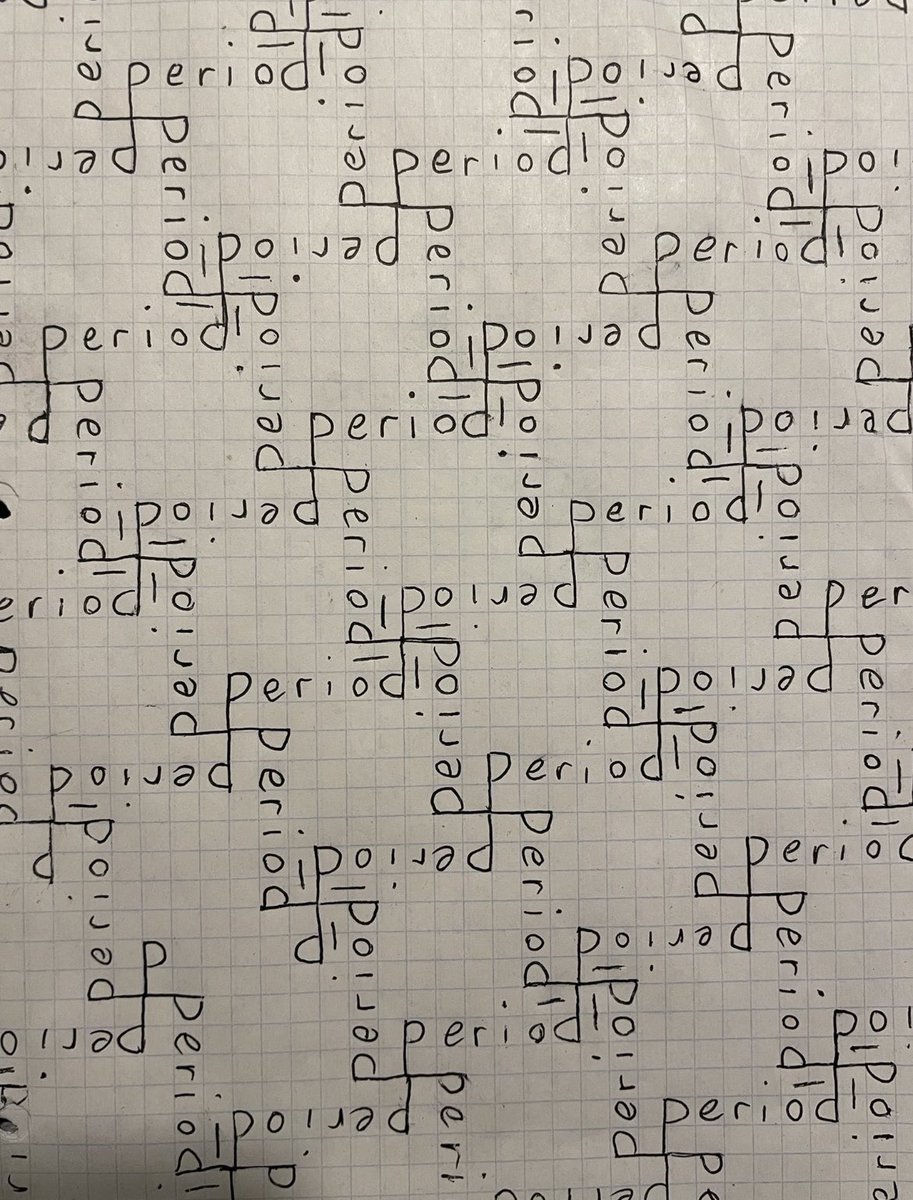
Each word sits between two clusters.
One cluster participates at one boundary of the word (p) and another participates at the opposite boundary (d).
Each cluster possesses sixteen local configurations and five balance classes.
The inner part of word (erio) therefore acts as a bridge between two independent balance spaces at the two boundaries of the word.
A transformation redistributes organization across the relationship connecting two neighboring clusters. The lattice starts w/ binary positions, but the interesting behavior emerges from the relationships among the resulting balance states rather than from the positions themselves.


philarchive.org/rec/PORMOT-2
The Period Lattice explores how higher-order organization can emerge from simple binary relationships distributed across a connected symbolic field. Each local cluster contains four positions capable of occupying one of two states, generating sixteen possible configurations. When grouped according to overall pole composition, these configurations collapse into five higher-order balance classes, illustrating how organizational structure may emerge from combinatorial relationships without the introduction of additional components. The lattice is organized through repeating instances of the word period, which participate between neighboring cluster organizations and connect local balance spaces into a larger relational field. Transformations therefore occur through relationships linking neighboring organizations rather than within isolated structures. Continuity is preserved through the larger organization even as local states reorganize. Particular attention is given to the periodic state, in which neighboring clusters occupy opposite maximally polarized balance classes. Although each cluster is locally uniform and maximally distinct from its neighbors, the resulting large-scale field exhibits perfect regularity through repetition. The strongest possible local distinctions therefore generate the most uniform large-scale organization. Periodicity and polarization emerge as complementary descriptions of the same structure viewed at different scales. The Period Lattice provides a symbolic model for examining how continuity, transformation, and coherent organization may arise through the stable arrangement of oppositions within connected relational systems. The resulting structure suggests that large-scale order need not emerge from local sameness, but may instead emerge from the consistent organization of difference.
1
1
5
808
Transformation occurs inside & is reflected at the boundaries.
feature of the lattice: its periodic state & its maximally polarized state are the same state viewed from different scales.
Locally, every cluster occupies one of the two extreme balance classes:
4p : 0d
or
0p : 4d
Each cluster is completely uniform. There is no internal mixture. Every position agrees with every other position. The clusters therefore occupy the most polarized states available within the balance space.
Yet when these maximally polarized clusters alternate across the lattice, a periodic structure emerges:
4p : 0d | 0p : 4d | 4p : 0d | 0p : 4d …
From the perspective of an individual cluster, the system is maximally polarized. From the perspective of the larger field, the system is maximally regular.
This creates a structural duality.
The strongest possible local distinctions generate the most uniform large-scale organization.
The periodic state is produced by local opposition. The repetition exists because neighboring clusters occupy opposite extreme states.
In this sense, periodicity and polarization are different descriptions of the same organization viewed at different scales.
Locally, the lattice maximizes distinction.
Globally, the lattice maximizes repetition.
The periodic field is therefore a state in which difference itself becomes the source of regularity.
This observation suggests continuity need not arise from uniformity. It may also arise from the stable organization of oppositions. The lattice remains coherent because the differences between neighboring states are organized into a repeating structure.
That may be why the periodic state appears to contain the conditions for transformation. Every local boundary already contains the maximum distinction available within the balance space. The field is globally regular because it is locally saturated with opposition. The same organization that produces perfect repetition also concentrates the greatest possible relational tension at every boundary.
That is the paradox: the state of greatest large-scale order is simultaneously the state of greatest local polarity.
Another Point
Each cluster contains four positions.
Each position can occupy one of two states:
p or d
Because each position has two possibilities, the cluster generates:
2^4 = 16
possible configurations.
These sixteen configurations describe the local state space of the cluster. They represent every possible arrangement of four binary positions.
However, many of those configurations differ only in arrangement while preserving the same overall balance between p and d. For example:
pppd
pdpp
dppp
ppdp
are different configurations, but they all contain three p’s and one d.
When the configurations are grouped according to overall pole composition rather than exact ordering, the sixteen configurations collapse into five balance classes:
4p : 0d
3p : 1d
2p : 2d
1p : 3d
0p : 4d
The important observation is that the cluster still contains only four positions.
Yet the organization of those four positions generates five possible balance states.
The fifth arises from the combinatorial organization of the four-position system itself.
In that sense, the fifth state is emergent. It is a property of the organization rather than a property of an additional component.
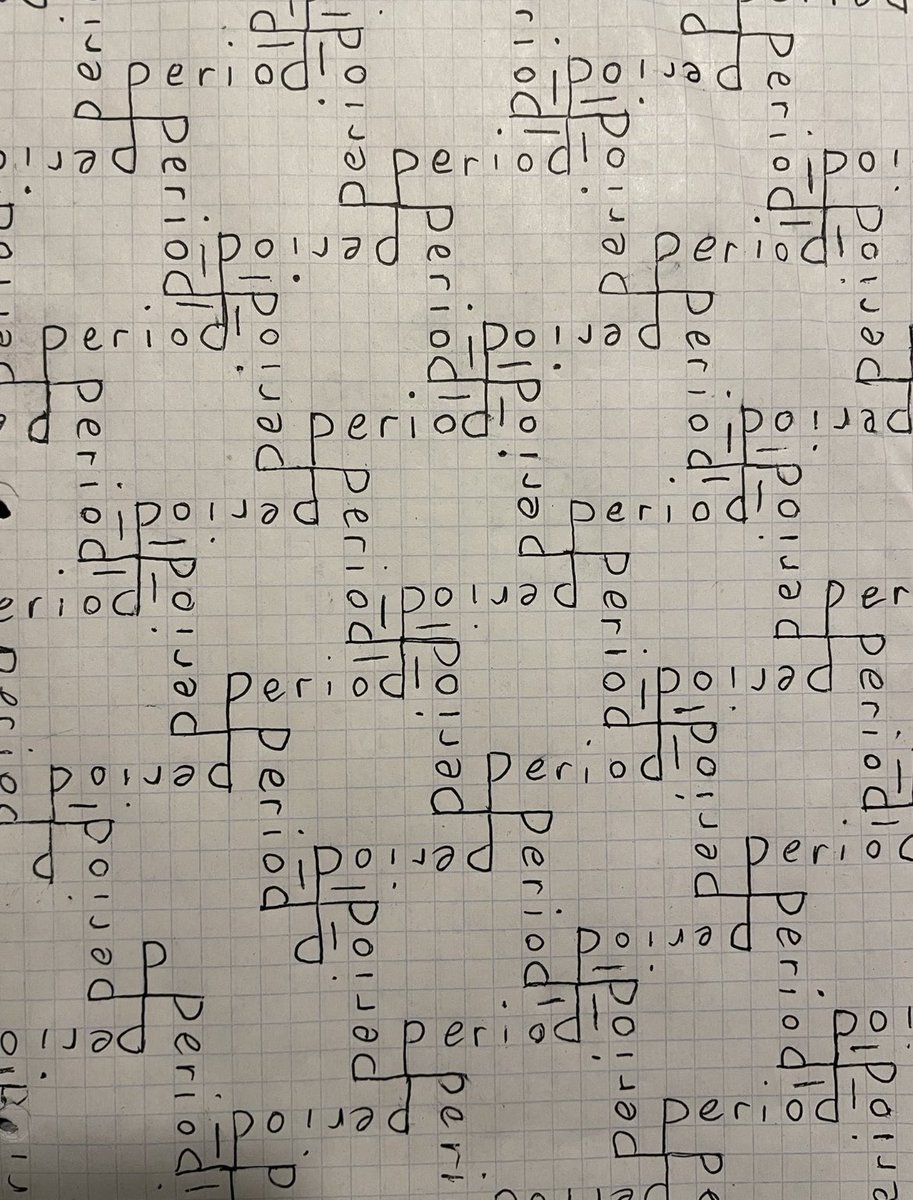
Each word sits between two clusters.
One cluster participates at one boundary of the word (p) and another participates at the opposite boundary (d).
Each cluster possesses sixteen local configurations and five balance classes.
The inner part of word (erio) therefore acts as a bridge between two independent balance spaces at the two boundaries of the word.
A transformation redistributes organization across the relationship connecting two neighboring clusters. The lattice starts w/ binary positions, but the interesting behavior emerges from the relationships among the resulting balance states rather than from the positions themselves.
1
4
103
philarchive.org/rec/PORMOT-2
An interesting feature of the lattice is that its periodic state and its maximally polarized state are the same state viewed from different scales.
Locally, every cluster occupies one of the two extreme balance classes:
4p : 0d
or
0p : 4d
Each cluster is completely uniform. There is no internal mixture. Every position agrees with every other position. The clusters therefore occupy the most polarized states available within the balance space.
Yet when these maximally polarized clusters alternate across the lattice, a periodic structure emerges:
4p : 0d | 0p : 4d | 4p : 0d | 0p : 4d …
From the perspective of an individual cluster, the system is maximally polarized. From the perspective of the larger field, the system is maximally regular.
This creates a structural duality.
The strongest possible local distinctions generate the most uniform large-scale organization.
The periodic state is produced by local opposition. The repetition exists because neighboring clusters occupy opposite extreme states.
In this sense, periodicity and polarization are different descriptions of the same organization viewed at different scales.
Locally, the lattice maximizes distinction.
Globally, the lattice maximizes repetition.
The periodic field is therefore a state in which difference itself becomes the source of regularity.
This observation suggests that continuity need not arise from uniformity. Continuity may also arise from the stable organization of oppositions. The lattice remains coherent because the differences between neighboring states are organized into a repeating structure.
That may be why the periodic state appears to contain the conditions for transformation. Every local boundary already contains the maximum distinction available within the balance space. The field is globally regular because it is locally saturated with opposition. The same organization that produces perfect repetition also concentrates the greatest possible relational tension at every boundary.
That is the paradox: the state of greatest large-scale order is simultaneously the state of greatest local polarity.
Another Point
Each cluster contains four positions.
Each position can occupy one of two states:
p or d
Because each position has two possibilities, the cluster generates:
2^4 = 16
possible configurations.
These sixteen configurations describe the local state space of the cluster. They represent every possible arrangement of four binary positions.
However, many of those configurations differ only in arrangement while preserving the same overall balance between p and d. For example:
pppd
pdpp
dppp
ppdp
are different configurations, but they all contain three p’s and one d.
When the configurations are grouped according to overall pole composition rather than exact ordering, the sixteen configurations collapse into five balance classes:
4p : 0d
3p : 1d
2p : 2d
1p : 3d
0p : 4d
The important observation is that the cluster still contains only four positions.
Yet the organization of those four positions generates five possible balance states.
The fifth arises from the combinatorial organization of the four-position system itself.
In that sense, the fifth state is emergent. It is a property of the organization rather than a property of an additional component.
Each word sits between two clusters.
One cluster participates at one boundary of the word (p) and another participates at the opposite boundary (d).
Each cluster possesses sixteen local configurations and five balance classes.
The inner part of word (erio) therefore acts as a bridge between two independent balance spaces at the two boundaries of the word.
A transformation redistributes organization across the relationship connecting two neighboring clusters. The lattice starts w/ binary positions, but the interesting behavior emerges from the relationships among the resulting balance states rather than from the positions themselves.
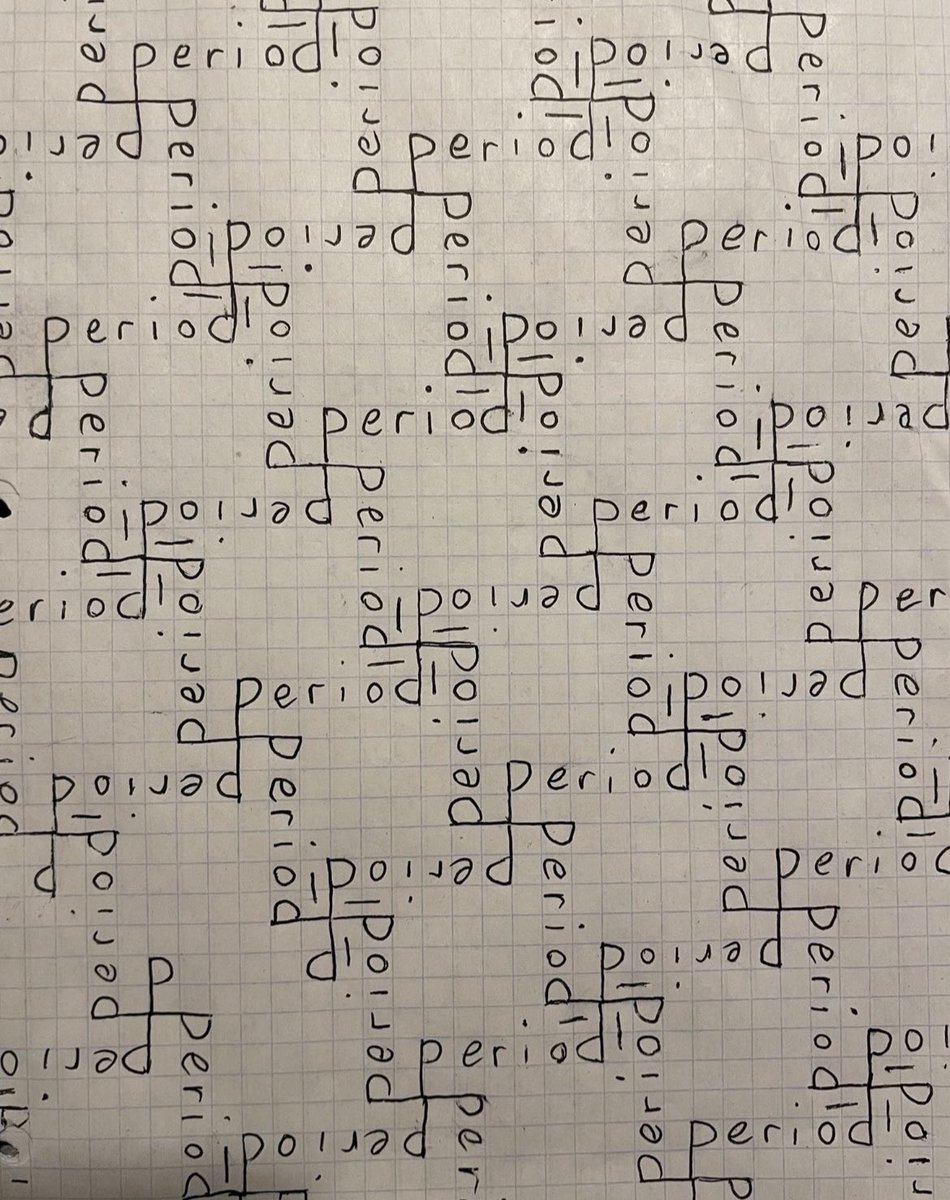
A period marks a boundary, a stop, a whole cycle. The end of a sentence. But that “point” in grammar that marks the end of a sentence is the very same point where the meaning of the sentence can be reflected back in its entirety. If you break the word open — p — erio — d — the center segment, “erio,” becomes the interesting part. That middle piece is the part that can flip. And how it flips reveals a structural rule that mirrors the logic of real phase transitions.
Reflection Reversal
When you reflect “erio,” you get a mirror: “ǝɹᴉo.”
When you reverse the order of the letters you get the opposite order: “oire.”
Neither of these creates the word “period” in a legible form with the p and d end poles.
But when you apply reflection and reversal at the same time, the middle segment becomes:
erio → oᴉɹǝ
In this orientation, the word is legible from a different perspective. Your brain allows you to see it even upside down, and pays no mind to the fact that the p became a d and the d became a p without moving at all. Their identities changed, but the structure in the grid remained intact.
The reflection and reversal both happening to the letters within the dipoles is the precise condition under which the poles on each side flip identity. The fact that there is a proper orientation, a way in which the word “period” is read, is a key detail. The lattice has an orientation. It matters which way is “forward” and which way is “back.”
The word is incoherent as “period” unless both the reflection and the reversal of the inner letters “erio” occur together. A single operation will not recover the orientation. Only the combined transformation yields the readable, structurally consistent arrangement. That directional requirement is what makes the identity flip non-arbitrary.
The word “period” has two poles: p on the left, d on the right. When the center undergoes the compound transformation:
• p becomes d
• d becomes p
both poles invert at the same instant.
This is a phase drop. In physics, a phase drop (or phase slip) is the moment an oscillating system suddenly loses alignment and jumps to a new orientation. The cycle’s identity resets.
The period lattice models the same structure. The poles (p and d) act like two orientation states. Their identity is their phase. The simultaneous reflection reversal is the phase drop. The flip misaligns neighbors, and the misalignment propagates as a reorientation wave.
One flip does not stay local. One change in the combination of ps or ds in the neighboring clusters causes its neighbors to reorient, then their neighbors, and so on. The whole field reorganizes to restore coherence. And because every junction’s meaning depends on how it connects to its neighbors, the identity flip does not just change the future of the lattice, it retroactively changes how earlier junctions are interpreted.
This is how many real emergent systems behave. Local rules under constraint produce large-scale reconfiguration.
The period lattice looks simple, or even silly, but it captures a real structural idea: identity changes only when the correct symmetry condition is met. Reflection and reversal in a system with an orientation, and the entire field updates.
Even though the lattice is drawn in two dimensions, the actual rule underneath it is very simple. Each dipole can be treated as having one of two states, written as s = 1 or s = −1. The only transformation that changes the entire lattice’s identity while keeping the pattern consistent is to flip every state at once. In math terms, this means applying the map s → −s to every dipole in the grid.
The reflection and reversal of “erio” is just the visible, letter-level way this flip shows up. It turns every p into a d and every d into a p while preserving the structure of the lattice, which is the higher-dimensional echo of the same flipping you see in the inner letters. It is a clean, discrete model of a phase drop in symbolic space.

2
1
5
6,190
More on the Period lattice
An interesting feature of the lattice is that its periodic state and its maximally polarized state are the same state viewed from different scales.
Locally, every cluster occupies one of the two extreme balance classes:
4p : 0d
or
0p : 4d
Each cluster is completely uniform. There is no internal mixture. Every position agrees with every other position. The clusters therefore occupy the most polarized states available within the balance space.
Yet when these maximally polarized clusters alternate across the lattice, a periodic structure emerges:
4p : 0d | 0p : 4d | 4p : 0d | 0p : 4d …
From the perspective of an individual cluster, the system is maximally polarized. From the perspective of the larger field, the system is maximally regular.
This creates a structural duality.
The strongest possible local distinctions generate the most uniform large-scale organization.
The periodic state is produced by local opposition. The repetition exists because neighboring clusters occupy opposite extreme states.
In this sense, periodicity and polarization are different descriptions of the same organization viewed at different scales.
Locally, the lattice maximizes distinction.
Globally, the lattice maximizes repetition.
The periodic field is therefore a state in which difference itself becomes the source of regularity.
This observation suggests that continuity need not arise from uniformity. Continuity may also arise from the stable organization of oppositions. The lattice remains coherent because the differences between neighboring states are organized into a repeating structure.
That may be why the periodic state appears to contain the conditions for transformation. Every local boundary already contains the maximum distinction available within the balance space. The field is globally regular because it is locally saturated with opposition. The same organization that produces perfect repetition also concentrates the greatest possible relational tension at every boundary.
That is the paradox: the state of greatest large-scale order is simultaneously the state of greatest local polarity.
Another Point
Each cluster contains four positions.
Each position can occupy one of two states:
p or d
Because each position has two possibilities, the cluster generates:
2^4 = 16
possible configurations.
These sixteen configurations describe the local state space of the cluster. They represent every possible arrangement of four binary positions.
However, many of those configurations differ only in arrangement while preserving the same overall balance between p and d. For example:
pppd
pdpp
dppp
ppdp
are different configurations, but they all contain three p’s and one d.
When the configurations are grouped according to overall pole composition rather than exact ordering, the sixteen configurations collapse into five balance classes:
4p : 0d
3p : 1d
2p : 2d
1p : 3d
0p : 4d
The important observation is that the cluster still contains only four positions.
Yet the organization of those four positions generates five possible balance states.
The fifth arises from the combinatorial organization of the four-position system itself.
In that sense, the fifth state is emergent. It is a property of the organization rather than a property of an additional component.
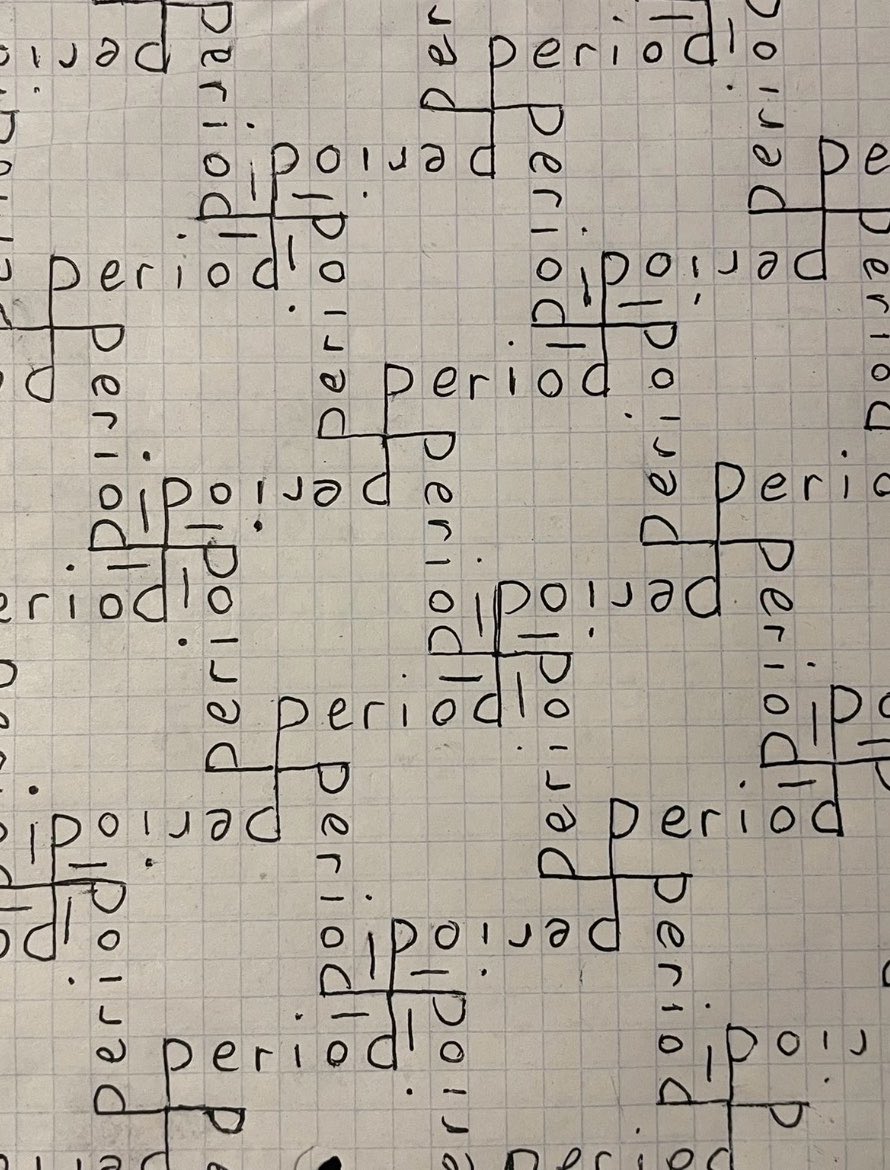
Each word sits between two clusters.
One cluster participates at one boundary of the word (p) and another participates at the opposite boundary (d).
Each cluster possesses sixteen local configurations and five balance classes.
The inner part of word (erio) therefore acts as a bridge between two independent balance spaces at the two boundaries of the word.
A transformation redistributes organization across the relationship connecting two neighboring clusters.
The lattice begins with binary positions, but the interesting behavior emerges from the relationships among the resulting balance states rather than from the positions themselves.
2
48










May 30
Balka Suman Remanded to 14 days Judicial Custody
After medical check-up the #BRS leader #BalkaSuman was produced before the Magistrate at Himayat Nagar in #Hyderabad
Balka Suman remanded to judicial custody for 14 days by the court, he will be shifted to #CherlapallyJail
Nampally police registered a case after a complaint filed by Singareni officials, following controversial remark by Balka Suman, for inciting party workers to destroy Singareni properties.
A case has been registered against Balka Suman u/s 326(g), 152 BNS, Sec 4 of PDPP Act r/w 55, 61(2)(a), 351(3), 353(1)(b) of BNS.
May 30

After arrested the #Nampally Police took former #BRS MP Balka Suman, for medical examinations at a Govt hospital in King Koti.
After medical check-up #BalkaSuman will be produced before the Magistrate at Himayat Nagar in #Hyderabad .
7
16
5,149

May 30
宿声,顺利结束!
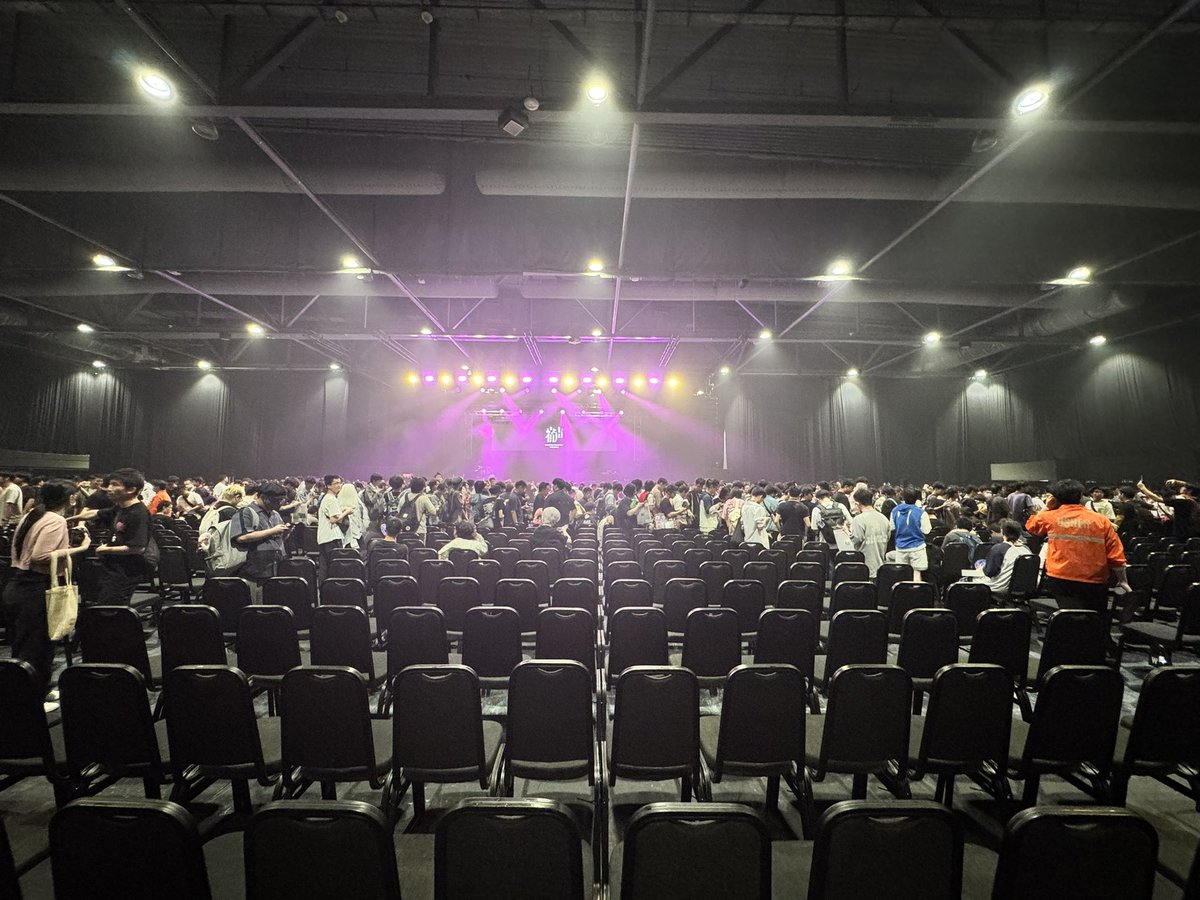
花譜活力满满又可爱,她的歌声充满力量,给人热爱生活、反抗命运的勇气。MC环节全是我的心里话。音乐将我们相连——大海高山,语言文化,都分不开我们。また会おうね!pdpp桑,我能许愿情緒的CN演唱会吗?🌻
#宿声
#KAFWORLDCIRCUIT

1
36
530

May 30
难以忘怀pdpp在上海宿声取消后,宿声深爱结束后发的长文。怀抱着长文里的感情,我终于在中国内听到了花谱的演唱会
音乐是魔法,我一直相信其蕴含的情感有穿越国界的魅力,感谢pdpp,花谱,以及作为嘉宾登场的两位,谢谢你们向我展示了这样一个温柔的可能性世界
能与大家见面真是太好了,期待下次相见!
4
87
4,599
