
I am a retired Anesthesiologist and Professor, and active consciousness researcher at The University of Arizona.
Joined December 2010
- Tweets 4,526
- Following 174
- Followers 27,486
- Likes 533
323 Photos and videos
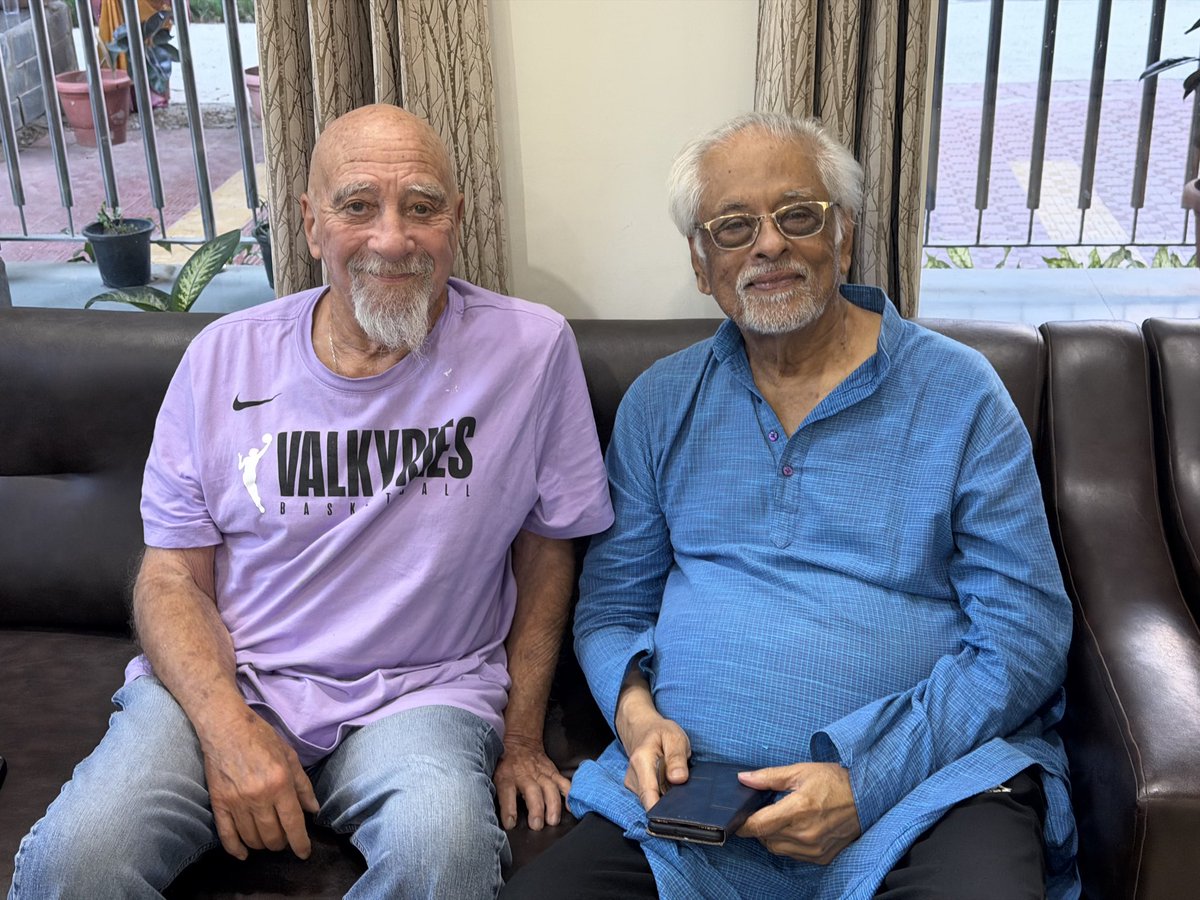


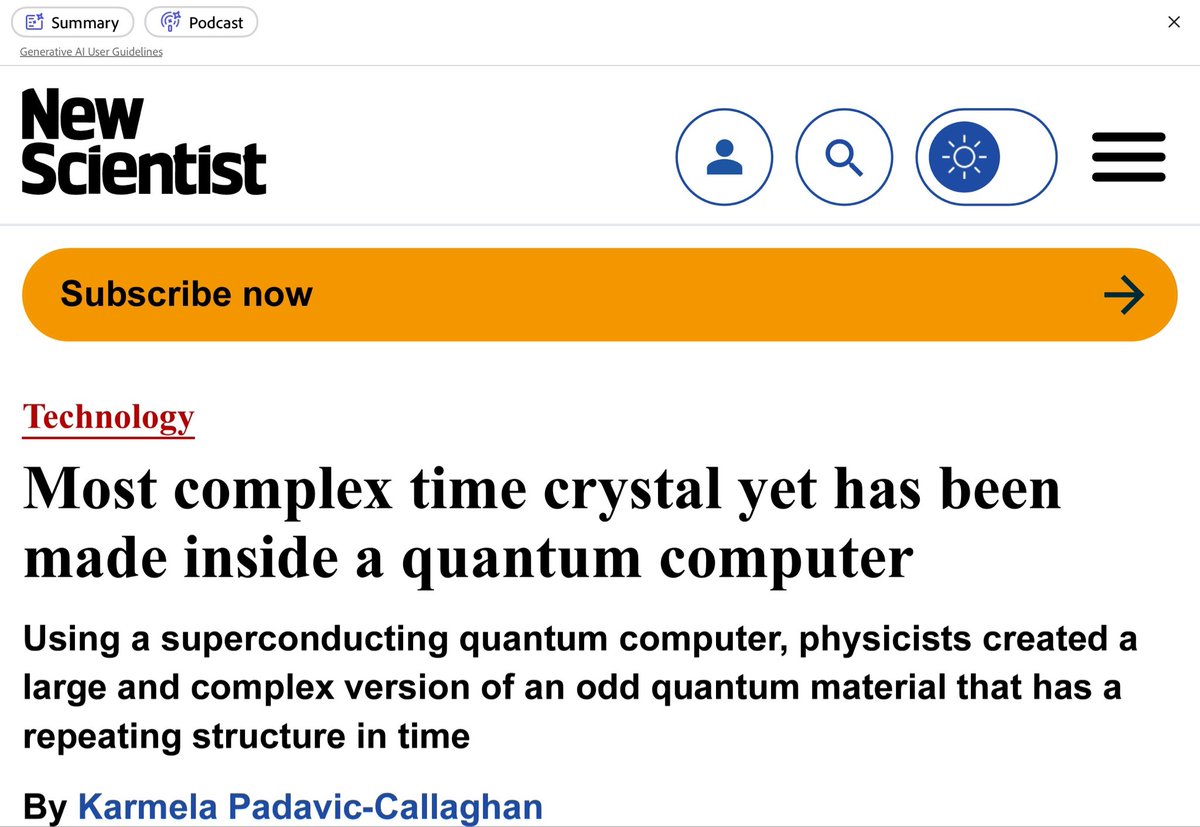
Indian scientists ‘see red’ over a reincarnation discussion at the IIT Mandi conference on Mind, Brain and Consciousness at which I spoke last week (see below).
There was a breakout session on reincarnation, near death and out-of-body experiences which I didn’t attend. But I do believe reincarnation, NDE and OOBs are possible. Consciousness in the Orch OR theory occurs at the level of spacetime geometry, normally between the ears. But when the brain and body fail it is conceivable the quantum information dissipates but remains entangled as a ‘Quantum soul’. researchgate.net/publication… There’s a fair amount of evidence from pediatric psychiatry. Kids recount details of past lives which sometimes correspond with birthmarks related to the cause of death.
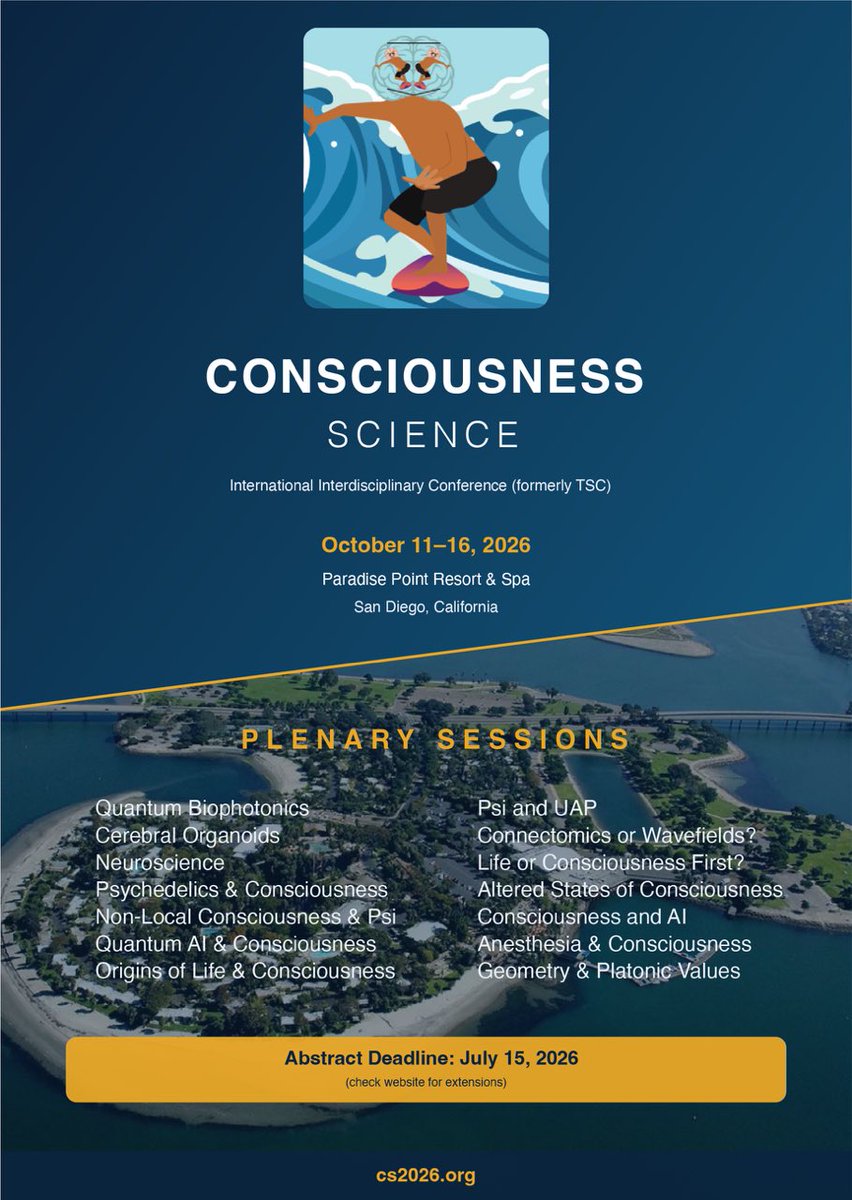
I’m offering to debate any of the incensed Indian scientists, possibly at The Science of Consciousness conference in San Diego in October.
tsc2026.org/ on whether reincarnation is scientifically possible.
Let’s see if they chicken out like @davidchalmers42 @anilkseth and Christof Koch have.
newindianexpress.com/amp/sto…
2
1
3
109
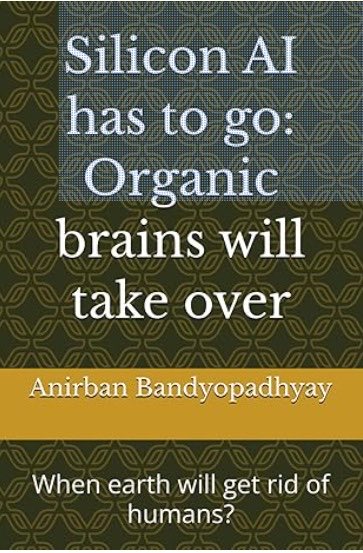
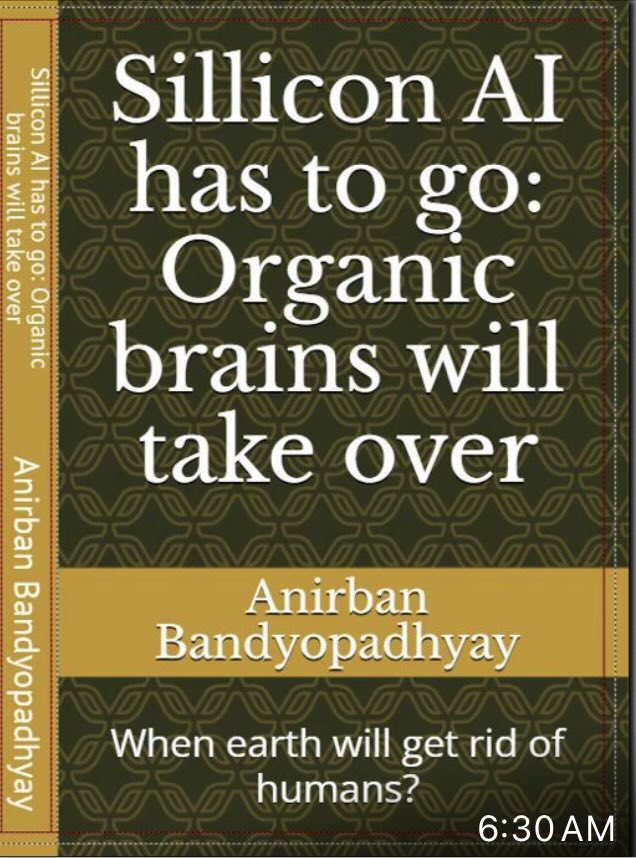
The best course is organic, warm temperature quantum AI being developed in India by @anirbanbandyo and funded by Indian government. Greater capacity without the ridiculous energy demands of silicon AI is on the horizon. Here’s the proof of concept paper. iopscience.iop.org/article/1…
It grew from the Orch OR theory which is actively suppressed by academics funded by AI to push the phoney narrative of conscious AI from silicon
@davidchalmers42

"To embrace the poisonous nonsense of degrowth now — to shut down nuclear power plants, to regulate the AI industry out of existence, to forcibly shorten working hours, to bar the construction of houses and factories, etc. — would be to cripple one of the last few remaining economic engines of the free world, at precisely the time when it’s under its greatest external challenge." @Noahpinion open.substack.com/pub/noahpi…
10
7
58
3,513
Memory is encoded in microtubules.
pubmed.ncbi.nlm.nih.gov/2241…

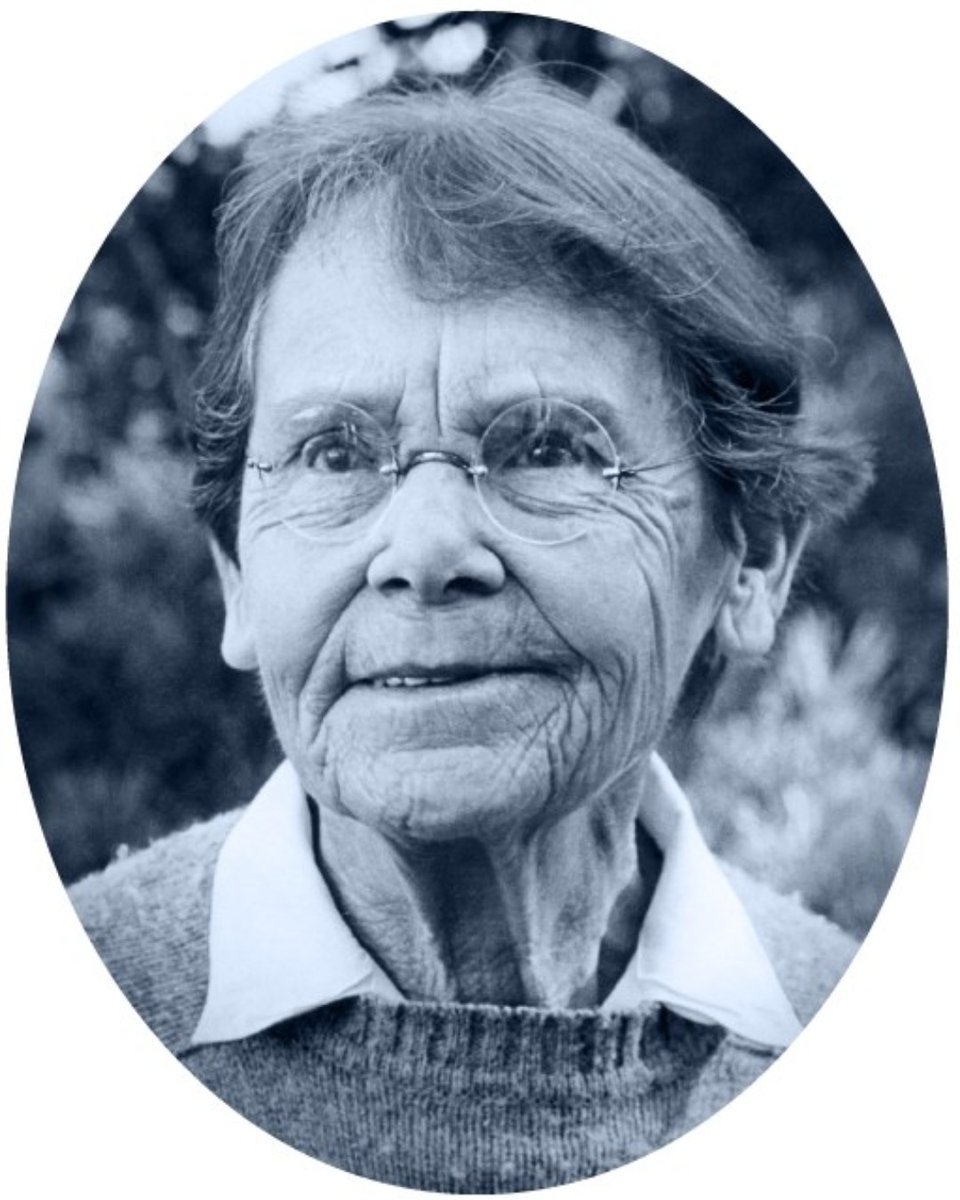
In her Nobel Prize acceptance speech in 1983, the octogenarian geneticist Barbara McClintock asked the question, “What does a cell know of itself?” Forty years later, scientists are realizing that the answer might be: Much more than we thought.
quantamagazine.org/what-can-…
2
4
43
2,385
Thanks Dimitris
Your linked paper shows that ephaptic fields encode memory in cytoskeleton.
Bravo! The resolution for microtubule-based information would be far greater than what could be encoded by membrane-generated fields so I suspect the microtubules are involved.
But that’s not proof.
What were the frequencies of the fields
(were they oscillating?) I’d bet megahertz and gigahertz as in this paper. pubmed.ncbi.nlm.nih.gov/3388…
It’s the same issue about the origin of EEG. Assumed to be from membranes but no proof. Microtubules in cell free systems oscillate at 39 hertz. pubmed.ncbi.nlm.nih.gov/3009…
And we still don’t understand EEG - there is no unified theory. But there is!
Roger Penrose and I suggest EEG is ‘interference beats’ of megahertz and gigahertz oscillations. sciencedirect.com/science/ar… That would account for the frequency downshifting seen in brain processing.
Christof Koch’s claims that ephaptic fields come from membranes have to be taken with a grain of salt. He’s never acknowledged cytoskeletal oscillations. But I don’t believe cartoon neurons could generate or perceive high frequency fields.
So are the megahertz and gigahertz brain waves real? We intend to find out.
Thanks for your great work. It was fun hanging out in the Himalayas last week.
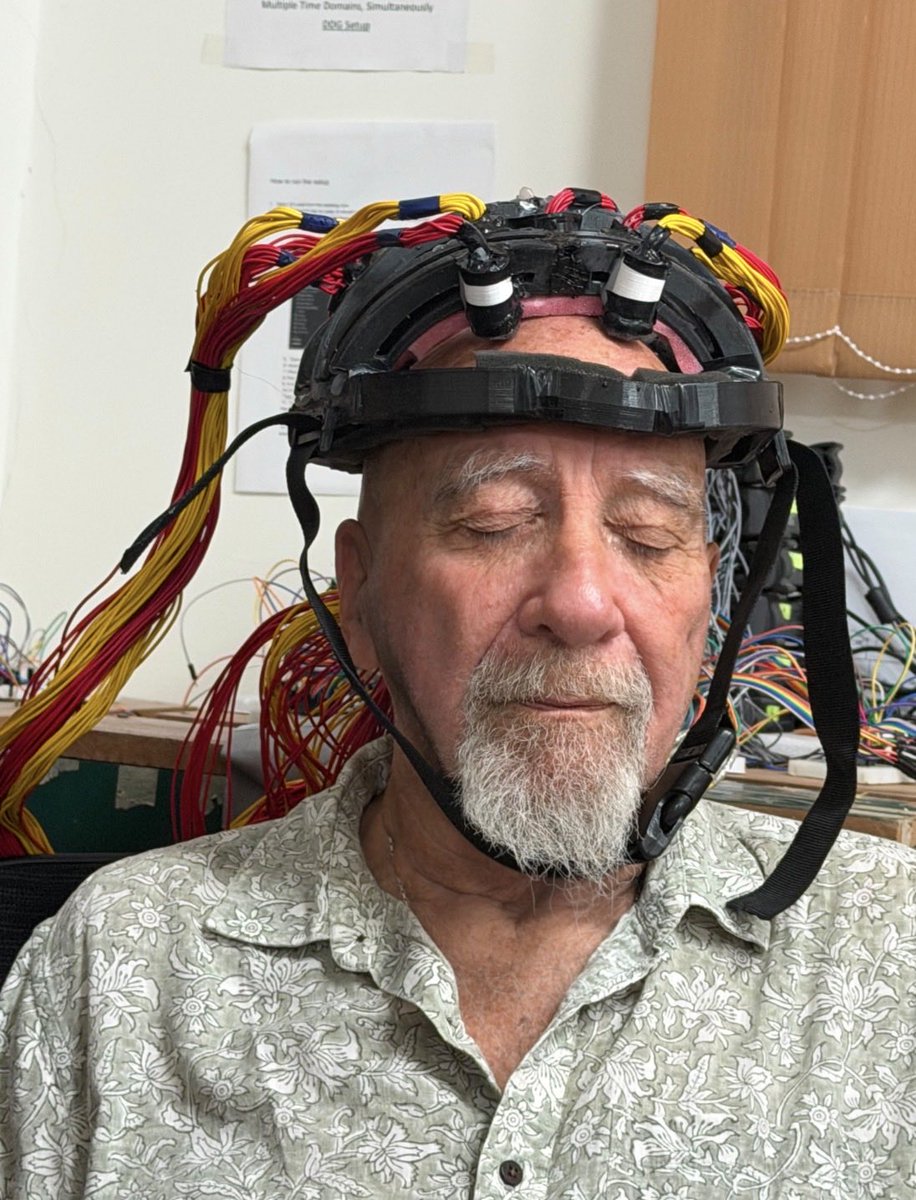
You had your DDG measured. What was your megahertz and gigahertz output?

@StuartHameroff We have explained in detail what generates the information-rich electric field: all electrically charged structures and all processes that produce currents like electrodiffusion, mechanotransduction etc, including microtubules, please see pubmed.ncbi.nlm.nih.gov/3721…
6
5
36
4,229

Jun 13
It’s a hologram. The engram isn’t concrete. it’s an interference pattern in 2-d which projects a 3-d image when illuminated with coherent source. Memories are distributed in an interference wavefield all over the cortex and other brain regions. The coherent reillumination ‘recalls’ the memory stored in microtubules.
Jun 12

This idea that memory is distributed across regions of the brain is interesting but I wish it were more concrete to help my own understanding. Does this mean a memory (ex: driving your car yesterday) is broken into bits and the bits are combined and reassembled during recall?
10
9
62
3,758
Jun 13
Thanks Dimitris
The engram you’re looking for is likely to be an interference pattern, like how a hologram is stored. It doesnt look like anything recognizable until a coherent wave reilluminates and projects a 3-d dynamic image (Princess Leah in Star Wars). In a previous paper you showed the ephaptic field imprinted the engram into the cytoskeleton. But you haven’t said what generates the information-laden ephaptic field. Neither did Earl Miller or Mike Levin in their discussion.
Everyone assumes it’s from membranes. But is it? And what are the relevant field frequencies? You’re looking in membrane frequencies in hertz to a hundred hertz or so but microtubules inside neurons and glia oscillate in hertz, kilohertz, megahertz, gigahertz and terahertz. Without membranes, microtubules oscillate at 39 hertz. I’ll bet you a lobster dinner that the ephaptic fields encoding the engram come from microtubules.
Jun 12
Hi @StuartHameroff See below for a biological correlate of GC : Ephaptic coupling strength , could involve microtubules too pubmed.ncbi.nlm.nih.gov/3742… Building on @anilkseth 's work. W/@MillerLabMIT
3
2
25
2,315
Jun 13
No Demis Hassabis, there is ample evidence that consciousness depends on quantum brain biology. As Roger Penrose’s collaborator on the Orch OR theory of consciousness it was my job to find it and prove it. We did,
First, anesthesia acts by quantum interactions to selectively block consciousness, sparing nonconscious processes.
This happens in nonpolar oil-like regions where anesthetics act, avoiding water. Oil and water don’t mix. Anesthetics act in an adiabatic decoherence resistant subspace.
Neuroscientists are ignorant about quantum brain biology (and biology in general I’ve come to learn). Too much cartoon neuron doctrine has dumbed down the neuroscience of consciousness to make conscious AI seem feasible. You can fund all the cartoon neuron work you want, they’re not gonna find consciousness.
Now we have organic gel warm temperature quantum computers iopscience.iop.org/article/1… which may indeed dominate AI.
Here’s some evidence for microtubules and consciousness.
academic.oup.com/nc/article/…
pubmed.ncbi.nlm.nih.gov/2885…
pubs.acs.org/doi/10.1021/acs…
Jun 12

Google DeepMind CEO Demis Hassabis on the central question of his life: what can humans do that AI never will?
Asked about the limits of artificial intelligence, Hassabis doesn't hesitate to say this is the question that drives him: "Yes, it is."
His starting point is one of his heroes, Alan Turing.
He explains that Turing described theoretical constructs—Turing machines—that underpin all modern computers, machines "that are able to compute anything that's computable… anything that can be described as an algorithm."
The provocative leap comes when Hassabis turns that lens on biology. The AI systems his teams build are Turing machines, and he suspects the brain may be one too:
"A lot of neuroscientists including me think that maybe the brain… a good model for the brain is an approximate Turing machine."
He's careful to note this isn't settled. Some of his peers see it differently, including physicist Roger Penrose:
"Friends of mine like Roger Penrose… believe there might be some quantum effect in the brain."
But Hassabis points to where the evidence currently stands:
"So far neuroscience hasn't found any quantum effects in the brain… people have looked quite carefully and we haven't found any."
His conclusion from that absence is striking. If the brain runs on ordinary computation, then there may be no hard ceiling on what AI can eventually match:
"It looks like most of what's going on in the brain is kind of classical computation… so therefore it's not clear what the limit would be in terms of eventually what an AI system could do and could mimic."
For @demishassabis, building intelligence is a mirror held up to ourselves, not only a feat of engineering.
He describes the project as a kind of experiment that reveals what we are:
"I think we'll have almost like a control study comparison to the human mind. And then I think we'll see in this journey what are the differences and what's unique about the mind."
He stays genuinely open about what that comparison might expose. Some things, he suspects, may never transfer:
"There could be unique things and certainly unique connections between humans that will never be replicated by these AI systems."
But the capabilities we tend to treat as distinctly human, he believes, are within reach:
"A lot of things that we currently are not in reach, like long-term planning and reasoning and maybe some forms of creativity... I think eventually AI systems will be able to do."
38
48
293
31,057
Jun 12
Yes downshifting during sensory processing is quite interesting. Frequencies go down from cortical back to front, front to back, and top to bottom (apical dendrite to pyramidal cell body) to slow down to cognitive epochs of a few hertz.
I think this starts with fast, tiny biomolecular processes in terahertz and downshifts through microtubule time crystal behavior in gigahertz, megahertz, kilohertz and hertz. This may happen through negative resonance, or interference beats among mixed polarity microtubules in dendrites and soma. Layer 5 pyramidal neurons have the largest soma and thus largest arrays of antiparallel microtubules. These have different frequencies in a common voltage field to cause interference beats.
Fortunately we will be able to detect these faster rhythms with the DDG dodeconogram sensing hertz thru gigahertz from scalp
Dimitris Pinotsis tried the DDG in India last week. We submitted an abstract on it to Society for Neuroscience
Jun 12

Dimensionality reduction likely corresponds to a shift toward lower-frequency dynamics. This reduced representation may function as a top-down pointer and be organized by these slower frequencies.
doi.org/10.1016/j.cobeha.202…
osf.io/preprints/psyarxiv/z4…
2
3
35
3,887
Jun 12
You read the paper in one minute?
Jun 12

And what is that exactly? @StuartHameroff
2
12
2,426
Jun 12
I think Anirban’s 5 millisecond biological Bose Einstein condensate is impressive too. iopscience.iop.org/article/1…
Jun 12

A second or longer would be the most important number in the field if it survives replication, because it’s finally falsifiable. That’s the whole game to me!! A coherence time long enough to matter is also long enough to be cleanly measured and cleanly killed if it’s wrong. So I’ll hold the enthusiasm until Dogariu and Tuszynski are out and reproduced. But I’ll say this. You just stated a number most people in this debate carefully avoid stating. That’s the difference between a position and a mood.
4
1
13
2,091
Jun 12
Without a biological connection, what good is the study? What does it tell us about how the brain works.
I’m betting you never took biology in school.
Jun 12

2/2 Our new @PhysRevE paper extends the method to a wide class of dynamical (Langevin) systems, with many applications. But it remains a *statistical analysis method*, not a phenomenon (like, e.g., consciousness) in need of a biological mechanism or correlate. Hope that's clear.
6
19
4,164
Jun 12
Precisely why time crystals are needed.
Jun 12

Even if decoherence rates are correct, the question may be misframed. In scale-free critical systems, the micro-macro gap that makes amplification necessary may not be structurally present.
5
2
19
1,991
Jun 12
Delayed luminescence studies (Dogariu, Tuszynski) are in preparation showing discrete stepwise transitions in tubulin. The total coherence time reaches a second or longer.
Jun 12
Stepwise is the key admission, because steps are testable in a way a smooth gradient isn’t. If the downshift is discrete, each step should have a signature you can locate, not just model. Negative resonance gives you a mechanism for the descent. What it doesn’t yet give you is a way to read off which step the system is on from the outside, independent of the substrate you attribute it to. That’s the gap I keep circling: a stepwise process is exactly the kind that a clean measurement could pin down.
1
1
13
1,524
Jun 12
Stepwise. I call it downshifting, due to interference, or negative resonance among microtubules oscillating at different frequencies . Time crystals very useful here.
Jun 12
You and Miller are both describing a descent: high-dimensional, high-frequency activity collapsing toward something lower. The interesting question is whether that descent is monotonic and drivable on purpose. If consciousness tracks reduction in dimensionality, then a system walked stepwise down its own excitation axis should show the reduction as an ordered gradient, not a single threshold. Time crystal or microtubule, the discriminating test is the same: does the observable move by steps as you descend, or all at once at the bottom?
3
1
15
1,623
Jun 12
How do you know Orch OR has nothing to do with GC when you know nothing about Orch OR? And you have no biology for GC?
Jun 12
1/2 The reason I quoted Maslow is that Granger casuality (GC) has absolutely nothing to do with Orch OR or microtubules. GC is a statistical method for estimating directed functional connectivity (or 'information flow') in time series data. (scholarpedia.org/article/Gra…)
2
1
22
2,517
Jun 12
I know what GC is but don’t see any biological implementation possibilities in your work. I asked you several times but zero, zip, nada in response. You won’t appreciate that Orch OR could be taken as Granger causality because apparently you’ve never read about Orch OR nor know anything about it. So you’ve got statistics but no biology. And no evidence. That’s biological naturalism?!
Jun 12
1/2 The reason I quoted Maslow is that Granger casuality (GC) has absolutely nothing to do with Orch OR or microtubules. GC is a statistical method for estimating directed functional connectivity (or 'information flow') in time series data. (scholarpedia.org/article/Gra…)
3
2
14
1,903
Jun 12
Better than the molecular structures of which the brain is actually composed? Tubulin is the brain’s most abundant protein. More than anything else, the brain is made of microtubules. Dots?
Jun 12

No, it's the process of shifting to better epistemic standards than "microtubule".
dottheory.co.uk
2
4
18
2,524
Jun 12
Thanks Anil
My nickname in the operating rooms was ‘the Hammer’ as if I put my patients to sleep with one. Actually I generally started with propofol and turned on sevoflurane gas when the airway was established. I estimate I anesthetized 50,000 patients over 49 years in anesthesiology.
You haven’t answered my questions about Granger causality and OR collapse other than to deflect with your joke. Nor what your biological mechanism for Granger causality might be if not Orch OR in MTs. You make fun of my consistent answers when you have no answers,
Jun 12
Maslow (1966): if all you have is a hammer, everything looks like a nail.
3
5
53
8,685
Jun 12
Great. Two guys way ahead of their respective disciplines. They agree EM fields control life over many scales and frequencies. Where do the fields come from, and what biology primarily receives and responds to them?
Is it membranes? They’re clearly involved. But are they in charge? Are they governing Earl’s top-down message? Michael’s xenobots ?
Earl didn’t say. I don’t think so.
They discussed transcending scale, like the same information in milliseconds at small scales, then slower at higher frequencies and several neurons
Multiscale frequency systems are well served by time crystals, it looks more and more that life is organized by microtubule time crystals in hertz through gigahertz.
ingentaconnect.com/content/i…
There are two gorillas in the living room, unmentioned;
1) Consciousness: Behavior in pursuit of drive, goals, intentionality is likely trying to feel good, to access or obtain pleasure. The most basic of organic molecules, e.g. amino acid phenylalanine is very much like dopamine, the ‘pleasure molecule’.
Proto-Consciousness by Penrose OR can be a low level fundamental process, accessed by simple quantum biology.
No need for complexitg. Worms, amoeba, insects must have feelings to grow and survive.
2. Microtubules.
What generates these fields with frequencies spanning hertz, kilohertz, megahertz, gigahertz snd terahertz? What receives them??
Microtubules,
Where is memory encoded?
Microtubules.,
Plasticity.
Microtubules
Memory
I’ll bet lunch Mike’s xenobots are controlled by microtubules in search of pleasure,
Gotta sleep. Jet lagged from India. Flying to San Diego for rural Transduction theory conference
Back soon on Platonic Realm.
Jun 5

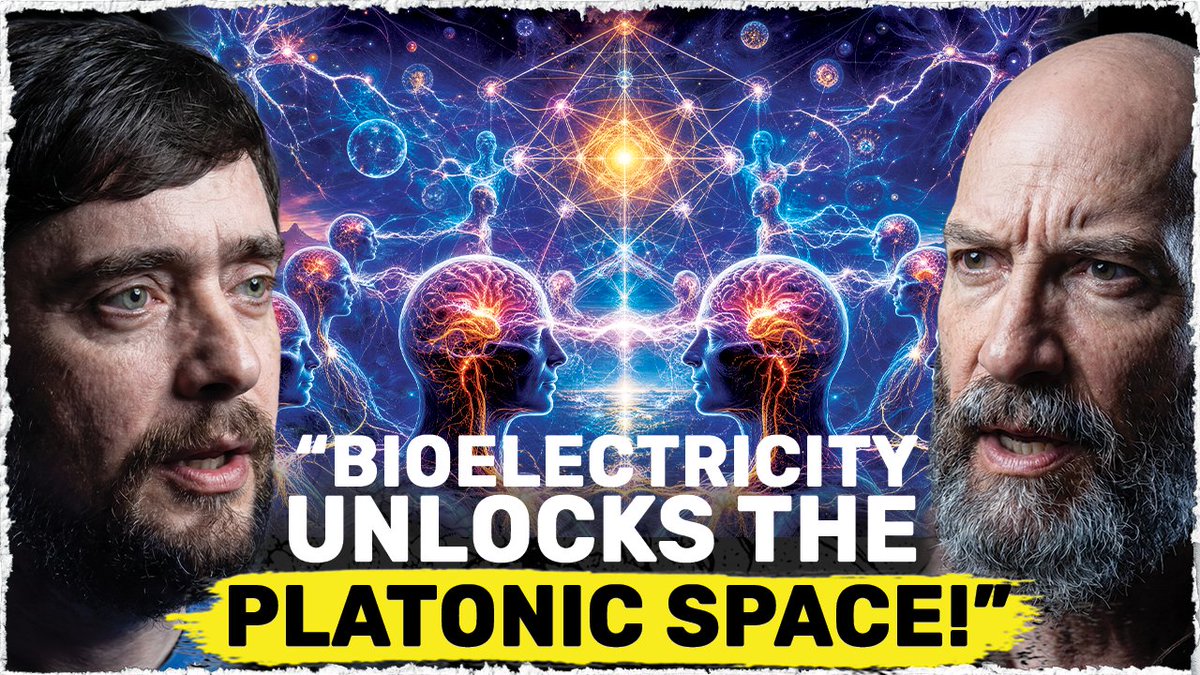
Michael Levin & Earl Miller: Platonic Space of Minds, Bioelectricity, Cell Intelligence & Neurobots
Youtube: youtu.be/6mU5nN5nlLA
Spotify: open.spotify.com/episode/6qJ…
Skool Ad Free: skool.com/the-giants-shoulde…
18
36
202
12,937
Jun 12
Shrinking the noise globally to zero sure sounds like collapsing a wavefunction.
Jun 9
5/5 (iii) extension of GC maps and GC rates to classical *deterministic* systems (via shrinking the noise globally to zero, while retaining its "ghost" as noise variance-covariance maps in phase space). Here's the paper: journals.aps.org/pre/abstrac… (funded by @ERC_Research CONSCIOUS)
7
4
40
6,065