

B.SC - Physiology
Dip- Product Design
Cert- Echocardiography
Currently interning as a Cardiac Physiologist in one of the best hospitals in Lagos🤭

Jun 12

Hi women, can you post pictures or talk about your academic achievements? I need some motivation this month.
If you see this tweet, share it so women can see it.
3
12
75
1,485

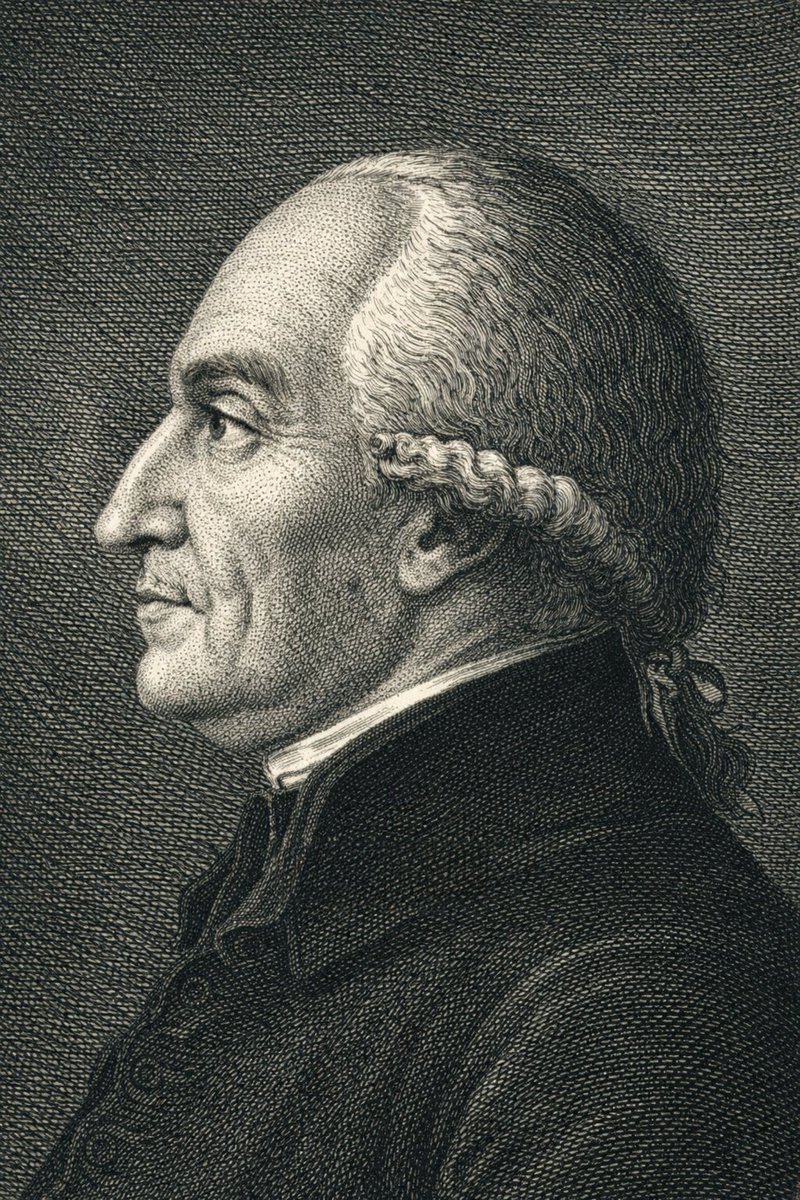
📅 On June 15, 1667, the first documented human #blood #transfusion was performed by Jean-Baptiste Denys, a brilliant 32-year-old French physician, professor of philosophy and mathematics, and personal doctor to King Louis XIV.
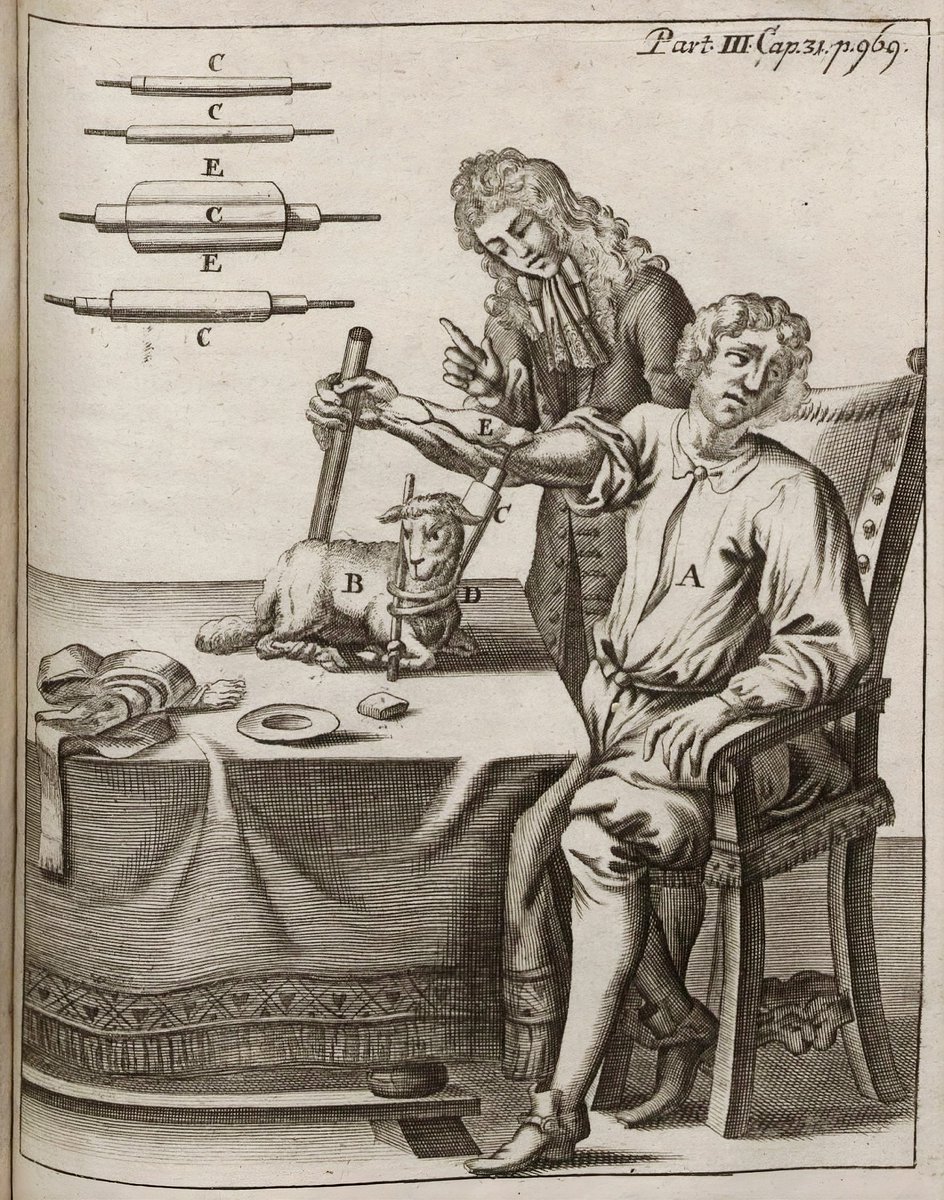
Using goose quills as makeshift cannulas, Denys transfused the blood of a lamb into Antoine Mauroy, a young man suffering from a violent fever. At the time, standard medical practice involved bleeding patients to “balance the humors,” a treatment Mauroy had already endured repeatedly. Denys dared to try the opposite.
The first two transfusions appeared to succeed. But the third proved catastrophic. Denys himself recorded the horrifying reaction: “His arm grew hot, his pulse quickened, sweat broke out on his forehead… he complained of severe pain in his kidneys and stomach, and his urine was as black as soot.” Mauroy died shortly afterward.
Denys was immediately accused of murder. During the trial, however, it emerged that Mauroy’s wife had poisoned her husband with arsenic. Denys was acquitted, but the ordeal shattered him. He abandoned medicine entirely. The scandal led France to ban blood transfusions in 1670, a prohibition that lasted more than two centuries.
It was not until 1902, when Karl Landsteiner discovered the ABO blood group system, that safe human-to-human transfusions finally became possible.
🗺 Jean-Baptiste Denis (Paris, ca. 1635-1704). A digitally restored and enlarged version of an antique engraving. Credit: EuroMedSim Medicine Museum.
🗺 Early blood transfusion. Historical artwork of the English physiologist Richard Lower (1631-1691) transfusing blood into a man's arm from a lamb in 1667. The end of the tube used to puncture the blood vessels and transfer the blood is at top left. Lower first demonstrated the transfusion of blood from the artery of one dog to the vein of another in 1665. Later attempts by others to transfuse from animals to humans led to some deaths. Lower's Treatise on the Heart describes the heart as a muscular pump rather than an organ 'inflated by spirits'. He deduced that the bright red of arterial blood results from the mixing of dark venous blood with inspired air in the lungs.
3
4
50

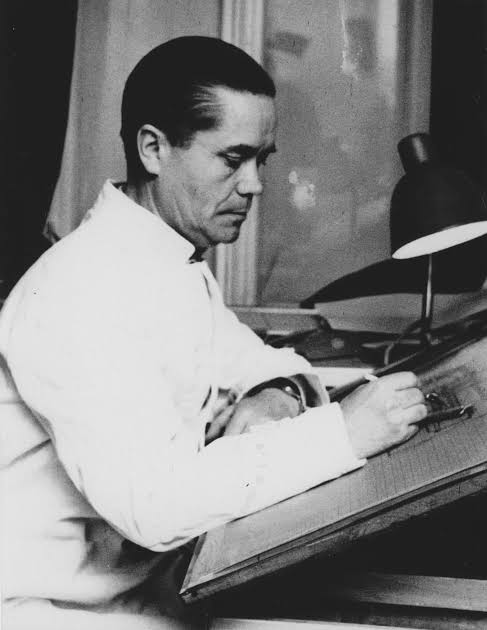
In the 1930s, Finnish physiologist attempted to mechanically stimulate the auditory system, particularly the middle ear. And he did so through electromagnetic induction.
This paved way for the technology of Active Middle ear implants used today in hearing loss.
The beauty of science
1
1
131

Exercise Physiologist at Onyibiz Consult & Insight dlvr.it/TT34Xc
20

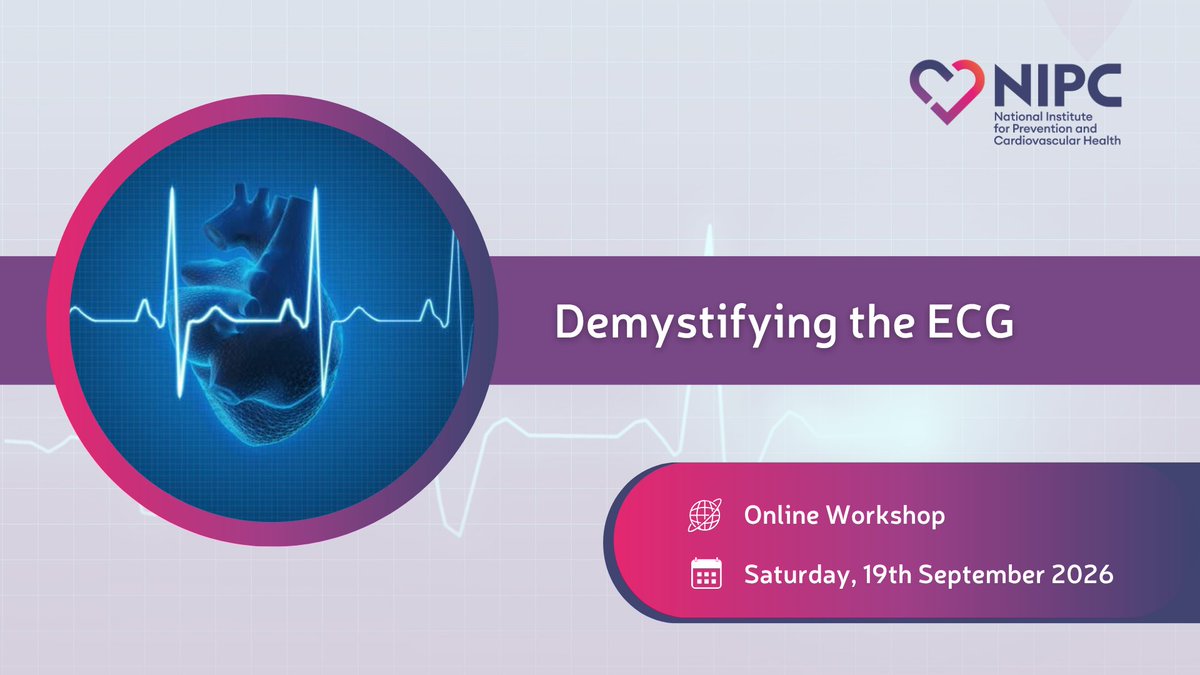
Flexible online learning live expert teaching. Our Demystifying the ECG course includes:
•Self-paced online learning (approx. 4 hours)
•Interactive half-day virtual workshop
•Facilitated by @pnolan99, Clinical Lecturer & Cardiac Physiologist
Book at bit.ly/4pYBLlY
1
15

As an exercise physiologist & physical rehabilitation specialist I treat this a lot. It is commonly a case of an overuse injury/ inflammation or tendinitis.
However, if you experience severe pain, instability, swelling, etc- please visit your doctor, physio or me.
1
110


Big News for HCP!
🥳2024 is here!!! Which means Reveal Myo Academy is almost here!
I'll be honest, I didn't know if I was going to launch Reveal Myo Academy and the Accredited Orofacial Myofunctional Physiologist myo Program this year.
After moving...

4


15h
OOMG did you see David Cochrane salivating on Air talking about his trip to the G7, Obviously his physiologist after breaking has said YOU deserve it honey 🍯
28
あっちっち retweeted

Jun 14
You have been told to drink 8 glasses of water a day.
A Dartmouth physiologist traced the rule to a single sentence in a 1945 federal report.
The very next sentence said "most of this is already in your food."
Marketers cut that line. You have been hydrating against an invented number for 80 years.
Here is the full story.
The expert is Heinz Valtin. He spent his career as a professor of physiology at Dartmouth Medical School. He wrote two of the standard textbooks on the kidney and water balance. He is one of the most cited water scientists in the country.
In 2002, the American Journal of Physiology asked him to write an invited review. He took the assignment seriously. He read every study on water intake he could find. He went back through the citation chain on the "8 glasses a day" rule, paper by paper.
He could not find the source. There was no study. There was no clinical trial. There was no medical body that had ever set the rule.
So he kept digging.
He traced it back to one document. A 1945 report by the Food and Nutrition Board of the National Research Council, published during the Second World War. The board was writing dietary advice for a rationed country.
Tucked into the report was this line:
"A suitable allowance of water for adults is 2.5 liters daily in most instances."
2.5 liters is about 8 cups. The math was clean. The phrasing was authoritative.
Then came the next sentence.
"An ordinary standard for diverse persons is 1 milliliter for each calorie of food. Most of this quantity is contained in prepared foods."
That second sentence does all the work. It says the 2.5 liter number is a total intake target. Not a drinking target. Every glass of milk, every bowl of soup, every apple, every cup of coffee counts. The water inside your food counts. Once you subtract the food, the actual glass-of-water number is closer to 1 liter. Sometimes less.
The second sentence disappeared. The first one became the rule.
Valtin published his findings in August 2002. The paper is titled "Drink at least eight glasses of water a day. Really? Is there scientific evidence for 8 by 8?"
His conclusion, in his own words: "I have found no scientific proof that absolutely every person must drink at least eight glasses of water a day."
Two years later, the Institute of Medicine, the top US body on nutrition, published its own review. The 2004 report said adult men need about 3.7 liters of total water a day. Adult women need about 2.7 liters.
But here is the key line in the same report, which most people never see.
About 20 percent of that water comes from food. The rest comes from any fluid. Coffee counts. Tea counts. Milk counts. Soup counts. Juice counts.
The Institute also said this: "the vast majority of healthy people adequately meet their daily hydration needs by letting thirst be their guide."
That is the official guidance. From the same body that sets every nutrition rule in America. Trust your thirst.
So why does the 8 glasses rule keep coming back.
Look at who profits when you follow it.
The global bottled water market was worth $364 billion in 2024. It is projected to hit $677 billion by 2035. Every wellness brand, every gym, every influencer with a tracker app has a reason to keep you reaching for one more glass.
Drinking extra water when you are not thirsty is not just unnecessary. In rare cases it is dangerous. Forcing fluids beyond thirst can cause a condition called hyponatremia, where blood sodium drops too low. It has killed marathon runners who drank too much during races. Valtin flagged this risk in his 2002 paper.
So how do you actually hydrate. 3 rules.
Rule 1. Drink when you are thirsty. Your body has a 200,000 year old hydration sensor. It works.
Rule 2. Check your urine color. If it is pale yellow, you are fine. If it is dark, drink more. If it is clear all day, you might be drinking too much.
Rule 3. Count every fluid. Coffee, tea, milk, juice, soup, fruit, and yes, plain water. They all count. The "caffeine dehydrates you" myth has also been debunked by the same Institute of Medicine.
The bigger lesson.
A rule everyone repeats is not the same as a rule that is true. The 8 glasses rule has been printed in school textbooks, on bottled water labels, on doctor's office posters, and in your phone's wellness app. None of those sources went back to check the original.
One physiologist did. He found one sentence. The sentence the marketers dropped.
If you have been forcing down water you did not want, you can stop.
Your thirst is the science. It always was.
30
181
522
40,897

It blew my mind when the physiologist I worked with at the tribunal shared this story with me.
3
46

18h
The physical trauma of high-explosive shells would not kill him, but the energy required to heal such massive cellular damage would instantly drain his caloric reserves. The subsequent forced regression would reduce him to a defenseless human, easily kept in a standard concrete cell.
Arthur was trapped in a perfect physiological cage. He had to dig deeper into the dark, crushing weight of the earth simply to earn the precise number of calories required to keep his body from collapsing in on itself.
He thought about the scholarship application. He thought about the door he had never opened.
Then he turned toward the mountain and began to dig.
---
**II. The Human Mole**
Deep beneath the bedrock, the air was a thick, humid soup of stone dust and sweat. Arthur worked in the absolute dark, his massive hands clawing through granite faces that would have shattered standard steel excavators.
FIRA's economic analysts had realized that Arthur was vastly superior to any mechanical alternative. The pinnacle of modern civil engineering was the Tunnel Boring Machine (TBM), a multi-million-dollar behemoth often referred to as a "mole." But even the largest TBMs, reaching up to 17.6 meters in diameter, were agonizingly slow. In ideal geological conditions, a TBM managed a rate of only 15 to 50 meters of excavation per day. During the construction of the Gotthard Base Tunnel under the Swiss Alps, the absolute record achieved was a meager 56 meters in a 24-hour cycle — a pace equivalent to a snail crawling at 0.0064 m/s. Mechanical TBMs were perpetually bottlenecked by their "Advance Cycle," which demanded constant shutdowns for ground support installation, cutter head maintenance, utility setup, and dewatering.
Arthur had no mechanical downtime. His Rate of Advance was limited solely by his physical stamina and the speed at which his handlers could feed him. He ripped through hundreds of meters of hard rock per shift, his human intelligence allowing him to navigate fault lines and stabilize tunnel roofs with the same instinctive accuracy that had once made him dream of building bridges.
But the cost of his kinetic output was staggering. Every thrust of his arms burned millions of calories, generating a lethal build-up of internal heat.
According to standard mammalian physiology, Arthur should have died of hyperthermia long ago. In 1883, the physiologist Rubner had demonstrated that because biological bodies lose heat passively through their surface area but produce it metabolically throughout their volume, an organism's surface area must scale to the 2/3 power of its mass (M^{2/3}) to avoid burning itself alive.
Arthur's biology circumvented this thermodynamic limit through a hyper-efficient adaptation of Kleiber's Law. Across standard taxa, an organism's basal metabolic rate scales as the 3/4 power of its mass:
B ∝ M^{3/4}
This relationship remains valid from microscopic mitochondria up to the largest mammalian structures. In Arthur, his cellular behavior mirrored the unique allometry of planarian flatworms (Schmidtea mediterranea). His metabolic efficiency did not stem from a decrease in cellular metabolic rate, but from a massive, size-dependent increase in the mass per individual cell. His cells packed hyper-dense lipid and glycogen stores directly into their structure, acting as organic capacitors that stabilized his body temperature.
Yet, the physical labor of digging still forced his body into aggressive diet-induced thermogenesis (DIT). Digestion and muscle contraction combined to create an internal furnace. He lived in a state of continuous, agonizing hyperhidrosis. Sweat poured from his macro-scaled skin in steaming torrents — a phenomenon his handlers jokingly referred to as the industrial-scale "meat sweats."
1
74

Conor posts one flash selfie and the entire internet becomes a dermatologist, detective, and physiologist 😭 Men, what's the first thing you noticed in this picture?
68