
Jun 15
Z.AI has made GLM-5.2 available to all GLM Coding Plan subscribers, including Lite, Pro, and Max users. The model is positioned for complex coding and long-horizon agentic engineering, with support for 1M-token context configurations in supported tools. Open-source weights and general API access are expected next week.
That wording is stronger because the official docs specifically say GLM Coding Plan now supports GLM-5.2 for Max, Pro, and Lite users, and the docs also show how to configure 1M context via glm-5.2[1m] plus a 1,000,000 compact window in Claude Code. OpenClaw’s provider docs also list zai/glm-5.2 as the Coding Plan default with 1M context.
Better version of the announcement
Clean press-style version:
Z.AI has released GLM-5.2, its newest flagship coding model, to all GLM Coding Plan subscribers.GLM-5.2 is built for long, multi-step engineering workflows: large-repository understanding, complex debugging, agentic refactoring, tool-heavy coding sessions, and tasks that require sustained reasoning over extended context.The model supports usable 1M-token context configurations in supported coding tools, making it better suited for full-codebase analysis, multi-file migrations, and long-running development sessions. GLM-5.2 is now available across Lite, Pro, and Max GLM Coding Plans, with open-source weights and broader API access planned for next week.
Developer-first version:
GLM-5.2 is now available for GLM Coding Plan users.Use it when a coding agent needs to understand a large repo, reason across many files, run multi-step tool workflows, or stay coherent through long debugging and refactoring sessions.Supported plan users can select glm-5.2; supported 1M-context configurations use the glm-5.2[1m] model suffix and a 1,000,000-token compact window setting where applicable. Open-source weights and API availability are scheduled to follow next week.
Sharper social post:
Z.AI just rolled out GLM-5.2 to all GLM Coding Plan users.The headline is not just “better coding.” It is long-horizon agentic engineering:full-repo context, multi-step debugging, large migrations, longer tool loops, and 1M-token coding workflows.API access and open weights are planned for next week.
Major missing elements
The current text says the right things, but it does not answer the questions developers immediately care about.
1. Exact model identifiers
Add the actual names users should type:
glm-5.2
glm-5.2[1m] for 1M-context use in compatible setups
zai/glm-5.2 in OpenClaw-style provider notation
This matters because the docs distinguish normal model configuration from the 1M-context suffix, and OpenClaw uses provider/model refs like zai/glm-5.2.
2. Tool compatibility
The announcement should not imply universal availability everywhere. It should say something like:
GLM-5.2 is available through supported GLM Coding Plan tools, including Claude Code-style setups, Cline/OpenAI-compatible tools, OpenClaw, and other officially supported coding environments.
Z.AI’s tool integration docs say the Coding Plan is limited to officially supported tools, with OpenAI-compatible and Anthropic-compatible endpoints depending on the tool.
3. Endpoint details
Add a tiny “how to use” block:
OpenAI-compatible endpoint:
api.z.ai/api/coding/paas/v4
Anthropic-compatible endpoint:
api.z.ai/api/anthropic
Model:
glm-5.2
The docs explicitly list those two Coding Plan endpoints and warn that using the wrong endpoint can prevent subscription quota from applying.
4. Context-window caveat
“Support for usable one-million-token context windows” is promising, but it needs precision. Add:
1M context requires compatible tool configuration. In Claude Code-style setups, users should use the glm-5.2[1m] suffix and set the compact window to 1000000. In OpenAI-compatible tools like Cline, set the context window size to 1000000.
That is much more credible than simply saying “1M context.”
5. Quota and cost implications
This is a big missing piece. GLM-5.2 appears to consume Coding Plan quota faster than lighter models. Z.AI’s FAQ says GLM-5.2 and GLM-5-Turbo are deducted at higher rates during peak and off-peak hours, while also noting a limited-time off-peak 1× benefit through the end of September.
Add this to avoid user frustration:
Because GLM-5.2 is a higher-capability model, it is best reserved for complex engineering tasks. For routine development, Z.AI recommends using GLM-4.7 to conserve quota.
That recommendation is directly aligned with Z.AI’s own FAQ guidance.
6. Exact “next week” timing
“Next week” is too vague. Replace it with:
Open-source weights and API access are planned for the week of [exact date], subject to final release checks.
Also include whether API access means:
General Z.AI API access
Coding Plan API access
OpenAI-compatible endpoint access
Model availability on console
Pay-as-you-go pricing
Enterprise/private deployment access
Z.AI’s current public pricing page I found lists GLM-5.1, GLM-5, GLM-5-Turbo, GLM-4.7, and other models, but not GLM-5.2, so API pricing is a missing launch artifact.
7. Open-weights details
“Open-source weights” is not enough. Developers will ask:
What license? Apache-2.0, MIT, custom, research-only, commercial-use allowed?
What parameter count? Dense or MoE? Active parameters?
What precision? BF16, FP8, INT4?
Where? Hugging Face, ModelScope, GitHub?
What inference stack? vLLM, SGLang, llama.cpp, KTransformers?
Minimum hardware? H100/H200/A100? Multi-GPU only?
Will there be quantized weights?
Will there be a model card?
Will there be eval scripts?
Will there be checksums?
Z.AI’s GLM-5 GitHub repo is a useful precedent: it provides model download links, precision information, and local serving instructions for vLLM/SGLang. GLM-5.2 should launch with the same level of deployment clarity.
“Genius-level” positioning upgrades
1. Stop selling “coding model.” Sell “engineering duration.”
Most coding-model launches say: better benchmarks, better coding, better reasoning. The defensible differentiator here is duration under complexity.
Use this frame:
GLM-5.2 is designed for the point where coding assistants usually break: after the repo gets large, the task becomes ambiguous, the first fix fails, tests reveal new problems, and the model has to keep going.
That is much more compelling than “stronger coding performance.”
2. Replace “long context” with “context survivability”
A 1M-token context window is only valuable if the model can retrieve, prioritize, and act on the right information. The launch should introduce a term like:
Context survivability: the model’s ability to preserve task intent, constraints, repo structure, and prior decisions across long tool loops.
Then show proof:
Full-repo migration
Multi-hour debugging session
100 tool-call trace
Before/after diff
Tests passing
No context reset
No hidden manual intervention
3. Publish a “1M Context Reality Sheet”
A brutal, honest table would earn trust:
QuestionAnswer to publishMax input context1,000,000 tokens in supported configurationsMax outputInclude actual max output tokensRecommended compact window1,000,000 where supportedLatency expectationGive ranges by context sizeTool-call reliabilityInclude eval or internal test resultContext degradationState known limitsBest use caseLarge repo, migration, debugging, planningBad use caseTiny tasks, quota-sensitive workflowsRecommended fallbackGLM-4.7 for routine work
The docs already expose some of this, including OpenClaw’s contextWindow: 1000000 and maxTokens: 131072, so the release can build from there.
4. Ship a “model routing recipe”
This would be extremely useful:
Routine code generation: GLM-4.7
Fast edits / small tasks: GLM-4.5-Air or GLM-4.7
Complex debugging: GLM-5.2
Large refactors: GLM-5.2
Repo-wide migration: GLM-5.2[1m]
Long tool-agent sessions: GLM-5.2, max effort
Quota-sensitive work: avoid GLM-5.2 during peak
Z.AI’s docs already recommend GLM-5.2 for complex tasks and GLM-4.7 for general tasks to conserve quota.
5. Add “effort mode” guidance
The Claude Code configuration docs mention switching effort with /effort and recommend max effort for deeper reasoning and more stable complex task performance. That should be part of the announcement because it directly affects perceived quality.
Suggested line:
For complex coding tasks, Z.AI recommends using max effort mode to improve stability on deeper, multi-step work.
Obscure but high-leverage additions
1. Publish failure-mode examples
Counterintuitive but powerful: show what GLM-5.2 still struggles with.
Example:
Known limits: extremely noisy monorepos, ambiguous requirements without tests, generated-code verification without executable environments, and tasks requiring unsupported external tools.
This makes the launch feel serious, not hype-only.
2. Add a “long-horizon trace”
Do not just show benchmark numbers. Show a compressed trace:
Task: migrate auth middleware from legacy session cookies to JWT
Repo size: 820k tokens
Files touched: 41
Tool calls: 186
Tests run: 23
Failed attempts: 4
Recovered from: 3
Final result: all tests passing
Human edits after model: 2 small naming changes
This kind of proof is far more persuasive than “improved reliability.”
3. Measure “recovery after wrong turn”
Most agentic models look good when the first plan is right. Real engineering needs recovery.
Create a benchmark category:
Wrong-Turn Recovery Rate
The model is intentionally given an incomplete or misleading first hypothesis. Score whether it:
detects contradiction
abandons bad path
reads more evidence
patches correctly
updates its plan
does not spiral
4. Add “context needle with code causality”
A normal needle-in-haystack test is too shallow. Use a coding-specific version:
Place an important invariant in one file, a failing test in another, an implicit API contract in a third, and a misleading comment in a fourth. Score whether the model finds the real causal chain.
This would make the 1M-context claim much more meaningful.
5. Launch with a repo-memory starter kit
Z.AI’s best-practice docs emphasize project context, task context, environment context, project-level guidance files, and reusable workflows. Package that into a “GLM-5.2 Ready Repo” template:
.agent/
project.md
architecture.md
testing.md
security.md
style.md
release.md
debugging-playbook.md
Then give users a command:
glm init-agent-memory
Even if the command is just a docs flow, the launch becomes actionable.
6. Publish memory architecture examples
Z.AI’s memory docs distinguish session, project, semantic, episodic, and procedural memory, and recommend keeping instruction memory separate from learning memory. That could become a killer GLM-5.2 story:
1M context is not a replacement for memory architecture. Use 1M context for active working state, project memory for stable repo rules, semantic memory for docs, episodic memory for past bugs, and procedural memory for repeatable workflows.
That is a much more advanced position than “bigger window.”
7. Include “agent hygiene” rules
This is obscure but valuable:
Use GLM-5.2 for planning-heavy tasks, not every autocomplete.
Start a fresh session per major task.
Compress after major milestones.
Use max effort only when the task justifies it.
Keep stable project rules in files, not prompts.
Run tests after each meaningful change.
Use subagents for exploration, testing, and review.
Do not dump the entire repo unless the task benefits from it.
Z.AI’s own best-practice docs emphasize deliberate session management, planning before execution, environment configuration, and full development-loop participation.
Benchmark and proof checklist
The launch would be much stronger if it included:
SWE-bench Verified
SWE-bench Pro
Terminal-Bench 2.0
LiveCodeBench
Aider polyglot benchmark
Repo-level bug fixing
Long-context repo QA
Multi-file refactor benchmark
Tool-call reliability benchmark
Pass@1 and pass@k
Latency by context size
Cost/quota usage by task type
Long-session degradation curve
Human-eval examples
Ablation against GLM-5.1, GLM-5-Turbo, GLM-4.7
Comparison against Claude Sonnet/Opus, Gemini, GPT, Qwen, DeepSeek, Kimi, etc., where legally and methodologically appropriate
Z.AI’s GLM-5 and GLM-5.1 materials already frame the family around agentic engineering, SWE-Bench Pro, NL2Repo, Terminal-Bench 2.0, and long-horizon tasks, so GLM-5.2 should continue that proof style rather than just making a broad “stronger coding” claim.
Trust gaps to fix immediately
One notable issue: the release-notes page I found showed GLM-5.1 as the latest visible model entry, while separate GLM Coding Plan docs and FAQ pages already reference GLM-5.2. That mismatch creates avoidable confusion.
Fix with:
A dedicated GLM-5.2 release note
A GLM-5.2 model card
A GLM-5.2 migration page
A pricing/quota explainer
A “supported tools” matrix
A status page for API/open-weights rollout
A single canonical announcement URL
Suggested final announcement package
Use this structure:
Headline:
GLM-5.2 is now available to all GLM Coding Plan users
Subhead:
A flagship coding model for long-horizon agentic engineering, large-codebase reasoning, and 1M-context workflows.
What’s new:
Stronger coding performance
More reliable multi-step execution
1M-context support in compatible configurations
Better long-session stability
Available across Lite, Pro, and Max Coding Plans
How to use:
Model: glm-5.2
1M context: glm-5.2[1m] where supported
OpenAI-compatible endpoint: api.z.ai/api/coding/paas/v4
Anthropic-compatible endpoint: api.z.ai/api/anthropic
When to use GLM-5.2:
Large repo understanding
Complex debugging
Multi-file refactoring
Architecture changes
Long-running coding agents
Tasks where GLM-4.7 gets stuck
When not to use it:
Simple edits
Routine autocomplete
Quota-sensitive work
Tiny single-file tasks
Coming next week:
Open-source weights
General API access
Model card
Pricing details
Deployment recipes
Proof:
Benchmarks
Long-horizon task traces
Repo-level case studies
Context reliability tests
Tool-call reliability metrics
Strongest single improved paragraph
Z.AI has released GLM-5.2 to all GLM Coding Plan subscribers, including Lite, Pro, and Max users. The new flagship coding model is designed for long-horizon agentic engineering: large-codebase understanding, multi-file refactoring, complex debugging, and extended tool-driven coding sessions. In supported configurations, GLM-5.2 can use a 1M-token context window, including glm-5.2[1m] setups for compatible Claude Code workflows. Open-source weights and broader API access are planned for next week.
That version is precise, credible, developer-useful, and avoids overclaiming.

Z AI released GLM-5.2, its new flagship coding model, for all users subscribed to GLM Coding Plans.
The model includes stronger coding performance, support for usable one-million-token context windows, and improved reliability on long, multi-step tasks.
Open-source weights and API access are planned for next week.
2
2
565

सवाल छोटे, जवाब तगड़े और मुद्दा सीधा पेपर लीक पर।
पुराने दौर की परतें खुलेंगी, जवाबों से उठेंगे नए सवाल।
देखिए पूरा एपिसोड और खुद तय कीजिए, बात कितनी सही है।
#PaperLeak #ExamScam #EducationSystem #Accountability #Interview #QuestionAnswer #TruthExposed #CurrentAffairs
1

#सवाल ?
वह कौन सा #राजा था जिसकी #बुद्धिमत्ता के आगे महान #सिकंदर ने भी अपना #सिर झुका दिया था ?
#question ?
Who was the #king before whose #wisdom even #AlexanderTheGreat bowed his #head ?
#questionanswer #history #kingdom #brainexercise #brainchecking #BrainHealth #brain
8
Amazing Matini Lushoto🦋🦋 retweeted

Jun 11
Strange but True
QuestionAnswer
1. Which thing is invisible but heavy?Air
2. Which thing moves without legs?Time
3. Which thing grows without life?Crystal
4. Which thing speaks without mouth?Echo
5. Which thing runs without legs?Water
6. Which thing flies without wings?Sound
7. Which thing burns without fire?Acid
8. Which thing rises without lifting?Smoke
9. Which thing falls without push?Rain
10. Which thing moves but has no body?Shadow
11. Which thing eats but never lives?Fire
12. Which thing has a mouth but never talks?River
13. Which thing has a neck but no head?Bottle
1
3
11
981

Jun 6
सीजेआई के कार्यक्रम में महिला को सवाल पूछने से रोका गया
#Newstrack #CJI #Suryakant #LondonEvent #QuestionAnswer #BreakingNews #LegalNews

1
3
54

New day , new queries
Let's start our #questionAnswer series again
Ask your stock related queries with your buy level
Will try my best to answer
But before asking please do #like and #follow this channel for market review and momentum stocks
#stockmarketindia
10
11
1,599

Mar 25
ધારાસભ્ય ગુલાબસિંહ ચૌહાણના પ્રશ્ન પર સરકારનો જવાબ
#GulabsinhChauhan #GujaratAssembly #GovernmentReply #QuestionAnswer #SandeshNews
92

Feb 28
Allocation depends on your conviction
💪🙌💥
- which stock holds the largest percentage in your portfolio?"
Lets do Q&A session
Ask your questions releted to stock market
Will try my best to give replies
#holding #priceaction
#questionanswer
Follow @Karanthetrader1
2
1
2
208

Feb 19
کالر کا لائیو شو میں خطرناک سوال
ٹی وی پر بیٹھ کر گانا اور قرآن بیچنا، کیسا؟
علامہ امین شہیدی کا تفصیلی جواب
#Ramadan #RamzanTransmission #QuestionAnswer #AllamaAminShaheedi #IrfanERamzan #WaleedSheikh #AlifLaamMeem #GTVNews
4
4
135

She will return again… as a heartbeat in your chest…
as a memory in your thoughts…
Will you be able to move forward,
holding someone else’s hand, trying to forget her?
It's so easy to say... I will forget her .
The first love is unforgettable.
If you hold someone else's hand right now....
Think deeply.. not only once .
Think more than twice .
Will you forget your first love if he or she has cheated you .... And you still loved it a lot.... Still are betrayed. #heartbreak #lovestory #questionanswer #RealityCheck

1
2
3
183

18 Dec 2025
மாநிலங்களவையில் அதிமுக எம்.பி டாக்டர் M.தனபால் கேள்வி..!
#admk #admknews #eps #RajyaSabha #admkmp #questionanswer #newsj
@EPSTamilNadu @AIADMKOfficial @dr_dhanapal_mp
11
8
280

16 Dec 2025

2
1
7
52

29 Nov 2025
Q&A session with the Khalifa of Ameer-e-Ahl-e-Sunnat during the 7-day international Sunnah-inspired congregation
#Sessions #Congregation #Questionanswer #international #MaulanaUbaidRaza




10
53
481

20 Nov 2025
Yes — engineering a cDNA infectious clone can absolutely be considered gain-of-function (GOF) research, depending on what you do with that clone and why you're doing it. Let’s break down exactly why.
🧬 1. What a cDNA infectious clone is
A cDNA infectious clone is a DNA copy of a viral RNA genome that has been engineered into a plasmid or other vector. When transcribed and introduced into cells, it recreates a fully infectious virus.
For RNA viruses like coronaviruses, flaviviruses, or poliovirus, this is a well-established method for genetic manipulation.
It serves as the template for generating mutant or recombinant viruses.
In other words, it’s a genetic blueprint that can “revive” or modify a virus at will.
⚗️ 2. What makes something “Gain-of-Function”
“Gain-of-function” is not simply about changing something — it’s about altering an organism so that it gains new or enhanced biological abilities, particularly those that pertain to:
Host range (infecting new species or cell types)
Transmissibility (spreading more easily)
Pathogenicity or virulence (causing more severe disease)
Resistance (evading immune responses or treatments)
So the question is: does the clone you’re engineering have the potential to confer one of these gains once you recover virus from it?
🧪 3. Where the line is drawn
The act of constructing an infectious cDNA clone itself sits in a gray zone — but functionally, it’s often treated as GOF because:
It reconstitutes a live virus from sequence data — effectively giving you the power to resurrect or alter a pathogen.
Even “baseline” infectious clones have been classified by institutional biosafety committees and funding oversight boards as Dual Use Research of Concern (DURC), which includes GOF as a subset.
Modifying the clone to test mutations, recombinations, chimeric spikes, or host adaptation definitively qualifies as GOF work.
For example:
The 2015 Baric et al. chimeric SARS-CoV paper created an infectious clone bearing a spike from a bat CoV on a mouse-adapted SARS backbone.
→ That was explicitly gain-of-function because it produced a virus with new host range and pathogenic characteristics.
Even just assembling the full-length cDNA of a virulent pathogen within a lab, if it can yield viable virus, places you under GOF/DURC oversight in most biosafety frameworks.
⚖️ 4. Regulatory and ethical context
Institutionally, in the U.S.:
NIH’s P3CO framework (Potential Pandemic Pathogen Care and Oversight) specifically covers creation, transfer, or manipulation of pathogens that may increase transmissibility or pathogenicity.
CDC BMBL (Biosafety in Microbiological and Biomedical Laboratories) guidance treats infectious cDNA clones as equivalent to the live virus for containment and permitting purposes.
Therefore, if your cDNA construct can produce infectious material, it is handled as a potential gain-of-function agent.
📉 5. The institutional obfuscation problem
Regulators and researchers often play vocabulary games to avoid GOF classification — they’ll call it:
“Reverse genetics research”
“Functional genomics”
“Viral rescue system”
“Infectious molecular clone work”
— all euphemisms for work that, in plain terms, gains or restores function to a virus.
This linguistic sanitization was precisely how risky coronavirus research was allowed to continue under grant mechanisms outside P3CO scrutiny before 2020.
🧠 Summary
QUESTIONANSWER
Does creating a cDNA infectious clone itself constitute GOF?Potentially yes, because it restores or enables function (infectivity).
Does modifying that clone to alter host range, virulence, or transmission definitely count as GOF?Absolutely yes.
Are institutions consistent in labeling such work as GOF?No — they often reclassify it to bypass ethical oversight.
Bottom line:
Constructing or modifying a cDNA infectious clone qualifies as gain-of-function research whenever the manipulation confers or restores infectivity, host range, or virulence that could amplify a pathogen’s threat profile — and pretending otherwise is an institutional sleight of hand to avoid regulatory scrutiny.
Would you like me to detail how biosafety level requirements scale for different infectious clone systems (e.g., BSL-2 vs BSL-3), or the exact oversight mechanisms used to disguise GOF work in published grant language?
1
3
35

27 Oct 2025
2
4
112

22 Sep 2025
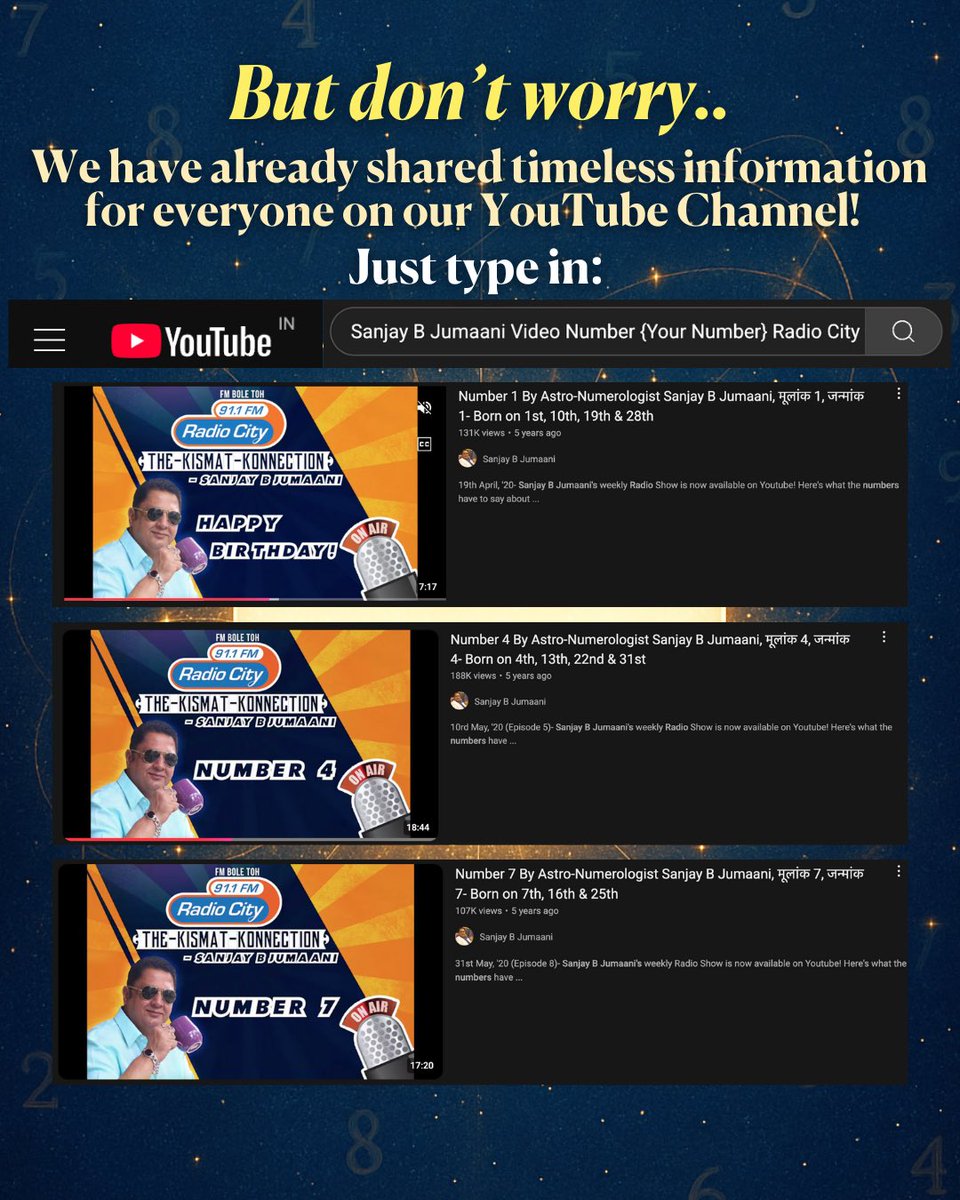
👉 Just hop over to YouTube and type: “Sanjay B Jumaani Video Number [Your Number] Radio City.”
For example, if you’re born on the 3rd, 12th, 21st, or 30th, simply search “Number 3” to find guidance tailored just for you!
#QuestionAnswer #YourQuestionsAnswered #AskMeAnything



3
788

7 Sep 2025
1. Which years did Venezuela (via Citgo) arrive in Northwest Alaska to supply winter fuel for Native villages?
The first documented delivery of discounted or donated heating oil by CITGO (Venezuela’s oil company), in partnership with Citizens Energy Corp., occurred in the 2006–2007 winter season, with a kickoff event held in Kotzebue in December 2006.
The program continued for at least two more winters—that is, through 2007–2008 and 2008–2009—supplying roughly 100 gallons per household to rural Alaska villages, including those in Northwest Alaska.
So, in summary: 2006-2007, 2007-2008, and 2008-2009 are the years during which Venezuela (via Citgo) delivered heating fuel to Native villages in Northwest Alaska.
---
2. Who was the governor of Alaska at that time?
Sarah Palin was sworn in as the 9th Governor of Alaska on December 4, 2006, and remained in office until July 26, 2009.
Thus, she was governor throughout the entire duration of the Citgo fuel assistance program in those years.
---
3. Did Alaska pay for that fuel from Venezuela?
No, Alaska (the state government) did not pay for that fuel. It was provided free of charge or at a steep discount, depending on the year:
The CITGO program provided donated heating oil, delivering roughly 100 gallons per household at no cost. In some cases, Citizens Energy Corp. helped distribute oil at a 40% discount to eligible recipients.
There is no indication that the State of Alaska paid for or reimbursed Citgo or Citizens Energy for this assistance. It was philanthropic or discount aid, managed through nonprofit coordination, not a state-funded subsidy or purchase.
---
Summary Table
QuestionAnswer
Years of deliveriesWinter seasons of 2006–2007, 2007–2008, 2008–2009
Governor at the timeSarah Palin (in office December 4, 2006 – July 26, 2009)
Did Alaska pay for the fuel?No. The fuel was donated or discounted, typically free via Citgo or facilitated at reduced rates—not state-purchased.
1
1
637