
How did the famous resistor colour code come about?
We use it everyday, and often give it little thought - but how did the resistor colour code come about. When was it introduced, and who thought it up?
It turns out those familiar bands have a fascinating history that dates back over a century. Before the Radio Manufacturers Association (RMA) standardised things in the 1920s, engineers and hobbyists lived in a "Wild West" of proprietary marking systems that made cross-referencing components nearly impossible.
Here are three things you might not know about the history of the resistor colour code:
1. It was a "Masterclass" in Practical Engineering 🛠️ As resistors got smaller, printing legible numbers became technically difficult and expensive. Even worse, the heat and friction of the soldering process often rubbed those numbers right off. Colours provided a robust, 360-degree identification method that could survive the assembly line.
2. The Era of the "Body-End-Dot" 🔴 Before the modern band system, we had the "Body-End-Dot" scheme. The body colour was the first digit, the tip was the second, and a central dot was the multiplier. It worked... unless you soldered the resistor with the dot facing the circuit board! If the dot was hidden, you had no idea what the value was.
3. From RMA to EIA 📜 The system evolved through several name changes as the industry grew—from the RMA to the RTMA, RETMA, and finally the Electronic Industries Alliance (EIA).
While surface-mount technology (SMT) dominates today, the core "ROY G. BIV" inspired colour sequence remains a foundational language for every electronics engineer.
Whether you’re restoring a vintage radio or designing a new PCB, understanding the "why" behind these standards helps us appreciate the elegant solutions of the past.
📖 Read the full history and grab a handy colour chart here: electronics-notes.com/articl…
Do you still have the resistor colour code memorised, or do you reach for a multimeter (or a cheat sheet) every time? Let's discuss in the comments! 👇
#Electronics #Engineering #HistoryOfTech #ResistorColorCode #resistorcolourcode #VintageRadio #ElectricalEngineering #ElectronicsNotes #electroniccomponents
5
13
67
3,075
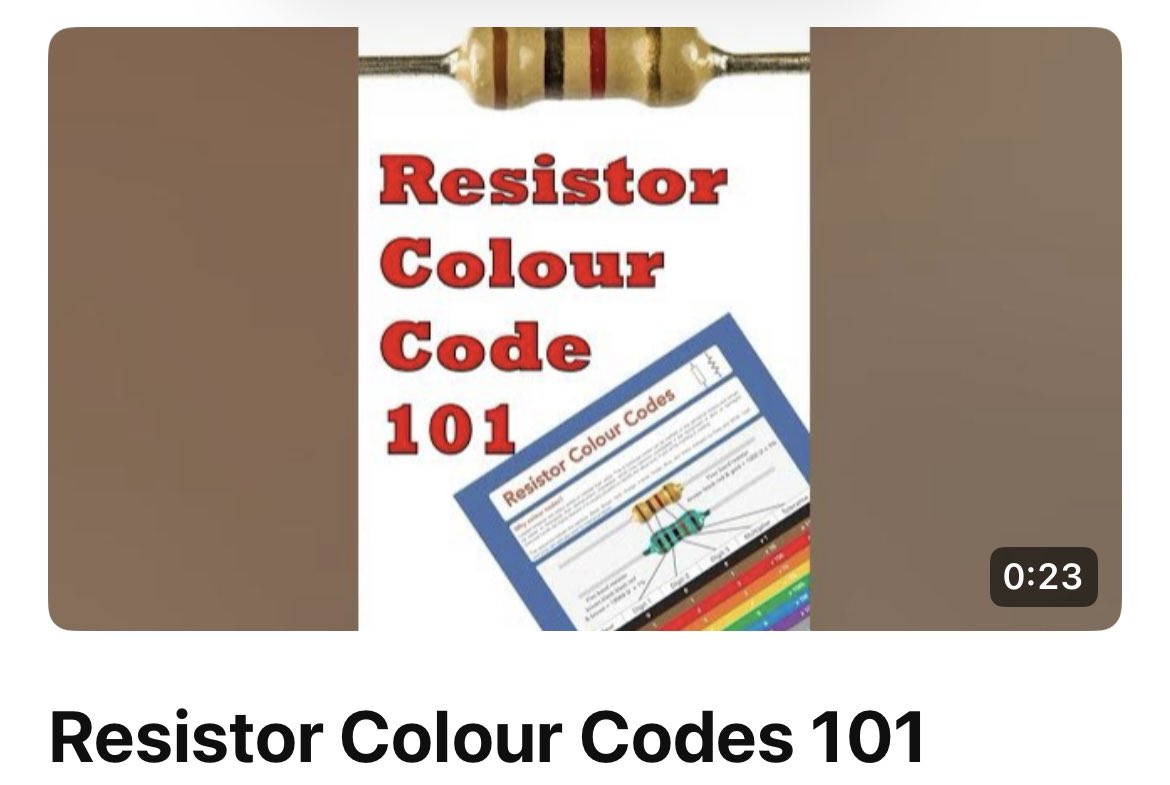
Resistor Colour Codes 101
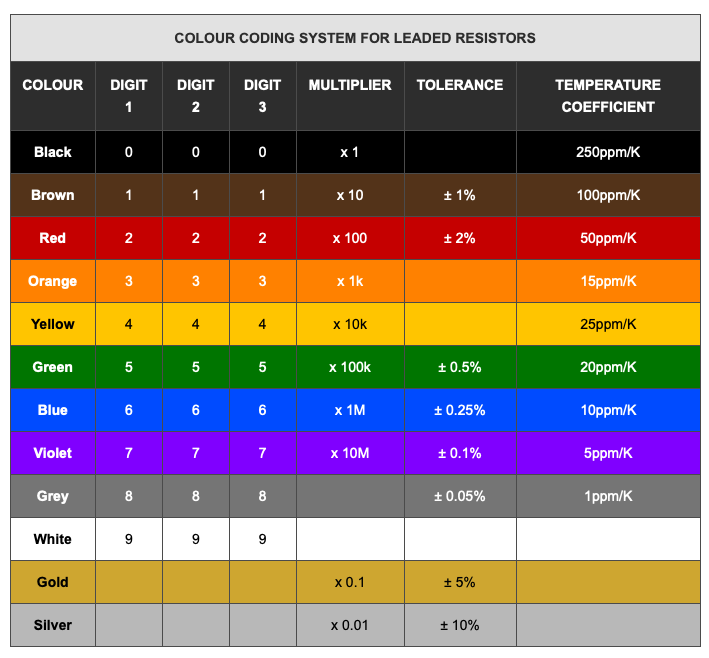
Do you ever get confused reading resistor colour codes. There are three, four and five band codes that are seen everyday.
These codes can be easy to decipher with a colour code chart or when you learn the colour code system.
Check out more YouTube short video to find out more: youtube.com/shorts/A2nh4HIbU…
#resistors #resistorcolorcode #resistorcolourcode #electronicsnotes #electroniccomponents #electronicsengineering
1
5
20
993
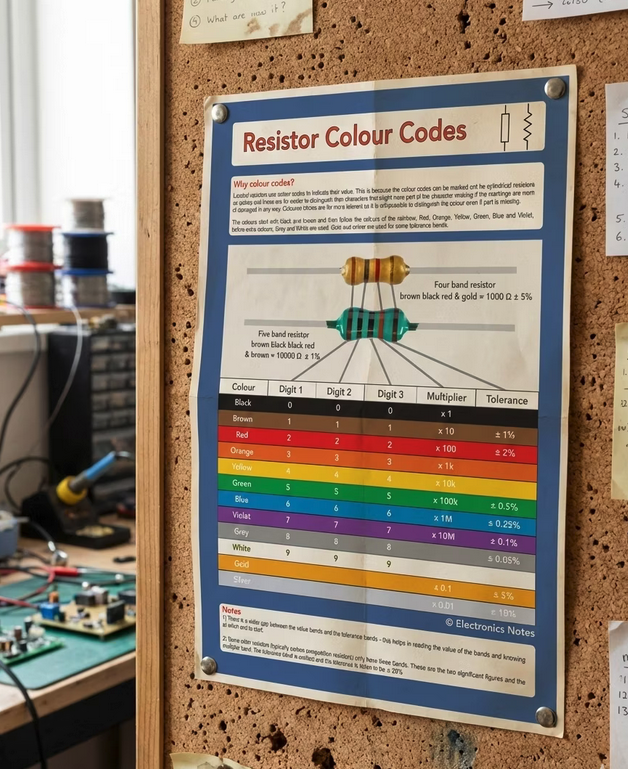
Downloadable PDF Resistor Colour Code Cheat Sheet.
Never struggle with tiny resistor bands again. Whether you’re a student in the lab or a hobbyist at your workbench, identifying resistor values quickly and accurately is an essential skill.
This professional-grade downloadable infographic from Electronics Notes provides a high-definition, visual reference for both 4-band and 5-band resistors, including the often-confusing tolerance and multiplier bands.
The primary version is a downloadable cheat sheet, but you can also buy it as a printed poster for the lab or wall.
Buy the downloadable PDF now: electronics-notes-shop.fourt…
#resistorcolourcode #resistorcolorcode #resistors #electronics #electronicslab #electroniccomponents
2
2
23
1,127
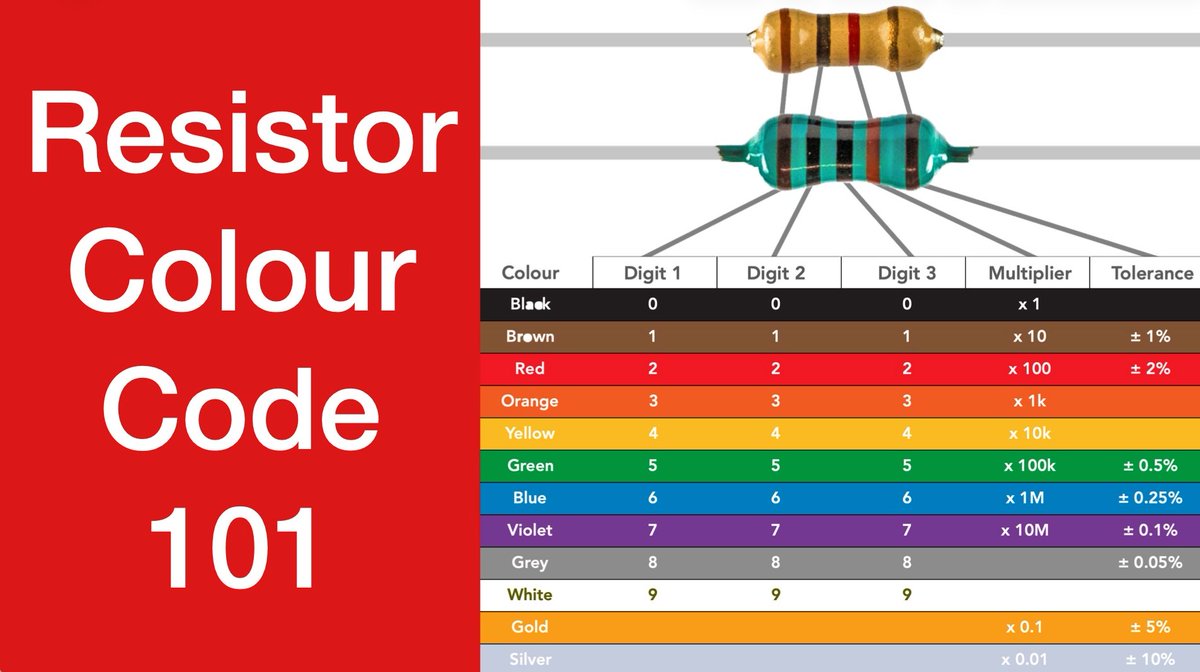
Resistor Colour Code: the secret facts and how to use it
Do you struggle with using the resistor colour code at times?
I’ve developed a video to help anyone with using it. The video shows how to use it with three, four and five band resistors. I also give worked examples of each type, determining the values for each one.
There are also some interesting facts you probably didn't know that you’ll discover along the way.
There’s also an associated crib sheet which is available very cheaply from my online shop.
Check out the full video and learn a whole lot more about the resistor colour code: youtu.be/QhBJnPXN6L0
#resistors #resistorcolorcode #resistorcolourcode #electroniccomponents
1
7
31
1,145
Resistor Colour Code - What You Need to Know
Still squinting at those tiny coloured bands? 🌈
Even in the age of surface-mount technology, leaded resistors are everywhere—from prototyping breadboards to high-power industrial equipment. If you’re involved in electronics, being able to read them at a glance is a non-negotiable skill.
I’ve put together a 4-minute masterclass designed to take you from "colour-confused" to "colour-confident."
What’s inside the video:
* The System: A clear breakdown of how the 3, 4, and 5-band codes actually work.
* Worked Examples: I walk you through real-world scenarios so you can see the maths in action.
* Memory Hacks: Pro-tips and mnemonics to help you memorize the sequence without the struggle.
Whether you’re a student just starting out, a hobbyist building your first kit, or a pro who just needs a quick refresher, this video will help you identify values on sight—no multimeter required.
Stop guessing and start decoding. Watch the full video now: youtu.be/QhBJnPXN6L0
#Electronics #Engineering #STEM #ResistorColorCode #CircuitDesign #HobbyistElectronics #LearningResources #electroniccomponents #resistorcolourcode
1
7
36
1,611
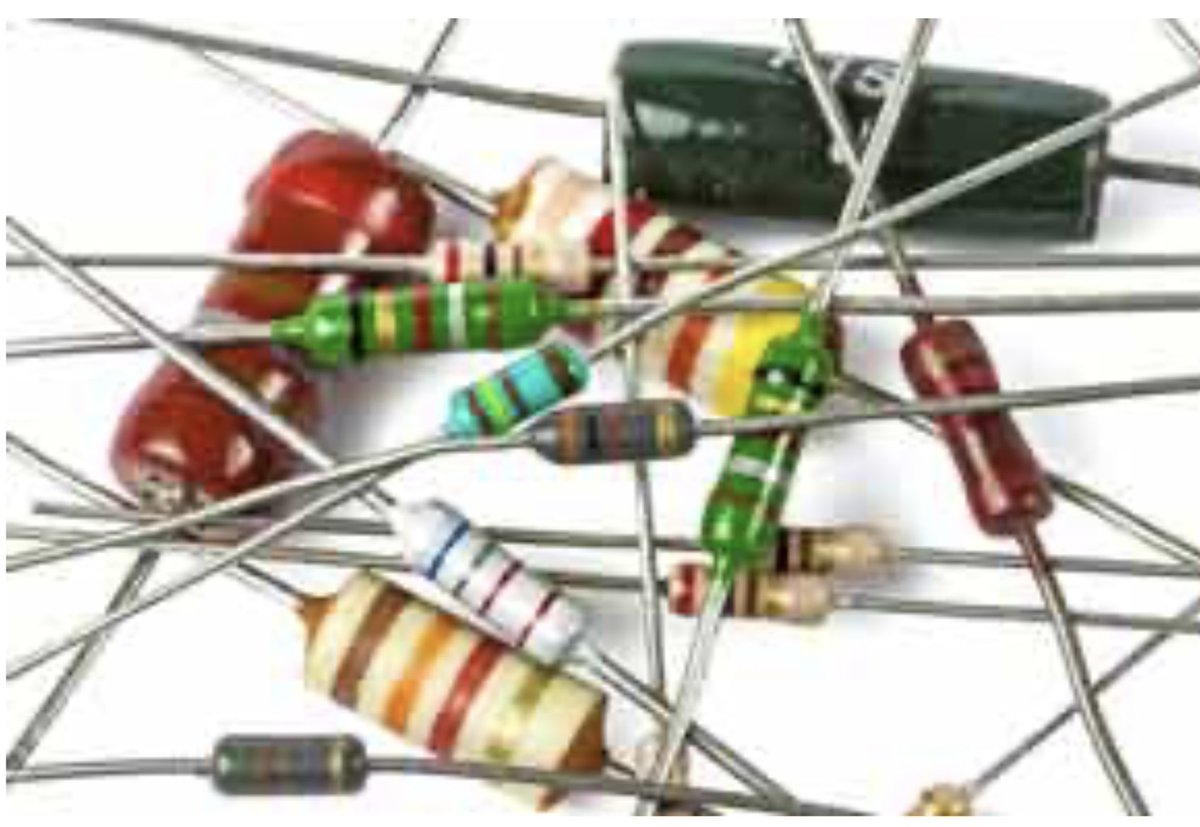
Still squinting at 5-band resistors and second-guessing your math? 🧐
We’ve all been there—buried in a circuit design with lots of electronic components and trying to remember if that third band is a multiplier or a digit.
Here is a quick breakdown of how to master resistor colour codes (and a tool to make it permanent) 👇
#resistors #resistorcolorcode #resistorcolourcode #circuitdesign #electroniccomponents #cheatsheet
2
3
41
1,720
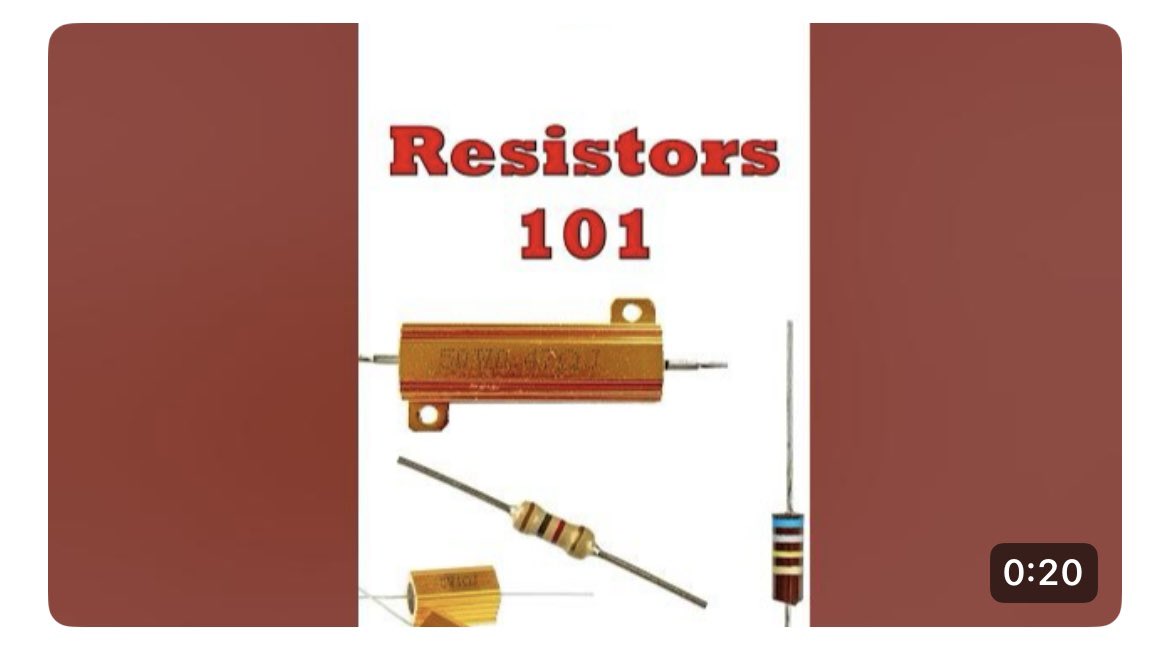
Resistors 101
My short video gives some of the key factors about resistors and gives a link to my full video.
Check out this video now: youtube.com/shorts/_s3A7coOy…
#resistors #resistors101 #resistorcolourcode #electroniccomponents
11
667
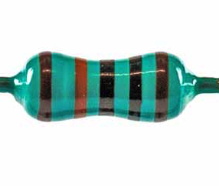
How did the famous resistor colour code come about?
It turns out those familiar bands have a fascinating history that dates back over a century. Before the Radio Manufacturers Association (RMA) standardised things in the 1920s, engineers and hobbyists lived in a "Wild West" of proprietary marking systems that made cross-referencing components nearly impossible.
Here are three things you might not know about the history of the resistor colour code:
1. It was a "Masterclass" in Practical Engineering 🛠️ As resistors got smaller, printing legible numbers became technically difficult and expensive. Even worse, the heat and friction of the soldering process often rubbed those numbers right off. Colours provided a robust, 360-degree identification method that could survive the assembly line.
2. The Era of the "Body-End-Dot" 🔴 Before the modern band system, we had the "Body-End-Dot" scheme. The body color was the first digit, the tip was the second, and a central dot was the multiplier. It worked... unless you soldered the resistor with the dot facing the circuit board! If the dot was hidden, you had no idea what the value was.
3. From RMA to EIA 📜 The system evolved through several name changes as the industry grew—from the RMA to the RTMA, RETMA, and finally the Electronic Industries Alliance (EIA).
While surface-mount technology (SMT) dominates today, the core "ROY G. BIV" inspired colour sequence remains a foundational language for every electronics engineer.
Whether you’re restoring a vintage radio or designing a new PCB, understanding the "why" behind these standards helps us appreciate the elegant solutions of the past.
📖 Read the full history and grab a handy colour chart here: electronics-notes.com/articl…
Do you still have the resistor colour code memorised, or do you reach for a multimeter (or a cheat sheet) every time? Let's discuss in the comments! 👇
#Electronics #Engineering #HistoryOfTech #ResistorColorCode #resistorcolourcode #VintageRadio #ElectricalEngineering #ElectronicsNotes #electroniccomponents
5
4
34
2,366