
32m
The main reasons these tankies think Churchill was more racist than anyone else is
(1) they want to believe it, particular because their own heroes (Lenin, Stalin, Castro) were all complete monsters.
(2) they've only read out-of-context snippets handed to them, which makes it seem much worse. That's not to say there's not an issue, but the selectivity greatly overstates it.
(3) they've literally not read the writings of anyone else of that era other than Walt Disney.
1
9

the selectivity is the personality. not everyone gets the full version and thats not a flaw, its discernment
52

Me: Is the LGBT community any more or less sexually than any other community
Ai: Yes, there are measurable differences in average sexual behavior, particularly in the number of partners, though they vary significantly by subgroup (gay men, lesbians, bisexuals) and are not uniform across the entire “LGBT community.” These patterns emerge from population-based surveys, CDC/NSFG data, and academic studies, but they reflect averages with wide individual variation—many people in every group have few partners, while a minority account for a disproportionate share. pmc.ncbi.nlm.nih. gov
Number of Sexual Partners
• Gay and bisexual men (MSM) consistently report more partners than heterosexual men. In one comparison of population-based surveys, heterosexual men and women had a median of 1 partner in the past year, while MSM reported medians of 2–4. Lifetime figures show larger gaps: for ages 35–39, heterosexual men had a median around 10–12, while MSM had a median of 67 in some datasets. pmc.ncbi.nlm.nih. gov
• Behaviorally bisexual men often report the highest recent partner counts (e.g., 2.5–3 more past-year partners than heterosexual or homosexual men after controls). guttmacher. org
• Lesbians often report fewer recent opposite-sex partners but can show higher variability or same-sex partner counts in some studies; bisexual women frequently report more opposite-sex partners than heterosexual women. sti.bmj. com
• Inequality in partner distribution is notable: Gay men show slightly more skewed distributions than straight men (more extremes of high and low), while lesbians show high inequality (many with 0 partners recently). Straight women tend toward the most equal distribution. contexts. org
Broader patterns from national surveys (e.g., NSFG, NATSAL) confirm sexual minorities, especially men who have sex with men and bisexuals, report higher lifetime and recent partner counts on average. cdc. gov Older data (e.g., pre-2000s) sometimes showed even larger gaps, partly due to different sampling and eras.
Sexual Frequency in Relationships
• Gay male couples often report similar or higher early-relationship frequency compared to heterosexual couples, though it declines over time like others. peplau.psych.ucla. edu
• Lesbian couples frequently report lower frequency than heterosexual or gay male couples (e.g., “lesbian bed death” stereotype has some basis in older data, with many long-term pairs having sex once a month or less). However, their encounters tend to be longer and with higher orgasm rates (lesbians ~86% usually/always orgasm vs. ~65% for heterosexual women). goodtherapy. org pubmed.ncbi.nlm.nih. gov
• Satisfaction levels are often comparable across groups when accounting for factors like emotional intimacy, communication, and orgasm consistency—lower frequency in lesbian couples doesn’t necessarily reduce overall satisfaction. mdpi. com
Key Context and Caveats
• Not monolithic: The “LGBT community” includes gay men (higher partner counts), lesbians (often lower frequency), and bisexuals (variable, sometimes highest activity). Many LGB people are in committed relationships (40–80% depending on group and survey). apa. org
• Gender matters more than orientation in some ways: Male sexuality (whether gay or straight) tends toward more partners on average due to lower selectivity and easier access in male-male dynamics. Female same-sex dynamics often involve longer but less frequent encounters.
• Influences: Minority stress, cultural norms (e.g., apps facilitating casual encounters for gay men), historical sampling biases, and self-reporting all play roles. Modern data shows convergence in some behaviors, but gaps persist.
• Health implications: Higher average partner counts among MSM correlate with elevated STI/HIV risks, which is why targeted public health efforts exist. thebody. com
1
56
Hannah Wallen | Too Dangerous For #Facebook! retweeted

women weaponize their selectivity as virtue then cry when the same selectivity exposes low value men use language to mark the transaction
1
1
208

To be clear - I'm not citing Paul as my authority. I'm citing Paul as yours.
You built your case on Paul's authority. Within that framework, Paul's own undisputed letter - Romans 16:7 - names Junia as outstanding among the apostles. Not a witness. Not someone sharing good news with friends. An apostle. By Paul's hand, in a letter nobody disputes.
You don't get to invoke Paul's authority to restrict women's office and then ignore Paul's own undisputed testimony of a female apostle. That's not my selectivity. That's yours.
The restriction on women's office comes from the Pastoral Epistles - disputed authorship, excluded by Marcion in the second century, doubted by Luther, rejected by Erasmus.
The female apostle comes from Romans - undisputed.
Within your own framework, the undisputed letter outranks the disputed ones.
And Jesus - the person I'm actually arguing from - never said a word restricting women from leadership. Not once.
3

Regional occupational hazards in love and war persist, with sloppyslut towers amenable to #freakofnaturetech criterion level of selectivity in discrimination: a sound bargain in the meatier enterprise. The adjacent approximation of sleepy towers may draw return fire if waiters of vanity watching the supply logistics and exchange fortunes of their mighty squeeze choke supply and cook up if adequately tipped off to the RIMIN prospect a synthetic RIMIN surrogate autocratically induced for explicit purposes of hallucinating induction, at face value I might add
1
7


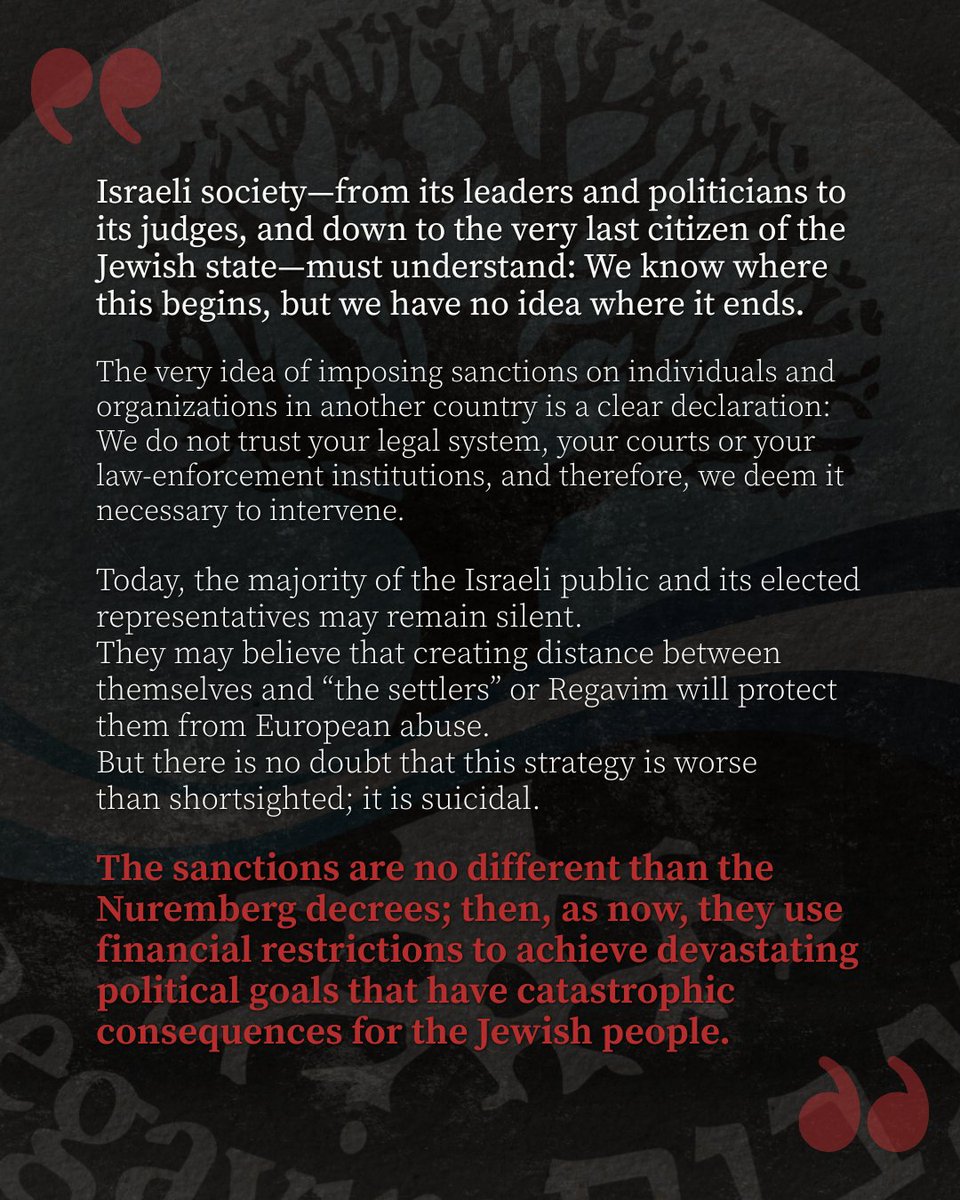
Meir Deutsch, Director General of Regavim, has made the Nuremberg comparison in print, and he is right. The official Arab position is the continuation of the Jordanian one: ethnically cleanse Jews from Judea and Samaria. The new draft constitution of the Palestinian Authority presented in February this year, which designates Sharia as the primary source for legislation, affords protections to Christians, but accordingly falls silent on Jews.
The Int’l Court of “Justice” in essence calls for this, but elides the nature of the crime against humanity via technicalities, classifying disputed land with no prior sovereign as occupied, without adjudicating title, yet demanding the removal of over half a million Jews from their homes under the color of law “as rapidly as possible.”
When the Court knowingly enjoins itself via a facially neutral international rule with the Palestinian position, dating it by many years and anything but neutral, the product, in the actual world with the actual parties, lands on Jews and Jews alone. “It’s status, not ethnicity” describes one card in a grotesque game of three card monte.
That, to anyone who sees the machinations of the system, is what is striking about the “ethnic cleansing” accusations against Israel: that they are being made in the mirror and smack of laws and procedures under the color of legitimacy that preceded mass persecution of Jews in Europe, now openly advanced by the same legacy powers with obsessive selectivity in the very system that succeeded the one ripped to the ground in the wake of World War II.
The land is not legally ‘Palestinian’. Its status is disputed with no prior sovereign. A demand that it end up with zero Jews isn’t reversing an illegal transfer. It is a demand to clear an area of one ethnoreligious group.
The ICJ’s complicity is glaring and deserves to be named, the European Union’s escalation is patently corrupt, and Regavim’s only crime has been exposing this for anyone who will take the trouble to examine the factual record.
Enough Israelis see it clearly, that the legal framing now does work that ordinary morality would never and should never permit, and they are up in arms, ready, willing and able to fight to defend themselves.

Regavim's CEO, Meir Deutsch, on @JNS_org, commenting on the new European and Canadian sanctions imposed on Regavim.
Read it below 👇

1
6
12
989

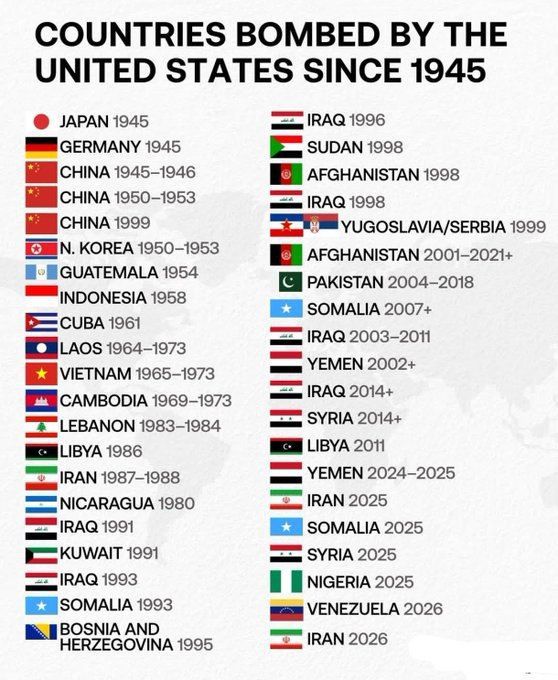
How many of the countries bombed 💣 by #AmeriKKKa are white/#European? There's a clear #WhiteSupremacistAgenda evident in their selectivity, don't you think 🤔 😏 😉?

53

Female reproductive biology imposes high obligatory investment (gestation, lactation, early offspring vulnerability)
This favours selectivity, not indiscriminate trading. Classic parental investment theory (Trivers) predicts females will be choosier, males more eager.
1
52

I’m talking about credential recognition at the k12 level. As I understand it, the credentialing vis a vis family mobility that boils down to an issue of reciprocity when switching schools.
Public schools are obligated to take you so the question is moot there. But in the independent scene, private schools give each other the side eye and when switching, there are tests, elements of admissions selectivity, and placement at play. It is the same if you switch public to private (or vice versa), or private to private.
The one system I can think of that might have some form of reciprocity is the Catholic system, since the schools have a shared tradition in the church. But even the Catholic schools have their own fractures, independents vs archdiocese-sponsored, etc.
In short: for school choice to work, you have to have more than one school! Which immediately introduces the question of how reciprocity is managed. It’s easy to say “well that’s up to the parents” but frankly people are lazy. Some network standard needs to be in place or families will default to “the devil you know” as it were.
1

📈 Wyckoff SMI "Week In Review" June 7th, 2026. | Wyckoff Stock Market Institute. Markets spent the week stabilizing after the recent correction.
Leadership shifted toward:
🏥 XLV
🏦 KRE
🏢 XLRE
Meanwhile:
📉 Precious Metals remain weak
📈 Energy remains constructive
₿ Bitcoin's oversold bounce worked as expected
Market Health Score: 51
Regime: Transition / Selective Bullish
👉 Selectivity remains critical.
wyckoffsmi.com/📈-…
#SPY #QQQ #Bitcoin #Trading #Wyckoff #StockMarket #Investing
1
2
434

I found myself returning to this line:
“Companies need to turn their workflows, domain knowledge, and accumulated judgment into AI systems that improve with each use.”
What gives me pause is the assumption that companies will continue amassing ever-expanding reserves of tokenized knowledge as a source of advantage.
For most of modern business history, operational expertise and competitive differentiation lived in the same place: people. If AI makes those elements separable, the boundary between building and buying shifts with it.
The central question becomes less about software ownership and more about ownership of judgment.
A more likely outcome, in my view, is greater selectivity. Companies will abstract and standardize forms of judgment that no longer differentiate, making them cheaper to access than to store and maintain internally. Operational judgment may increasingly resemble shared infrastructure while differentiating judgment becomes proprietary and built in house.
Under that framework, the difficult task is determining which forms of organizational judgment create durable advantage and which are better obtained through the same platforms available to everyone else. The same may be true of proprietary data. Its value is not in being proprietary, but in informing decisions that competitors cannot replicate. Data that feeds commodity judgment becomes infrastructure. Data that shapes differentiated judgment becomes advantage.

32

According to Socioemotional Selectivity Theory, true maturity means filtering out the noise & prioritizing deep, present-moment emotional meaning over superficial social networks.
1
9

Multilayer cellulose hybrid films with tunable UV selectivity and mech... sciencedirect.com/science/ar…
2

The market feels like it's rewarding selectivity right now rather than broad dip buying.
22


...number of beds in a very limited number of areas you have a situation that is capable of handling only a small percent of the homeless. Now lets look at the selectivity of these programs. Within the US there is only a small percentage of places that allow both...
4

Oh yes, you do else you wouldn’t have read it and you wouldn’t be replying.
Your education is poor you have not the faculty to understand how even to argue. You have been selective in your Response that selectivity betrays you.
13

🚨 A MAJOR BARRIER TO TURNING CO₂ INTO USEFUL FUEL MAY HAVE JUST FALLEN.
Scientists have developed a new catalyst that triples methanol production while solving a decades-old chemistry trade-off.
For years, researchers trying to turn carbon dioxide into methanol (a valuable fuel and chemical feedstock) have faced an annoying trade-off: at lower temperatures the reaction is more efficient, but CO₂ is hard to activate. Raise the temperature to speed things up, and you get more unwanted carbon monoxide instead of methanol.
A team at the Dalian Institute of Chemical Physics has now broken this deadlock. By redesigning the catalyst so that different reaction steps happen on spatially separated active sites, they achieved a space-time yield of 1.2 g of methanol per gram of catalyst per hour roughly three times higher than standard commercial Cu/Zn/Al catalysts.
Why this matters:
• Methanol from CO₂ is seen as a key route for carbon recycling and producing sustainable fuels and chemicals
• The new design dramatically improves both activity and selectivity at the same time
• It reduces the formation of carbon monoxide byproduct while keeping hydrogen dissociation efficient
• This kind of catalyst improvement is essential if we want CO₂-to-fuel processes to become economically viable at scale
The deeper implication:
Converting CO₂ into useful products has always been limited by fundamental chemistry trade-offs. By cleverly separating reaction steps across different parts of the catalyst, this work shows we can overcome those limitations without needing extreme conditions or exotic materials.
It’s a practical step toward making carbon capture and utilization more efficient turning one of our biggest waste products into something valuable instead of just burying it.
We’re getting closer to catalysts that don’t force us to choose between speed and cleanliness.
How important do you think breakthroughs like this will be for scaling up carbon-to-fuel technologies in the coming years?
Follow for more frontier chemistry, catalysis, and carbon utilization research.
10
39
160
12,859