
Joined January 2013
- Tweets 39,395
- Following 11,311
- Followers 26,394
- Likes 81,989
6,019 Photos and videos




Pinned Tweet

Jun 1
Iran Standoff Analysis || Washington is trying, so far unsuccessfully, to convince Tehran the negotiation table is real and that Batna is existentially risky. It wants SoH demined, stranded vessels evacuated and the French-Uk led maritime taskforce launched in return for staged release of cash and a 30-60 day window to iron out the nuclear file; Tehran isn’t biting due to both political echelon mistrust and hardliners who, to varying degrees, are disinterested in a US deal on reasonably inferable operational and strategic imperatives…
The region is in a temporary standoff. Iran understands better than most that neither it nor the US can capitulate. It’s banking that the security shadow that renewed combined operations cast over the Saudi Hajj (just ended), the FIFA World Cup and America’s 250th in between, coupled with Potus’s preference for congress out of session, will deter Washington from moving till Aug. It also understands that high intensity operations will cost it dearly while feeding red meat to US and Israeli domestic bases in the crucible of the upcoming elections.
Concurrently global markets remain exposed to stagflationary shocks from protracted SoH closure while Tehran faces long term economic damage from the US blockade. Tehran’s light at the end of the tunnel is denying the US and Israel anything they can sell domestically as a win before US midterms and Israel’s government elections around October-November.
If Republicans lose the house and lose senate cohesion AND Israel establishes a new government with Ra’am as a potential kingmaker or coalition enabler in the post-election Knesset, renewed operations become difficult to sustain under domestic pressure; the US and Israel will be incentivized to deescalate under less favorable terms, or enter a prolonged ceasefire that leaves the region in a state of protracted instability. The latter outcome makes the Iranian regime especially attractive to Moscow and Beijing’s opportunism as leverage for diluting US bandwidth and complicating multi-theater resource allocation and force posture —a so-called ‘simultaneity problem’ premium Tehran can concierge to major power competitors.
Consequently, Iran is concurrently denying clearance of flanking pressure from Hezbollah on Israel, and preventing the evacuation of around 1,500 hostage vessels with some 22k civilian mariners still trapped in the Gulf since the launch of Epic Fury and Roaring Lion on Feb 28, that dilute defensive capacity, exert pressure on interceptor magazine depth and keep critical sites exposed to saturation risk across a roughly thousand mile littoral.
In sum, Iran is leveraging the summer’s security shadow as deterrent to deny US-Israel theater shaping for renewed combined ops in August’s final campaign window before elections when security successes, failures, or inaction can be weaponized or paraded for political points.
This is likely why Tehran’s hardliners and IRGC view anyUS deal as unfavorable: even for cash and immediate relief the risks of furnishing the US and Israel shaping conditions that embolden action carries risks. A second phase of the kinetic campaign will cost the IRGC dearly and they know it—they likely lose the island chains as coalition forces push to establish seaward based weapons engagement zones to secure an SoH corridor, and missile sites are likely to be strategically isolated and limited to onsite diesel reserves (5-20 day supply depending on size).
This is a high-stakes, high-mistrust temporary stalemate with no credible structural pathway to a diplomatic offramp, and accumulating mutual chokehold costs of prolonged stasis. There is high risk of surprise, but little appetite for major kinetic breakout on either side right now. If a credible deal cannot be put on the table the US and Israel may have to push ahead of preferred timetables and select from higher intensity options to thwart Tehran’s strategy.
19
38
148
40,165
dan linnaeus retweeted

הופעלו התרעות על חדירת כלי טיס עוין במספר מרחבים בצפון הארץ, הפרטים בבדיקה
4
14
52
3,090
dan linnaeus retweeted

6 things to remember about the possible deal with Iran that help make more sense of it:
1⃣ The Gulf countries & others are working as fast as they can to prepare the energy market for the next time that the Strait of Hormuz is shut down. For example, the UAE's new pipeline designed to bypass the Strait is scheduled to become operational in 2027. That means Iran's leverage will be greatly reduced.
2⃣ Iran can no longer quickly create a nuclear bomb before we can adequately react. It is not enriching & any effort to enrich its current uranium stockpile or move towards weaponization (actual nuclear warhead/bomb construction) is very likely to be detected and violently ended by the U.S. & Israel. If trends are in our favor, our position will strengthen over time.
3⃣ If it's true that Iran's ballistic missile production capabilities have been destroyed, minimized or severely reduced, it might make mathematical sense for us to continue the pattern where Iran slowly reduces its remaining stockpile by using it in small amounts intermittently.
4⃣ At the same time, the U.S. and its allies' defensive anti-missile capabilities are likely to increase. If Iran's capabilities are on the downtrend, and our capabilities are on the uptrend, delaying military action arguably puts us in a better position. There may also be reasons for us to believe that our intelligence inside Iran will get stronger & that the strength of the Iranian opposition will also get stronger during this delay.
5⃣ If Iran's big economic threat is using the Houthis to shut down the Bab al-Mandab Strait, then this time period might be used to reduce the Iranian/Houthi ability to accomplish that. Unfortunately, the U.S. has decided not to recognize Somaliland as an independent country like Israel has. Big strategic mistake that undermines the case for believing in point #5 here.
6⃣ It's not a determining factor, but if the U.S. can afford to wait for more favorable weather conditions (springtime), isn't it worth doing so in order to lessen the risks to our military servicemen and women?
Just some things to keep in mind.
3
16
57
2,400
dan linnaeus retweeted
Mar 25
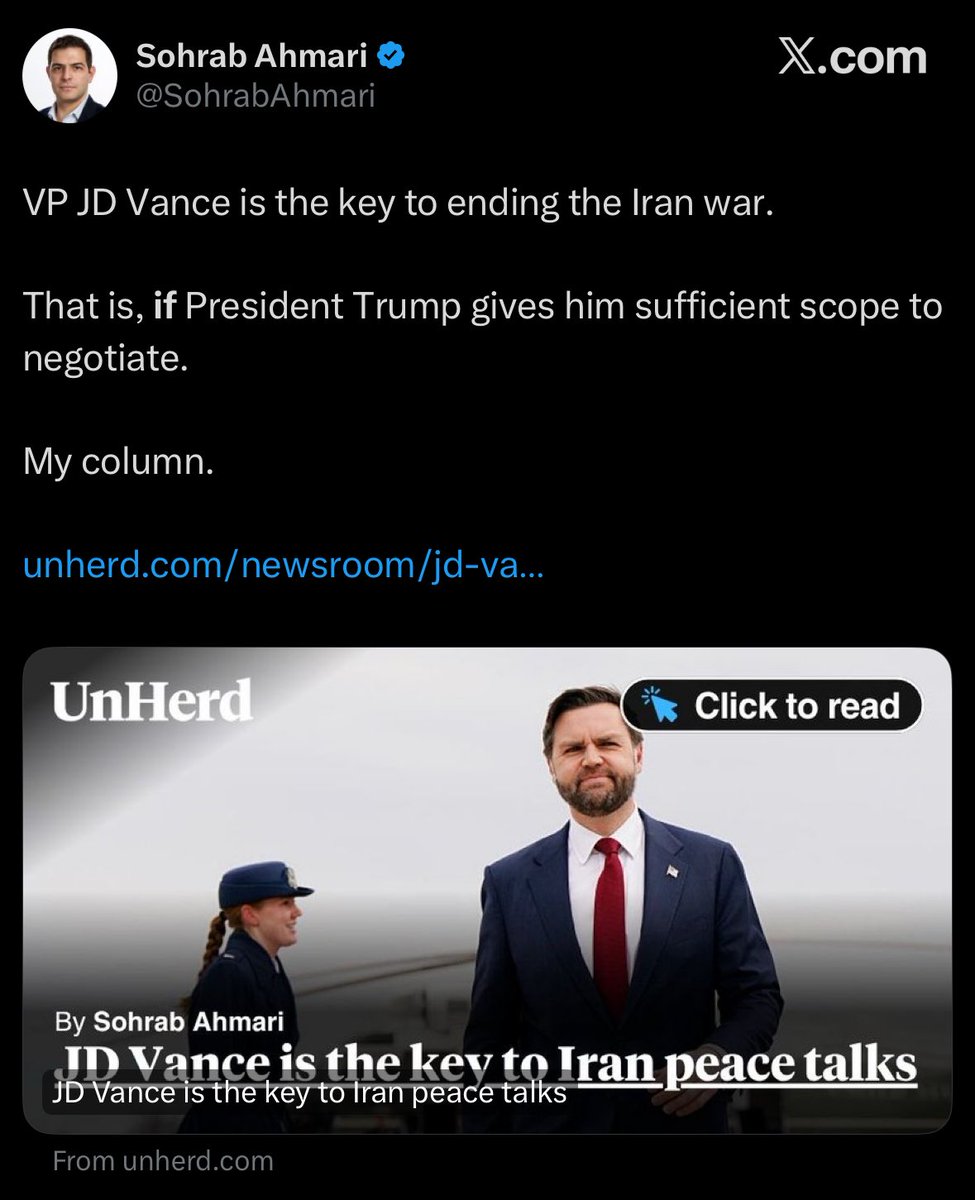
Something to watch unfold. Even though Ahmari and Trita Parsi (@tparsi) have spent more than a decade publicly attacking each other -- Ahmari used to call Parsi and NIAC regime apologists who blame America snd Israel for everything; Parsi used to dismiss Ahmari as a neoconservative warmonger -- their positions have quietly converged on their desire to avoid US-Iran conflict and see diplomacy as the only realistic path forward.
Parsi recently begun amplifying Ahmari’s UnHerd pieces on the topic. In June last year he tweeted “MUST READ by @SohrabAhmari” on one of Ahmari’s columns about the Israel-Iran 12 Day war and noted that the two of them “used to be quite far from each other.” Now he retweeted this latest column arguing that JD Vance is the one person in the Trump orbit who could actually close a deal. The piece aligns with Parsi’s longstanding track-II advocacy for engagement, sanctions relief, and deescalation.
As things would have it, the paleocon-Iran lobby dyad is odd sort of horseshoe of its own…
7
28
79
6,938
dan linnaeus retweeted

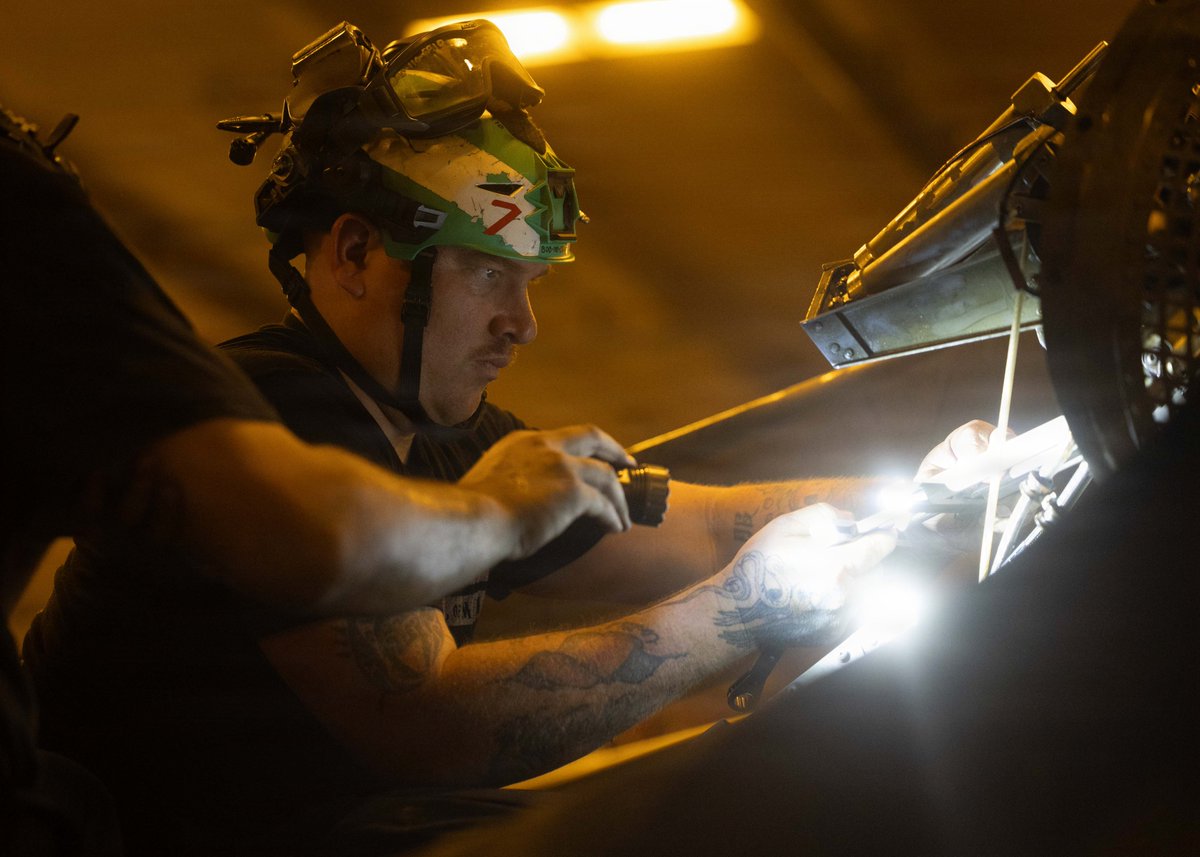
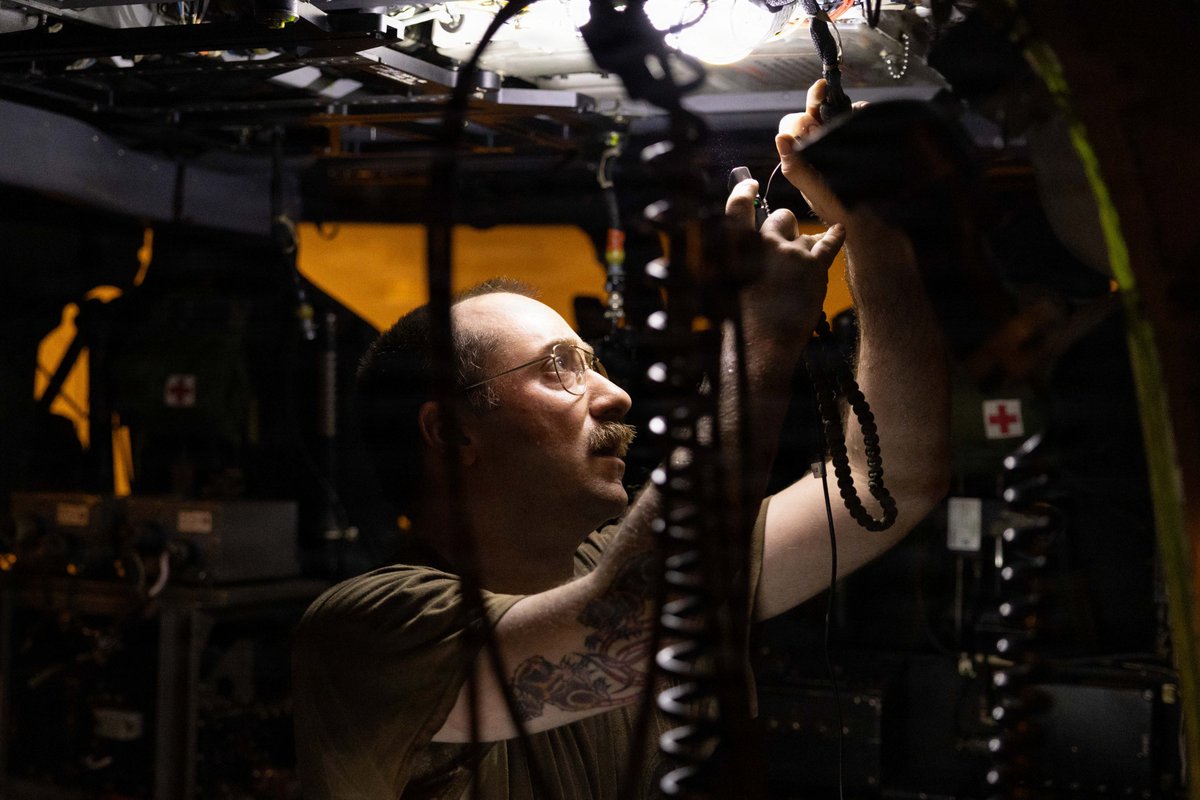
Sailors aboard USS George H.W. Bush (CVN 77) perform maintenance on MH-60 Sea Hawk helicopters, keeping them mission-ready as the aircraft carrier transits the Arabian Sea and supports the U.S. blockade against Iran.
77
331
2,389
67,244
dan linnaeus retweeted

Shalom Mahmoud, didn't you use to work for UNRWA? They just fired 70 terrorists in Gaza, so when you get deported, at least you know there's a job waiting for you.

New York has been my home for the last 3.5 years and I've been lucky to witness all the great things happening in the city. Above all, I'm grateful for its people, their warmth, love, and solidarity.
Thank you to the 33 NY lawmakers who sent a joint letter to DHS demanding an immediate end to the politically-motivated removal proceedings against me, and to @SenatorBrisport for leading this effort.
nysenate.gov/newsroom/press-…
11
126
861
18,500
dan linnaeus retweeted

This is a really good point. As the confirmation of combatant deaths in Gaza continues to rise, as the fantasy academic papers about 100s of 1000s of dead get proved wrong, as S Africa beg for more ICJ time, their genocide narrative falls apart, so they must escalate.
Jun 12

Worth noting that Mehdi Hasan’s recent hate binge and rhetorical escalation are also a sign that his cause is losing its sway over the Western public and a bid for in-group cohesion. He’s had to attack Seinfeld, John Cleese, Bari Weiss, and Mark Dubowitz in the span of the last 24 hours alone to do damage control within his cohorts, which are losing steam and legitimacy. It’s incendiary and not to be taken lightly, but the doubling down seems to stem from realizing his narratives are unwinding and need defending.
47
321
1,952
113,636
dan linnaeus retweeted
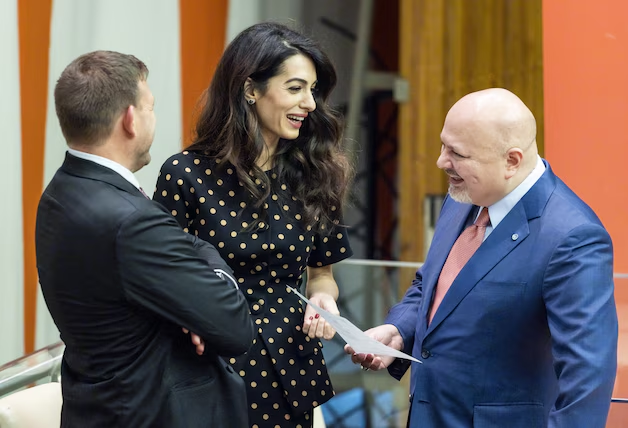
Reuters: Two-thirds of ICC bureau found prosecutor Karim Khan guilty of “serious misconduct” and “serious breach of duty” by sexually assaulting his employee.
14 voted against Khan: Switzerland, Japan, Belgium, Chile, Cyprus, Ecuador, Finland, Italy, Latvia, Poland, Slovenia, South Korea, Brazil, New Zealand
4 voted for Khan: South Africa, Senegal, Kenya, Sierra Leone
3 abtained: Uganda, Bosnia, Bolivia
reuters.com/world/prosecutor…
33
334
1,146
34,438
Big if true.

“Tulsi Gabbard and her staff promulgated Russian intelligence products as American work.”
Yes, and she did this before joining ODNI and again on her way out the door, which should probably tell you where she’ll wind up next. Senators who voted to confirm her should think on their sins.
4
5
28
2,200
Funny. I do. I trust Iran not to give up its missile program.
I trust America too. We’re not leaving that lever in their hands so they can create mass salvo crises and disrupt Indopac at will.

I don’t trust Iran.
4
3
18
1,291
dan linnaeus retweeted

Israel will not be bound by a potential Iran deal but must coordinate with the United States, a senior diplomatic source told Israel Hayom, saying Israel would still be able to defend itself if an agreement is reached. US President Donald Trump told Israel’s Prime Minister Benjamin Netanyahu that Iran’s nuclear program, missiles and Hezbollah must be addressed or there would be no deal, according to the source. If talks fail and Iran continues military activity, regime change in Iran could be considered in Washington, the source added.
9
48
161
14,948
dan linnaeus retweeted
AP Exclusive: Humanitarians at Médecins Sans Frontières sexually exploit Sudanese underage girls in refugee camps, systematically targeting vulnerable victims of war. Internal report, buried for 11 months, suggests there was organized sexual trafficking.
apnews.com/article/chad-suda…
35
612
1,126
29,042
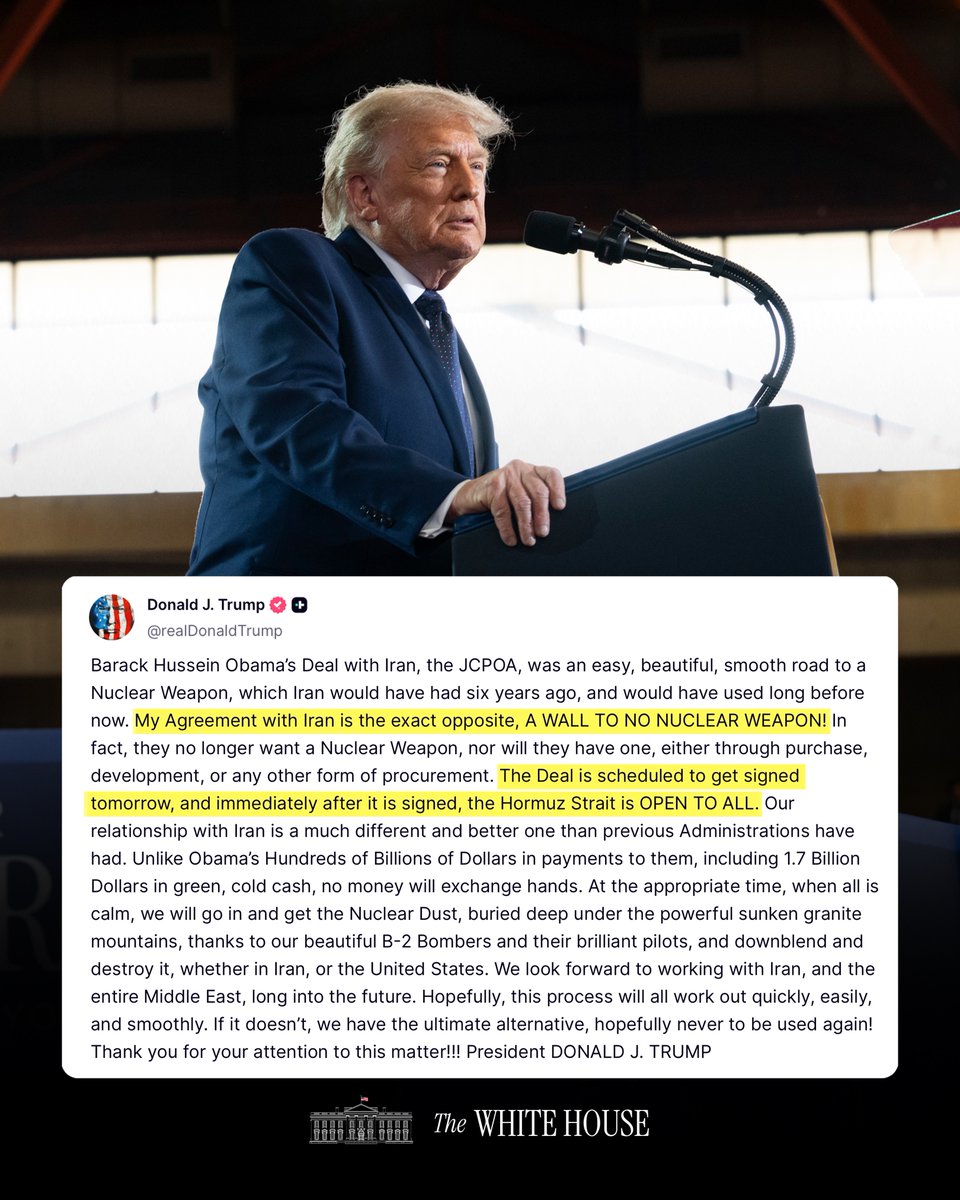
Potus: We look forward to long-term cooperation with Iran and the entire Middle East. Let's hope the entire process goes quickly, easily, and smoothly. If not, we have the ultimate option, which hopefully will never need to be used again!

"The Deal is scheduled to get signed tomorrow, and immediately after it is signed, the Hormuz Strait is OPEN TO ALL." - President Donald J. Trump 🇺🇸
1
3
11
1,157
dan linnaeus retweeted

🎥WATCH: Weapons located in one of Hezbollah’s underground terror tunnels.
For this very reason, the IDF launched the operation in the Beaufort Ridge: to dismantle Hezbollah’s threat, prevent them from using the ridge to target northern communities and dismantle the underground tunnel network beneath it.
68
301
1,429
42,284
dan linnaeus retweeted
One of X’s contributions to humanity was enabling this community note
11 Nov 2023

False & insidious claims that our schools teach hatred that we have let the people of #Gaza down come from those who want @UNRWA to fail.
They only fuel a toxic & deeply polarized environment .
unrwa.org/newsroom/official-…
Community note
“...the new textbooks examined in this report indoctrinate for death and martyrdom. Jews and Israelis are portrayed as quintessentially evil, amid calls for jihad and martyrdom by Palestinian children.” There is no distinction made between Jews and Israelis..."
brandeiscenter.com/swiss-governme…
foreignpolicy.com/2021/11/05/unr…
nypost.com/2017/01/06/un-…
7
128
662
9,807
dan linnaeus retweeted
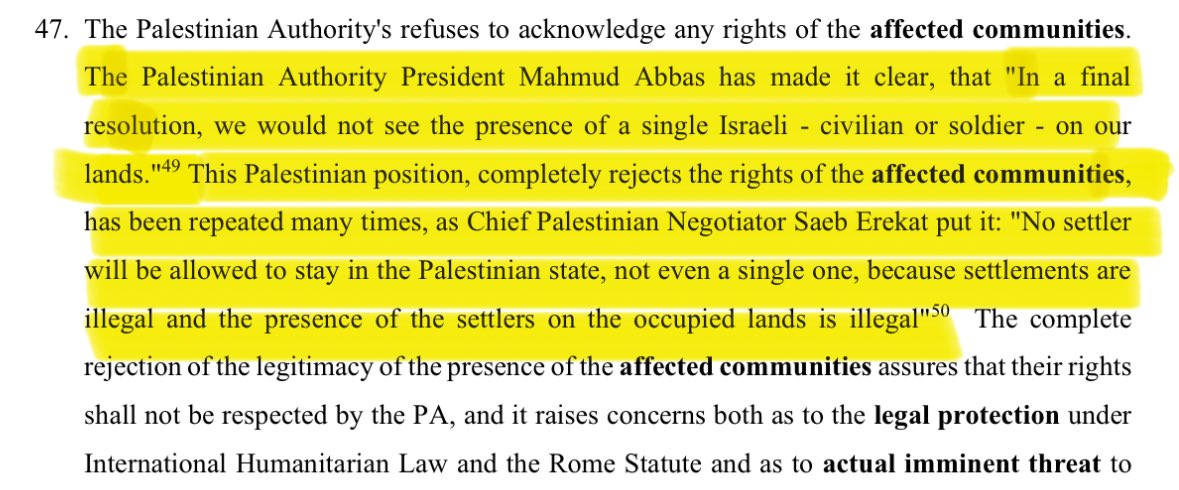
The official Arab position is the continuation of the Jordanian one: ethnically cleanse Jews from Judea and Samaria. The land is not legally ‘Palestinian’. Its status is disputed with no prior sovereign. A demand that it end up with zero Jews isn’t reversing an illegal transfer. It is a demand to clear an area of one ethnoreligious group. The ICJ’s complicity is glaring and deserves to be named.
The new draft constitution of the Palestinian Authority presented in February this year, which designates Sharia as the primary source for legislation, affords protections to Christians, but accordingly falls silent on Jews.
What most Westerners do not understand because of the opacity of int’l law is that the Int’l Court of “Justice” in essence calls for this, but elides the nature of the crime against humanity via technicalities, classifying the land as occupied without adjudicating title yet demanding the removal of over half a million Jews from their homes under the color of law “as rapidly as possible.”
When the Court knowingly enjoins itself via a facially neutral international rule with a Palestinian position dating it by many years that is not facially neutral, the product, in the actual world with the actual parties, lands on Jews and Jews alone. “It’s status, not ethnicity” describes one card in a grotesque game of three card monte.
That, to anyone who sees the machinations of the system, is what is striking about the “ethnic cleansing” accusations against Israel: that they are being made in the mirror and smack of laws and procedures under the color of legitimacy that preceded mass persecution of Jews in Europe, that are now openly advanced by the same legacy powers with obsessive selectivity in the very system that succeeded the one ripped to the ground in the wake of World War II.
It really does not matter if the broader publics fully grasp the arguments and exegesis involved. What is important is that they are aware that indeed many Jewish Israelis see this quite clearly, that the legal framing now does work that ordinary morality would never and should never permit, and they are up in arms, ready, willing and able to fight to defend themselves.
legal-tools.org/doc/8ni202/p…
8
55
118
3,484
dan linnaeus retweeted
What is a more aggressive deterrence posture Israel can take on its northern border?
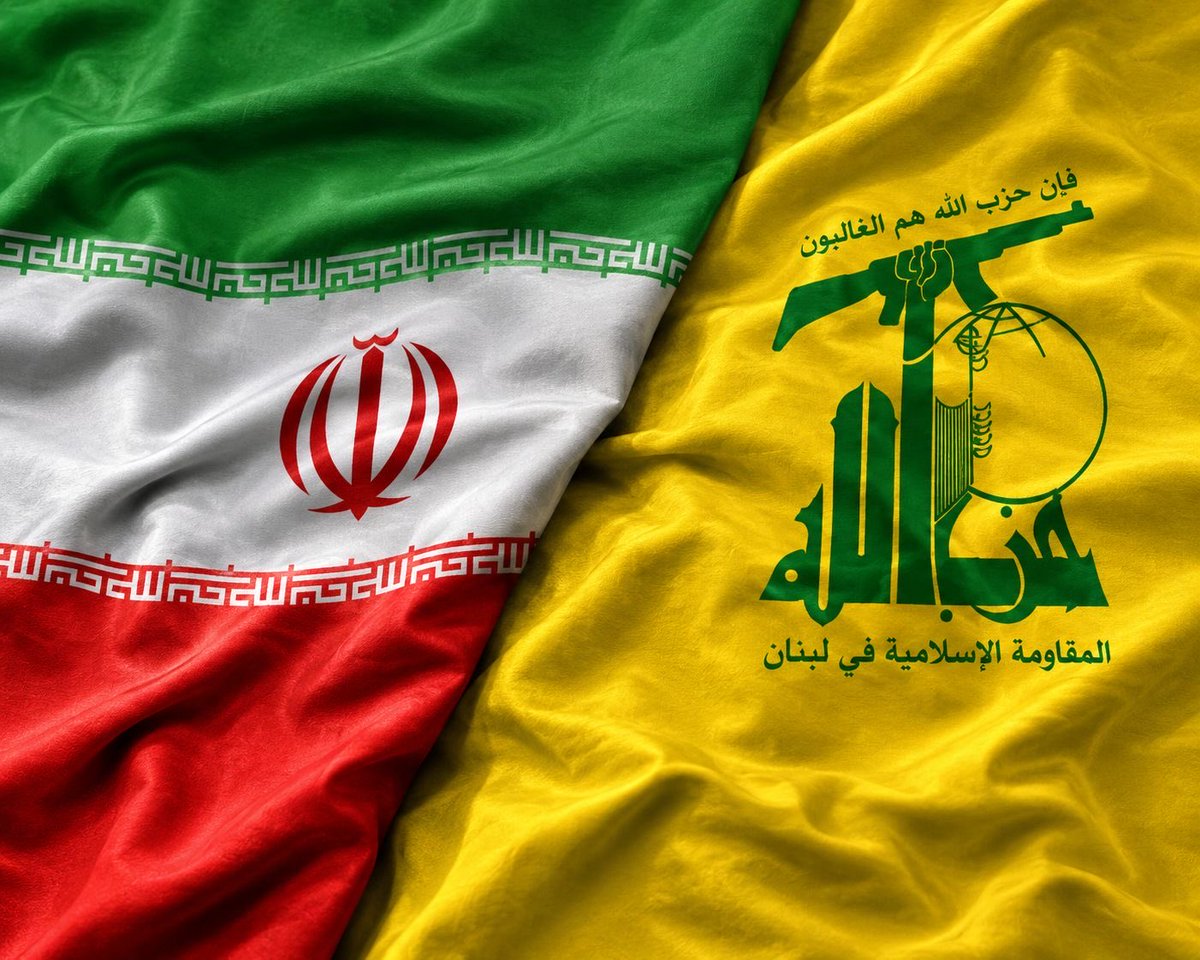
Viz. Iran-Hezbollah. If Iran treats Hezbollah as a “united front” and defends it as such, then every attack by Hezbollah may be repelled in Beirut and Tehran. When Hezbollah and Tehran understand attacks on Israel from Lebanon mean attacks in Dahiyeh and Tehran they will have new costs to factor into Hezbollah’s decisions to launch attacks. Going forward, Hezbollah fire activates Israeli freedom to impose costs on the Iranian state apparatus that makes the Lebanese front possible.
Viz. Washington. Conversely, Tehran’s bid to fuse Israel and the US, where Israel’s colorable self-defense is met by Tehran with attacks on the US lawful presence in the region must be defeated. Washington cannot make itself an accomplice to depriving Israel of its self-defensive rights by any means. If Washington cannot take the heat then it may acquiesce to Tehran's demands and get out of the kitchen, draw down Centcom posture, but it may not deprive Israel of its sovereign rights under Article 51. Alternatively, Washington can continue to draw a bright line between its presence and Israel’s defensive operations, making clear to Tehran that if Hezbollah attacks and Israel defends it supports Israel’s rights, now inclusive of Iranian territory target sets, but will not be directly involved unless attacked itself -- any attack or threat to US presence in the region will be met with US defensive actions, up to and including renewed combined operations.
Those are deterrence and strategic postures. There are serious intn’l law, military strategic, and geopolitical questions surrounding these postures that require unpacking. But roughly speaking, this is a categorically more aggressive deterrence posture for Israel to take. Not necessarily the recommended one.
Note that Israel has already conducted strikes against the IRGC Lebanon Corps on Iranian soil to degrade Iran-Hezbollah operational coherence. As Iranian state forces whose entire function is the Hezbollah front, the IRGC Lebanon Corps doesn’t fit a clean Iran-Hezbollah separation.
It is concurrently, (a) Iranian state armed forces, which makes striking them part of the Iran-Israel international armed conflict, and (b) an operational contribution to the Hezbollah-Israel front, building its tunnels, running its rearmament, embedding in its command, maintaining security channels and coordinating with the IRGC.
Where Quds personnel are embedded in Hezbollah’s operational front, even on Iranian territory, Israel can and has targeted the Iranian state component directly. It does not need to relitigate Iran’s involvement in each Hezbollah launch.
The separation between the Iran and Hezbollah theaters was already tenuous at the operational seam before Iran’s latest missile attack further eroded it.
Now following (i) Iran’s direct missile strikes on behalf of its Hezbollah front, (ii) its decision to hang its ceasefire with Israel on the Israel-Hezbollah conflict, and (iii) its threats, capability and intent to repeat attacks if that conflict continues, arguendo, going forward, Israel may adopt a strategic posture that targets Iranian assets directly in its defensive operations against Hezbollah, and preemptively to disrupt them -- as an integrated component of the Israel-Iran IAC.
The key is this. An integrated ceasefire theory is now reciprocal. Iran is saying the Israel-US operations were combined. Correct. It wants suspension of hostilities on both and has unwittingly or wittingly claimed Hezbollah as its own. Fine. Just be clear that Hezbollah attacks on Israel trigger the Iran-Hezbollah front and the US may sit out unless Iran widens to US presence.
The basic legal theory. Israel-Iran and Israel-Hezbollah are linked IACs
A ceasefire suspends but does not terminate an ongoing IAC, so both conflicts remain live, and Israel, not being party to any US–Iran cessation, retains full belligerent rights regardless of Iran’s demand to include Lebanon.
1. Jus in bello. Iran cannot be treated as a strict Wentker co-party to Hezbollah, it is a co-party analogue and state component of the Hezbollah-Israel front in an extended state–non-state actor context.
2. Attribution. For attribution of Hezbollah’s own conduct to Iran as a matter of state responsibility, ARSIWA Art. 8 (conduct on the instructions, direction, or control of the state) or Art. 11 (conduct acknowledged and adopted by the state “as its own”) must be argued.
3. Targetability. But for the targetability of Iranian organs participating in the Hezbollah front, no such upward attribution is needed. The test is structural party status, and Art. 4 already makes both IRGC Aerospace Force and Quds Force conduct Iran’s own.
4. Operational Contribution. Since Wentker’s operative test applied to Iran’s contribution is knowing, operational, coordinated with Hezbollah, and directly connected to harm against Israel, on that, Iran plainly qualifies on status.
5. Persistent Status. Once Iran crosses the party status threshold, that status persists with stability and permanence until its criteria cease. Israel is not confined to a per-attack attribution inquiry before treating Iranian military organs integrated into the Hezbollah front as part of its defensive target bank.
In sum, Israel may no longer treat the Hezbollah front as hermetically separable from Iran where Iran itself has integrated, sustained, and defended that front through state force. Hezbollah attacks from Lebanon will be treated as attacks within an integrated Iran–Hezbollah armed campaign when they are directed, enabled, sustained, shielded, or enforced by Iranian state organs or by Iran’s substantial operational involvement.
As such, Israel may reserve the right to respond against Hezbollah assets in Lebanon and against Iranian military organs and assets, including on Iranian territory, that form part of the campaign. The target set is bounded by campaign nexus, the necessity and proportionality of the defensive response, and IHL targeting rules.
Merits Outline.
Hezbollah on Lebanese soil presents a forward-deployed, high freedom of action externalized formation of the Iranian armed forces whose operational latitude no more severs command relationships than a special operations force element’s tactical discretion severs its parent service.
It is comprised of tens of thousands of “borderless fighters” armed by Iran with an arsenal of tens of thousands of rockets, drones and missiles, integrating IRGC Quds personnel inside Hezbollah’s planning, targeting, and command structures, and executing Iranian strategy on another state’s territory.
The weapons, the supply chain, the financing, the four-decade training pipeline, the strategic direction, and the secure communications are Iranian. The two coordinate through standing diplomatic and security channels under unified strategic command and pledge fealty to Iran’s Supreme Leader under the Shi’i revolutionary religio-juristic doctrine of Vilayat-e Faqih.
Critically, the apparatus that builds, arms, finances, and directs the Lebanese front does not sit in Lebanon. It sits in Iran. The Quds Force Lebanon Corps operates from Iranian soil -- its engineering branch head Mehdi Vafaei was struck in Mahallat, central Iran, while running Hezbollah’s subterranean weapons-storage and tunnel infrastructure in Lebanon and Syria -- and its officials have been struck by Israel in both Beirut and Tehran.
The rearmament pipeline, the precision-conversion program, the financing channels, and supply nodes such as Tofigh Daru originate on Iranian territory. The Lebanese front cannot be operationally degraded from Lebanese airspace alone; its command-and-sustainment layer is Iranian, located in Iran, and reachable only there.
Arguments.
1. Attribution. The restrictive attribution standard rests on a sound protective premise that a state should not be held responsible for the conduct of actors it does not control. A state should not be dragged into war for arming, funding or sympathizing with a belligerent. Subjecting the floor of wrongful attribution to cracks is a dangerous business, but without a clearly defined ceiling on its exploitability, states may use it to engineer plausible deniability for actions that undermine peace and security and effectively deprive states of their Charter rights.
First, the law must not require the impossible of states. A rule that conditions a state’s right of self-defense on a showing no state can be reasonably expected to make is unmeetable -- lex non cogit ad impossibilia. Where a foreign state has fused itself into a VNSA’s command, targeting, planning, and rearmament across an active front, the defending state cannot, before lawfully responding, intercept every communication, identify every belligerent, and adjudicate in real time which operative on that front acts under foreign direction and which under the VNSA -- especially when the foreign state adopts a decentralized “mosaic defense” doctrine and autonomous cells act with high freedom of action on standing engagement triggers and objectives. A standard that cannot be meaningfully defined and met cannot guide conduct, and law that purports to bind or hold persuasive weight must be able to tell states what is reasonably expected of them -- lex certa and nullum crimen, nulla poena sine lege.
Second, the contrary licenses an abus de droit. Attribution theory strives for a threshold to prevent a state from being blamed for what it does not command, not to permit a state to command armed forces and conduct attacks under deniability. A state that stands up an army behind the non-state actor screen, directs that army against another state, and then invokes the screen to escape response is not exercising the protection the rule confers. It is abusing it.
As Schmitt argues in the Ukraine context, even substantial aid (arms, training, intelligence) to an independent belligerent does not confer party status. That is the floor, and the line the international community rightly polices to keep states from being dragged into war by mere support. (Schmitt, 2022)
Article 3(g) of the Definition of Aggression supplies the ceiling when “sending by or on behalf of a State of armed bands… or its substantial involvement therein” reaches the armed-attack threshold -- a formulation the ICJ in Nicaragua received into customary law. (UNGA Res. 3314, 1974; ICJ, 1986)
Nicaragua remains the opposing citation but does not defeat this interpretation. The Court excluded mere weapons and logistical support from “armed attack” while recognizing that sending armed bands, or substantial involvement of sufficient scale and effects, qualifies. Iran’s relationship to Hezbollah is not arms supply to an independent force. It is command-integration of a force Iran built, sustains, and directs -- the far side of the line Schmitt draws and squarely within 3(g)’s “substantial involvement.” The bright line urged here is therefore not invented but is already latent in 3(g), and has simply never been applied to the integration case.
2. Reciprocity. A state should not be able to claim the proxy’s autonomy when autonomy buys immunity and claim the proxy’s cause as its own when ownership buys a pretext for aggression against another state.
Iran will likely argue the mirror: if Israel argues Hezbollah is part of Iran front, then an Israeli strike on Hezbollah licenses an Iranian strike on Israel and Israel has no basis for complaint -- it is acceding to the linkage. Three points complicate this symmetry.
First, Hezbollah is not a state. Collective self-defense of the Hezbollah front is the right Iran would need to invoke but is available only to a state victim, and under Nicaragua requires that the victim state declare itself the object of an armed attack and request assistance. Hezbollah can make no such request and confers no such right. Iran cannot ground a collective self-defense claim on a non-state actor.
Second, there is no right of self-defense against lawful self-defense. If Israel’s force against Hezbollah and against the integrated Iranian apparatus is itself a lawful exercise of self-defense, Iran acquires no Article 51 right to resist it -- becoming a party to a conflict does not authorize force against a state acting within its own defensive rights.
Third, abuse of rights bars Iran from having the screen both ways. Iran cannot claim the proxy’s autonomy when autonomy buys immunity from response, and claim the proxy’s cause as its own when ownership buys a pretext for force against Israel. Iran’s integration makes the front its own and strips the deniability on which any mirror claim should he able to cogently rest.
Closing.
Legally, Hezbollah’s armed campaign no longer has a meaningful place to sit outside Iranian command and enforcement without prejudicing Israel’s rights within the meaning of Art. 51, lex non cogit ad impossibilia, enabling Iranian abus de droit and undermining the principle of lex certa.
Strategically, this creates optionality for Israel’s posture, which may opt to strike both Iran and Hezbollah concurrently to repel attacks emanating from Hezbollah in Lebanon.
Currently, Israel has chosen to suspend hostilities with Iran, but the Prime Minister in an address to the nation reaffirmed that Israel will continue to operate against Hezbollah and it continues to do so per its defensive rights.
Going forward, however, Israel’s security interests may no longer be reducible to separating Iran and Hezbollah as cleanly in the post-True Promise reality.
Acquiescence to a sequencing that is dictated by Iran, where it makes the ultimate decision as to when separation is convenient and when not, is no longer the same thing as Israel maintaining separation. It is outsourcing that decision making space to Tehran and its IRGC.
Israel is unlikely to concede to that arrangement.
Israeli planners may reasonably conclude that preserving escalation dominance and restoring deterrence requires imposing direct costs on Tehran to compel abeyance on its Lebanese front.
Crucially, as part of the MoU, the United States should not accept Iran’s attempt to fuse US regional presence with Israeli self-defense. Washington may support Israel’s Article 51 rights while remaining outside Israeli operations unless Iran attacks or imminently threatens US forces. Any such attack will trigger US self-defense.

3
8
33
3,332
Revisionists have been wielding anti-Jewish discrimination as a weapon against Western powers for about a century. Its origins can be traced to Alfred Hess, the younger brother of Hitler’s deputy Rudolf Hess.
After serving under the Kaiser in World War I, Alfred returned to Alexandria in 1924. There, he helped establish the fledgling Nazi Party (NSDAP) presence in Egypt in 1926. He later moved to Cairo in 1927 to manage his family’s Hess & Co. branch, which served as the company’s regional headquarters and commercial base. In 1933, he formally founded the Landesgruppe Ägypten in Cairo.
The Hess family, wealthy German merchants with longstanding business roots in Alexandria, provided the networks and cover that facilitated Nazi engagement in the region. Through Alfred Hess’s connections, Nazi agents distributed antisemitic pamphlets on “the Jewish Question” and cultivated relationships among Egyptian elites. These networks quickly extended to Hasan al-Banna’s newly formed Muslim Brotherhood, established in Ismailia in 1928, and to the British Mandate’s leading Palestinian Arab figure, Grand Mufti Haj Amin al-Husseini.
Al-Banna’s Muslim Brotherhood became a major conduit for Nazi propaganda in the 1930s. It circulated Arabic translations of Mein Kampf and The Protocols of the Elders of Zion, while mounting joint opposition to Jewish immigration, Zionism, and British rule. Nazi Germany provided both funding and ideological support to the Brotherhood, viewing it as a useful anti-British force. The Nazis also collaborated directly with the Mufti.
From their earliest contacts, these groups helped al-Husseini incite the 1929 Hebron massacre and riots, which ethnically cleansed centuries-old Jewish communities. They later coordinated the 1936–1939 Arab Revolt. In 1941, al-Husseini helped orchestrate the pro-Nazi Golden Square coup in Iraq, which triggered the Farhud massacre in Baghdad, a pogrom that killed hundreds of Jews and wounded over a thousand.
After the Farhud, Haj Amin al-Husseini fled to Germany via Iran. In Berlin, he used the Zeesen radio transmitter to broadcast Nazi propaganda across the Middle East, helped the Nazis recruit Muslim SS units, and continued close collaboration with Nazi elites.
The Muslim Brotherhood, the Palestinian nationalist project led by the Mufti, and the Nazis emerged from the same interwar period as a grotesque ideological triplet. It should therefore come as no surprise that segments of the ideologically captured far-right in the West today are simultaneously anti-Jewish and pro-Islamist. This alignment represents roughly a century of ideological convergence, cooperation, and shared anti-Western and anti-Jewish incitement.
This is why the term IslamoNazism has earned purchase, not merely as incendiary polemic, but as a historically grounded description of that specific convergence.
26 Feb 2024

A Jewish woman and an Arab man from Hebron speak about how they remember the Hebron Massacre in 1929.
The city’s Muslims launched an unprovoked attack on the Jewish population on August 24th, killing 69 people including women, children and the elderly.
4
69
133
4,417
I don’t know. Maybe Mehdi Hasan is just the shadow of a stream of IslamoNazi ideology leveraging feeble minded, compromised in-group detractors and captured institutions to stoke hatred against a protected minority? But look, I’m just asking questions.
If, as in fact dozens of researchers have, for every single one of his citations, demonstrated beyond any reasonable person‘s ability to doubt that they were full of outright distortions, selective data, manipulated data, ideologically tainted narratives, foreign terror organization aligned activism and circular reporting, then I might be inclined to lean towards maybe yes.
The new-old game certainly appears to be information saturation. State scale funding for “research” shops, NGOs, IGOs and on and on, producing a bunch of distorted nonsense that converges on certain geopolitical priors, agendas and interests to fracture critical western alliances and undermine sociopolitical cohesion.
It’s not a single coordinated conspiracy with a master plan, probably, but appears to be persistent ideological and agenda driven streams -- antisemitism, certain strains of Islamist rejectionism with historical overlaps to Nazi era collaboration, and related power-seeking agendas of frustrated leftover Cold War era networks -- that never fully died out, that mutated, survived in the background, and are now resurging and being exploited in a genuinely high risk geopolitical environment.
If true, little Mehdi is indeed just a poor man’s version of Goebbels’ Haj Amin al-Husseini bloviating on X instead of Zeesun Radio, using terms of art as weaponized word salad against geopolitical adversaries. His output certainly flickers from the liminal shadows of a century old tradition of al-Banna, al-Husseini and Alfred Hess. But look, what does that even mean? In the great Carlsonian tradition I insist I’m just asking questions.

Yes, let’s ignore the UN Commission, multiple UN special rapporteurs, the international association of genocide scholars and its president, Amnesty, Human Rights Watch, Btselem, Doctors Without Borders and leading Israeli historians of the Holocaust like Amos Goldberg and Omer Bartov. Instead let’s listen to a Twitter troll like you.
Ok.
lol.
11
64
1,649
dan linnaeus retweeted

True observation. They were lying all along, and their fictional narrative is disintegrating.

This is a really good point. As the confirmation of combatant deaths in Gaza continues to rise, as the fantasy academic papers about 100s of 1000s of dead get proved wrong, as S Africa beg for more ICJ time, their genocide narrative falls apart, so they must escalate.
7
124
745
32,069
dan linnaeus retweeted

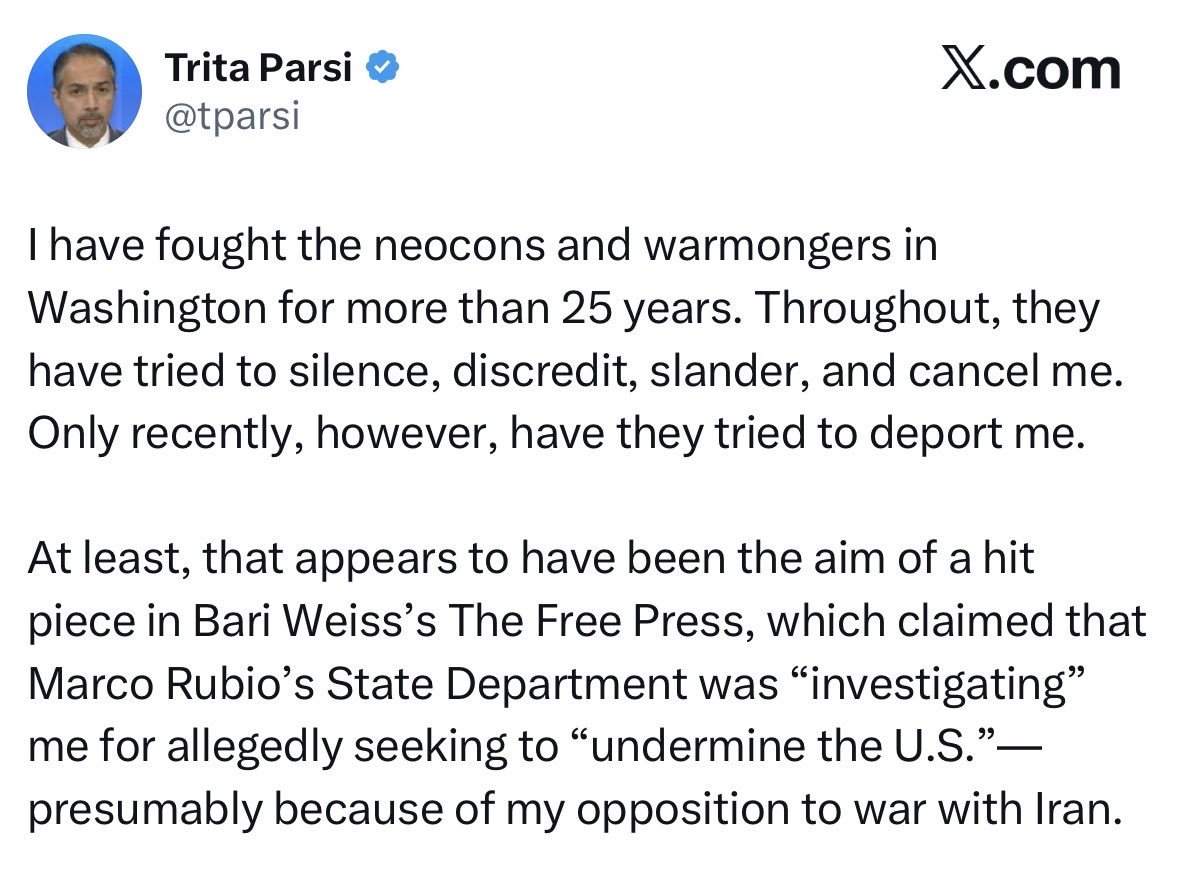
Excellent long form piece by @TheFP into the notorious Trita Parsi and his brother Roozbeh
thefp.com/p/iran-war-critic-…
24
76
237
16,622