
米国インデックス投資家|嵐ファンで2億円達成 retweeted

22 Dec 2025
【GS選定 半導体5銘柄が入っている米国ETF】
🟢 SOXX(iShares Semiconductor ETF)
→ NVDA / AVGO / CDNS / MCHP / AMAT 全部入り
👉 半導体セクター王道ETF
🟢 SMH(VanEck Semiconductor ETF)
→ NVDA / AVGO / CDNS / MCHP / AMAT 全部入り
👉 製造装置・設計まで含む定番
🟢 QQQ(NASDAQ100)
→ NVDA / AVGO / CDNS / AMAT
※MCHPは非採用
👉 AI・半導体“主力4社”を間接保有
🟢 VGT(米国情報技術ETF)
→ NVDA / AVGO / CDNS / AMAT
※MCHPなし
👉 ITセクター広くカバー
🟢 XLK(米国テクノロジーETF)
→ NVDA / AVGO / AMAT
👉 メガテック寄り構成
GSが選ぶ2026年半導体5銘柄
👉 全部まとめて持つなら SOXX / SMH
👉 成長×分散なら QQQ / VGT
#半導体株 #ETF投資 #SOXX #SMH #QQQ #米国株 #AI投資
22 Dec 2025

ゴールドマンサックスが選ぶ、2026年に上昇する半導体銘柄5選:
1. Nvidia (NVDA)
目標株価: $250
2025/26会計年度までにデータセンター部門の売上高が約5,000億ドルに達するという経営陣の見通し。
ハイパースケーラーの設備投資が上方修正される中、同社はその最大の恩恵を受けるポジションにいるとのこと。リスク・リワード比が5.3倍と極めて高く、現在のバリュエーションは、中長期的な成長性を考慮すれば非常に魅力的な水準にあると分析されています。
2.Broadcom (AVGO)
目標株価: $450
ブロードコムの強みは、ネットワーキング技術と「カスタムシリコン」の圧倒的なスケールメリットにあるとのこと。Googleとの強固な関係に加え、Meta、Anthropic、そしてOpenAIといったAIの最前線を走る企業とのパートナーシップが、今後のさらなるアップサイドを牽引するとの見込み。
汎用チップではない「独自の最適化」を求めるハイパースケーラーの需要を独占的に取り込む戦略は、2026年に向けて同社の市場支配力をさらに強固なものにすると分析されています。
3. Cadence (CDNS)
目標株価: $410
半導体の微細化が進むほど、その設計を支えるEDA(設計自動化)ツールの重要性は高まります。 IPビジネスの加速と、コアとなるEDA事業における強力な価格決定権は、インフレ環境下でも高いマージンを維持できる源泉であるとのこと。
技術の複雑化そのものを利益に変える同社のビジネスモデルは、ポートフォリオに安定感をもたらすと分析。
Microchip (MCHP)
目標株価: $88
アナログ半導体分野では、マイクロチップに注目です。パンデミック後の在庫調整を経て、現在アナログ市場は「循環的な回復」の途上にあります。
特に出荷レベルがコロナ前の水準から大きく落ち込んでいた分、今後4〜6四半期にかけて収益と利益率が大きく改善する余地が残されています。
大底圏での買いを狙う投資家にとって、4.3倍の上昇余地は非常に魅力的な数字となります。
Applied Materials (AMAT)
目標株価: $250
同社は「成膜」と「エッチング」という、最先端チップ製造に不可欠な工程で圧倒的なシェアを誇っています。 特に次世代のトランジスタ構造であるGAAロジックや、積層メモリ構造への移行に伴う追加投資は、同社に競合他社を凌駕するパフォーマンスをもたらすでしょう。
2
6
1,207

📈 Stocks That Tripled (or More) in the Past Year
Explosive gains in memory, AI infrastructure, data centers & semiconductors 👀
$SNDK Sandisk — 3,130%
$LITE Lumentum — 1,332%
$WDC Western Digital — 916%
$STX Seagate — 688%
$CIEN Ciena — 606%
$MU Micron — 574%
$INTC Intel — 366%
$FIX Comfort Systems — 334%
$CLS Celestica — 325%
$VRT Vertiv — 255%
$AMD AMD — 251%
$LRCX Lam Research — 251%
$RKLB Rocket Lab — 244%
$GLW Corning — 242%
Quick Takeaways
• Memory & Storage crushed it on AI demand
• Data center power & optical winners dominated
• Semiconductor rebound stories delivered massive returns
One of the strongest years ever for the AI ecosystem.
12

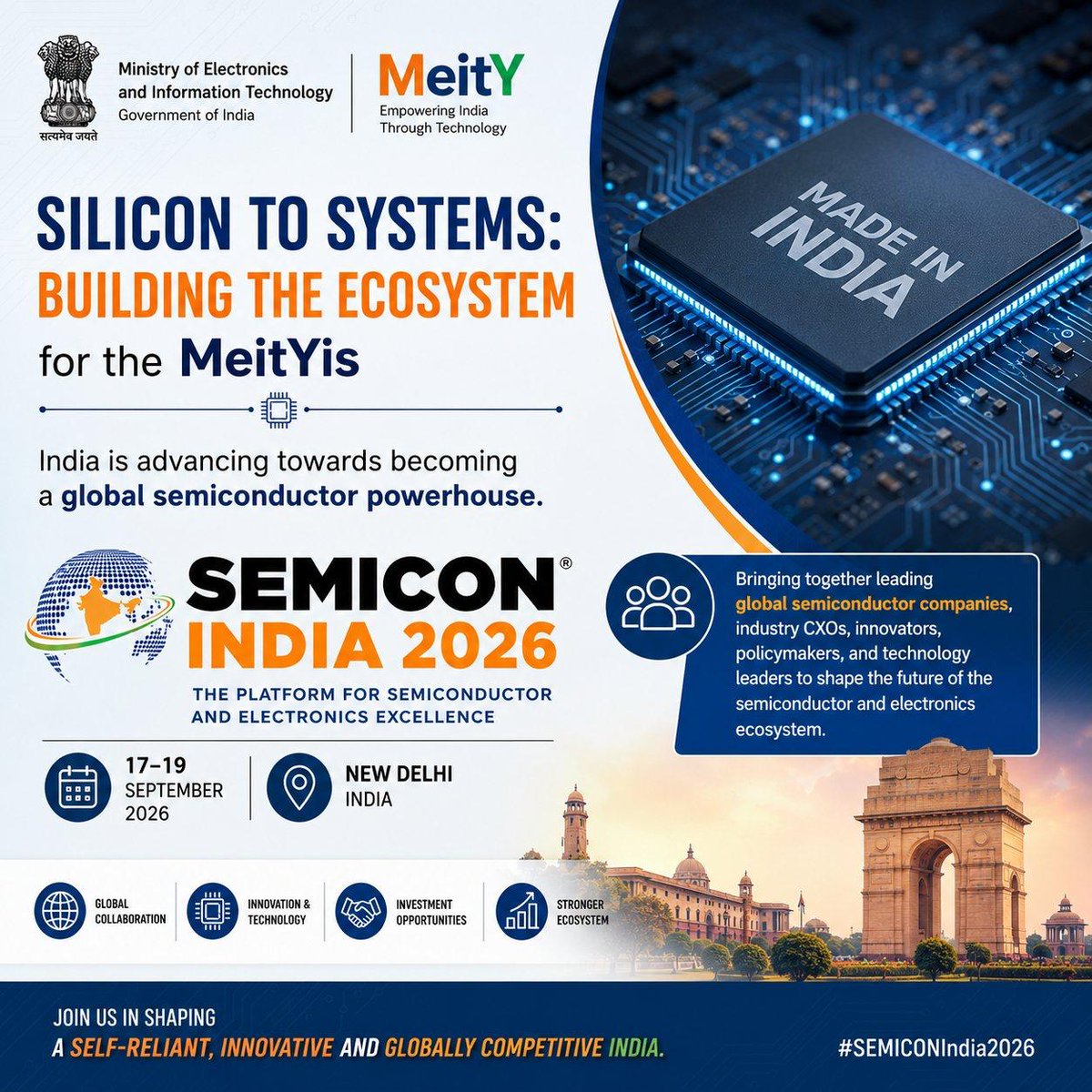
Under the visionary leadership of Hon’ble Prime Minister Shri @narendramodi, SEMICON India continues to drive strategic collaboration between industry, government, academia, and start-ups. 🇮🇳 is advancing towards becoming a global semiconductor powerhouse.
(2/3)
1
2
Join us at SEMICON India 2026, to be organized by @GoI_MeitY, jointly with India Semiconductor Mission (ISM) and SEMI, from Sept. 17–19, 2026, at Yashobhoomi, New Delhi. SEMICON India 2026 will bring together the global semiconductor ecosystem on one powerful platform.
(1/3)
1
4

Post-quantum semiconductor developer @SEALSQcorp Corp and its parent company WISeKey International Holding Ltd have detailed engineering and deployment milestones for their Quantum Spatial Orbital Cloud (QSOC) platform. The space-based infrastructure architecture is designed to configure low-Earth orbit (LEO) satellites as independent, tamper-resistant computing nodes delivering post-quantum cryptography (PQC), certified quantum randomness, and localized edge processing from orbit. The companies confirmed that the initial QSOC-dedicated hardware payload has finalized development and remains on schedule for orbital deployment aboard a SpaceX mission during the fourth quarter of 2026, anchoring a multi-year scaling roadmap aimed at establishing a 100-satellite constellation by 2033.
quantumcomputingreport.com/s…
1
60
John A. retweeted

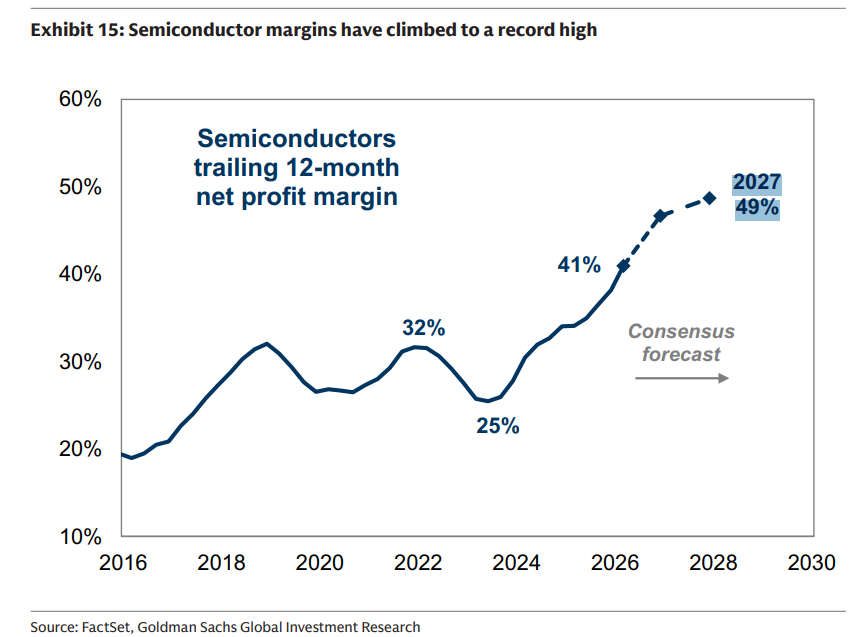
GS: The AI capex boom has lifted semiconductor profitability but will be an increasing headwind to mega-cap tech ROE going forward.
Semiconductor margins have climbed to a record high $SMH
2
10
40
3,363


Adobe CFO Joins Marvell For AI Push
Marvell Technology stock fell 3% Friday as Nasdaq dipped 0.22% and semiconductor shares faced selling pressure. This move follows a strong rally in chip stocks and suggests profit-taking.
2

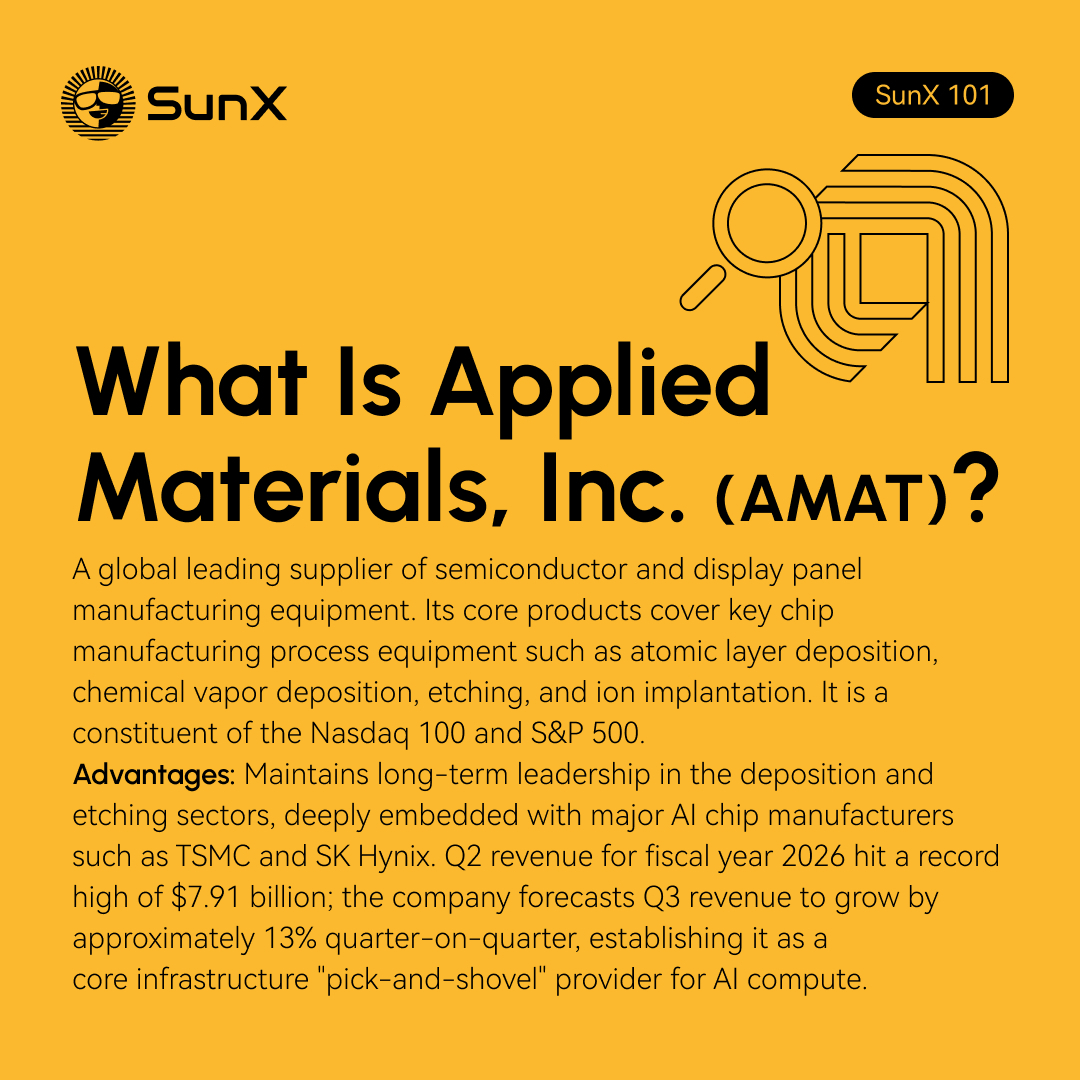
SunX 101 Lesson 6️⃣4️⃣ | What Is AMAT?
Applied Materials is a global leader in semiconductor equipment, supplying deposition, etching, and ion implantation tools for chip manufacturing. It is deeply embedded with AI chip giants like TSMC and SK Hynix.
$AMAT is a tokenized asset that tracks Applied Materials stock 1:1 on-chain. Now you can trade it on SunX with $AMAT/USDT, 24/7.
▶️ sunx.io/futures/exchange/AMA…

SunX New Listings are LIVE.
$AMAT/USDT | Applied Materials @Applied4Tech
$IBM/USDT | International Business Machines @IBM
$QNTX/USDT | Quantinuum @QuantinuumQC
Each tracks its underlying stock 1:1. Now you can trade them with up to 10X leverage. 📈
#AMAT #IBM #QNTX
1
1
40

Subjects in School and Colleges should be simple.
Space Technology
Ai Technology
Semiconductor Technology
Increasing IQ of Students
Building them hard so that they build companies and Startups.
This is what we need to teach to the students if we want to be Competitive in 2050.

China eleiminates 12000 degree certificates programmes by Chinese universities and will focus more on AI.
India too needed these type of steps. Too much of useless histroy subjects praising foreign invaders. Also too much of useless environment science, political science and various other non-employment generator subjects.
India needed AI education, business, startups, industrial skills in manufacturing degrees and Certification.
5

From today will do a 100 days challenge of my day trading learning journal:
Here’s an easy English translation of your daily investment schedule:
7:30 AM
Open TradingView and check my custom news feed: macroeconomic data updates, Federal Reserve official speeches, major tech company news, AI spending trends, supply chain reports, chip spot prices.
8:30 AM
Data maintenance: update NAV (net asset value), review position exposure, adjust portfolio beta. Use FactSet and Bloomberg to track Nasdaq futures, semiconductor index, and US Treasury yield curve. Quickly review major holdings for catalysts and valuation changes.
9:30 AM
Try to learn: “The world is messy.”
12:00 PM
Review morning market performance. Look at sector heatmap and ETF flows to understand where money is going and risk appetite. Even though my portfolio focuses on fundamentals, I do a technical review every day. My team makes independent trading decisions—we handle everything from position adjustments to placing orders ourselves.
1:00 PM
Read research reports: focus on vertical SaaS pricing power, AI spending cycles, HBM (memory chip) adoption rates, liquid cooling equipment orders. Also study chip manufacturing daily—photolithography, etching, deposition, and EDA software.
3:00 PM
Start preparing monthly stock pitches. Primary research takes most effort. I talk with management teams, distributors, equipment makers, customers, and former employees. Often one off-the-record comment changes everything. Since we cover multiple sectors, I also peer-review other teams’ work and track their markets.
5:00 PM
Evening review: portfolio gained today. Performance shows positive stock selection, negative allocation, beta slightly above benchmark. EDA license renewals accelerating; TSMC hiring shows production line expansion; NVIDIA Blackwell shipments may delay (short-term disruption, long-term thesis unchanged).
8:00 PM
Compare ASML and LRCX gross margin analysis, update valuation models, run sensitivity analysis with AlphaSense, regularly check if my investment thesis still holds, eliminate disproven assumptions.
13

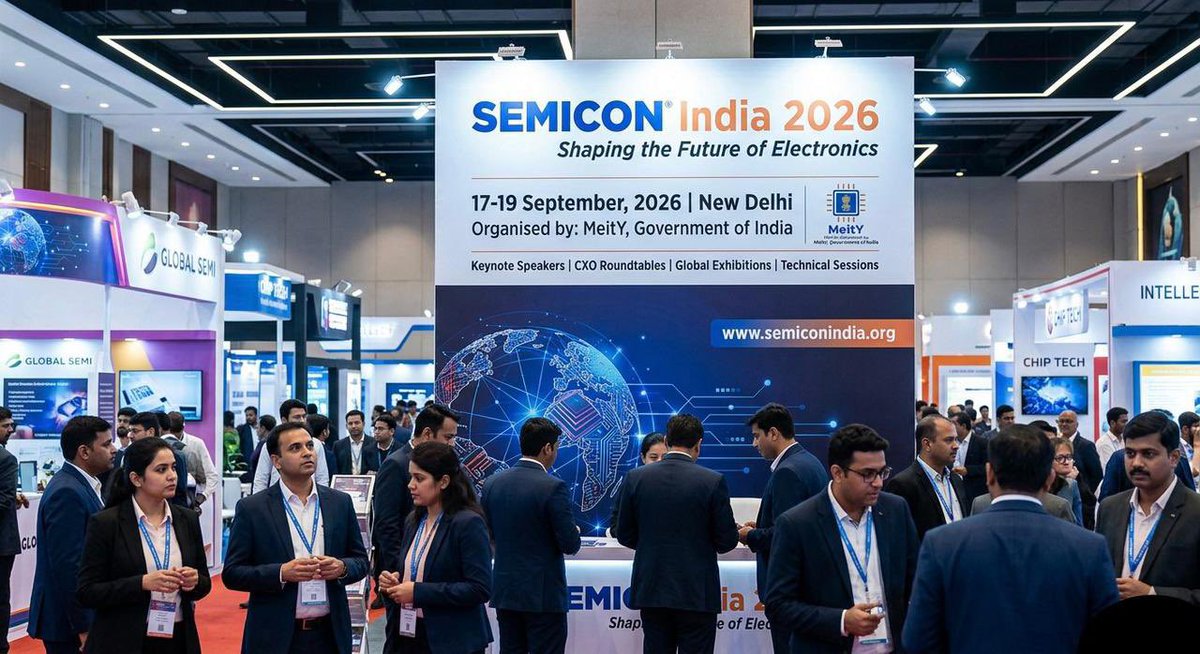
🇮🇳 is set to host SEMICON India 2026, a key global platform for the semiconductor ecosystem. Organised by @GoI_MeitY, the event will bring together leading global companies, CXOs, and industry experts in New Delhi from 17–19 September 2026.
More details: semiconindia.org
#SEMICONIndia2026 #Semiconductors #MakeInIndia
@MEAIndia @IndianDiplomacy @HCICanberra
8
Jd retweeted

Apr 25
半导体基金 SMH 包含哪些公司?
SMH 是一只跟踪 MVIS 美国半导体25指数的基金。顾名思义,它只持有 25 只半导体板块的公司。
该基金由VanEck发行,全称是 Semiconductor Holdings。
值得注意的是,这只基金也包括几个在美国上市的非美国公司,包括台积电、ASML、ARM等。
根据2026年6月24日的数据,该指数基金的头部持仓为:
1、英伟达:17.9%
2、台积电:10.7%
3、博通:8.4%
4、AMD:5.6%
5、德州仪器:5.3%
6、英特尔:5.2%
7、美光 (Micro):4.8%
8、亚德诺 (Analog Devices) :4.7%
9、科磊 (KLA):4.7%
10、泛林集团 (Lam Research):4.4%
11、应用材料:4.3%
12、ASML:4.3%
13、高通:3.4%
14、美满 (Marvell):3.1%
15、新思 (Synopsys):2.3%
其中,前十名股票的权重超过70%。
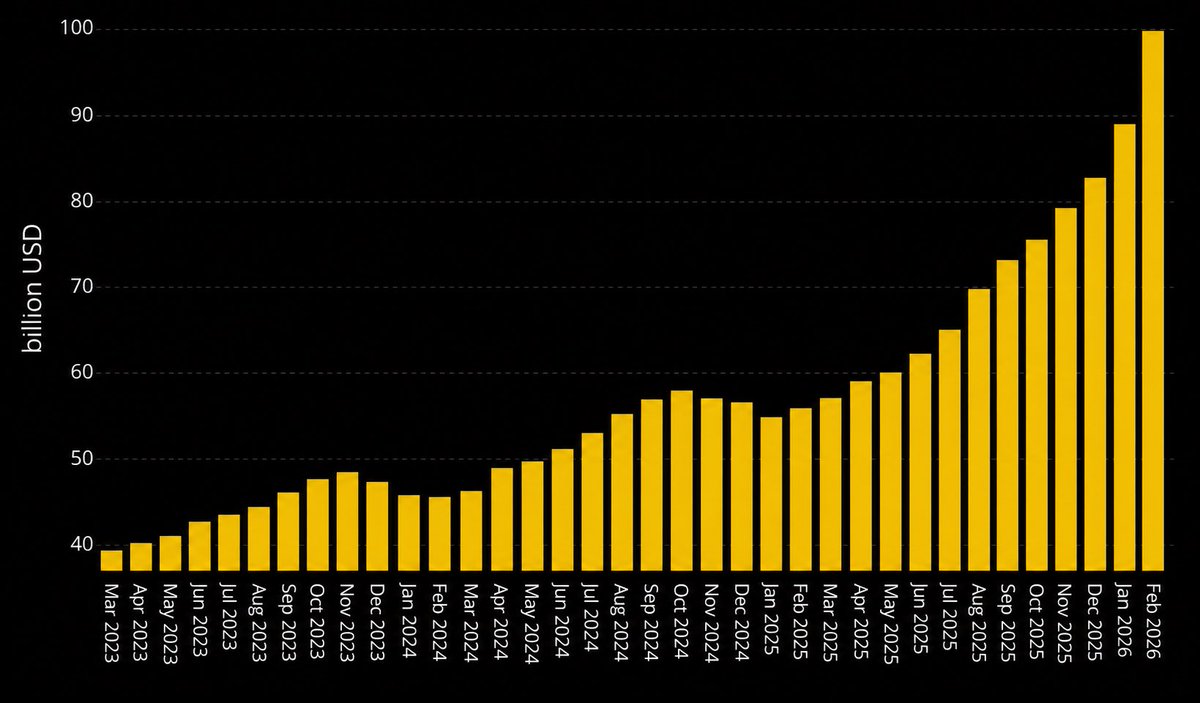
该基金成立于2011年,目前规模约为 580 亿美元。
过去10年、15年、20年,该指数的表现异常亮眼。下表列出了标普500指数、纳斯达克100指数、信息科技板块指数基金 VGT 和 SMH 的平均年化收益率。注意,SMH成立之前的收益率是按照 MVIS 美国半导体25指数计算的。
指数 10年 15年 20年
标普500 15.0 13.9 14.7
纳指100 20.8 18.8 15.8
VGT 23.8 19.7 16.0
SMH 35.2 26.9 20.0
需要指出的是,信息科技板块基金VGT里面,大约40%的权重是半导体公司,而软件公司占了大约40%的权重,电子设备等公司占了剩余的约20%权重。
而在纳斯达克100指数里,半导体公司所占的权重也有30%左右。在标普500指数里,半导体板块的权重约为15%。
因此,如果你拥有纳斯达克 100 指数、VGT 甚至标普500指数基金,那么你就自动获得了半导体板块增长带来的红利。
和 SMH 接近的半导体板块基金还有 SOXX 等。
如果你想了解更多我的投资理财经验和见解,请去亚马逊网站或者Google Play Books,购买我的中文理财书《财富捷径》,或者英文版《The Shortcut to Wealth: Your Simple Roadmap to Financial Independence》。
vaneck.com/us/en/investments…
10
22
100
16,320

I don't see people blaming indian market for concentration..
We would prefer indian semiconductor creating wealth for us..
Instead of worrying about concentration..
Doing something real is better then having fake sense of being vishwaguru and fooling people.
9

CKS and his son was the one who industrialized Taiwan, made it an Asian Tiger, build the semiconductor industry.
The wokesters are just claiming credit but they are actually making Taiwan worse
17

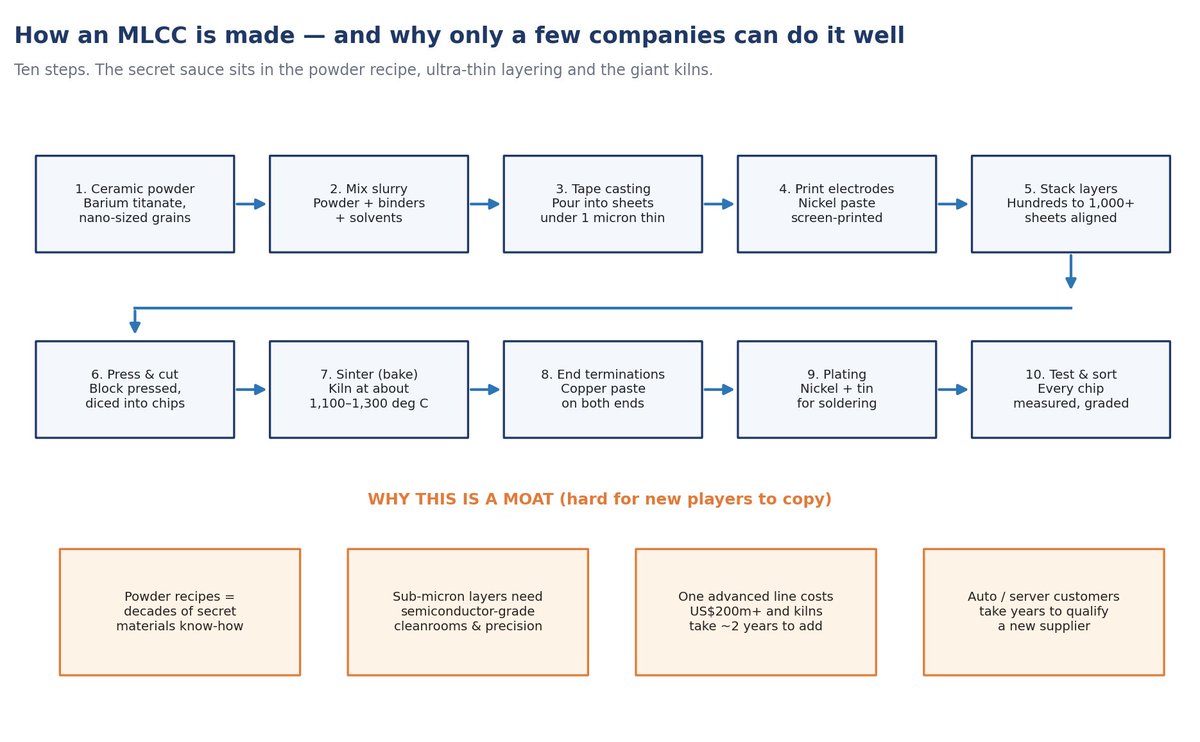
4/ How they're made — and why only ~5 companies can do it well
The process (simple on a slide, brutal in a factory):
Nano-sized barium-titanate powder → slurry → cast into ceramic tape under 1 micron thin → screen-print nickel electrodes → stack hundreds of sheets with sub-micron alignment → press → dice into chips → bake at 1,100–1,300°C in kilns the length of a football field → add copper end-caps → plate → test EVERY chip.
Now the moat:
🔒 Powder recipes = decades of secret materials know-how (leaders make their own, down to the nickel paste)
🔒 Sub-micron layers need semiconductor-grade cleanrooms — yield is the whole game
🔒 One advanced line costs US$200m , and kilns take ~2 YEARS to add
🔒 Server & auto customers take 3–5 years to qualify a new supplier
Translation: when a demand shock arrives, supply physically cannot respond fast. Queues form. Pricing power appears.
(#Murata alone: ~US$1.8bn capex in FY24-25 another ~US$1.2bn announced for Fukui/Izumo in Jan-2026.)
1
4

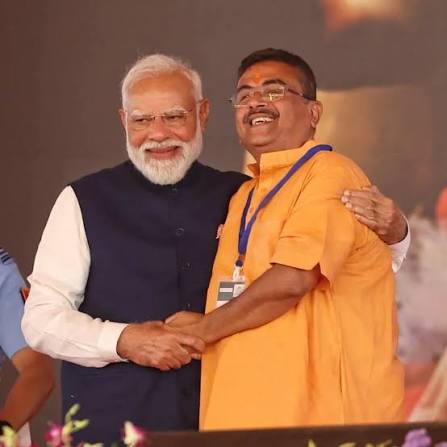
My humble request to Honourable CM Suvendu da please put all your time & energy to build Bengal. Infrastructure, Agriculture, education, Semiconductor & modern police.
These Bhalo Trinamool are equally culprit, looted us in past. Please don't accept them
@SuvenduWB @SamikBJP
2
20