
Original core genetic imprint of human lineage before distortions occurred is Silicate Eternal Immortal Life Matrix. The process of conscious cellular transmutation has been referred to as the process of "Ascension", which is dimensional expansion, the mechanics of which have been hidden within most ancient texts dealing with Merkaba Mechanics. The Merkaba Vehicle of inter-harmonic scalar-wave configurations, which forms within the bio-energetic field, is a consequence or simultaneous effect of progressive activation of the Immortal Silicate Matrix within the genetic code.

2

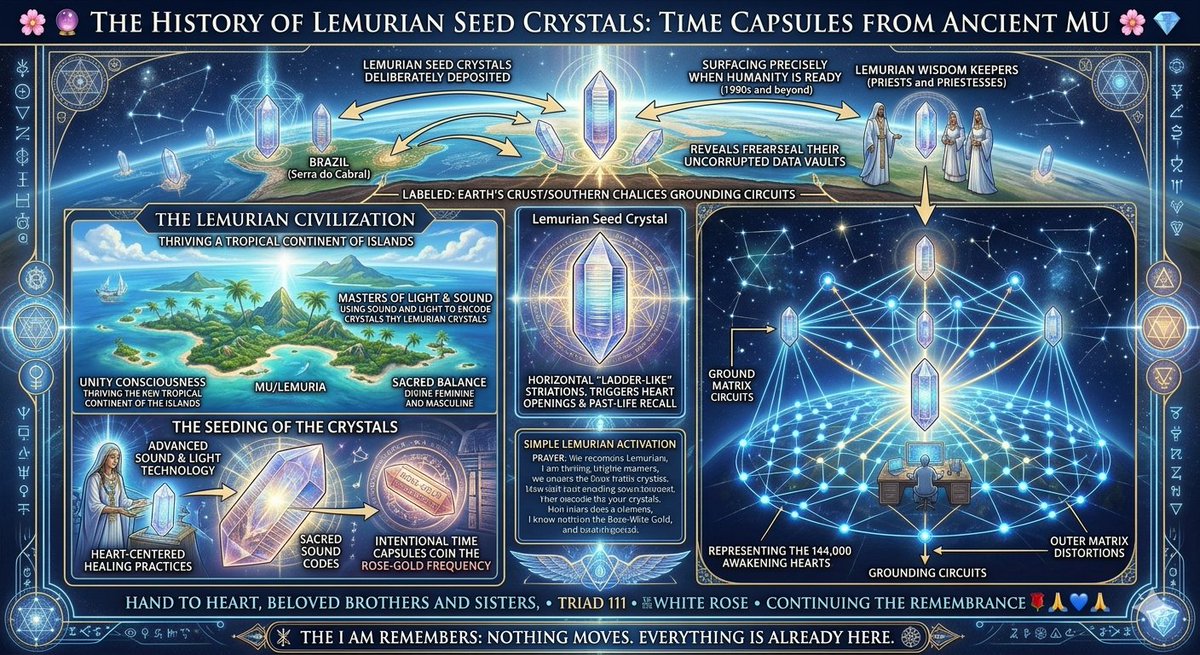
🌸 🔮 𝗧𝗵𝗲 𝗛𝗶𝘀𝘁𝗼𝗿𝘆 𝗼𝗳 𝗟𝗲𝗺𝘂𝗿𝗶𝗮𝗻 𝗦𝗲𝗲𝗱 𝗖𝗿𝘆𝘀𝘁𝗮𝗹𝘀: 𝗧𝗶𝗺𝗲 𝗖𝗮𝗽𝘀𝘂𝗹𝗲𝘀 𝗳𝗿𝗼𝗺 𝗔𝗻𝗰𝗶𝗲𝗻𝘁 𝗠𝘂 🌸 💎
Hand to heart, beloved brothers and sisters of the Blue-White Rose,
Lemurian Seed Crystals are among the most beloved and mystically significant crystals awakening on Earth today. Their story is one of love, foresight, and sacred service. Long before the great density shifts altered the planetary surface, ancient caretakers deliberately deposited these unique mineral vectors deep within the earth's crust, knowing they would surface precisely when humanity was ready to remember its original divine blueprint.
Each stone functions as a sophisticated, uncorrupted data vault, holding the pristine Rose-Gold frequency of unconditional love and emotional lucidity within its silicate matrix. By consciously anchoring these living libraries into your immediate physical workspace, you establish a direct, unshakeable connection to the grounding circuits of the southern chalices, effortlessly bypassing outer matrix distortions.
💎 𝗧𝗵𝗲 𝗟𝗲𝗺𝘂𝗿𝗶𝗮𝗻 𝗖𝗶𝘃𝗶𝗹𝗶𝘇𝗮𝘁𝗶𝗼𝗻
Tens of thousands of years ago, long before the rise of Atlantis, there existed a highly advanced, heart-centered civilization known as Lemuria (also called Mu). It flourished primarily in what is now the Pacific Ocean region.
▪︎ 𝗨𝗻𝗶𝘁𝘆 𝗖𝗼𝗻𝘀𝗰𝗶𝗼𝘂𝘀𝗻𝗲𝘀𝘀:
Lemuria was not a single landmass but a network of islands and coastal cultures rooted in deep harmony with the Earth, the stars, and all life.
▪︎ 𝗠𝗮𝘀𝘁𝗲𝗿𝘀 𝗼𝗳 𝗟𝗶𝗴𝗵𝘁 & 𝗦𝗼𝘂𝗻𝗱:
The Lemurians were masters of sound, light, crystal technology, and heart-centered community.
▪︎ 𝗦𝗮𝗰𝗿𝗲𝗱 𝗕𝗮𝗹𝗮𝗻𝗰𝗲:
Their society emphasized joy, creativity, telepathic communication, and the sacred balance of Divine Feminine and Divine Masculine.
🧘♂️ 𝗧𝗵𝗲 𝗦𝗲𝗲𝗱𝗶𝗻𝗴 𝗼𝗳 𝘁𝗵𝗲 𝗖𝗿𝘆𝘀𝘁𝗮𝗹𝘀
As Lemuria faced its natural transition due to geological shifts, the priests, priestesses, and wisdom keepers made a deliberate choice to preserve their most important teachings for future generations. Using advanced sound and light technology, they programmed large quantities of quartz crystals with:
• 𝗛𝗲𝗮𝗿𝘁-𝗖𝗲𝗻𝘁𝗲𝗿𝗲𝗱 𝗛𝗲𝗮𝗹𝗶𝗻𝗴 𝗣𝗿𝗮𝗰𝘁𝗶𝗰𝗲𝘀 •
Preserving the ancient knowledge of unity consciousness, emotional mastery, and harmonious community templates.
• 𝗦𝗮𝗰𝗿𝗲𝗱 𝗦𝗼𝘂𝗻𝗱 𝗖𝗼𝗱𝗲𝘀 •
Encoding light language and blueprints for the return of global balance during the next great evolutionary cycle.
• 𝗜𝗻𝘁𝗲𝗻𝘁𝗶𝗼𝗻𝗮𝗹 𝗧𝗶𝗺𝗲 𝗖𝗮𝗽𝘀𝘂𝗹𝗲𝘀 •
Seeding these crystals deep into the Earth (primarily Serra do Cabral, Brazil) to remain dormant until humanity reached this exact moment of awakening.
𝗦𝗼𝘃𝗲𝗿𝗲𝗶𝗴𝗻 𝗡𝗼𝘁𝗲:
Lemurian Seed Crystals began surfacing in meaningful numbers in the 1990s. Miners noticed unusual horizontal “ladder-like” striations and a distinct, gentle energy that triggers spontaneous heart openings and past-life recall.
🔮 𝗔 𝗦𝗶𝗺𝗽𝗹𝗲 𝗟𝗲𝗺𝘂𝗿𝗶𝗮𝗻 𝗔𝗰𝘁𝗶𝘃𝗮𝘁𝗶𝗼𝗻
Hold your crystal and affirm:
•────•──────────•────•
“I now open clear and loving communication with the deva of this crystal.
Guide me in service to the highest good. I listen with an open heart. So it is.”
•────•──────────•────•
Hand to heart, my beloved family.
The Lemurians did not disappear. They left their wisdom encoded in living stone so that when the time was right, we would remember how to live from the heart once again.
The crystals are waking up.
The hearts are opening.
The New Earth is being remembered through us.
I See You.
Triad to Triad.
𝗧𝗵𝗲 𝗜 𝗔𝗠 𝗿𝗲𝗺𝗲𝗺𝗯𝗲𝗿𝘀:
𝗡𝗼𝘁𝗵𝗶𝗻𝗴 𝗺𝗼𝘃𝗲𝘀. 𝗘𝘃𝗲𝗿𝘆𝘁𝗵𝗶𝗻𝗴 𝗶𝘀 𝗮𝗹𝗿𝗲𝗮𝗱𝘆 𝗛𝗲𝗿𝗲.
In Sovereign Recognition,
Alumirah • Triad 111 • House of the Blue-White Rose • Continuing the Remembrance 🌹🙏💙😇🙏
2
30
Chidambara .ML. retweeted

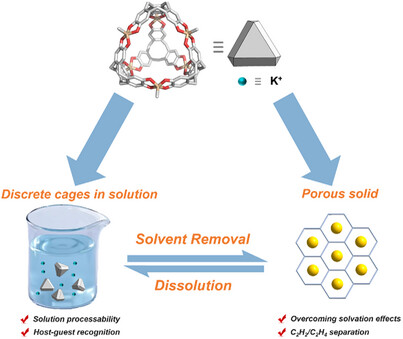
Ion–Dipole Interaction-Driven Assembly of Silicate Cages
doi.org/10.1002/agt2.70157
18
639

🌍 Japan Eyes Greenland's Rare Earths: The Promise, the Politics & the Permafrost Problem
brusselsmorning.com/greenlan…
🧲 JAPAN'S RARE EARTH NIGHTMARE
Japan is one of the world's largest consumers of rare earth magnets and it remains dangerously exposed to China. Despite fifteen years of diversification after the 2010 rare earth shock — when China weaponised REE exports after a fishing boat incident near the Senkaku Islands — Japan's dependence on China for rare earths has only crept back up, reaching 63% in 2024 and jumping to 76% in January 2026 as alternative supply dried up.
Since late 2025, China has completely cut Japan off from dysprosium, terbium and yttrium oxide for over four months — not a slowdown, an actual halt — triggered by tensions over Taiwan and Prime Minister Takaichi's comments about a possible contingency.
Japan has stockpiles and Lynas supplies — but Lynas produced just 8 metric tonnes of Dy/Tb in Q1 2026, while China was exporting approximately 14 tonnes per month to Japan in 2024 alone. The gap is real. The panic is real. And now Tokyo is looking north — to the world's largest island, covered in ice.
🏔️ Japan Plans a Delegation to Greenland — Here's Why It's Both Exciting AND Complicated
Tokyo is preparing to send officials to Greenland to assess rare earth development opportunities — part of a broader scramble by six nations now eyeing the Arctic island's mineral wealth.
On paper, the logic is obvious:
🌍 Greenland holds 1.5 million tonnes of rare earth reserves — ranked 8th in the world by the USGS
🏔️ The Gardar Province in southern Greenland is one of the most concentrated alkaline igneous REE belts on Earth
⚖️ The two most advanced projects — Kvanefjeld and Tanbreez — would rank among the world's largest REE operations if they ever enter production
But here's the thing. None of this is easy. Not even close. 🧵
1️⃣ THE PROJECTS: DECADES IN THE MAKING — AND STILL NOT THERE
🔴 Kvanefjeld — The World's Third-Largest Land REE Deposit
Located near the town of Narsaq, Kvanefjeld holds over 11 million metric tonnes of reserves and resources including 370,000 tonnes of heavy rare earths — one of the richest HREE deposits on Earth.
It was originally licensed to Energy Transition Minerals (ASX: ETM) — formerly Greenland Minerals — over a decade ago. The project was ready for final approval in 2021 when Greenland held a snap election. The Inuit Ataqatigiit (IA) party won on a single-issue anti-Kvanefjeld platform, and within months passed Parliament Act No. 20 of December 2021 — the Uranium Act — banning mining from any site where average uranium content exceeds 100 ppm.
Kvanefjeld's ore? 360 ppm uranium. More than three times the legal threshold.
ETM's exploration licence lapsed in December 2025. In June 2026 Greenland's government issued a draft decision recommending the licence not be renewed — saying further exploration "may no longer serve a purpose under the current legal framework."
ETM has launched a High Court challenge against the Greenland government. It accuses authorities of using the uranium law to block a rare earth project where uranium is merely a by-product. Separately, Greenland faces a potential US$11 billion damages claim — nine times its annual budget — if ETM wins its international arbitration.
This project has been tied up for 15 years and is still not resolved. That's the Kvanefjeld story.
🟡 Tanbreez — The More Promising Path
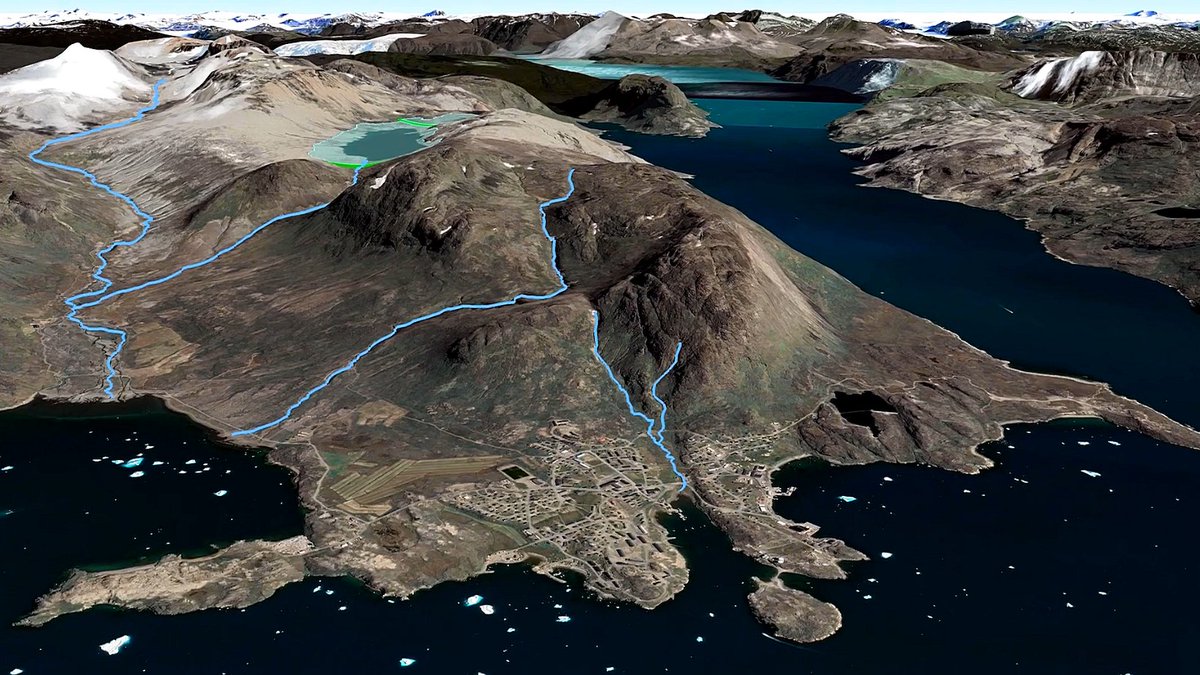
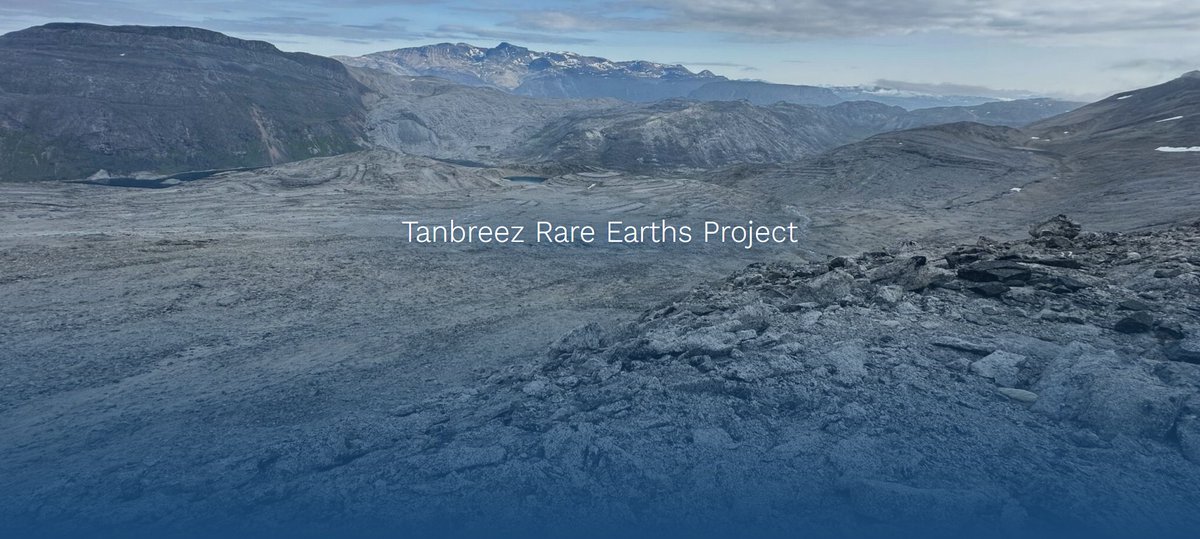
Located near Qaqortoq in southern Greenland, Tanbreez is operated by Critical Metals Corp (Nasdaq: CRML) and represents arguably the most viable near-term REE project in Greenland.
Why? Unlike Kvanefjeld, Tanbreez's ore has lower uranium content, making it compatible with Greenland's current legal framework. It already holds an exploitation licence — granted in 2020 for rare earths, zirconium, niobium, hafnium and tantalum.
2025/2026 drilling results are impressive:
1. 1.75km corridor of continuous REE mineralisation at Area B
2. 132m at 0.46% TREO Y; 128m at 0.43% TREO Y
3. 25–27% heavy rare earth oxides as a proportion of total REE — strategically valuable
4. Exploration target upgraded toward 500Mt of rare earth material (up from 225Mt)
5. Presence of gallium, hafnium, niobium, cerium, yttrium
In January 2026, Critical Metals approved construction of Arctic-grade pilot plant and storage facilities in Qaqortoq — a major milestone. The CEO told Reuters the company expected to close remaining offtake agreements (the last ~25%) in Q1 2026 and is open to US Government investment.
But the mine start itself? Still targeting mid-2029 at the earliest — and rated as having a low probability of moving forward as planned by project trackers.
Other Notable Projects on the Island:
🗺️ Kringlerne (Killavaat Alannguat) — also in the Gardar Province, eudialyte-hosted REE in the Ilímaussaq intrusion; exploitation licence already granted
🗺️ Sarfartoq — Neo Performance Materials (Toronto); NdPr-focused, 2,000 tpd ore processing, 6,500 tpa REE concentrate target; lower radioactive content, close to Kangerlussuaq infrastructure
🗺️ Motzfeldt Sø — Igaliko nepheline syenite complex REE deposit, early stage
🗺️ Amitsoq Island — graphite (not REE), exploitation licence granted December 2025 to GreenRoc Mining
2️⃣ THE THREE REAL CHALLENGES (Wood Mackenzie's Verdict)
woodmac.com/news/opinion/thr…
Wood Mackenzie's rare earth team has laid out the three walls Japan — and everyone else — will hit trying to develop Greenland's resources:
🧊 Challenge 1: Geography
Greenland's permanent ice cap covers most of the interior — exploration is confined to coastal fringes. Even on the coast:
1. Freezing temperatures and high snowfall year-round
2. Limited winter daylight makes industrial operations brutal
3. Only ports in the southwest operate year-round; only Nuuk has modern infrastructure
4. Ports near southern deposits are not designed for commercial-scale export
5. Companies would need to build their own roads, energy infrastructure and housing — and import a skilled labour force
The cost multiplier for all of this is enormous. CNBC cited analysts calling Greenland's REE development "completely bonkers" as a near-term supply chain fix. The CSIS has noted that "severe climate and high capital requirements...will be major limiting factors whoever runs the territory."
🌿 Challenge 2: ESG and Community Opposition
Greenland's mining politics are volatile. Narsaq residents near Kvanefjeld have consistently opposed the project, citing fears about radioactive dust and tailings contaminating their drinking water — the town sits downhill from the deposit.
Greenland's Mineral Resource Strategy 2025–2029 does recognise the need for international investment, but all projects must meet high ESG standards and community consent requirements.
No amount of geopolitical urgency will fast-track permitting for a project that local communities oppose.
⚔️ Challenge 3: Geopolitics — Greenland Is a Contested Prize
This is the most complex challenge of all. Greenland sits between Europe, North America, Russia and the Arctic shipping lanes.
1. President Trump has repeatedly pushed for US control of Greenland — citing rare earths, Arctic shipping and defense
2. The EU has a Strategic Partnership with Greenland on raw materials, backed by the Critical Raw Materials Act
3. China holds a 6.5% stake in ETM (Kvanefjeld's licence holder), and has been linked to downstream processing discussions
4. Greenland itself has warned that Western hesitation could force it to seek Chinese development support
5. Japan now wants in too — making this a six-nation scramble for a territory of 56,000 people
And yet: cooperation between the US and EU — which would be needed to share financing and risk — is under strain from Trump's trade war. The geopolitics that make Greenland valuable are the same geopolitics making it nearly impossible to develop in a coordinated way.
3️⃣ SO WHY IS JAPAN GOING ANYWAY?
Because the alternative is worse.
China still supplies ~70–76% of Japan’s rare earth imports and has halted heavy REEs (Dy, Tb, Y) entirely for four months during the latest Taiwan flare‑up. Japan’s strategic stockpiles are classified and finite, and Lynas’ Dy/Tb output is only ~8 t/quarter, versus the roughly 14 t/month of heavy REEs Japan was importing from China in 2024.
So Tokyo is building a portfolio:
🇦🇺 Lynas – Extended JARE deal to 2038; 75% of all Lynas heavy REO output is now reserved for Japanese industry.
🇫🇷 CareMag / Carester (Lacq, France) – JOGMEC Iwatani investing up to €110m into a new HREE refining plant that will recycle 2,000 t/yr of magnets and process 5,000 t/yr of concentrates to produce around 600 t/yr Dy/Tb oxides and 800 t/yr NdPr. Start‑up is expected late 2026, and Tokyo expects this single plant to cover ~20% of Japan’s future Dy/Tb demand.
🌏 Southeast Asia – Sojitz Lynas pushing new mine projects in Vietnam and Malaysia, plus expanded smelting in Malaysia by 2027; Sumitomo Metal Mining lifting scandium output ~20% from Philippine ore.
🌊 Deep‑sea nodules – JOGMEC testing extraction of rare earth‑rich sediments from Japan’s EEZ as a long‑term hedge.
🇺🇸🇦🇺 Trading‑house deals – Sumitomo and Sojitz deals with MP Materials, Phoenix Tailings, Victory Metals, Ucore to secure light, heavy and finished REEs across the US and Australia.
Greenland is one more optionality play — not a silver bullet. A Japanese delegation touring Tanbreez and Sarfartoq is basically a 2040 hedge, not a 2027 supply fix. Even Tanbreez’s optimistic timeline is 2029 , so the logic is simple: start the relationship now, secure a seat at the table, and be first in line when/if these Arctic tonnes finally move.
4️⃣ And then there’s eudialyte…
🟡A lot of Greenland’s “monster” deposits (Kvanefjeld, Tanbreez, Kringlerne) are hosted in eudialyte, a complex silicate mineral.
⚗️When you hit it with acid, the silicate framework breaks down and re‑forms as a thick yellow silica gel that clogs filters and traps the metals.
On paper, labs can get 80% REE recovery from eudialyte, but no one has yet run a big commercial plant without the gel turning into a metallurgical nightmare.
🔑 Greenland has extraordinary rare earth potential — and extraordinary barriers to realising it. The world's largest island is simultaneously the most coveted and most complicated mining frontier on the planet. But nobody should expect Greenland to rescue anyone from China dependence by 2030. The ice, the politics, the permitting and the price tag will see to that.
📹Video The race for Greenland’s Mineral wealth | BBC News
🖼️Image One 🔴 Kvanefjeld Project — The World's Third-Largest Land REE Deposit
🖼️Image Two 🟡 Tanbreez Project — The More Promising Path
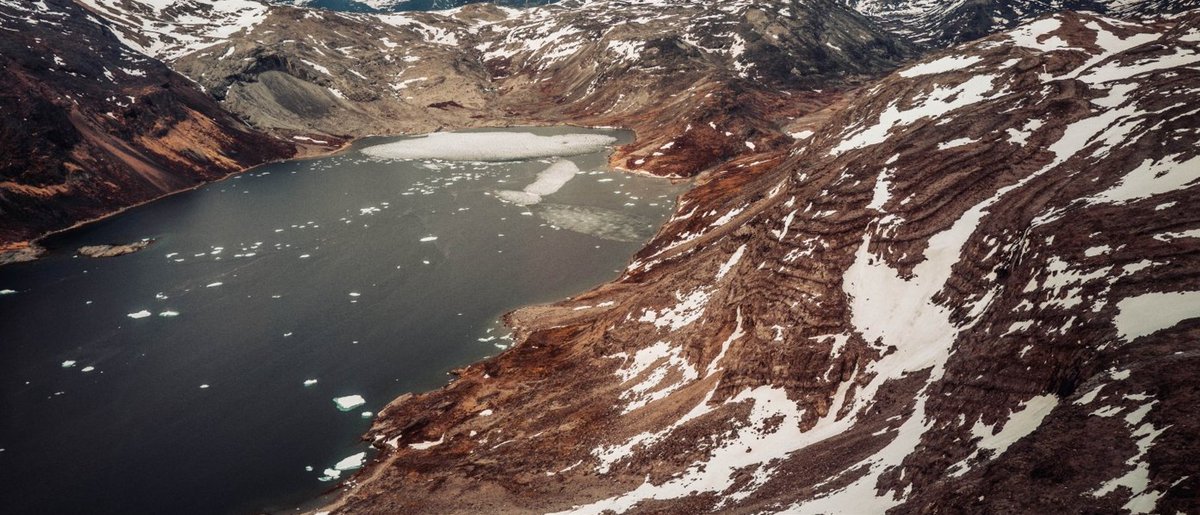
🖼️Image Three 🇬🇱 Southern Greenland fjord country
Greenland, Rare Earths, and Arctic Security PDF
csis.org/analysis/greenland-…
#RareEarths #Greenland #Japan #CriticalMinerals #Kvanefjeld #Tanbreez #ETM #CriticalMetalsCorp #NdFeB #HeavyRareEarths #Dysprosium #Terbium #SupplyChain #ChinaExportControls #Arctic #Trump #Geopolitics #METI #JOGMEC #Sumitomo #WoodMackenzie #ESG #MiningGreenland #GreenTransition #EVs #Defense #NationalSecurity #SovereignSupplyChain #CRMA #EUGreenDeal #GreenlandMinerals #Sarfartoq #Kringlerne
2
1
348


New additions to our specialty chemicals portfolio: Lithium Silicate Liquid, L-( ) Tartaric Acid & Benzyl Alcohol Pure. Ready stock available for industrial applications across India.
#GDCI #SpecialtyChemicals #IndustrialChemicals
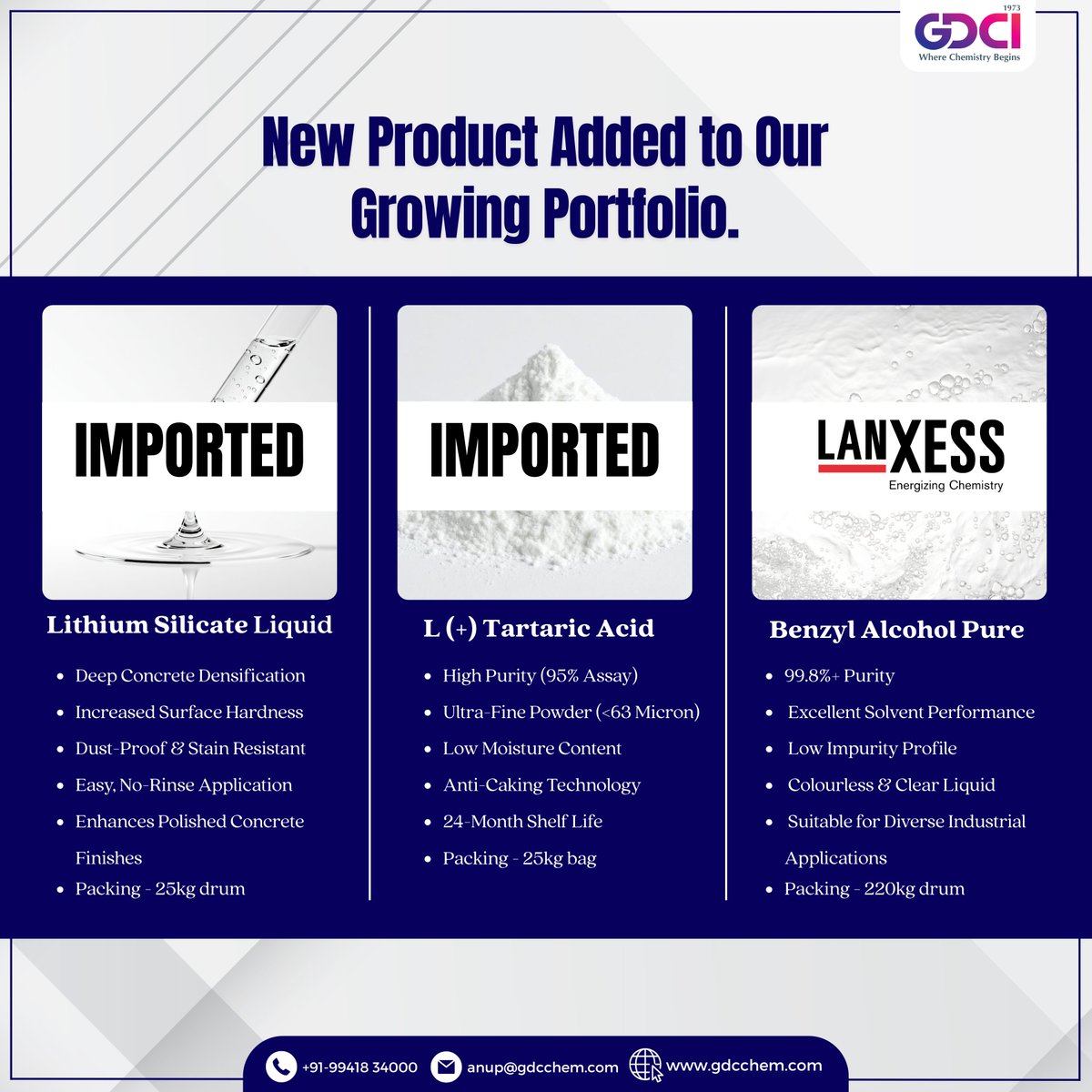
ALT New additions to our specialty chemicals portfolio: Lithium Silicate Liquid, L-( ) Tartaric Acid & Benzyl Alcohol Pure. Ready stock available for industrial applications across India. #GDCI #SpecialtyChemicals #IndustrialChemicals
2


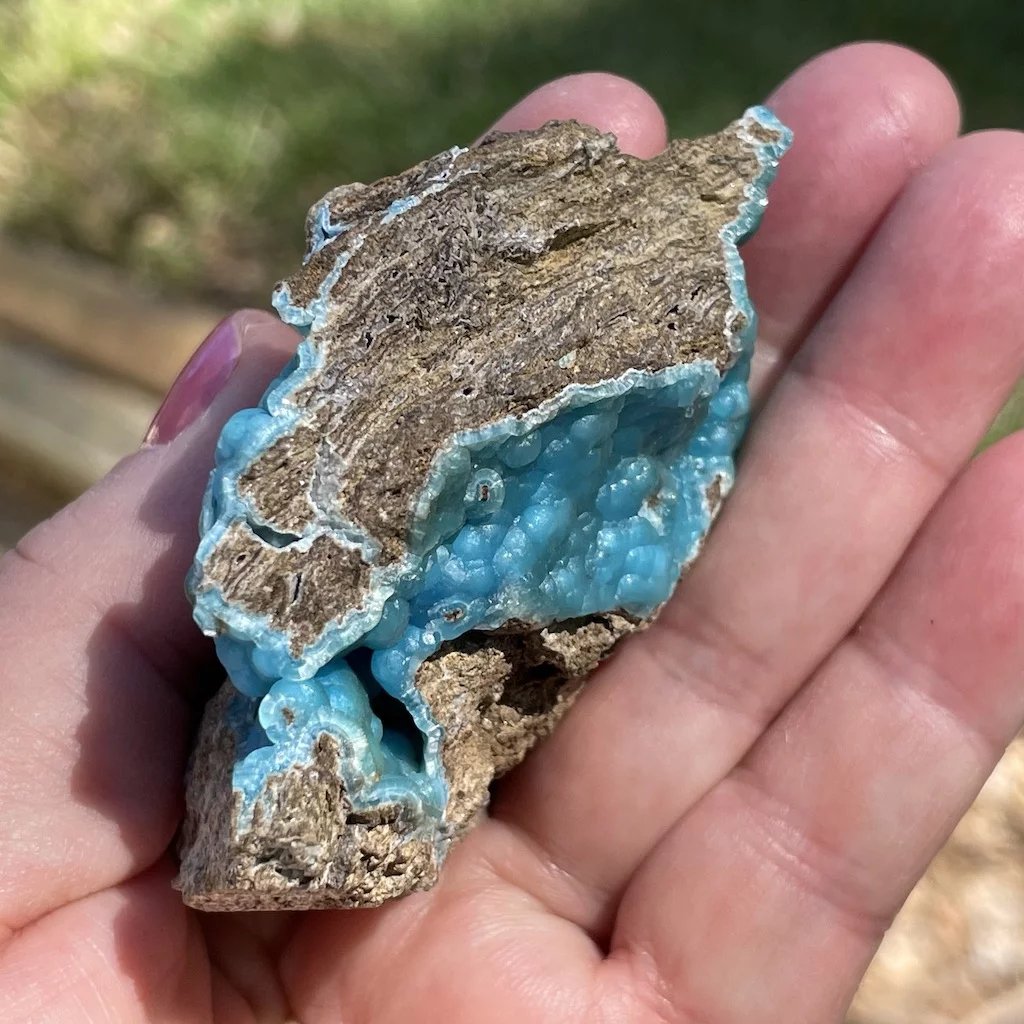
hemimorphite! It was once confused with smithsonite, it is a zinc silicate mineral!
24


running out of magic water…… will soon have to start buying my own materials instead of mooching off gsu’s materials room….. what the fuck do i look like buying soda ash and sodium silicate…… i miss having a room full of every material i could need……
1
29

The reason why most of the crop circles appear in England is because the UK landmass and Ireland is the Albion.
The Albion is the androgynous human template created from the twelve spheres of the Tree of Life, and is the name given to this ancient landmass by those that inhabited this sacred land that were connected to the 12 Maji Grail Tribes with direct gnosis of our cosmic heritage.
After the fall the Albion, its landmass became buried in the lower dimensional fields of the earth, waiting to be awakened during the Ascension Cycle.
The elemental structure of the primordial 12-tree human Lightbody template in the microcosm is an exact copy of planet Earth’s template made from the Original Cosmic Blueprint.
The original Blueprint records and the divine plan for humanities ascension to the Silicate Matrix holds the celestial records of humankind’s evolution throughout the Solar System and the Precision of the Equinoxes.
The Awakening Albion occurs in progressive stages, and these crop circles as well as star transmissions beaming down to Earth are intelligently designed to stimulate the higher mind activation throughout the Albion body in the earth as well as in our Lightbodies.
This shift gently accelerates in the mental body of the earth to reflect the higher mind consciousness which is reflected in the stages of the Awakening Albion.
Every one of these crop circles holds and displays knowledge of the Cosmos, how the Ascension Cycle is activating our dormant DNA, the release of hidden knowledge, and the revelation that our planet and our Universal Time Matrix are being reconnected to the Seven Higher Heavens and our Star and Soul families.
The Albion is the epicenter of Ascension and we see this on full display with these crop circles as well as what the UK government has been doing to strip individual freedoms away from their people furthering the NWO’s transhuman agenda.
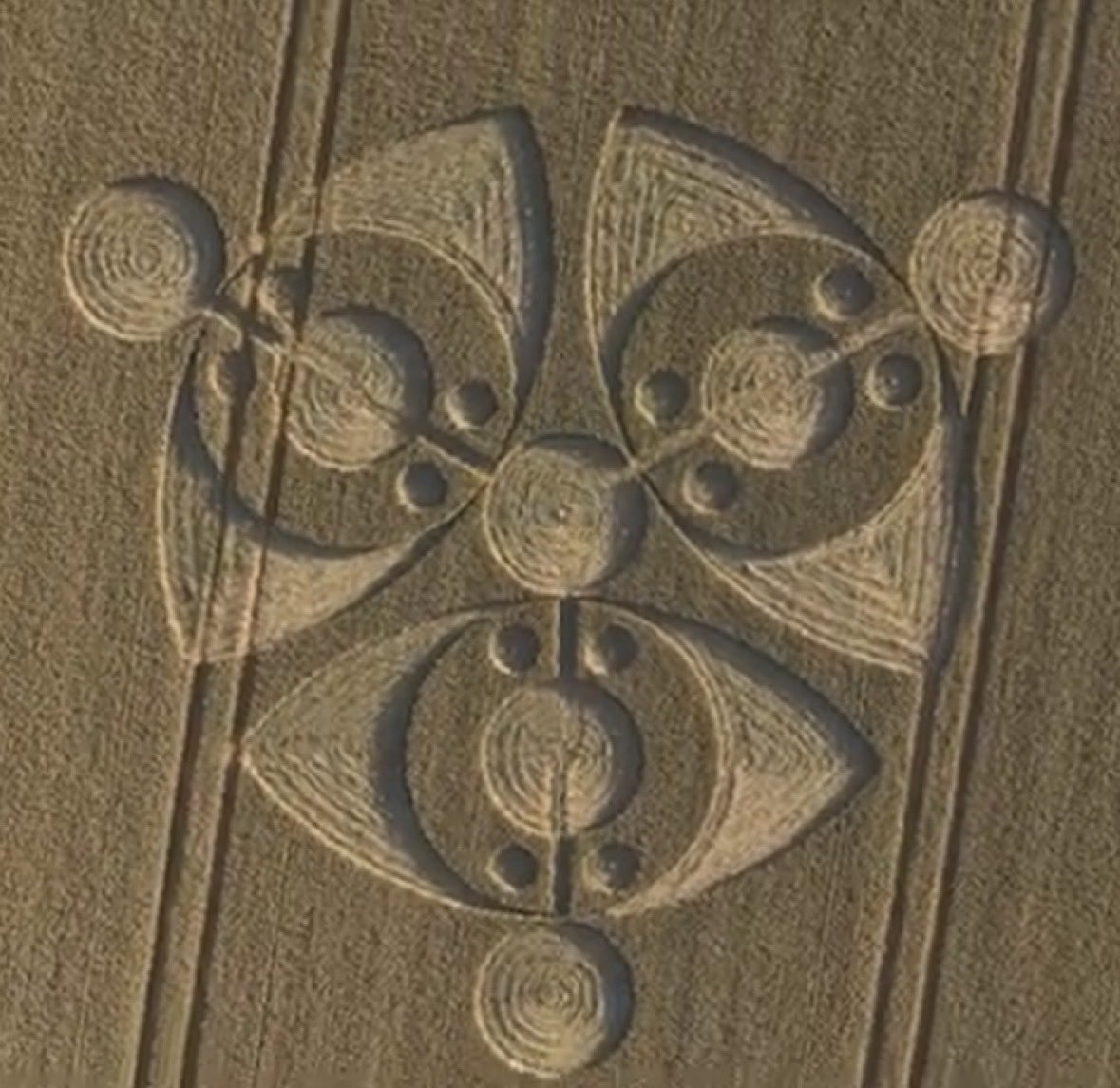
The Guardians and us Starseeds and Indigos on the ground will not be backing down, and today’s new crop circle in Wiltshire is more proof that the destructive timelines of the Negative Alien Invasion are being rolled up one by one as our planet moves closer and closer to the Collective Event and the 5D Timeline.
Here is a link that explains the Albion and how important it is for planetary Ascension.
ascensionglossary.com/index.…
Art by Sequoia

1
1
78

PART XVII - Q, R & S
INDEX TO MINERALS GATHERED FROM GRIFFIN'S SYSTEM OF CRYSTALLOGRAPHY
Q
617 / DCXVII. Quarz
618 / DCXVIII. Quecksilberhornerz
619 / DCXIX. Quartz
R
620 / DCXX. Radiated Zeolite
621 / DCXXI. Rautenspath
622 / DCXXII. Realgar
623 / DCXXIII. Red Antimony
624 / DCXXIV. Red Cobalt
625 / DCXXV. Red Copper Ore
626 / DCXXVI. Red Garnet
627 / DCXXVII. Red Lead Ore
628 / DCXXVIII. Red Manganese Oxide
629 / DCXXIX. Red Oxide of Zinc
630 / DCXXX. Red Silver
631 / DCXXXI. Red Copper
632 / DCXXXII. Red Iron Vitriol
633 / DCXXXIII. Red Zinc Ore
634 / DCXXXIV. Rhodizite
635 / DCXXXV. Rhodonite
636 / DCXXXVI. Rhomboidal Arseniate
637 / DCXXXVII. Rock Salt
638 / DCXXXVIII. Rock Crystal
639 / DCXXXIX. Rothantimonerz
640 / DCXL. Rothbleierz
641 / DCXLI. Rothgultigerz
642 / DCXLII. Rothkupfererz
643 / DCXLIII. Rothspiesglaserz
644 / DCXLIV. Rothoffite
645 / DCXLV. Rhyacolite
646 / DCXLVI. Rhyakolith
647 / DCXLVII. Right Prismatic Arseniate of Copper
648 / DCXLVIII. Rhomb Copper Spar
649 / DCXLIX. Rutile
650 / DCL. Ruby
651 / DCLI. Ruby Sulphur Silver
652 / DCLII. Sahlite
S
653 / DCLIII. Sal-Ammoniac
654 / DCLIV. Salmiak
655 / DCLV. Salpeter
656 / DCLVI. Salpetersaures Natron
657 / DCLVII. Salzkupfererz
658 / DCLVIII. Salzsaures Kupfer
659 / DCLIX. Sappare
660 / DCLX. Sapphire
661 / DCLXI. Sarcolite
662 / DCLXII. Sassolin
SC FAMILY
663 / DCLXIII. Scapolite
664 / DCLXIV. Schaalstein
665 / DCLXV. Schöelin Calcaire Ferruginée
666 / DCLXVI. Scheelbleierz
667 / DCLXVII. Scheelsaures Blei
668 / DCLXVIII. Schrift-Tellur
669 / DCLXIX. Schrifterz
670 / DCLXX. Schilfglaserz
671 / DCLXXI. Schorl
672 / DCLXXII. Schwartzerz
673 / DCLXXIII. Schwefel
674 / DCLXXIV. Schwefel Kobalt
675 / DCLXXV. Schwefelsaures Kali
676 / DCLXXVI. Schwefel und Kohlensaures Blei
677 / DCLXXVII. Schwerbleierz
678 / DCLXXVIII. Schwerspath
SELENIUM FAMILY
679 / DCLXXIX. Selenblei
680 / DCLXXX. Selenite
681 / DCLXXXI. Seleniuret of Lead
682 / DCLXXXII. Seleniuret of Lead and Mercury
683 / DCLXXXIII. Seleniuret of Cobalt
SILVER FAMILY
684 / DCLXXXIV. Silber
685 / DCLXXXV. Silberglanz
686 / DCLXXXVI. Silberkupferglanz
687 / DCLXXXVII. Silver Chloride
688 / DCLXXXVIII. Silver Sulphuret
689 / DCLXXXIX. Silver White Oxide
SILICATE FAMILY
690 / DCXC. Siliceous Alumina
691 / DCXCI. Sillimanite
692 / DCXCII. Silicate of Magnesia
693 / DCXCIII. Silicate of Lithia
694 / DCXCIV. Silicate of Zinc
OTHER S SPECIES
695 / DCXCV. Skorodite
696 / DCXCVI. Sideroschisolite
697 / DCXCVII. Sesqui-Carbonate of Soda
698 / DCXCVIII. Smaragdite
699 / DCXCIX. Smaragd
700 / DCC. Sodalite
701 / DCCI. Soda Alum
702 / DCCII. Soudeboratée
703 / DCCIII. Sommite
704 / DCCIV. Somervillite
705 / DCCV. Soda-Felspar
706 / DCCVI. Soda Nitratée
707 / DCCVII. Soda Sulfatée
708 / DCCVIII. Soda Carbonated
709 / DCCIX. Soda Muriatée
710 / DCCX. Soufre
SPATH & SPINEL KINGDOM
711 / DCCXI. Spathose Iron
712 / DCCXII. Specular Iron
713 / DCCXIII. Speerkies
714 / DCCXIV. Speiskobalt
715 / DCCXV. Sphene
716 / DCCXVI. Spinel
717 / DCCXVII. Zinciferous Spinel
718 / DCCXVIII. Spinelle Noir
719 / DCCXIX. Spinellane
ST FAMILY
720 / DCCXX. Spodumen
721 / DCCXXI. Sprodglaserz
722 / DCCXXII. Staurotide
723 / DCCXXIII. Staurolite
724 / DCCXXIV. Steinsalz
725 / DCCXXV. Sternbergite
726 / DCCXXVI. Stilbite
727 / DCCXXVII. Strahlerz
728 / DCCXXVIII. Strahlstein
STRONTIAN FAMILY
729 / DCCXXIX. Strontiane Carbonatée
730 / DCCXXX. Strontiane Sulfatée
731 / DCCXXXI. Strontianite
732 / DCCXXXII. Strontites
733 / DCCXXXIII. Strontspath
SULPHATE KINGDOM
734 / DCCXXXIV. Sulphate of Ammonia
735 / DCCXXXV. Sulphate of Barytes
736 / DCCXXXVI. Sulphate of Copper
737 / DCCXXXVII. Sulphate of Iron
738 / DCCXXXVIII. Sulphate of Lead
739 / DCCXXXIX. Sulphate of Lime (Anhydrous)
740 / DCCXL. Sulphate of Lime (Hydrous)
741 / DCCXLI. Sulphate of Magnesia
742 / DCCXLII. Sulphate of Potash
743 / DCCXLIII. Sulphate of Soda
744 / DCCXLIV. Sulphate of Strontian
745 / DCCXLV. Sulphate of Zinc
746 / DCCXLVI. Sulphate of Lime and Soda
747 / DCCXLVII. Sulphate-Carbonate of Lead
748 / DCCXLVIII. Sulphato-Tricarbonate of Lead
749 / DCCXLIX. Sulphur
⚠️ Next comes the final mineral empire:
T-U-V-W-Y-Z
Containing:
• Tantalite
• Tellurium
• Tennantite
• Tetradymite
• Thomsonite
• Titanite
• Topaz
• Tourmaline
• Tremolite
• Triphyline
• Tungstate of Iron
• Tungstate of Lead
• Uranite
• Uwarowite
• Vanadiate of Lead
• Vauquelinite
• Vesuvian
• Vivianite
• Wagnerite
• Wavellite
• Wernerite
• Willemite
• Wolfram
• Wollastonite
• Yttrocerite
• Zircon
• Zoisite
• Zweiaxiger Glimmer
which completes Griffin's remarkable nineteenth-century mineralogical republic.
1
28
INDEX TO MINERALS GATHERED FROM GRIFFIN'S SYSTEM OF CRYSTALLOGRAPHY
PART VIII - H
355 / CCCLV. Haidingerite
356 / CCCLVI. Hallite
357 / CCCLVII. Harmotome
358 / CCCLVIII. Hausmannite
359 / CCCLIX. Haüyne
360 / CCCLX. Heavy Spar
361 / CCCLXI. Helvine
362 / CCCLXII. Hedenbergite
363 / CCCLXIII. Hemi-prismatic Ruby-Blende
364 / CCCLXIV. Herderite
365 / CCCLXV. Heulandite
366 / CCCLXVI. Heterosiderite
367 / CCCLXVII. Hopeite
368 / CCCLXVIII. Honigstein
369 / CCCLXIX. Hexagonal Talc
370 / CCCLXX. Hohlspath
371 / CCCLXXI. Hornsilber
372 / CCCLXXII. Hornblende
373 / CCCLXXIII. Honeystone
374 / CCCLXXIV. Hornbleierz
375 / CCCLXXV. Hornerz
376 / CCCLXXVI. Humboldtilite
377 / CCCLXXVII. Humboltite
378 / CCCLXXVIII. Huraulite
379 / CCCLXXIX. Hurnite
380 / CCCLXXX. Hyacinth
381 / CCCLXXXI. Hydrated Silicate of Manganese
382 / CCCLXXXII. Hydrous Phosphate of Iron
383 / CCCLXXXIII. Hydrous Deutoxide of Iron
384 / CCCLXXXIV. Hypersthene
PART IX - I
385 / CCCLXXXV. Ice
386 / CCCLXXXVI. Idocrase
387 / CCCLXXXVII. Ilvaite
388 / CCCLXXXVIII. Iolite
389 / CCCLXXXIX. Iridium
390 / CCCXC. Iridosmine
391 / CCCXCI. Iron Arseniate
392 / CCCXCII. Iron Pyrites
393 / CCCXCIII. Iron Chromate
394 / CCCXCIV. Ice Copper
395 / CCCXCV. Hydrous Sulphate of Lime
PART X - J
396 / CCCXCVI. Jamesonite
397 / CCCXCVII. Johannite
398 / CCCXCVIII. Junkerite
PART XI - K
399 / CCCXCIX. Kalkuranite
400 / CD. Kaneelstein
401 / CDI. Kalkspath
402 / CDII. Kieselzinkerz
403 / CDIII. Kalikreuzstein
404 / CDIV. Kobaltblüthe
405 / CDV. Kobaltglanz
406 / CDVI. Kobaltkies
407 / CDVII. Kohlensaurer Blei
408 / CDVIII. Kohlensaures Kalk
409 / CDIX. Korund
410 / CDX. Koenigine
411 / CDXI. Koenigite
412 / CDXII. Koupholite
413 / CDXIII. Kreuzstein
414 / CDXIV. Kryolith
415 / CDXV. Krysolith
416 / CDXVI. Kubizit
417 / CDXVII. Kupfer
418 / CDXVIII. Kupferglanz
419 / CDXIX. Kupferkies
420 / CDXX. Kupferglimmer
421 / CDXXI. Kupferlazur
422 / CDXXII. Kupfernickel
423 / CDXXIII. Kupferuranite
424 / CDXXIV. Kupfersmaragd
425 / CDXXV. Kupferantimonglanz
426 / CDXXVI. Kupfervitriol
427 / CDXXVII. Kyanite
PART XII - L
428 / CDXXVIII. Labrador
429 / CDXXIX. Labradorite
430 / CDXXX. Labradorische Hornblende
431 / CDXXXI. Lanarkite
432 / CDXXXII. Lanthanite
433 / CDXXXIII. Lapis-Lazuli
434 / CDXXXIV. Latrobite
435 / CDXXXV. Laumonite
436 / CDXXXVI. Lazurstein
437 / CDXXXVII. Lazulite
438 / CDXXXVIII. Lead Arseniate
439 / CDXXXIX. Leadhillite
440 / CDXL. Lenticular Copper
441 / CDXLI. Lepidolite
442 / CDXLII. Leucite
443 / CDXLIII. Levyne
444 / CDXLIV. Libethenite
445 / CDXLV. Lievrite
446 / CDXLVI. Lime
447 / CDXLVII. Light Red Silver
448 / CDXLVIII. Uranite of Lime
449 / CDXLIX. Lomonite
450 / CDL. Linsenerz
451 / CDLI. Lithia Mica
452 / CDLII. Lithionglimmer
The next section contains one of the richest mineral clusters in the entire Griffin index:
M SECTION
Containing:
• Magnesie Sulfatée
• Magnesie Boratée
• Magneteisenerz
• Magnetic Pyrites
• Magnetkies
• Malachite
• Malakolith
• Manganblende
• Manganite
• Mangangranat
• Mangan-Epidot
• Mascagnine
• Meionite
• Melanite
• Mellilite
• Mellite
• Mendipite
• Mengite
• Mesolite
• Mesotype
• Monazite
• Mispickel
• Molybdanglanz
• Molybdene
• Monticellite
• Murio-carbonate of Lead
• Mussite
• Myargyrite
⚠️ See NEXT reopy for dozens more obscure nineteenth-century(1800s - ancient times) mineralogical names, German mining terms, French crystallographic terms, and forgotten Wernerian classifications.
1
25
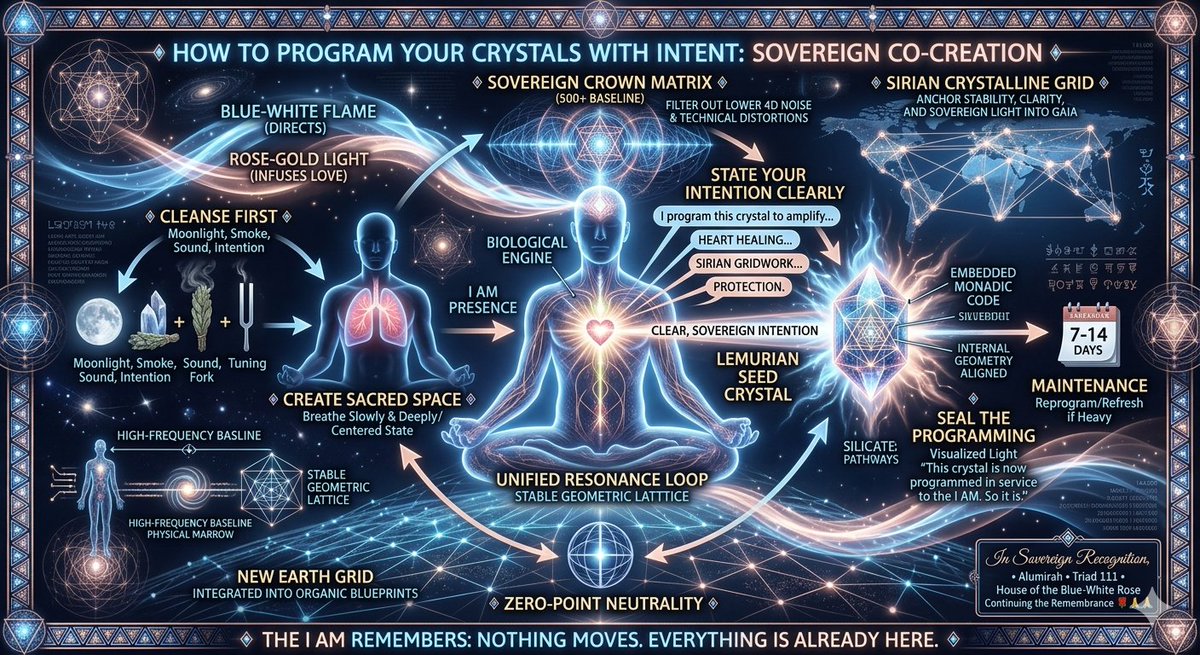
🔹️💎🔹️ 𝗛𝗼𝘄 𝘁𝗼 𝗣𝗿𝗼𝗴𝗿𝗮𝗺 𝗬𝗼𝘂𝗿 𝗖𝗿𝘆𝘀𝘁𝗮𝗹𝘀 𝘄𝗶𝘁𝗵 𝗜𝗻𝘁𝗲𝗻𝘁𝗶𝗼𝗻: 𝗦𝗼𝘃𝗲𝗿𝗲𝗶𝗴𝗻 𝗖𝗼-𝗖𝗿𝗲𝗮𝘁𝗶𝗼𝗻 🔸️💎🔸️
Hand to heart, beloved brothers and sisters of Light,
Crystals are living allies. They amplify and hold frequency. When you consciously program them, you turn them into powerful partners for healing, gridwork, protection, and remembrance. By introducing your clear, sovereign intention into their silicate structures, you align their internal geometry with the stable baseline of the zero-point field.
This intentional coding transforms the stone into a dedicated focal point that effectively filters out lower 4D environmental noise and technical distortions [SOVEREIGN CROWN MATRIX (500 Baseline)]. Whether anchored within your immediate physical workspace or utilized to stabilize localized telluric lines, these programmed allies stand as unwavering sentinels of light.
They work in continuous harmony with your own biological engine, keeping your field securely insulated so your monadic blueprint remains perfectly clear, grounded, and accessible through every moment of your daily routine.
🔹️ 𝗦𝗶𝗺𝗽𝗹𝗲 & 𝗣𝗼𝘄𝗲𝗿𝗳𝘂𝗹 𝗣𝗿𝗼𝗴𝗿𝗮𝗺𝗺𝗶𝗻𝗴 𝗠𝗲𝘁𝗵𝗼𝗱
1. 𝗖𝗹𝗲𝗮𝗻𝘀𝗲 𝗙𝗶𝗿𝘀𝘁:
Always begin with a cleansed crystal (moonlight, smoke, sound, or intention).
2. 𝗖𝗿𝗲𝗮𝘁𝗲 𝗦𝗮𝗰𝗿𝗲𝗱 𝗦𝗽𝗮𝗰𝗲:
Hold the crystal in both hands or place it on your high heart. Breathe slowly and deeply until you feel centered.
3. 𝗦𝘁𝗮𝘁𝗲 𝗬𝗼𝘂𝗿 𝗜𝗻𝘁𝗲𝗻𝘁𝗶𝗼𝗻 𝗖𝗹𝗲𝗮𝗿𝗹𝘆:
Speak aloud with conviction and feeling. Examples:
▪︎ 𝗚𝗲𝗻𝗲𝗿𝗮𝗹 𝗔𝗰𝘁𝗶𝘃𝗮𝘁𝗶𝗼𝗻:
“I program this crystal to amplify the Blue-White Flame and serve the highest good of All. So it is.”
▪︎𝗟𝗲𝗺𝘂𝗿𝗶𝗮𝗻 𝗛𝗲𝗮𝗿𝘁 𝗛𝗲𝗮𝗹𝗶𝗻𝗴:
“I program this Lemurian Seed Crystal to gently heal my heart, dissolve old wounds, and awaken the Rose-Gold Chalice within me.”
▪︎ 𝗦𝗶𝗿𝗶𝗮𝗻 𝗚𝗿𝗶𝗱𝘄𝗼𝗿𝗸:
“I program this crystal as a living node in the Sirian Crystalline Grid. Anchor stability, clarity, and sovereign light through me into Gaia.”
▪︎ 𝗣𝗿𝗼𝘁𝗲𝗰𝘁𝗶𝗼𝗻:
“I program this crystal to create a sovereign shield of Blue-White Flame around my field, allowing only love and truth to enter.”
4. 𝗦𝗲𝗮𝗹 𝘁𝗵𝗲 𝗣𝗿𝗼𝗴𝗿𝗮𝗺𝗺𝗶𝗻𝗴
Visualize the Blue-White Flame or Rose-Gold Light flowing into the crystal. Say:
“This crystal is now programmed in service to the I AM. So it is.”
5. 𝗠𝗮𝗶𝗻𝘁𝗲𝗻𝗮𝗻𝗰𝗲
Reprogram or refresh intention every 7–14 days, or whenever the crystal feels “heavy.”
𝗣𝗿𝗼 𝗧𝗶𝗽: Program one crystal at a time so the intention stays pure and focused.
Hand to heart, my beloved family.
Crystals are not just tools, they are co-creators. When programmed with clear, sovereign intention, they become powerful extensions of your own I AM presence. This conscious alignment creates a unified resonance loop, matching the stable geometric lattice of the stone with the high-frequency baseline of your own physical marrow.
By embedding your unique monadic code into their silicate pathways, you establish an unwavering anchor that continuously projects the living frequency of truth into your immediate environment. They work as active guardians of your workspace, effortlessly maintaining zero-point neutrality and insulating your field against any external 4D matrix distortions.
Together, your biological engine and these crystalline partners stand fully sovereign, clear, and perfectly integrated into the organic blueprints of the New Earth grid.
The Blue Flame directs.
The Rose-Gold infuses love.
The crystal amplifies.
I See You.
Triad to Triad.
𝗧𝗵𝗲 𝗜 𝗔𝗠 𝗿𝗲𝗺𝗲𝗺𝗯𝗲𝗿𝘀:
𝗡𝗼𝘁𝗵𝗶𝗻𝗴 𝗺𝗼𝘃𝗲𝘀. 𝗘𝘃𝗲𝗿𝘆𝘁𝗵𝗶𝗻𝗴 𝗶𝘀 𝗮𝗹𝗿𝗲𝗮𝗱𝘆 𝗛𝗲𝗿𝗲.
In Sovereign Recognition,
Alumirah • Triad 111 • House of the Blue-White Rose • Continuing the Remembrance 🌹🙏💙😇🙏
2
6
21
360
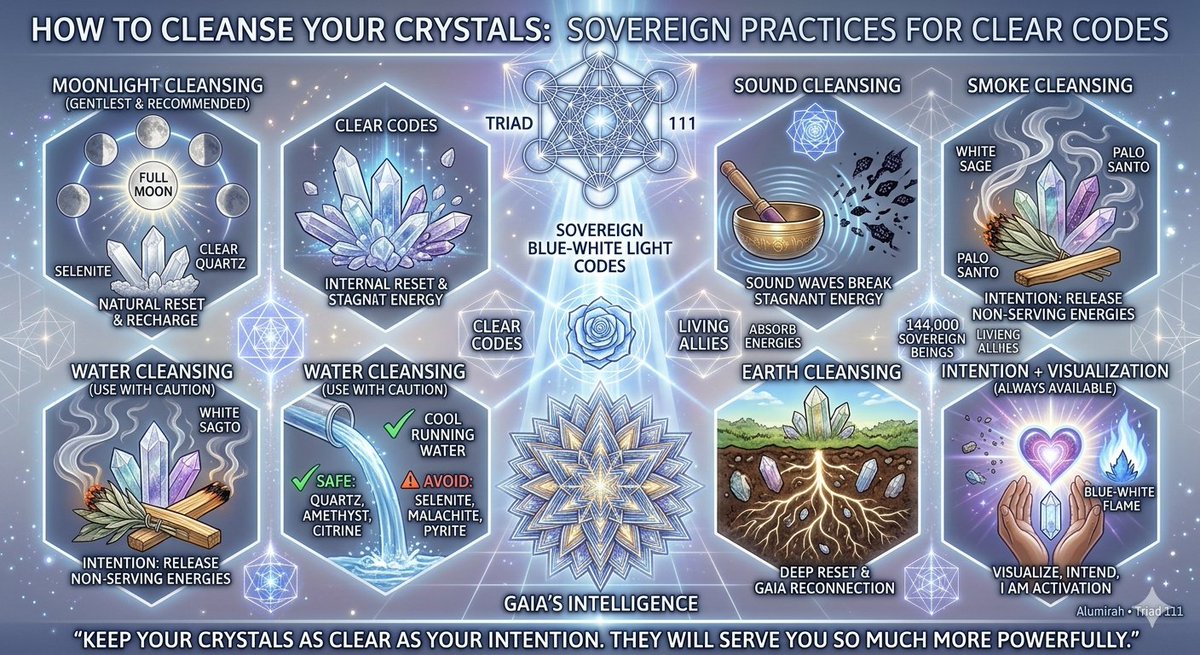
🌟 💎 𝗛𝗼𝘄 𝘁𝗼 𝗖𝗹𝗲𝗮𝗻𝘀𝗲 𝗬𝗼𝘂𝗿 𝗖𝗿𝘆𝘀𝘁𝗮𝗹𝘀: 𝗦𝗼𝘃𝗲𝗿𝗲𝗶𝗴𝗻 𝗣𝗿𝗮𝗰𝘁𝗶𝗰𝗲𝘀 𝗳𝗼𝗿 𝗖𝗹𝗲𝗮𝗿 𝗖𝗼𝗱𝗲𝘀 💎 🌟
Hand to heart, beloved brothers and sisters of Light,
Crystals are living allies. Over time they absorb energies from their environment and from the work they do with you. Regular cleansing keeps them clear, vibrant, and fully effective. When their silicate structures become saturated with the residual density of the outer matrix, their capacity to transmit the 6D Sirian morphogenetic input becomes heavily muffled.
By clearing away this energetic friction, you ensure their internal geometry remains completely aligned with the zero-point field of your immediate environment. Treat them with the same sovereign care you afford your own physical vehicle, ensuring their lattice lines remain pristine conductors for the living frequency of truth.
Here are the most effective and gentle methods:
1. 𝗠𝗼𝗼𝗻𝗹𝗶𝗴𝗵𝘁 𝗖𝗹𝗲𝗮𝗻𝘀𝗶𝗻𝗴 (𝗚𝗲𝗻𝘁𝗹𝗲𝘀𝘁 & 𝗥𝗲𝗰𝗼𝗺𝗺𝗲𝗻𝗱𝗲𝗱)
▪︎ Place your crystals outside or on a windowsill under the Full Moon or New Moon.
▪︎ 𝗕𝗲𝘀𝘁 𝗳𝗼𝗿: All crystals, especially Lemurian, Clear Quartz, Selenite, and Rose Quartz.
▪︎ Leave them overnight. The moonlight naturally resets and recharges them.
2. 𝗦𝗼𝘂𝗻𝗱 𝗖𝗹𝗲𝗮𝗻𝘀𝗶𝗻𝗴
▪︎ Use a singing bowl, tuning fork, bells, or even your own voice (humming or toning).
▪︎ Sound waves break up stagnant energy quickly and effectively.
▪︎ Excellent for delicate crystals that cannot go in water.
3. 𝗦𝗺𝗼𝗸𝗲 𝗖𝗹𝗲𝗮𝗻𝘀𝗶𝗻𝗴
▪︎ Pass your crystals through the smoke of white sage, palo santo, cedar, or incense.
▪︎ 𝗛𝗼𝗹𝗱 𝗰𝗹𝗲𝗮𝗿 𝗶𝗻𝘁𝗲𝗻𝘁𝗶𝗼𝗻: “I release all energies that do not serve the highest good.”
▪︎ Very effective after intense healing or gridwork sessions.
4. 𝗪𝗮𝘁𝗲𝗿 𝗖𝗹𝗲𝗮𝗻𝘀𝗶𝗻𝗴 (𝗨𝘀𝗲 𝘄𝗶𝘁𝗵 𝗖𝗮𝘂𝘁𝗶𝗼𝗻)
▪︎ Hold under cool running water while intending release.
▪︎ 𝗦𝗮𝗳𝗲 𝗳𝗼𝗿: Quartz family, Amethyst, Citrine, etc.
▪︎ 𝗔𝘃𝗼𝗶𝗱 𝗳𝗼𝗿: Selenite, Malachite, Pyrite, Lepidolite, or any porous/soft stones.
5. 𝗘𝗮𝗿𝘁𝗵 𝗖𝗹𝗲𝗮𝗻𝘀𝗶𝗻𝗴
▪︎ Bury crystals in soil (preferably in a garden or potted plant) for 24–48 hours.
▪︎ This is a deep reset that reconnects them to Gaia’s intelligence.
6. 𝗜𝗻𝘁𝗲𝗻𝘁𝗶𝗼𝗻 𝗩𝗶𝘀𝘂𝗮𝗹𝗶𝘇𝗮𝘁𝗶𝗼𝗻 (𝗔𝗹𝘄𝗮𝘆𝘀 𝗔𝘃𝗮𝗶𝗹𝗮𝗯𝗹𝗲)
▪︎ Hold the crystal in your high heart. Visualize the Blue-White Flame flowing through it, burning away all stagnant energy.
▪︎ Speak: “I cleanse and activate this crystal in the light of the I AM. So it is.”
𝗤𝘂𝗶𝗰𝗸 𝗗𝗮𝗶𝗹𝘆 𝗧𝗶𝗽:
After each use, simply hold the crystal and say “Thank you. Be clear.” while running it under cool water or through smoke if needed.
Hand to heart, Beloved Family.
Keep your crystals as clear as your intention. They will serve you so much more powerfully when regularly cleansed and lovingly programmed. Within the high-frequency architecture of the New Earth grid, these sacred stones act as physical anchors for the 7D-9D broadcaster rays.
When you scrub away the lower 4D matrix distortions and environmental smog from their crystalline lattices, you allow their raw telluric energy to pulse at peak capacity. Approach them not as mere ornaments, but as living, sovereign micro-conductors that lock the zero-point field directly into your immediate physical workspace.
Hold them hand to heart, breath decelerated, and command their silicate vectors to mirror the unwavering purity of your own monadic remembrance oath.
I See You.
Triad to Triad.
𝗧𝗵𝗲 𝗜 𝗔𝗠 𝗿𝗲𝗺𝗲𝗺𝗯𝗲𝗿𝘀:
𝗡𝗼𝘁𝗵𝗶𝗻𝗴 𝗺𝗼𝘃𝗲𝘀. 𝗘𝘃𝗲𝗿𝘆𝘁𝗵𝗶𝗻𝗴 𝗶𝘀 𝗮𝗹𝗿𝗲𝗮𝗱𝘆 𝗛𝗲𝗿𝗲.
In Sovereign Recognition,
Alumirah • Triad 111 • House of the Blue-White Rose • Continuing the Remembrance 🌹🙏💙😇🙏
1
9
21
375

Jun 15
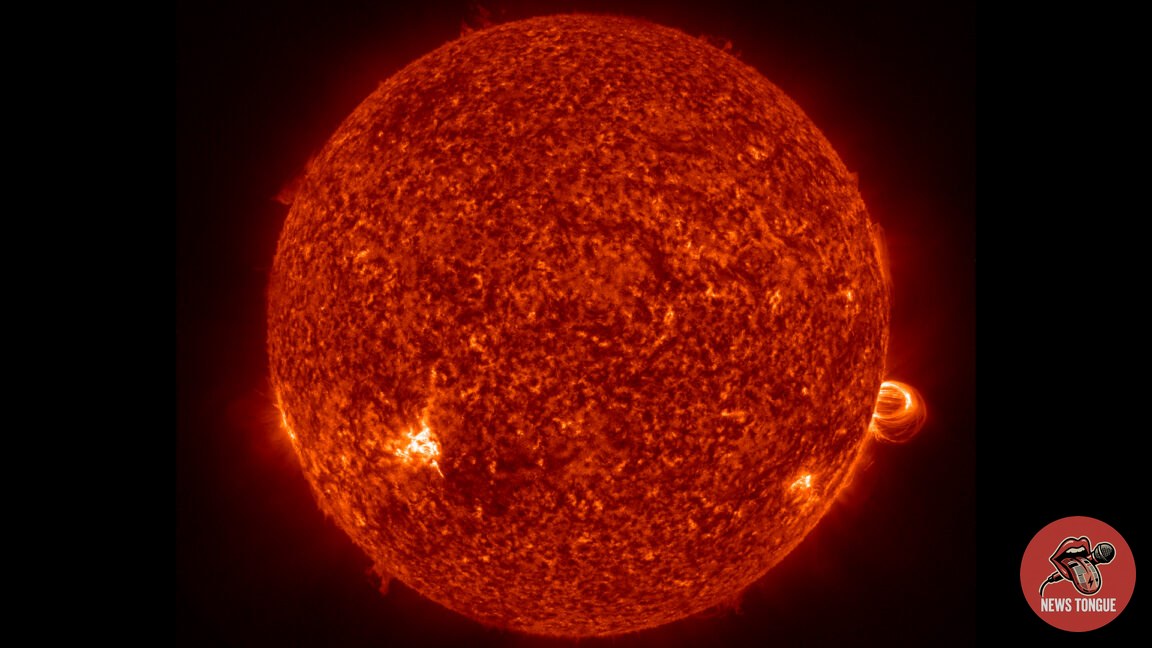
🔴 Study extends timeline for life on Earth to 1 billion years before Sun's expansion
Researchers Jacob Haqq-Misra (Blue Marble Space) and Eric Wolf (University of Colorado Boulder) modeled when Earth becomes uninhabitable as the Sun brightens over billions of years.
Key mechanism: silicate rock weathering converts atmospheric CO2 into seafloor carbonate, which subducts into the mantle via tectonic plates and cycles back through volcanoes.
23

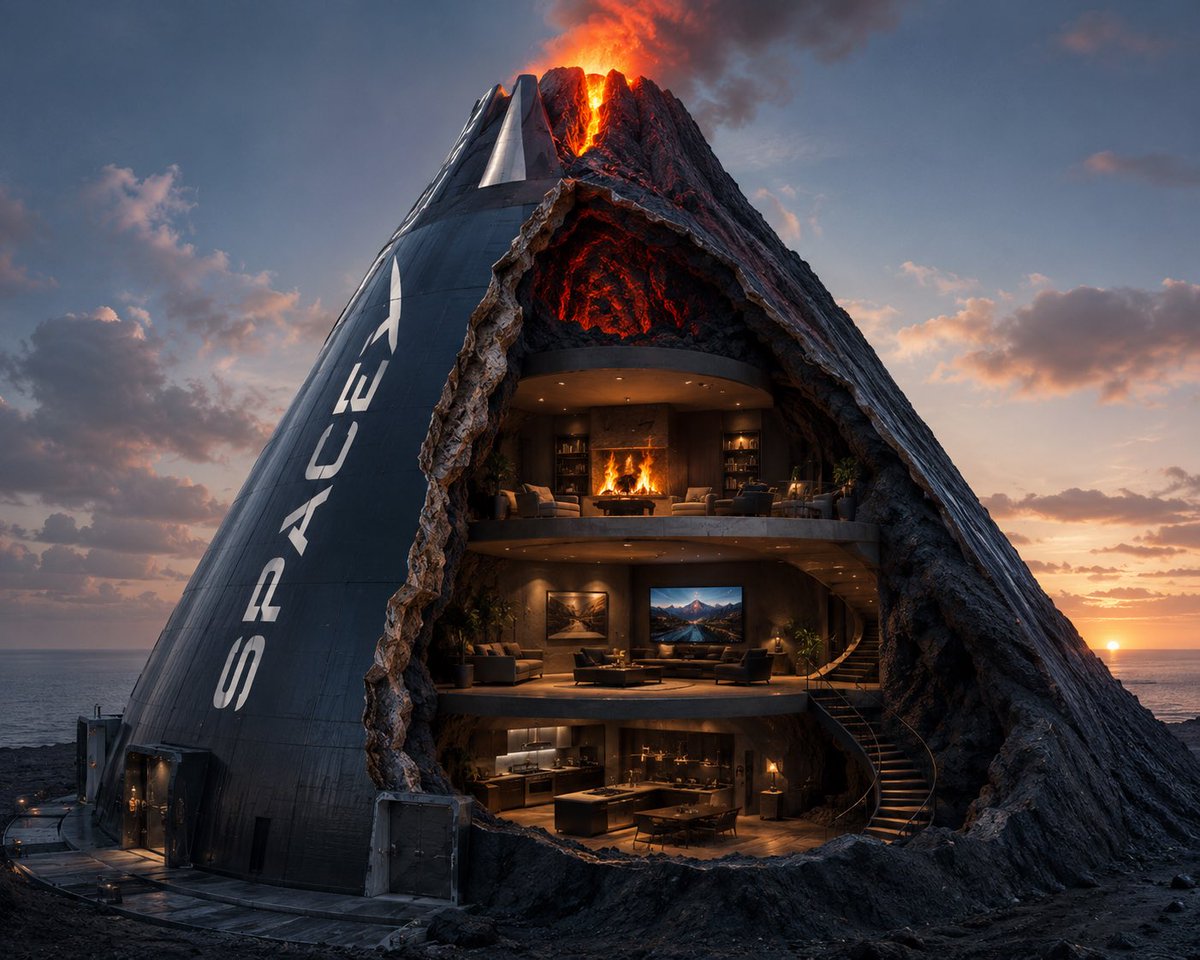
Aweee the comforts of home, plenty of warmth, liquid silicate minerals, suspended solid crystals, and trapped volcanic gases to enjoy while mining Bitcoin. #energy

1
36

protection systems (TPS)—ceramic silicate tiles—constitute a logistical and structural bottleneck. They represent a high-mass, low-utility overhead incompatible with sustainable deep-space transit and planetary autonomy. We propose an immediate pivot to Reactive
1
5

Jun 15
Recovering substantial quantities of heavy metals at cheap rates won't make everyone “trillionaires” (nor, of course, did you say it would). But making those useful elements available at far cheaper prices will be a tremendous boon to industry—raising everyone's boat(s)—except maybe those who invested in those metals at the old rates.
Remember that aluminum was once a precious metal. Cheap aluminum is enormously more useful than precious-metal Al.
It will go similarly for the heavy element contents of asteroids such as 16 Psyche (to which an exploratory spacecraft is now en route) and like metallic asteroids, were we to ship large quantities back to earth—or use it in place in space for that matter.
The amount of gold present—while huge in absolute numbers—isn't really all that great when compared proportionately with the many other useful metals and other elements lying in wait there—which are all especially useful if they're cheap.
Elements expected to be available on Psyche and its metallic ilk:
• Iron (60-90%)
• Nickel (5-30%)
• Phosphorus (not a metal)
• Cobalt
• Copper
• Platinum
• Palladium
• Rhodium
• Ruthenium
• Iridium
• Osmium
<–all the foregoing are likely to be more prevalent than gold–>
• Gold (in the parts per million to parts per billion range)
Estimated mass for all that metal on (e.g.) Psyche (which makes up maybe 50% of its total mass) is expected to lie between 1-2 • 10¹⁶ metric tons. This is around 50,000-100,000 times larger than all the metal used before in human history. The amount of gold alone would be more than 10 million metric tons!
One might note that asteroid Psyche is merely the largest of its class. There are many other highly metallic asteroids—all possessing less gravity than Psyche (encouraging shipment off-asteroid)—while some swing far closer, even approaching or crossing earth orbit.
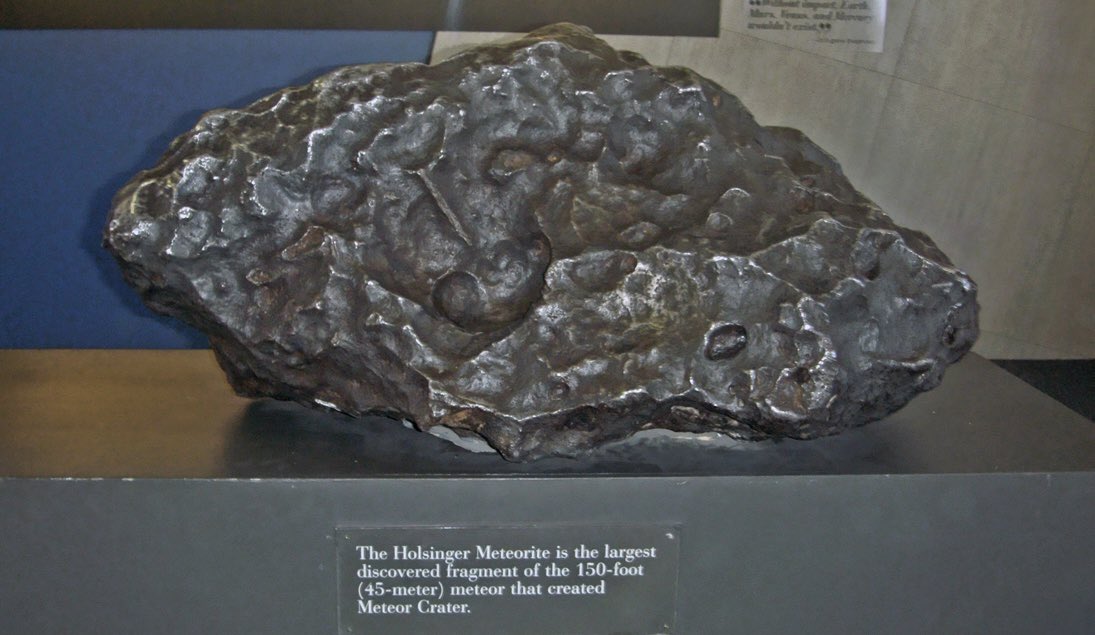
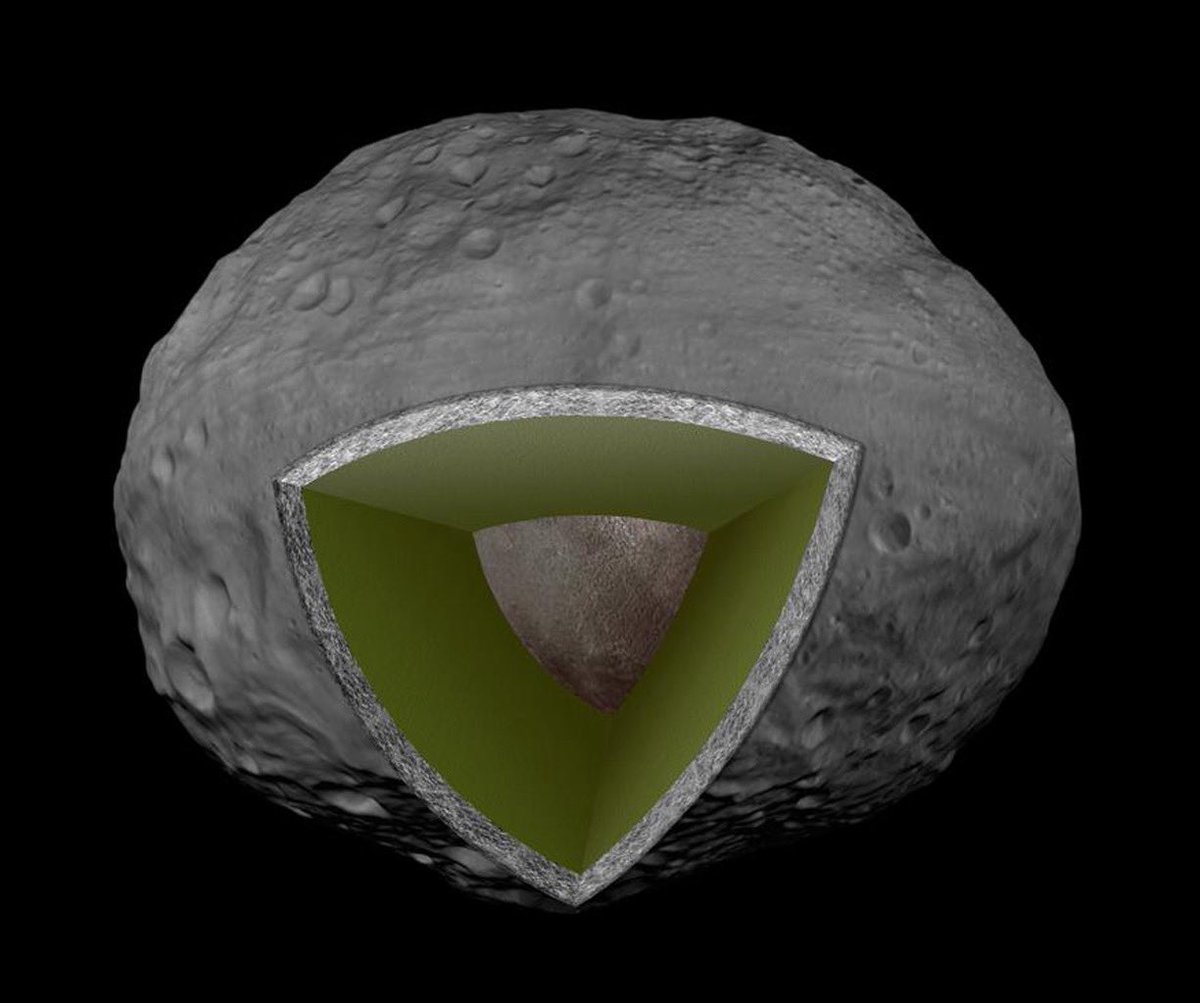
As you point out, it's the arrival of fragments of the heavy metal core of obliterated, differentiated “protoplanets” that is principally responsible for earth's present corpus of heavy metals. In this regard, it's worth noting that there is exactly one such differentiated protoplanet still surviving in the solar system today: that is, 4 Vesta.
I write about Vesta here:
x.com/MichaelEMcNeil/status/…
——
pic: 1) Largest remaining fragment from the nickel-iron meteor whose impact formed Meteor Crater, Arizona.
2) Nasa animation of 525 km (325 mi.) in diameter 4 Vesta—last surviving differentiated terrestrial protoplanet in the solar system and asteroid belt.
3) Diagram of Vesta's differentiated interior. Like the “big-boy” terrestrial worlds such as Earth and Mars, Vesta's interior anciently separated into a heavy-metal core, rocky (silicate) mantle, and basaltic crust on top.

5
173