
Jun 13
Would be nice to be able to turn otherwise singlethreaded implementations into multithreaded ones.
1
1
121


Jun 8
Wait, 50m searches per day it’s like 580 searches per second. shouldn’t be a problem even for singlethreaded pentium 4, isn’t it?
1
139

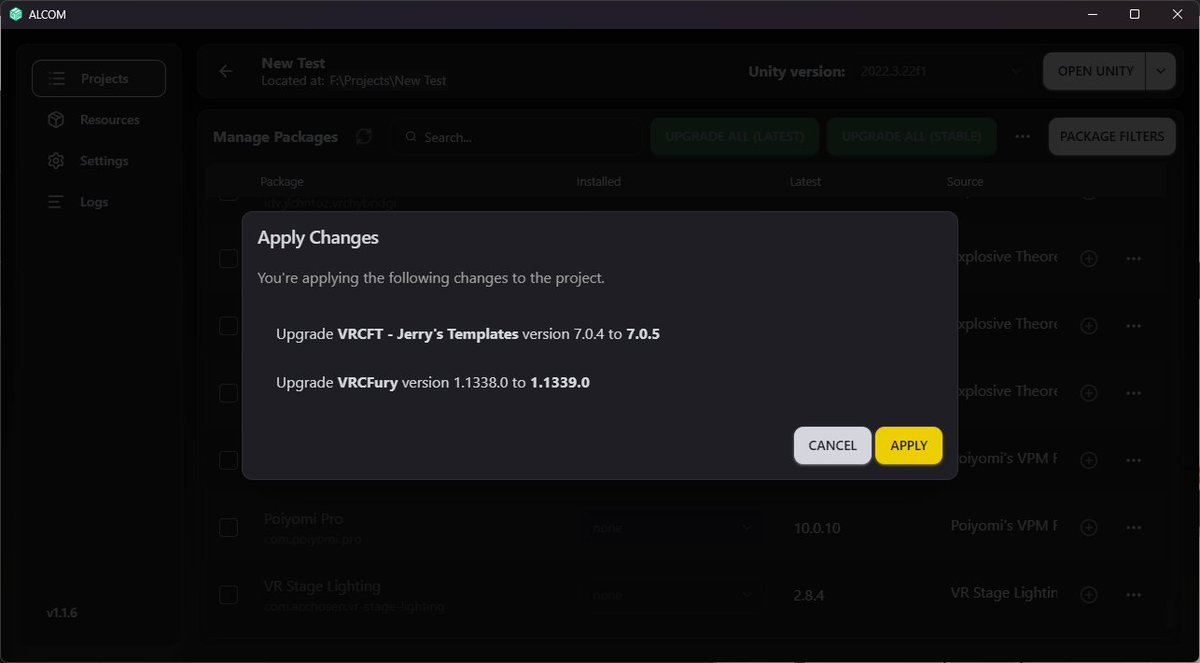

Yall don't get it either
We don't need lazer to be able to be set to unlimited frames because in theory it shouldn't do anything on multithreaded
The problem is the input handling for tablets on multithreaded is still fucking broken and worse than singlethreaded


4
1
68
7,526

Apr 21
TypeScript 7.0 Beta is out 🎉
It's the 10x faster Go-based port 🔥
🔷 `tsgo` vs `tsc` CLIs allow comparing
🔷 --checkers sets checker thread count
🔷 --singleThreaded keeps parsing/emit/checking together
🔷 TS 6.0 deprecations are hard errors
🔷 API access is planned for TS 7.1
Apr 21

TypeScript 7.0 Beta is here!
Built on a new native and parallelized foundation, it's already being used on multi-million line codebases.
Read up more here and try it on your projects today!
devblogs.microsoft.com/types…
5
45
914
77,403

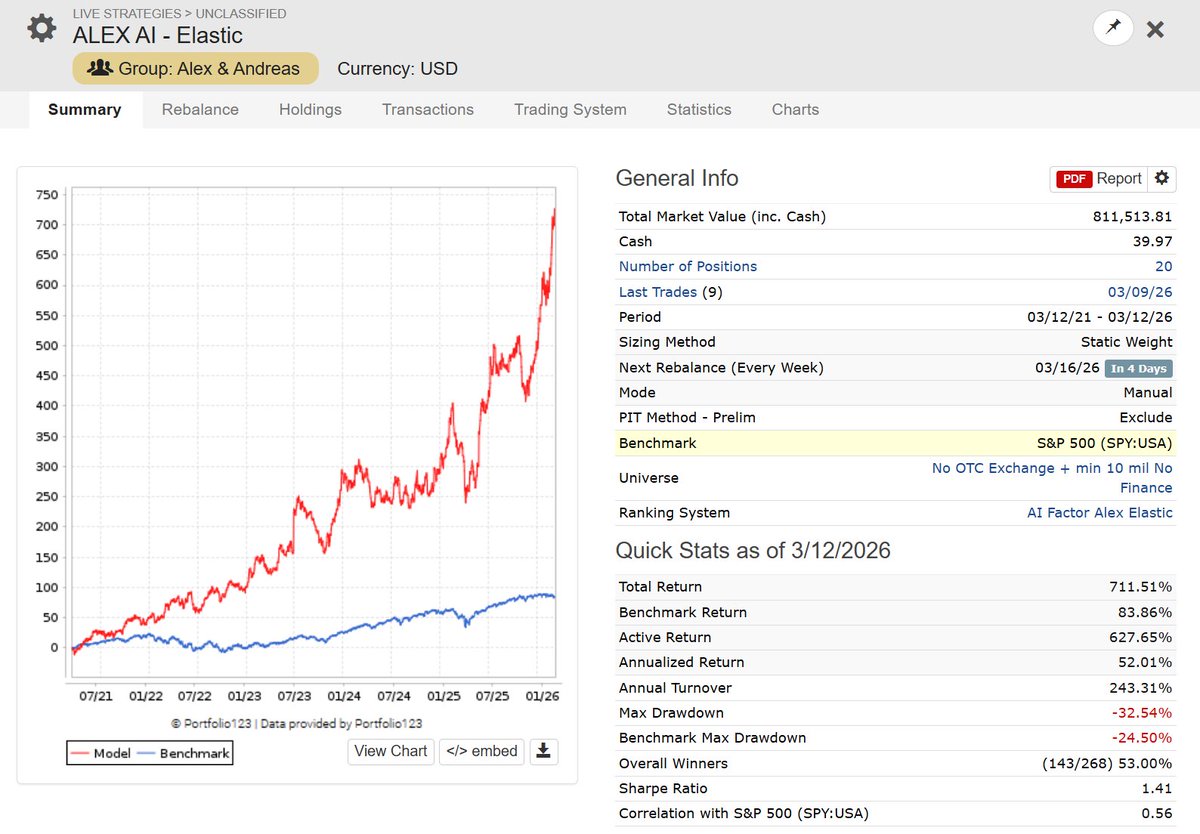
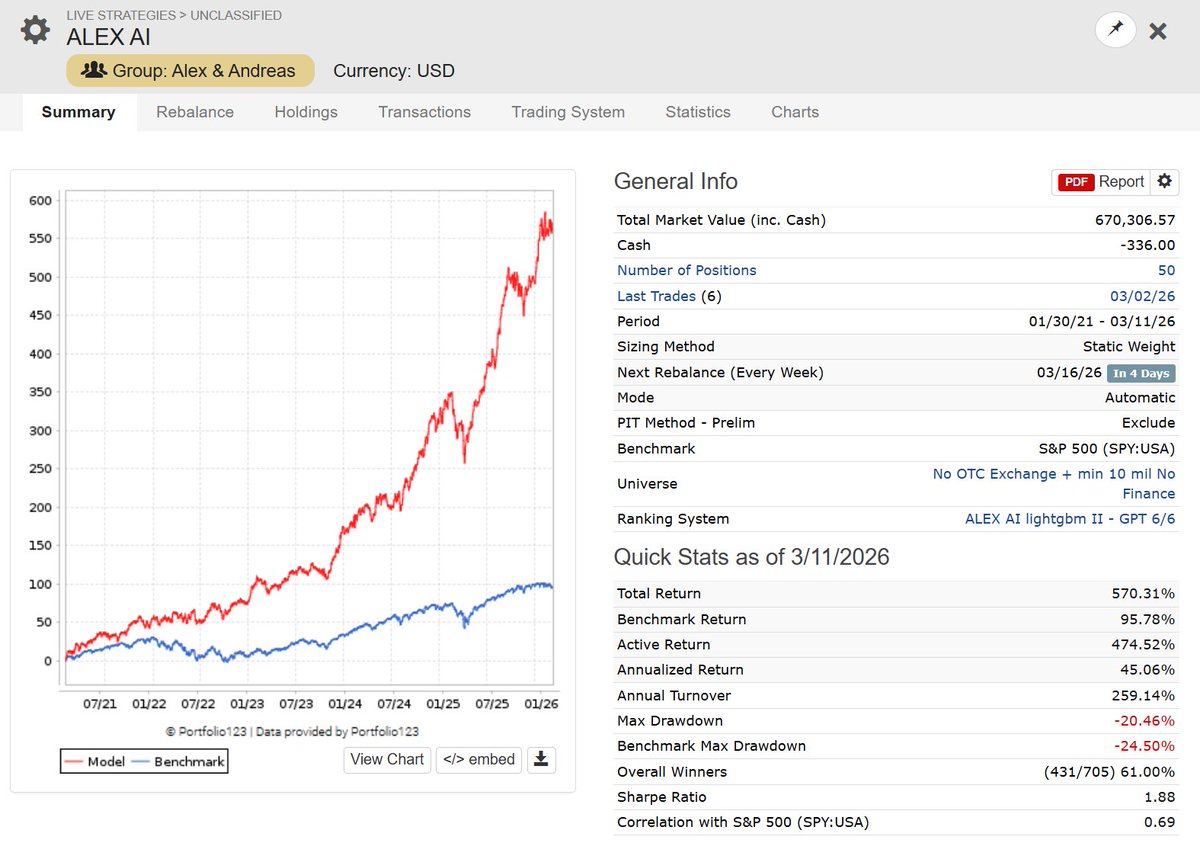
AI Factor robustness test: "Linear Elasticnet II" 📊
It’s not as strong as LightGBM or ExtraTrees, but if your cap curve looks solid, you know a simple linear ML model is successfully extracting alpha from your features.
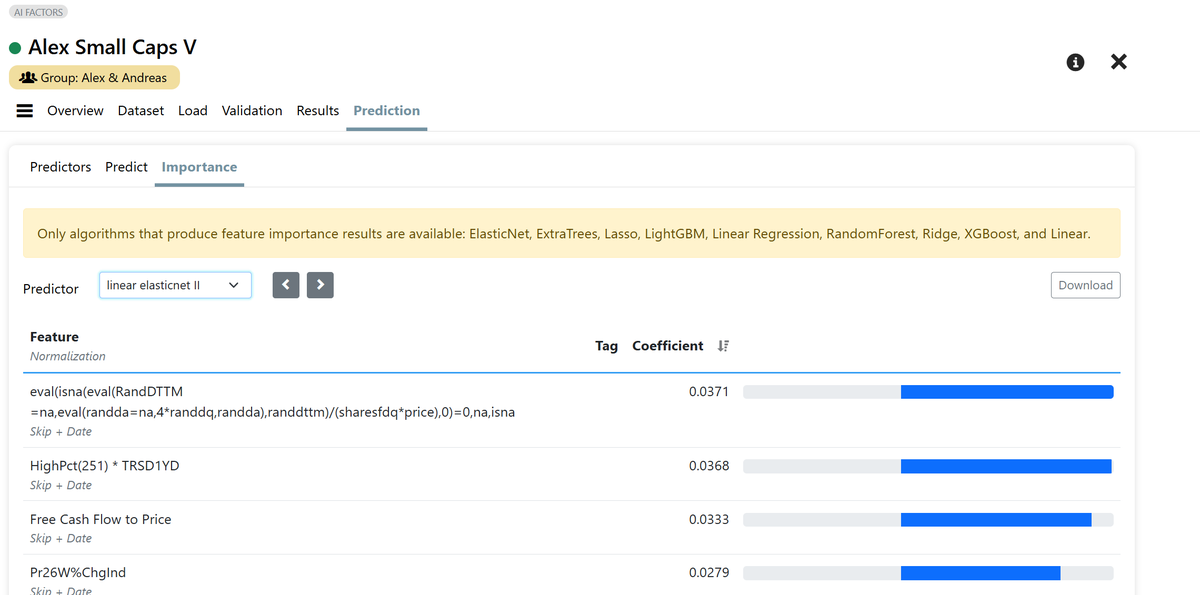
Plus, you get 100% transparency. You can see exactly how the ranking system is being built via feature importance! 💡
"Description: Linear model with ElasticNet regularization, slightly favoring L2 regularization (all features contribute to the prediction). High number of iterations to ensure convergence. #singlethreaded
Hyperparams: {"fit_intercept": true, "alpha": 0.01, "l1_ratio": 0.2, "max_iter": 25000}"
2
8
810


Feb 16
social media. Kindly do not share such details publicly or privately. Regards, Team ICICI Bank 2/2 x.com/messages/compose?recip…
7
Feb 16
Hi, we are concerned about your feedback. Please DM us your contact details. Our official will contact you. For your safety, please remember ICICI Bank will never ask for your password, PAN, Aadhaar, bank details, or OTP through calls, SMS, email, WhatsApp, or 1/2
1
11
Feb 15
details, or OTP through calls, SMS, email, WhatsApp, or social media. Kindly do not share such details publicly or privately. Sincerely, Team ICICI Bank 2/2 x.com/messages/compose?recip…
51
Feb 15
Hello, our customers are our top priority, and we're committed to addressing your concern. Please DM your contact details. We’ll connect you at the earliest. For your safety, please remember ICICI Bank will never ask for your password, PAN, Aadhaar, bank 1/2
3
69

Single Threaded vs Multi Threaded Languages Let’s Discuss
I see this misconception a lot:
“Single-threaded languages can’t scale.” reasons why alot of developers tend to talk down on NodeJS.
That’s not true and here’s why.
First, let’s define a thread.
A thread is simply a unit of execution think of it as a worker doing a task.
- Single Threaded (Execution Model)
One thread
One task at a time
Tasks are executed sequentially A classic example is JavaScript (Node.js / Browser).
Yes, JavaScript is singlethreaded, but here’s the important part:
Single threaded does NOT mean single user.
JavaScript uses: An event loop, Async I/O Non blocking operations
This allows Node.js to handle thousands of concurrent users, as long as the work is mostly I/O (API calls, DB queries, network requests).
The real problem?
- CPU heavy tasks, not user count.
Multi-Threaded Languages: Multiple threads run in parallel and there is better CPU utilization. Tasks can execute simultaneously on multiple cores examples are Java, C , C#, Go (goroutines), Python (threads exist, but GIL limits true parallelism)
Multi threading shines when: You’re doing heavy computations, image/video processing, scientific or data heavy workloads
But it comes with trade offs: More complexity, Race conditions, Deadlocks, Harder debugging
🔹 Simple Analogy
Single-threaded → One cashier serving customers fast, one after another
Multi-threaded → Multiple cashiers serving customers at the same time
Both work depending on the type of store.
🔹 The Real Takeaway
There is no “better” model.
✅ Single threaded async systems are excellent for I/O heavy workloads
✅ Multi threaded systems excel at CPU heavy tasks
✅ Modern systems often use both (workers, queues, background jobs)
Architecture decisions should be driven by problem type, not hype.
If you’re building with Node.js, Java, Go, or Python understanding this distinction will instantly make you a better engineer.
3
168

. @rainbowdotme hybrid RNBW design now locks 20% of Rainbow’s equity into rainbow foundation, routing any acquisition proceeds plus ongoing, feefunded realtime buybacks back to token holders as a kind of onchain equity proxy
@miranetwork has grown into decentralised AI verification fabric with 4M users n 19M weekly queries, using multi-model, crypto incentivised consensus to push AI accuracy above 95% for high stakes workloads.
@0xMiden remains Polygon zk execution lab, giving complex dApps rollup security plus flexible, parallel state handling that goes beyond what a singlethreaded EVM chain can realistically process
@MemeMax_Fi turned its maxpack campaign into extended boost Phase with 1 maxpack per 10 memeCore transactions n uncapped rewards up to 1M dollars per pack, sustaining a 400% network activity spike into launch
adds boost Up n post launch pack mechanics so opening MaxPacks, not just earning them, becomes a key action that gamifies airdrop extraction while aligning future incentives with on-chain trading behavior
41
37
180

23 Dec 2025
This is used to calculate distance (Pythagorean Theorem). However, Inverse Sq Root is quite expensive even today, so for relative calculations, often Sq Magnitude is used instead (as in which object is closer).
The famous Quake fast inverse root is mostly relevant in singlethreaded processor architecture today though, and there are better ways to optimize.
3
341


21 Oct 2025
rn if any tx writes to an acct all users of that accnt have to be singlethreaded, but bc of the entry constraint they also cant be batched together. so if theres a lot of write demand on an account, you only get one per batch and lots of potentially lower fee txs in between
1
6
610

29 Sep 2025
Rust doesn't fix memory leaks, that's not a safety issue.
But random memory stomps due to use after free, double frees or out of bound writes are notoriously hard to debug, especially when they only arise seldomly without a clear repro case.
Also, Rust makes code refactoring and multicoring singlethreaded code a breeze, because it usually means that if it compiles, you've done it right.
6
129