
What, the disaster that I bring down upon the Sinhalese?
Anyway,
These Muslims lived in the same and benefitted from the same community and spoke the same language as ethnic Tamils, the Muslims saw themselves as separate nonetheless and accepted the Sri Lankan settler colonial government. These same Muslims controlled much of the trade in the North, making them relatively privileged as compared to average non-Muslims Tamils, which would explain their acceptance and complicity of the Sri Lankan government's order.
*****************************************************
Prior to their mass expulsion, the primary consumers of Muslim-owned goods and services were all ethnicities present in the region—predominantly non-Muslim Tamils in the Northern Province, alongside Sinhalese communities and various foreign merchants.
The Muslim community served as a crucial economic backbone in Jaffna and broader northern Sri Lanka. Rather than only selling to co-religionists, their client base and market impact spanned the entire local population:
* Regional Trade and Retail: Muslim traders dominated the "New Market" in Jaffna, the hardware trade, and the textile and grocery sectors. Their customer base was fundamentally composed of the local Tamil majority.
* Lorry Transport and Logistics: Muslim transporters and truck owners controlled a vast share of the logistics sector, moving agricultural and manufactured goods both into the peninsula and out to the rest of the island.
* National and Foreign Consumption: Outside of Jaffna and the Northern Province, Muslim merchants historically catered heavily to Sinhalese kings and the general public, acting as trusted royal physicians, spice exporters, and internal merchants.
The forced expulsion of Muslims (numbering about 100,000) by the LTTE in October 1990 was driven by political anxieties surrounding the rise of a separate Muslim political party and the LTTE's desire for a mono-ethnic state, not by a lack of integration or consumption.
For a deeper look into the historical distribution of mosques, trade networks, and the economic integration of these communities across both Muslim-minority regions (like Jaffna) and the rest of the country, refer to the [ResearchGate Study on Mosque Distribution] and the [International Journal of Humanities and Social Science Analysis]
*************************************************************
So yes, it is a bad thing to not commit to the community it is that you benefit from, living in it even, when Tamils were being class stratified according to ethnicity and language as a form of colonial racism to use language as a means of domination through exclusion and then assimilation of those who seek to be included into the dominant order to try to overcome the structurally enforced racism.
********************************************************
In the context of Sri Lanka, describing the Sinhalese-led government's settlements in the Northern and Eastern provinces as "colonial" or "settler-colonial" is a viewpoint heavily emphasized by Tamil scholars, activists, and human rights organizations. This perspective centers on the following key points:
• State-Sponsored Resettlement: Critics point to government-directed internal colonization schemes (which began in the 1930s and expanded post-independence) that moved Sinhalese populations from the island's south and central regions into traditionally Tamil and Muslim areas in the Northern and Eastern provinces.
• Demographic Shifts: These state-sponsored projects led to significant shifts in the regional demographics. For example, in districts like Trincomalee and Mullaitivu, the Sinhalese population increased substantially, which critics argue is an intentional effort to dilute Tamil political power.
• Cultural Alteration: Alongside physical settlement, these policies often involve the construction of Buddhist shrines and temples in historically non-Buddhist areas, a process frequently described as "Buddhisization" or Sinhalization.
• Loss of Homeland: Tamil advocates argue that these actions are a form of settler colonialism aimed at erasing the historical boundaries of the Tamil homeland and threatening their cultural, economic, and political future.
Conversely, the Sri Lankan state and many Sinhalese nationalists view these actions differently. They frame these resettlement programs not as colonialism, but as the constitutional right of any citizen to live and work anywhere in their own country. The government has historically justified these massive irrigation and farming projects (such as the Mahaweli Development program) as necessary economic development, poverty alleviation, and internal integration meant to benefit all ethnic groups.
The competing historical and political narratives between Tamil groups and the Sri Lankan state are central to the island's long-standing ethnic tensions.
1
47

Sinhalization of Tamil history in Eezham. This is an important tweet below & historical facts ALL Tamils must be aware of. Nagars: natives of Eezham, now known as Sri Lankan, are of Tamil descent.
Jun 14

தமிழ் மொழி பேசிய ஈழத்து பூர்வக்குடி நாகர்கள் கட்டிய குளங்கள் சிங்களமயமாகாமல் தடுக்க வேண்டிய கடமை தமிழினத்துக்கு இருக்கு.
#அறிவோம்ஈழம்
#பாவற்குளம்
1
5
16
855

Drawing on local histories, this feature examines how occupation operates through militarisation, buddhisization, Sinhalization, and settler-colonialism—and how people continue to refuse it.
1
1
74

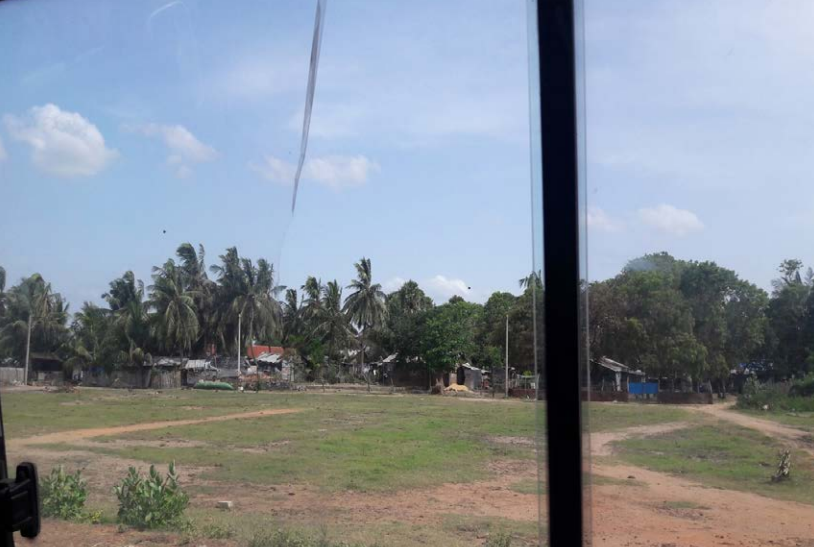
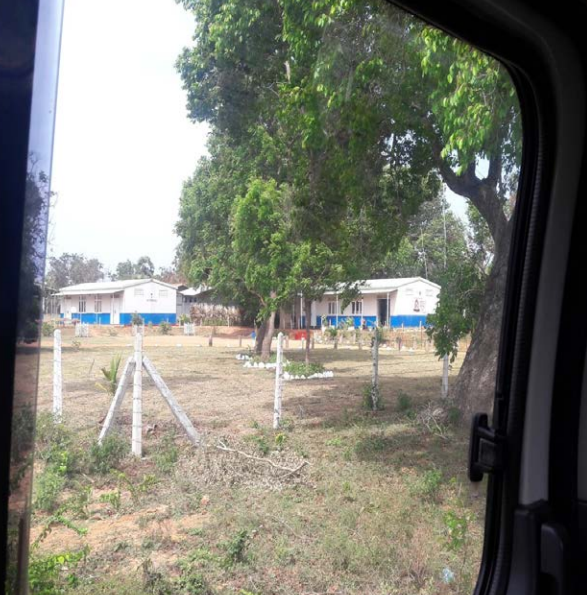
Photo 1 : Illegal settlement of Sinhalese fishermen in Kokkilai - land confiscated from a Tamil man.
photo 2 : Police station set up to protect Sinhalese settlers in Kokkilai, Mullaithivu
(Left to right)
#illegal #landcrab #sinhalization #fishermen #tamilland #tamileelam
2
5
17
526

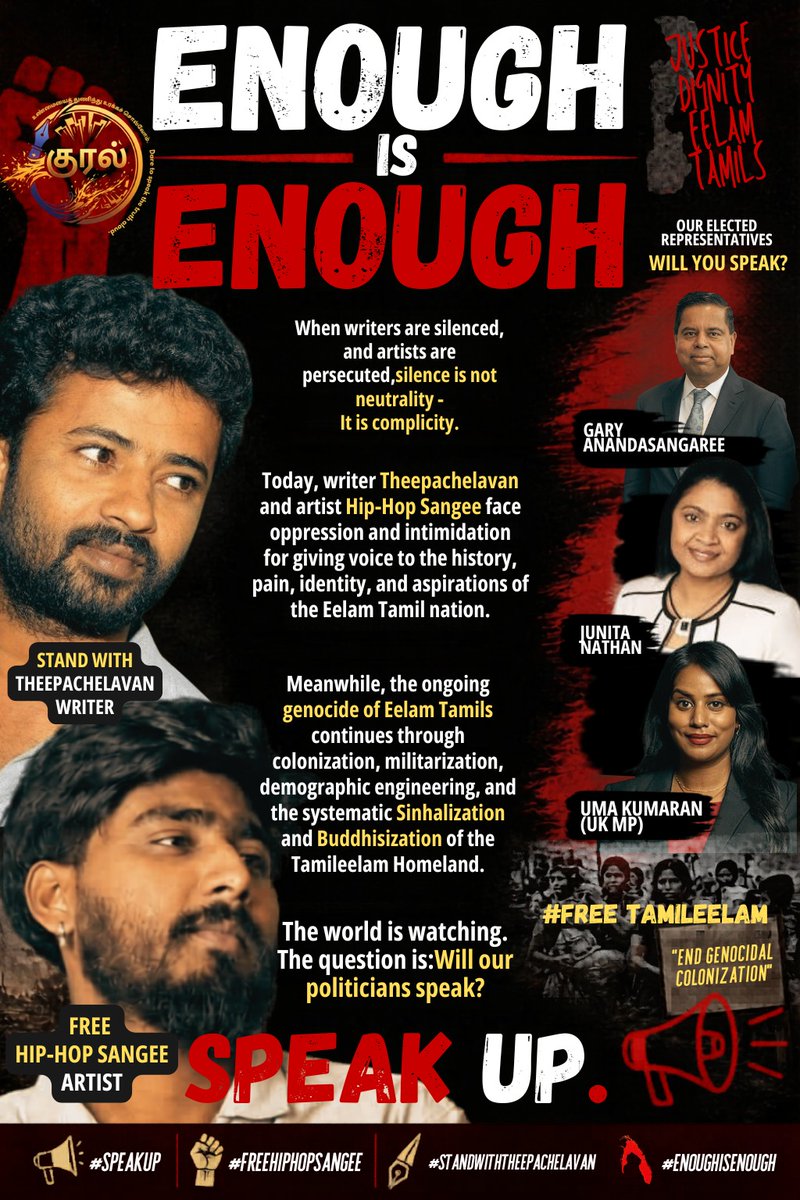
ENOUGH IS ENOUGH
When writers are silenced,
and artists are persecuted,
silence is not neutrality - It is complicity.
Today, writer Theepachelvan and artist Hip-Hop Sangee face oppression and intimidation for giving voice to the history, pain, identity, and aspirations of the Eelam Tamil nation.
Meanwhile, the ongoing genocide of Eelam Tamils continues through colonization, militarization, demographic engineering, and the systematic Sinhalization and Buddhisization of the Tamileelam Homeland.
The world is watching.
The question is: Will our politicians speak?
SPEAK UP.
#SpeakUp
#FreeHipHopSangee
#StandWithTheepachelvan
#EnoughIsEnough
#Kural (Dare to speak the truth aloud)
#குரல் (உண்மையைத் துணிந்து உரக்கச் சொல்வோம்)
17
32
897

May 18
Who said the whole country belongs to the Sinhalese? Tamils want to rule over the Northeast, a region traditionally & historically ruled by us before the British arrived, which remains largely inhabited by Tamils to this day, yet is threatened by systematic sinhalization.
4
6
200

May 18
#STATEMENT: Remembering the Tamil Genocide, and Reaffirming the Vaddukoddai Resolution 50 years on
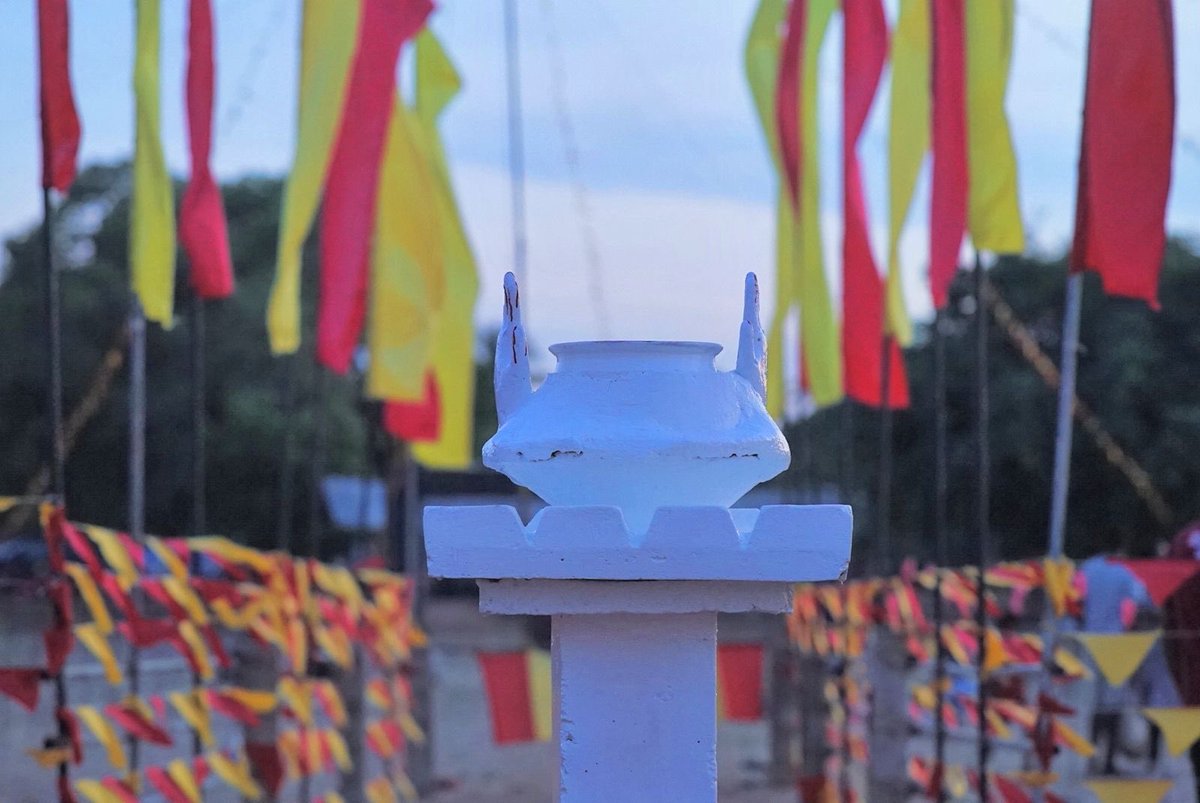
Washington, D.C.; May 18, 2026 – On the 17th anniversary of the Mullivaikkal Genocide, commemorated globally as Tamil Genocide Remembrance Day, PEARL stands with the victims and survivors of the Sri Lankan government’s genocide against the Eelam Tamil people. This month also marks the 50th anniversary of the Vaddukoddai Resolution, a 1976 declaration spearheaded by Tamil political leaders, elected by Eelam Tamils, to assert the Eelam Tamil people’s right to self-determination and calling for the independent state of Tamil Eelam. These anniversaries are reminders that the struggles for justice and self-determination remain unresolved and as critical as ever.
In 2009, the Sri Lankan government carried out a military campaign in the Vanni that amounted to genocide, marked by the deliberate denial of food and medicine, the corralling of Tamil civilians into so-called “No Fire Zones” that were subsequently bombed, and the systematic targeting of hospitals and humanitarian sites. Credible sources indicate that between 70,000 and 169,796 Tamils remain unaccounted for and are presumed dead (see our report Justice for Genocide: Sri Lanka’s Responsibility for Genocide against the Tamil People in 2009). Every year at memorial events, kanji, a thin watery rice porridge, is served to commemorate the scarcity of food during this time and the resilience of the Tamils in Mullivaikkal, who were forced to survive on this inadequate meal. Braving heavy intimidation, harassment, and surveillance by Sri Lankan security forces that persist to this day, it is through these traditions that the Eelam Tamil people remember the genocide and those taken by it.
Eelam Tamil resilience dates back well before the genocide in 2009, as they have long faced decades of violence and systemic discrimination. The Sri Lankan government’s broken political promises for equality and the denial of Tamil political agency ultimately led to the adoption of the Vaddukoddai Resolution in 1976, which became a historic assertion of the Eelam Tamil people’s right to self-determination. The Eelam Tamil nation became the primary bulwark against the rising Sinhala-Buddhist majoritarian state. On the 50th anniversary of the Vaddukoddai Resolution, we are reminded of this pivotal moment for Eelam Tamil nationhood. Based on the Vaddukoddai Resolution, generations of Tamils have worked to build and protect the Eelam Tamil nation and fought for international recognition of the Tamil Eelam state. Sri Lanka's denial of Eelam Tamil nationhood has fuelled decades of mass atrocities and culminated in the destruction of the de-facto state of Tamil Eelam. The Sinhala-Buddhist majoritarian government's intention was not only to destroy Tamil bodies, but to extinguish any thoughts of liberation and self-determination from the Tamil people’s minds. It is clear that 17 years after the Mullivaikkal Genocide, and 50 years after the Vaddukoddai Resolution, Sri Lanka’s plan has completely failed.
Today, Eelam Tamil resilience endures in the face of ongoing structural repression by the Sri Lankan government and the absence of accountability for mass atrocity crimes. Tamils continue to reject failed domestic mechanisms, such as the Office on Missing Persons, instead sustaining their own persistent demands for truth and justice for the genocide. This tenacity persists amid ongoing militarization of the North-East, the Sinhalization of Tamil lands and livelihoods, and surveillance and violence from security forces. The NPP government still promotes a narrative of reconciliation throughout all of this, while also sidelining Tamil demands and retaining the draconian Prevention of Terrorism Act, which continues to disproportionately target Tamils and Muslims. Sinhala-Buddhist majoritarianism is still the primary ideology and protects and upholds the unitary state structure on the island.
1
16
33
739

Mar 15
Other west coast Catholic groups that have undergone Sinhalization include the Bharathas (from TN Paravar) and Colombo Chetties. Many post-19th century Indian Tamil migrants in the south are also increasingly assimilating with the Sinhalese through bilingualism and intermarriages. There are more privileges by adopting the dominant identity. Since they’re only half way in, they strategically deploy their Tamil identity against Eelam Tamils to serve Sinhalese interests. This is why Eelam Tamils emphasize their distinct nationhood which can only be maintained through demographic dominance and political autonomy.
2
3
24
2,002
Mar 15
Here’s another example of Sinhalization: Catholic fishermen in Negombo whose ancestors came from TN post-15th century. Many are still bilingual in Tamil, speaking their own unique dialect. Their assimilation was facilitated by the Sinhala Catholic Church. BJP candidate Radhika Sarathkumar’s mother was from this community. scroll.in/magazine/1020026/h…
1
4
39
4,063
Mar 15
A Telugu community in Anuradhapura, Sri Lanka is embracing Sinhalese identity and Christianity to escape stigma associated with snake charming. This is just the latest example of Sinhalization of many different waves of South Indian migrants which is the best-kept secret of Sinhala history.
examiner.media/why-the-telug…
11
107
349
18,669
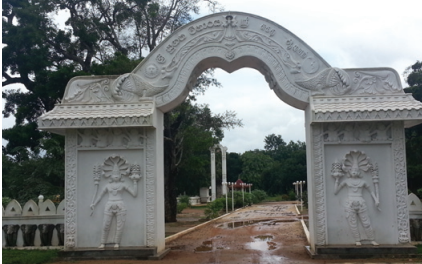
(1) With the massive number of troops in the north have come various forms of Sinhalization. The almost entirely Tamil-speaking north is now dotted with Sinhala sign-boards, streets newly renamed in Sinhala, monuments to Sinhala war heroes, and even a war museum and battlefields
3
13
32
1,655

Sinhalese are among South Asia's most insecure majorities: 74% of the island, total control of south/west/center, yet they act like a threatened minority, pushing Sinhalization in the tiny Tamil North-East to erase the last non-Sinhala space.
Their identity is built on the Mahavamsa myth: an exiled Indian (Bengali/Orissan) prince Vijaya supposedly arrives, slaughters locals, founds the Sinhala line—but rebrands as "lion-descended" to erase Indian roots and claim divine Buddhist primacy. The whole "Sinhala Buddhist promised land" narrative is a post-facto coping mechanism to hide immigrant origins and justify supremacy.
Overwhelming numerical power minority persecution complex = endless insecurity. Dominating 90% isn't enough; the North must be colonized too. Classic overcompensation.
1
8
275

Tamils. The Sri Lankan state currently destroys Hindu cultural places of worship, illegally dispossesses, disenfranchises Tamils of their lands, livelihoods, community, commits cultural genocide, state sanctioned rape and sexual violence, deep militarization and Sinhalization.
3
97
Calling "Tamil genocide" low IQ doesn't erase facts. Oppression started long before the LTTE existed. Prabhakaran was born in 1954. LTTE founded in 1976. Saying "it all started with LTTE" is deflection. The state drove Tamils to militancy after decades of systemic attacks.
Pre-LTTE milestones (1956–1983):
1956: Sinhala Only Act barred Tamils from public jobs. Cultural erasure when Prabhakaran was 2.
1958: Anti-Tamil pogrom. Hundreds killed. State complicit.
1972 Constitution: Buddhism declared "foremost." Tamil Hindus and Christians marginalized.
1970s Standardization: Tamils needed higher marks for university. Deliberate education barrier.
1977: More anti-Tamil riots. Killings and destruction.
1981: Jaffna Library burned. Army and police watched. 97,000 books destroyed. Cultural genocide.
Black July 1983: 3,000 Tamils killed in Colombo. Mass rape. Homes looted. Peaceful paths exhausted. LTTE recruitment exploded.
2009 Mullivaikkal: UN Panel found credible evidence of war crimes. Shelling of no-fire zones. Hospitals hit repeatedly. 40,000 civilians killed, mostly by government artillery. Aid denied.
Government's "we fought LTTE, not civilians" narrative? Debunked. UN reports confirm indiscriminate shelling of civilian areas. Most casualties from government fire.
Genocide claims cite UN Convention Article II: intent to destroy a group through killing, harm, or conditions. Ongoing structural violence plus 2009 events meet that standard.
Post-war: Sinhalization, land grabs, militarization continue ethnic erasure in the North-East.
Facts aren't low IQ. Denial is. Read UN Panel Report, OISL, HRW. Stop swallowing propaganda.
The war didn't start with the LTTE. It started with majoritarian policies that made resistance inevitable.
1
4
74

Jan 26
..and processes whilst prohibiting the emergence of new ones. The processes of Sinhalization have contributed to the relative impoverishment and poverty of the Tamil-speaking regionsin the decadessince independence."
5
234