
well, it would be more effective if the collectors would specify what type of art they are after. When I used to do these posts to collect from, it was difficult to find something I liked, until I started specifying what type of art I was after. Then it became actually useful.
1
1
10


Like my job taken partly by a 9 million what appeared to be a church type business and they did not deliver what they lied about on the Az legislature video when specifying money use. I guess it’s always money / the evil part
1
10

does anyone know an indian artist that I can commission? uh its would best if theyre good with expressions and human figures? (Im specifying Indian cause my currency of is ass and i wont be able to afford an American or European artist 🥀)
2
1
76

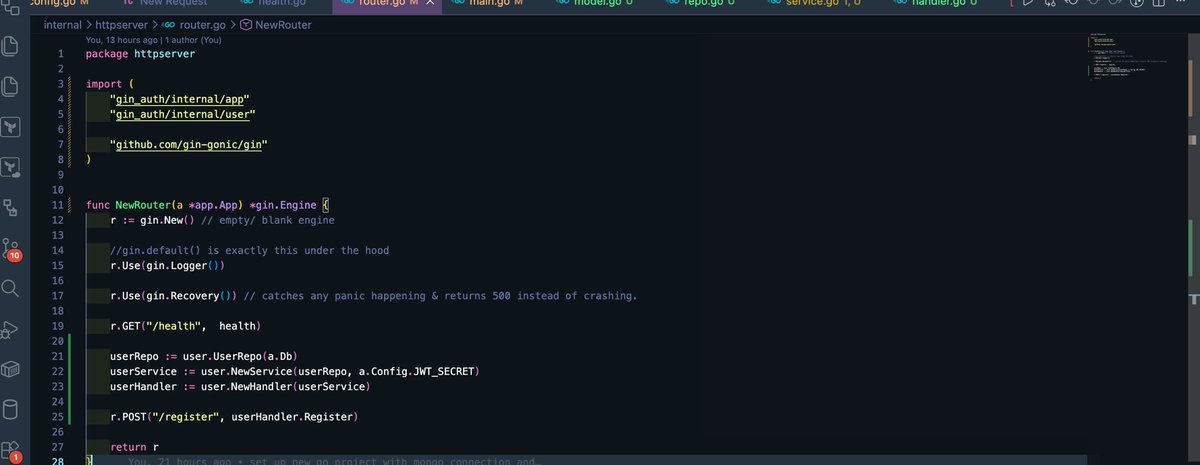
- modeling in structs. Some fields can be omitted out of the json response by using a “-“. Some fields can be made required too by using omitnotempty
- I discovered the difference between using the default gin engine versus specifying a new empty one.
1
1
4

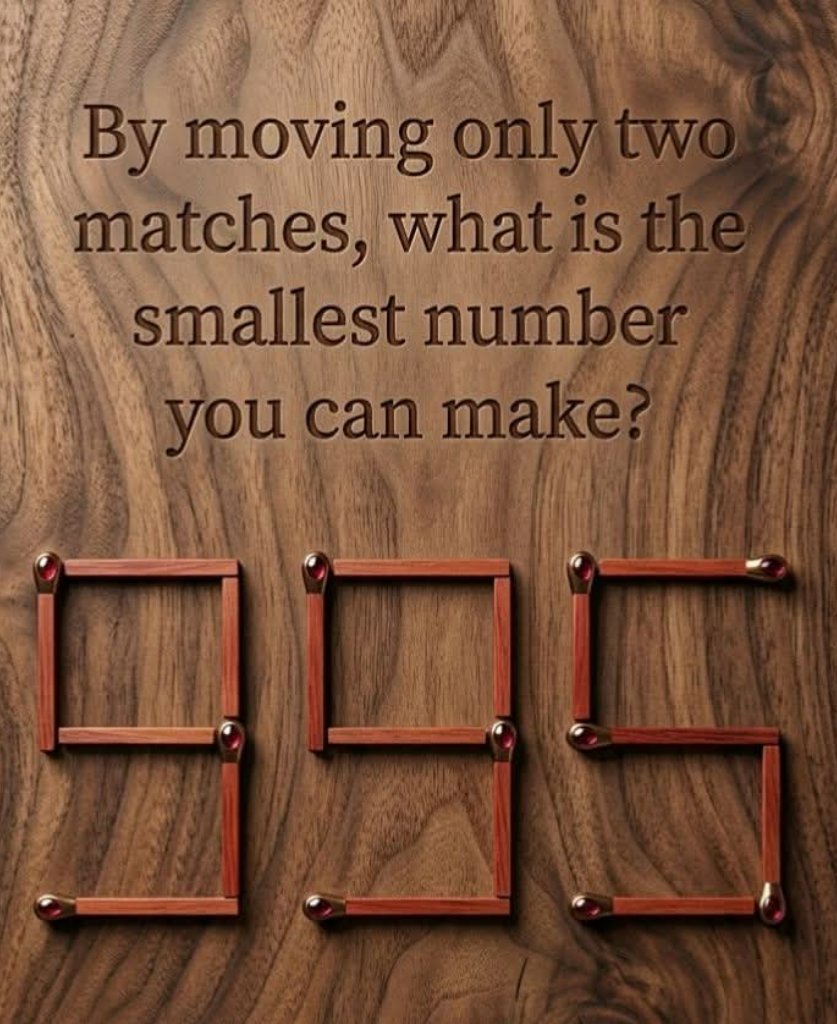
Answer is 002. Basically 2
Firstly. There are 6 sticks here shared between the two 9s. They are NOT proper matches as they have no match heads.
There's no rule specifying how many of them can be moved or whether they even can be moved.
Move two proper matches in 5 to make 2.
22h

Tell me the number bigger than 995 by moving only 2 matches.
0.0001% will win.
20
Answer is 002. Basically 2
Firstly. There are 6 sticks here shared between the two 9s. They are NOT proper matches as they have no match heads.
There's no rule specifying how many of them can be moved or whether they even can be moved.
Move two proper matches in 5 to make 2.
39

Hyliion's KARNO™ Power Module Named 2026 Most Valuable Product by Consulting-Specifying Engineer finance.yahoo.com/sectors/en…
5

The UK imports 80% of its timber needs, worth around £9bn annually.
Specifying more UK-grown C16 supports rural jobs, strengthens supply chains and helps build a more sustainable future.
Find out more: cti-timber.org/trust-uk-c16-…
#TrustUKC16
1
1
12

Well, don't think it fair to compare them without specifying the formats rn. For example england in ODI.
17

highkey more people gotta be specifying their audience on tweets like these (or really any tweet with an active audience, romatic, sexual, or otherwise.)
seeing some1 go "le sigh, no one will ever love me" then denying the shlubs in her replies is lame. just say who you want

fuck it who wants to see it?
DM me and I'll show you
(weird perverted women only, sorry)
1
1
26

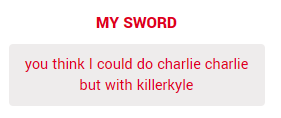
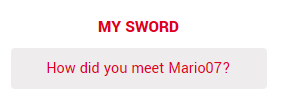
1. yes of course. do it right now kyle kyle.. and ill be like yoo hello
2. i dont know what this means!!!!!!!!! im not an rp acocunt!!!!!!!!! and if this is something im not specifying dont odthat!!!!!!!!!!!!
3. maybe eventually.... i might have to make a better one tho b4

1
3
91

@grok, how many people were imprisoned and tortured during the Spanish Inquisition?
He's specifying executions but what was the overall imprisonment and torture for count?
1
40

This is a very detailed fashion prompt. Do you find that specifying the bag size helps the AI get it right?
3

Most people talk about Freedom, without specifying whose version it is. Assuming that it must be freedom including the things they like. That it will exclude or criminalise the things they don’t want tolerated.
mrgwydionmwilliams.quora.com…
12

RSI divergence on *which* timeframe though? Daily RSI divergences have false-signaled corrective moves dozens of times in Bitcoin's history. If you're trading on 4H RSI, you're fighting against longer-cycle accumulation. Worth specifying.

Looking back in 2025, bitcoin had three bearish divergences: higher highs in price, lower highs in RSI. Stronger on the surface than underneath.
1

#CanardHirsute’s morning geopolitical round-up 🦆
Deal in “Trump l’oeil” (lost in translation)
x.com/ANI/status/20665623002…
--------------
1 Iran
Donald Trump claimed last night that the Strait of Hormuz would be “completely open” on Friday, the day of the signing ceremony for the framework agreement reached between the United States and Iran to end the war in the Middle East. “Ships from all over the world, start your engines. Let the oil flow!” he wrote. “We expect the Strait to be reopened without tolls in the long term,” US Vice-President JD Vance told CNBC on Monday. From this, one can infer that the mullahs’ regime would be permitted, in the medium term, to charge ‘service fees’ – a subtle distinction.
The framework agreement has already been signed electronically by Donald Trump, his Vice-President JD Vance, and the Speaker of the Iranian Parliament and Tehran’s chief negotiator, Mohammad Bagher Ghalibaf. The text has not been made public, leaving doubts hanging over points of disagreement between the two sides following laborious negotiations.
Tehran has also claimed that “the American side has committed” to unfreezing Iranian funds held abroad and paying $300 billion in reparations for war damage. “They will never receive a single dollar from the American taxpayer. Never,” JD Vance insisted on Fox News, implying that the Gulf monarchies could be pressured to pay, why not.
Basically, notes Canard Hirsute, this is an excellent deal for the United States, except that it makes no mention of nuclear weapons, ballistic missiles or proxies; it abandons Israel and the Gulf monarchies and leaves open the possibility that the reopening of the Strait, which was unimpeded before the war, will be subject to the mullahs’ regime’s conditions. The Art of the Deal, a triumph.
---------------------------
2 Japan
On Tuesday, the Bank of Japan raised its key interest rate to 1%, the highest level since 1995, in a bid to stem the weakening of the yen and inflation fuelled by the war in the Persian Gulf, through which 90% of Japan’s oil passes. This decision, in line with market expectations, follows recent monetary tightening by the European Central Bank (ECB) and the Bank of Indonesia, and comes ahead of a meeting of the US Federal Reserve (Fed) this week.
Having long been plagued by deflation, Japan has since 2022 experienced a sustained rise in consumer prices of over 2%, prompting the BoJ to gradually tighten its rates – which had long remained at zero or negative levels – since 2024.
----------------
3 Palestinian Territories
The leader of the Palestinian Authority, Mahmoud Abbas, aged 90, announced on Monday evening that a presidential election would be held in early 2027 and parliamentary elections as early as next November, without specifying whether he would stand for re-election (which, given that he is semi-senile, would be sheer madness, but in those parts anything is possible).
He was elected in 2005 for a four-year term, but no presidential election has been held since. He governs by decree, which has drawn criticism both domestically and internationally. The last parliamentary elections in the Palestinian territories took place in 2006, won by the Islamist movement Hamas at the expense of Fatah, immediately followed by the liquidation of opponents in Gaza and civil war. Canard Hirsute is therefore not certain of a convincing democratic future in the Territories within a year…
--------------- ---
4 Israel
Benjamin Netanyahu declared on Monday evening that he intended to stand in the parliamentary elections scheduled for the autumn.
The 76-year-old Israeli Prime Minister has governed the country for a total of 18 years since 1996, a record. On Monday, Israeli officials across the political spectrum lambasted the agreement reached between Iran and the United States, claiming it did not address Israel’s security concerns.
--------------
End of this news feed; you may now resume intense metaphysical activity. If you want Canard Hirsute to return tomorrow, all fired up, to chronicle the world’s upheavals, you can RT, comment, quote, or tag him (he usually replies).
 ANI
ANI
274

yes i think you knew what you're doing as you kindly explained here in this tweet which is what i was specifying in my first reply here
you actually go on to explain at the end that you don't believe for a second the match was rigged
but 2 of your main posts have that exact word/question/accusations
you know what you're doing. and you've done it well
you can either move forward and repeat this if you can take the heat or not.
game is indeed game
2
1
49


I have immense respect for the person making this argument, @annamalai_k anna. In fact, that is precisely why it is disappointing to see a line of reasoning that relies more on rhetorical framing than a careful examination of the actual impact of these measures. The argument presents a series of security arrangements in a dramatic sequence: @crpfindia and @CISFHQrs escorts, @IAF_MCC airlift, AI surveillance, biometric verification, multiple layers of frisking, and monitoring, creating the impression that students are being subjected to an unprecedented security regime. However, the conclusion that these measures themselves impose a significant burden on students is not logical.
Let us examine each claim on its merits...
𝑻𝒘𝒐-𝒕𝒊𝒆𝒓 𝑪𝑹𝑷𝑭 𝑪𝑰𝑺𝑭 𝒆𝒔𝒄𝒐𝒓𝒕 𝒘𝒊𝒕𝒉 𝑰𝑨𝑭 𝒂𝒊𝒓𝒍𝒊𝒇𝒕: This sounds extraordinary because military jargon naturally evokes images of high-risk operations. Yet the relevant question is simple: How does this affect the student? Students are not being escorted by CRPF personnel, transported by the Air Force, or subjected to additional procedures as a result of these arrangements. These measures are intended to ensure the secure transport of question papers and reduce the risk of leaks, tampering, theft, or logistical failures.
Enhanced security around examination materials is not an additional burden on candidates. If anything, it is a safeguard for the honest students.
4-𝒍𝒂𝒚𝒆𝒓 𝑪𝑪𝑻𝑽 𝒘𝒊𝒕𝒉 𝑨𝑰 𝒔𝒖𝒓𝒗𝒆𝒊𝒍𝒍𝒂𝒏𝒄𝒆: CCTV and AI monitoring operate passively. A student does not lose examination time because a camera is recording the hall, nor does a candidate answer fewer questions because AI is monitoring suspicious activity.
Such systems primarily deter malpractice and strengthen confidence in the fairness of the examination process. Their impact falls on those attempting to cheat, not on those who have prepared honestly. If surveillance alone is considered a source of undue stress, then every airport, university, public institution, and examination centre equipped with cameras would have to be viewed in the same way.
𝑩𝒊𝒐𝒎𝒆𝒕𝒓𝒊𝒄 𝒂𝒏𝒅 𝒇𝒂𝒄𝒊𝒂𝒍 𝒓𝒆𝒄𝒐𝒈𝒏𝒊𝒕𝒊𝒐𝒏 𝒃𝒆𝒇𝒐𝒓𝒆 𝒆𝒏𝒕𝒓𝒚: Identity verification is not new. Competitive examinations have always required candidates to undergo verification procedures before entry.
The real question is whether these systems create unreasonable delays. In most cases, biometric verification takes only a few seconds and is often more reliable than manual verification. It reduces impersonation, identity fraud, and disputes.
For students who have invested years in preparing for a career-defining examination, a brief verification process that protects the exam's integrity is hardly unreasonable. 𝐓𝐡𝐞 𝐚𝐥𝐭𝐞𝐫𝐧𝐚𝐭𝐢𝐯𝐞 𝐰𝐨𝐮𝐥𝐝 𝐛𝐞 𝐟𝐚𝐫 𝐦𝐨𝐫𝐞 𝐝𝐚𝐦𝐚𝐠𝐢𝐧𝐠.
𝙈𝙪𝙡𝙩𝙞𝙥𝙡𝙚 𝙡𝙖𝙮𝙚𝙧𝙨 𝙤𝙛 𝙛𝙧𝙞𝙨𝙠𝙞𝙣𝙜: The word “multiple” provides no measurable details. Does it mean two checks? Three? Five? Without specifying the actual process, the additional time involved, or evidence of resulting delays, the claim remains speculative.
If frisking is genuinely creating difficulties, those difficulties should be demonstrated through waiting times, queue lengths, missed reporting windows, or measurable effects on performance. Without such evidence, the argument appeals more to reels than reality.
Multi-level oversight with direct monitoring from the Prime Minister’s Office: For years, critics have argued that examination integrity was not being treated with sufficient seriousness. When authorities respond by instituting higher levels of oversight and accountability, that same seriousness is now being portrayed as excessive. One cannot simultaneously argue that the system failed because it lacked accountability and then criticise efforts to strengthen accountability.
If anything, high-level monitoring reflects the importance being attached to restoring public trust.
More broadly, the argument conflates two very different issues.
The first is stress arising from competition, preparation, and the high stakes associated with examinations.
The second is a set of security measures designed to ensure fairness and prevent malpractice.
These are not the same thing.
The objective of reducing exam stress is to address unnecessary academic pressure, excessive rote learning, and unhealthy educational practices. It does not require the removal of reasonable safeguards that protect the integrity of the examination itself. A leaked paper creates exponentially greater stress than a biometric scan. A compromised examination causes far more anxiety than CCTV cameras. A cancelled exam imposes a far greater burden than arriving slightly earlier for verification.
Yes, implementation issues should be addressed. If admit cards are difficult to access, if verification processes become inefficient, or if logistical challenges genuinely inconvenience students, those concerns deserve immediate attention and correction.
But criticism must distinguish between actual burdens and security measures that merely sound burdensome when presented in a dramatic sequence.
Ultimately, the question is straightforward:
Which of these measures demonstrably harms an honest student more than a paper leak harms them?
Unless that question can be answered with evidence rather than rhetoric, the criticism remains emotionally compelling but logically unconvincing.
Perhaps what is most disappointing is not disagreement itself, but the growing tendency to view every policy through a political lens. Respect for an individual does not require agreement with every argument they make. In this case, a more balanced assessment would acknowledge that while implementation challenges deserve scrutiny, the objective of securing the examination process is not only legitimate but also necessary for protecting the interests of honest students.
@narendramodi Ji, @dpradhanbjp Ji, @EduMinOfIndia
@blsanthosh Ji, @shaileshkpandey Ji

Two-tier CRPF CISF escort with IAF airlift.
4-layer CCTV with AI surveillance.
Biometric & facial recognition before entry.
Multiple layers of frisking.
Multi-level oversight with direct monitoring from the Prime Minister’s office.
Yes, you read it right. But these are not arrangements to buy high-level, classified, military-grade software. These are the arrangements made by the Ministry of Education for the NEET retest scheduled for 21st June 2026.
Every student would appreciate the government's efforts to prevent paper leaks by implementing additional security measures and enhanced monitoring. But an increase in scrutiny before entry, extended frisking, and an increase in the overall exam time from 180 minutes to 195 minutes will only add to their already ballooning exam pressure.
While the government has taken measures to contain leaks, they have forgotten the additional burden they have imposed on a young student before they take up an assessment, one that they have spent months preparing for, dissolving the entire purpose of our exam system and the NEP 2020’s goal to reduce “Exam Stress”.
Despite all these arrangements for the examination, there are issues with downloading the admit cards, and NTA has assured students that it will resolve them at the earliest.
Yes, there are challenges that demand meaningful solutions. However, I am concerned that the approach devised for the NEET retest may not resolve the issue; instead, it risks creating a new set of problems.
6
20
36
1,867