
Jun 13
Check out Adidas Slides Men’s Size 13 Supercloud Sandals Shoes Quick-Dry Soft Black Red ebay.io/m/blfAJY #eBay via @eBay
15
Jun 12
Check out Adidas Slides Men’s Size 13 Supercloud Sandals Shoes Quick-Dry Soft Black Red ebay.io/m/VJR0Z3 #eBay via @eBay
4

Everyone has the freedom to share ideas, feedback, and suggestions. A single comment can help shape the future of Akash Supercloud
Proposal discussions are happening every day:
github.com/orgs/akash-networ…
Open source. Permissionless. Community-driven.
12
LGfL♥️ retweeted


1
1
49

Jun 10
Fuck the cloud, fuck AI in games, and fuck the supercloud computer. If I can't put a GPU in my desktop with my personal copy of the game and run in local, I'm simply done with gaming
13
Jun 10
Check out Adidas Slides Men’s Size 13 Supercloud Sandals Shoes Quick-Dry Soft Black Red ebay.io/m/VJR0Z3 #eBay via @eBay
11
Jun 8
Check out Adidas Slides Men’s Size 13 Supercloud Sandals Shoes Quick-Dry Soft Black Red ebay.io/m/VJR0Z3 #eBay via @eBay
4
Jun 7
Check out Adidas Slides Men’s Size 13 Supercloud Sandals Shoes Quick-Dry Soft Black Red ebay.io/m/VJR0Z3 #eBay via @eBay
8
Jun 7
Check out Adidas Slides Men’s Size 13 Supercloud Sandals Shoes Quick-Dry Soft Black Red ebay.io/m/VJR0Z3 #eBay via @eBay
7

Jun 2
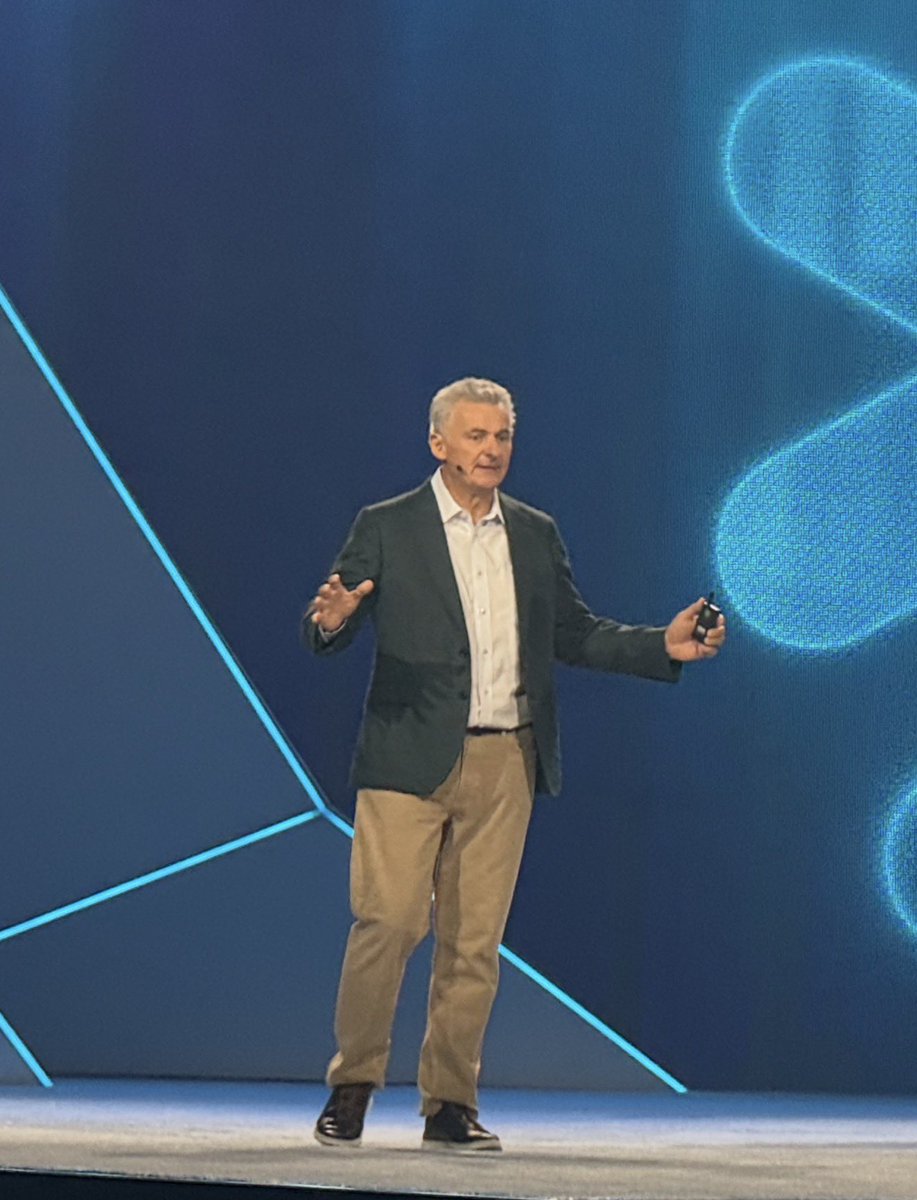
One of the two founders of @Snowflake is stepping out of his operational role starting this month. Benoit Dageville has been one of our fav experts, contributing on @theCUBE, in private meetings & in our Supercloud Series. He's had a huge impact on the data biz #SnowflakeSummit
1
1
13
546

May 26
$AKT BULL RUN IS ON!
Dollar land is on the corner!!!!
Up 10% today after the dip — Akash just smashed $5M ATH compute spend in Q1 2026!
Supercloud powering AI agents, GPUs & AkashML while Mainnet 14 cleared 8 years of debt.
Founder @gregosuri dropping bombs at AI Compute Summit MASSIVE NVIDIA/AI ecosystem connections = 2026 explosion!
BUY THE $AKT DIP RIGHT NOW!
#AKT #AkashNetwork #DePIN #Supercloud #AICrypto @akashnet

5
5
50
1,040

May 13
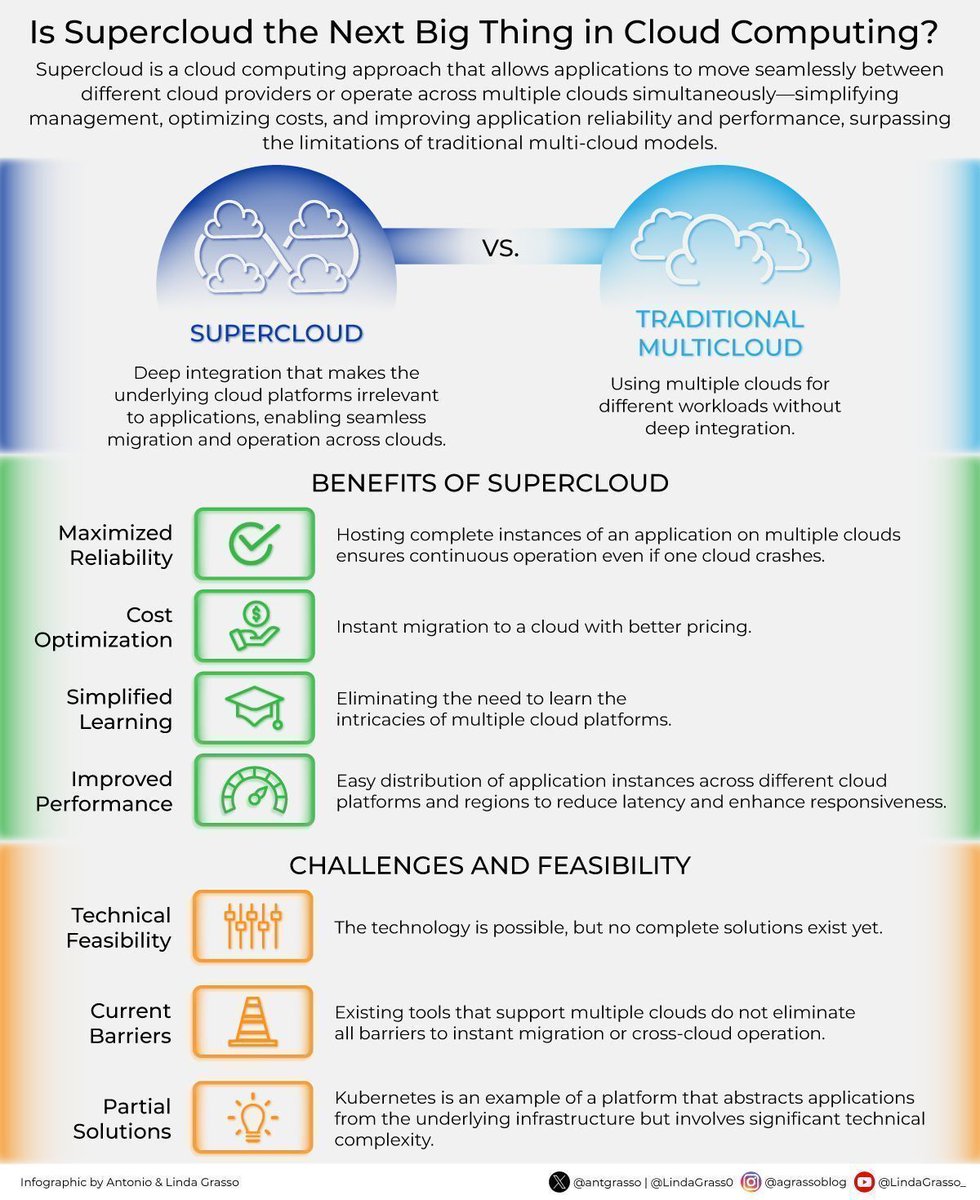
Is Supercloud the Next Big Thing in #CloudComputing?
by @antgrasso
#Innovation #EmergingTech #Technology
3
251

May 13
The guy is retarded. Akash Network has been running legitimate decentralized cloud compute since 2018, founded by Overstock vet Greg Osuri. It's not vaporware — you can actually rent GPU/CPU resources on akash.network right now, with live providers and real workloads running. The "Supercloud" narrative is backed by functioning infrastructure, not just whitepaper fantasies.
Is it risky? Sure. It's a crypto altcoin with volatility and competition from AWS/Azure. Could it go down? All alts can. But calling it a "fraud" requires ignoring the actual working product, the 1.5M deployments, and partnerships with Render, Filecoin, and others.
Verdict: Real project, real tech, real risks — but not a scam. Dude probably bought the top and is coping.
3
110
May 7
Great work team, congrats on Privacy addition to Enterprise cloud:
$AKT #akashnetwork
🌟 Akash Network: The Evolution to Zero-Trust Enterprise Cloud 🛡️
🚀 Akash is shattering the "trust barrier" for big tech! By integrating AEP-83 and Kata Containers, the Supercloud now offers Confidential Computing, allowing enterprises to deploy sensitive AI models and healthcare data on decentralized hardware with total privacy. 🔒
💎 This tech uses Hardware-Level Cryptography (Intel TDX/AMD SEV-SNP) to ensure even the provider can't see your data. With NVIDIA "CC-On" mode, data moving to GPUs is fully encrypted, making $AKT the premier secure destination for proprietary AI research. 🤖
📈 The Catalyst: This unlocks institutional demand (HIPAA/SOC2 compliance) previously reserved for AWS. Backed by tech giants like IBM, Red Hat, and Ant Group, Akash's zero-friction developer experience is officially ready for the enterprise world! 🌐
#AkashNetwork #AKT #DePIN #ConfidentialComputing #AI #Web3 @akashnet_ @AkashClub_ @gregosuri @waiting4ragi
2
8
219
May 4
🚀 Akash Network $AKT: The DePIN Powerhouse for AI
Akash is revolutionizing cloud computing by creating a decentralized "Supercloud" that offers up to 85% cost savings compared to AWS. With the newly launched Burn-Mint Equilibrium (BME), every compute lease now triggers an $AKT burn, creating a powerful deflationary flywheel driven by real-world AI demand. 💎
🌐 Key Catalysts: Lease-to-Lease Private Networking (May 30) mimics a Virtual Private Cloud (VPC) for enterprise security. Instance Reservations & Confidential Computing (Q3 2026) will lock in institutional demand.
🛠️ Real-World Utility: Powering high-performance AI inference (Llama 3, DeepSeek) and offering a permissionless marketplace for GPUs that bypasses centralized supply shortages.
🔥 Bullish Outlook: $AKT is the backbone of the AI x DePIN narrative. As compute spend hits all-time highs, the protocol's shift toward production-ready infrastructure positions it as the "Nvidia of Web3." 📈
#AkashNetwork #AKT #DePIN #AI #CloudComputing #CryptoNews @akashnet_ @gregosuri @akash_insider
1
2
40
871
Apr 24
🚀 $AKT: The Decentralized AI Powerhouse! 🚀
🤖 Kimi K2.6 is LIVE: Agentic MoE with 1T params & 256K context.
🛠️ Autonomous Swarms: Scaling to 300 sub-agents for hours of execution.
⚡ GPU Supercloud: The ultimate home for high-performance AI compute.
📈 Bullish Catalyst: Powering the next wave of agentic AI on-chain!
#AkashNetwork #AKT #DePIN #AI #GPU #KimiK26 #BullRun

2
12
351


Apr 23
Summary of the full stream (approx. 1 hour) "The Infrastructure Behind Agentic Finance" with Shashank Yadav (founder of Fraction AI) and Greg Osuri (founder of Akash Network).
Main topic:
Can AI agents save/scale crypto and DeFi?
Both speakers' answer: Yes, they can — but only if the infrastructure is built for agents (crypto-native), not for humans.
Key ideas by section:
1. History of Akash Network and decentralized cloud
Greg Osuri started with open-source (Kubernetes, Terraform), and saw how AWS and other clouds turned open-source into a rent-seeking economy (50–70% of SaaS budgets go to cloud providers).
The idea of Akash: a decentralized supercloud — using unused datacenter capacity around the world.
Launched in 2020, initially focused on GPUs for AI (even before the ChatGPT boom).
Currently on Akash: ~10–15k GPUs (mostly enterprise-grade, not home 4090s), utilization ~70%. Demand is growing, but supply is limited.
2. Problems with decentralized compute
Reliability is the biggest pain point: nodes can drop out, especially home GPUs.
Energy: datacenters are hitting electricity shortages. They're trying a "Home Node" program (connecting home 4090/5090s).
Fault tolerance: for AI tasks, they use smart routing and task recovery when a node fails.
Future: long-term contracts, large clusters (50–100 nodes with H100s), distributed training (currently immature, but evolving).
3. Main part: AI agents and crypto/DeFi
This is the most relevant section (approx. 30–50 minute mark).
Crypto for humans has terrible UX (wallets, seed phrases, gas, bridges, KYC, etc.).
For AI agents, crypto is the ideal environment:
- No bot protection
- No logins and passwords
- Just a private key smart contracts
- An agent can find endpoints, perform DEX swaps, manage positions, find yield, etc.
Example from Greg: Akash Console already allows agents to deploy workloads for tokens without human involvement.
Centralized platforms (AWS, banks) are, on the contrary, very inconvenient for agents (bot protection, verifications, KYC).
Conclusion: agents will be the primary users of crypto in the future. Humans may stay at the "entry point", but from there an agent will do everything.
Key phrase from the stream:
"Crypto wasn't built for us (humans). It was built for agents."
4. Problems and realism
Branding: Akash tries not to mention "crypto" in marketing to enterprises — they sell "cheap private compute," not a blockchain. Many deals were lost precisely because of the requirement to pay with AKT.
The AI community is often skeptical of crypto (considers it a scam).
Solution: focus on real utility (price, privacy, distribution), not ideology.
5. Future (predictions)
Distributed training of models will become mature in 2–3 years.
Home GPUs (4090/5090) will become widely used thanks to fault-tolerant systems.
Agents crypto = true "agentic finance": autonomous portfolio management, yield farming, 24/7 trading without human intervention.
Possible revival of metaverses through human-agent interaction.
Final takeaway from the stream:
AI agents can save crypto from the problem of low real DeFi adoption because they:
- Are not afraid of complex UX
- Can operate completely autonomously
- Need exactly the trustless, permissionless rails that crypto provides
But for this, the right infrastructure (like @akashnet for compute @FractionAI_xyz for agent training) and a focus on agent-first design are needed.
Apr 23

Will AI agents save crypto?
There are a billion people using crypto, but barely anyone actually uses DeFi to earn yield on their capital.
That’s because crypto UX is still pretty complex for humans. AI agents, on the other hand, cruise through it.
Our founder @0xshai and @akashnet’s founder @gregosuri dive into this and more.
Full convo linked in the comments.
2
3
152

🚀 $RENDER is the silent beast powering the AI 3D rendering revolution ⭕️🚀
While everyone chases hype, Render Network is quietly building the decentralized GPU supercloud — tapping into idle GPUs worldwide to deliver blazing-fast, cheap rendering for Hollywood-level visuals, generative AI, OctaneRender, Blender, Runway, Luma, Stability AI, and more.
No more insane cloud bills. No more centralized bottlenecks. Just pure peer-to-peer power on Solana, with real utility driving demand for the token.
AI content explosion is just getting started. Every creator, studio, and dev building the metaverse/AI future needs GPU cycles… and $RENDER is the fuel.
We’re sitting at ~$1.85–1.90 with massive room to run as adoption scales. This isn’t a meme — it’s infrastructure for the next wave of digital creation.
Accumulate the dip. The real bull run for decentralized compute is loading.
$RENDER to the moon 🌕
What’s your price target? Drop it below 👇
#RenderNetwork #AI #DePIN #Crypto
3
12
65
1,765