
Apr 28
📢 JOBS ALERT - Onsite (Jakarta)
Sagara Technology is currently looking for talented and motivated individuals to join our growing team across the following roles:
• Project Manager
• System Analyst
• Frontend Developer
• Backend Developer
• Mobile Engineer
• Data Engineer
• Quality Assurance
• UI/UX Designer
Requirements (WNI / Indonesia Citizens Only):
• Bachelor’s degree in Computer Science, Information Technology, or a related field
• 0–5 years of experience in relevant roles with a strong project portfolio
If you are interested, apply to:
lnkd.in/g_e7EVJW
Let’s build impactful technology together.
#Hiring #TechJobs #SagaraTechnology
#FrontendDeveloper #BackendDeveloper #MobileEngineer
#DataEngineer #UIUX #QA #SystemAnalyst

15
15
254
489,891

GR8 Tech is Hiring 📢
Role: Senior System Analyst
Location: Remote (Worldwide)
Pay: Competitive
- 3 years of experience as a Business Analyst or Systems Analyst, including hands-on PSP integrations.
- Strong understanding of APIs, integration patterns, and data mapping.
- Experience working with payment flows (deposits, withdrawals, routing, retries).
Actions to take:
**If this fits your skillset, review the requirements carefully
**Tag/send to someone qualified.
Like and rt to reach people that may need this.
Link in the comments👇
#SystemAnalyst #remotecareerafrica #remotejobs
1
4
167

Feb 24
📗SUMMARY | The Grey Area | Bridget Anderson @Bridget49838665
#TheGreyArea #HighStrangeness #SimulationTheory #OBE #HybridChild #Reincarnation #GlitchesInTheSystem #SystemAnalyst #Sasquatch #MissingTime #SpiritualJourney #TruthSeeking #LifeIsAGame
🔗pdfhost.io/v/dnkBML8lR_The_G…

1
5
9
319
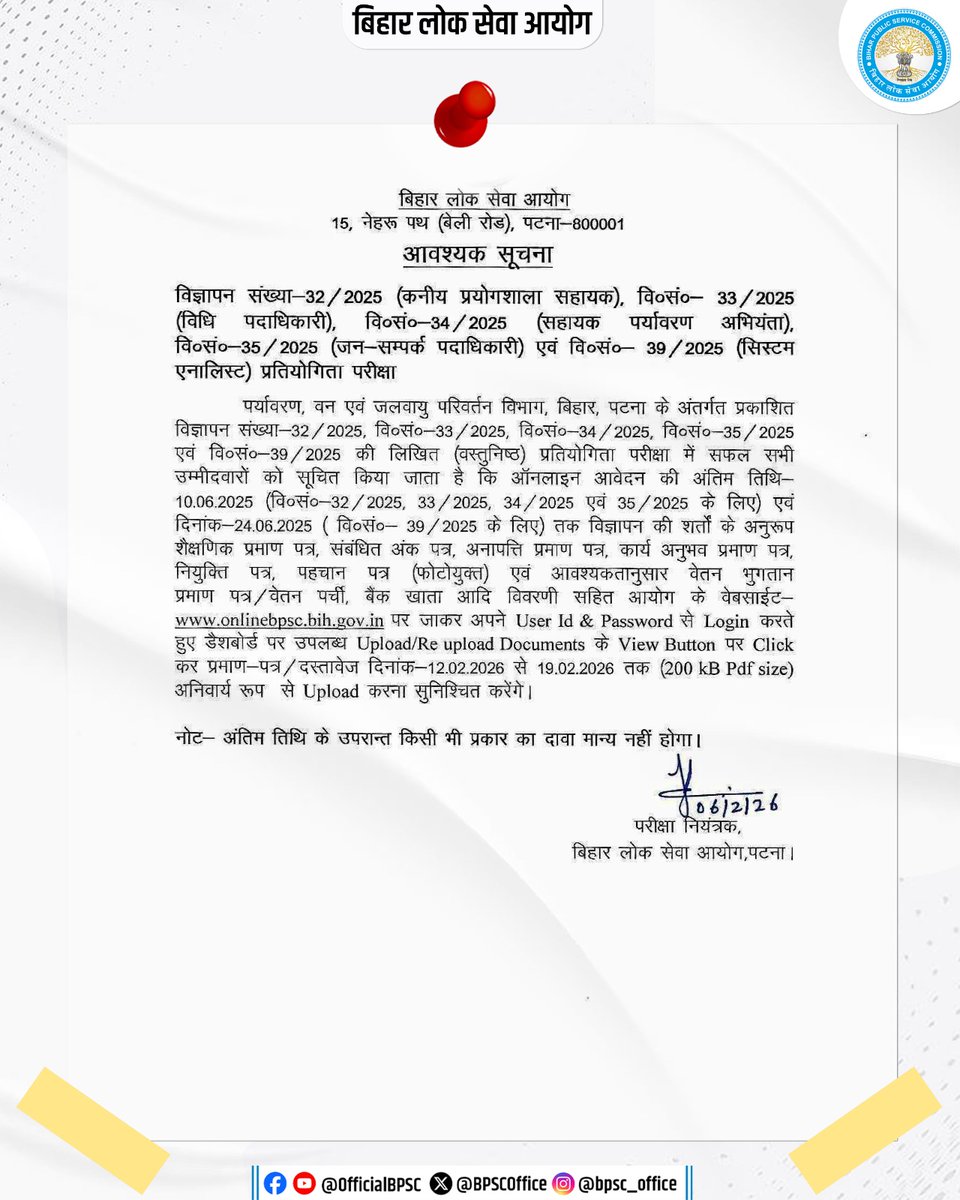
पर्यावरण, वन एवं जलवायु परिवर्तन विभाग, बिहार, पटना के अंतर्गत प्रकाशित विज्ञापन संख्या 32/2025, वि. सं.- 33/2025, वि. सं.- 34/2025, वि. सं.- 35/2025 एवं वि. सं.- 39/2025 की लिखित परीक्षा में सफल सभी उम्मीदवारों के लिए आवश्यक सूचना।
#BPSC #BPSCNotice #BPSCExam #BPSCUpdate #JuniorLaboratoryAssistant #LawOfficer #AssistantEnvironmentalEngineer #PublicRelationsOfficer #SystemAnalyst
6
6
67
8,109

13 Nov 2025
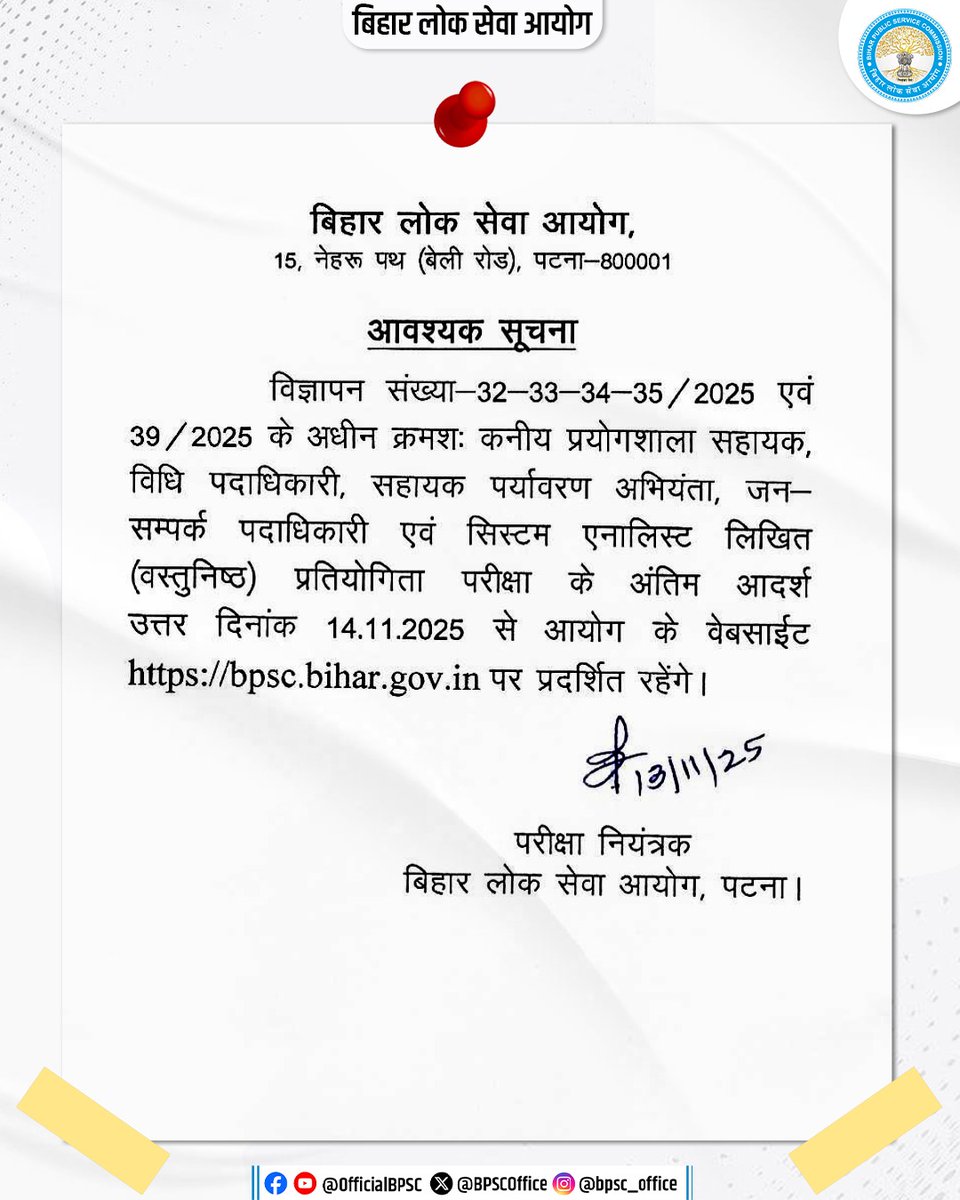
आवश्यक सूचना
विज्ञापन संख्या 32, 33, 34, 35/2025 एवं 39/2025 (कनीय प्रयोगशाला सहायक, विधि पदाधिकारी, सहायक पर्यावरण अभियंता, जन-संपर्क पदाधिकारी एवं सिस्टम एनालिस्ट) पदों के लिए लिखित (वस्तुनिष्ठ) प्रतियोगिता परीक्षा के अंतिम आदर्श उत्तर दिनांक 14.11.2025 से आयोग की वेबसाइट पर प्रदर्शित रहेंगे।
BPSC परीक्षा से जुड़ी जानकारी के लिए केवल आयोग की आधिकारिक वेबसाइट और सोशल मीडिया हैंडल्स का अनुसरण करें।
#BPSC #BPSCNotice #BPSCExam #BPSCUpdate #JuniorLaboratoryAssistant #LawOfficer #AssistantEnvironmentalEngineer #PublicRelationsOfficer #SystemAnalyst
13
6
73
14,566
9 Oct 2025
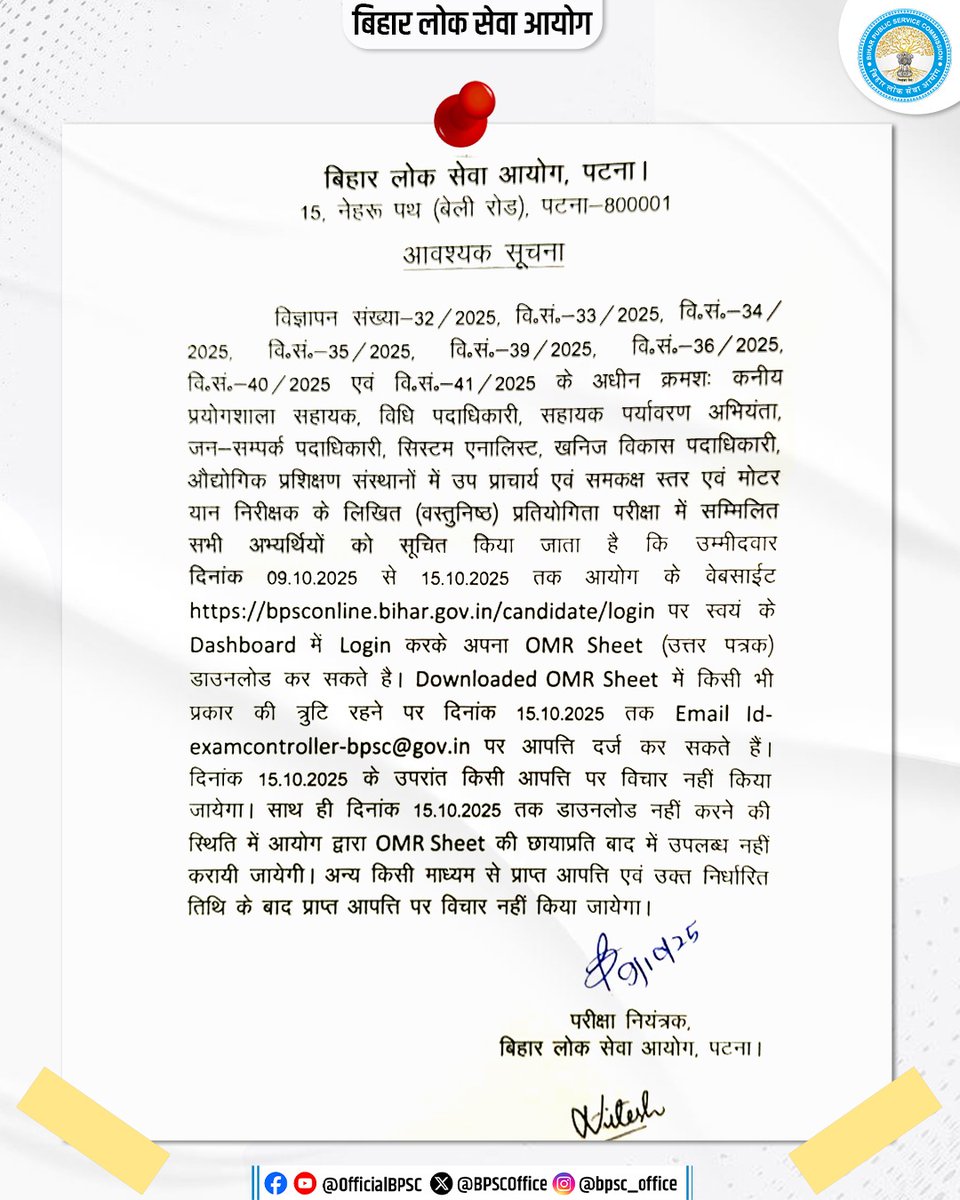
महत्वपूर्ण सूचना
विज्ञापन संख्या 32/2025, 33/2025, 34/2025, 35/2025, 36/2025, 39/2025, 40/2025 एवं 41/2025 के तहत लिखित (वस्तुनिष्ठ) परीक्षा में सम्मिलित अभ्यर्थी 09.10.2025 से 15.10.2025 तक आयोग की वेबसाइट bpsconline.bihar.gov.in पर लॉगिन कर अपनी OMR शीट डाउनलोड कर सकते हैं।
Downloaded OMR Sheet में किसी भी प्रकार की त्रुटि रहने पर दिनांक 15.10.2025 तक Email Id-examcontroller-bpsc@gov.in पर आपत्ति दर्ज कर सकते हैं।
दिनांक 15.10.2025 के उपरांत किसी भी आपत्ति पर विचार नहीं किया जायेगा। अन्य किसी माध्यम से प्राप्त आपत्ति एवं उक्त निर्धारित तिथि के बाद प्राप्त आपत्ति पर विचार नहीं किया जायेगा।
#BPSC #BPSCNotice #BPSCEXAM #BPSCUpdates #BPSCNotification #LabAssistant #LegalOfficer #EnvironmentEngineer #PublicRelationsOfficer #SystemAnalyst #MineralDevelopment #IndustrialTraining #MotorVehicleInspector
7
12
137
22,255
21 Jun 2025
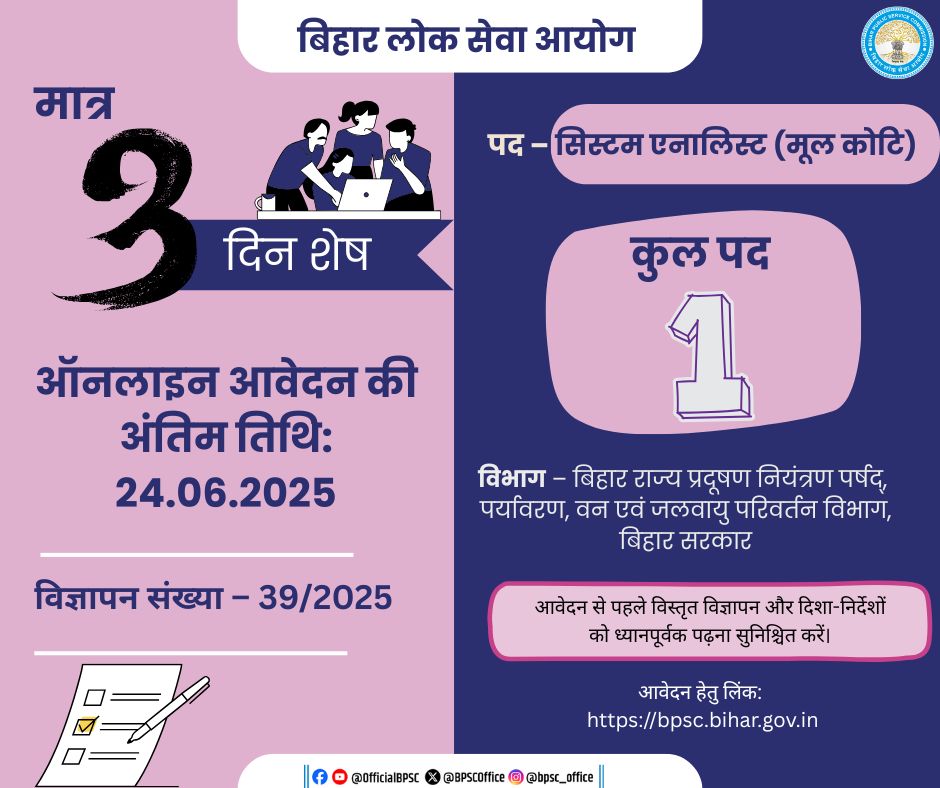
3 दिन शेष!
ऑनलाइन आवेदन की अंतिम तिथि: 24.06.2025
विज्ञापन संख्या – 39/2025
पद – सिस्टम एनालिस्ट (मूल कोटि)
कुल पद – 01
विभाग – बिहार राज्य प्रदूषण नियंत्रण पर्षद्, पर्यावरण, वन एवं जलवायु परिवर्तन विभाग, बिहार सरकार
इच्छुक अभ्यर्थी समय पर आवेदन सुनिश्चित करें।
आवेदन करने से पूर्व विस्तृत विज्ञापन एवं दिशा-निर्देशों का भली-भाँति अध्ययन कर लें।
#BPSC #BPSCExam #BPSCRecruitment #SystemAnalyst #BPSCNotification #ApplyNow #SarkariNaukri #GovtJobUpdates #bpsconline #bpsconline #BiharJobs #JobAlert
6
71
12,032
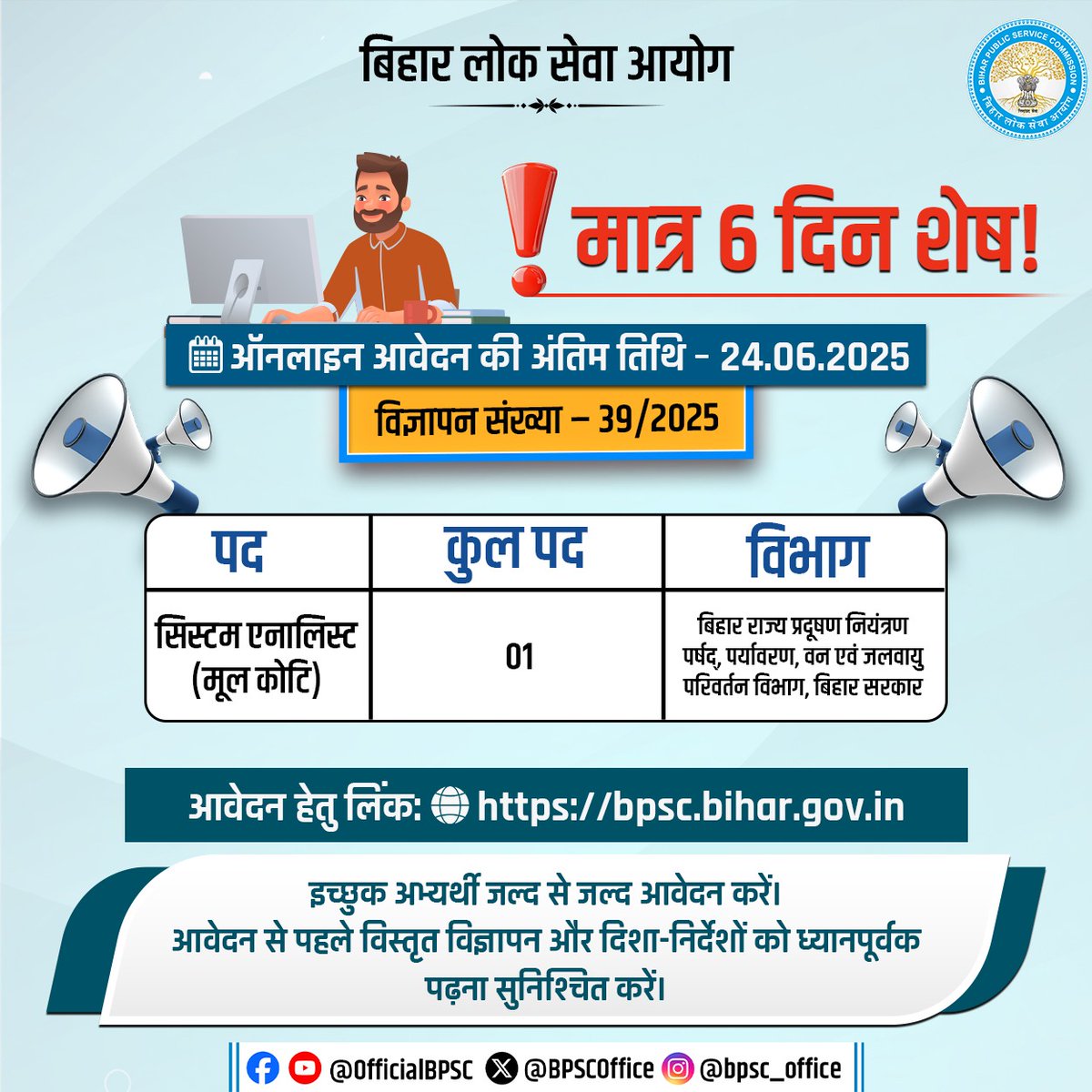
18 Jun 2025
6 दिन शेष!
ऑनलाइन आवेदन की अंतिम तिथि: 24.06.2025
विज्ञापन संख्या – 39/2025
पद – सिस्टम एनालिस्ट (मूल कोटि)
कुल पद – 01
विभाग – बिहार राज्य प्रदूषण नियंत्रण पर्षद्, पर्यावरण, वन एवं जलवायु परिवर्तन विभाग, बिहार सरकार
इच्छुक अभ्यर्थी समय पर आवेदन सुनिश्चित करें।
आवेदन करने से पूर्व विस्तृत विज्ञापन एवं दिशा-निर्देशों का भली-भाँति अध्ययन कर लें।
#BPSC #BPSCExam #BPSCRecruitment #SystemAnalyst #BPSCNotification #ApplyNow #SarkariNaukri #GovtJobUpdates #bpsconline #bpsconline #BiharJobs #JobAlert
4
111
14,425

3 Jan 2025
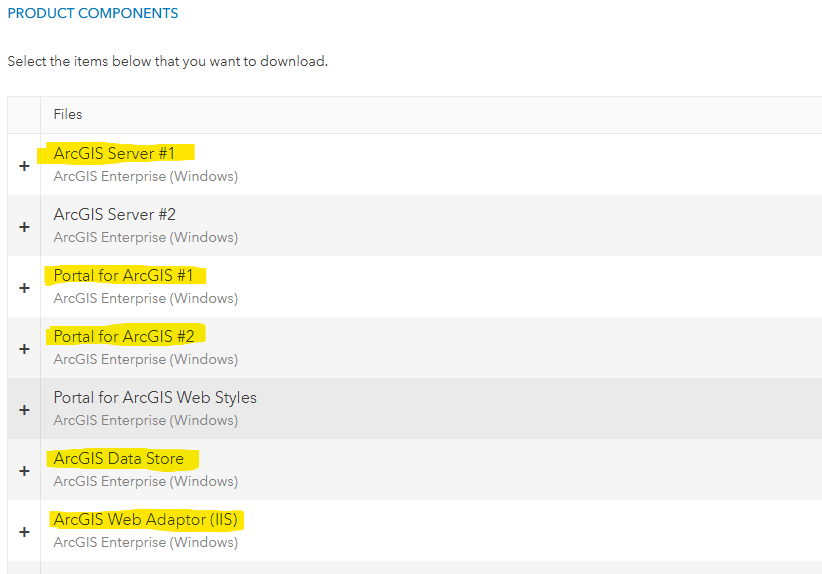
Have you ever installed and managed any of the following software?
If you have, lets connect. Follow and I will follow you back.
#GIS #GISAdmin #GISTech #SystemAnalyst #GISDev
1
58

16 Oct 2024
Desejo que você também tenha um Feliz Dia dos Professores.
#professor #doctor #engineer #systemanalyst #developer #author #creator #fukuda #fukudasolutions #app #webapp #saas #python #react #marketingdigital #WordPress #website #ia #ai #ml #rl #datascience #DataAnalytics

2
2
93

6 Aug 2024
What are Entry Level Programming Jobs?
tinyurl.com/ycks7sbj
#EntryLevelProgrammingJobs #JuniorDevelopers #SoftwareEngineer #WebDeveloper #SystemAnalyst #AI #AINews #AnalyticsInsight #AnalyticsInsightMagazine

61

24 May 2024
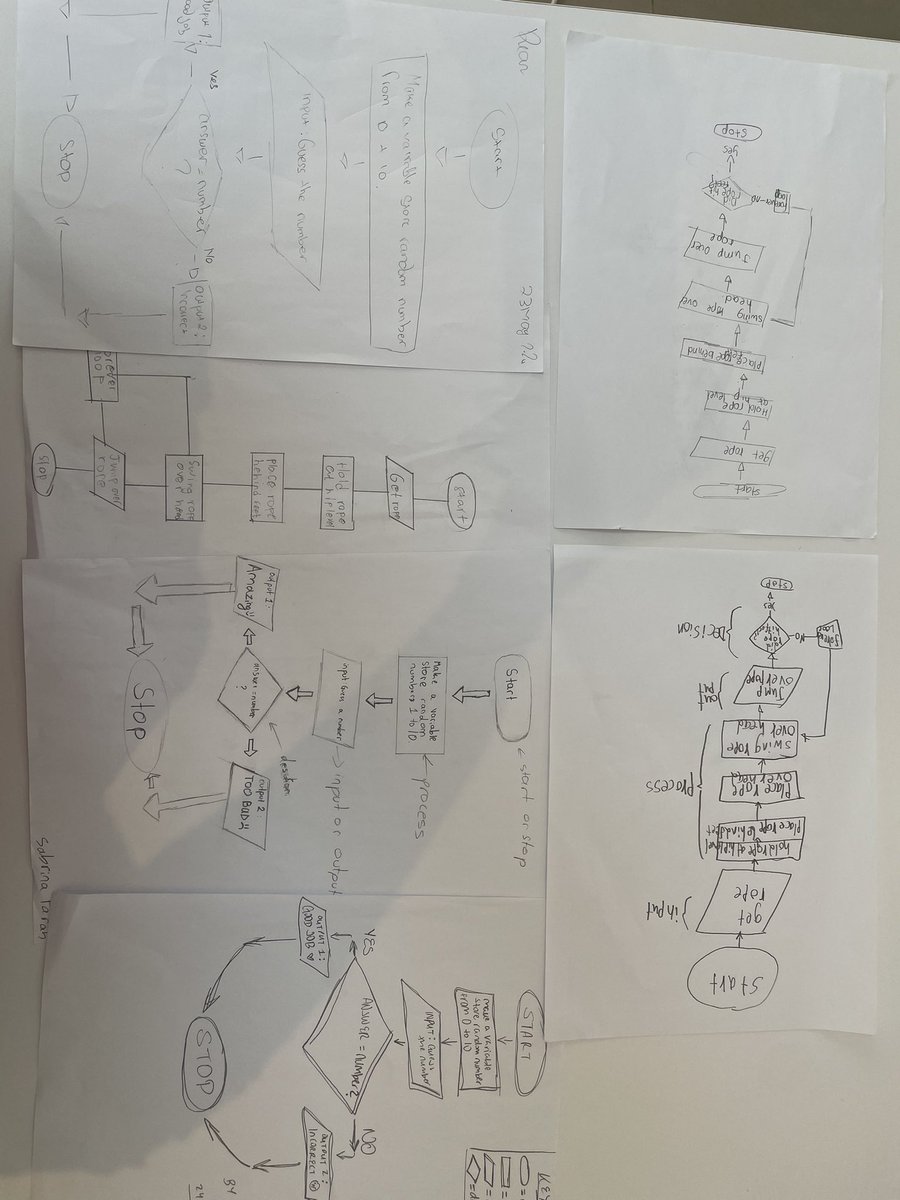
"Today, students explored flowcharts and made a simple game diagram, gaining insight into the role of a system analyst in everyday life. 📊🎮💡 #Learning #Flowcharts #SystemAnalyst"
3
12
757

31 Jan 2024
We are hiring a System Analyst. EvenBet Gaming aims to be a leading high-tech poker supplier in the B2B sector, setting trends worldwide and providing a dynamic and enthusiastic working environment inside the company.
What you will be doing:
- Analyse the needs and collect data from the customer.
- Interact with the customer during the development, testing, and implementation of systems.
- Build a system of models for processes, data, and objects in the subject area.
- Construct the target model of the IT object, considering requirements, capabilities, and limitations.
- Participate in the preparation of technical specifications for the development and modernisation of information systems.
- Coordinate the results of work with the customer.
- Organise analytical work on the project.
What we will value in you:
- Higher education in the field of information technology.
- Experience in a similar position.
- Understanding of the principles and processes of development.
- Readiness to plan, organise, and coordinate the work of the team.
- English language proficiency not lower than B1.
- Experience with databases and SQL.
What we offer:
- Flexible start of the working day.
- The ability to work from anywhere in the world.
- One hundred percent payment of vacations and sick leave.
- Compensation for paid medical services.
- Company-sponsored training.
- Participation in the internal bonus system.
Please contact Daria Fot, EvenBet Gaming Head of HR, at df@evenbetgaming.com to send a CV, know more about the vacancy and for any further details.
#itjobs #itjob #vacancy #systemanalyst #openposition #hiringnow

1
73

25 Jan 2024
Career Opportunities @GSFCUniversity
#Systemanalyst #Softwaredeveloper #Systemadministrator #Assistant #JobsinGujarat

1
2
225

Il #SystemAnalyst sviluppa modelli matematici di sistema e algoritmi di #Signal e #DataProcessing📊Ha una laurea in #ingegneriaelettronica o in #telecomunicazioni, ed è esperto di Teoria dei Segnali, Campi Elettromagnetici, #Radar📡invia il tuo cv qui! ⤵
lnkd.in/dcX7rJza

2
169

5 Oct 2023
Are you looking for a #systemanalyst to join your team? Or perhaps you're the one looking for the job? 🤔 In both cases, we got you covered! Our analysts have written an article in which you'll find sample questions to use during the interview: bit.ly/48tJRuf

5
261
2 Sep 2023
Analyst: System Analyst
A Systems Analyst plays a critical role in the field of information technology and business analysis. Their primary responsibility is to bridge the gap between business needs and technical solutions. Here are some of the key tasks and responsibilities typically associated with a Systems Analyst:
1⃣ Requirements Gathering: Systems Analysts work closely with stakeholders, including business managers and end-users, to understand and document their requirements. They conduct interviews, surveys, and workshops to gather information about what the system needs to achieve.
2⃣ Analysis: They analyze the gathered requirements to identify patterns, commonalities, and potential conflicts. They also assess the feasibility of proposed solutions, considering technical constraints and available resources.
3⃣ System Design: Based on the requirements, Systems Analysts create system design specifications. This includes defining data structures, workflows, and user interfaces. They may also recommend technology solutions and architectural frameworks.
4⃣ Prototyping: In some cases, they create prototypes or mock-ups to provide stakeholders with a visual representation of the proposed system. This helps in getting feedback and clarifying requirements.
5⃣ Data Modeling: They develop data models to define the structure of the data the system will use and manage. This can include creating entity-relationship diagrams and database schemas.
6⃣ Documentation: Systems Analysts create detailed documentation that outlines the system's functionality, design, and specifications. This documentation is crucial for developers and other team members to understand the project.
7⃣ Communication: Effective communication is a key skill for Systems Analysts. They need to convey technical information to non-technical stakeholders and vice versa. Clear communication ensures that everyone involved in the project understands the requirements and objectives.
8⃣ Quality Assurance: They may be involved in quality assurance activities, such as creating test plans, conducting testing, and verifying that the system meets the specified requirements.
9⃣ Project Management: Systems Analysts often play a role in project management, ensuring that the project stays on track, within budget, and meets deadlines. They may also assist in resource allocation and risk assessment.
🔟Training and Support: After a system is implemented, Systems Analysts may provide training and support to end-users, helping them understand how to use the system effectively and troubleshoot any issues.
1⃣1⃣ Continuous Improvement: They monitor system performance and user feedback to identify areas for improvement. They may recommend updates or enhancements to keep the system aligned with evolving business needs.
1⃣2⃣ Security and Compliance: Systems Analysts are often responsible for ensuring that the systems they work on comply with security standards and industry regulations. They may need to assess and address security vulnerabilities and data privacy concerns.
1⃣3⃣ Vendor Evaluation: In cases where third-party software or solutions are being considered, Systems Analysts may evaluate and compare vendors to select the best-fit solution for the organization's needs.
On that note, Systems Analysts serve as a bridge between business stakeholders and technology teams, ensuring that IT solutions align with business objectives and requirements. Their work involves a combination of technical expertise, analytical skills, and effective communication to facilitate successful system development and implementation.
#gis #analyst #systemanalyst #data #dataanalyst #gisanalyst #systems #securityanalyst #riskanalyst #informationsecurity #informationtechnology #IT #computerscience

1
3
404

17 Jul 2023
1
422

14 Jul 2023
Hartron Apply Online System Analyst, Programmer 133 Post
#Sarkari_Result1 #Hartron #SystemAnalyst #Programmer
sarkariresult.app/hartron-pr…

1
33

Hartron Apply Online System Analyst, Programmer 133 Post
#CourtJobs #Hartron #SystemAnalyst #Programmer
courtrecruitment.com/hartron…

2
10