

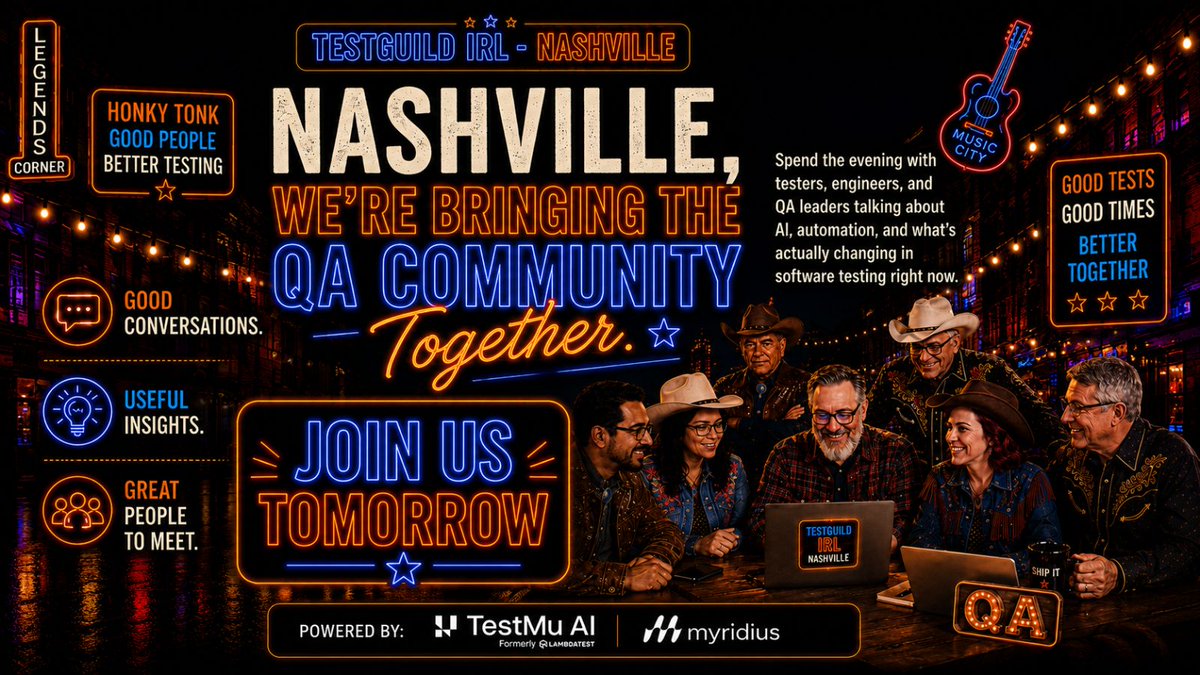
ALT Join Us Tomorrow TestGuildIRL Free AI & Software Testing Event in Nashville May 19, 2026 4:30 PM to 8:30 PM Only 100 spots available Speakers: Joe Colantonio Jim Tentradue Greg Paskal Misbah Farooqi Roundtable Experts: Aline Alves Amanda Ellison Jason Bryant Sponsors: TestMuAI Myridius




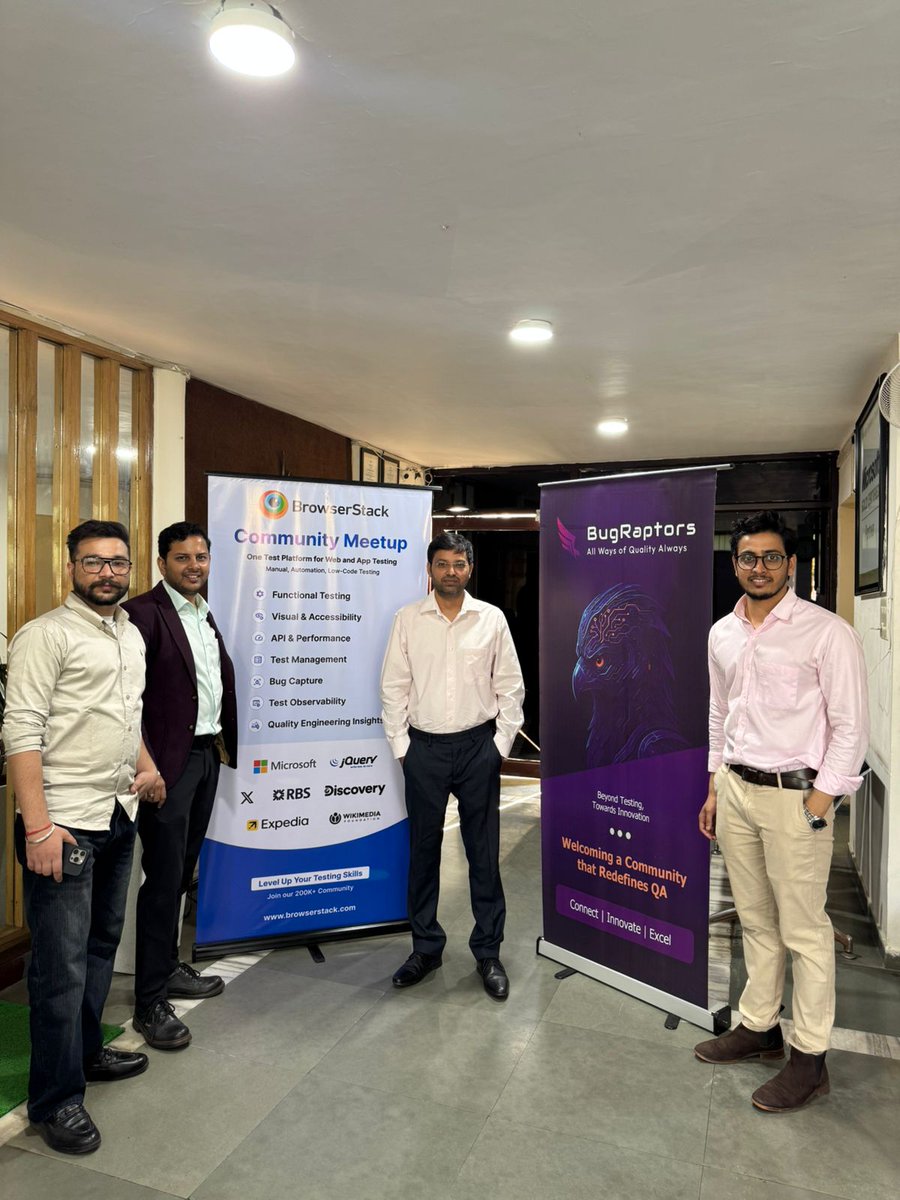
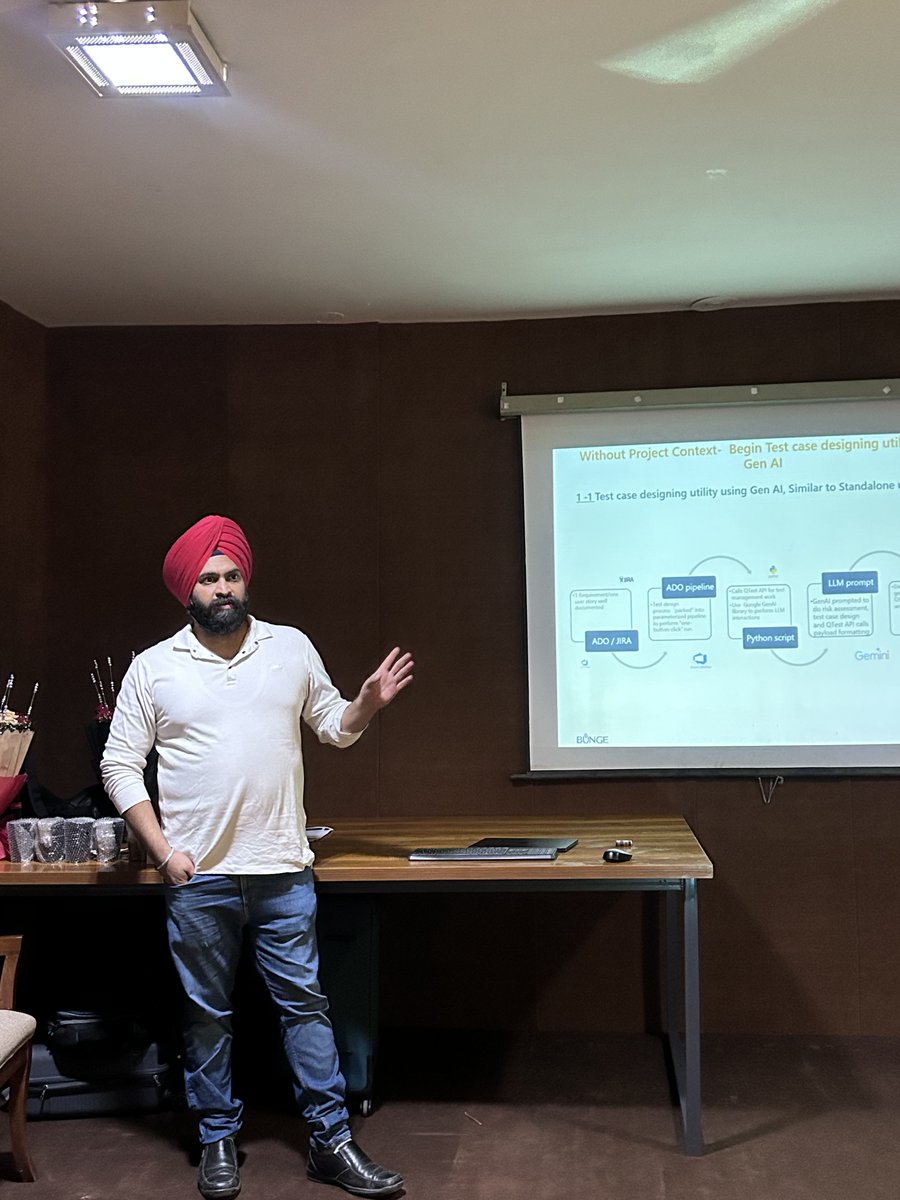
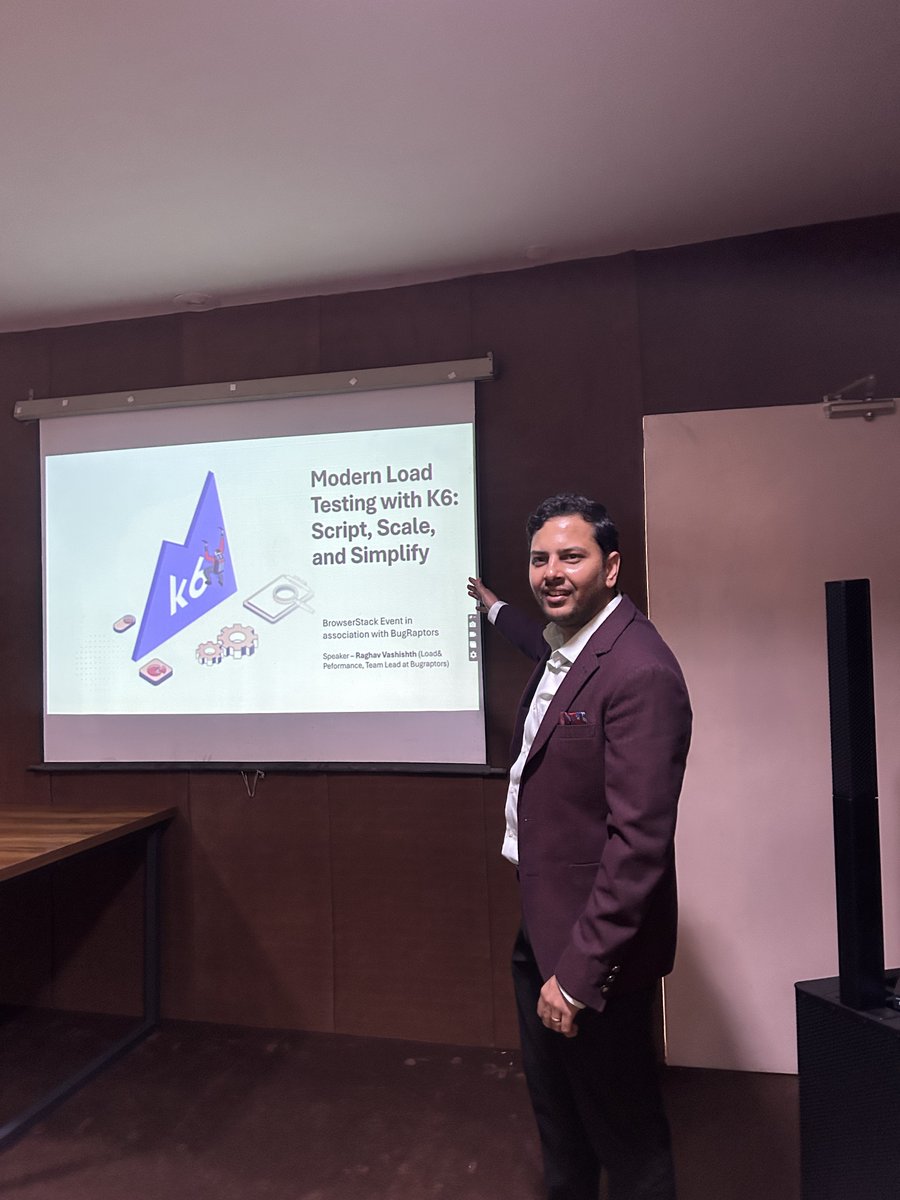









ALT Banner for the "BrowserStack Noida Meetup," presenting an event called "Quality Quest Testathon." Scheduled for Saturday, July 26, 2025, the graphic features a playful, maze-like design with bug and Pac-Man-like icons, with attendees having the chance to win up to $100.
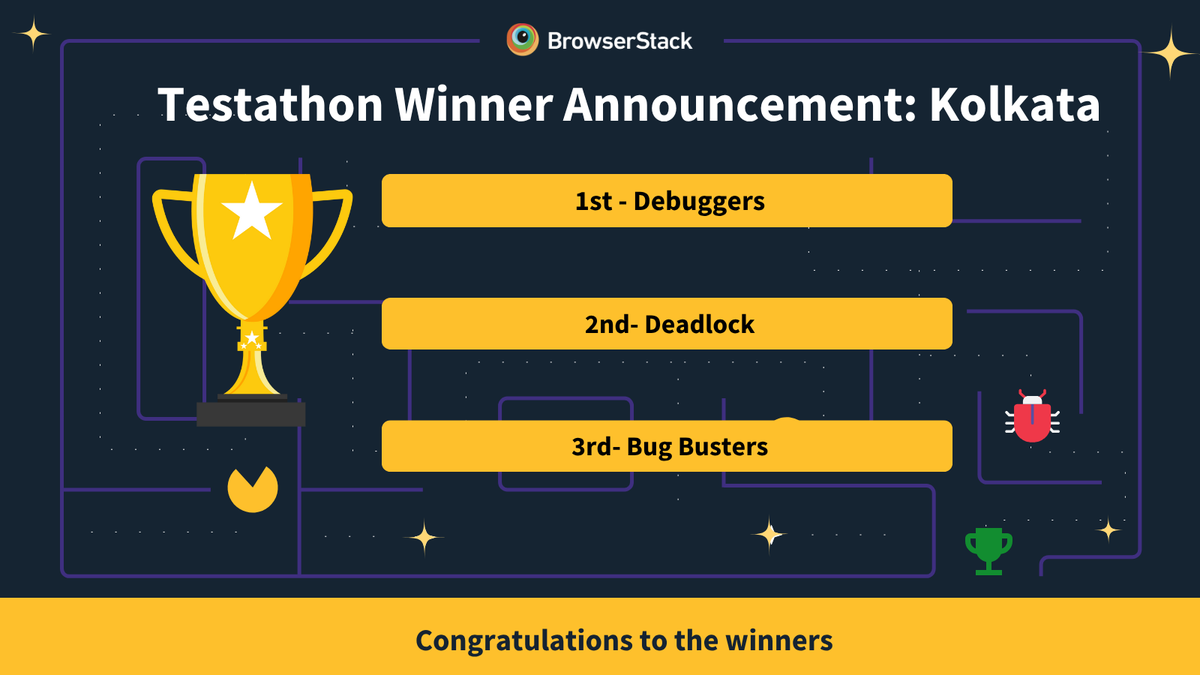
ALT Graphic announcing the winners of the BrowserStack Testathon in Kolkata. A large golden trophy icon is displayed on the left. The text reads “Testathon Winner Announcement: Kolkata” at the top. Below that, the winners are listed in yellow banners: 1st - Debuggers 2nd - Deadlock 3rd - Bug Busters At the bottom, a yellow banner reads: “Congratulations to the winners.”