
🧬 Testing Methodology
Credits: Dr. Mohammad Al-Shinnag, KFSHRC
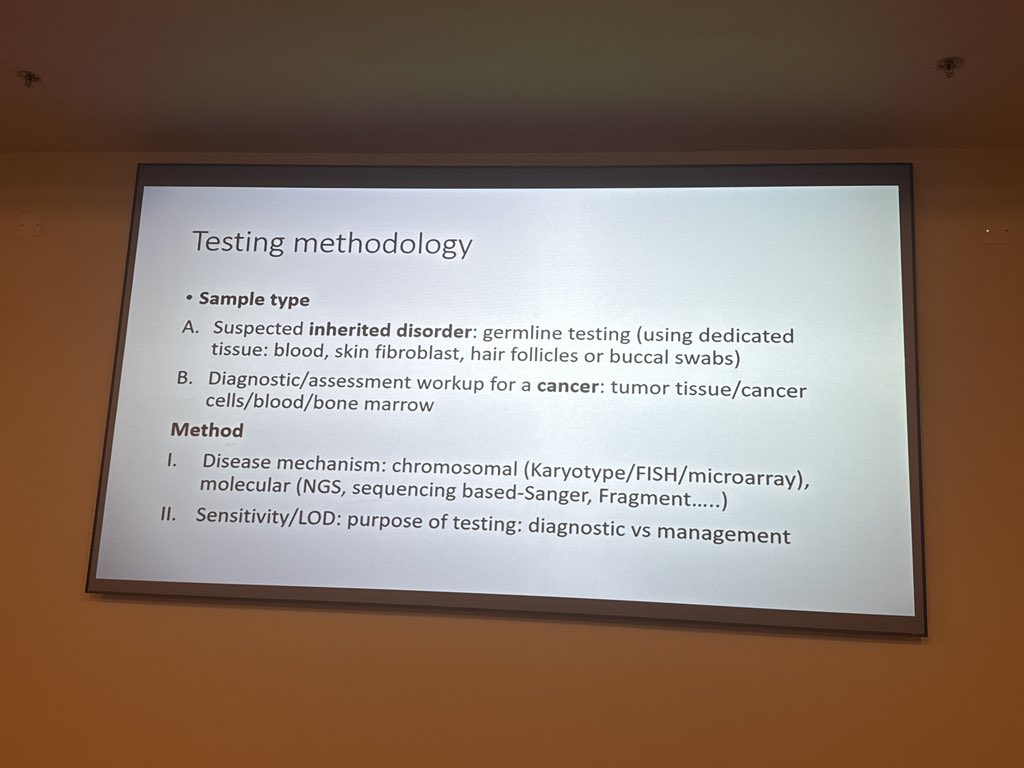
🔬 Sample Type
🧬 Suspected Inherited Disorders (Germline Testing)
🩸 Peripheral blood
🧫 Skin fibroblasts
💇 Hair follicles
👄 Buccal swabs
📌 Requires dedicated non-tumor tissue for accurate germline analysis.
🩸 Cancer Diagnostic and Assessment Workup (Somatic Testing)
🧫 Tumor tissue
🧬 Cancer cells
🩸 Peripheral blood
🦴 Bone marrow
📌 Essential for diagnosis, prognosis, and therapeutic decision-making.
⚙️ Testing Methods
🧪 Chromosomal Analysis
🧬 Karyotyping – Detects large structural abnormalities and aneuploidy.
🔬 FISH (Fluorescence In Situ Hybridization) – Identifies specific gene rearrangements and copy number changes.
📊 Microarray (aCGH/SNP Array) – Detects submicroscopic deletions and duplications.
🧬 Molecular Analysis
🧪 Next-Generation Sequencing (NGS) – Comprehensive mutation profiling.
🔍 Sanger Sequencing – Gold standard for variant confirmation.
🧩 Fragment Analysis – Detects insertions, deletions, and repeat expansions.
📈 PCR-Based Assays/RT-PCR – Targeted detection and quantification of variants.
📊 Sensitivity and Limit of Detection (LOD)
🎯 Purpose of Testing
🔎 Diagnostic Testing – Identifies disease-causing variants.
📉 Prognostic and Management Testing – Guides risk stratification and therapy.
📈 Approximate Sensitivity by Method
🧬 Karyotyping: ~5–10% clone detection.
🔬 FISH: ~1–5%.
🧪 NGS: ~1–5% (≤1% with ultra-deep sequencing).
🧫 RT-qPCR/ddPCR: up to 10⁻⁴–10⁻⁶ for MRD assessment.
🩸 Clinical Relevance in Hematology
🔬 AML: NPM1, FLT3, IDH1/2 mutations.
🧬 CML: BCR::ABL1 detection and monitoring.
🩸 MDS: Cytogenetic abnormalities and somatic mutations.
🧫 ALL: Fusion genes and MRD assessment.
🧬 Myeloma: Copy number alterations and translocations.
🎯 Key Takeaway
📌 Optimal test selection depends on clinical context, specimen type, disease mechanism, and required sensitivity, forming the cornerstone of precision hematology.
#MolecularGenomics #TestingMethodology #PrecisionMedicine #NGS #FISH #Cytogenetics #Hematology #KFSHRC
2
236

31 Jan 2024
'Examination of exact testing methodology beyond purview of judicial review'; Calcutta High Court upholds tender process
#CalcuttaHighCourt #JudicialReview #JusticeSabyasachiBhattacharyya #sampletesting #SterileGloves #tenderprocess #testingmethodology
scconline.com/blog/post/2024…
1
188

28 Oct 2022
Early communication is important in #ClinicalTrials that refer samples to path laboratories including #HospitalTransfusionLaboratories and #RCILaboratories to allow the understanding of the #Risk related to #TestingMethodology, #Capacity and #Staffing to ensure #GoodPatientCare.
1
3

5 Aug 2022
Transaction testing is an unsung hero in business and financial operations! Designed to validate transactional continuity and integrity.
Read this to know more.
bit.ly/3buUq7w
.
#mbg #mbginsights #mbgblog #transactiontesting #testingmethodology #riskadvisoryservices

1
2

30 Dec 2015
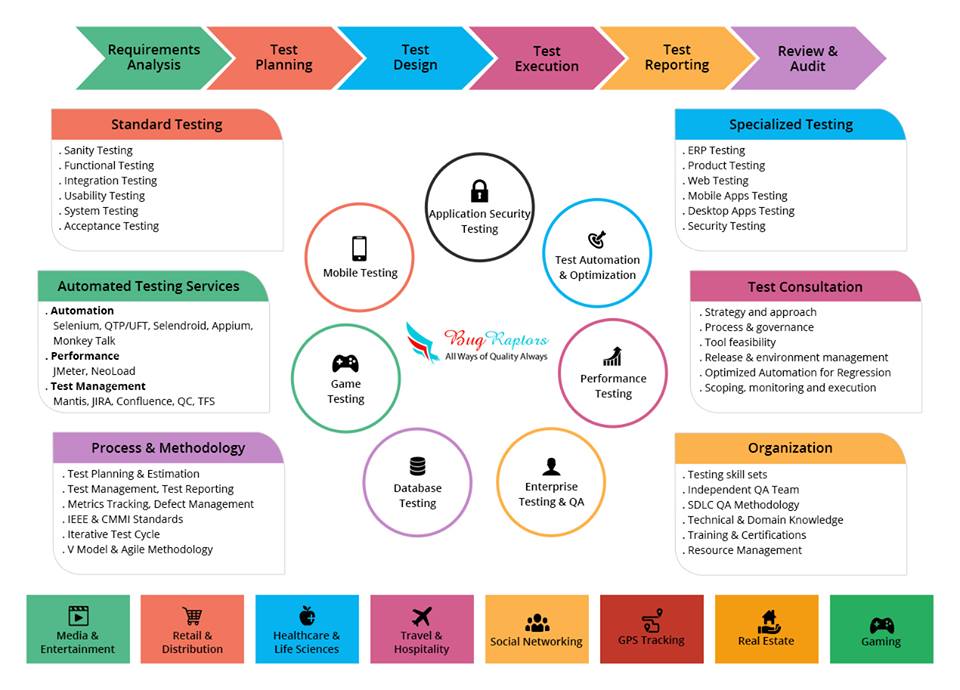
One stop solution for all testing needs
#Testing #AutomationTesting #TestingMethodology #PerformanceTesting
2
30

12 Aug 2015
"Brain" still continues to be the best Tool available for testers! #testing #testingmethodology #testingtechnique #tester #testertips
3
2