
$BABA : Jack Ma-backed Ant Group is testing an overhaul to its Alipay super app that would introduce an AI agent interface, a major escalation in its battle for users with archrival WeChat bloomberg.com/news/articles/…
1
8
175

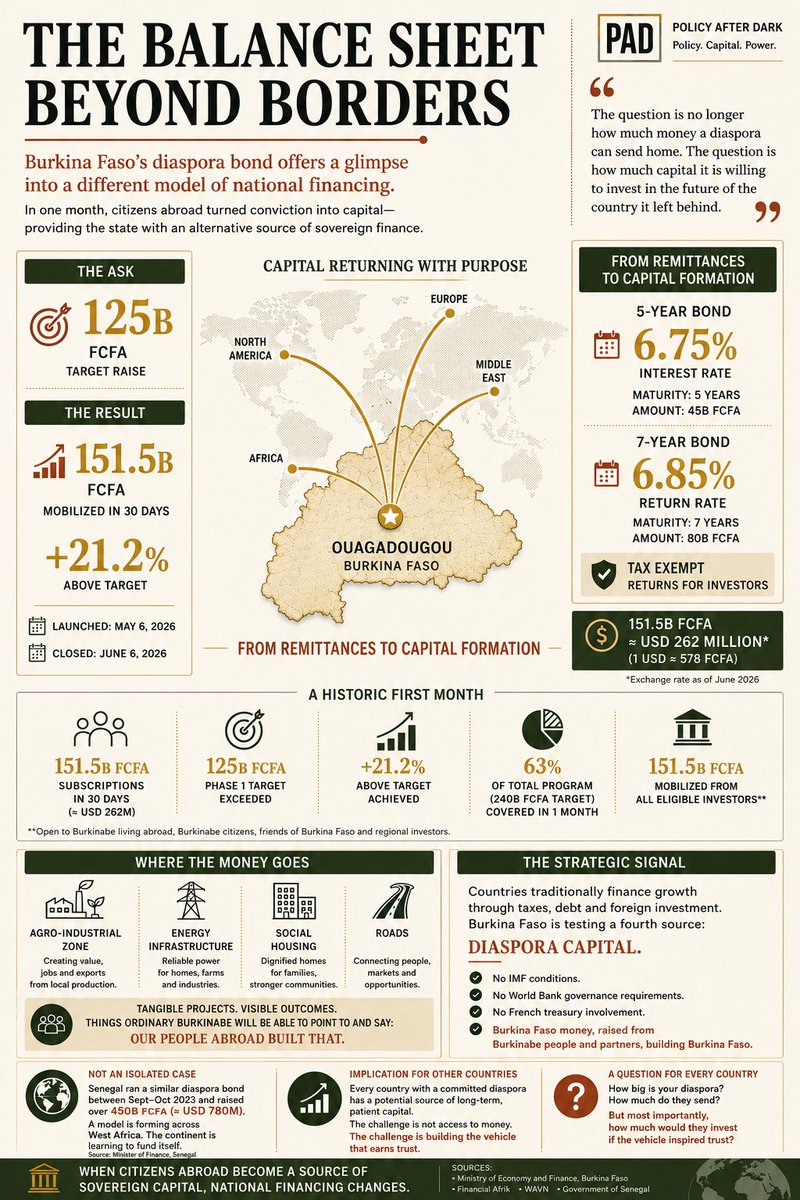
Burkina Faso targeted 125B FCFA from its diaspora. It raised 151.5B FCFA in a month. A country traditionally financed through taxes, debt and foreign investment is testing a fourth source of capital: its citizens abroad.
National balance sheets may be larger than we think.

🚨 Alleged Cybersecurity Incident Targets Pakistan Educational Testing Sector: Dark Web Recent Claims Video
-Fact Checker: ✅: 2 ❌: 1 || 2/3 → Score: 66% ⚖️
-Prediction: 📈 2 Positive | 📉 3 Negative
undercodenews.com/alleged-cy…

period cramps acting like i won't just take double my sleeping pill dosage and end the pain permanently. bitch. i will put an end to the both of us if you keep testing me.

From the last time @echo_vick made some updates to the app.
Added Google Oauth
Just completed the Implementation of MTN Momo, works locally now testing cross border remittance.



🔻marxist-sodomist 🇵🇸 gazafunds.com retweeted

If you believe Israel has a RIGHT TO EXIST you’re a ZIONIST. That is NOT “purity testing”. If you’re doing LIBERAL ZIONISM you’re helping to LAUNDER and HUMANIZE a GENOCIDE.

No it doesn’t, you’re just a purity testing prick.
1
22
84
1,019

32s
I’ve just found this great product testing website. myoffers.co.uk/thankyou/498-… via @MyOffers_Lionel
HPX 🍉 retweeted

I was the product marketing manager for @GearsofWar 2. We did zero focus testing on the ads. The team was locked in together. Total trust in each other and in what we were making. Taste and confidence.

269
1,238
15,578
312,897
Bijon Mushahary retweeted

.@SecRollins on efforts to combat and eradicate the New World Screwworm: We have moved the testing from Iowa to our brand new facility in Texas. The upcoming Edinburg, TX facility will give us about 300-400M sterile flies. We opened a new dispersal facility that allows us to better disperse the flies that are currently being born in Panama.
126
394
1,978
73,271
betaloser retweeted

Jun 13
Testing baju baru sebelum outing 😛
#cder #cderjilbab #cderhijab #cderindo #crossdresser #crossdresserjilbab
#crossdresserhijab #waria #femboy #cding #crossdresserindo


9
9
265
8,904
Midwest Farmer retweeted

Jun 13
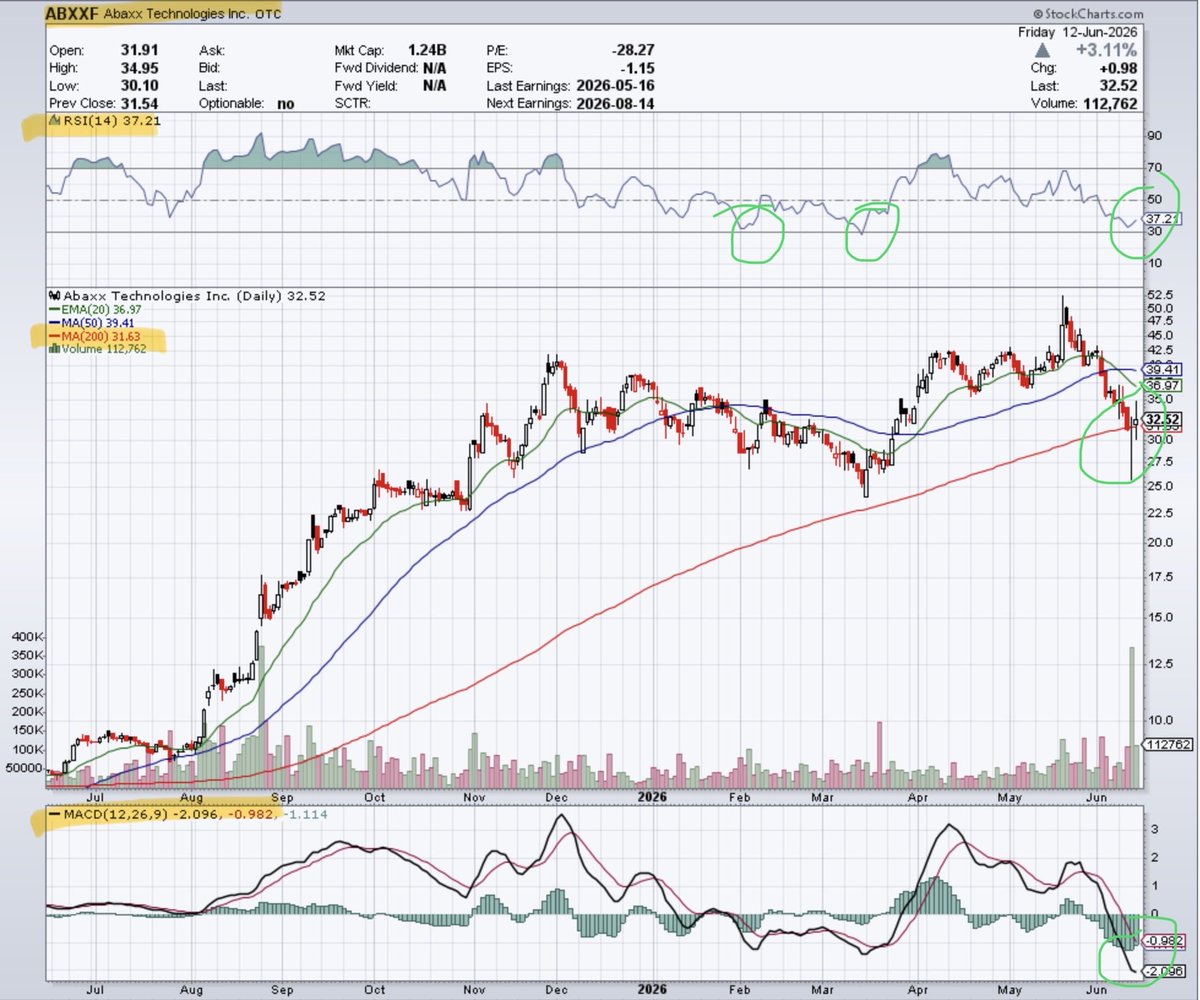
@abaxx_tech had quite the volatile week testing the 200 dma and closing above it, potentially establishing a bottom. Good luck 🩳’s and your pathetic report. #29ers $ABXX.TO $ABXXF
2
17
225

52s
WHITE GUSHERS❄️
Testing: 35%
📦Order on IG: @iamni_kk1
📦Order on TG: t.me/issa1a11
#aatl #atlplug #atlza #atlanta #decatur #zaza #redan #eastsideatl #buckhead #westsideatl #midtownatl #lithonia #downtownatl #pluginatl #lithonia, #Stonemountain, #Decatur #Lawrenceville, #KSU #GSU #spellmen
1
Nesarahmad Ahmadi retweeted

Jun 10
@MrSuissx 🍆 Tonight was all about testing limits, giving in to temptation, and seeing just how far I could go... 😈
Let's just say I surprised myself. The full story is waiting for you. 🔥💋
#trailer #Tease #ExclusiveContent
11
237
1,966
64,154
Cfc_Santos retweeted

While Hal has demonstrated optional manned capability with OMCa and developed Cats Warrior for ground testing and a second prototype for flight trials, even the new Space Research and Technology is working on the Abhay CCA platform, it would be foolish to call it basic.


2
17
154
2,079
RedusTheRedHerring🔞 retweeted

25 Feb 2024
Testing out the rig a bit... Still got some work to do but liking the results so far.
Lizzy belongs to @PutriciasPit
#NSFW #blender3d
6
70
462
20,138
𝒢𝑜𝒹𝒹𝑒𝓈𝓈 𝓈𝒶𝓃𝒹𝓇𝒶 retweeted

I'm Not just Testing If You Like Cock,or your once in a while sissy urges...
I deliberately Want To BREAK YOU.
That's why you keep coming back for more Straight test Sessions😈 Totally not gay btw.🥵 t.me/mommytest3
31
27
615

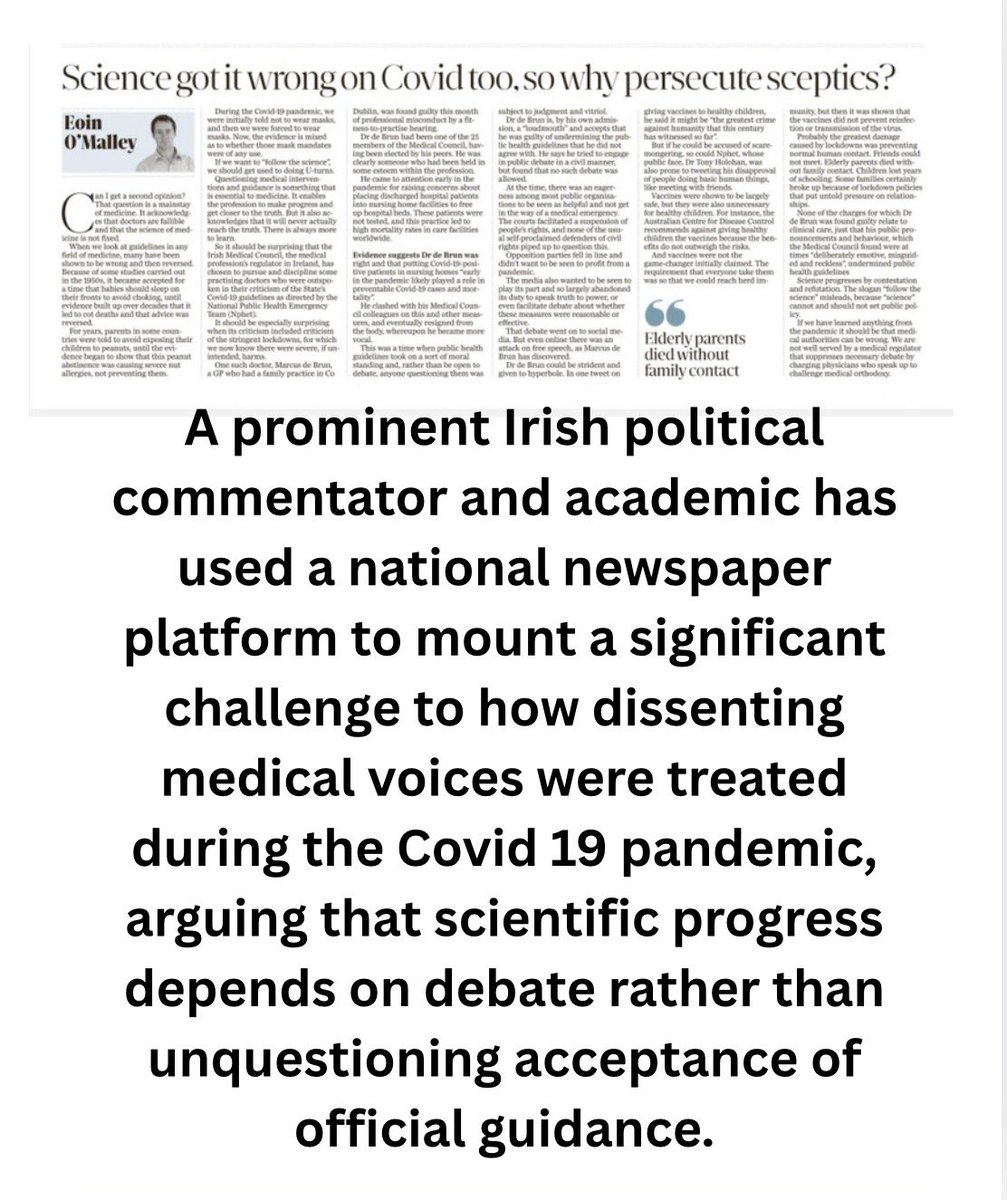
𝐒𝐮𝐧𝐝𝐚𝐲 𝐈𝐧𝐝𝐞𝐩𝐞𝐧𝐝𝐞𝐧𝐭 𝐂𝐨𝐥𝐮𝐦𝐧 𝐐𝐮𝐞𝐬𝐭𝐢𝐨𝐧𝐬 𝐌𝐞𝐝𝐢𝐜𝐚𝐥 𝐂𝐨𝐮𝐧𝐜𝐢𝐥’𝐬 𝐓𝐫𝐞𝐚𝐭𝐦𝐞𝐧𝐭 𝐨𝐟 𝐂𝐨𝐯𝐢𝐝 𝐃𝐢𝐬𝐬𝐞𝐧𝐭𝐞𝐫𝐬
A prominent Irish political commentator and academic has used a national newspaper to mount a significant challenge to how dissenting medical voices were treated during the Covid pandemic, arguing that scientific progress depends on debate rather than unquestioning acceptance of official guidance.
Writing in the Sunday Independent, Eoin O’Malley, Associate Professor of Politics at Dublin City University, contends that medicine has a long history of revising accepted wisdom and warns against attempts to discipline doctors who challenge prevailing orthodoxy.
O’Malley is one of Ireland’s most respected political analysts and public commentators. The son of former Fianna Fáil minister Desmond O’Malley, who later founded the Progressive Democrats after his expulsion from Fianna Fáil by Charles Haughey in 1985, he is widely regarded as a mainstream and establishment political voice rather than a campaigner from outside the political system.
In his column, O’Malley argues that many medical certainties have subsequently been overturned. He cites changing advice on infant sleeping positions, guidance on peanut exposure for children, and evolving recommendations on mask wearing during the pandemic as examples of how scientific understanding develops over time.
Against that backdrop, he questions the decision of the Irish Medical Council to pursue disciplinary proceedings against GP Dr Marcus de Brun @indepdubnrth , who became one of the most outspoken critics of aspects of the State’s Covid response.
Dr de Brun was found guilty of professional misconduct by a fitness to practise hearing earlier this month. However, O’Malley notes that the findings related not to clinical care but to public statements and criticisms of public health policy.
The columnist highlights concerns raised by Dr de Brun early in the pandemic regarding the transfer of hospital patients into nursing homes, arguing that subsequent evidence suggests such concerns were justified given the high mortality rates experienced in care facilities internationally.
O’Malley maintains that during the pandemic a climate emerged in which questioning official policy became increasingly difficult. He argues that political parties, public institutions, sections of the media and even traditional civil liberties advocates largely aligned behind public health restrictions, leaving little room for meaningful debate.
While acknowledging that Dr de Brun could be provocative and sometimes used inflammatory language, O’Malley argues that public health authorities were also capable of overstating risks and presenting uncertain evidence with excessive confidence.
The article also revisits wider questions about lockdown policies, vaccine mandates and restrictions on social contact. O’Malley argues that the social consequences of lockdowns were profound, pointing to educational disruption, family separation, isolation of older people and strains on personal relationships.
At the heart of the piece is a broader argument about the relationship between science, public policy and free expression. O’Malley rejects the slogan “follow the science” as an oversimplification, arguing that science is not a fixed set of answers but an ongoing process of challenge, testing and revision.
He concludes that one of the principal lessons of the pandemic should be recognition that experts and institutions can be mistaken and that society benefits when dissenting voices are allowed to challenge accepted thinking.
The significance of the article lies not simply in its defence of Dr de Brun, but in where the argument is coming from. media commentators. O’Malley’s intervention is notable because it comes from a highly regarded academic and newspaper columnist with deep roots in the political establishment.
K-Pop K-Drama K-Beauty Gal retweeted

7 killer headline frameworks for Facebook Ads:
1. Finally...a [solution] that doesn't [common pain point].
2. Testing [solution] so you don't have to.
3. What if [problem] isn't actually [their assumption]?
4. [Target group] think they need [wrong solution]. Here's what actually works.
5. Stop trying to [common approach]. Do this instead.
6. Why [desired outcome] has nothing to do with [misconception].
7. [Outcome] isn't about [effort]. It's about [mechanism].
Fill the gaps with your research and enjoy some winning ads
1
3
17
766
