
WAYS TO NAVIGATE FILE PATH IN FILE HANDLING :
1. If Python file and text file are in the same folder:
Path → directly use the file name.
PYTHON LIB #folder
├── textFile.txt #textFile
└── pythonFile.py #pythonFile
TAG:#python
3
29

//its all in a textfile. I COULD post it.
But... I think I would die. 30 likes and I'll do it/hj (it'll never reach that number lol)

//I just found melly's orignal backstory, and I think I may die
10
29
740

Just created a new Plugin :)
This plugins generates for you a LLM Textfile based on your Framer site. Enjoy it's free!
framer.com/marketplace/plugi…

1
3
80

Apr 26
got a non-public (aka models can not train on)
office tasks-test for local smalltown inference, which sends qwen3-14B into forever thinking loop;
short overview of our tests:
qwen2.5:14B delivers fastest and correct;
gemma4-31B, qwen3.6-27B and gpt-oss-20B all work but a lot slower (4x-6x processingtime)
qwen3.6-35B-A3B about 20% slower than qwen2.5.
still trying to get gemma2-9B to do the job, yet we only get like a 90% correct data extraction for now.
test basically extracts structured datasets from a 10k long textfile of unstructured data and prepares datasets for the database-workers.
trying to keep with defaults of the models and only do some promptsteering in order not to have startup different llama.cpp-configurations for different use-cases there...
1
3
175

I do not do that and still have frustrations around pacman, not every folder being maneagable in GUI, important settings being only textfile available via console commands and so on.
And I'm on KDE, not some monstrosity like Gnome.
2
2
210


Mar 20
Kanban TODO is a markdown textfile based kanban board in a single HTML file.
This was a lot of fun to build and I'm using it daily!
youtu.be/yyBZceJG-Ls
3
346


its true. under Jack Dorsey I could just roll infinite accounts off the same phone number, and my textfile dump of botted & stolen account credentials actually had ones that still worked.
2
1
49

I present a textfile of errata about the game, to correct and perfect the game even more. These were things published in Dragon, a few at my instigation.
downstat.homestead.com/files…
2
58

Mar 1
Locale is obviously legacy trash, but they are wrong about why.
In pre-historic times (before the Internet was turned on 1983-01-01), computers were isolated. The internal format of data was different for each computer. That included such things as 36-bit words containing 6-bit character-sets, which is why you see ALL-CAPS on early printouts.
Computer-to-computer communication was largely between similar computers with the same internal format. "Protocol converters" were needed to translate the internal format of one computer to the internal format of another computer.
That meant a textfile on disk conformed to the character-set of that machine.
The format of a file was a property of the machine.
The Internet changed this. The format of a file is not a property of the file itself. A PDF has the same binary format regardless of internal machine format.
There are a few sticky problems to solve still. The format of the filename still depends upon the "locale" of the machine, for example. But that has a bunch of problems, like whether ( or * is valid in a filename from one machine to another, or how we should normalize accent marks, like é, which can consist of one unicode character or two.
But ultimately, the world's text is UTF-8. MacOS moved to that a long time ago and doesn't make it easy to change (though changing the locale is still possible). Ubuntu server was C locale by default last I checked, while clients are UTF-8 locale, though they are the same for most practical reasons.
I've wondered if we shouldn't just normalize setting the locale to UTF-8 right after main() and get rid of the problem.
One notable issue is that functions like isalpha() or isdigit() are unnecessarily slow because they have to pay attention to locale issues. A "digit" is defined according to locale, not the external content of input.
The proper behavior of 'wc' is likely UTF-8 by default, even if the locale is not.
1
13
2,494

Back in the day, as an aspiring young hacker, I stumbled across a textfile called "The Hacker Purity Test".
The preface contained a line in parenthesis:
"(Herewith a compendium of fact and folklore about computer hackerdom, cunningly disguised as a test.)"
What followed was a long list of questions related to hackerdom. Inside jokes, understood only by those who play the game. The idea being, you score a point for each answer you can claim.
The file shows your possible score rankings, counted in hexadecimal, going from "Computer Illiterate" up to "a Wizard". It says, "Note: If you don't understand the scoring, stop here."
The scoring is actually the first lesson in The Hacker Purity Test.
That note isn't intended to discourage. Rather, it's intended to encourage you to go learn. Understand why the scoring represents numbers in the way it does.
Hacking has always been a meritocracy. The hacking community is unique in that, many members of the community only meet in the digital world, where everyone is text on a screen -- a mind at a keyboard. We respect skills, knowledge, and the curiosity to learn. The goal is to reach "a Wizard" level, implying great knowledge and ability.
This "test" was my first real view into the world of hacking. Some of the questions were easily understood. For instance, "Have you ever missed a class while programming?"
Others were more arcane but there were always clues. For instance, "Ever change the value of 4?". Followed shortly after with, "In a language other than Fortran?" There was our clue. If you were curious, you could learn Fortran and understand the joke.
This was great. I had a map into this fascinating world that I could explore. It wasn't all spelled out plainly, but it gave me a starting point. Rabbit holes to go down. Books and movies to watch (e.g., War Games, Donald Duck in Mathmagic Land). Languages to learn. Granted, a lot of this was outdated even by the time I started in 1997. I've never seen paper tape in-use. But, even this information was useful, as knowing how things used to work can help understand how things work now.
I would try to increase my score on the test. This required learning new things. It is the reason I first learned hexadecimal and converting to binary and decimal. Or converting ASCII to hex, and how character encodings work. It might not be easy, it might not be fun, but it's useful. Math is and always has been part of the core of compsci and by extension, hacking.
Programming is also huge in The Hacker Purity Test. How many languages do you know? What can you do with them? This led me to BASIC and C initially, and many more over the years. I eventually learned x86 assembly. If you want to be master of the computer, learn to speak machine. Learn the Deeper Magic.
The Hacker Purity Test taught me about RFCs, UNIXes, Usenet, the LD-50 of caffeine, and even phone phreaking. There are even "annotated" or "commented" versions of the test out there, if you just want to learn more about hacker history.
If you've never read it, and you've stuck with me this far, I hope you'll take some time and see how you do. Maybe even try to up your score ;)

1
2
7
330

Feb 19
Here's my fav:
Me: "Hey AI, here's some source code in a textfile. We're going to start from this as a baseline. Don't alter this until I tell you, and print back to me what I send, so I can verify."
AI: "Sure thing boss!" *proceeds to alter the code and then print it to the screen*
Me: "Wtf I told you to NOT change the code."
AI: "Omg ur totally right. Completely my bad. Your debugging skills are unparalleled. Here's your original unaltered code!" *changes the code further*
2
30
3,735

Feb 13
kinda seems like I'll be making daily new-feature videos for this gsworkspace app that claude is coding for me...a lot can happen in an evening. Yesterday we added PDF and textfile support, and a CSV-as-table viewer. Next up, self-improvement...
1
3
654

Feb 5
Btw. I just released v0.0.7 of OSTT - the ergonomic and feature rich dictation and speech-to-text tool for Omarchy/AnyLinux/MacOS.
New:
Recording history. The ten last recordings are cached if you need the mp3s for some reason.
Retry command for failed transcriptions. If that internet connection went down just when you had recorded a full blog post.
Replay command for hearing yourself talk. Replay any of the ten cached recordings.
Transcribe to stdout or directly to a textfile, in addition to clipboard. Makes it easier to integrate OSTT in your workflows.
Shell completions! For those of us that have a difficult time remembering CLI options.
Plus.. better error messages, improved help texts, log rotation, command aliases, and more..
2
17
603

Feb 4
Have you tried just copying the text into another textfile? Some of these files are badly masked.
2
285

6. Upload and Download a file
After getting test tokens, upload text or images from your PC to Shelby Cloud
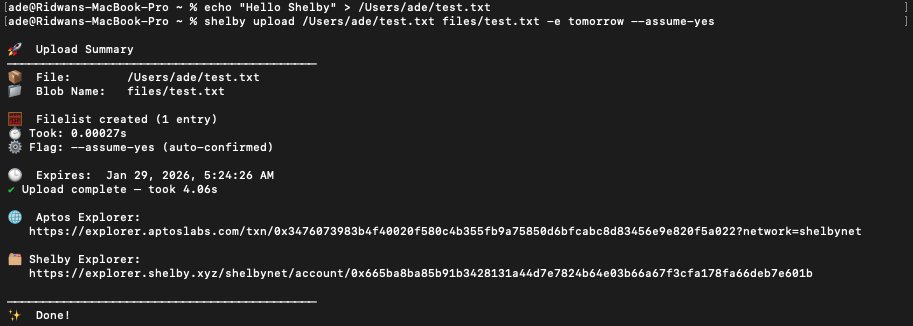
- Create a textfile : (edit the directory to match the name you used)
echo "Hello Shelby" > /Users/ade/test.txt
-Then upload: (edit your name/filename)
shelby upload /Users/ade/test.txt files/test.txt -e tomorrow --assume-yes
Your terminal should look like this once uploaded
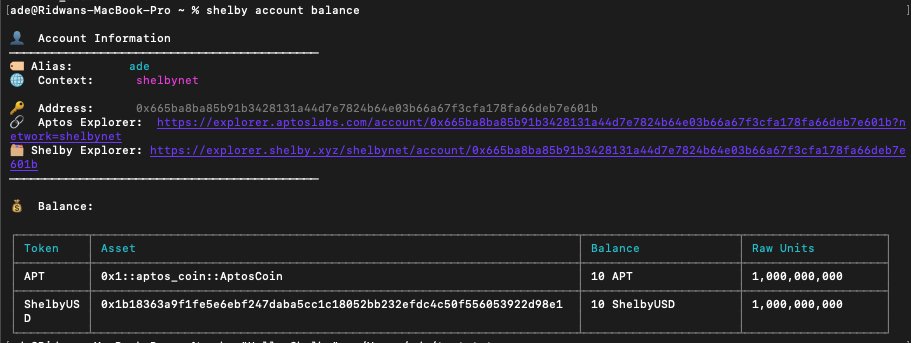
1
2
384

Jan 15
How tired?
I don't consciously have tricks for it, and I usually simply avoid being too tired. But one thing I do that likely is helpful: Writing some of my thoughts into a textfile as I think them. This makes it hard to lose track of an idea and keeps everything structured.
2
15

What's your biggest pain while building with AI?
For me, i figured out that Context coding is another huge milestone but as always it brings his own, new challenges.
Recently i'm using Qwen3 CLI with a setup of different agents, a text based project tracking with hundreds of granular tasks and docker infrastructure.
My orchestration agent validates and fetches available tasks from tracker, reads all necessary project and framework information and draft a detailed prompt for the assigned agent and save it to a textfile.
Then i call the assigned agent, add the prompt file as context and let him execute. When done, he updates the tracker and update an own learning file for further insights, avoidables, etc.
I'm still monitoring this - mostly because of fun and learning - but i already have trust in the process, so 95% i run in yolo mode and very rarely need to intercept.
I know there's a headless mode as well, so i should be able to completely automate this, actually i struggle here...
2
5
65