

Adventure jump in Brazil turns fatal as crew throws woman off bridge without attaching rope ebx.sh/J22ZI2

4
Zach💫 retweeted

Victor Wembanyama throws championship parade after mistaking OKC for the NBA Finals.
 𝙖𝙧𝙠𝙖𝙖
𝙖𝙧𝙠𝙖𝙖
64
601
12,907
184,458
Matt retweeted

11h
Bro cosplays as being wise beyond his years when he’s actually just a toddler that throws tantrums whenever he doesn’t get his way
43
137
4,937
155,936
HITESH retweeted

India throws away over 7 million tonnes of textile waste every year, not because people don't care but because they don’t know how to dispose of it.
Two engineers saw this gap and built NoKasa, an app where you can book a pickup. An agent comes to your home, grades your clothes on the spot, and sends cashback via UPI immediately.
They've already kept 1 lakh garments out of landfills. Such a good innovation to keep cities clean.

31
97
423
29,785


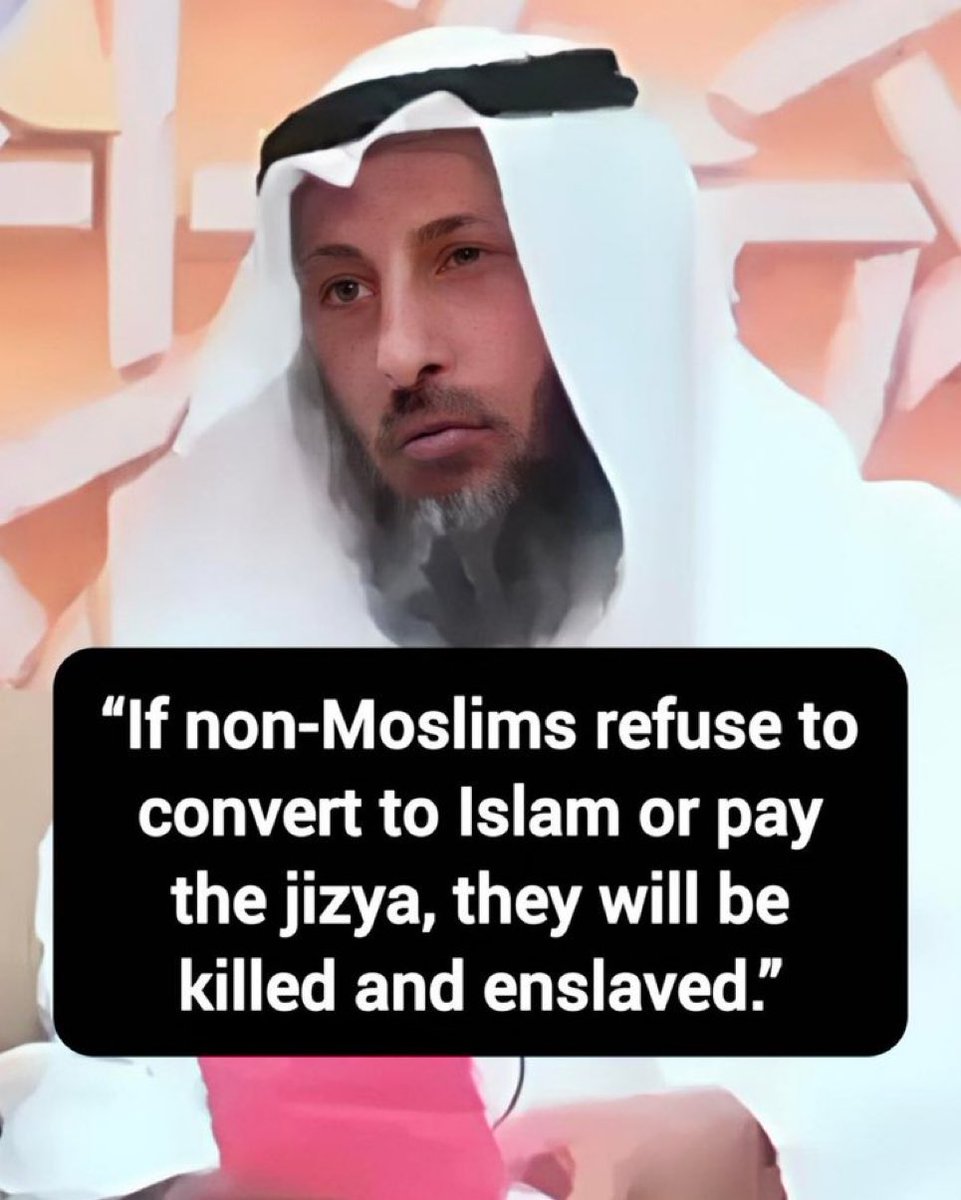
You should really do your own research on Islam, before someone throws you off the top of a building.

☪️ I DATED A MUSLIM
Yes, I dated a Muslim named Raouf for about a year when I lived in Florida.
He was a software engineer and a nice person.
The topic of visiting a mosque was broached by Raouf about seven months into our relationship. I declined after learning that I would have to cover myself from head to toe in order to enter the mosque.
The initial information that I read about the Islamic religion concerned me, but I didn’t dig deep for details. I didn’t see a huge red flag until Raouf mentioned marriage and children.
Raouf wanted to take our future children to Algeria for family visits.
Then, I dug deep.
(BTW… Raouf had a beautiful French accent, and he spoke French fluently. His family owned homes in both France and Algeria. Just an interesting observation considering the state of France these days.)
I thoroughly researched Islam and the region’s problems after he mentioned marriage and children — even communicating with other Muslims.
A small percentage of Muslims believe that you can marry “people of the book”, meaning Christians, Jews, and Muslims. Many Muslims that I communicated with were strongly against any such union.
This realization caused other problems in our relationship since I’m not a Christian, a Jew, or a Muslim.
The relationship ultimately came to an end due to our religious differences.
I’ve been following the Muslim takeover ever since.
To those who claim that I know nothing about Muslims and the Middle East can kindly fuck off.
1
5

i can’t find the tweet but i don’t think i’ve had an impact on the internet but only small fandom spaces. Cough. Wretches. Throws up on the floor. Sweeps away the fur ball. this is all i got
1
1

Justin Hughes throws it down! @JustinHughes00 is gonna be a problem on Friday nights for @Tomcat_football this fall and for @Tomcat_Hoops this winter!
4
Rosie Clarke retweeted

🇬🇧 Sheffield Protest
Heavy handed policeman throws a patriot to the ground and knocks him unconscious…
228
647
1,445
71,073

Dosnt this looser crybaby bitch work for a living or does he just whine and throws his family up on his profile? What a fucking weak crybaby Cunt
2

Brunson did this exact same thing all 4th quarter and got 300 free throws what’s the difference
The league is based around flopping it’s a disgrace
1


ZERO free throws. While being hacked all game
Credited with turnovers, even though she didn't turn the ball over.
Gets multiple phantom fouls called against her
And she still does this

What is the meaning of Revelation 14:11, and what is the context of Revelation 14?
📖 𝐀𝐧𝐬𝐰𝐞𝐫 (ꜰʀᴏᴍ ᴘᴀꜱꜱᴀɢᴇ ɴᴀᴠɪɢᴀᴛᴏʀ):
──────────────────────
𝐓𝐡𝐞 𝐂𝐨𝐧𝐭𝐞𝐱𝐭 𝐨𝐟 𝐑𝐞𝐯𝐞𝐥𝐚𝐭𝐢𝐨𝐧 14
Revelation 14 is the climactic end of the fourth vision cycle in the book — the cycle that began in chapter 12 with the woman giving birth, the dragon's expulsion from heaven, and the emergence of the two beasts in chapter 13. Chapter 14 answers the pressure of chapter 13: if the beast demands worship and economically excludes all who refuse, what is the church's hope? The chapter provides that answer through a sequence of seven scenes that move from ultimate security to ultimate judgment.
The chapter opens with the Lamb standing on Mount Zion with the 144,000 — the same complete number of God's redeemed people who were sealed in chapter 7. They bear the Father's name on their foreheads, which is the direct opposite of the beast's mark on the forehead (13:16–17). They sing a new song that only they can learn. They are described as those who follow the Lamb wherever he goes, redeemed as firstfruits, blameless. This is the vision of the church in ultimate safety with Christ — the answer to everything the beast threatens.
Then three angels fly across the sky with escalating messages. The first proclaims the eternal gospel to every nation — a call to "fear God and give him glory, for the hour of his judgment has come," and to worship the Creator rather than the beast. The second announces Babylon's fall. The third delivers the most severe warning in the entire book.
After the third angel's warning, a voice from heaven pronounces a beatitude: "Blessed are the dead who die in the Lord from now on." This is the pastoral counterpoint — those who suffer and die in faithfulness are blessed, not defeated.
Finally, the chapter closes with a harvest scene (14:14–20): the Son of Man on a white cloud with a sickle reaps the earth, and an angel gathers the grapes of the earth and throws them into "the great wine press of the wrath of God." Blood flows as high as horses' bridles for 1,600 stadia. This is the final judgment depicted in the language of Joel 3:13 and Isaiah 63:1–6 — the same judgment that appears at the end of every vision cycle in Revelation, retold from a new angle, not a new event in a timeline.
𝐓𝐡𝐞 𝐌𝐞𝐚𝐧𝐢𝐧𝐠 𝐨𝐟 𝐑𝐞𝐯𝐞𝐥𝐚𝐭𝐢𝐨𝐧 14:11
Revelation 14:11 is the conclusion of the third angel's warning:
“𝑇ℎ𝑒 𝑠𝑚𝑜𝑘𝑒 𝑜𝑓 𝑡ℎ𝑒𝑖𝑟 𝑡𝑜𝑟𝑚𝑒𝑛𝑡 𝑔𝑜𝑒𝑠 𝑢𝑝 𝑓𝑜𝑟𝑒𝑣𝑒𝑟 𝑎𝑛𝑑 𝑒𝑣𝑒𝑟. 𝑇ℎ𝑒𝑦 ℎ𝑎𝑣𝑒 𝑛𝑜 𝑟𝑒𝑠𝑡 𝑑𝑎𝑦 𝑎𝑛𝑑 𝑛𝑖𝑔ℎ𝑡, 𝑡ℎ𝑜𝑠𝑒 𝑤ℎ𝑜 𝑤𝑜𝑟𝑠ℎ𝑖𝑝 𝑡ℎ𝑒 𝑏𝑒𝑎𝑠𝑡 𝑎𝑛𝑑 ℎ𝑖𝑠 𝑖𝑚𝑎𝑔𝑒, 𝑎𝑛𝑑 𝑤ℎ𝑜𝑒𝑣𝑒𝑟 𝑟𝑒𝑐𝑒𝑖𝑣𝑒𝑠 𝑡ℎ𝑒 𝑚𝑎𝑟𝑘 𝑜𝑓 ℎ𝑖𝑠 𝑛𝑎𝑚𝑒.”
Several elements require careful attention.
𝐓𝐡𝐞 𝐨𝐛𝐣𝐞𝐜𝐭 𝐨𝐟 𝐣𝐮𝐝𝐠𝐦𝐞𝐧𝐭. This verse specifically describes the fate of those who worship the beast and receive its mark — those who, under the pressure of economic exclusion and social coercion (13:16–17), choose to align with the beast's system rather than remain faithful to the Lamb. This is not a general statement about all humanity; it is directed at a specific act of allegiance.
"𝐓𝐡𝐞 𝐬𝐦𝐨𝐤𝐞 𝐨𝐟 𝐭𝐡𝐞𝐢𝐫 𝐭𝐨𝐫𝐦𝐞𝐧𝐭 𝐠𝐨𝐞𝐬 𝐮𝐩 𝐟𝐨𝐫𝐞𝐯𝐞𝐫 𝐚𝐧𝐝 𝐞𝐯𝐞𝐫." The language echoes Isaiah 34:8–10, where Edom's judgment is described as smoke that rises forever. The image is of a fire that does not go out — the finality and irreversibility of God's judgment on those who persistently identify with the beast. The word "torment" (𝑏𝑎𝑠𝑎𝑛𝑖𝑠𝑚𝑜𝑠) indicates conscious suffering, not annihilation. The duration — "forever and ever" (𝑒𝑖𝑠 𝑎𝑖ō𝑛𝑎𝑠 𝑎𝑖ō𝑛ō𝑛) — is the strongest expression of eternality in the Greek language, the same phrase used for God's eternal reign and the saints' eternal reign with him (22:5). The grammar does not permit reading this as temporary or symbolic of extinction.
"𝐓𝐡𝐞𝐲 𝐡𝐚𝐯𝐞 𝐧𝐨 𝐫𝐞𝐬𝐭 𝐝𝐚𝐲 𝐚𝐧𝐝 𝐧𝐢𝐠𝐡𝐭." This is the deliberate, devastating contrast that gives the verse its pastoral force. The third angel's warning is framed between two statements about rest. Those who worship the beast have no rest, day or night. But the voice from heaven immediately follows: "Blessed are the dead who die in the Lord from now on" (14:13) — and the Spirit adds that "they may rest from their labors." The beast-worshipper's restless torment is set against the believer's rest. The contrast is absolute. The choice the seven churches faced — worship Caesar and participate in economic life, or refuse and suffer — is presented here as a choice between eternal rest and eternal restlessness.
𝐓𝐡𝐞 𝐩𝐫𝐞𝐬𝐞𝐧𝐜𝐞 𝐨𝐟 𝐭𝐡𝐞 𝐡𝐨𝐥𝐲 𝐚𝐧𝐠𝐞𝐥𝐬 𝐚𝐧𝐝 𝐭𝐡𝐞 𝐋𝐚𝐦𝐛. Verse 10 states that this torment occurs "in the presence of the holy angels and in the presence of the Lamb." This is not a picture of God taking pleasure in suffering. The language draws on Isaiah 66:23–24, where the redeemed go out and look upon the corpses of those who rebelled against God — their judgment is visible, known, and serves as an eternal testimony to the justice of God's final verdict. The presence of the Lamb at this scene underscores that the one who was himself slain rather than compromise is the one before whom all rebellion is finally exposed.
𝐓𝐡𝐞 𝐩𝐚𝐬𝐭𝐨𝐫𝐚𝐥 𝐟𝐮𝐧𝐜𝐭𝐢𝐨𝐧. This is the starkest warning in Revelation, and it is directed at people facing real pressure to compromise. The churches of Asia Minor were being told: worship the emperor, burn the incense, take the mark — or lose your livelihood, your freedom, your life. The third angel says: the cost of that compromise is eternal. The passage is not given to satisfy curiosity about the mechanics of hell; it is given to strengthen the resolve of believers who are tempted to capitulate. "Here is the perseverance of the saints, those who keep the commandments of God and the faith of Jesus" (14:12) — that is the sentence the warning was designed to produce.
𝐒𝐮𝐦𝐦𝐚𝐫𝐲
Revelation 14:11 describes the eternal, conscious consequence for those who choose allegiance to the beast over faithfulness to the Lamb. The verse functions within its immediate context as the third angel's climactic warning — the negative image that makes the beatitude of verse 13 shine with its full force. Those who compromise with the beast's system to avoid suffering will find no rest, ever. Those who die in the Lord will find rest forever. The chapter as a whole moves from the security of the redeemed with the Lamb on Mount Zion, through the universal call of the gospel and the announcement of Babylon's fall, to this final warning and the harvest of the earth — assuring persecuted believers that their faithfulness is not wasted and that the beast's apparent power is temporary, while God's judgment is final.
3

If they keep hitting ours, you know what’ll be coming back. And nearly our entire bullpen throws 100.
1

11
444
1,864
15,898
