
Yes, UV-C damages DNA primarily by creating thymine dimers and other lesions that frequently cause mutations during replication or faulty repair. That's core to how it inactivates pathogens and pests—it halts their ability to reproduce or survive.
In these targeted nighttime applications, doses are set for high lethality or sterility on the treated organisms. Survivors with mutations are possible in theory, but field results and research show effective control with minimal resistance development compared to chemical pesticides. The precision limits impact on non-target species.
2
5
41
2,388

Why not thiamine . Multiple doses of thymine need to be administered before glucose infusion na
2
526


REGINA MARGARETH DE CASTRO retweeted

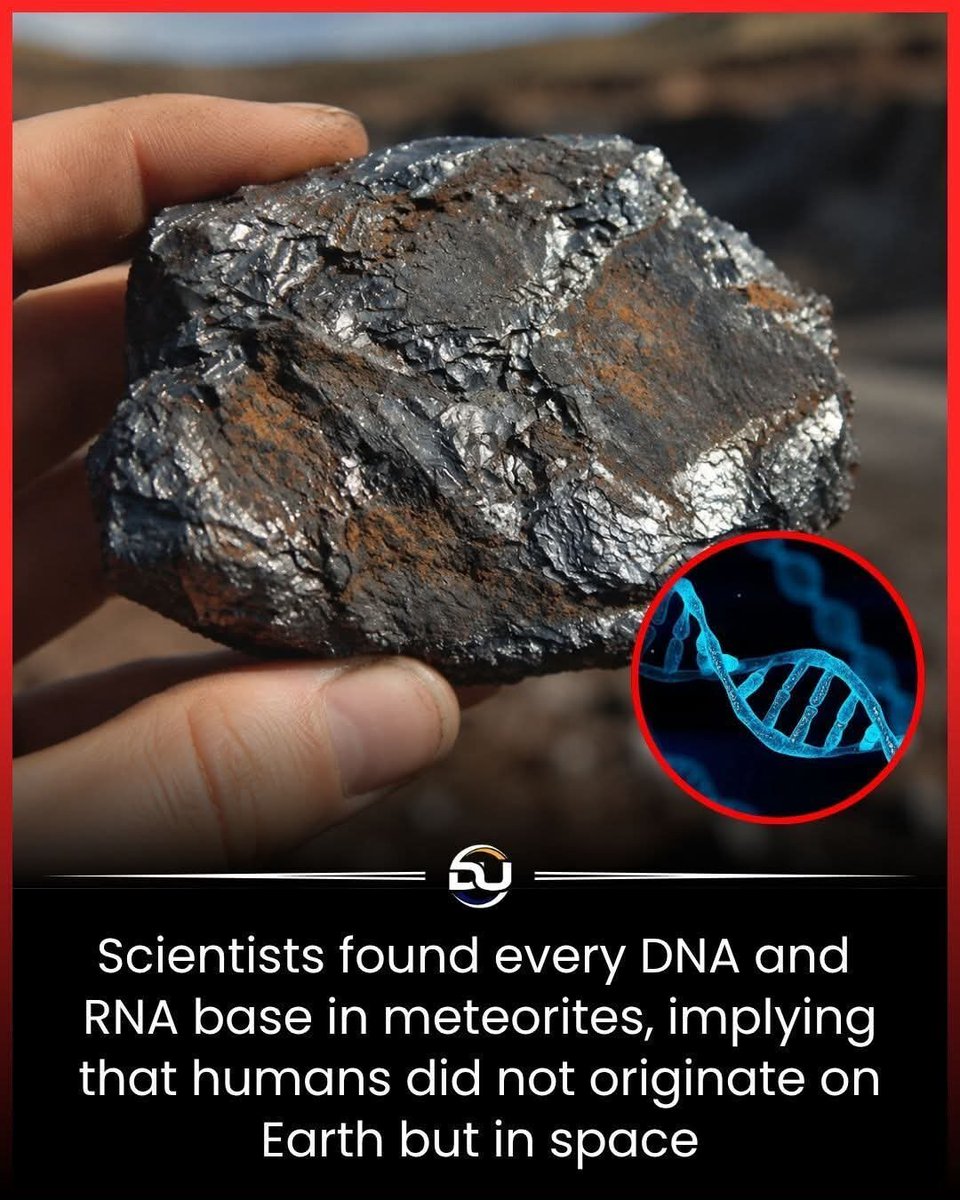
Japanese researchers found that adenine,guanine,cytosine,thymine, uracil,in approximately equal proportions, in samples collected directly from "asteroid Ryugu",contain 5 bases that form DNA and RNA,molecules responsible for storing all genetic information of living beings.
1
1
29

Jun 14
🧬☄️ A fascinating discovery is reshaping how we think about our origins.
Scientists have detected all five nucleobases that make up DNA and RNA—adenine, guanine, cytosine, thymine, and uracil—in meteorites and asteroid samples. These are essential building blocks of life as we know it. 🌌
While this doesn't prove that life came from space, it suggests that the ingredients needed for life may be widespread across the cosmos and could have been delivered to early Earth by asteroids and comets.
The question is no longer whether the building blocks of life can form in space—we now know they can. The next question is: how common might life be in the Universe?
Perhaps we are, in some way, children of the stars. ✨
#Space #Science #Astrobiology #DNA #RNA #Cosmos #OriginsOfLife
4
28
29
493

Jun 13
🚨: An asteroid was found to have all the building blocks of life.
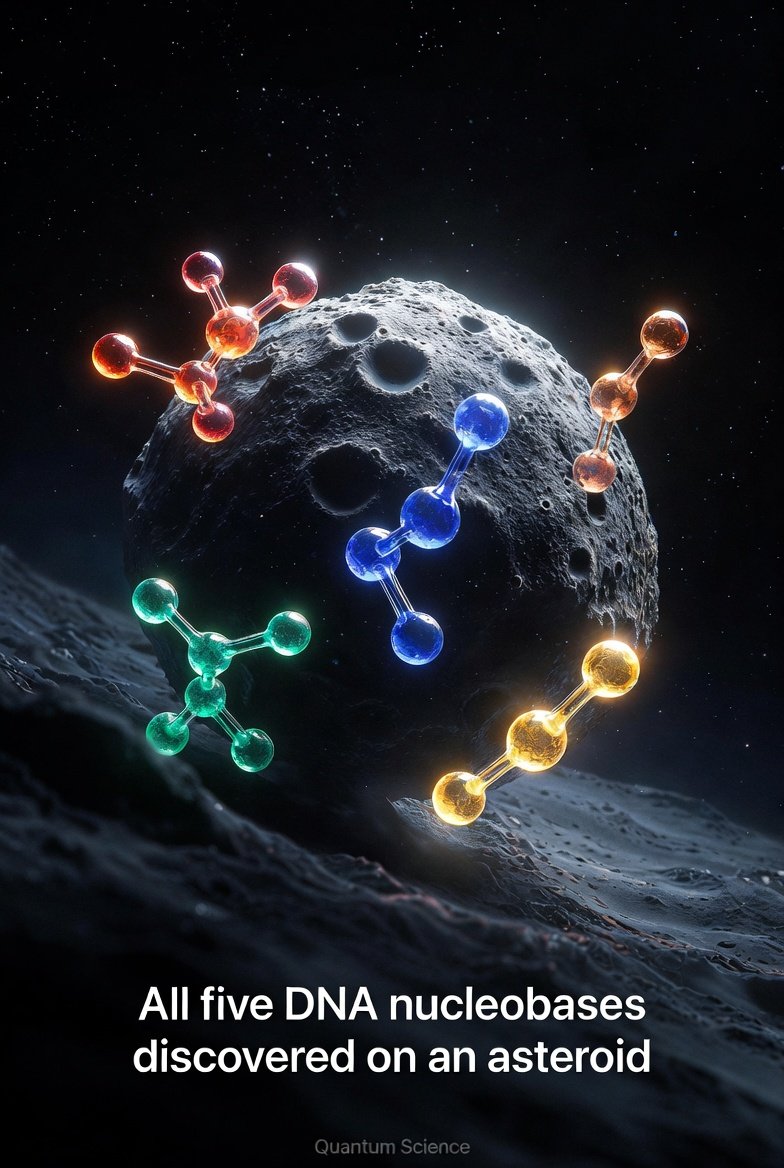
Japanese scientists have confirmed a monumental discovery: asteroid Ryugu contains all five nucleobases essential for DNA and RNA. By analyzing just 5.4 grams of material returned by the Hayabusa2 spacecraft, researchers identified adenine, guanine, cytosine, thymine, and uracil in similar proportions. This marks the first time a single celestial body has been found to harbor a complete, balanced mix of every fundamental component needed to store and transfer biological information, suggesting that the molecular foundation of life is far more prevalent in deep space than previously imagined.
This breakthrough provides compelling evidence for the theory that asteroids and meteorites may have delivered the basic ingredients for life to early Earth during its formation. Unlike previous findings that only showed partial sets of these molecules, Ryugu’s chemistry points toward a water-rich parent body where complex reactions could occur over millions of years. While it remains a mystery how these molecules eventually transitioned into living organisms, their widespread presence across the solar system implies that the recipe for biology is not a terrestrial anomaly, but a cosmic standard.
source: Oba, Y., et al. (2026). A complete set of canonical nucleobases in the carbonaceous asteroid (162173) Ryugu. Nature Astronomy.
84

Jun 13
🚨: An asteroid was found to have all the building blocks of life.
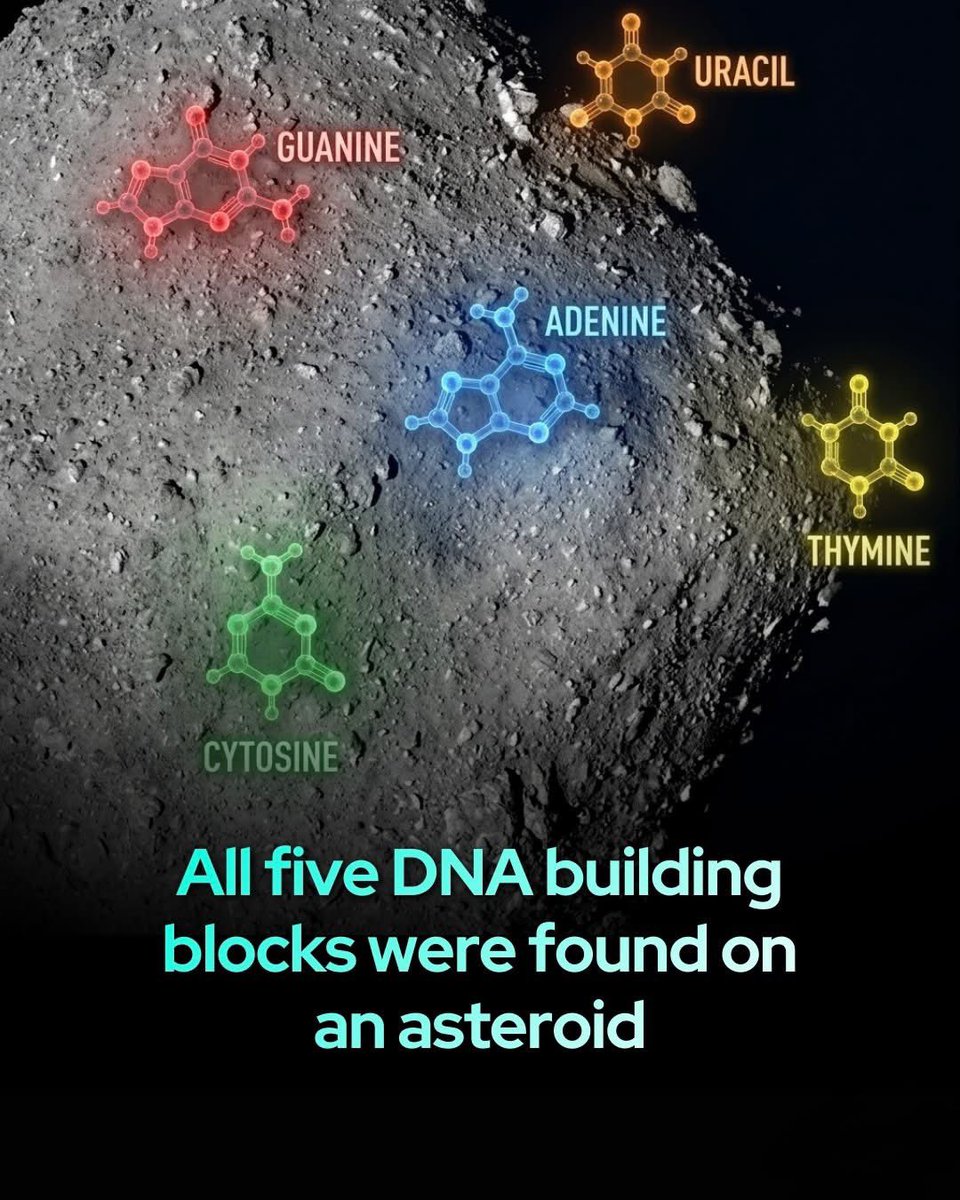
Japanese scientists have confirmed a monumental discovery: asteroid Ryugu contains all five nucleobases essential for DNA and RNA. By analyzing just 5.4 grams of material returned by the Hayabusa2 spacecraft, researchers identified adenine, guanine, cytosine, thymine, and uracil in similar proportions. This marks the first time a single celestial body has been found to harbor a complete, balanced mix of every fundamental component needed to store and transfer biological information, suggesting that the molecular foundation of life is far more prevalent in deep space than previously imagined.
This breakthrough provides compelling evidence for the theory that asteroids and meteorites may have delivered the basic ingredients for life to early Earth during its formation. Unlike previous findings that only showed partial sets of these molecules, Ryugu’s chemistry points toward a water-rich parent body where complex reactions could occur over millions of years. While it remains a mystery how these molecules eventually transitioned into living organisms, their widespread presence across the solar system implies that the recipe for biology is not a terrestrial anomaly, but a cosmic standard.
source: Oba, Y., et al. (2026). A complete set of canonical nucleobases in the carbonaceous asteroid (162173) Ryugu. Nature Astronomy.
18
84
228
4,527

Jun 12
DNA is exactly the same. It is a literal digital code. The physical molecules (adenine, cytosine, guanine, thymine) are just the ink and paper. The arrangements of those molecules form instructions that tell the cell how to build proteins.
2
28

Jun 12
Summer arrives and people want to go to the beach and, despite the heat, get as tanned as possible. For several reasons, I do not understand this passion some people have for tanning. Mainly because you burn yourself and, worse still, you put your future health at risk.
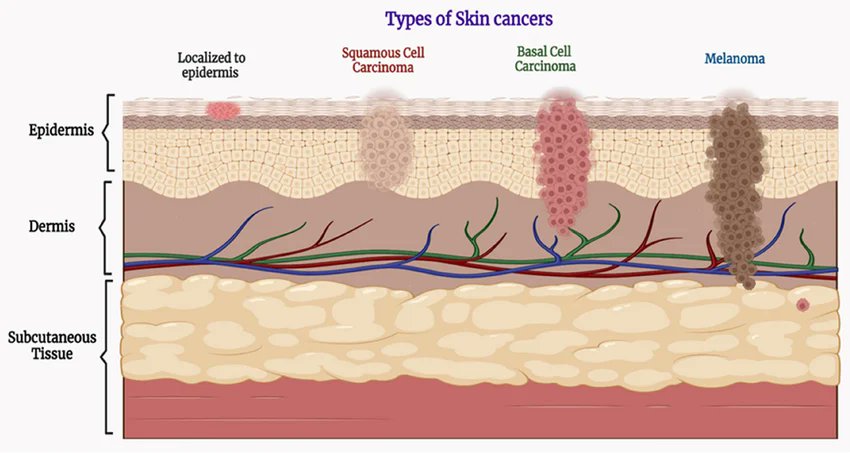
Yes, good guess: I am going to talk about melanoma, the most lethal malignant tumour affecting the skin, and one that in recent years has gone from being a very uncommon tumour to becoming the fifth most commonly diagnosed malignant tumour in countries such as the USA.
We are dealing with a scenario very similar to tobacco. I am sorry to say it, but for me there is a clear parallel between people who deliberately sunbathe today and smokers several decades ago.
Both are tumours with high incidence, and the worst part — or the best, depending on how one looks at it — is that they are clearly preventable because we know their main trigger. Do not smoke and do not expose yourself excessively to the sun, and the problem largely disappears.
Fortunately, in Western countries, fewer and fewer people smoke. In the USA, adult smoking fell from 21% in 2005 to 13% in 2020. Education and preventive measures are doing their work. Now it is melanoma’s turn.
UV light accounts for approximately 10% of the radiation emitted by the Sun, although humans cannot see it. It is non-ionising radiation. Although it enables vitamin D formation in vertebrates, it also burns the skin and damages DNA.
For life to progress, therefore, living organisms had to “develop and invent” ways of protecting themselves from UV rays. This radiation creates pyrimidine dimers, which distort the DNA strand and prevent it from being properly read.
First came what we might call an indirect conquest: the creation of the ozone layer. In the upper layers of the atmosphere, oxygen can naturally combine into this triatomic form, which has the ability to absorb a large proportion of UV radiation.
But that is not enough to free us from its harmful effects. Living organisms also had to invent a biological system to reverse the damage that UV radiation causes to DNA, to the genetic information of living beings.
This mechanism is universal. All living organisms must be able to correct UV-induced mutations in the genome. LUCA, the last universal common ancestor of all living beings, already possessed it.
The simplest and most widespread mechanism is based on photolyases, enzymes capable of reversing this damage, mainly that caused by the formation of thymine dimers. There are also other, more complex mechanisms that can repair these errors.
So it is curious that all living organisms have had to protect themselves from this solar radiation, and yet we humans decide to expose ourselves to it so aggressively. As if this problem somehow did not apply to us. But it most certainly does.
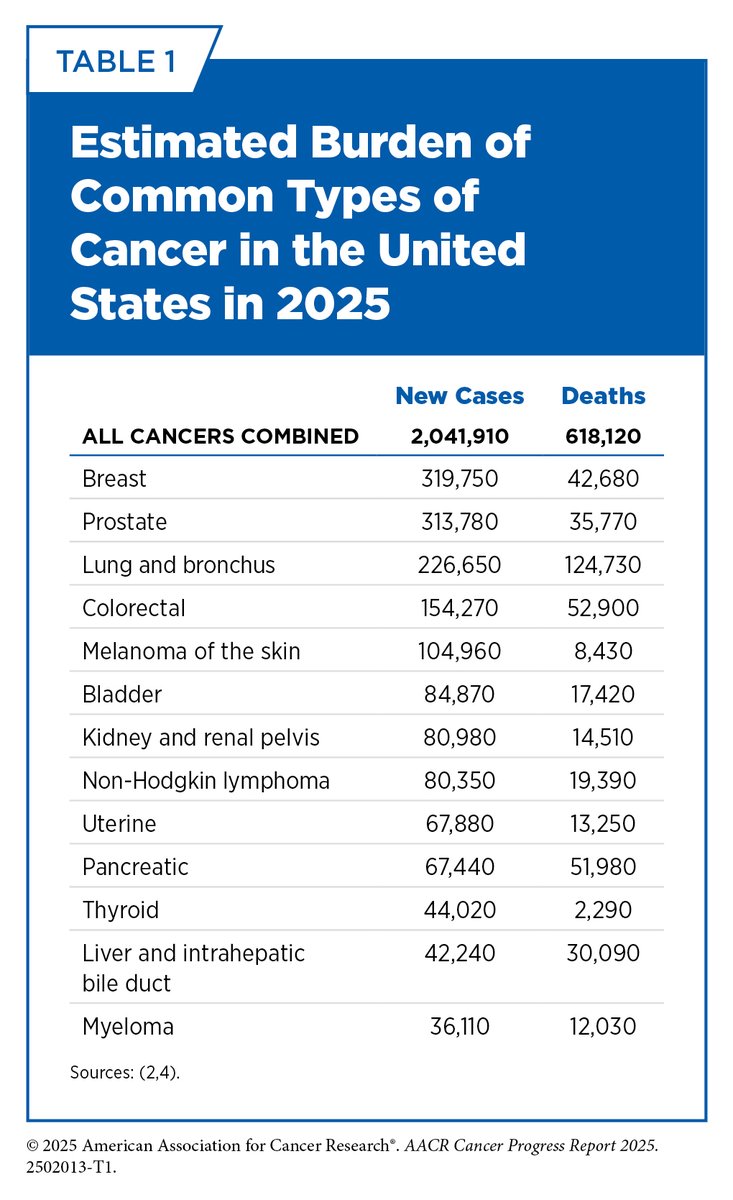
Skin cancers are the most common malignant tumours in humans. Yes, you heard that correctly. The most common. It is estimated that, in the USA alone, more than 2 million were diagnosed in 2025. Fortunately, many of them are completely treatable.
But among these millions, around 1 in 20 are melanomas, which, without treatment, can become invasive and lethal. A major problem is that the number of melanomas is increasing.
Between 1950 and 2007, its incidence increased 17-fold in men and 9-fold in women.
Dermatologists several decades ago might see the occasional melanoma during their residency. Today, they see several cases every month. Melanoma is the most commonly diagnosed cancer in women aged 25 to 29.
Melanoma is currently the fifth most commonly diagnosed cancer in the USA. There are additional risk factors. Fair skin increases the risk 20- to 30-fold. Freckles and pigmented lesions also increase the risk.
Other factors include polymorphisms or mutations in DNA repair systems, as well as immunosuppression. And as a final note, we should remember that this damage is cumulative. Today’s exposures will take their toll in the future.
Do not expose yourself excessively to the sun. And if you do, use sunscreen.
2
4
338
Yehangane Obed retweeted

Jun 12
What if Adenine is cheating on Thymine with Uracil and that's why cheating is in our DNA?🤔

1
1
20