
Skeptics still waste 90 minutes every morning triaging their inbox while others wake up to a fully prioritized list with draft replies ready. The difference isn't better discipline — it's one automated AI workflow running overnight. Curious how to build it without coding? Next tweet...
1
2

My big girl job really is a fast pace environment. Taking doctors orders all day, charting, triaging, typing notes, administering medication, drawing bloods, setting up IVs, assisting with and preparing the procedure room for ultrasound guided injections and FNA biopsies etc.
16

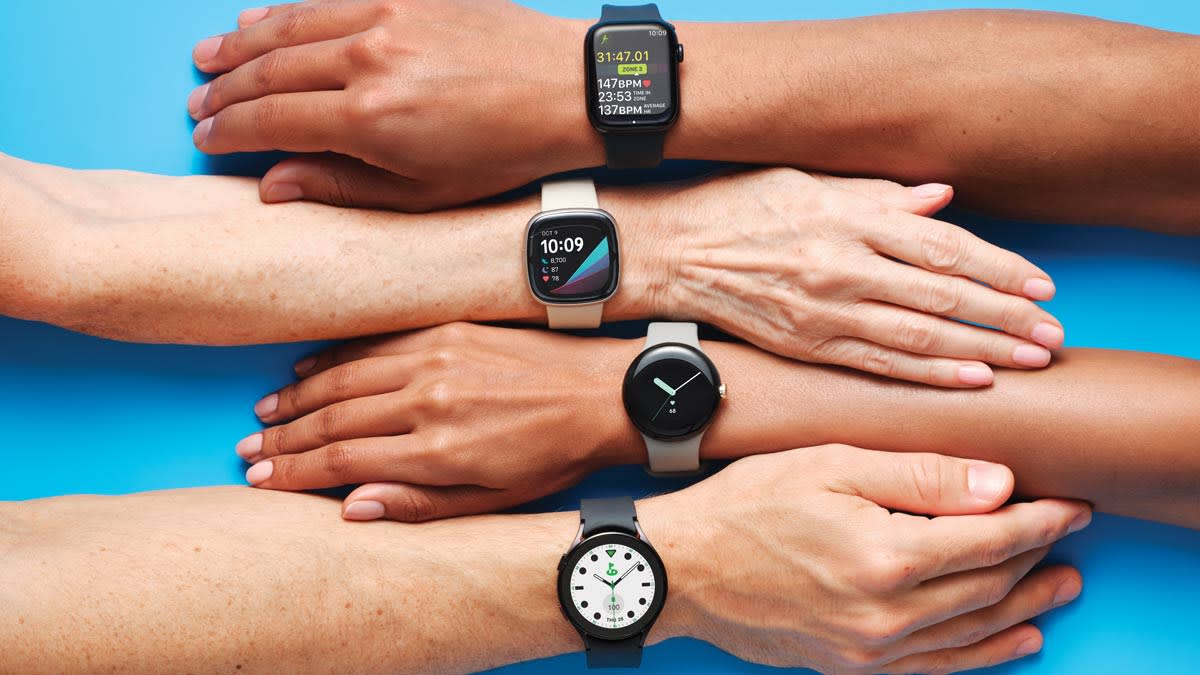
The same device ‘making you sick’ is the one your insurer bundles in to keep you healthy. Whilst triaging your benefits to its use.

Your smartwatch is making you sick.
It emits Bluetooth, Wi-Fi, and cellular radiation directly into your body.
No health metric it gives you is worth that trade.
1
3

Once you learn these three things, you can build nearly anything yourself.
Skills, chains, and plugins. Learn them once and you can automate a real part of your week yourself.
Here's the system:
A skill is a standard operating procedure.
It's one long, reusable prompt that does one thing well, like writing a newsletter, setting up a PPC campaign, triaging your inbox, or drafting a note to the board. You write it once and reuse it forever.
The trick is to feed it your real work. For my writing skill, I gave Claude posts I admire and my own exported analytics with the winners marked, so it could see the patterns. Show it what good looks like and it nails your voice. Skip that step and it guesses.
A chain connects skills into an automation.
One skill's output feeds the next, in order. A copywriting skill writes the messaging, then hands it to a PPC-setup skill that builds the campaign. That's an automation, and you built it without writing code.
A plugin is the harness that holds it all.
It bundles your skills and chains into one thing you share with your team. Instead of sending 15 separate prompts around, you send one plugin, and it knows when to use each skill on its own.
Skill, chain, plugin. It's one step up the ladder, and once you're up there it's easy.
Now the worked example. I call it the Daily Driver.
It's five skills chained together: email triage, a writer, Slack triage, a thinking partner, and a setup skill that connects my tools and personalizes everything. I chained them into one morning brief and scheduled it to run at 9am and message me the list.
Two things made the biggest difference.
Give it memory. I made plain docs for About Me, my Brand Voice, and my working preferences. I had Claude interview me and saved each answer as a file. Now every output sounds like me and knows my projects and my team.
Connect your tools. The plugin reads my inbox, Slack, and calendar through MCP connectors for Gmail, Slack, and Google Calendar. That's what turns "summarize my morning" into a real brief instead of an empty wish.
This is the highest-ROI thing an operator can set up this week. I run my YouTube channel, podcast, community, and newsletter on plugins I built myself, all on the $100 Max plan with no engineer in sight.
I made a full walkthrough that shows the whole build start to finish.
Want the Daily Driver plugin to start from? Comment PLUGIN below and I'll send it to you.
#AI #automation #ClaudeCode
10
2
30
21,321
Tathagata M. retweeted

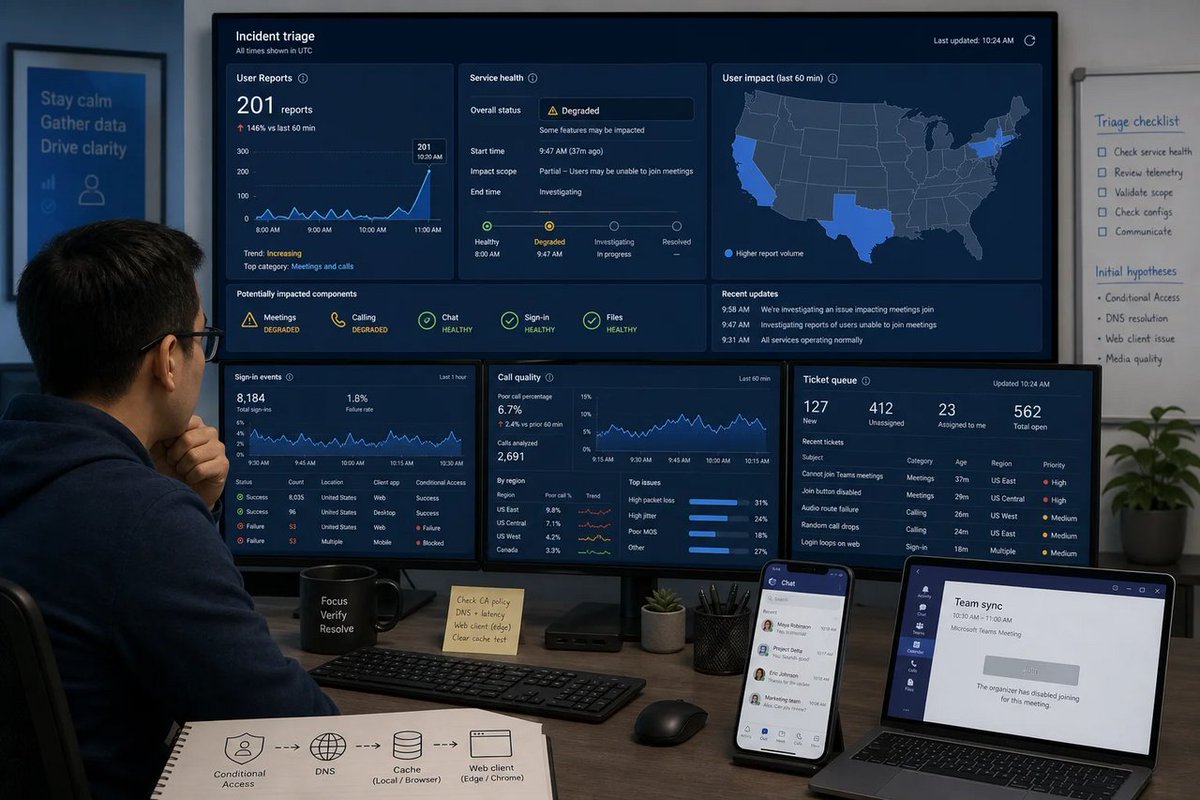
🪟 226 Teams “reports” isn’t a Microsoft outage… it’s IT’s new daily jump-scare. Stop panicking, start triaging: check status, auth, regions, then teammates. “Just Teams” is fragile. #Windows #Microsoft #Teams #Microsoft365 #ITPro
windowsforum.com/threads/mic…
#MicrosoftTeams
1
14


AI in the inbox is shifting from assistance to action. With Microsoft 365 Copilot in Outlook, Copilot can now proactively manage email and calendar—triaging messages, resolving scheduling conflicts, and tracking priorities. Read more about our updates: msft.it/6018vYn8r
30

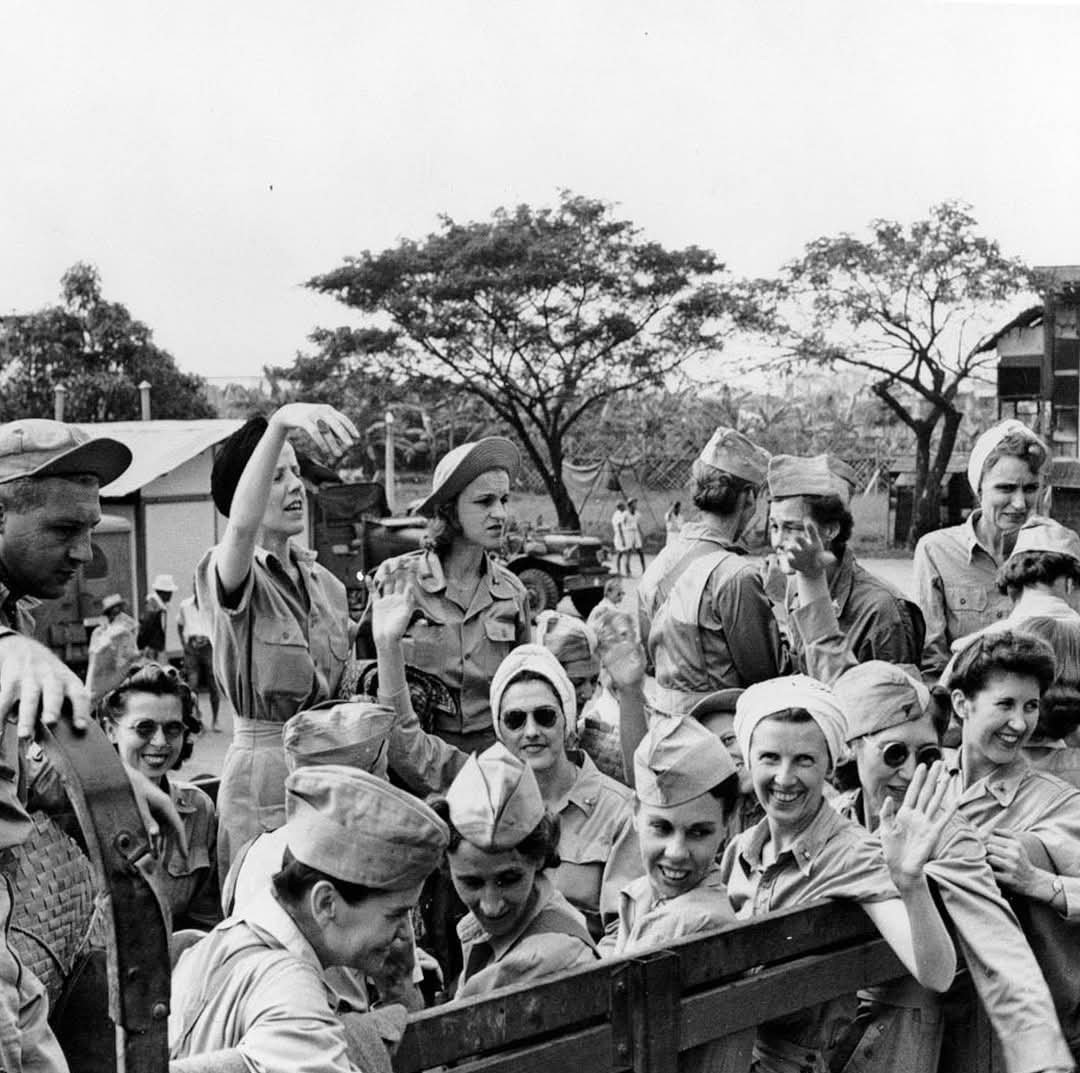
In December 1941, nearly 100 American women were already at work in the Philippines when the Japanese bombers arrived.
They were nurses. Army and Navy both. Some had been posted there for months. A few had arrived just weeks before Pearl Harbor.
Within hours of the December 8th attacks on the islands, they were triaging wounds by flashlight.
There was no orderly evacuation. There was no rescue plan that included them.
As Japanese forces advanced across Luzon, the nurses moved with the retreating army into the Bataan Peninsula. They set up open-air wards in the jungle, under the trees, because the buildings were already full. Malaria hit the patients. Then it hit the staff. They treated dysentery, shrapnel wounds, burns, and the particular kind of exhaustion that comes from working a 12-hour shift on half rations and then doing it again.
Bataan fell in April 1942.
The nurses who remained were pulled back to the island fortress of Corregidor, where they worked inside the Malinta Tunnel, a long concrete corridor blasted through the volcanic rock. The tunnel shook with every shell that hit the island above. Patients lay on cots a few feet apart. The nurses moved between them in the dark, between bombardments, doing what they could.
Corregidor fell on May 6, 1942.
At that point, most military personnel became prisoners of war. The nurses were no exception. They were interned at Santo Tomas, a civilian internment camp in Manila that had been a university. Hundreds of civilians were already there. The conditions were crowded and, over time, they became desperate.
Food was the slow emergency. Early in the internment there was enough, barely. By 1944 the rations had been reduced to a level that was clinically insufficient. Prisoners were losing weight that they could not afford to lose. The nurses, trained to read bodies, watched it happen in the people around them and felt it happening to themselves.
They still ran the camp hospital.
They still treated the sick, organized the ward rotations, kept the records. They did this for nearly three years, through the stages of deprivation that the camps passed through as the war ground on.
A group of nurses was also held at Los Banos, another camp south of Manila, where conditions grew even harsher in the final months of the occupation.
Liberation came in early 1945, as American forces returned to the Philippines. The rescue of the Los Banos internees in February 1945 involved an airborne assault and a coordinated amphibious crossing that freed more than 2,000 prisoners, including some of the nurses, in a matter of hours.
The Santo Tomas camp was reached by American armor in early February 1945 as well. The nurses who walked out had endured captivity for roughly three years.
When they returned to the United States, they were thin, quiet, and largely unrecognized.
The story that the public knew about the Philippines was the Bataan Death March, which had claimed the lives of thousands of American and Filipino soldiers after the peninsula fell. That story was real and it was enormous. But the nurses had their own story running alongside it, and it did not get the same telling.
They had not broken under the pressure of combat conditions. They had not abandoned their patients when the situation became hopeless. They had worked, with shrinking supplies, in a tunnel under an island being bombed into rubble, and then they had spent three years in captivity and still come home.
Nearly all of them survived.
The Army eventually gave them formal POW status and the recognition that came with it, but it took time and it took effort from the women themselves.
Historians and writers have returned to their story in the decades since, and each telling tends to surface it briefly before it sinks again into the general haze of wartime detail.
© Daughters of Time
#archaeohistories
7
34
150
3,846


Because when I had a back injury I worked temporarily in the dash cam submission unit triaging subs before it all became known as Op Snap. It was insane. We could not cope with the level of material. We had to focus on the worst offenders to get them into the system in time.
1
15

I have engineering weeks and ops weeks.
During eng weeks I'm building detections, automations, and agents.
During ops weeks I'm on-call for Incident Response. This means triaging alerts and responding to threats. The full IR lifecycle.
1
2
98


11h
Swift development, some front-end work, triaging large upstream features for Hermex.
It needed less hand holding and usually made much better assumptions where needed
1
1
16

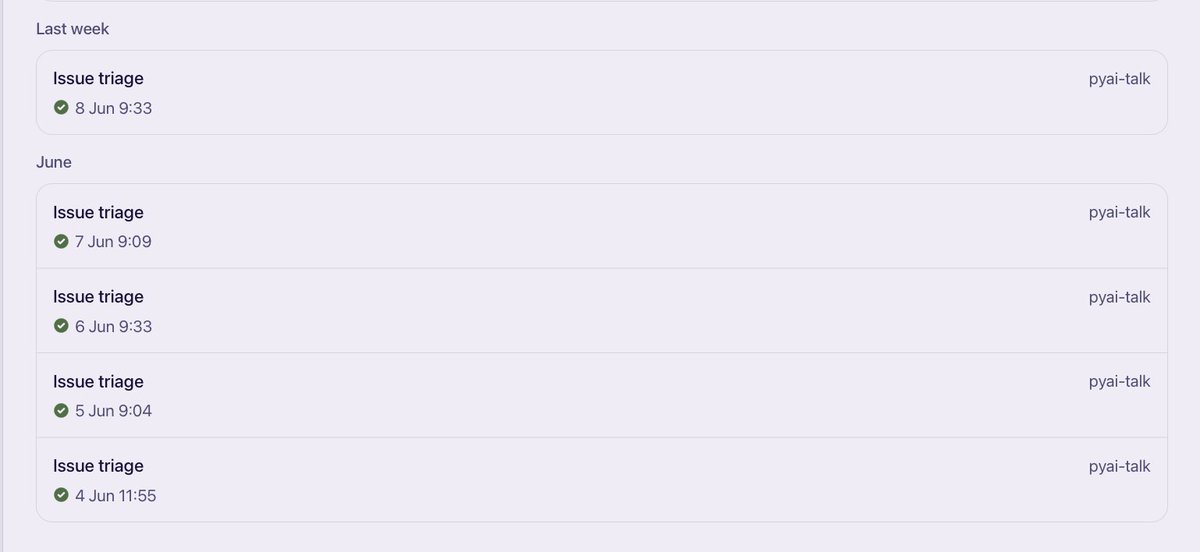
Was off my laptop all of last week and its nice to see my automated triaging from this video kept going💜✨
My thought now is to see if I can get it to triage emails and slack/teams for anything important, maybe every other day though👩🏾💻
Jun 4

In case you don't have time to watch the full stream, here are some highlights!
3 features I like about the new GitHub Copilot App:
- A game you can play while you wait for your agents🎮
- The in app browser 🖥️
- Automations (Skills you can schedule to run) ✅
2
2
13
1,268

13h
My math professors would randomly scatter proofs of theorems and lemmas far beyond our experience to throw us off.
It was unfair, but it forced me to get much better at triaging problems quickly. Funny that I use that skill way more than the real analysis I was being tested on.
2
176

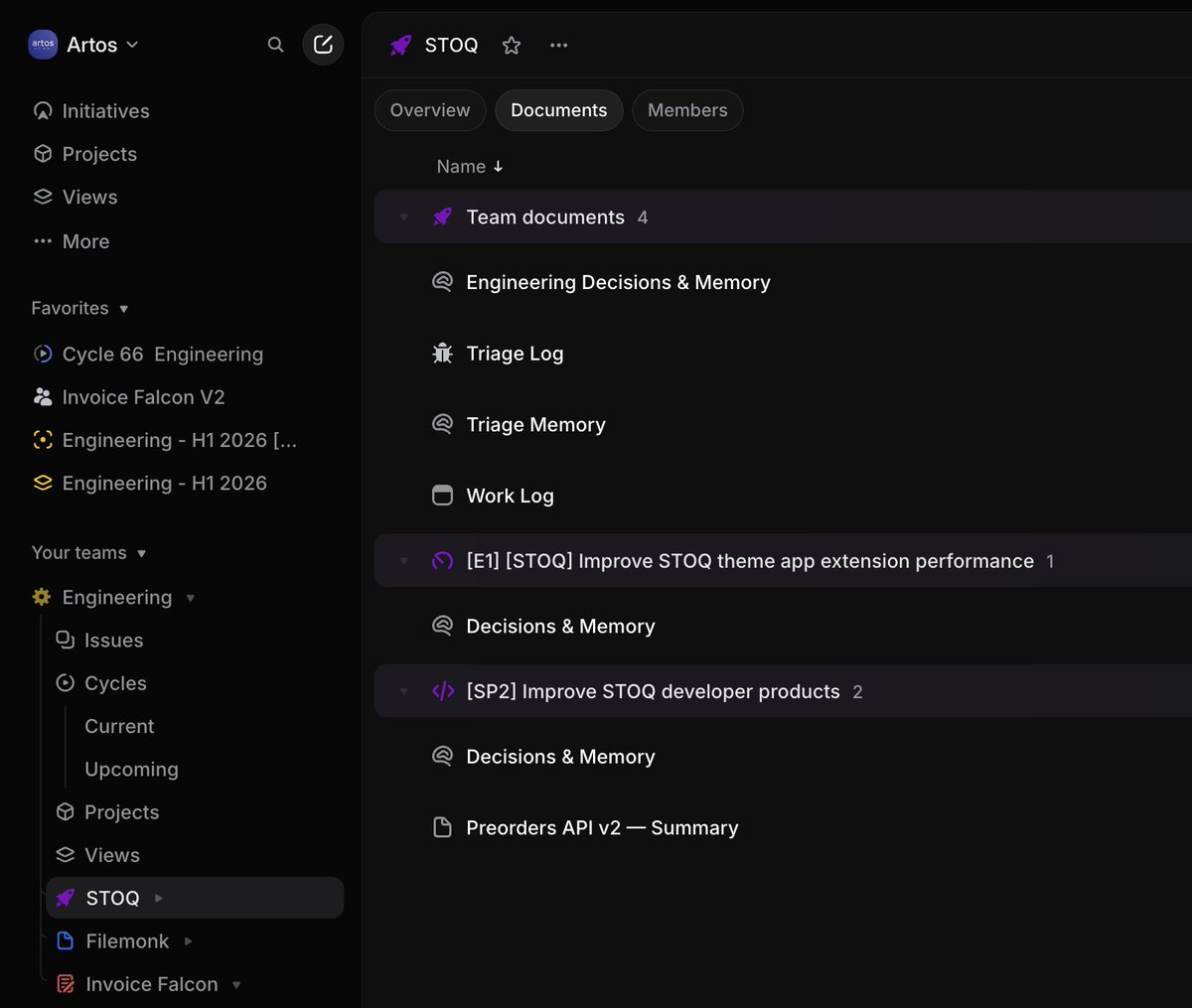
We're starting to work on using Linear as a shared memory database for our apps. As well as building workflows to automatically track plans and decisions into each project, track triaging learnings and daily work logs. As the volume of work goes up, tracking context is key.
11

the AI revolution is not being televised.
it's happening in:
→ code editors (46% of code is AI-generated)
→ email inboxes (AI drafting and triaging)
→ meeting rooms (AI summarizing and action-tracking)
→ customer support (AI handling tier-1 tickets)
→ spreadsheets (AI analyzing and visualizing)
quiet. invisible. transformative.
the revolution doesn't need a headline. it just needs a login.
11

Guard Core: API Security
OSS core engines/framework adapters of Guard Core on my github.com/rennf93 github.com/rennf93/guard-cor…
Most popular being: github.com/rennf93/fastapi-g…
SaaS Monitoring/Tracking/Triaging: guard-core.com
1
50
